Native plants support 4 times more wildlife than non-native ornamentals. These 15 species provide nectar, seeds, berries, and shelter across five regions. Each plant listed below hosts specific butterflies, feeds migratory birds, or attracts native bees that ornamental imports can’t support.
What You Need
| Item | Cost | Notes |
|---|---|---|
| Native perennials (1-gallon pots) | $12-18 each | Local nurseries stock regional natives |
| Native shrubs (3-gallon) | $25-40 each | Buy 2-3 for pollination |
| Compost or leaf mold | $8/bag | Amend clay or sandy soil |
| Mulch (shredded leaves or bark) | $4/bag | 2-3 inch layer, keep off stems |
| Soaker hose (optional) | $15-25 | First season only |
Buy from native plant nurseries or state native plant societies. Big box garden centers often sell cultivars that don’t support the same wildlife.
Northeast (Zones 4-6)
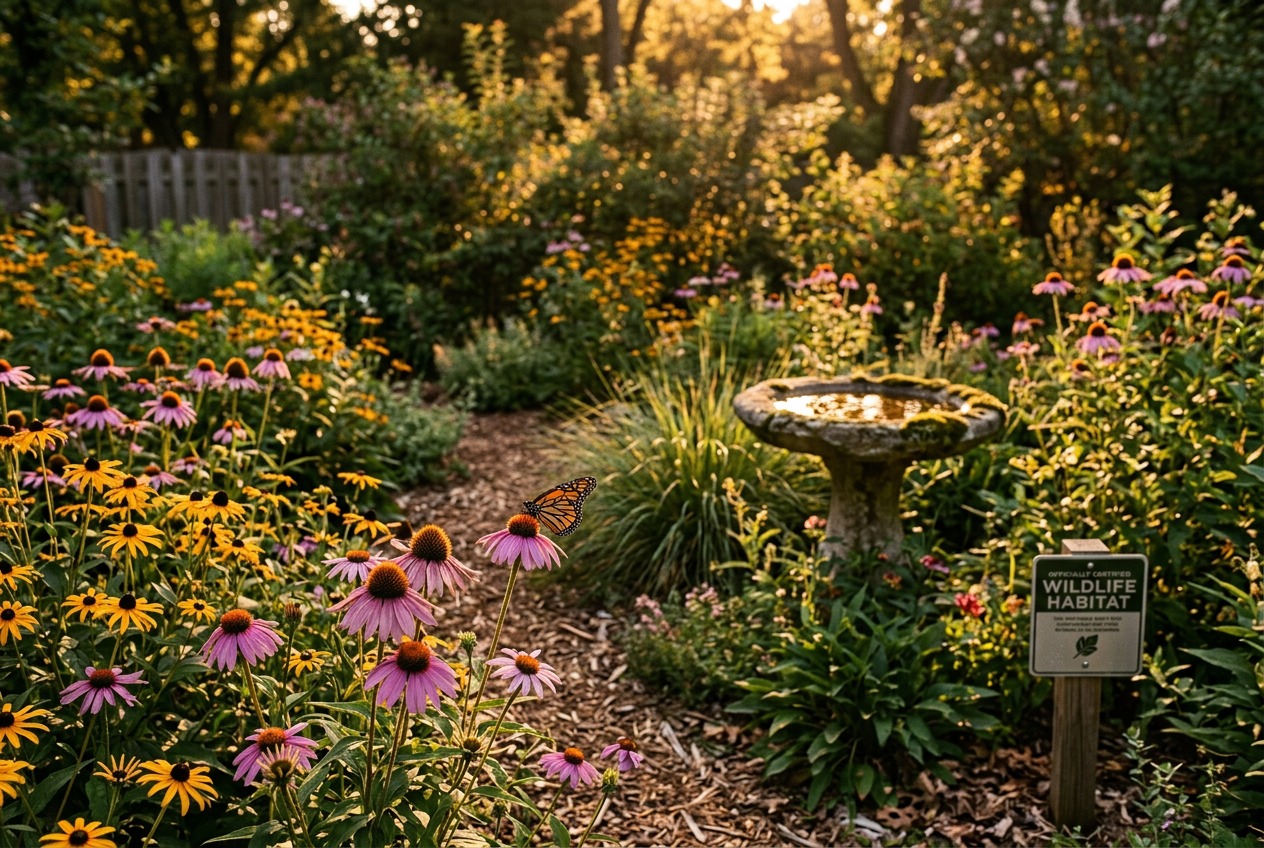
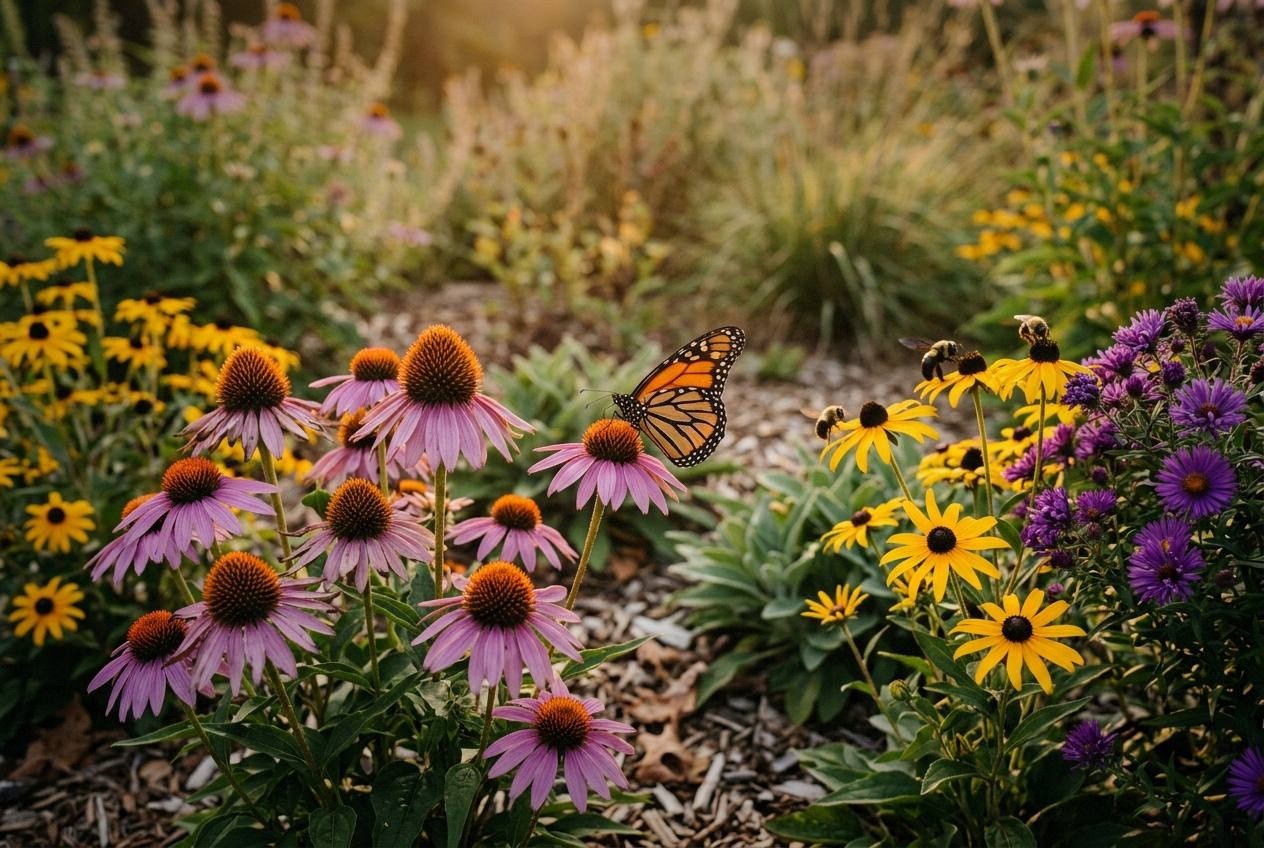
Purple Coneflower (Echinacea purpurea)
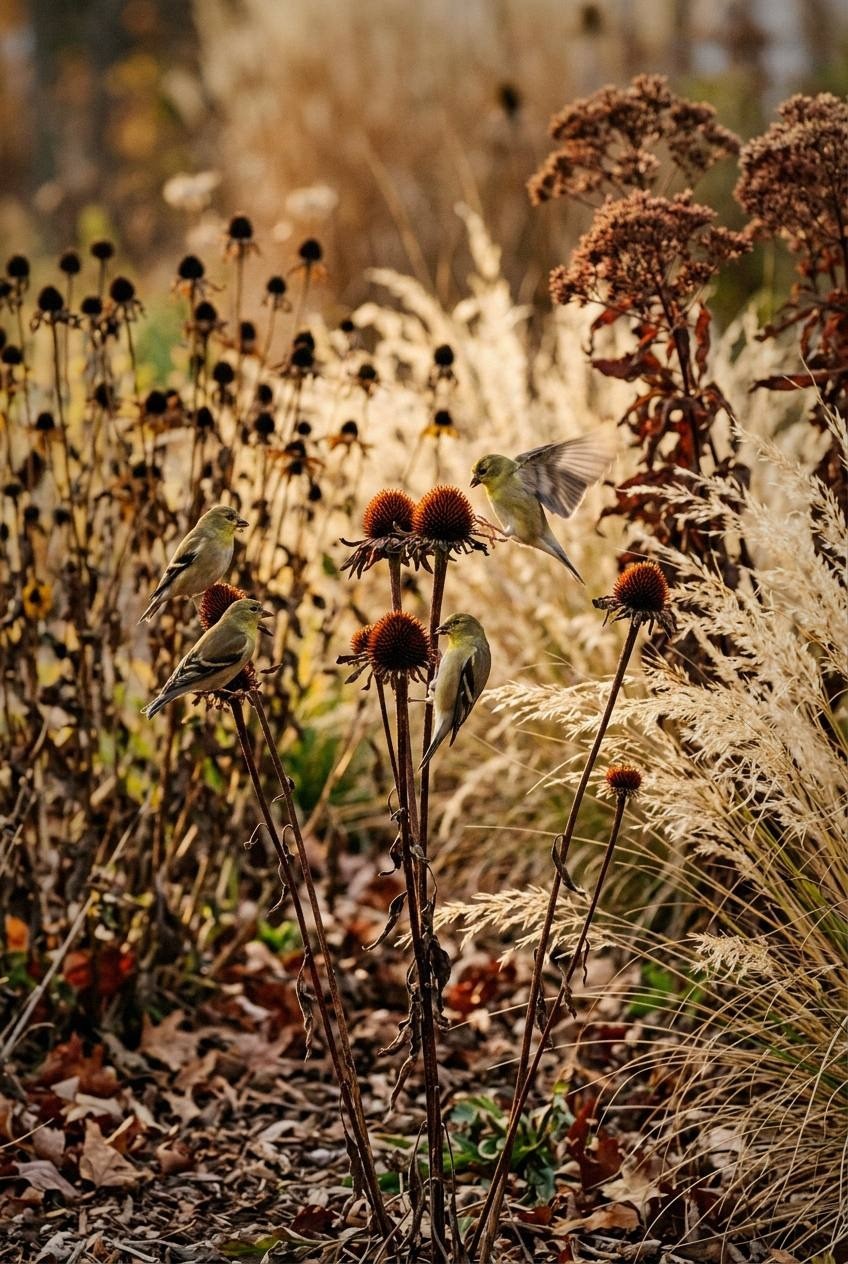
Blooms July through September. Goldfinches eat the seed heads in fall. Supports 6 native bee species. Plant 18 inches apart in full sun. Tolerates clay soil once established.
New England Aster (Symphyotrichum novae-angliae)
Last nectar source before frost. Blooms September to October. Monarch butterflies feed heavily before migration. Grows 3-5 feet tall. Cut back by half in June to prevent flopping.
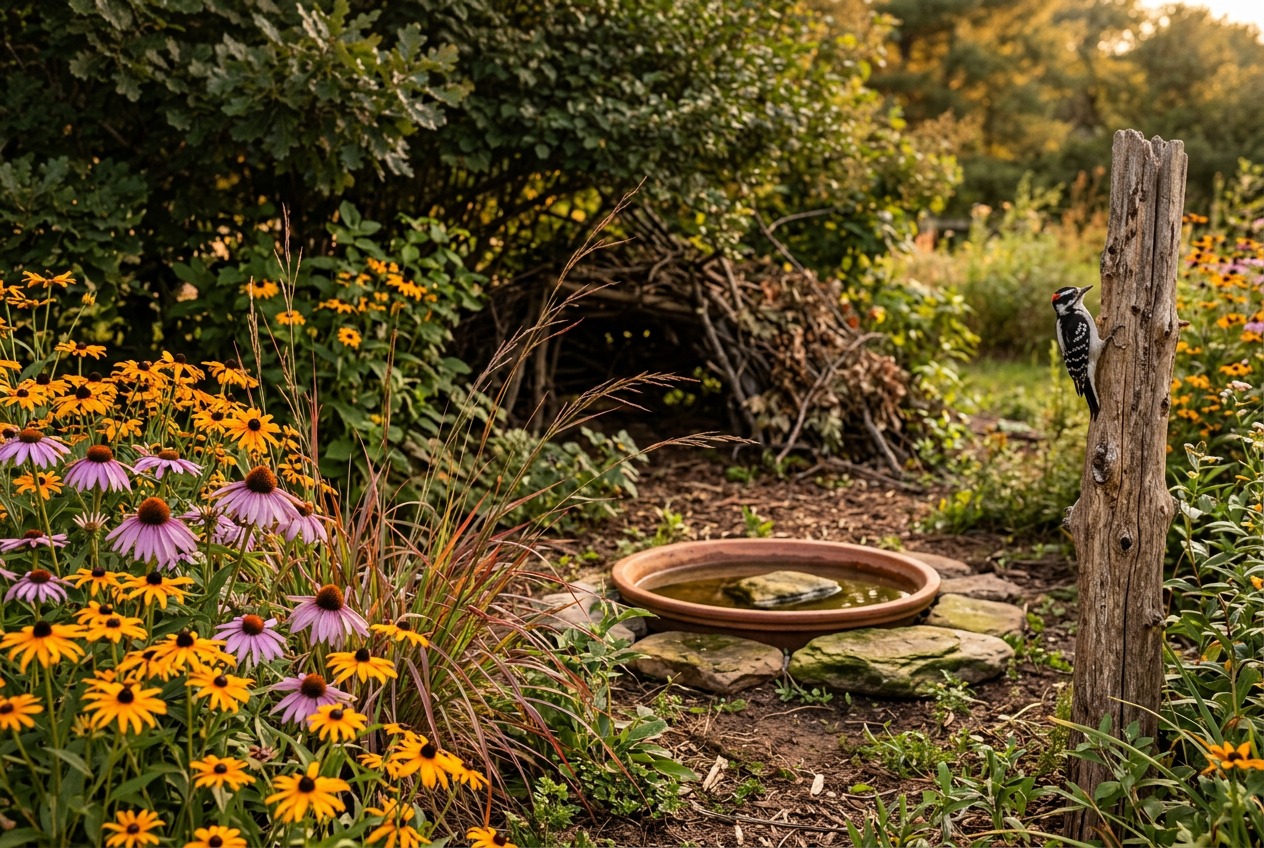
Black-eyed Susan (Rudbeckia hirta)
Blooms June through August. Reseeds freely in disturbed soil. Attracts pearl crescent butterflies and native bees. Deer resistant. Thrives in lean soil, no fertilizer needed.
Red Twig Dogwood (Cornus sericea)
Berries feed 18 bird species. Red stems provide winter interest. Grows 6-9 feet tall. Plant in wet areas or rain garden edges. Cut oldest stems to ground every 3 years for bright color.
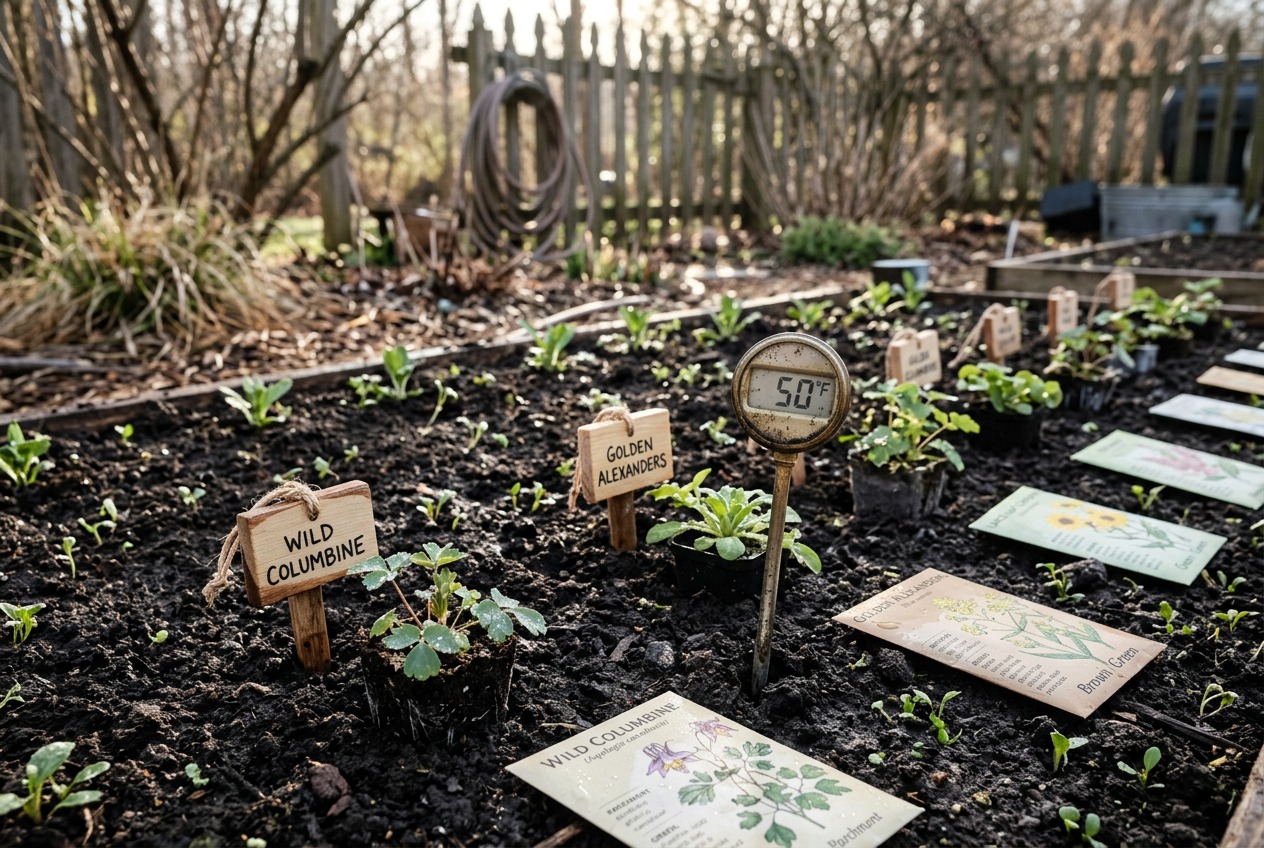
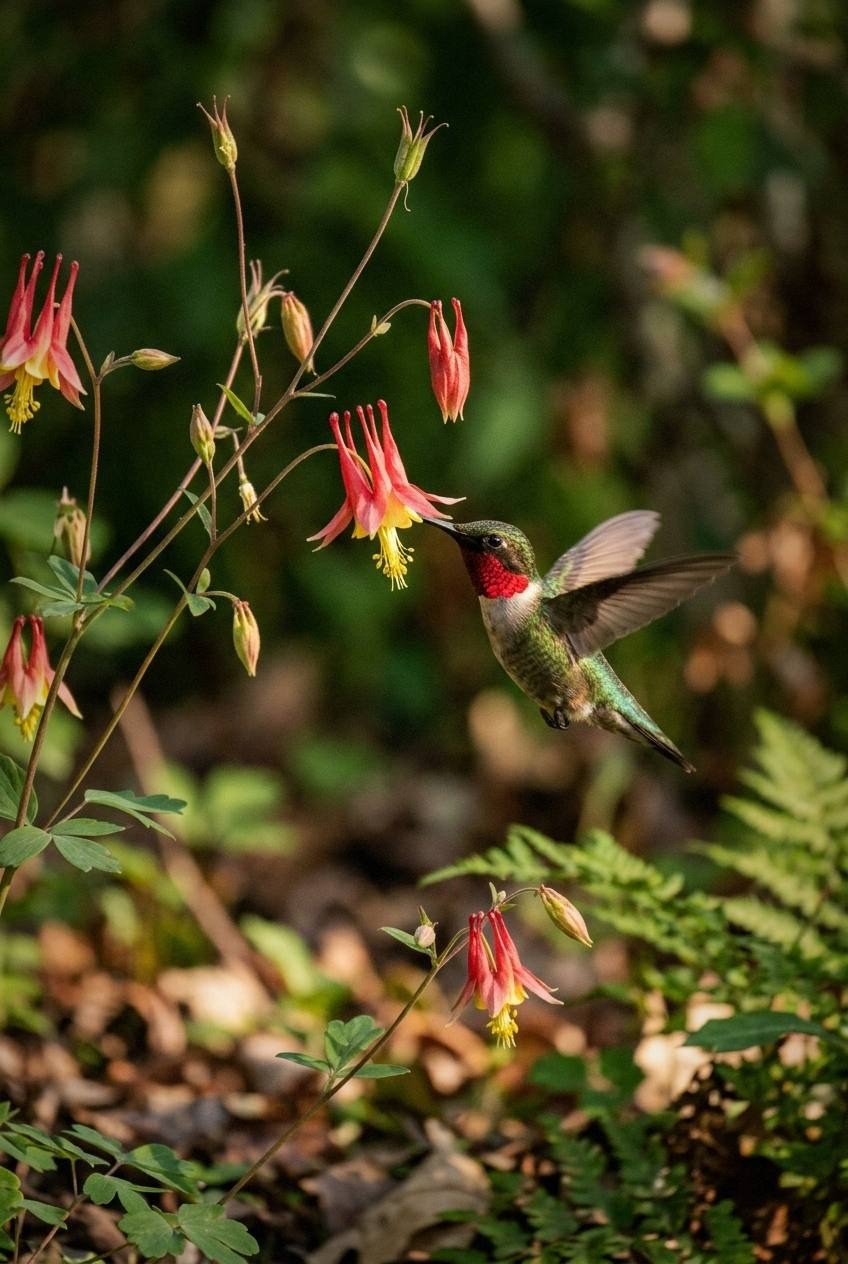
Wild Columbine (Aquilegia canadensis)
Ruby-throated hummingbirds arrive when this blooms in May. Self-sows in part shade. Grows 18-24 inches. Tolerates dry shade under maples once root systems establish.
Southeast (Zones 7-9)
Coral Honeysuckle (Lonicera sempervirens)
Hummingbirds visit tubular red flowers April through June. Non-invasive vine, unlike Japanese honeysuckle. Grows 10-15 feet on trellis or fence. Berries feed songbirds in fall.
Swamp Milkweed (Asclepias incarnata)
Monarch host plant. Pink flower clusters bloom July through August. Prefers moist soil but tolerates average garden conditions. Plant 3 or more for butterfly egg-laying.
Beautyberry (Callicarpa americana)
Purple berries appear September through November. 40 bird species eat them. Grows 4-6 feet wide. Cut to 6 inches in late winter for bushier growth and more berries.
Carolina Jessamine (Gelsemium sempervirens)
Yellow flowers in February and March feed early bees. Evergreen vine. Grows 10-20 feet. All parts toxic to humans. Plant on pergolas or arbors away from children.
Buttonbush (Cephalanthus occidentalis)
White spherical flowers attract 17 butterfly species. Blooms June through August. Grows in standing water or consistently wet soil. Plant at pond edges or low spots.
From my experience: I planted 3 swamp milkweed in a rain garden. First year, zero monarchs. Second year, I counted 14 caterpillars on those same plants. They need time to get established and for butterflies to find them.
Midwest (Zones 4-6)
Prairie Dropseed (Sporobolus heterolepis)
Native bunchgrass. Seed heads feed sparrows and juncos in winter. Fragrant foliage smells like coriander in late summer. Grows 24-30 inches. Plant 18 inches apart for meadow effect.
Leadplant (Amorpha canescens)
Deep taproot breaks up clay soil. Purple flower spikes in July attract bumblebees and leaf-cutter bees. Grows 2-3 feet. Fixes nitrogen, improves soil for neighboring plants.
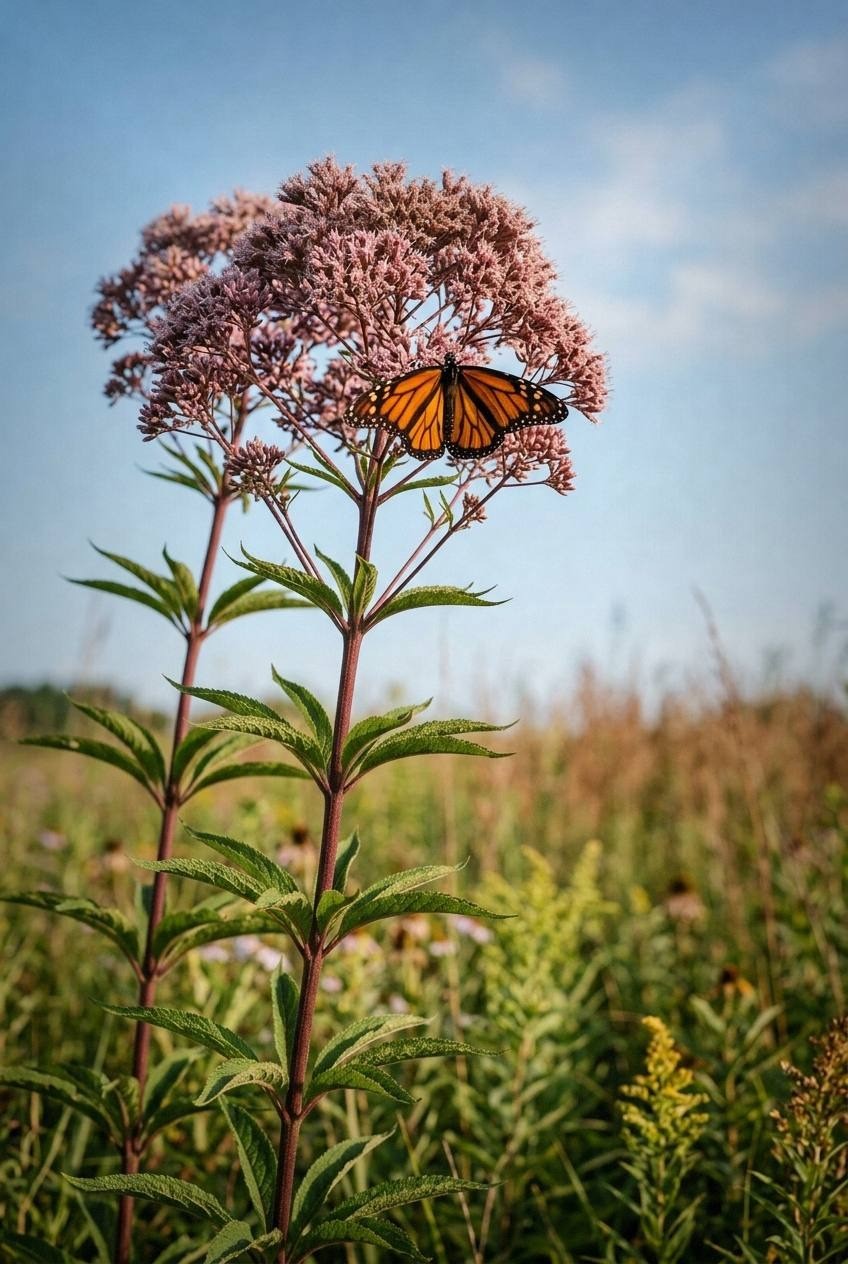
Joe-Pye Weed (Eutrochium maculatum)
Grows 5-7 feet tall. Pink flower clusters in August feed migrating monarchs. Prefers moist soil but survives drought once established. Plant in back of borders.
Serviceberry (Amelanchier arborea)
White flowers in April feed mason bees. Berries ripen in June. Birds eat them within days. Multi-stemmed small tree, 15-25 feet. Orange-red fall color.
Wild Bergamot (Monarda fistulosa)
Lavender flowers July through August. Hummingbirds and sphinx moths visit at dusk. Spreads by rhizomes. Give it 3 feet of space. Tolerates clay and drought.
Southwest (Zones 7-9)
Desert Marigold (Baileya multiradiata)
Yellow daisy flowers bloom March through October with monsoon rains. Reseeds aggressively in disturbed soil. Native bees visit all day. Grows 12-18 inches. No supplemental water after establishment.
Chuparosa (Justicia californica)
Red tubular flowers attract hummingbirds year-round in Zone 9. Deciduous in colder zones. Grows 3-5 feet. Prune hard after bloom for compact shape.
Fairy Duster (Calliandra eriophylla)
Pink powder-puff flowers February through May. Hummingbirds and carpenter bees feed on nectar. Grows 2-3 feet wide. Evergreen in Zone 9, deciduous in Zone 7.
Desert Willow (Chilopsis linearis)
Orchid-like flowers May through September. Hummingbirds nest in branches. Grows 15-25 feet. Drops leaves in winter. Seed pods feed finches. Thrives on 2 deep waterings per month in summer.
Brittlebush (Encelia farinosa)
Yellow daisy flowers March through May. Silver foliage reflects heat. Grows 3-4 feet. Reseeds in gravel and decomposed granite. Cut to ground in June after bloom for neat appearance.
Quick Tip: Southwest natives need excellent drainage. Amend planting holes with 50% decomposed granite or pumice if your soil is heavy clay.
Pacific Northwest (Zones 7-9)
Oregon Grape (Mahonia aquifolium)
Yellow flowers in March feed mason bees. Blue berries attract robins and waxwings. Evergreen shrub, 3-6 feet. Tolerates dry shade under conifers. Spreads slowly by rhizomes.
Red-flowering Currant (Ribes sanguineum)
Pink flower clusters in March and April. Anna’s hummingbirds time nesting to bloom period. Grows 6-10 feet. Berries feed band-tailed pigeons. Deciduous, orange fall color.
Western Columbine (Aquilegia formosa)
Red and yellow flowers May through July. Hummingbirds and hawkmoths visit. Grows 18-36 inches in part shade. Self-sows in moist woodland gardens.
Sword Fern (Polystichum munitum)
Evergreen groundcover. Provides shelter for ground-nesting birds and overwintering butterflies. Grows 2-4 feet. Plant 24 inches apart. Tolerates dry summer shade after establishment.
Pacific Ninebark (Physocarpus capitatus)
White flower clusters in May attract native bees. Exfoliating bark adds winter interest. Grows 6-10 feet. Berries feed songbirds. Thrives in wet or dry soil.
Planting and Care by Season
| Season | Task | Notes |
|---|---|---|
| Spring | Plant container stock after last frost | Water weekly first 8 weeks |
| Summer | Mulch 2-3 inches, water deeply | Soak root zone, not foliage |
| Fall | Best planting time in most zones | Roots establish before summer heat |
| Winter | Leave seed heads standing | Finches, sparrows feed on seeds |
Water new plants weekly the first season. Year two, water every 10-14 days during dry spells. Year three and beyond, most natives survive on rainfall alone.
From my experience: I stopped deadheading native plants after the first year. Goldfinches mobbed the coneflower seed heads in October. Leaving spent flowers doubled the bird activity in my yard.
What to Watch For
Deer browse native plants as readily as ornamentals. Fence new plantings or use motion-activated sprinklers for the first two seasons. Once root systems establish, plants recover quickly from browsing.
Aggressive spreaders like wild bergamot and New England aster need dividing every 3-4 years. Dig and remove outer sections in spring. Replant divisions or compost them.
Native plant establishment takes patience. First year they sleep. Second year they creep. Third year they leap. Don’t judge performance until year three.

Make It Your Own
Start with 5 species from your region. Plant 3-5 of each for visual impact and to support insect populations. Add more species each year as you observe which wildlife visits.
Layer plants by height. Grasses and low perennials in front, medium shrubs in middle, small trees in back. This creates habitat niches for different species.
Include at least one spring, summer, and fall bloomer. Add evergreen structure with native shrubs or ferns. Year-round habitat supports more wildlife than seasonal gardens.
Before You Start
Native plants cost the same as ornamentals but require less water, fertilizer, and pest control after establishment. Budget $150-300 for a 100-square-foot native bed including plants and mulch.
Plan for mature sizes. Shrubs like buttonbush and beautyberry spread 6-8 feet wide. Space accordingly or commit to annual pruning.
Check invasive plant lists for your state before buying. Some native plants become weedy outside their home range. Coral honeysuckle is native to the Southeast but can be aggressive in California.
FAQ
How many native plants do I need to attract wildlife?
Plant at least 3-5 of the same species. Pollinators forage more efficiently when they can move between multiple plants without searching. A single specimen won’t support breeding populations of specialist insects.
Do native plants bloom the first year?
Most native perennials bloom lightly year one, better year two, and reach full bloom year three. Exceptions: black-eyed Susan and desert marigold often bloom the first season from spring planting.
Can I plant natives in clay soil?
Yes. Most natives listed here tolerate clay once established. Amend planting holes with compost, but don’t create a “bathtub” of rich soil surrounded by clay. Mix amendments into the surrounding area so roots can spread. Leadplant and Joe-Pye weed actually prefer clay.