
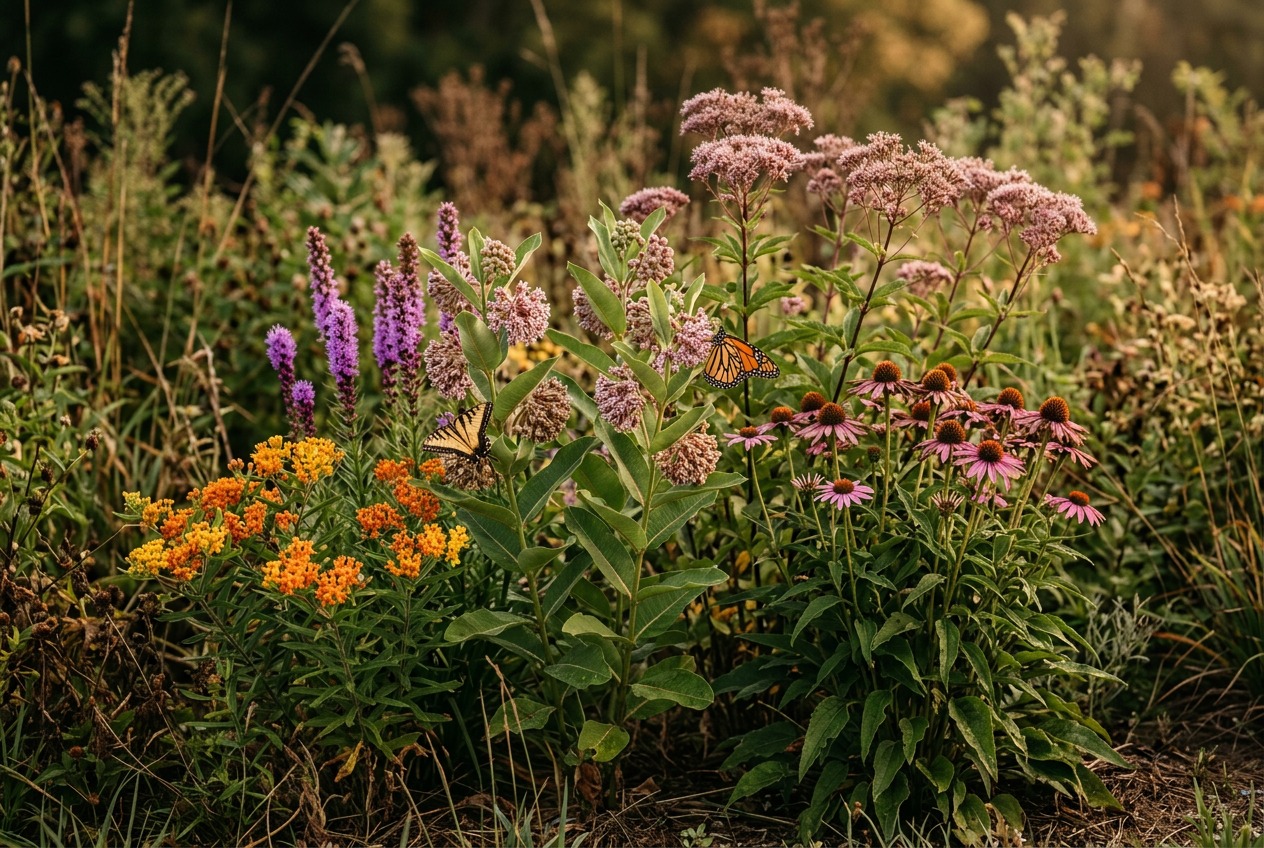
You do not need a meadow or a full garden redesign to attract butterflies. Five specific native perennials, planted in the right spot with decent soil, will bring swallowtails, monarchs, painted ladies, and skippers to a standard suburban yard.
These are not rare specialty plants. They grow in most of the continental U.S., handle a range of soil types, and come back every year without replanting. Here are the five, with zones, spacing, costs, soil needs, and which butterflies actually show up for each one.
1. Purple Coneflower (Echinacea purpurea)
USDA Zones: 3 through 8 Height: 2 to 5 feet Spacing: 18 to 24 inches apart Light: Full sun to light shade (six or more hours of sun) Soil: Average, well-drained. Tolerates clay, drought, and poor soil once established. Bloom period: June through August
Purple coneflower is the anchor plant for any butterfly garden. It blooms for weeks, produces abundant nectar, and attracts a wide range of species.
Butterflies attracted: Fritillaries (great spangled and Aphrodite), painted ladies, eastern tiger swallowtails, black swallowtails, red admirals, American ladies, and skippers.
Where to buy: Native plant nurseries like Prairie Moon Nursery and Prairie Nursery sell Echinacea purpurea as bare-root plants ($3 to $5 each) or plugs ($4 to $7 each). Big box stores like Home Depot and Lowe’s carry coneflowers too, but check the label. You want the straight species Echinacea purpurea, not a hybrid cultivar like “PowWow” or “Magnus Superior.” Hybrids often produce less nectar and may be sterile, giving butterflies less reason to visit.
Planting tip: Direct sow seed in fall for free plants. Scatter seed on prepared soil, press lightly, and let winter cold stratify the seeds naturally. A packet of 200 seeds costs about $3 from American Meadows or Botanical Interests.
2. Butterfly Weed (Asclepias tuberosa)
USDA Zones: 3 through 9 Height: 1 to 2.5 feet Spacing: 12 to 18 inches apart Light: Full sun (eight or more hours preferred) Soil: Well-drained, lean soil. Thrives in sandy, rocky, or gravelly conditions. Does not like wet feet or rich compost. Bloom period: June through August
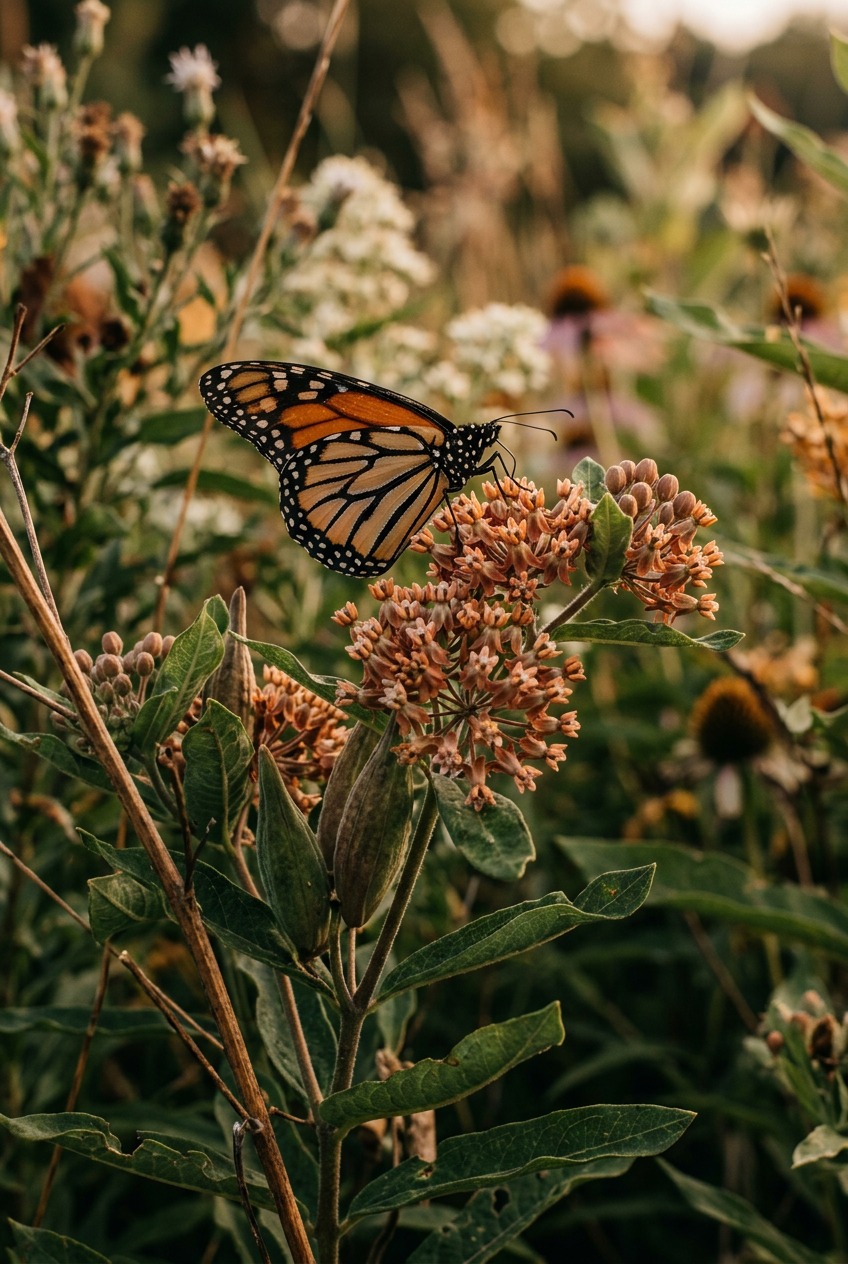
This is a milkweed, which means it does double duty. It provides nectar for adult butterflies and serves as a host plant for monarch caterpillars. The bright orange flower clusters are easy to spot and bloom reliably for six to eight weeks.
Butterflies attracted: Monarchs (both nectar and egg-laying), eastern tiger swallowtails, great spangled fritillaries, gray hairstreaks, and cloudless sulphurs.
Where to buy: Buy plugs or small pots, not bare-root divisions. Butterfly weed has a deep taproot and does not transplant well once established. Prairie Moon Nursery sells plugs for about $5 each. Avoid digging wild plants. Seed is inexpensive ($3 to $4 per packet) but germination takes patience. Cold-stratify seeds in the fridge for 30 days, then sow after last frost.
Planting tip: Do not amend the soil with compost or fertilizer. Butterfly weed performs best in lean, dry conditions. If your soil is heavy clay, mix in coarse sand or plant in a raised bed with a gravel-based mix.
3. Joe-Pye Weed (Eutrochium purpureum)
USDA Zones: 4 through 9 Height: 4 to 7 feet Spacing: 24 to 36 inches apart Light: Full sun to partial shade (four or more hours of sun) Soil: Moist, rich soil. Tolerates clay. Grows well along ditches, rain gardens, and low spots. Bloom period: July through September
Joe-Pye weed is the big one. A single mature plant can reach 7 feet and produce dome-shaped flower clusters 12 inches across. It is a butterfly magnet during mid to late summer when many other plants have stopped blooming.
Butterflies attracted: Swallowtails (eastern tiger, spicebush, and black), monarchs, great spangled fritillaries, red-spotted purples, and American ladies. Also draws significant numbers of native bees and hummingbird moths.
Where to buy: Joe-Pye weed is less common at big box stores. Order from native plant nurseries. Gallon-size pots run $9 to $14 each. Prairie Nursery, Izel Native Plants, and your state’s native plant society sales are good sources. Many state native plant societies hold annual spring plant sales with locally grown stock at lower prices.
Planting tip: Place this in the back of a border or along a fence line. It gets tall. Water regularly the first season. Once established, it handles moderate drought but looks best with consistent moisture.
4. Blazing Star (Liatris spicata)
USDA Zones: 3 through 8 Height: 2 to 4 feet Spacing: 12 to 15 inches apart Light: Full sun (six or more hours) Soil: Average to moist, well-drained. Tolerates clay and poor soil. Avoid waterlogged conditions. Bloom period: July through August
Blazing star has a unique bloom pattern. Its purple flower spikes open from the top down, which extends the bloom period. The tall, narrow shape adds vertical interest to garden beds and looks striking planted in groups of five or more.
Butterflies attracted: Monarchs, painted ladies, clouded sulphurs, orange sulphurs, great spangled fritillaries, and skippers. Blazing star is also a favorite of native bees and a documented nectar source for migrating monarchs.
Where to buy: Blazing star is sold as corms (bulb-like structures) or potted plugs. Corms are the cheapest option. A bag of 25 corms costs $12 to $18 from suppliers like American Meadows or Holland Bulb Farms. Plant corms 2 to 4 inches deep in spring or fall. Plugs cost $4 to $6 each.
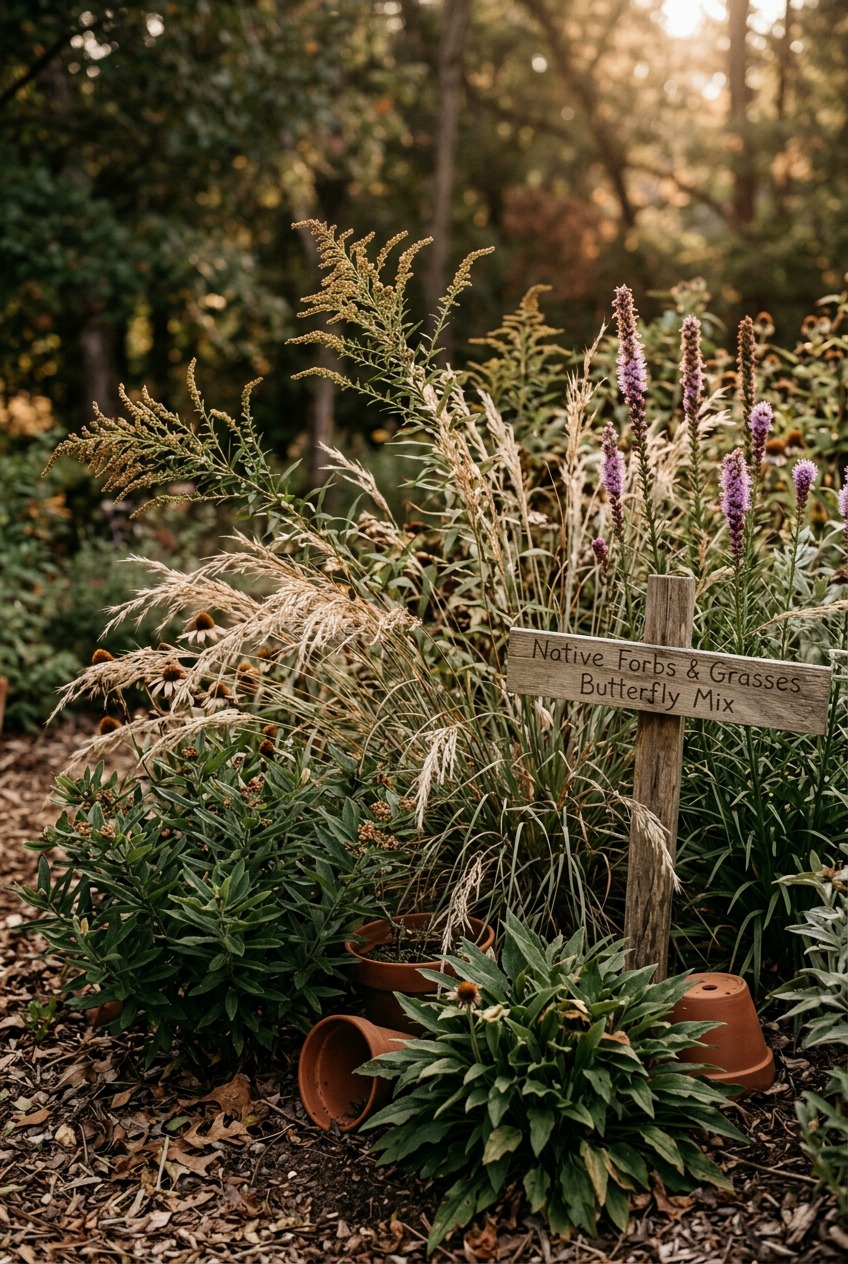
Planting tip: Plant in drifts of at least five. A single blazing star looks sparse. A group of seven to ten creates a purple column that butterflies can find from across the yard. They rarely need staking unless your soil is overly rich.
5. New England Aster (Symphyotrichum novae-angliae)
USDA Zones: 4 through 8 Height: 3 to 6 feet Spacing: 18 to 24 inches apart Light: Full sun (six or more hours) Soil: Average to moist. Tolerates clay, loam, and slightly acidic conditions. Bloom period: August through October
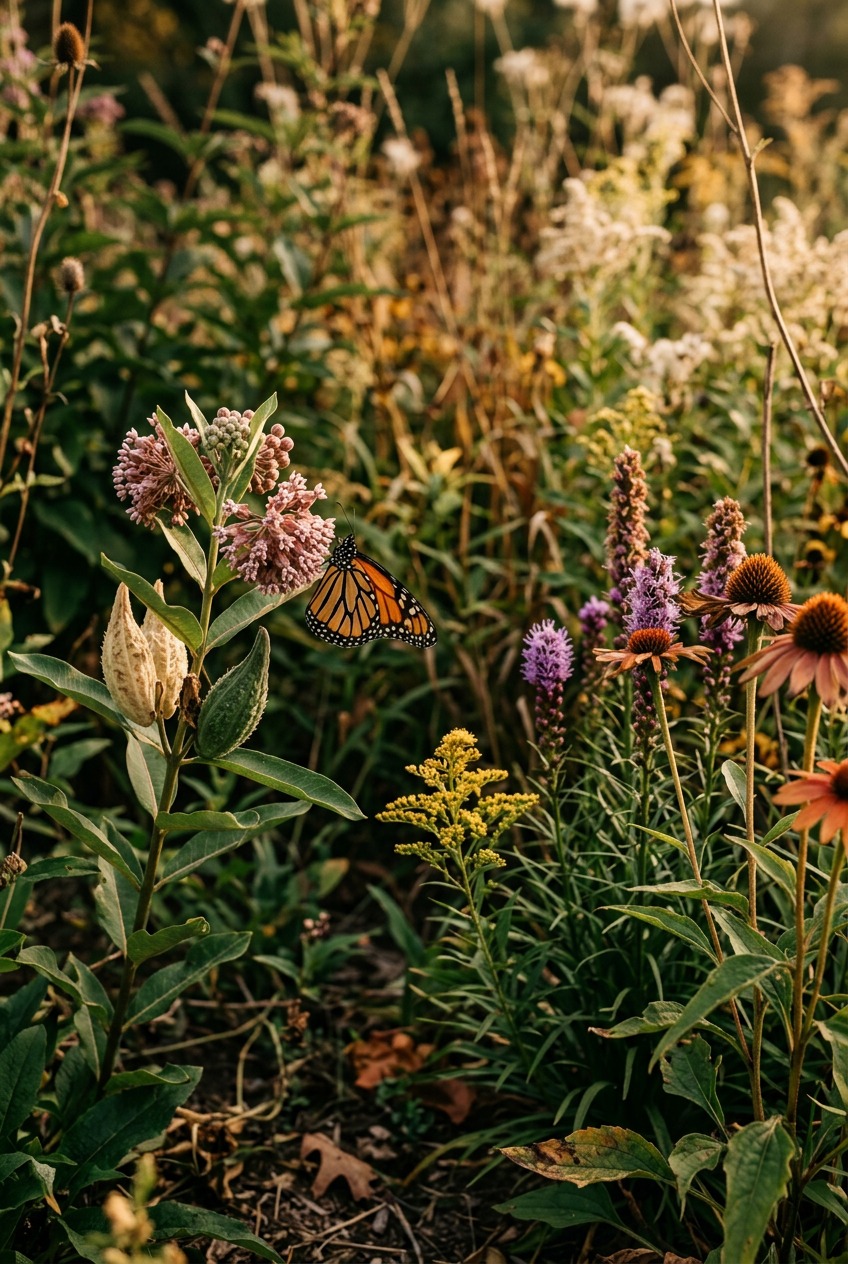
This is your fall closer. When most garden perennials are fading, New England aster erupts in purple, pink, and violet blooms right when migrating monarchs and late-season butterflies need fuel the most.
Butterflies attracted: Monarchs (critical fall migration nectar source), painted ladies, American ladies, pearl crescents, question marks, commas, and late-season skippers.
Where to buy: Native plant nurseries carry this reliably. Gallon pots cost $7 to $12. Big box stores sometimes carry aster cultivars, but again, look for the straight species Symphyotrichum novae-angliae. Some nurseries still list it under its old name, Aster novae-angliae. Seed is available for about $3 per packet and germinates easily after 60 days of cold stratification.
Planting tip: Pinch the growing tips once in early June when plants are about 12 inches tall. This produces bushier growth and more flowers. Without pinching, New England aster gets leggy and flops.
Where to Buy Native Plants (and Where Not To)
Best sources:
- Prairie Moon Nursery (prairiemoon.com): Ships bare-root and plugs. Wide selection. Ships to all lower 48 states. Prices from $3 to $14 per plant.
- Prairie Nursery (prairienursery.com): Similar selection. Offers pre-designed garden kits for butterfly habitats starting around $60.
- Izel Native Plants (izelnativeplants.com): Aggregates inventory from regional native nurseries. Searches by zip code.
- State native plant society sales: Many states hold spring and fall sales with locally grown native plants at wholesale prices. Search “[your state] native plant society” for schedules.
Big box stores: Home Depot, Lowe’s, and Walmart carry some of these plants, especially coneflower and blazing star. The risk is mislabeled cultivars, neonicotinoid-treated plants, or non-local genotypes. If you buy from big box stores, look for organic or “pollinator-friendly” labeling and verify the species name on the tag.
Putting It Together
A basic five-plant butterfly habitat fits in a 4x8 foot bed or a sunny strip along a fence.
Sample layout for a 4x8 foot bed:
- Back row: 1 Joe-Pye weed (center), 2 New England asters (flanking)
- Middle row: 3 purple coneflowers, 3 blazing stars
- Front row: 3 to 5 butterfly weed
Total cost from plugs: roughly $60 to $90. Total cost from seed and corms: roughly $15 to $25.
Plant in spring after your last frost date, or in early fall (six weeks before first frost) to give roots time to establish. Water weekly the first season. After that, these plants are mostly self-sufficient.
You will see butterflies the first summer if you plant plugs that bloom that year. Seed-grown plants may take until year two to flower. By year three, a bed like this will be full, self-seeding, and attracting species you did not even plant for.
Five plants. One sunny spot. That is all it takes to turn a patch of lawn into something monarchs, swallowtails, and fritillaries actually use.
