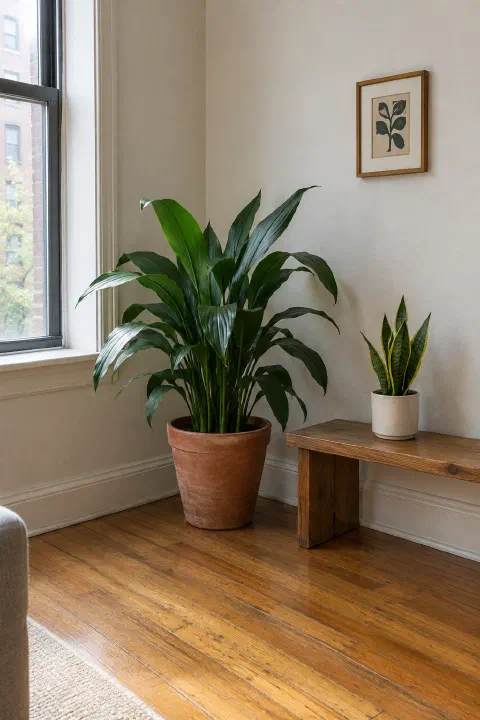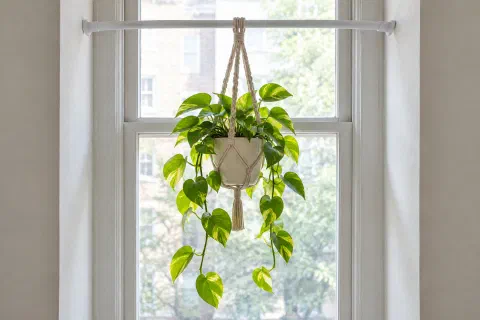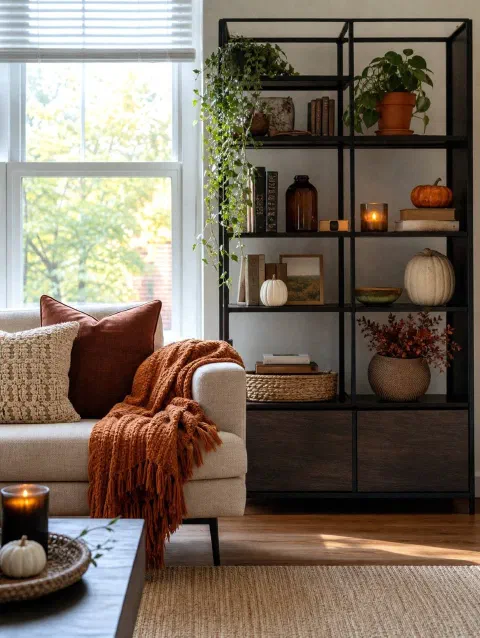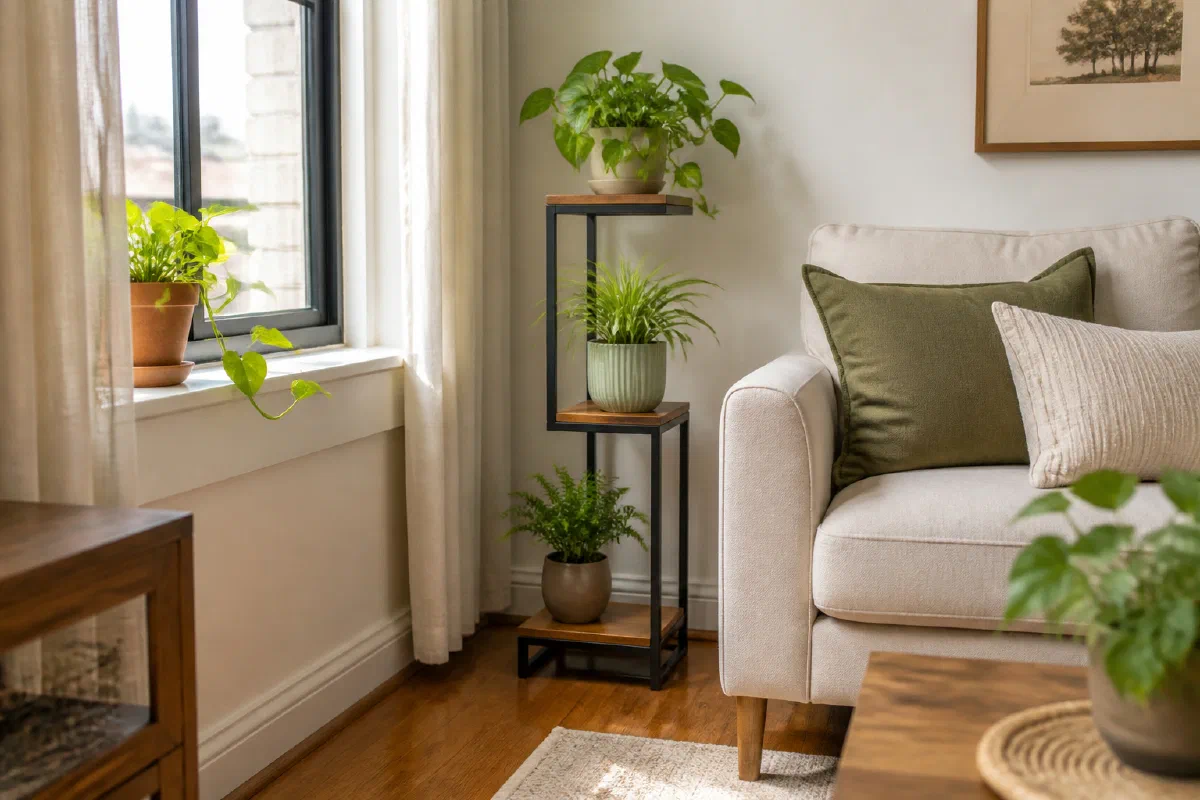
The best narrow plant stand for an apartment corner is the one that adds height without stealing the path to the sofa, window, or balcony door. A stand can look slim in a product photo and still spread across two feet of floor once its legs and shelves are assembled.
Measure the corner as part of the room first. Then choose a stand shape that fits the plants you actually own. Five empty tiers do not make a better corner than two stable shelves with enough room above each pot.
Measure the clear walkway and floor footprint
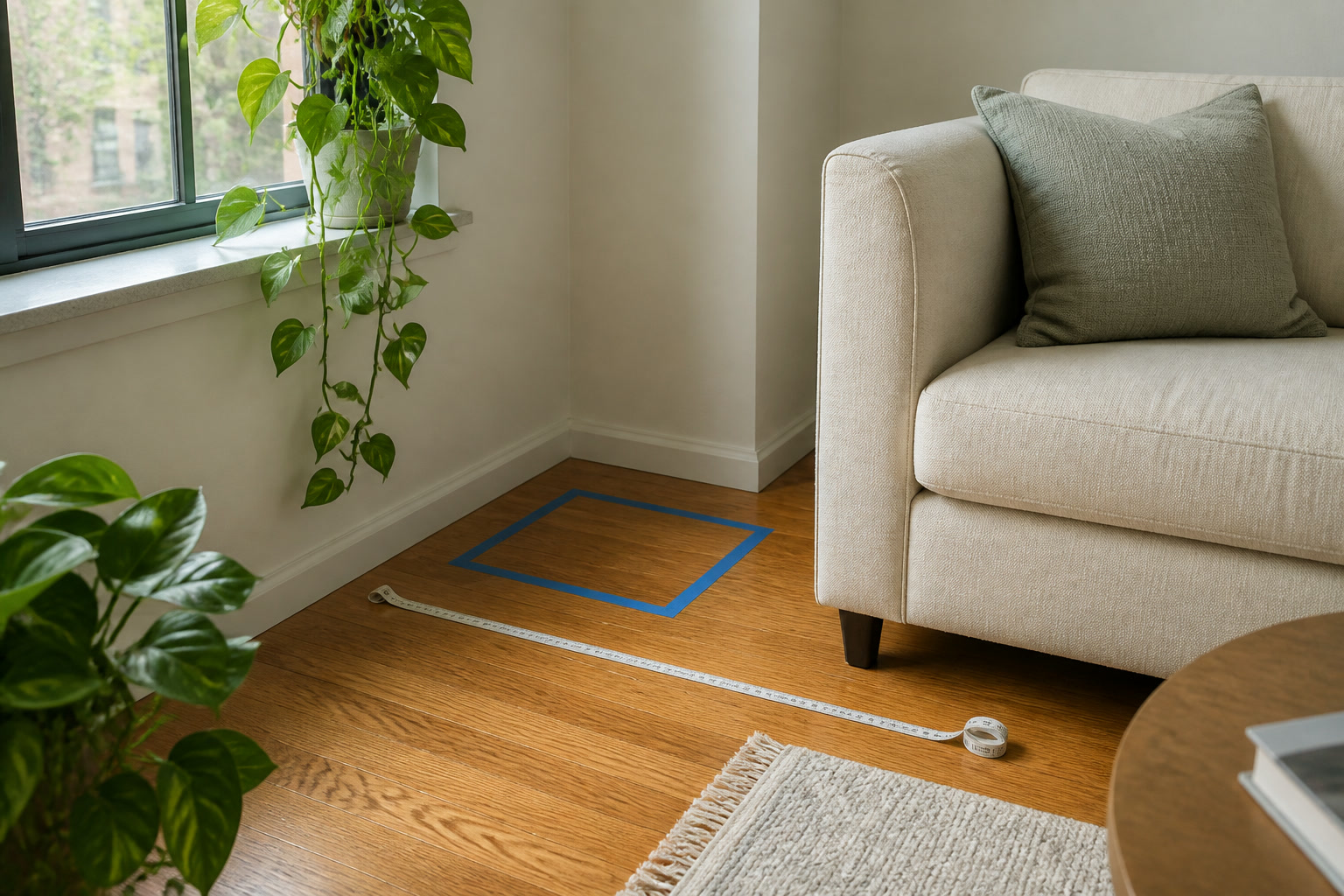
Tape the stand’s full rectangle on the floor, including the widest legs or feet. Keep the route to a regularly used door, seat, or window open. If a door swings into the corner, open it fully before measuring. A local building or accessibility requirement may call for more clearance than a furniture rule of thumb, so follow the strictest requirement that applies to your home.
Record three numbers:
- Maximum floor width: from the wall to the edge of the clear path.
- Maximum floor depth: out from the corner along the other wall.
- Usable height: stop at a windowsill, thermostat, artwork, vent, or ceiling slope that the stand cannot block.
A stand that exceeds either floor measurement does not fit, even when curved shelves make it look visually light. Leave space to water, turn, and remove each pot without bumping the wall.
Check shelf diameter, shelf height and weight
Listings often give the outside frame size but omit the measurements that decide whether a plant can live there.
Shelf diameter
A seven-inch round shelf is for a five- or six-inch pot, not an eight-inch planter. Measure the pot base and leave a little edge around it. A pot perched on the rim can slide when someone brushes past the stand or when wet soil makes it heavier.
Clear shelf height
Measure from the shelf surface to the underside of the shelf above it, then subtract the pot height. That remainder is the plant’s real growing allowance. Include the current leaves, not only the stem, and leave room to lift the pot out for watering.
Weight at each level
Seller-listed total capacity tells you less than the capacity of the highest shelf. Wet soil and ceramic add up quickly. Put the heaviest pot on the lowest level, even when a photograph puts it on top.
Base shape
Three legs may sit steadily on a hard, flat floor, while four small feet can rock on uneven tile. A broad frame can be steadier but uses more floor. If the manufacturer supplies an anti-tip strap, install it, especially around children, pets, or a soft rug. The U.S. Consumer Product Safety Commission’s tip-over research explains why anchoring tall furniture matters.
Pick the stand shape for the corner
| Stand shape | Typical plant grouping | What it solves | Watch for |
|---|---|---|---|
| Staggered multi-tier | Several small pots | Uses vertical space in a tight corner | Small shelves, crowded watering, uneven balance |
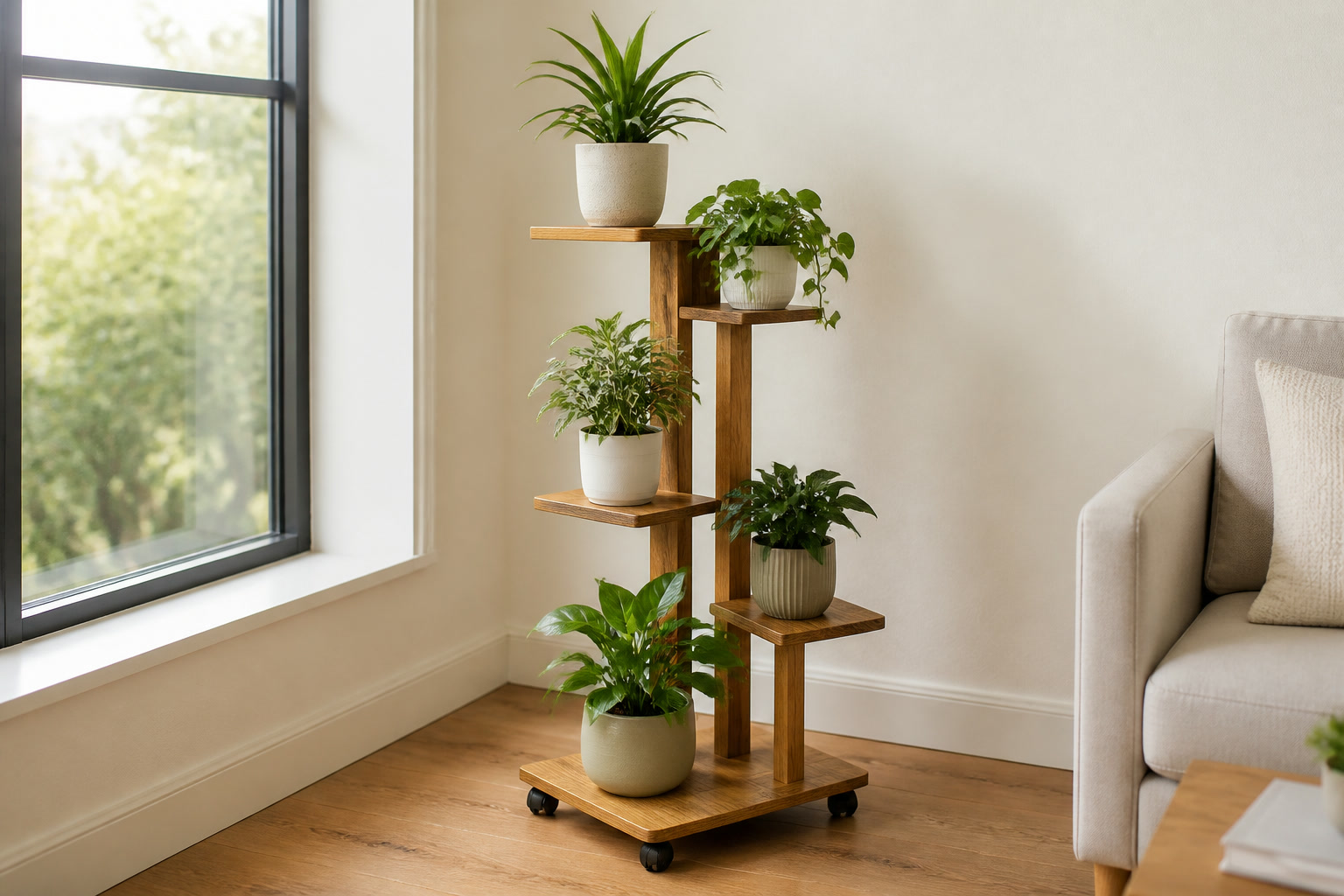
| Offset corner tower | Mixed small and medium plants | Gives leaves more room between levels | A footprint that is wider than the front photo suggests |
| Low two-tier stand | One larger pot and one small pot | Keeps the corner calm and easy to water | Less capacity and a top-heavy upper pot |
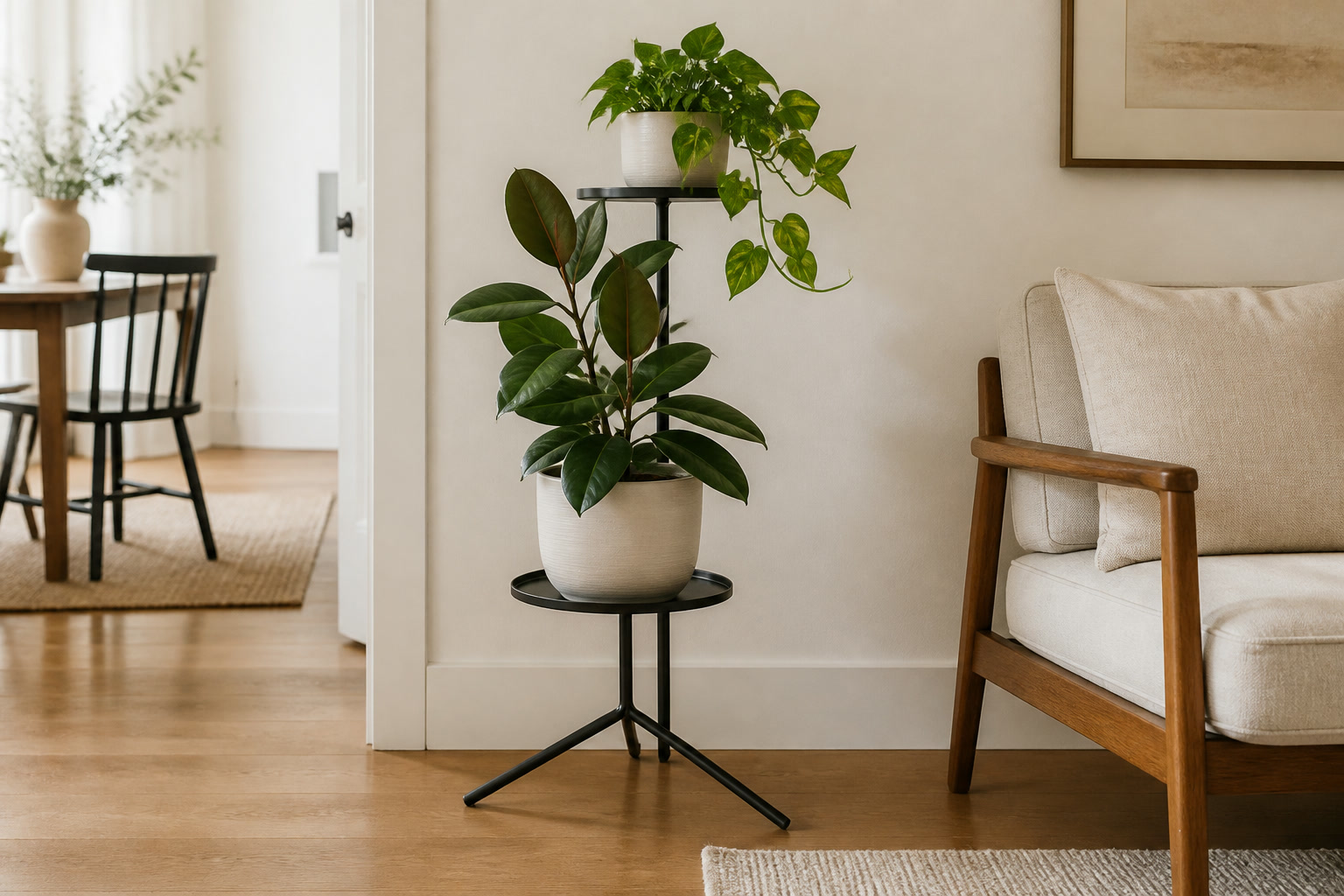
| Single pedestal | One floor plant | Adds height without a plant rack | A narrow base under a wide canopy |
The right choice depends on the room’s path as much as the number of plants. A staggered stand works when each pot has a clear removal route. A low two-tier stand is better when you want one plant to anchor the corner without turning the window into a collection shelf.
Match the stand to the plant’s habit
Use the plant’s shape and light needs as a fit test:
| Plant habit | Stand shape that usually works | What to avoid |
|---|---|---|
| Upright snake plant | Single pedestal or low two-tier | A shelf directly over leaf tips |
| Trailing pothos | Staggered upper shelf | A vine spilling into the walkway |
| Bushy peperomia | Small round shelf | A tray smaller than the pot base |
| Young rubber plant | Broad low tier | A lightweight top shelf |
| Small succulents | Multi-tier stand near bright light | A dark corner chosen only for decor |
The stand changes height and visibility, not growing conditions. University of Minnesota Extension’s indoor-plant lighting guide recommends matching the plant to the room’s available light and using supplemental light when the exposure is not enough. Clemson HGIC’s indoor plant factsheet puts those bands in foot-candles, the unit light is measured in. Low light starts at a 100 foot-candle minimum with 75 to 200 preferred for good growth, medium runs 200 to 500, and high runs 500 to 1,000. The same factsheet notes that the interior of a well-lighted home is often under 100 foot-candles, which is why a corner can look bright to you and still read as low light to a plant. A beautiful stand cannot make a dark corner suitable for a sun-loving plant.
Setup order for a narrow stand that will not tip
Before you load the shelves, run this sequence:
- Assemble the frame on a hard, level surface and tighten every fastener.
- Test the empty stand for rocking. Add a manufacturer-approved foot or move it to a flatter spot; do not wedge loose cardboard under a leg.
- Put the heaviest pot on the lowest shelf and keep every pot centered over its support.
- Add a drip tray under each nursery pot, then carry the pots to a sink or tub for thorough watering when possible.
- Check that water cannot reach an outlet, power strip, radiator, vent, or electronic thermostat.
- Walk the route with your normal bag, laundry basket, or vacuum. If the stand catches anything, the corner is too tight.
- Anchor the stand when the manufacturer provides an attachment method and the room has children, pets, or frequent traffic.
One empty shelf can be useful. Space around leaves helps the plants read as living plants instead of a stack of objects, and it makes dusting and watering less frustrating. Indoor plant styling without clutter carries the same principle across a larger room.
Apartment-corner buying checklist
Before ordering, confirm all seven:
- the taped footprint stays outside the walkway
- the widest leaf can open without rubbing the wall
- every pot base is smaller than its shelf
- tall plants have clear height above the pot
- the heaviest pot has a low position
- watering cannot drip onto an outlet or power strip
- a window, vent, and balcony door still work normally
If a tall plant already wobbles in its pot, read what size planter a tall indoor plant actually needs before putting it on a stand. A stable cachepot or a broader base may solve the problem without repotting.
FAQ
How narrow can a plant stand be?
The narrowest useful stand is limited by the pot base, the frame’s feet, and the room’s path. Measure those three things rather than choosing by a listing’s front-view width. Small shelves usually mean small pots.
Is a tall plant stand safe on carpet?
Soft carpet can make a narrow stand less stable. Use a broad, rigid base, place heavy pots low, and use the manufacturer’s anti-tip method when one is supplied. Do not rely on the plant’s weight to steady a wobbly frame.
Should plants touch the wall?
No. Leave enough room for leaves, cleaning, and watering. A stand jammed into a corner can also encourage one-sided growth toward the window.
Sources
- University of Minnesota Extension: lighting for indoor plants
- U.S. Consumer Product Safety Commission: furniture tip-over prevention research
- University of Missouri Extension: lighting indoor houseplants
What to Read Next
- What Size Planter Does a Tall Indoor Plant Actually Need? gives you the root-ball and base measurements before you buy a stand.
- How to Style Tall Indoor Plants in a Living Room helps place the finished plant without blocking furniture or light.
- Grow Lights That Look Good in a Living Room compares low-visual-impact ways to support a dim plant corner.