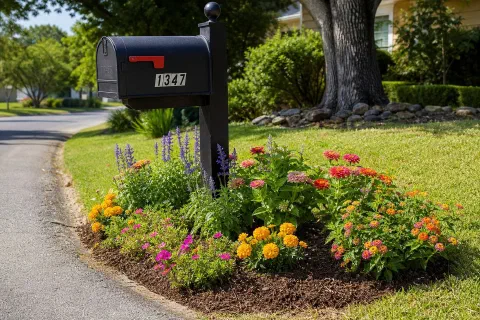
The mailbox is one of those spots people ignore until they suddenly cannot unsee it.
Maybe the post is leaning a little. Maybe the grass around it is impossible to trim neatly. Maybe it sits at the end of the driveway looking bare while the rest of the yard is trying its best.
You don’t need a full landscaping project to make it look better. A small planting around the mailbox can add color, hide the awkward base, and make the front of the house look more cared for from the street.
The key is keeping it simple. Mailbox flowers have to deal with heat, road dust, reflected sun, passing dogs, and the occasional person stepping too close. This isn’t the place for fragile plants that need constant attention.
What Flowers Look Good by a Mailbox?
Zinnias, salvia, and lantana. Those three carry a curbside bed from late spring through the first frost without daily attention. Flowers by a mailbox sit in the hottest, dustiest, most walked-past spot in the yard, so choose for toughness first and color second. Keep the bed small enough that you can weed it in five minutes with a trowel, because a bed you dread is a bed that turns into grass by July.
Start Small Around the Post
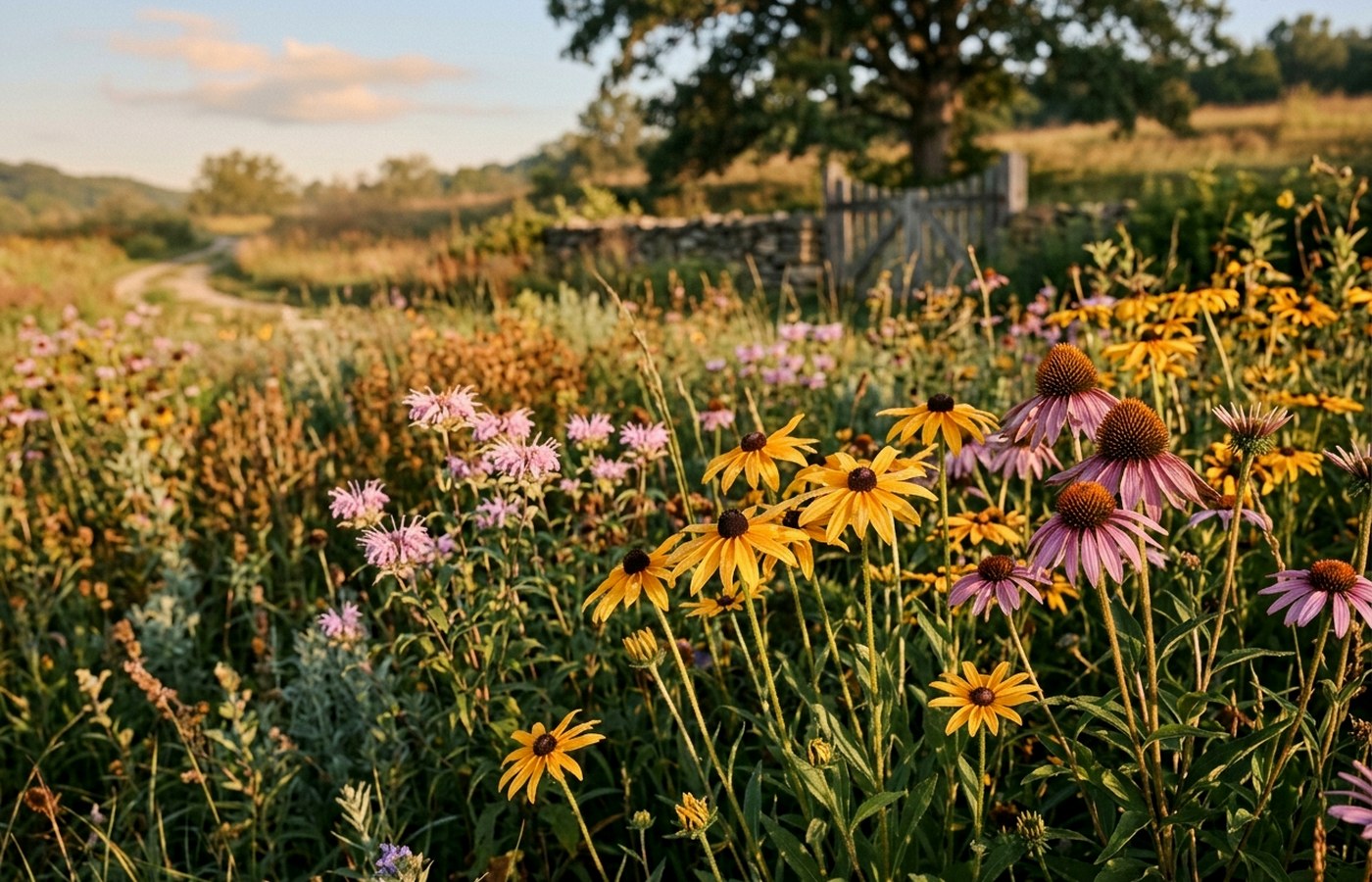
A mailbox bed doesn’t need to be big.
In fact, smaller is usually better. A huge bed around a mailbox can look strange unless the rest of the front yard is already landscaped. Start with a simple circle, half circle, or kidney shape around the post.
Give yourself enough room to plant without crowding the mailbox, but not so much that you create another area to weed every weekend.
If the post looks rough at the base, flowers and mulch can help. If the post itself is falling apart, fix that first. Plants can’t hide everything.
Choose Plants That Can Handle Neglect
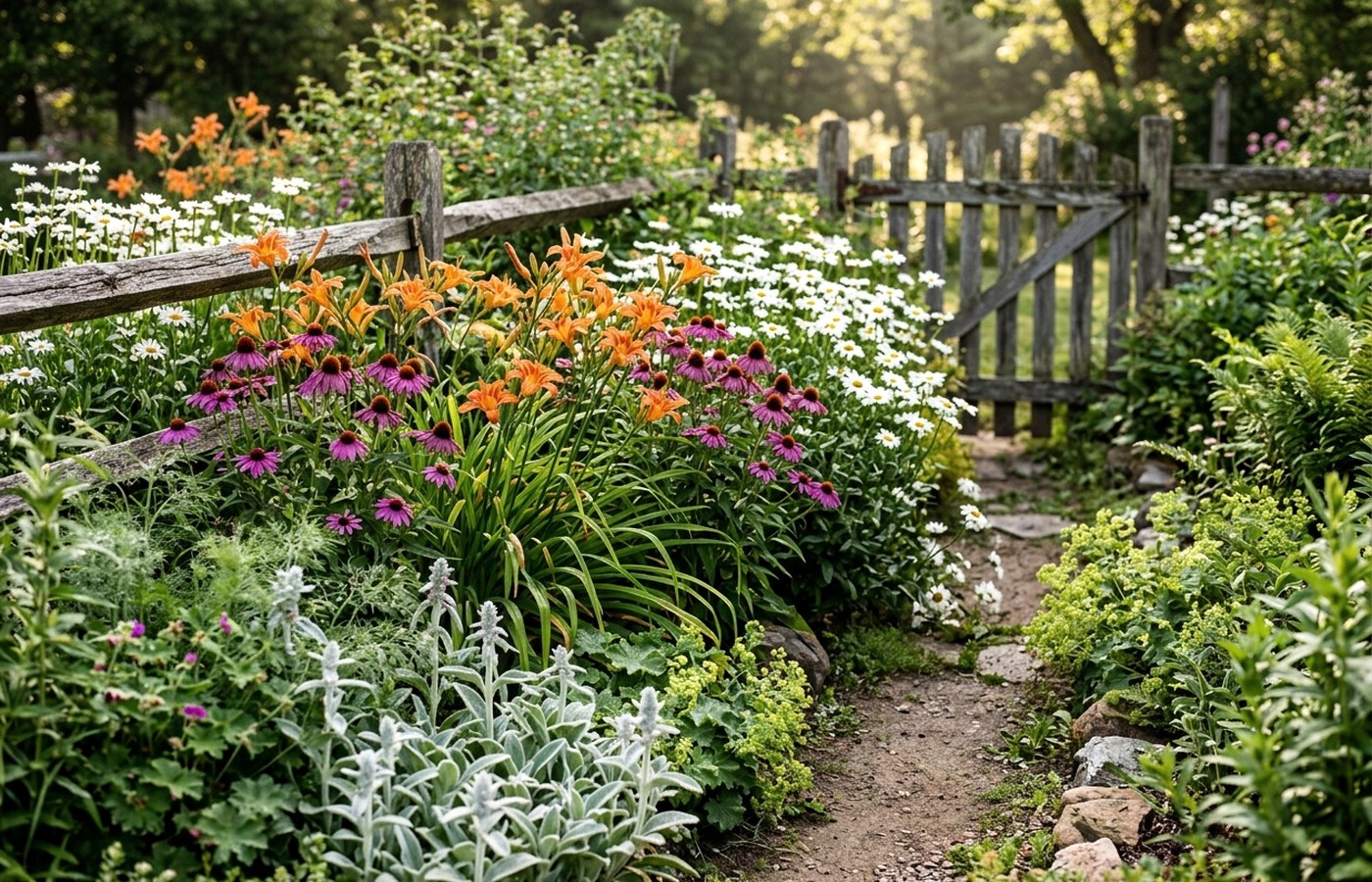
Mailbox flowers should be tougher than porch flowers.
They are usually farther from the hose, which means they get forgotten. They may get full sun all day. They may deal with hot pavement or dry soil.
If your post sits at the edge of asphalt with sun on it from morning to evening, that is the hardest version of this spot. Mailbox flowers for full sun that survive road heat narrows the list to the ones that hold up there.
Good sunny options:
- Zinnias
- Lantana
- Salvia
- Marigolds
- Coneflowers
- Black-eyed Susans
- Coreopsis
- Verbena
- Daylilies
- Sedum
For part shade, try:
- Begonias
- Coleus
- Impatiens
- Heuchera
- Ajuga
- Ferns if the soil stays moist
If you only want to plant once, use perennials for the main structure and tuck in annuals for color.
What Counts as Full Sun at the Mailbox
Full sun means six or more hours of direct sunlight a day, not just a bright spot. That is the Penn State Extension definition , and it is worth knowing because a curbside spot is usually the sunniest ground you own, hotter and drier than the bed by the house. Reflected heat off asphalt pushes it further.
If your post gets six hours or more, the sunny list above is the right list. If it only catches morning or late-day sun, drop to the part-shade list, because a sun plant in four hours of light stays small all season and never fills in.
Keep the Colors Easy to Read
Mailbox flowers are seen from farther away than porch pots.
Tiny color details disappear from the street. Stronger blocks of color usually work better. A few yellow coreopsis plants, a row of red zinnias, or purple salvia with white flowers will show up better than a dozen tiny mixed blooms.
This doesn’t mean the bed has to be loud. It just needs enough color or shape to be visible.
I like using two main colors at most. Yellow and purple. Pink and white. Red and green. Too many colors can make a small mailbox bed look messy.
Add a Clean Edge
The edge is what makes mailbox flowers look intentional.
It can be brick, stone, metal edging, a simple trench edge, or even a ring of mulch kept tidy. Without an edge, grass creeps in and the bed starts looking accidental.
| Edge | What it looks like | Upkeep | Best for |
|---|---|---|---|
| Trench edge | A clean cut line between the bed and the lawn | Recut it once or twice a season | The smallest budget, and the fastest start |
| Metal edging | A thin, low line that almost disappears | Almost none once it is set | A curved shape, because it bends to the line you cut |
| Brick or stone | A visible border that reads as built | Weeding between the pieces, and resetting any that heave | A house that already has brick or stone on it |
| Mulch ring only | No hard line, just a tidy circle of mulch | Remulching each year, and grass creeping back in | A rental, or a bed you might move |
Pick one edge and stay on top of it, and a small planting looks like someone meant it.
Do Not Block the Mailbox
That’s the boring but important part.
The mail carrier still needs to reach the box. Plants shouldn’t block the door, hide the house number, or grow into the road. Tall flowers can go behind or beside the post. Keep the front clear.
The rule behind that is the same one that governs anything you attach to the box itself. Under the USPS engineering standard for curbside mailboxes , a decorative addition is allowed only if it does not interfere with mail delivery or present a safety hazard, and mounting accessories are not permitted to project beyond the front of the mounted box. A planting is not an attachment, but the standard tells you what the carrier is working around: a clear, unobstructed approach and nothing sharp or sprawling in the reach path.
If you use vines, be careful. A vine-covered mailbox can look charming for about five minutes and then become a problem. Morning glories, clematis, and climbing roses need more attention than people expect.
If you want height, use a neat perennial or a small ornamental grass behind the post instead of letting a vine take over.
A Simple Mailbox Flower Formula
Here is the kind of planting I would use for an easy sunny mailbox bed:
- One small clump of salvia or coneflower for height
- Three to five zinnias or marigolds for color
- A low edging plant like alyssum, thyme, or sedum
- Mulch to keep weeds down
For shade, I would use:
- Coleus for color
- Begonias or impatiens for bloom
- Ajuga or heuchera near the edge
- Mulch or pine straw
Nothing fancy. Just enough to make the spot look cared for.
How to Plant a Mailbox Bed in One Afternoon
The whole job fits in an afternoon if the ground is workable. This is the order that keeps it from turning into a mess.
- Pick a damp day, or water the ground the night before. Dry, hard ground is the main reason a small planting job takes all weekend.
- Mark the shape with a hose, a rope, or a ring of flour. Walk out to the street and look at it before you cut anything.
- Cut the edge first. Follow the line with a spade, straight down, and lift the turf inside it. Shake the soil out of the turf and stack it somewhere out of sight to break down.
- Loosen the soil and work in compost if it is poor or compacted. This strip sits next to pavement, so it is usually the leanest ground you own.
- Set the plants out in their pots first. Move them around until the spacing looks right from the street, then plant each one at the depth it was growing at in the pot.
- Firm the soil and mulch a couple of inches deep, pulled back off the stems so nothing sits wet against the plant.
- Water it in slowly so the soil settles around the roots, and keep an eye on it for the first two weeks.
- Stand at the street and check the front. If anything leans into the walking path or hides the box, move it now, while it is still easy.
Let It Be a Small Win
Mailbox flowers are a good project because they stay contained.
You can improve one visible part of the yard without taking on the whole front landscape. You can plant it in an afternoon. You can water it with one can. You can change the annuals next season if you get bored.
Sometimes that is the kind of garden project that actually fits real life.
Not a whole new yard. Just one spot that looked forgotten and now looks like someone remembered it.
What to Read Next
Mailbox flowers for full sun and road heat if your post sits against asphalt and you want the narrower list of plants that hold up in the hardest version of this spot.
Drought tolerant flowers that still bring color for the watering problem, since a mailbox bed is usually the last thing to get the hose.
Full sun perennials that bloom without asking much if you want the structure planted once instead of buying annuals every spring.
Front yard cottage garden edges that still look tidy because the edge is what makes a small curbside bed read as intentional from the road.
Window box flowers for a house that needs more color for the next-smallest planting job once the mailbox is done.