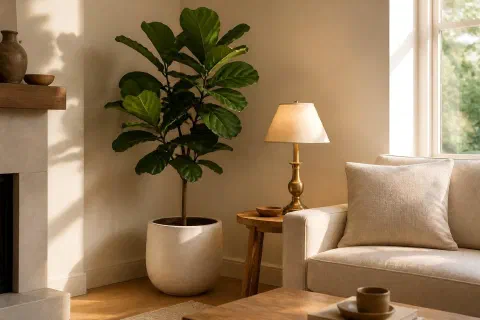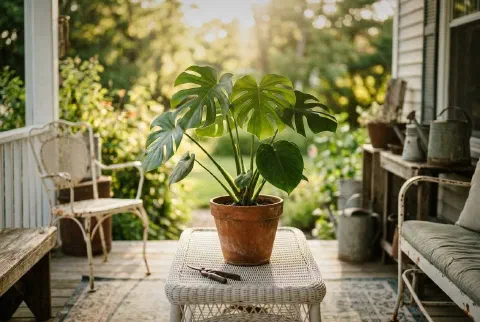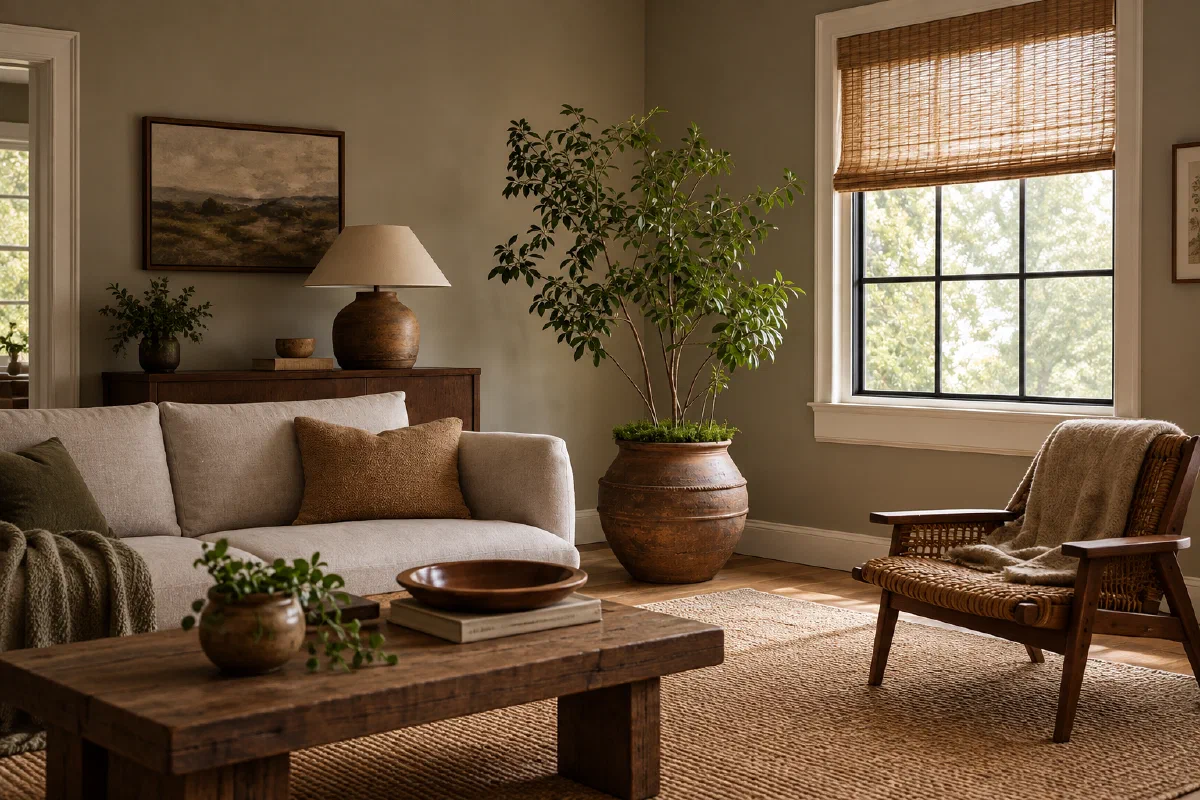
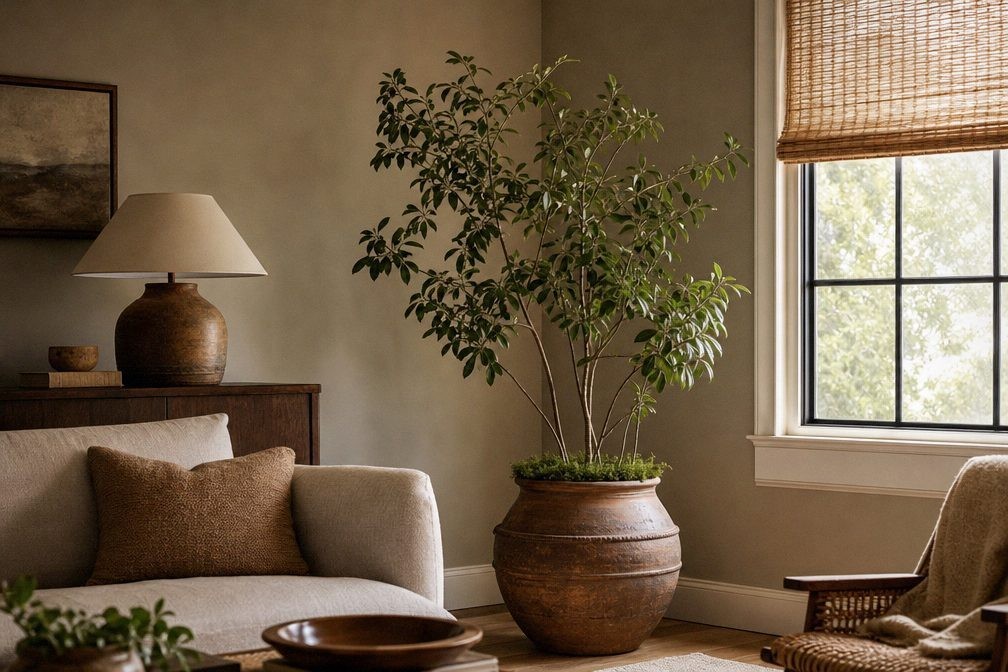
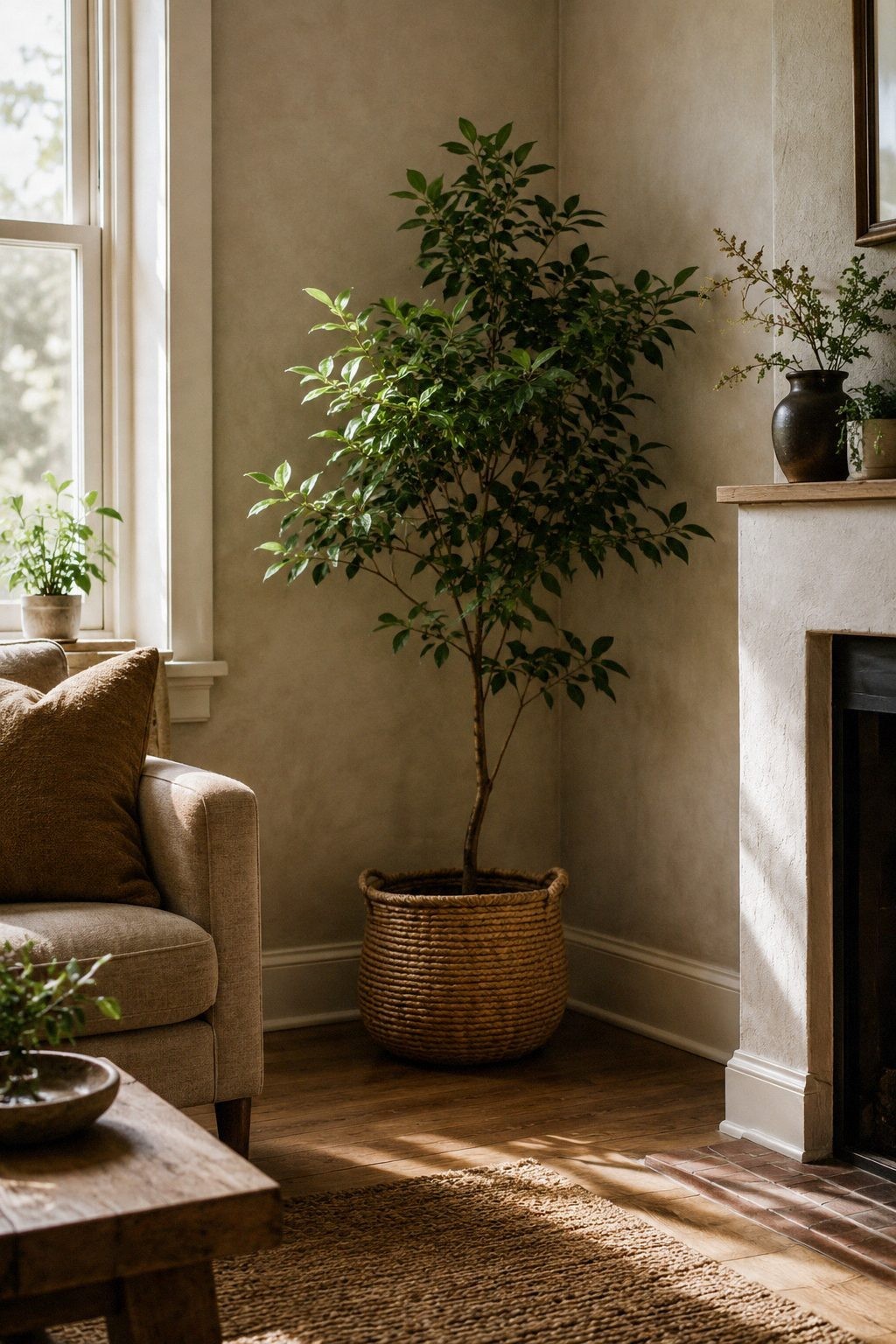
An empty living room corner can make the whole room feel unfinished. Before you add a shelf or another small table, decide what the corner lacks: height, softness, light, or a place to hold something you use.
One plant can solve the first two. The right plant can soften a hard corner and add a vertical line without taking over the room. The wrong plant becomes a pot you have to move every time you vacuum.
Decide what the living room corner needs
Use the view from the sofa and the doorway. If the corner disappears, it needs height. If it blocks a path, it needs a narrower plant or a smaller pot. If the corner is already busy, the plant needs a quiet container and no companion decor.
| What the corner lacks | Better move | What to check |
|---|---|---|
| Height beside a sofa or cabinet | One floor plant with a clear trunk or upright leaves | Ceiling height and mature spread |
| Softness beside a hard wall | A plant with broader leaves in a woven or matte pot | Light reaching the leaves, not only the floor |
| Greenery with no floor space | One trailing plant on a stable shelf | Shelf load, outlet access, and a clean drop |
| A useful landing place | A plant beside one low lamp or small table | Keep the walkway and controls clear |
The corner does not need a matching set. It needs one plant whose shape fits the gap.
Check the indirect light before choosing the plant
Check the actual spot in the morning, around midday, and late afternoon. Window direction is a clue, not a guarantee: trees, blinds, overhangs, and a building next door can change the light at pot height.
The University of Missouri Extension guide to indoor lighting describes low-light houseplant conditions as roughly 50 to 250 foot-candles and notes that the human eye adjusts, so a room can look bright while measuring dim. The University of Illinois Extension lighting guide also recommends judging the place where the plant will sit rather than relying on a label.
How much light does a corner actually give a plant?
Less than the room suggests. Clemson HGIC’s indoor plant factsheet measures home light in the same unit and notes that the interior of a well-lighted home is often under 100 foot-candles, while outdoor light on a clear sunny day can exceed 10,000. That gap is why a corner can look bright and still read as low light to the plant.
For a quick home check:
- Stand where the pot will go and use a light-meter app, if you have one. Record the lowest reading, not the brightest one.
- Use the shadow test at midday. A sharp shadow suggests stronger light; a faint outline suggests a dimmer spot.
- Watch the plant after it arrives. Long gaps between leaves, pale new growth, or a strong lean toward the window mean the placement needs more light.
Low light means less direct sun, not a windowless room. A room with no light needs a grow light or a rotation with a brighter room.
Match the floor plant shape to the gap
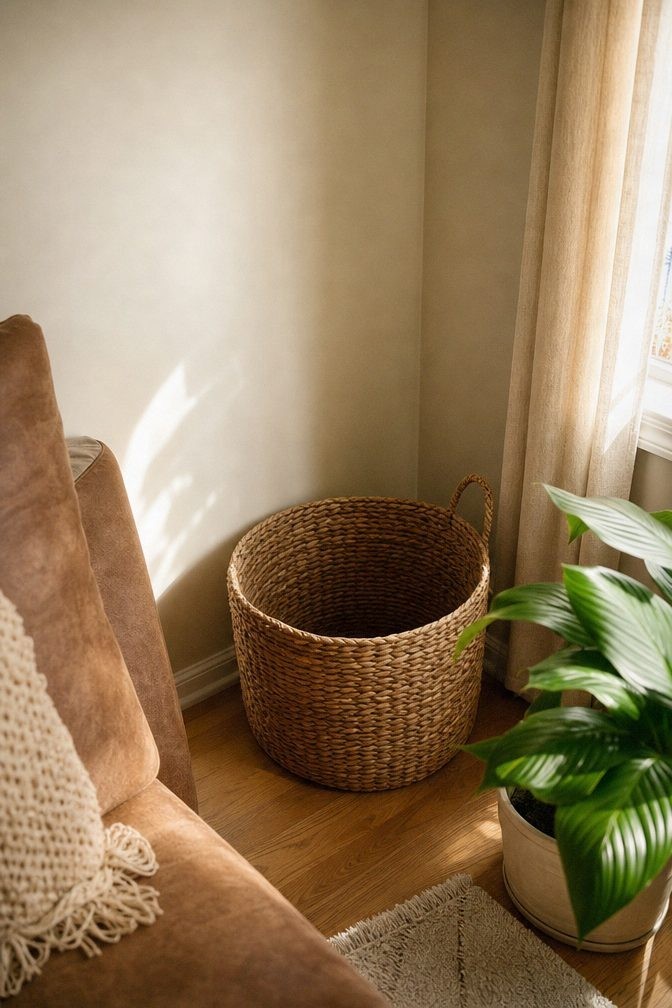
Choose by mature shape first, then by leaf style. A narrow corner beside a chair needs a different plant from a broad corner beside a sideboard.
- For a narrow floor gap: a snake plant or dragon tree keeps its foliage mostly upright. Check the mature width, not only the nursery-pot width.
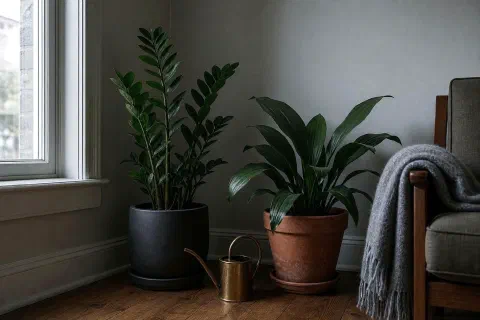
- For a dim corner: a ZZ plant, cast iron plant, or parlor palm can tolerate lower light, though growth may slow. The low-light plant guide covers the tradeoffs and pet-safety checks in more detail.
- For a bright corner: a rubber plant or bird of paradise can carry more visual weight. Leave room for spread and keep leaves away from a hot pane.
- For a shelf instead of the floor: pothos or heartleaf philodendron gives the corner movement without adding another bulky object. Make sure the vines cannot catch on a lamp cord or block a switch.
If you need a plant that reaches six feet, compare height, light, and pet safety in this guide to tall plants for a living room corner. This page is about the corner decision; that guide handles a tall plant as the room’s main vertical anchor.
Set the height without making the corner top-heavy
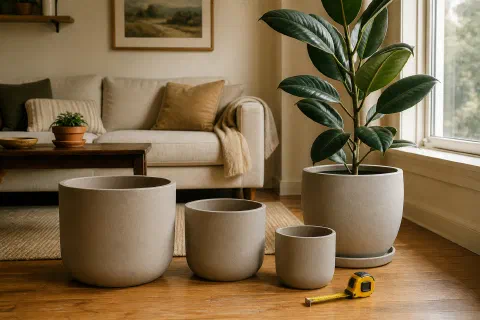
A floor plant should be visible from the main seat, but the pot still needs to feel stable. Measure the ceiling, the pot width, and the distance to the nearest walking path before you shop. A plant that fits only when its leaves are trimmed is the wrong shape for the corner.
If the plant is young, use a low, sturdy stand that cannot wobble when you water it. Keep the plant low enough that a child or pet cannot pull it down, and do not place a heavy pot where it narrows a route around the sofa.
Keep the pot and the floor practical
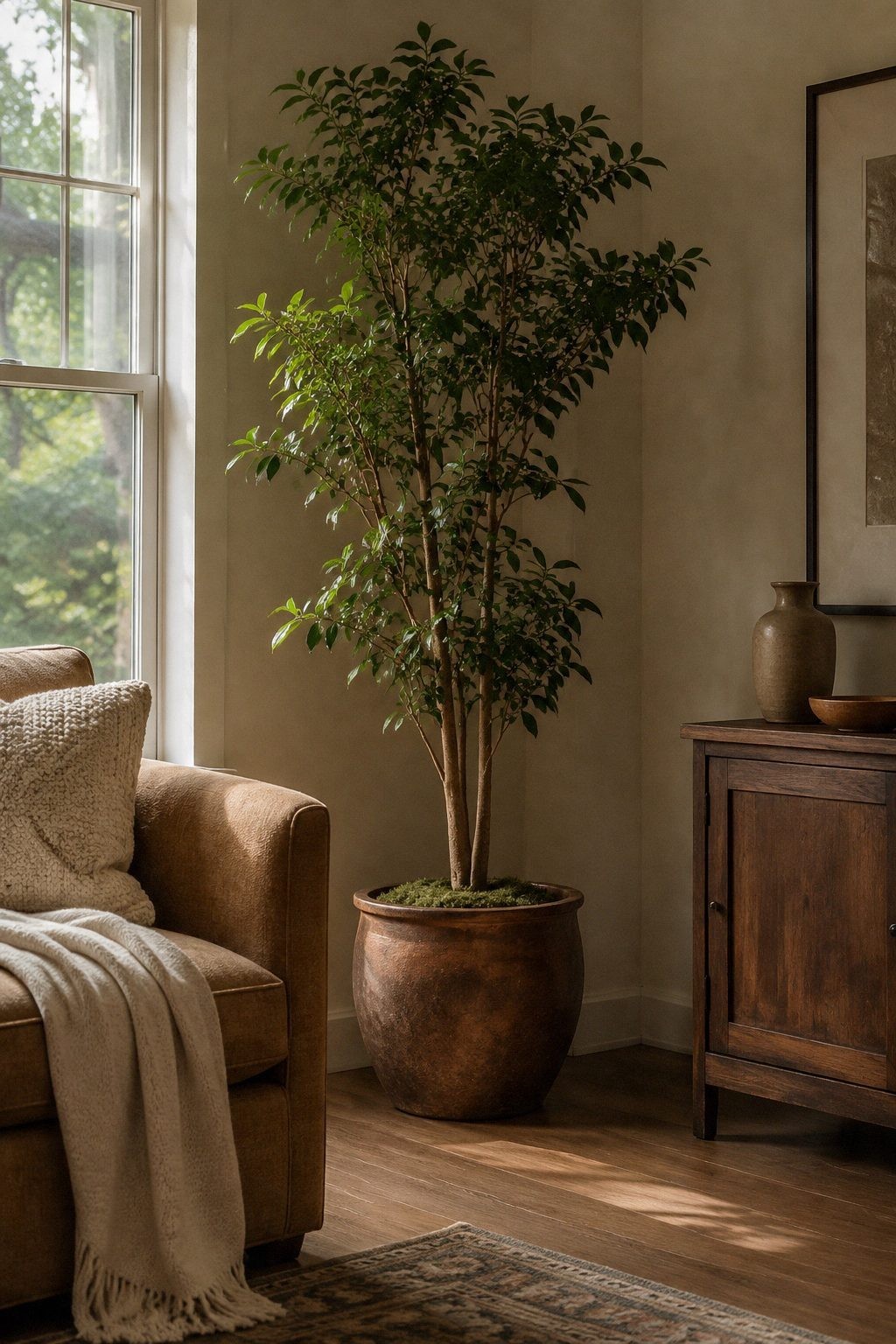
Choose a pot finish that repeats something already in the room: cream ceramic, terracotta, wood, or woven texture. The container should support the plant without becoming a second focal point.
Use a nursery pot with drainage inside the decorative pot. Lift it out to water, let it drain fully, then return it. Empty the saucer so the floor and roots do not sit in standing water. Clemson’s guide to indoor plant containers describes the same double-potting setup and adds the detail people skip: never let a pot sit directly on carpet, wood, or furniture, because trapped moisture damages the surface underneath. The University of Minnesota Extension watering guidance recommends checking the top inch of soil and letting the plant and soil guide watering instead of following a fixed calendar.
Pet safety belongs in this decision too. The ASPCA toxic and non-toxic plant database is searchable by exact common and scientific name. A high shelf reduces access but does not replace checking the plant, especially for a determined cat or a curious dog.
A ten-minute corner setup
- Clear the corner and walk past it with the sofa, door, and lamp in use.
- Measure the open floor width, ceiling height, and distance to the nearest window.
- Check the light at three times of day.
- Choose one plant shape that fits the light and the gap.
- Place the plant with a drainage plan, a stable base, and enough room to water it.
- Live with the corner for a week before adding a basket, lamp, or small table. If it already feels balanced, stop.
Mistakes that make an empty corner harder
- Buying for the photograph and discovering the plant needs a brighter window.
- Choosing a broad plant for a narrow passage because the nursery pot looked small.
- Filling the corner with tiny pots before testing one larger shape.
- Setting a decorative pot directly on wood or fabric without a saucer.
- Adding a stool or lamp that turns a clear walkway into a trip hazard.
- Watering by weekday instead of checking the soil.
The corner should feel easier to use after the plant arrives. If it needs constant rearranging, change the plant’s shape or position before buying more decor.
Sources
- University of Missouri Extension: Lighting Indoor Houseplants
- University of Illinois Extension: Lighting for Houseplants
- University of Minnesota Extension: Spring houseplant care
- Clemson HGIC: Indoor Plant Care and Light Requirements
- ASPCA: Toxic and Non-Toxic Plants
What to Read Next
- Living Room Plants for a Calmer Home: choose a smaller plant mix after this corner has its main anchor.
- Low Light Indoor Plants: compare tolerant plants when the corner stays dim.
- How to Style Tall Indoor Plants in a Living Room: plan a tall plant when height is the problem.
- Indoor Plant Styling Without Clutter: keep the rest of the room from filling up around the new plant.
- Narrow Plant Stands for Apartment Corners: check stand dimensions when the floor gap is tight.