July watering has a way of making good gardeners feel behind. The beds look fine at breakfast, tired by dinner, and dramatic by the next afternoon.
The answer is not always more effort. Raised beds drain fast. Greenhouses heat up. Containers dry from every side. A simple drip setup with a timer can keep the garden steadier than heroic hand-watering.
The easiest July watering setup is a timer, main hose, drip line or soaker hose, mulch, and one weekly check. The goal is slow water at soil level before the bed dries out, not a frantic hose rescue every evening.
Why July Watering Gets Away From You
Hand-watering feels thorough because you are standing there with the hose. But in hot weather, it often wets the top inch and misses the root zone.
Raised beds make this worse. They warm earlier, drain quickly, and dry along the edges. Greenhouse plants can lose moisture faster because heat builds up even when the door is open.
If you are growing in small spaces too, container vegetable garden ideas for small spaces and what to do when container soil keeps drying out too fast are worth reading alongside this setup.
The Simple Drip Layout for Raised Beds
Keep the first version boring.
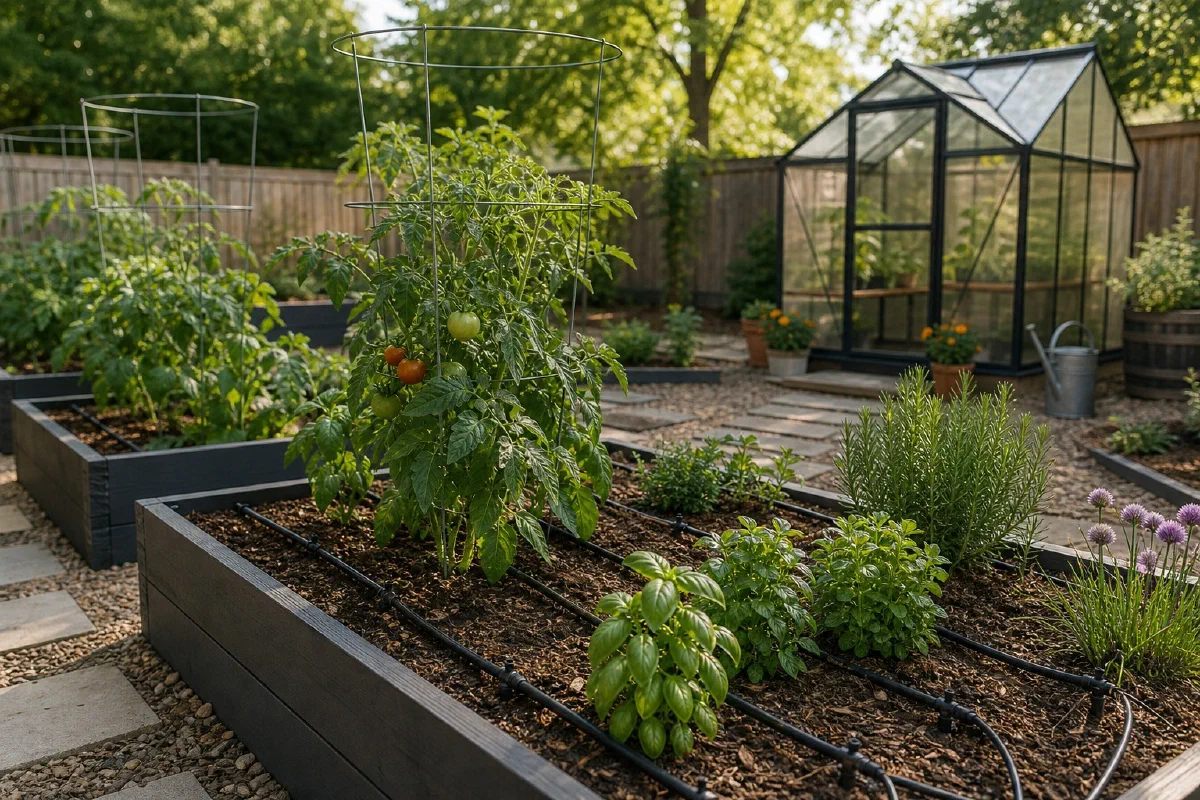
Run one main line along the bed, then use drip tubing or soaker-style lines down each planting row. Place the lines close enough that the root zones overlap, especially for greens, herbs, and closely planted flowers.
For tomatoes, peppers, squash, and larger plants, put emitters near the root zone rather than spraying the whole bed. The goal is slow water at soil level, not wet leaves.
Use garden staples to hold tubing down, then cover the lines lightly with mulch so the sun does not bake them.
How to Set Up a Timer That Does Not Drown the Garden
Start with short, consistent watering and adjust from there.
For many raised beds, 20 to 40 minutes in the early morning a few times per week is a better starting point than a daily sprinkle. Very sandy soil, shallow beds, or heat waves may need more. Heavy soil may need less.
After the first week, dig down two inches after the cycle finishes. If the soil is damp below the surface, you are close. If only the top is wet, run longer. If the bed stays soggy, run less often.
Do not set the timer and disappear for the season. Set it, test it, then tune it.
A vegetable bed wants about an inch of water a week from rain and irrigation together, which is the figure Iowa State Extension’s watering guide gives, so check the rain gauge before you lengthen a cycle.
What Changes Inside a Greenhouse
Greenhouses need a little more attention because heat, airflow, and pot size change everything.
Use separate zones if possible. A greenhouse bench full of pots should not always be on the same schedule as an outdoor raised bed. Pots may need shorter, more frequent watering, while beds need deeper cycles.
Ventilation matters too. If the greenhouse holds heat overnight, the soil may dry faster than expected. Keep airflow moving, group thirsty plants together, and check the pots at the edges first.
For hot-season planting decisions, what to plant in late June for fall color can help you choose plants that are less likely to punish you for missing one watering.
The Mulch Layer That Makes Watering Last
Drip lines work better under mulch. Clemson Extension puts the layer at 2 to 3 inches of pine bark or pine straw to conserve soil moisture, and the same depth works over a drip line in a raised bed.
Use straw, shredded leaves, fine bark, compost, or another garden-safe mulch to shade the soil. Keep it pulled back from stems so plants do not rot at the base.
Mulch slows evaporation, keeps soil temperature steadier, and makes the timer more forgiving. It also makes it easier to see where water is actually reaching the bed.
If your summer garden is meant to support pollinators too, use the same moisture strategy around drought tolerant flowers that still bring color and plants hummingbirds visit every day .
The 5-Minute Check That Catches Problems Early
Walk the system while it runs once a week.
- Start a cycle and watch the far end of each line, where the pressure drops first.
- Look for clogged emitters, disconnected tubing, and puddles that mean a line has slipped out of place.
- Check the dry corners and the pots. Pots dry from every side, so they fail before the bed does.
- Lift the mulch in two or three spots and feel the soil instead of trusting the surface.
- Note anything that is still wilting after a full cycle. That is usually a root problem rather than a water problem.
The whole check takes about five minutes.
The lazy setup still needs attention. It just moves the work from carrying a hose every day to checking a system before plants suffer.
That is a much better trade in July.
Two Mistakes That Cost You Water
Watering the leaves instead of the root zone is the first, and leaving the soil bare is the second. Both show up as a timer that runs longer than it should.
- Wetting the foliage. Roots take up the water and leaves do not. Iowa State Extension’s watering guide says to water the root zone rather than the foliage, and notes that wet foliage is more likely to have disease issues. Drip lines exist to solve this, so let them.
- Skipping the mulch layer. Bare soil in July bakes between cycles, which is how a twenty-minute run turns into a forty-minute one.
Quick Tip: Water in the morning when you can. The bed goes into the hottest part of the day already hydrated, and the surface has time to dry before evening.
What I’d Buy First
- A hose timer if you only buy one thing.
- A basic drip irrigation kit for raised beds or container rows.
- Soaker hose for simple straight beds.
- Mulch and moisture meter if you need better feedback before adding more water.
What to Read Next
- Raised Bed Gardening Without a Construction Project covers the bed itself if yours is still a pile of lumber.
- What to Do When Container Soil Keeps Drying Out Too Fast is the container version of the same problem, and it dries faster than any raised bed.
- Container Vegetable Garden Ideas for Small Spaces helps you match pots and crops before you run drip line to them.
- Drought Tolerant Flowers That Still Bring Color is worth planting if you would rather water less next July than tune a timer.