Every kitchen has one corner that does nothing. Mine is the end of the counter past the stove, the spot too narrow for a real appliance and too awkward for anything to feel intentional. For two years it held mail, a fruit bowl that never had fruit in it, and whatever did not have another home.
The fix was not more storage. It was giving that corner exactly one job instead of letting it collect whatever needed somewhere to land.
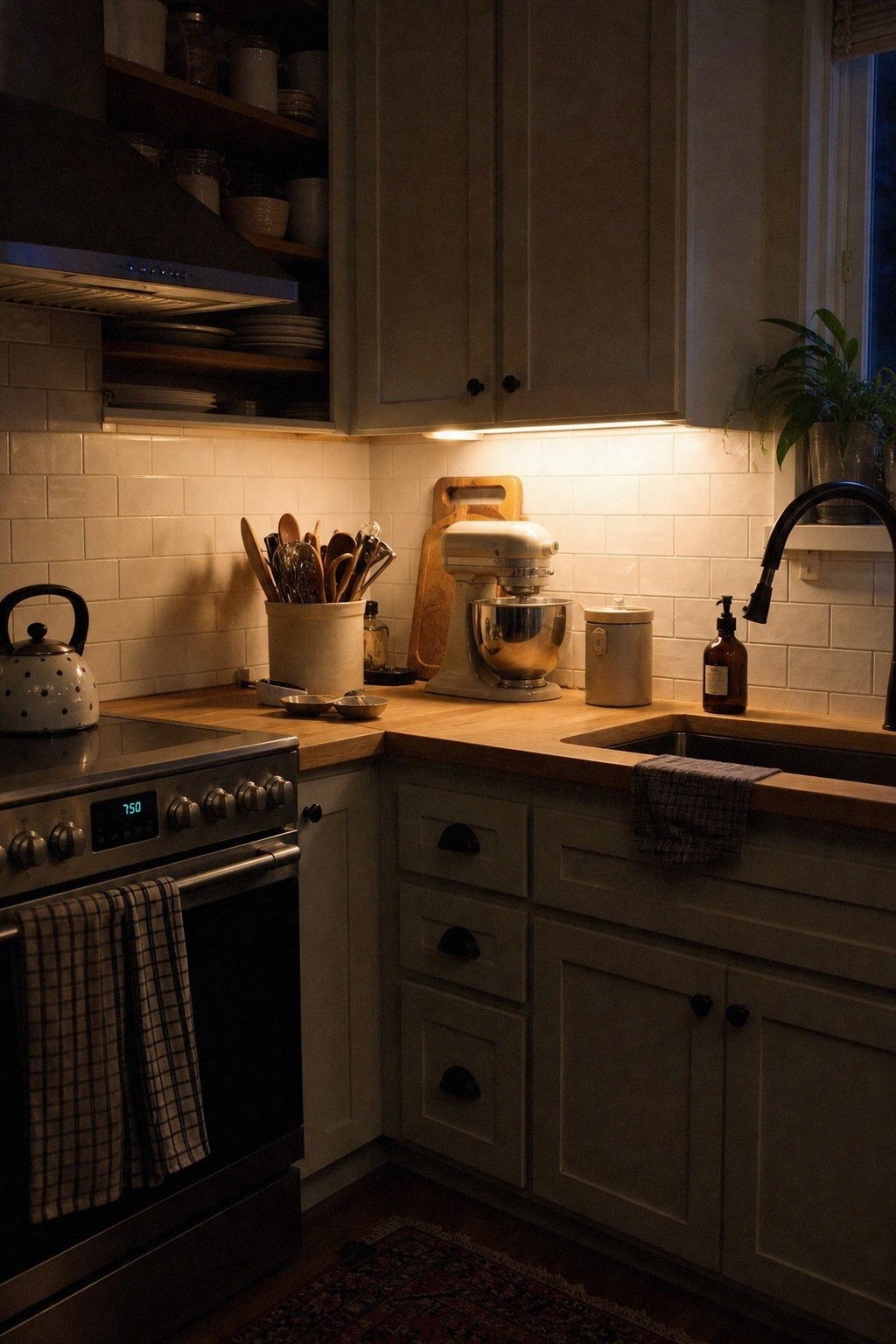
Pick one job for the corner
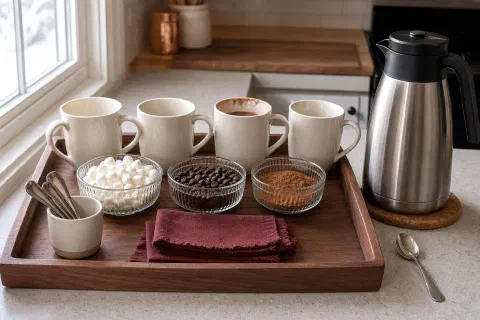
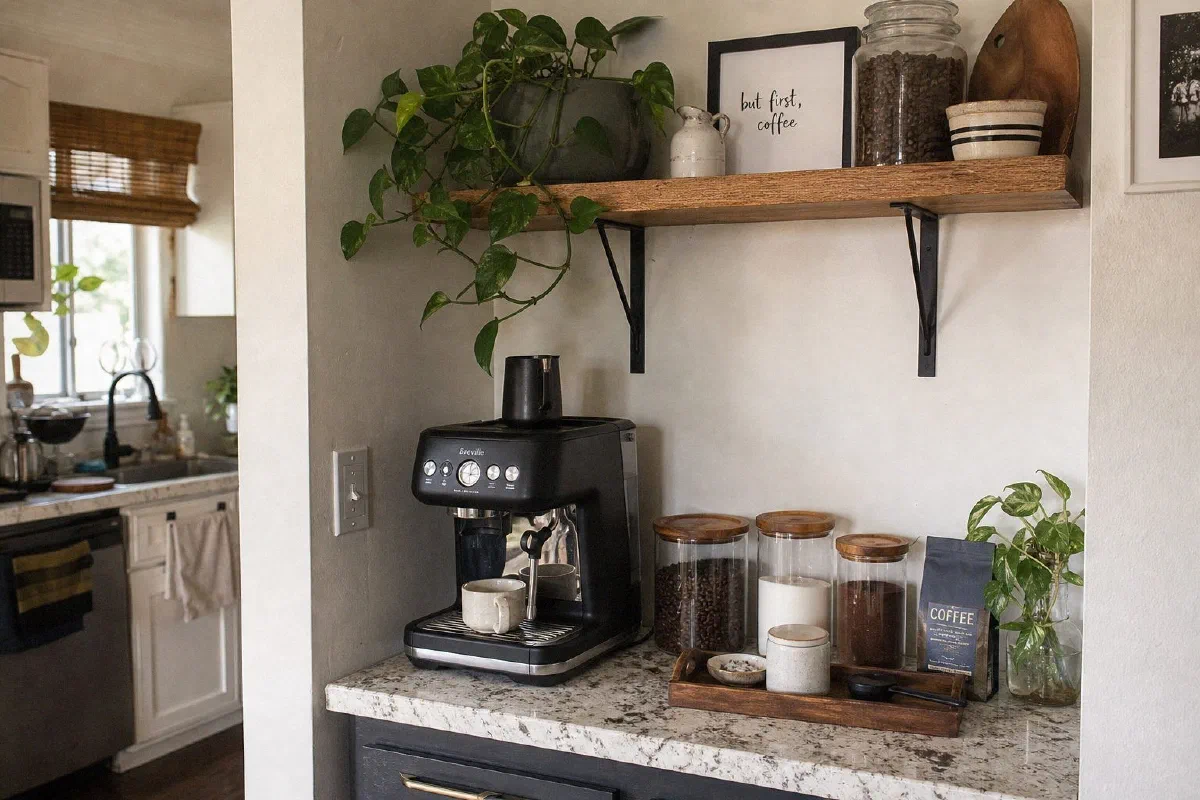
A dead kitchen corner usually works better as one of three things: a coffee and tea station, overflow pantry storage for dry goods that do not fit in the cabinet, or a small prep zone for cutting boards and daily-use tools. Trying to make it all three at once is how it turns back into a catch-all within a month.
Walk through your actual morning and evening routine and notice where you already stand still for a few seconds, reaching for the same two or three things. That is usually the real job the corner should have.
Which Job Fits Your Corner
Pick one, not two. The corner holds up when it has a single job.
| Job | What it needs | Best for |
|---|---|---|
| Coffee and tea station | A tray, two canisters, and the mugs you already reach for | A corner near the kettle |
| Pantry overflow | Clear canisters, one riser, and a shelf for the rest | Dry goods that never fit in the cabinet |
| Small prep zone | A cutting board, the tools you use daily, and clear counter space | A corner beside the stove |
Use canisters and risers, not open bags
Open bags of flour, rice, or pasta stacked in a corner read as clutter no matter how you arrange them. Clear glass or acrylic canisters, even a basic set of four to six in the $20 to $40 range, do two things at once: an airtight lid keeps the contents sealed away from pantry pests, and the same amount of food looks organized instead of stashed. NC State Extension’s stored product pest guide puts the storage rule plainly: store foods in airtight, sealed containers, and use dried goods within two to four months of purchase.
A small two-tier riser under the canisters adds visible storage without adding counter footprint, since it uses the vertical space above the counter instead of spreading out sideways.
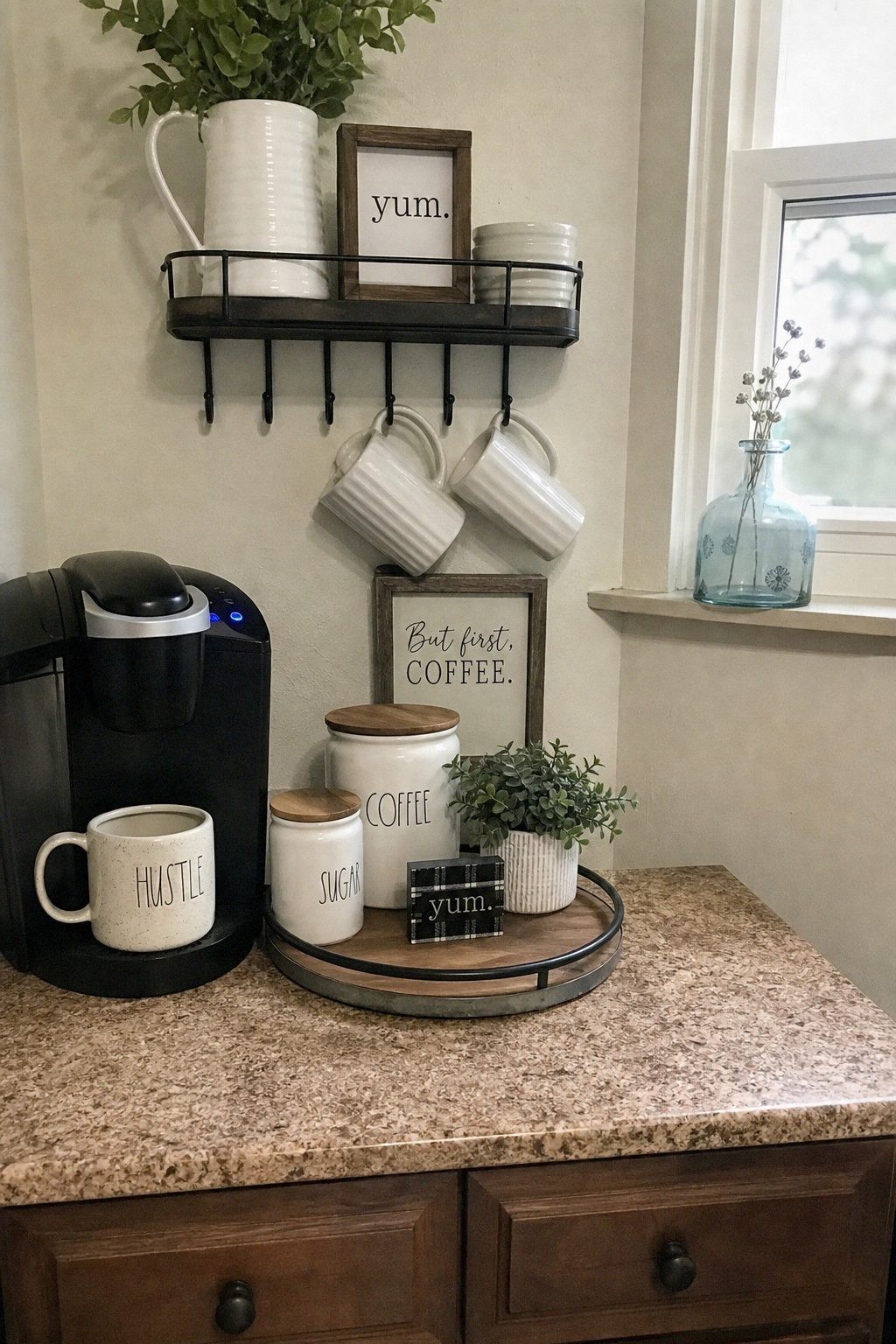
Go vertical before you go wider
A narrow corner rarely has room to add a wider cabinet or cart, but almost every kitchen wall has room for a single floating shelf or a wall-mounted rail with S-hooks. A 12 to 16 inch shelf mounted above the counter holds mugs, small canisters, or cookbooks without taking up any counter space at all.
If the wall is rented and cannot be drilled, a tension-mounted shelf or an adhesive rail rated for kitchen weight can do the same job without permanent holes.
Fix the light before you fix the styling
Corners at the end of a counter often sit just past where the main overhead or under-cabinet light reaches, which makes even a well-organized corner look dim and forgotten. A battery-powered puck light or a plug-in strip light tucked under the nearest cabinet edge solves this in an afternoon, no electrician required.
Warm light, not bright white, will make the same canisters and shelf look intentional instead of like an afterthought that happened to get organized. The numbers back that up: in the DOE’s lighting guidance, 2700K is listed as warm light for homes and libraries, while 4100K is the neat, clean, efficient light of offices and classrooms. That difference is exactly what you are looking at in a corner past the end of the cabinet run.
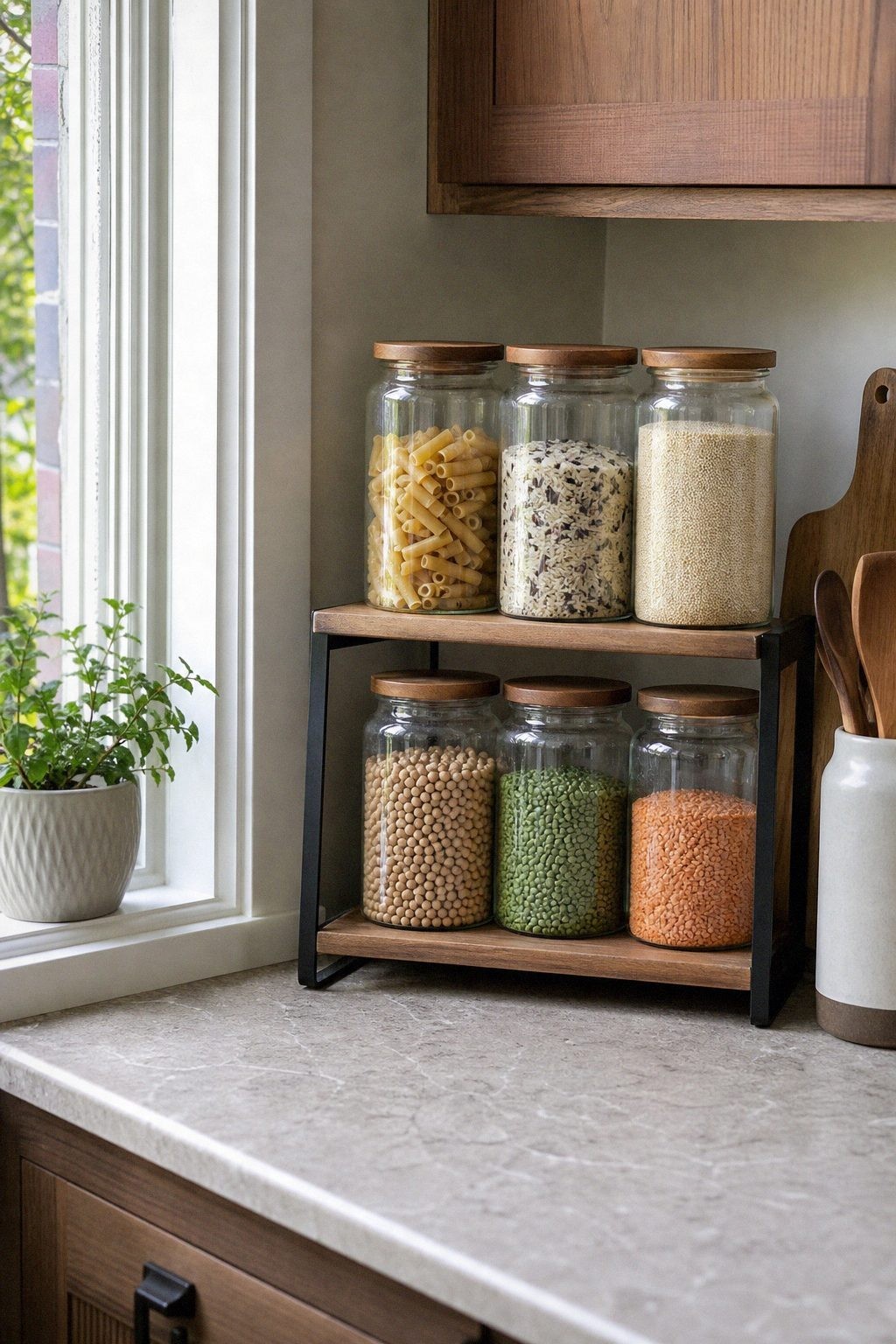
You do not have to fill every inch
A kitchen corner with one riser, a few canisters, and a small shelf above it is finished. It does not need a second riser, a third canister set, or a hanging plant added just because there is still a little space left.
If you keep adding items and the corner starts to feel busy again, that is the signal to stop, not to reorganize further.
The same three moves work on the other awkward corner in most apartments. Six Walmart finds for a small laundry room go vertical, contain the loose stuff, and stop there.
The three-step starting point
- Job: pick coffee station, pantry overflow, or prep zone, not all three
- Storage: clear canisters plus one riser, one wall shelf or rail
- Light: one warm puck light or plug-in strip under the nearest cabinet
Three real changes, done once, hold up longer than a full pantry system that needs constant upkeep.
What to Read Next
- Corner shelf styling that actually gets used if a floating shelf is the part you are still deciding on.
- Seven herb combinations for a kitchen window when the corner you are fixing sits next to glass.
- Cozy apartment ideas for a rental that feels like home for kitchens where you cannot drill a single hole.
- Fall kitchen decor ideas for keeping the corner useful when the season changes what you cook.