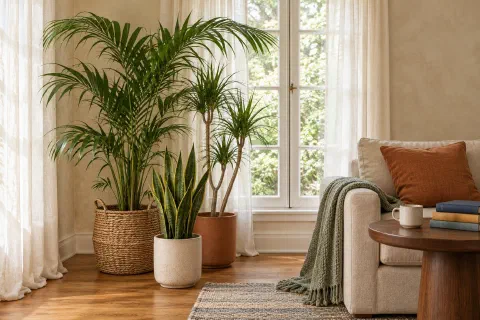
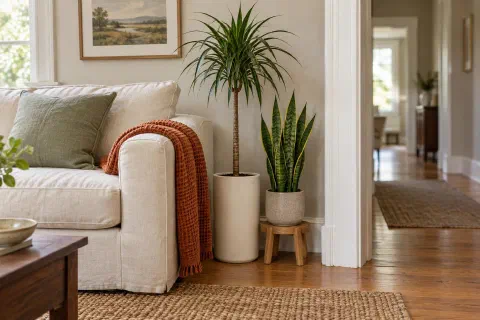
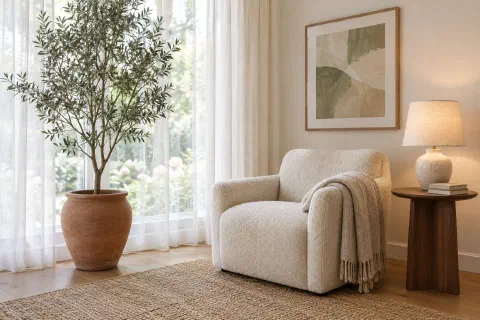
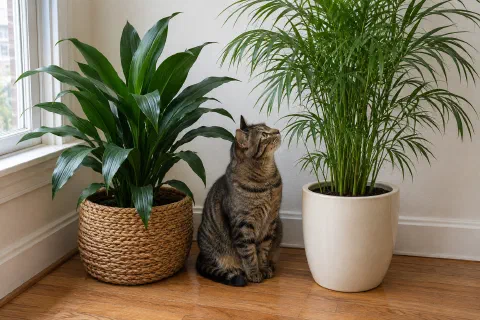
The best indoor plants that look like real trees with a woody trunk and lifted canopy are the rubber tree (Ficus elastica), braided money tree, dragon tree, kentia palm, fiddle leaf fig, live Arbequina olive tree, weeping fig, and umbrella tree. If you want the easiest starter tree, I always point readers to a rubber tree in medium-bright light or a dragon tree in a tighter corner. If you share the room with cats or dogs, go straight to a braided money tree, kentia palm, or sunny olive tree, all verified ASPCA non-toxic.
8 Indoor Plants That Look Like Trees (By Height, Light & Care)
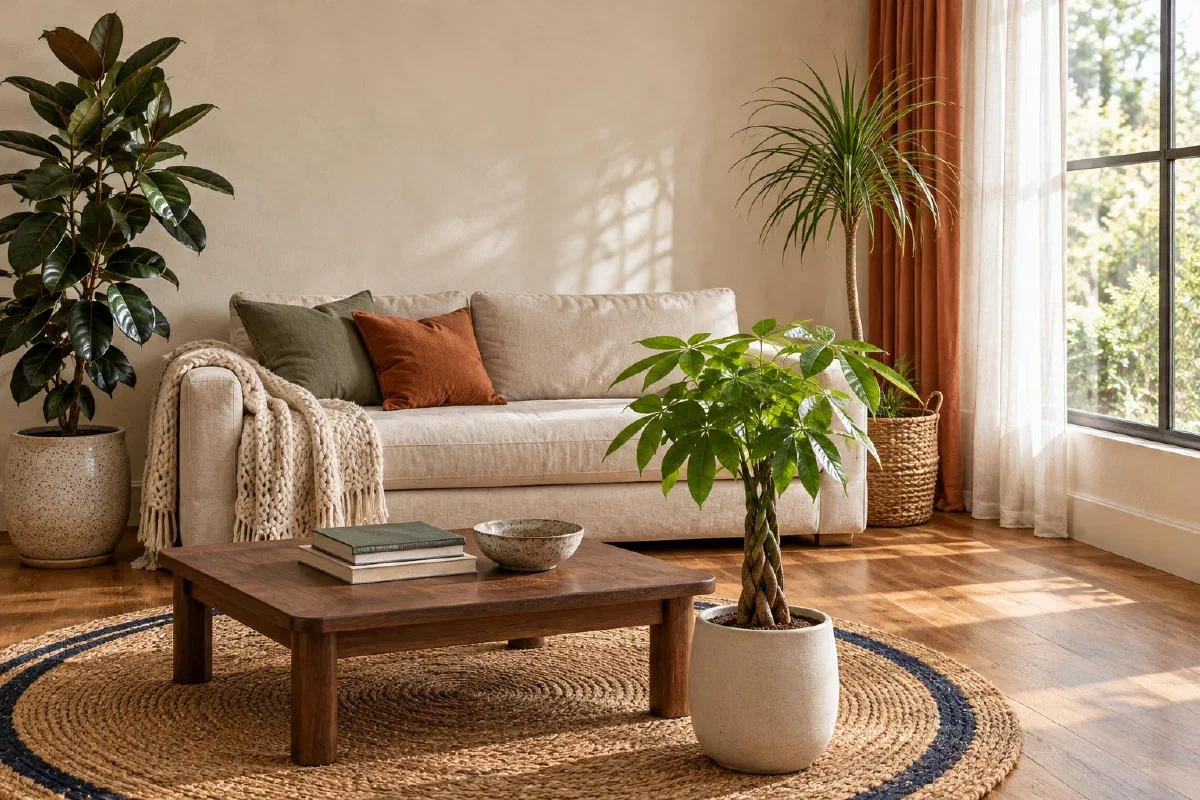
A real woody trunk with a lifted canopy adds height and softness to a living room without crowding the floor.
A real tree silhouette changes a living room faster than almost any piece of furniture because the bare lower trunk keeps the floor open while the leafy crown softens tall blank walls. Below we compare all eight tree-form houseplants side by side for our Indoor Plants Hub, with honest light rules so you never bring a fussy sunny tree into a dim room.
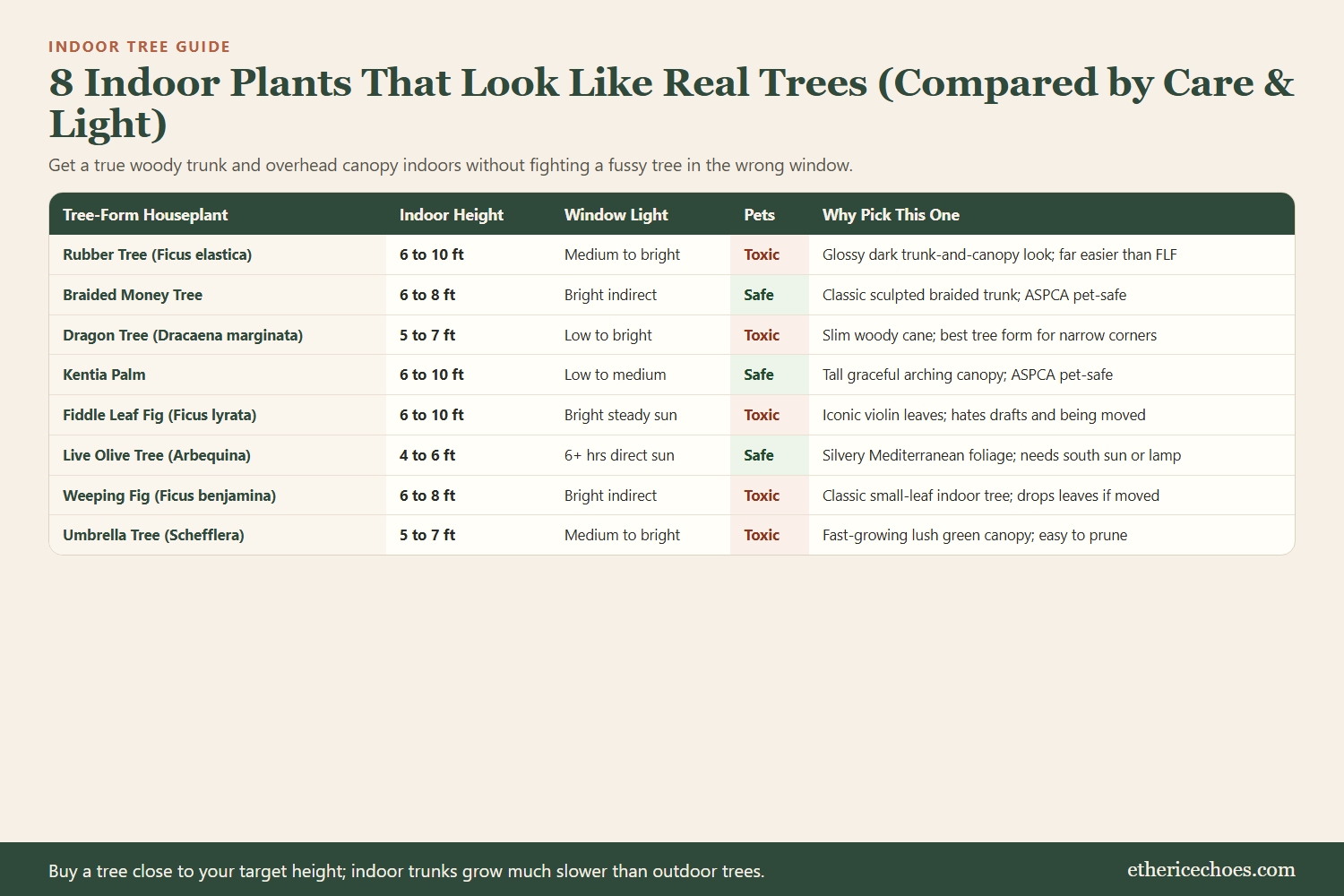
The 8 Best Tree-Like Houseplants Compared
1. Rubber Tree (Ficus elastica): Best Easy Statement Tree
If you love the dramatic tree look of a fiddle leaf fig yet dread its famous mood swings, choose a rubber tree trained as a “standard” (single woody stem branching into a crown up top). Its thick glossy dark-green or burgundy leaves shrug off dry winter heat far better than thin-leaved figs.
- Indoor height: 6 to 10 ft (easily kept at 6 ft by pinching top tips).
- Light: Medium to bright indirect light; deep burgundy leaves hold richest color closer to glass.
- Pet safety: Toxic to cats and dogs.
2. Braided Money Tree (Pachira aquatica): Best Pet-Safe Indoor Tree
With a hand-braided sculptural trunk and an airy bright-green canopy, money tree delivers an unmistakable indoor tree silhouette while staying completely pet-friendly. The ASPCA lists Pachira aquatica as non-toxic to cats and dogs.
- Indoor height: 6 to 8 ft.
- Light: Bright indirect light; rotate a quarter-turn weekly so the canopy stays centered.
- Care tip: Let the top 2 inches dry between deep waterings and never leave standing water in the saucer.
3. Dragon Tree (Dracaena marginata): Best Tree for Tight Corners
Slender woody canes topped with spiky red-edged tufts make dragon tree the easiest indoor tree for narrow gaps beside a sofa or doorway. Because it tolerates lower light than most trees, it holds up well a few feet back from the window.
- Indoor height: 5 to 7 ft indoors.
- Light: Low to bright indirect light.
- Pet safety: Toxic to cats and dogs.
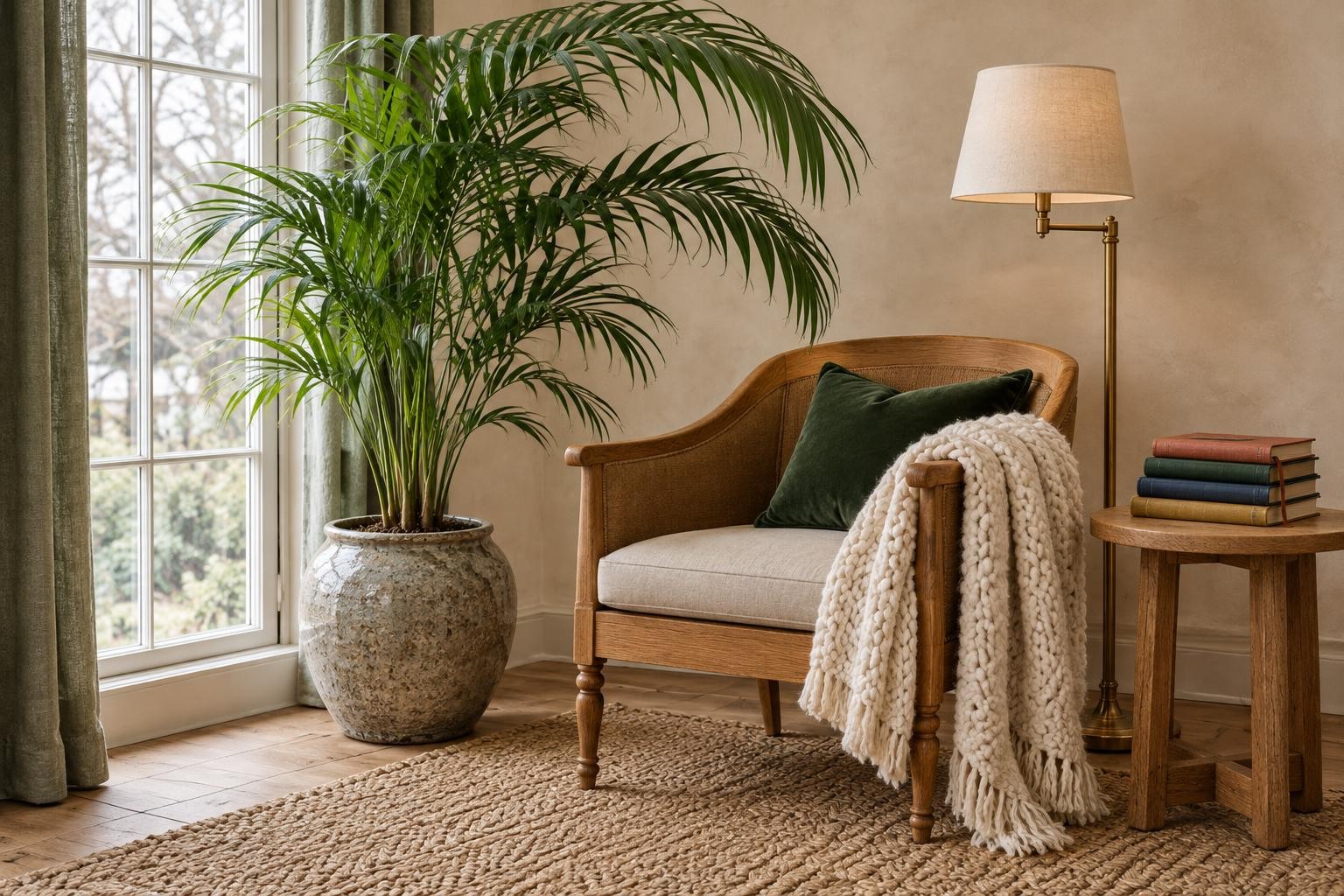
4. Kentia Palm (Howea forsteriana): Best Low-Light & Pet-Safe Tree
Classic Victorian drawing rooms relied on kentia palms for one simple reason: they tolerate dim rooms and cool evenings better than almost any other tall palm. Arching dark-green fronds rise gracefully overhead while keeping the floor uncluttered, and the ASPCA lists kentia palm as non-toxic.
- Indoor height: 6 to 10 ft over many years (slow grower, so buy near your finished height).
- Light: Low to medium indirect light.
5. Fiddle Leaf Fig (Ficus lyrata): Iconic Sculptural Canopy
Deeply veined, leather-textured violin leaves up to 18 inches long make fiddle leaf fig the ultimate designer living room tree, provided you give it bright steady light beside a south or filtered west window and never move it once settled.
- Indoor height: 6 to 10 ft indoors.
- Light: Bright indirect light (avoid cold exterior door drafts and heating vents).
- Pet safety: Toxic to cats and dogs.
6. Live Arbequina Olive Tree (Olea europaea): Sunny Mediterranean Tree
Silver-green leaves on fine woody branches bring effortless warmth to neutral rooms, and olive trees are listed ASPCA non-toxic. The catch is light: a real olive needs at least 6 hours of direct sun (or a dedicated warm pendant grow lamp). If your corner is dimmer, our indoor olive tree guide walks through realistic faux alternatives.
- Indoor height: 4 to 6 ft in containers.
- Light: Full direct south window sun (6+ hours daily).
7. Weeping Fig (Ficus benjamina): Classic Small-Leaf Tree
With arching slender branches covered in hundreds of small glossy oval leaves, weeping fig looks most like an outdoor backyard tree brought inside. Per Clemson Extension, it drops leaves whenever moved or chilled, so pick one bright draft-free spot and leave it put.
- Indoor height: 6 to 8 ft indoors.
- Light: Bright indirect light.
- Pet safety: Toxic to cats and dogs.
8. Umbrella Tree (Schefflera actinophylla): Fast-Growing Lush Canopy
Need a full green canopy fast without spending splurge money on a mature specimen? Umbrella tree grows rapidly into an upright indoor tree with glossy spoked leaves and handles light spring pruning gracefully.
- Indoor height: 5 to 7 ft indoors.
- Light: Medium to bright indirect light.
- Pet safety: Toxic to cats and dogs.
4 Buying & Styling Rules for Real Indoor Trees
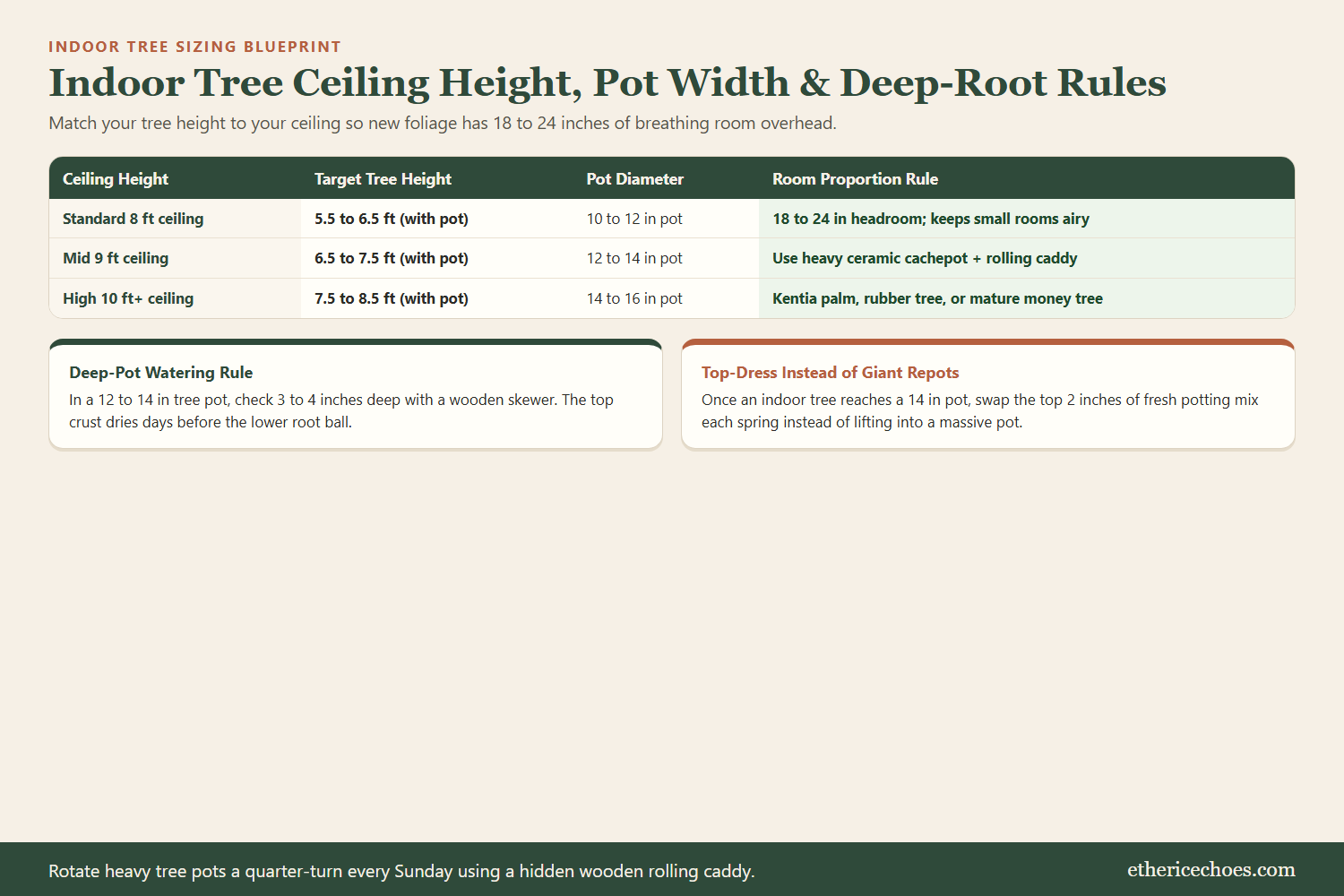
- Leave 18 to 24 inches of ceiling headroom: Under an 8-foot ceiling, aim for a 5.5- to 6.5-foot tree (pot included) so new top leaves open naturally.
- Use a heavy outer planter or rolling caddy: Tall trees get top-heavy. Slide the plastic nursery pot on a waterproof saucer inside a heavy ceramic or stoneware pot, and set extra-large pots on a hidden wooden rolling caddy so weekly turning takes two seconds.
- Check root moisture 3 to 4 inches deep: Large 12- and 14-inch tree pots stay wet at the bottom long after the top crust dries. Push a long wooden skewer or battery-free moisture probe down deep before watering.
- Keep tree canopies out of heating vents: Forced-air heat blasts dry air directly up through indoor tree leaves in winter. Check our winter indoor plant care guide if your tree starts shedding leaves in November.
Frequently Asked Questions About Indoor Tree-Form Plants
How do I make a floor plant grow more like a tree?
Buy a “tree-form” or “standard” nursery specimen with a single bare lower stem, or gently prune off the lowest side leaves on a young rubber tree or umbrella tree in spring while staking the main stem straight upward.
Can an indoor tree live in a room with only a north-facing window?
Only kentia palm and dragon tree hold steady long-term in true north-facing light without supplemental lighting. For any other indoor tree in a north room, pair it with a warm 3000K decorative living room grow light.
How often should you repot a large indoor tree?
Usually only every 2 to 3 years in spring. Once a tree reaches a 14- to 16-inch pot, you can refresh the top 2 inches of potting mix each spring (“top-dressing”) instead of wrestling a massive root ball into a heavier pot.
Sources
- NC State Extension Plant Toolbox: Ficus elastica, Pachira aquatica, Howea forsteriana: indoor tree size, light, and moisture needs.
- Clemson HGIC: Weeping Fig (Ficus benjamina): leaf-drop triggers and indoor acclimation.
- ASPCA Toxic and Non-Toxic Plants Database: pet safety checks by botanical name.