The best indoor plants for a west-facing window depend on whether the pot sits right on the hot afternoon sill or 3 to 5 feet back in the room. Directly against unshaded west glass, I stick to sun lovers like jade plant, aloe vera, echeveria, rosemary, and snake plant. Pull pots back 3 to 5 feet (or hang one airy sheer curtain), and a west room becomes prime real estate for rubber trees, braided money trees, bird of paradise, and fiddle leaf figs.
Indoor Plants for a West-Facing Window: 10 Picks by Sun Zone
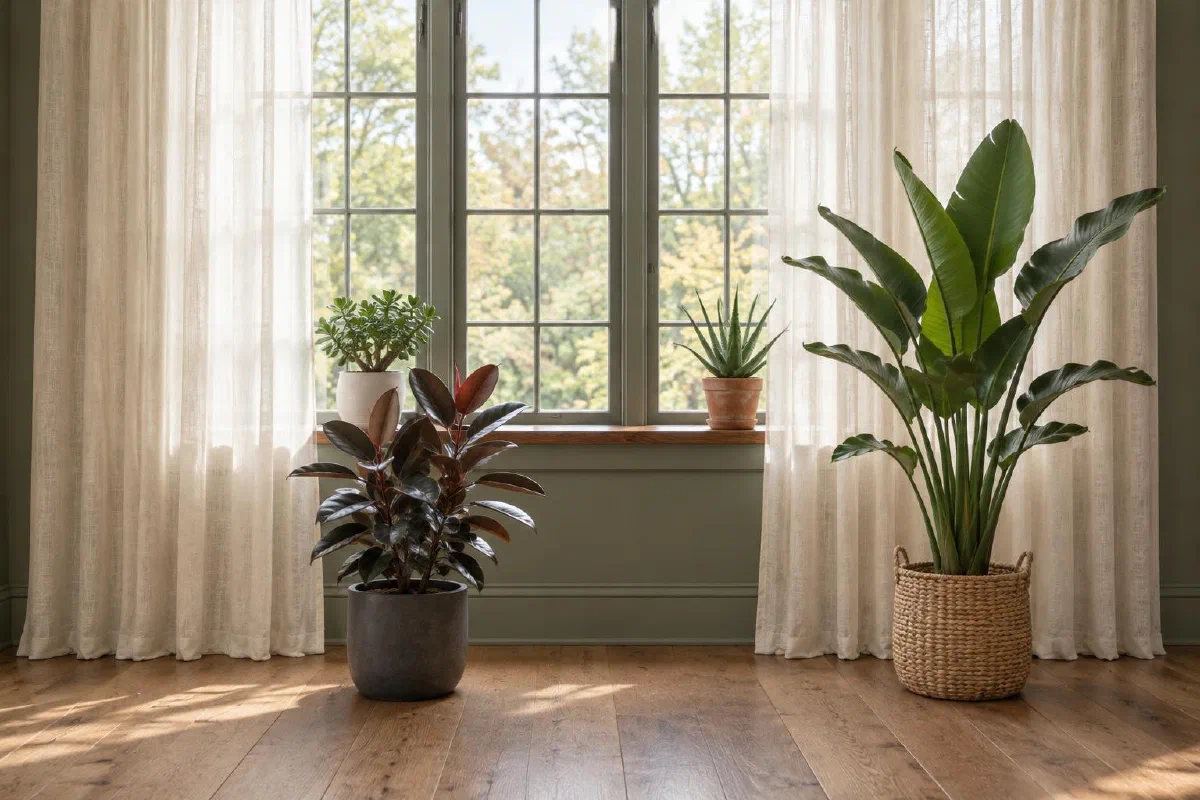
A single sheer linen curtain turns harsh 4 PM west-window sun into prime bright indirect light for tropical foliage.
West-facing rooms fool a lot of plant owners because they feel dim and cool at 9 AM, then bake with intense, low-angle afternoon sun between 2 PM and 6 PM. When we map window rooms for our Indoor Plants Hub, we split every west-facing room into three simple zones so tropical leaves never sunburn and sun-lovers never stretch.
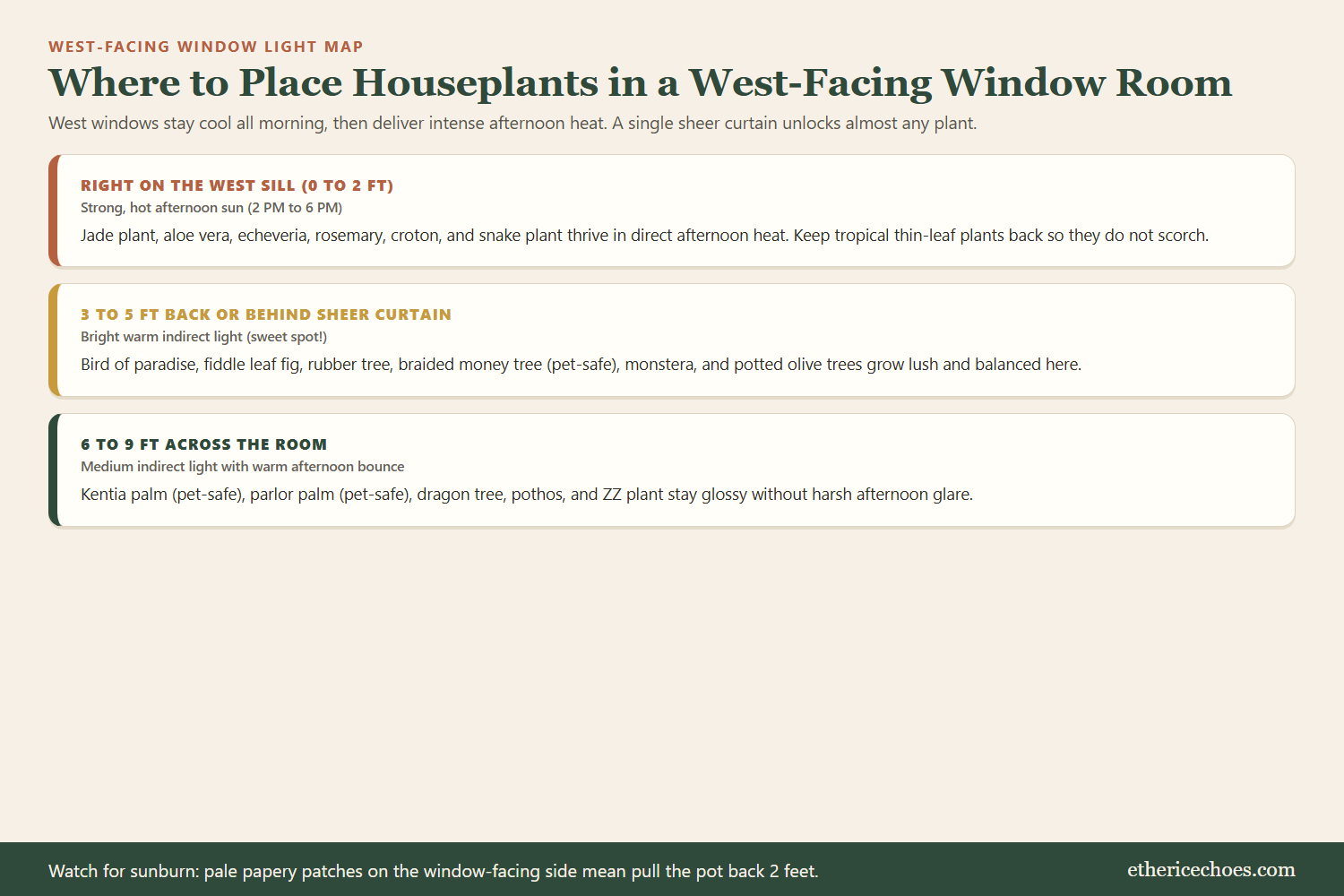
Zone 1: Right on the West Sill (0 to 2 Feet From Glass)
These four picks love 3 to 5 hours of direct afternoon sun and actually lose their compact shape if tucked into darker corners.
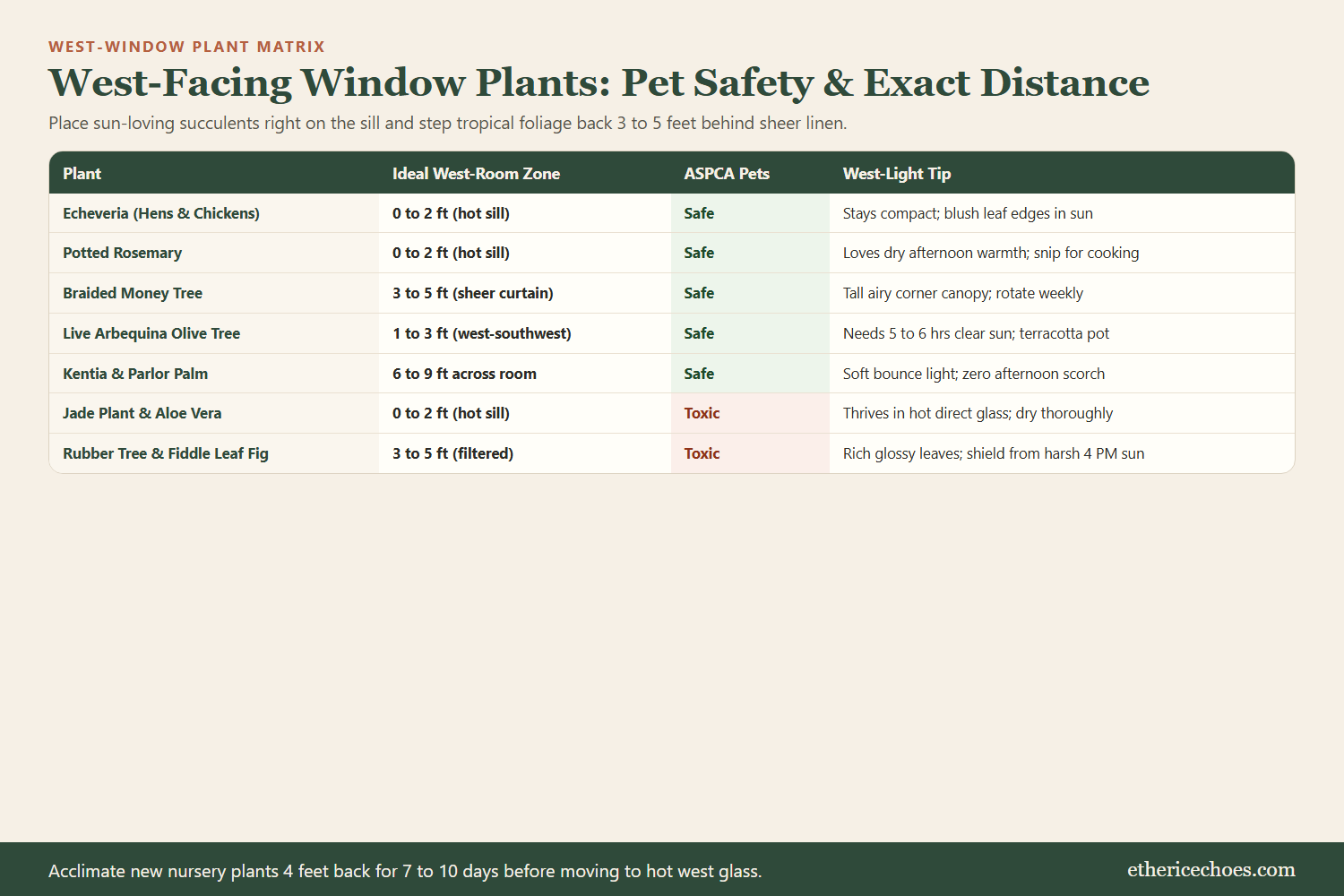
| Plant | Size | Pet Safety (ASPCA) | Watering Cue |
|---|---|---|---|
| Echeveria (Echeveria elegans) | 6 to 8 in rosette | Non-toxic (Hens & Chickens) | Dry thoroughly between waterings |
| Potted Rosemary (Salvia rosmarinus) | 12 to 24 in | Non-toxic | Top inch dry; never soggy |
| Jade Plant (Crassula ovata) | 1 to 3 ft | Toxic to cats & dogs | Dry completely; plump leaves store water |
| Aloe Vera (Aloe barbadensis) | 1 to 2 ft | Toxic to cats & dogs | Dry completely; fast-draining terracotta |
- Echeveria & compact succulents: Intense afternoon sun brings out soft rose and blush leaf edges instead of stretched green stalks.
- Potted rosemary: Most indoor culinary herbs limp along in winter, yet a sunny west kitchen sill gives rosemary the dry warmth and afternoon sun it craves.
- Jade plant & aloe vera: Pair both with unglazed terracotta pots so roots dry quickly between deep waterings.
Zone 2: 3 to 5 Feet Back or Behind a Sheer Curtain
This is the sweet spot of a west-facing living room. Hanging a single sheer cream linen curtain cuts midday glare while keeping the room bright enough for statement floor trees.
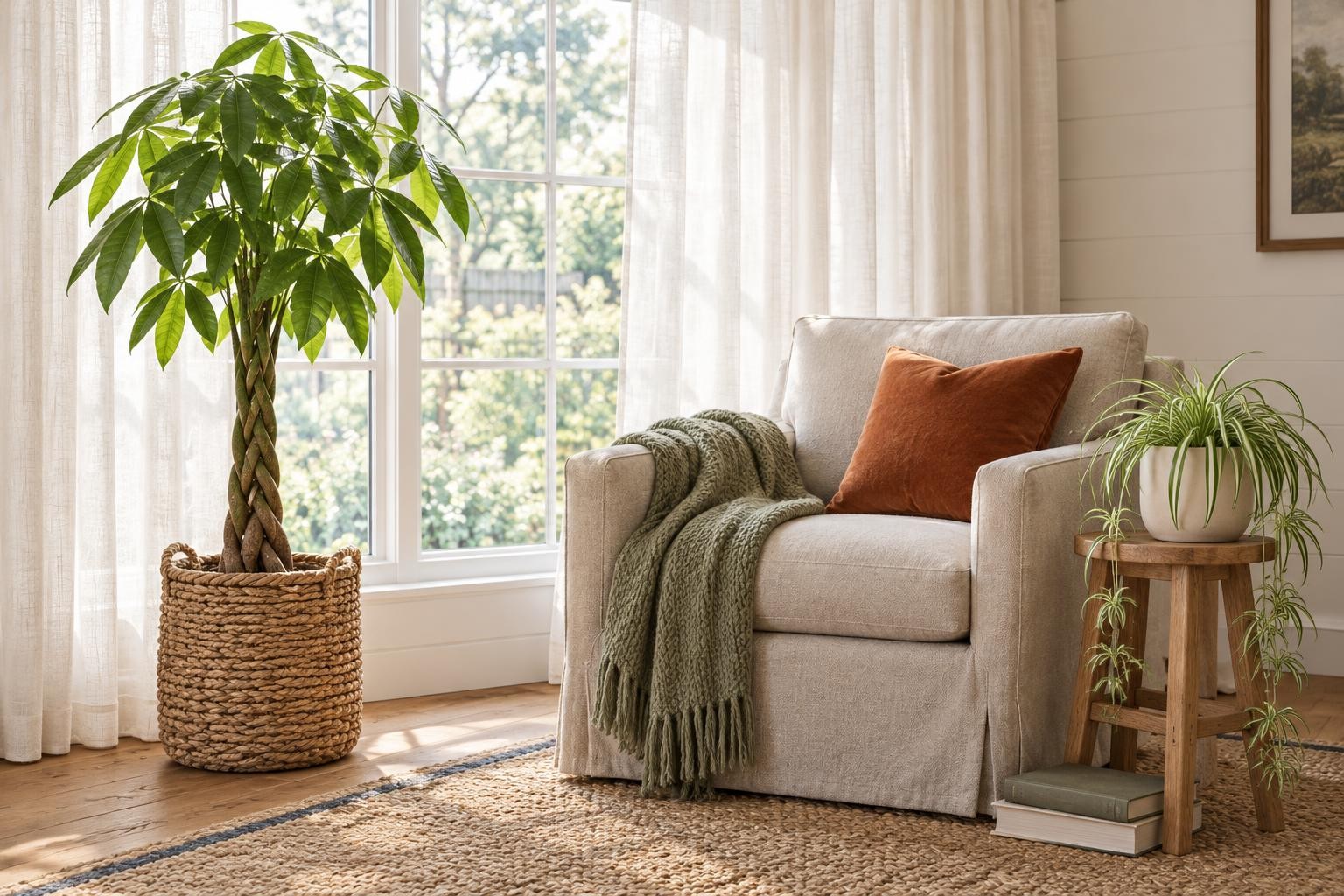
- Rubber tree (Ficus elastica): Thick burgundy and dark-green leaves hold richer pigment here than in dim rooms. Let top 2 inches dry between waterings (toxic to pets).
- Braided money tree (Pachira aquatica): One of our favorite ASPCA non-toxic tall picks for west corners. Rotate a quarter-turn weekly so the canopy stays upright.
- Bird of paradise (Strelitzia nicolai): Loves warm bright west light and rewards you with huge sculptural paddle leaves when kept out of tight hallways (toxic to pets).
- Fiddle leaf fig (Ficus lyrata): Pick one steady spot 3 to 4 feet back from west glass, keep away from vents, and leave it alone (toxic to pets).
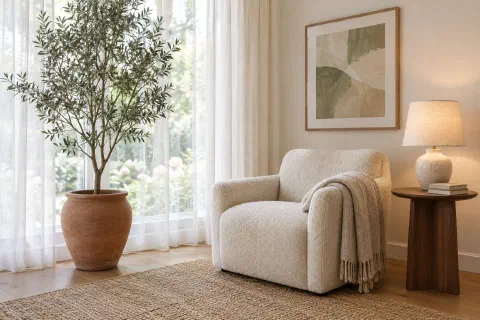
- Live Arbequina olive tree (Olea europaea): If your west window also leans slightly south with 5 to 6 hours of clear sky, a compact olive tree (ASPCA non-toxic) holds steady here. See our indoor olive tree guide for the noon sunbeam check.
Zone 3: Across the Room (6 to 9 Feet From West Glass)
Six to nine feet away from a west window, the afternoon bounce light feels calm and gentle, ideal for medium-to-low-light plants that would fry on the sill:
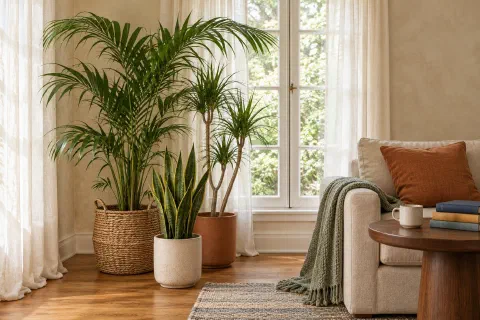
- Kentia palm (Howea forsteriana): Graceful, slow-growing, and ASPCA non-toxic up to 8 to 10 feet tall.
- Parlor palm (Chamaedorea elegans): Compact, feathery, and ASPCA non-toxic for shelves or smaller corners.
- Dragon tree (Dracaena marginata): Slim 6-foot vertical silhouette for tight walls (toxic to pets).
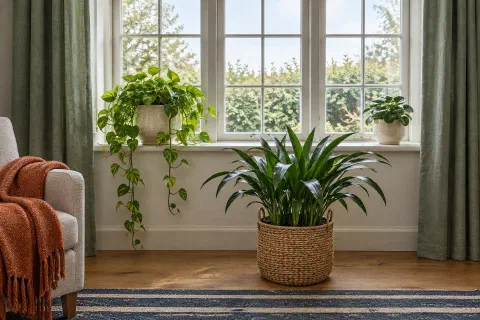
- Golden pothos & snake plant: Both stay fuller and keep brighter leaf striping across a west room than in a dim north hallway (both toxic to pets).
3 West-Window Mistakes to Avoid
- Setting a new nursery plant straight onto the hot sill on day one: Greenhouse-grown plants acclimate best over 7 to 10 days. Start 4 feet back and inch closer to the glass so tender leaves do not blister.
- Ignoring afternoon summer heat behind closed blinds: Closed dark blinds trap oven-like heat right against window sills. Keep plants in front of open sheer curtains instead of pinched between blinds and hot glass.
- Forgetting to rotate tall stems: Strong directional 4 PM light pulls trunks sideways fast. Give every floor pot a quick quarter-turn every Sunday.
Frequently Asked Questions About West-Facing Window Plants
Can a monstera sit in a west-facing window?
Yes, set 3 to 5 feet back from the glass or diffused by a sheer curtain. Direct unshaded afternoon sun right on the glass can scorch broad monstera leaves with pale papery patches.
What hanging plants work in a west-facing window?
String of pearls (toxic to pets), burro’s tail sedum (ASPCA non-toxic), and hoya wax plant (ASPCA non-toxic) love bright west glass. Hang spider plant or pothos slightly to the side of the frame or behind a sheer curtain so leaves stay crisp green.
How does west light compare to east or north windows?
East windows deliver cooler, gentler morning sun that rarely burns foliage. North windows provide cool indirect light all day with no direct sunbeams. West windows combine cool mornings with the hottest direct indoor sun of the afternoon.
Sources
- University of Missouri Extension: Lighting Indoor Houseplants (G6515): window orientation and indoor foot-candle intensity.
- Clemson HGIC: Indoor Plants Light Requirements: sunburn prevention and indoor exposure bands.
- NC State Extension Plant Toolbox: money tree, rubber tree, and parlor palm cultural needs.
- ASPCA Toxic and Non-Toxic Plants Database: pet safety checks by Latin name.