Hygge is not a shopping list.
The pinned versions usually involve buying linen, a sheepskin throw, a brass candleholder, and a stack of expensive matches. The actual practice is mostly about lighting and rhythm. Most of the items on this checklist are already in the house. The work is rearranging what is there and changing a few habits.
These twelve small changes cost almost nothing. Each one fits into an evening or a weekend. The order matters, because the early ones change the room more than the later ones. Start at the top and stop when the house feels right.
| Change | What it costs | What it fixes |
|---|---|---|
| Overhead light off after sundown | Two warm bulbs | A room that still reads like mid-afternoon at 8pm |
| Wool throw on the most-used chair | Nothing, if one is in a closet | A chair that looks cold and unfurnished |
| One ceramic mug | One mug | A thin glass or a travel mug at tea time |
| One candle at dinner | One unscented pillar | A kitchen that jumps straight from day to night |
| Three books within reach | Nothing | A chair with nothing to do in it |
| One mug coaster | A coaster | Rings on the side table |
| One plant closer to the chair | Nothing, if you already own one | A room with no green in it |
| One soft rug where the feet land | A small wool rug or sheepskin | Cold, hard floors underfoot |
| Phone-free hour in the evening | Nothing | An evening chopped up by notifications |
| Wool or cotton tea towel | One towel | A counter that reads purely functional |
| One framed photo on the side table | A small frame | A room that looks like a catalog page |
| Pouring the tea slowly | Nothing | An evening with no line between work and rest |
1. Switch the Overhead Light Off After Sundown
The single biggest hygge move is turning off the overhead light when the sun goes down.
Overhead lights run cool and bright. They mimic mid-afternoon, which is the wrong signal at 8pm. A room lit by one or two warm lamps reads as evening. The brain registers the difference. The room slows down because the light slowed down.
Buy two warm-white bulbs at 2700K or warmer for the lamps that are already in the room. If you want the number to mean something before you buy: 2700K is the color temperature the DOE’s bulb guidance lists as warm light for homes, at the warm end of the scale rather than the middle. Use the lamps. Leave the overhead off. This is the change that does the most work.
2. Put a Wool Throw on the Most-Used Chair
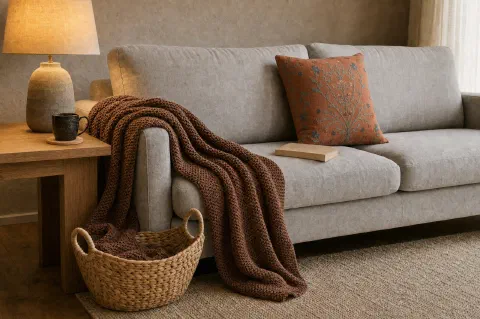
A wool throw folded across the arm of the chair that gets sat in every evening is the second biggest move.
Wool, not cotton or polyester. The weight of wool is part of what reads cozy. It also stays warm without needing to be heavy. A throw in cream, oat, or warm clay tones works with any palette. Avoid bright colors and patterns, they fight the warm lamp light.
Most houses already have a wool blanket folded in a closet somewhere. Pull it out. Drape it across the arm. Leave it there.
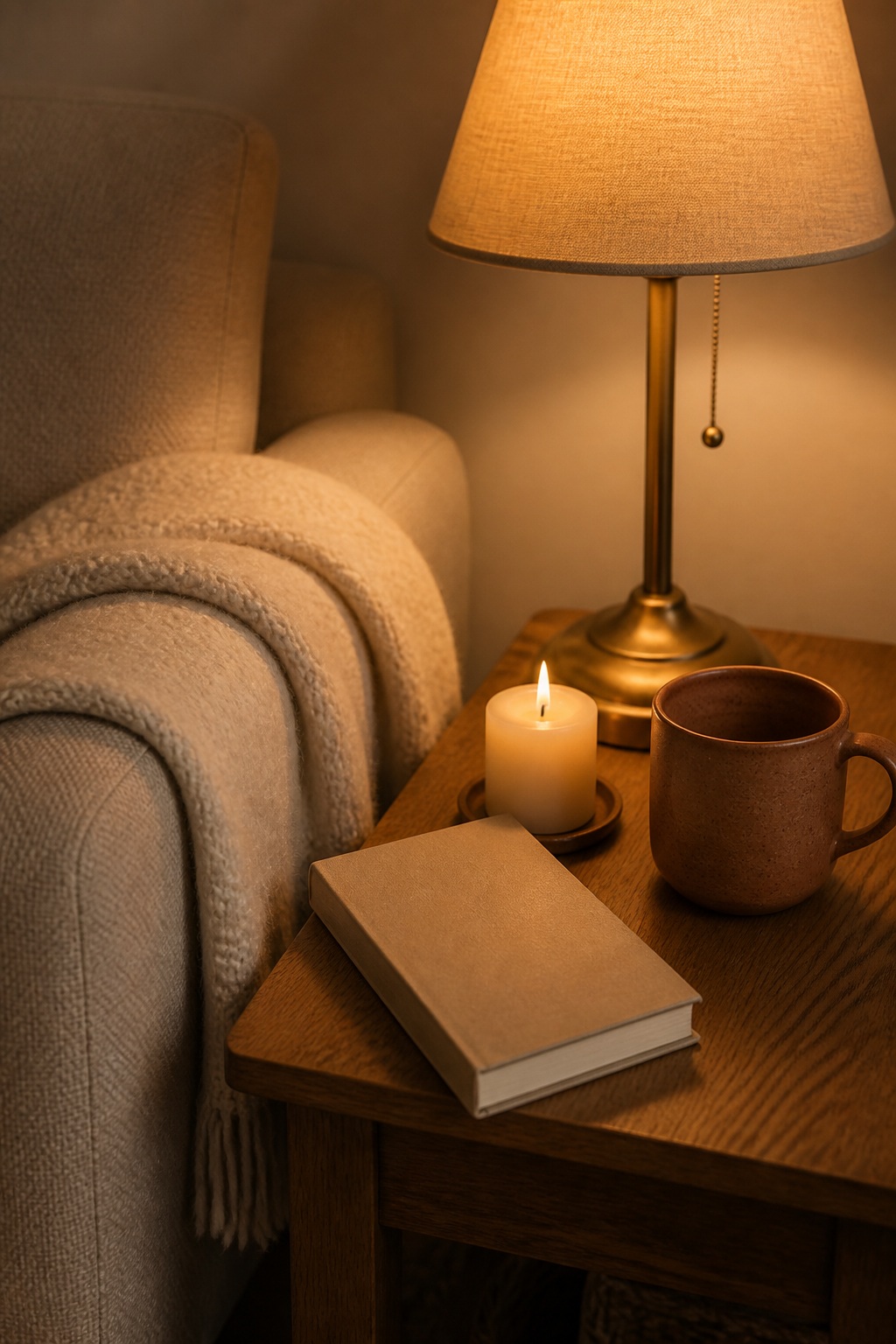
3. Replace One Mug With a Ceramic One
The cup that holds the evening tea or coffee matters more than expected.
A thin glass or a paper-walled travel mug reads functional. A heavy ceramic mug with a real handle reads hygge. The weight in the hand is part of the experience. A small ceramic mug in cream or warm clay tone, kept on the kitchen counter and used every evening, makes the routine feel different.
This is not about replacing all the mugs. Just one. The one that gets used in the evening.
4. Light One Candle When Dinner Starts
A single lit candle on the kitchen counter or the dining table changes the whole room.
Light the candle when dinner prep starts. Let it burn through the meal and the dishes. Blow it out before bed. The candle does not need to be expensive, an unscented pillar in cream or beeswax tones is enough. Scented candles fight food smells. Save the scented ones for the bathroom or the bedroom.
The candle becomes a small daily ritual. After a week of it, the absence of the candle on a busy night feels off. For that same low glow across the whole seating area, a living-room electric fireplace can run the flame without another thing to blow out before bed.
5. Stack Three Books Within Reach of the Chair
A small stack of books on the floor beside the chair, on the side table, or on a low shelf within arm’s reach is part of the hygge setup.
The point is not to read them all. The point is to have them there. The choice of book at the moment of sitting down is part of what makes the chair the chair. Three books is the right number: a fiction, a nonfiction, and something old that gets reread. More than three reads cluttered. Fewer than three reads under-furnished.
The books rotate slowly. Swap one out every couple of weeks. The stack stays alive.
6. Find One Mug Coaster
A small wooden coaster, a cork coaster, or a single ceramic tile beside the chair is what keeps the side table from getting ringed.
Hygge falls apart fast when the side table gets coffee rings. The coaster solves it. One coaster on the side table beside the favorite chair, where the mug actually lands every evening, is enough.
This is the smallest item on the list and the one most often skipped. The room reads put-together or not based on whether the coaster is there.
7. Move One Plant Closer to the Chair
A single houseplant within sight of the chair softens the room.
The plant does not have to be tall or expensive. A small trailing pothos on the shelf above the chair, a snake plant on the side table, or a small herb pot on the windowsill nearby all work. The green of the plant balances the warm tones in the room. The presence of something living changes how the room feels at a level below conscious notice.
If the room has no plant, get one small one. A pothos or a snake plant is the forgiving pair to start with, and both sit in the low-light group in Clemson HGIC’s indoor plant light guide , which means a corner away from the window is still workable.
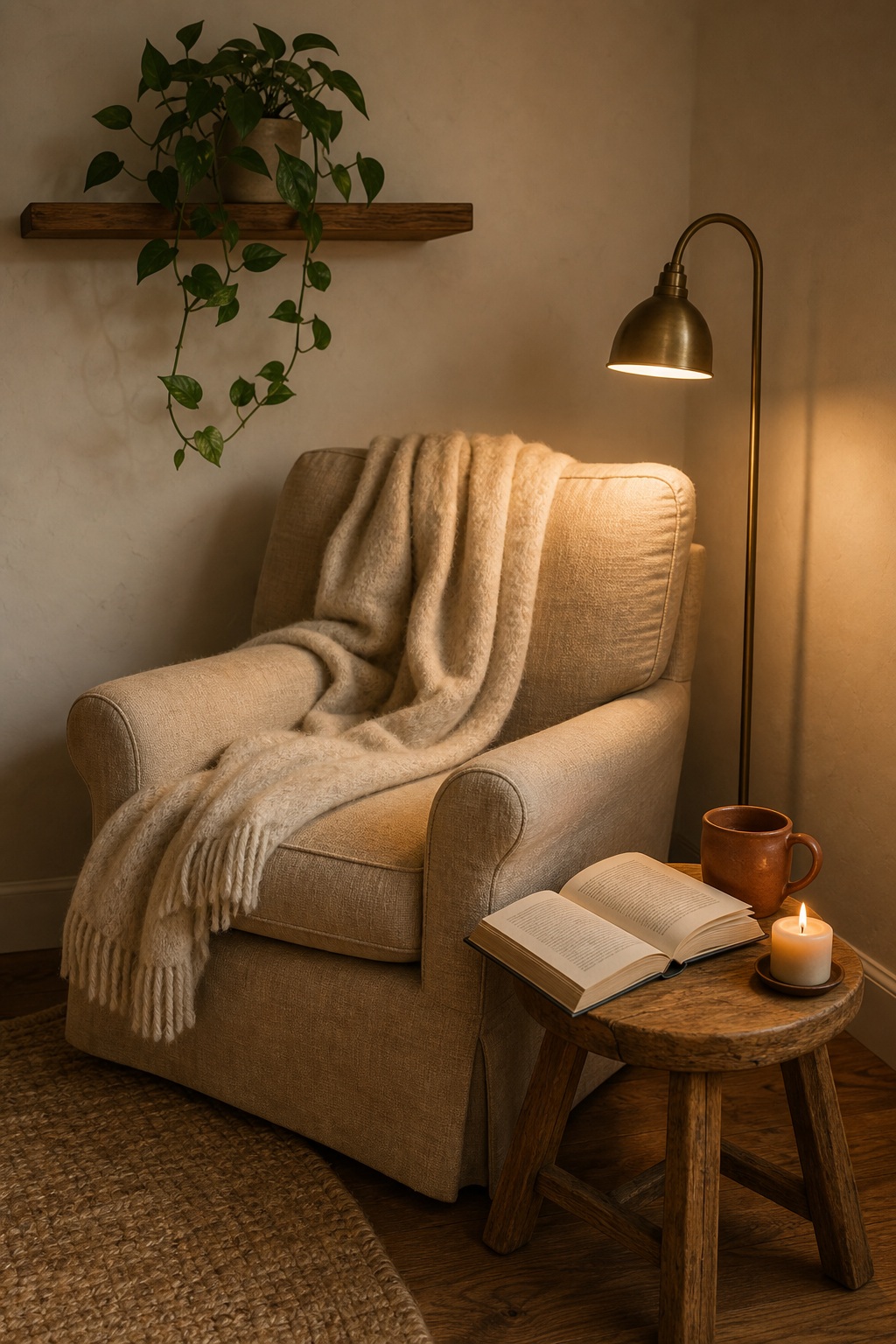
8. Add One Soft Rug Where the Feet Land
The spot where feet land when getting out of bed in the morning, and the spot where feet land when sitting in the chair, both benefit from a small soft rug.
A small wool rug or a sheepskin in cream or oat tone is enough. The texture underfoot in the morning and in the evening is part of what makes a house feel cared for. Hard floors get cold and read sterile in winter.
The rug does not need to be expensive. A small wool flatweave or a vintage hand-knot from a flea market works. Stay warm in tone, cream, oat, warm clay, walnut. Avoid cool greys and blues.
9. Set Up a Phone-Free Hour in the Evening
The single non-physical change on this list. Pick one hour in the evening when the phone goes in a different room.
Same room with the phone face-down does not work. Different room, on silent. One hour. The hour can be dinner, the post-dinner hour, or the hour before bed. Pick the hour that fits the household.
A hygge home with a phone in every pocket is half a hygge home. The phone interrupts the rhythm that the lamps and the candle are trying to create. One hour off is enough to change how the evening feels.
10. Buy a Wool or Cotton Tea Towel for the Counter
A nice tea towel folded on the kitchen counter is the smallest hygge upgrade and one of the most visible.
A waffle-weave cotton or a linen towel in cream, warm clay, or natural undyed tone reads hygge. A microfiber towel or a printed towel from a big-box store reads cheap. The towel does not need to be expensive. A single nice one, folded on the counter beside the stove, is enough.
This is the kitchen counter equivalent of the wool throw on the chair. A small textile change that the eye reads as warmth.
11. Frame One Photo for the Side Table
A small framed photo of a place, a person, or a moment that the household cares about, in a cream or oak frame, on the side table beside the chair, is the hygge anchor.
The photo does not need to be staged or curated. A real photo of a real moment, a walk in the woods last fall, a baby in the kitchen, a dog on the porch, a flower from the garden, in a small frame, sits beside the chair and reminds the household why the chair exists.
This is the change that turns a hygge room from a magazine setup into a home.
12. Pour the Tea Slowly
The last item on the list is the one that ties the rest of them together.
Pour the evening tea or coffee slowly, without doing anything else at the same time. Stand at the counter. Watch the water hit the cup. Listen to the kettle stop. Carry the mug to the chair. Sit down. Take the first sip before opening the book.
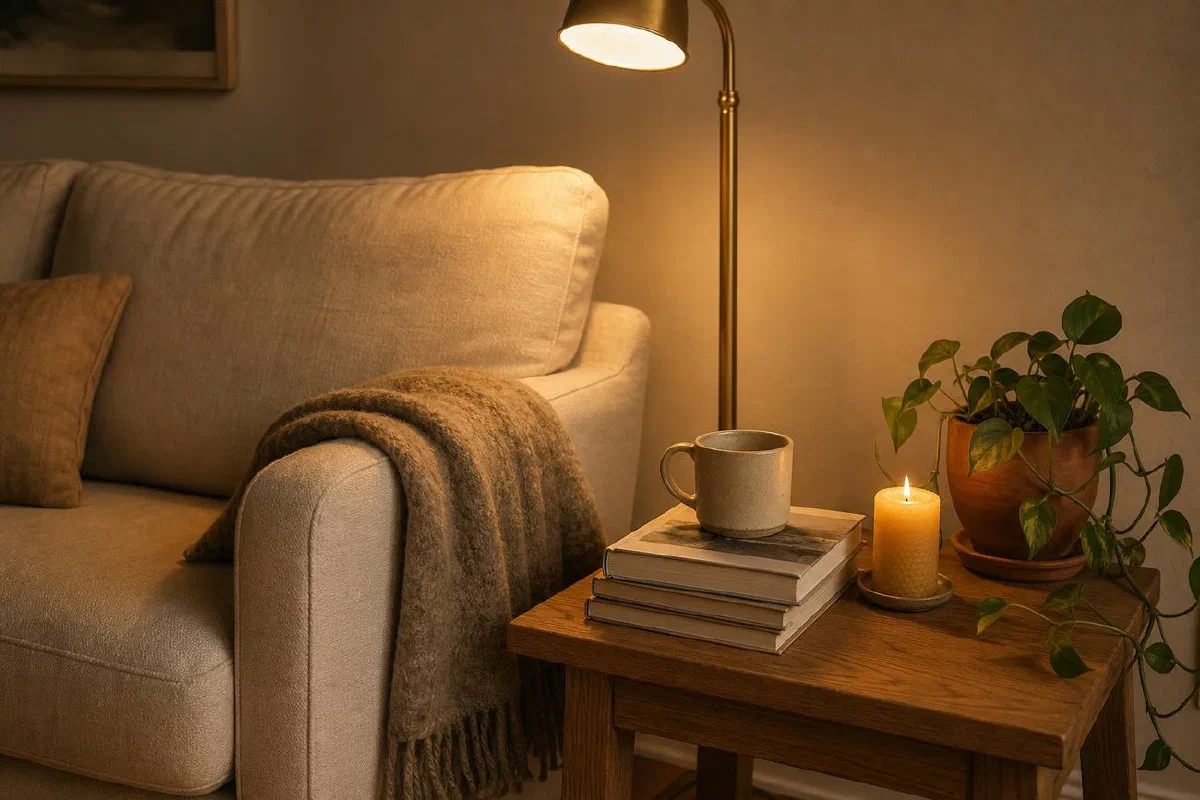
This is the hygge moment. The lamp is on. The candle is lit. The throw is on the chair. The mug is in the hand. The book is in reach. The phone is in another room. The pour is what marks the start of the evening.
A house with all twelve of these does not look different in a photo. It feels different to live in.
A First Evening, in Order
If you only do one pass this week, do it in this order. It takes about twenty minutes.
- Turn the overhead light off and switch on the lamp that is already in the room.
- Carry the wool blanket out of the closet and drape it across the chair you actually sit in.
- Pick the heaviest mug in the cupboard for the evening drink.
- Light one unscented candle before you start cooking.
- Put the phone in another room for the hour around dinner.
- Sit down and take the first sip before you open the book.
What to Skip Before You Buy
Most hygge shopping is unnecessary, and a few of the usual purchases work against the room.
- Scented candles for the kitchen. They fight the smell of food. Keep the scented ones for the bathroom or the bedroom and use an unscented pillar at the table.
- A full linen swap. Linen is the most marketed material in hygge content, and cotton, wool, and ceramic do more of the actual work.
- Bright colors and prints on the throw. They fight the warm lamp light that the rest of the list depends on.
- Twelve new mugs. Replace the one that gets used in the evening and leave the cupboard alone.
- Cool greys and blues underfoot. They undo the warm tones the lamps are creating.
FAQ
How do you pronounce hygge?
HOO-guh, with a soft g.
The first syllable rhymes with “who.” The second is a soft “guh,” closer to the start of “gather” than to a hard “gee.” The Danish sound does not exist in English, which is why you see the word spelled out so many different ways. Wiktionary records both /ˈhuːɡə/ and /ˈhʊɡə/ for English, and /ˈhyɡə/ for Danish.
What does hygge actually mean?
It is closer to “cosiness” than to any single English noun. Wiktionary defines it as a feeling of “cosiness, comfort, contentment and conviviality.”
Read that list again. Every word in it is a feeling, and none of them are objects. That is the whole reason this page is a checklist of small changes instead of a shopping list. Hygge is a mood you set, not a look you buy. The lamp, the throw, and the mug are simply the fastest ways to set it.
What is the cheapest way to start hygge at home?
Switch the overhead light off, turn on a warm lamp, drape a wool throw across the most-used chair, and light one candle. The total cost of the bulb and the candle is under twenty dollars. The throw is already in the house.
Do I need to buy linen for a hygge home?
No. Linen is the most-marketed material in hygge content, but cotton, wool, and ceramic do most of the actual work. A hygge home built on what is already in the house feels more lived-in than one built on a shopping spree.
Is hygge just for winter?
No. Summer hygge looks different: open windows instead of closed curtains, candles still lit at dusk, lighter wool throws or linen ones instead of heavy blankets, and the same lamp routine. The principles are about lighting and rhythm, not temperature.
What to Read Next
Living room plants for a calmer home if step 7 made you want a plant and you need one that survives the light you actually have.
Cozy reading nook layouts for small spaces to build the chair, lamp, and book stack from this checklist into one corner on purpose.
Brown living room decor if the lamp-and-throw changes worked and you are ready to warm up the bigger pieces in the room.
9 slow living habits that make home feel peaceful for the habit half of hygge, since this checklist is mostly the room half.