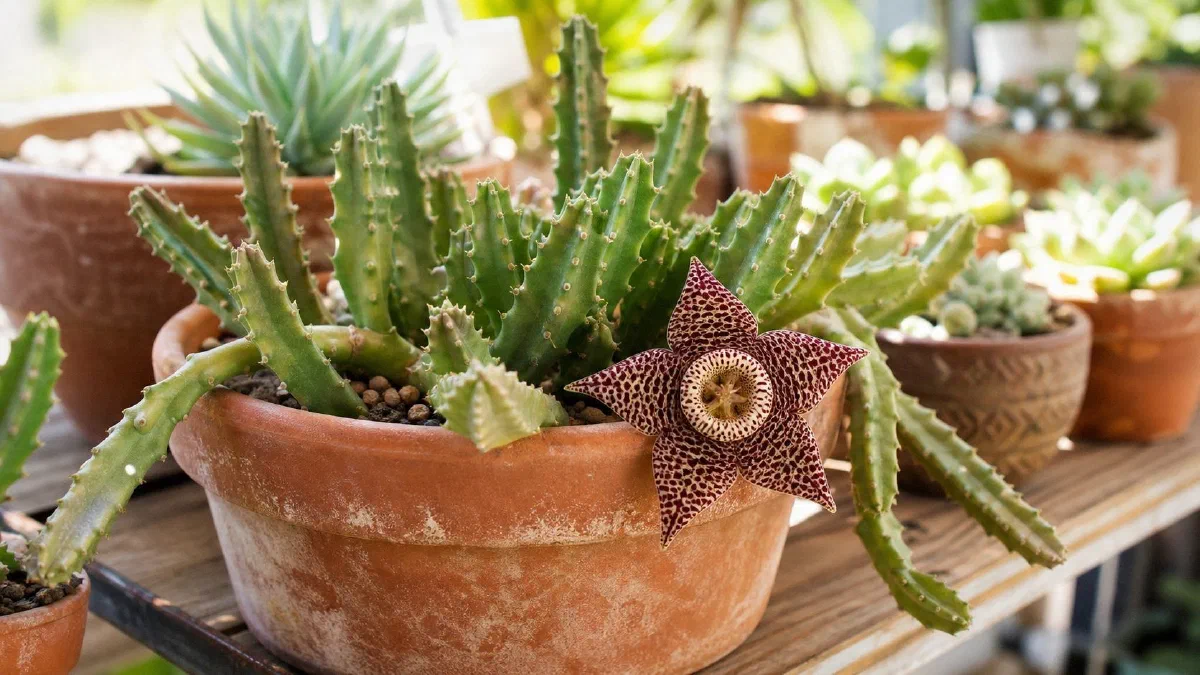
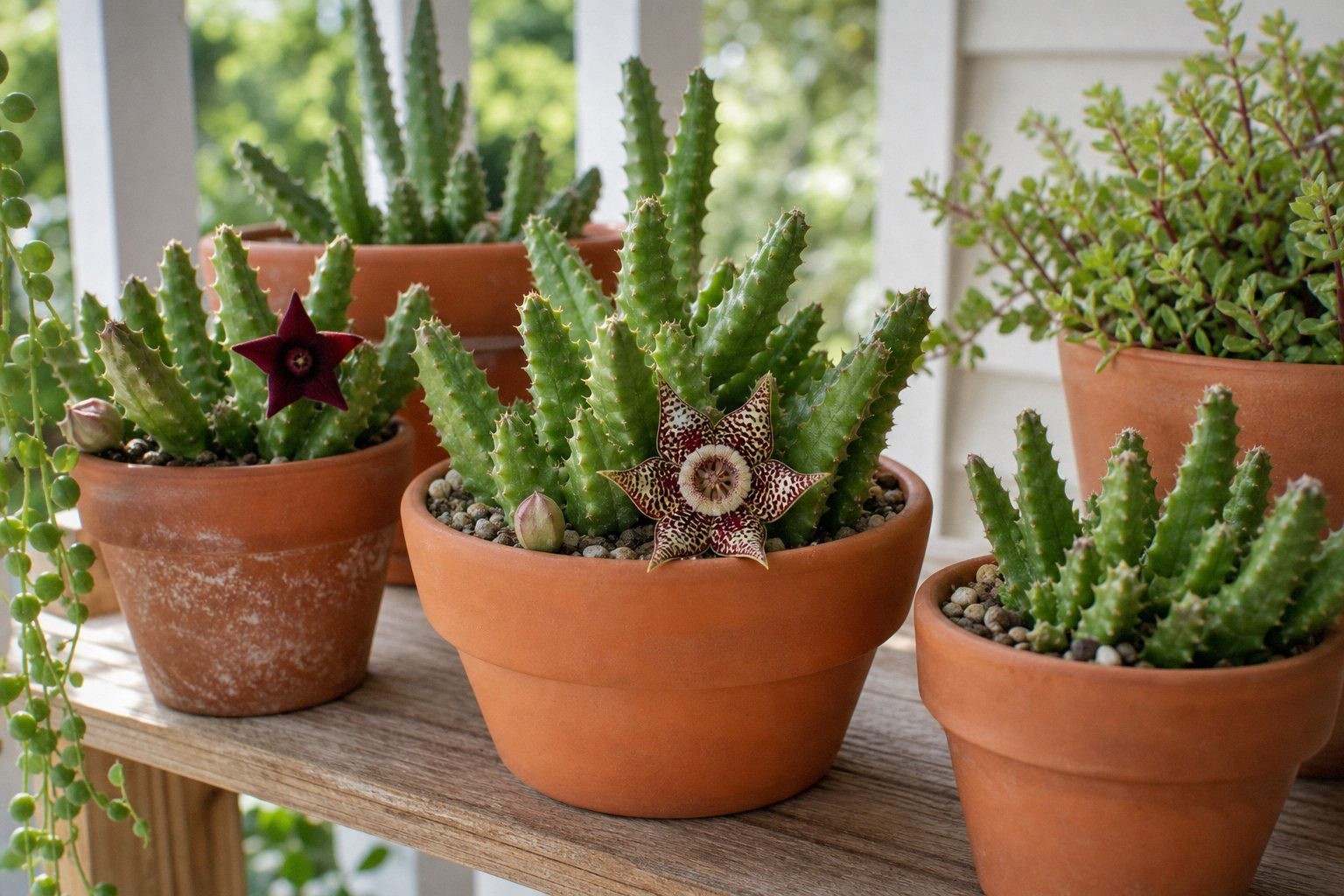
Huernia looks like the succulent someone made up to win an argument.
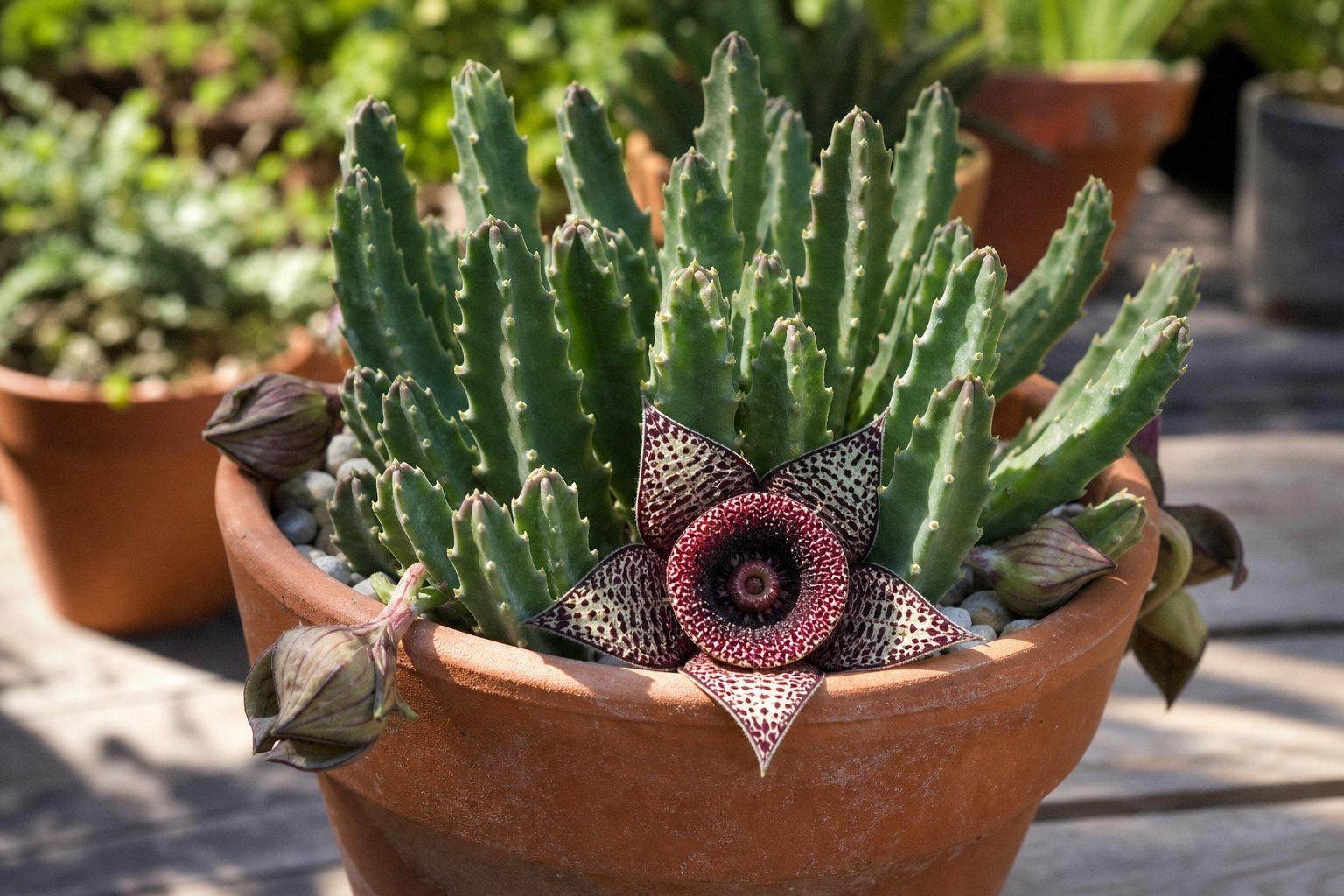
The stems are chunky and cactus-like, even though Huernia is not a cactus. The flowers can look spotted, striped, rubbery, or almost painted. Some have that raised little “lifesaver” ring in the middle. Others look like tiny starfish dropped into a pot.
That is why Huernia keeps showing up in summer succulent searches. It gives a porch pot or sunny shelf the thing most ordinary succulent bowls are missing: one plant that makes people lean in and ask what it is.
The catch is simple. Huernia is easy once the setup is right, but it does not forgive soggy soil. Treat it like a cute houseplant that wants weekly attention and it turns soft. Treat it like a warm-climate succulent with roots that need air, and it can bloom through the growing season with very little fuss.
What Huernia actually is
Huernia is a group of stem succulents related to stapeliads and milkweeds. You may see them sold as lifesaver plant, little owl eyes, dragon flower, red dragon flower, or just “Huernia” with no species name.
Most types grow as small clumps of angled green stems. The stems may be upright, trailing, or a little sprawly depending on the species. Instead of big leaves, the plant stores water in those fleshy stems.
The flowers are the reason people collect them. Common Huernia types bloom in star shapes, often with red, burgundy, cream, yellow, or spotted markings. Huernia zebrina is the famous “lifesaver” one, with a raised ring in the center of the bloom.
One honest note: some Huernia flowers can smell unpleasant up close. They are pollinated by flies in nature, so the scent is part of the plant’s strategy. It is usually not strong enough to ruin a porch unless you put your nose right on the flower, but it is worth knowing before you set one beside a dining table.
The summer setup that keeps it alive
Huernia wants warmth, bright light, fast drainage, and a full dry-down between waterings.
That sounds like normal succulent advice, but the potting mix matters more here than people expect. The stems can stay firm while the roots are already sitting in a wet pocket. By the time the plant looks wrong, rot may have started.
For a summer porch, patio shelf, or bright indoor window, use this setup:
- Light: Bright filtered light, morning sun, or late-day sun. Avoid harsh all-day afternoon sun on a hot wall.
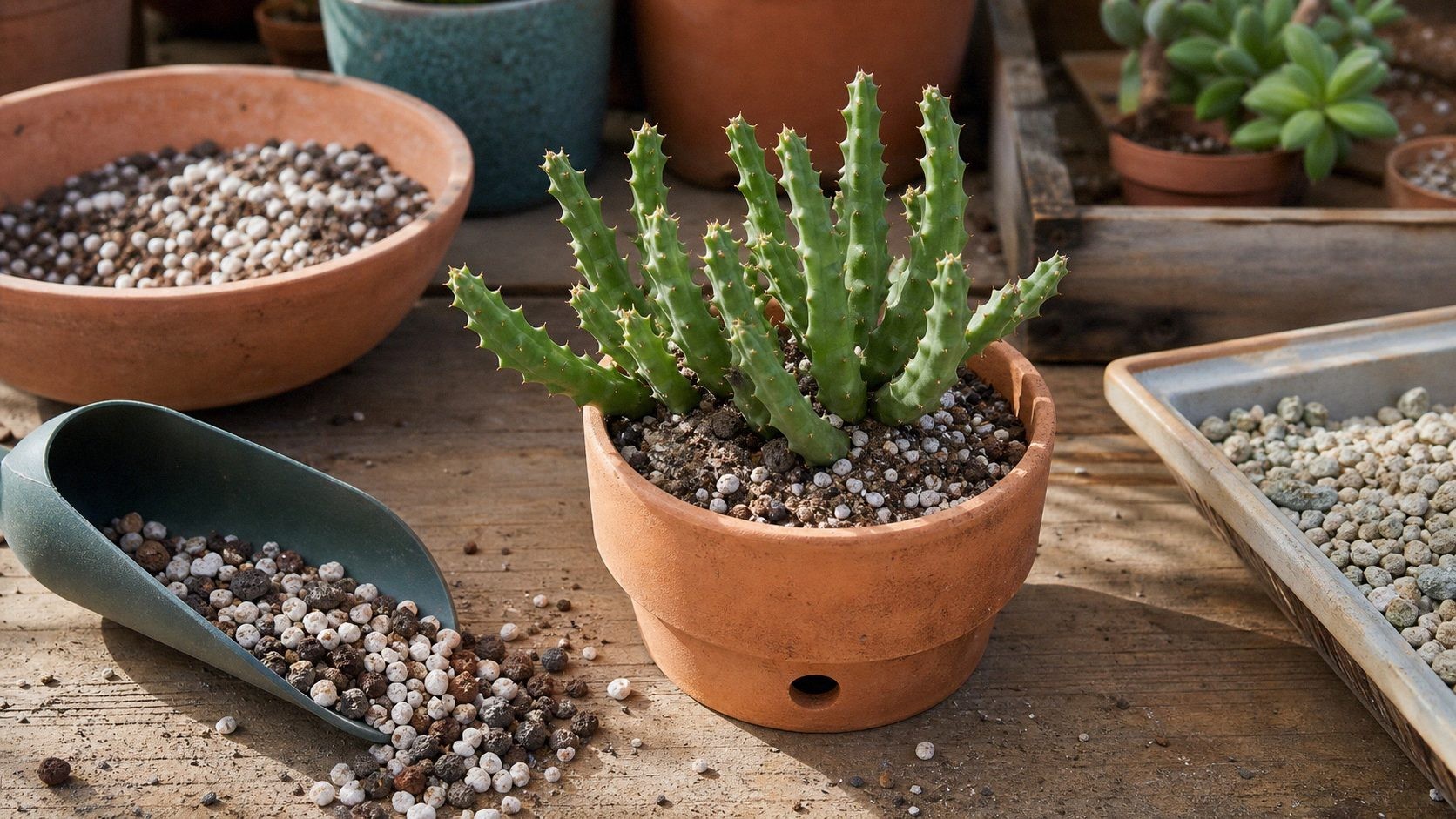
- Pot: Terracotta or another container with a real drainage hole. Skip cachepots unless you remove the inner pot to water and drain.
- Soil: Cactus mix amended with extra pumice, perlite, coarse sand, or small grit. Aim for a mix that dries fast and does not stay spongy.
- Water: Soak the pot when the mix is dry most of the way through. Then leave it alone.
- Air: Give it airflow. A crowded, damp corner is where stem rot gets a start.
If you are growing Huernia indoors, an east or west window is usually easier than a hot south window. If the stems stretch thin and lean hard toward the glass, it needs more light. If the stems bronze, wrinkle, or scald on the sunny side, it needs protection from the hottest rays. Clemson HGIC’s houseplant factsheet describes the same thing in general terms: too much direct light bleaches or scalds tissue, it usually shows up right after a plant is moved outdoors, and any change in light intensity should be gradual.
How to water without killing it
The mistake is watering by the calendar.
Huernia does not care whether it has been seven days. It cares whether the mix has dried, whether the air is warm, and whether the plant is actively growing.
In summer, check the pot before watering. Push a wooden skewer or chopstick down into the mix. Illinois Extension’s houseplant watering guide suggests the finger version of the same test, down to a depth of about two inches. If it comes out damp or cool, wait. If it comes out dry and clean, water thoroughly until water runs out the bottom.
Then do nothing.
That dry pause is not neglect. It is the point. Huernia roots need oxygen around them after a drink. Constantly damp soil is what turns the base soft.
For most small pots in warm summer light, watering may land around every 10 to 14 days. A tiny terracotta pot outside may dry faster. A glazed pot indoors may take much longer. The pot decides. Your finger or skewer tells you.
In fall and winter, water much less. Cool temperatures and wet soil are a bad combination for Huernia. If the plant is resting, give it just enough water to keep the stems from shriveling badly.
The soil mix I would use
Use regular cactus mix only if it already drains fast. Many bagged succulent mixes still hold more peat than Huernia likes.
A better simple mix:
- 2 parts cactus or succulent potting mix
- 1 part pumice or perlite
- 1 part coarse sand, chicken grit, or small lava rock
The finished mix should fall apart in your hand instead of packing into a wet lump. If it stays muddy, add more mineral material.
Top-dressing with gravel is optional. It looks nice, but do not use it to hide damp soil. If you cannot tell when the mix is dry, leave the top bare until you learn the plant.
Getting Huernia to bloom
If your Huernia grows stems but never flowers, check three things first.
The first is light. A plant kept too dim may survive, but it will not have much reason to bloom. Move it closer to a brighter window or give it a protected outdoor summer spot.
The second is winter rest. Huernia often blooms better after a cooler, drier winter period. That does not mean freezing. It means less water, no fertilizer, and a bright cool spot while growth slows.
The third is maturity. Tiny starter cuttings need time. A fuller clump with several healthy stems has more energy to produce buds.
During active growth, you can feed lightly once a month with diluted succulent fertilizer. Do not overdo it. Too much fertilizer pushes soft growth, and soft growth is easier to rot.
Propagating Huernia from cuttings
Huernia is usually propagated from stem cuttings, and this is one of the easiest ways to rescue or share a plant.
- Cut a healthy stem section with a clean blade.
- Set it somewhere dry and shaded for a few days so the cut end calluses. Do not rush this part. A fresh wet cut pressed into soil is an invitation for rot.
- Rest the callused end on barely moist gritty mix. Keep it bright but out of harsh direct sun.
- Water very lightly until you see new growth or feel resistance when you tug gently.
If a plant is already rotting at the base, cut above the soft section into firm healthy tissue. Let the cutting callus, then restart it in clean dry mix.
Where Huernia looks best
Huernia is not the plant for a huge mixed bowl where it gets buried. It is better as the weird little specimen in its own pot, or grouped with other small succulents that like the same bright, dry rhythm.
Good pairings:
- Haworthia in a nearby pot for a calmer green contrast
- Gasteria for thick patterned leaves
- Small aloe varieties for sharper structure
- Sedum or trailing succulents in separate pots, not crowding the Huernia crown
For outdoor summer styling, put Huernia where people can see the bloom up close: a porch side table, a sunny kitchen windowsill, a plant shelf near the door, or a small terracotta group on patio steps.
Just keep it out of reach of curious pets and children. Many stapeliad relatives have irritating sap, and it is better treated as decorative rather than edible.
Common Huernia problems
| What you see | What it usually means | What to do |
|---|---|---|
| Soft stems at the base | Rot from wet soil, poor drainage, or cool damp conditions | Take healthy cuttings now |
| Wrinkled stems | Thirst, or roots that are already damaged | Water if the mix is dry and the roots look healthy; if the mix is damp, suspect the roots |
| Long, thin growth | Not enough light | Move it somewhere brighter, gradually |
| Brown scald marks | Too much direct hot sun, especially right after moving outdoors | Give it morning sun and shade through the hottest part of the day |
| No blooms | Too little light, too much winter watering, or a plant that is still small | Fix the light and the winter rest first, then give the clump time to fill out |
Water and light account for most of what goes wrong. The plants that rot were usually sitting in mix that stayed wet, and the plants that stretch or refuse to bloom were usually sitting in light that was too dim.
FAQ
Is Huernia a cactus?
No. Huernia is a succulent, but it is not a true cactus. The cactus-like stems are why people confuse it with one.
Can Huernia go outside in summer?
Yes, if nights are warm and the plant is protected from heavy rain and harsh afternoon sun. Move it outside gradually so it does not burn.
How often should I water Huernia?
Water when the potting mix is dry most of the way through, not on a fixed schedule. In warm bright summer conditions that may be every 10 to 14 days, but the pot and soil matter more than the calendar.
Why does the flower smell strange?
Some Huernia flowers use scent to attract fly pollinators. The smell is usually only obvious close up.
What to Read Next
- Succulent Container Combos for Summer Heat: which succulents share Huernia’s bright, dry rhythm in a summer pot.
- Succulent Propagation: Turn One Plant Into Twenty: more on cuttings if you want to rescue or share a plant.
- What to Do When Container Soil Keeps Drying Out Too Fast: the opposite problem, and what it says about your mix.
- Container Garden Ideas for Small Patios That Still Feel Full: where one small specimen pot fits on a patio.