Start with a dragon tree for a narrow corner, a kentia palm for soft arching fronds, or a bird of paradise if you have a bright window and room for big leaves. A snake plant is the easy answer for a dim spot beside the sofa. Pick by the light in the room first and the height second, and the indoor plant will look like it belongs there.
9 Tall Indoor Plants for a Living Room, by Height
Last updated:
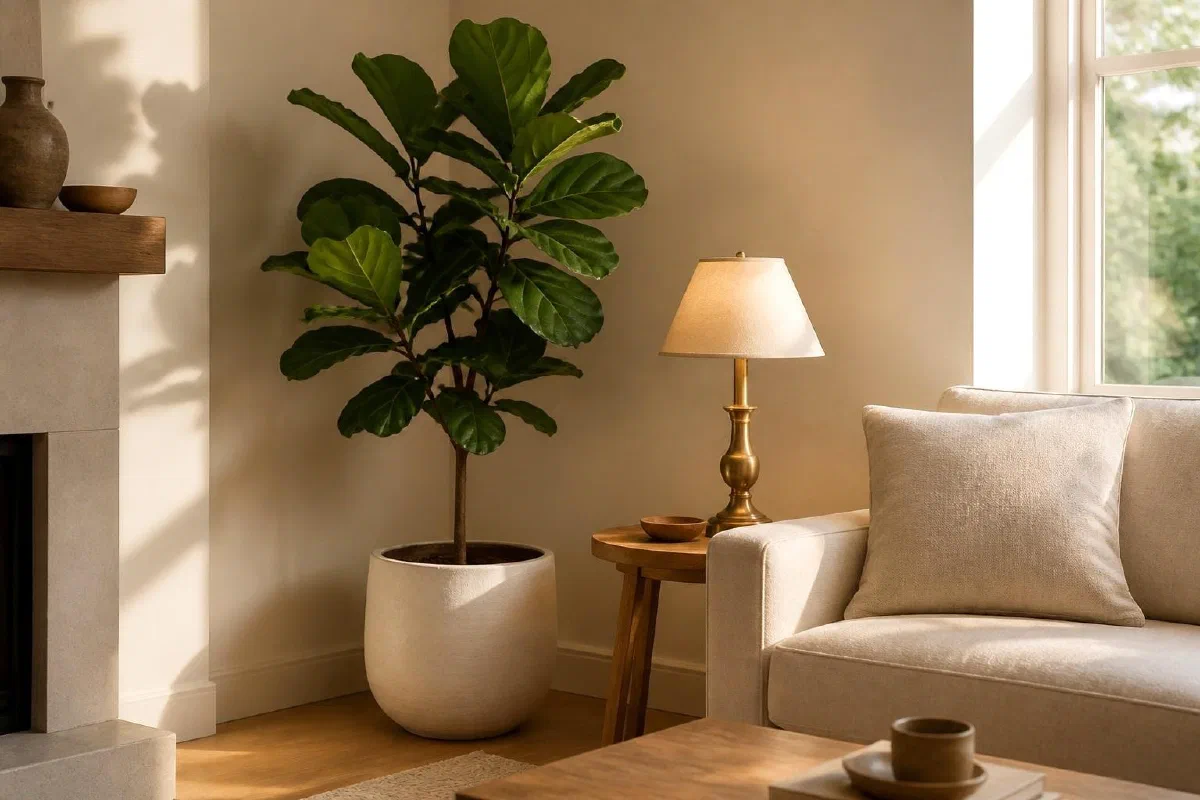
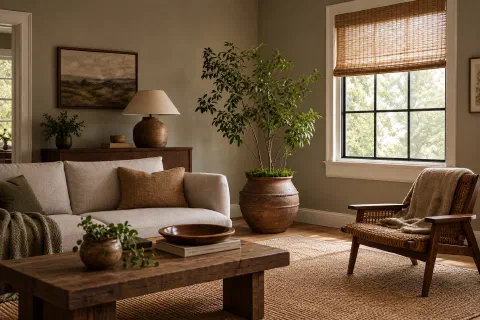
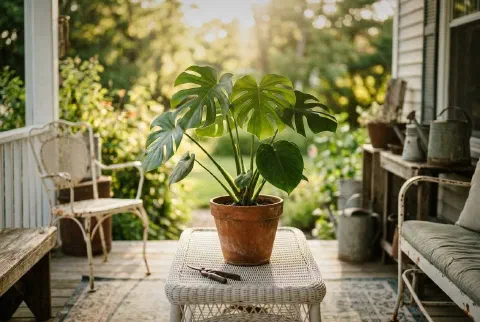
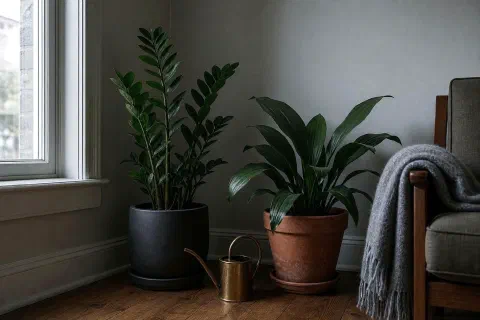
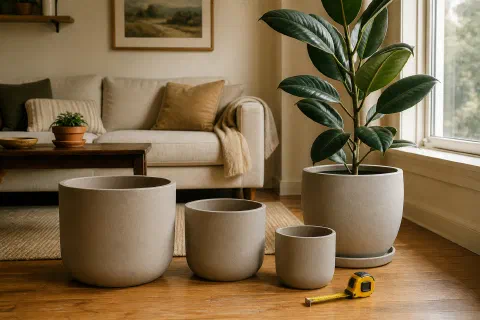
Illustrative scene, not a photograph of the linked products.
Here are nine that work in a living room, from the shortest to the tallest. After the table you will find the low-light picks, the ones that fit a skinny corner, which are safe for cats and dogs, and how tall a plant can go under your ceiling.
| If the room has… | Start with… |
|---|---|
| A narrow corner | Dragon tree or snake plant |
| Medium indirect light | Kentia palm |
| A big bright window and open floor | Bird of paradise or rubber tree |
| A cat or dog that chews plants | Kentia palm, parlor palm or money tree |
| A dim corner | Snake plant, parlor palm or kentia palm |
What are the best tall indoor plants for a living room?
A dragon tree, kentia palm, bird of paradise and rubber tree. The dragon tree reaches about 6 ft and fits a narrow corner. The kentia palm tops out near 10 ft and tolerates low to medium light. The bird of paradise grows about 7 ft and wants a bright window. The rubber tree runs 2 to 10 ft depending on pruning.
The 9 best tall indoor plants for a living room, by height
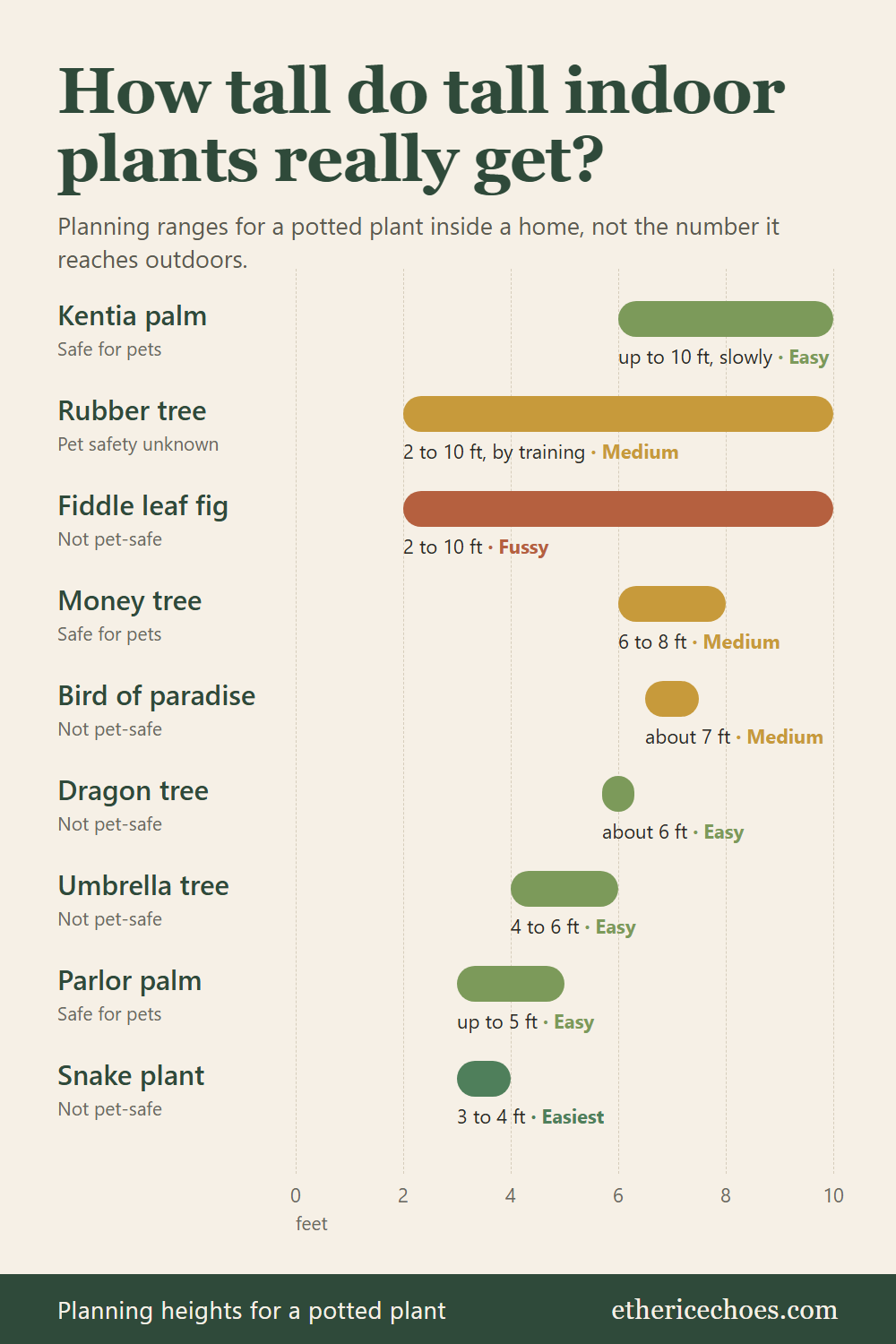
These are the heights a potted plant reaches inside a house, not the number you see for the same plant outdoors. A small plant from the nursery will take a few years to fill the corner. Light and pruning change the final size.
| Plant | Height indoors | Light | Safe for cats and dogs | Easy or fussy |
|---|---|---|---|---|
| Snake plant (Dracaena trifasciata) | About 3 to 4 ft | Low to bright | No | Easiest |
| Parlor palm (Chamaedorea elegans) | Up to about 5 ft | Low to medium | Yes | Easy |
| Umbrella tree (Schefflera actinophylla) | 4 to 6 ft | Medium to bright | No | Easy |
| Dragon tree (Dracaena marginata) | About 6 ft | Low to bright | No | Easy |
| Bird of paradise (Strelitzia nicolai) | About 7 ft | Bright, near a sunny window | No | Medium |
| Money tree (Pachira aquatica) | 6 to 8 ft | Bright, indirect | Yes | Medium |
| Kentia palm (Howea forsteriana) | Up to about 10 ft, slowly | Low to medium | Yes | Easy |
| Rubber tree (Ficus elastica) | 2 to 10 ft, by training | Medium to bright | No | Medium |
| Fiddle leaf fig (Ficus lyrata) | 2 to 10 ft | Bright, by a window | No | Fussy |
A few notes on the ones people ask about most.
Snake plant. It will sit in a dim corner and forgive a missed watering. It is durable and hard to kill. It likes some direct sun for a few hours a day but will tolerate very low light.
Spec: light low to bright | water when the soil feels dry, every few weeks | pets: toxic | height about 3 to 4 ft indoors.
Parlor palm. The shortest palm on the list and the friendliest to a dim, dry living room. Stems can reach 5 feet indoors but are usually smaller, and it thrives in dry air and dim light that other plants will not take.
Spec: light low to medium | water when the top inch of soil is dry | pets: safe | height up to about 5 ft.
Umbrella tree. Glossy leaves that fan out from a central stem. It grows 4 to 6 feet indoors. Keep it away from cold drafts and heating vents.
Spec: light medium to bright, out of hot afternoon sun | water regularly | pets: toxic | height 4 to 6 ft indoors.
Dragon tree. The best pick for a tight corner: a slim trunk with a tuft of leaves on top. It grows to about 6 feet as a houseplant and can be pruned smaller, and a pruned stem usually grows two or more branches.
Spec: light low to bright | water when the top 2 inches are dry | pets: toxic | height about 6 ft.
Bird of paradise. Big paddle-shaped foliage that tears easily, so give it room. Nurseries such as Gertens put it at about 7 feet tall and 6 feet wide indoors. It wants your brightest window.
Spec: light bright, indirect | water when the top layer of soil is dry | pets: toxic | height about 7 ft.
Money tree. A braided trunk and a soft, tree-like shape. Houseplants usually top out at 6 to 8 feet.
Spec: light bright, indirect | water when the soil is completely dry | pets: safe | height 6 to 8 ft.
Kentia palm. Slow, graceful and not fussy about light. It needs little light and is slow growing, and tall indoor specimens can get to roughly 10 feet over many years. It is the one to buy if you want a classic look and are willing to wait.
Spec: light low to medium | water when the top 2 inches are dry | pets: safe | height up to about 10 ft, slowly.
Rubber tree. A ficus with glossy dark foliage and a bold shape. You can keep it between 2 and 10 feet, and it prefers to stay in one spot away from drafts and cold. Prune the top for a bushier plant, or leave it alone for a tall, narrow one.
Spec: light medium to bright | water when the top 2 inches are dry | pets: toxic | height 2 to 10 ft.
Fiddle leaf fig. The other ficus on the list, the famous one, and the fussiest. It grows 2 to 10 feet indoors with leaves up to 18 inches long. It does best when you pick a bright spot and then leave it alone.
Spec: light bright, shielded from strong afternoon sun | keep soil moist but well drained, never soggy | pets: toxic | height 2 to 10 ft.
Which tall indoor plant is easiest to keep alive?
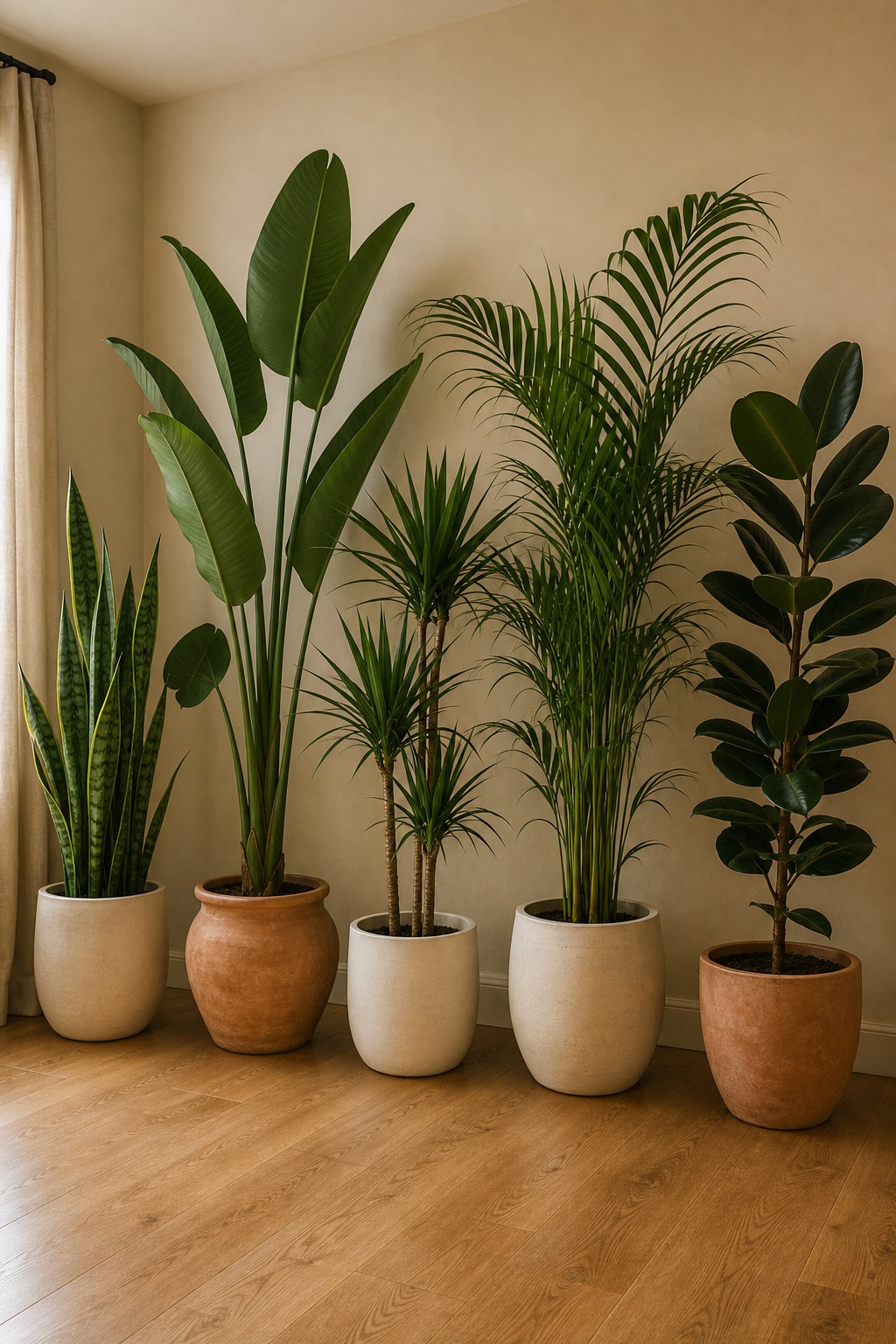
A snake plant, then a dragon tree or kentia palm. The snake plant is the most forgiving: it takes low light and a missed watering, and in winter it needs water only every month or two. A dragon tree is another good beginner tall plant. Both are toxic to cats and dogs, so a kentia or parlor palm is the better choice if a pet chews leaves.
The harder ones are the fiddle leaf fig, which drops leaves when you move it or change its routine, and the bird of paradise, which sulks in a dim room.
Which tall indoor plants work in low light?
Snake plant, parlor palm, kentia palm and dragon tree are the four to start with. They will not grow as fast in a dim corner as in a bright one, and a new leaf may take a while to show up, but they stay healthy.
| Low-light pick | Height indoors | Why it works |
|---|---|---|
| Snake plant | About 3 to 4 ft | Tolerates very low light and a missed watering |
| Parlor palm | Up to about 5 ft | Handles dim, dry rooms and is safe for pets |
| Kentia palm | Up to about 10 ft | Needs little light, and it is the tallest of the four |
| Dragon tree | About 6 ft | Slim enough for a tight corner, adapts to lower light |
Two more low-light picks, both from The Spruce: the ZZ plant (full shade to bright indirect light, water only when the soil has dried out completely, toxic to people and pets) and the cast iron plant (full shade to bright indirect light, water when the soil is completely dry, safe for pets).
If the corner is truly dark, no plant will thrive there for years. A slim grow light that looks good in a living room solves it, or you can read the low-light plant guide for shorter options.
Which tall indoor plants need a bright window?
Bird of paradise, fiddle leaf fig, rubber tree, money tree and umbrella tree all want a bright room. Set them close to a window that gets plenty of light, and turn the pot a quarter turn now and then so the plant does not lean. If a leaf bleaches or burns, pull the plant back a little from the glass.
Tall and narrow indoor plants for a small corner
In a small living room the width of the leaves matters more than the height. A big bird of paradise can reach into the walkway even when its pot fits the corner.
| Plant | Shape | Why it fits a small room |
|---|---|---|
| Snake plant | Upright leaves in a clump | Measure the actual plant so the leaves clear the path |
| Dragon tree | Slim trunk, crown on top | Height with almost nothing at floor level |
| Umbrella tree | One central stem, leaves fan out | Needs a little room, but the footprint is small |
| Kentia palm | A single trunk, arching fronds | Measure the frond spread before you buy |
When floor space is tight, narrow plant stands lift a smaller plant to a taller look. Another option for a skinny corner is a corner idea that fills the space.
Tall indoor plants that are safe for cats and dogs
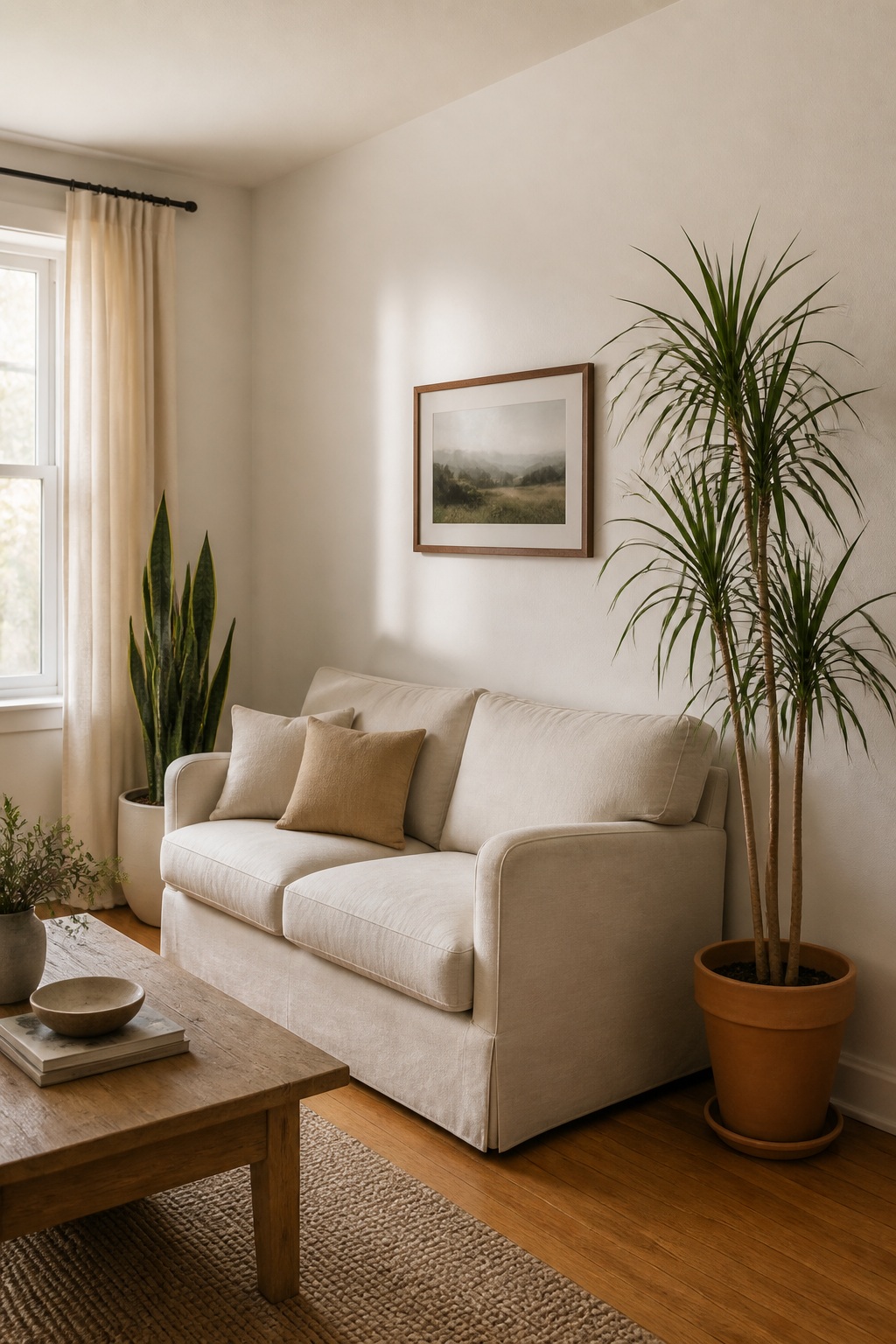
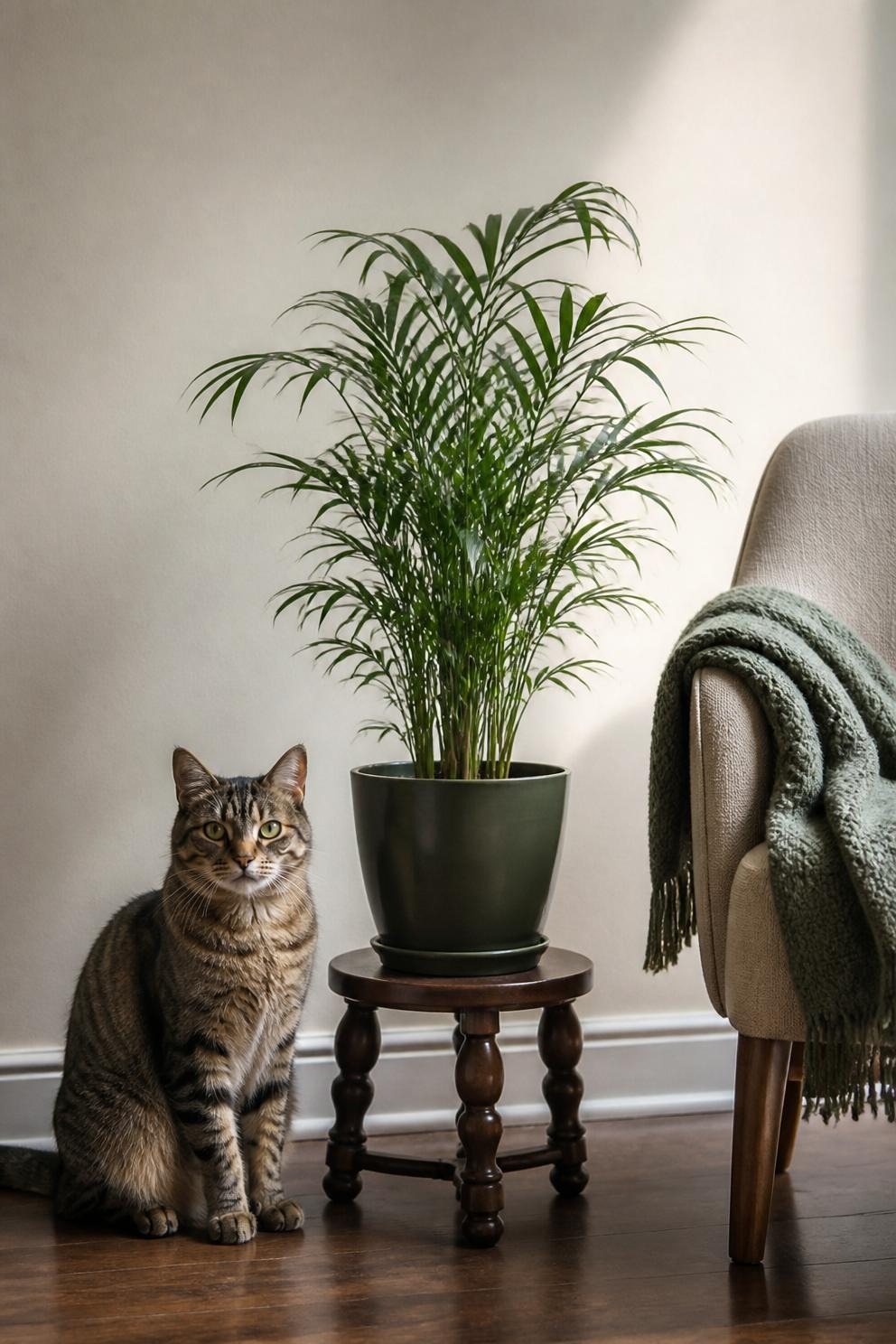
Three tall plants on this page are pet-friendly: kentia palm, parlor palm and money tree. Norfolk Island pine and areca palm are pet-friendly too.
The ones to keep away from a chewing pet are snake plant, dragon tree, umbrella tree, bird of paradise, rubber tree and fiddle leaf fig. NC State Extension lists the bird of paradise, fiddle leaf fig and umbrella tree as toxic, and The Spruce lists the rubber plant, dragon tree and snake plant the same way.
How tall a plant fits under your ceiling
Measure from the floor to the top leaf, pot included. As a rule of thumb, leave about two feet between the top of the plant and the ceiling so it has room to grow and you can still get at the leaves.
| Ceiling | Tallest plant, pot included | Plants that fit now |
|---|---|---|
| 8 ft | About 6 ft | Snake plant, parlor palm, umbrella tree, dragon tree |
| 9 ft | About 7 ft | Add bird of paradise, money tree |
| 10 ft | About 8 ft | Add a kentia palm, rubber tree or fiddle leaf fig that has had time to grow |
A plant that has outgrown the ceiling can be cut back for some types and not others. Palms such as the kentia grow from a single bud at the top, so if you cut the top off it will not grow back. Rubber trees and dragon trees branch when you prune them.
Which tall indoor plant grows fastest?
The umbrella tree. Our House Plants says it can grow two feet or more a year in good light, and some umbrella tree varieties are fast growers and up to 10 feet. A monstera on a moss pole climbs a foot or two a year in bright light. The kentia and corn plant are slow, so buy them taller if the corner looks bare.
Four more tall plants if none of the nine fit
| Plant | Height indoors | What to know |
|---|---|---|
| Monstera (Monstera deliciosa) on a moss pole | 6 to 8 ft | A climbing vine. Expect 6 to 8 feet in most homes. It needs bright light and a pole, and it is toxic to pets. |
| Norfolk Island pine (Araucaria heterophylla) | Up to 9 ft | Likes a bright room that stays cool, around 55 to 65 degrees. Safe for pets. |
| Corn plant (Dracaena fragrans) | 3 to 6 ft for the common compact types | A slow-growing dracaena plant with a tall, bare stem. Bright to moderate filtered light, and it is toxic to cats and dogs. |
| Yucca (Yucca gigantea) | Up to about 8 ft | Needs very bright light, and it grows slowly. Toxic to pets. |
Winter care for tall indoor plants
In winter the light is weaker and the heat is on, and tall plants notice. Move a plant a little closer to the window, and keep it away from heating vents and drafts. Low humidity from dry heated air browns leaf tips; a corn plant does better with a humidifier and a room temperature above 50 degrees. Water less: a snake plant needs water only every month or two in winter and a Norfolk Island pine sparingly, with a misting if the room is dry from the heater. Skip the fertilizer until spring, since a Norfolk Island pine only needs feeding from spring to fall. A plant that is dropping a few leaves in January is usually adjusting, not dying.
A grow light on a timer can make up for short days in a dim corner.
How to arrange tall plants in a living room: 6 rules
These six rules come from The Spruce’s guide to arranging plants in a living room (published October 31, 2025).
- Group in odd numbers. Threes look natural; pairs look staged. Pick different heights and give the group one thing in common, such as the pot color.
- Mix leaf shapes and textures. Feathery fronds beside broad paddle leaves look richer than three plants with the same leaf.
- Vary the greens. Skip the matchy look. Choose different shades or a variegated plant, and let the pots differ a little.
- Lead the eye. A tall plant with upright leaves pulls the eye up. Set one under a favorite piece of wall art, with a gap so the two do not compete.
- Fill the floor. A tall plant suits the dead space beside a sofa or window, and it can act as a soft room divider. Keep it off furniture and decor.
- Match the plant to the light. Check which way the window faces first. Put low-light plants in the dim corner together.
Should tall plants face an east or west window?
Either works, with one adjustment. An east window gives direct morning sun, then bright indirect light for the rest of the day, which suits most plants as is. A west window gives stronger afternoon and evening sun, so Epic Gardening suggests a curtain at peak hours or setting plants a few feet back. A bird of paradise or fiddle leaf fig can take a bright west window with a sheer curtain.
How to style a tall plant in the corner
Check the light from the sofa and from the window. A plant can look right beside a chair and still be too far from daylight. Choose the spot for the plant first, then move a table or lamp to suit it.
Pair it with something you already have. A sofa arm, stool or side table gives the plant something to sit beside. If a chair is already next to the pot, try that arrangement first.
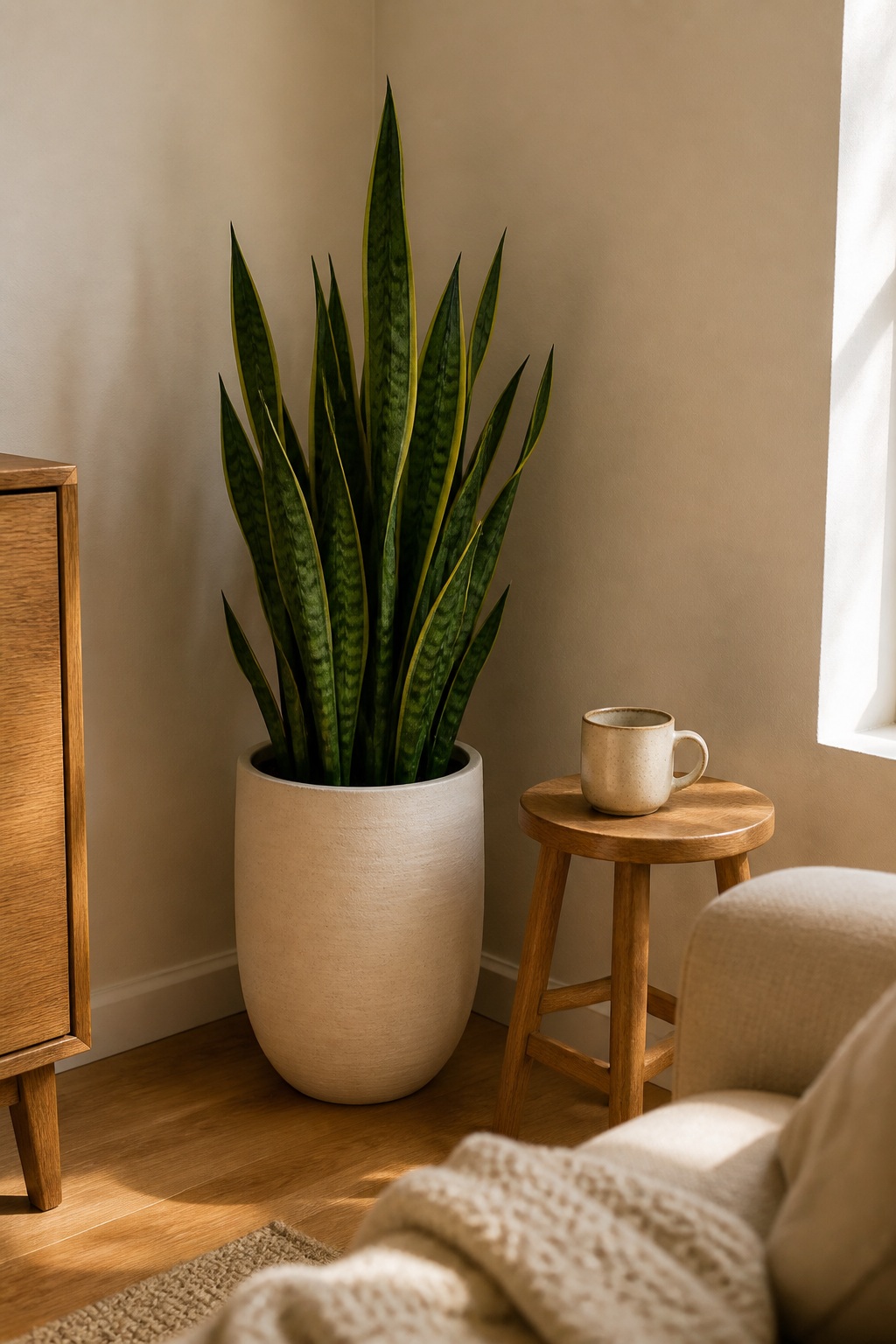
Leave breathing room. Set the pot where you want it and walk the route you use every day. Move it until the leaves clear the furniture and you can pass without brushing them.
Choose a pot you like, then check how it drains. Cream ceramic, terracotta and woven baskets all suit a living room. A basket needs a liner or an inner pot. Keep the plant in its nursery pot and set that inside the decorative one, so you can lift it out to water. If the roots are crowded, move up only one pot size. For help picking, read the planter size guide.
Keep it from leaning. A tall plant leans toward the window. Turn the pot a quarter turn each week or two, and stake a young fiddle leaf fig early so the trunk grows straight.
Three supplies worth a look
We earn a small commission if you buy through the Amazon links on this page, at no extra cost to you. Buy the plant first and add a supply only if it solves a problem.
| Supply | When it helps | Cost |
|---|---|---|
| XLUX soil moisture meter (opens Amazon in a new tab)As an Amazon Associate, we earn from qualifying purchases. Full disclosure. | A deep pot is hard to check by hand | $ |
| The Blooming Jungle stackable coir poles (opens Amazon in a new tab)As an Amazon Associate, we earn from qualifying purchases. Full disclosure. | A climbing monstera needs support. A palm or snake plant does not. | $$ |
| Worth 9-gallon tall round planters (opens Amazon in a new tab)As an Amazon Associate, we earn from qualifying purchases. Full disclosure. | A nursery pot needs a larger outer container. Keep the plant in its own pot inside. | $$ |
The listings were in stock on October 11, 2026. The poles stack to 48 inches, and the beige planters are listed as 14 inches across and 21 inches high.
What to do when the plant outgrows the corner
- Prune only if that plant allows it. Dragon trees and rubber trees branch when pruned; a palm does not.
- Divide it. Snake plants can be divided. A single-trunk tree cannot be split.
- Move it and replace it. Give the big one a higher-ceiling room and put a smaller plant of the same kind in the corner.
Where to buy a tall indoor plant
A local nursery lets you check the leaves, stem, soil and width before you commit. Online listings can be good for unusual plants, but the stated height often includes the nursery pot. Take three numbers with you: the floor width, the distance from the corner to the nearest window, and the tallest plant the ceiling allows.
FAQ
How tall should an indoor plant be in a living room?
With an eight-foot ceiling, a five- or six-foot plant is a good starting point. Include the pot in the measurement and leave room above the leaves. See the ceiling table above for taller rooms.
What is a tall low maintenance indoor plant?
The snake plant. The Spruce says it survives almost any condition, including low light, and wants water only when the soil feels dry, every few weeks. It reaches about 3 to 4 ft indoors. A dragon tree or kentia palm is the next easiest.
What is a tall, skinny indoor plant?
A dragon tree. It has a slim trunk with a tuft of leaves on top, so you get about 6 ft of height with almost nothing at floor level. A snake plant is the upright clump to choose when you need 3 to 4 ft.
Do tall indoor plants need direct sunlight?
Not most of them. Snake plant, parlor palm, kentia palm and dragon tree take lower light. Bird of paradise and fiddle leaf fig want a bright window.
Do tall plants clean the air or remove mold?
A plant makes a room feel better, but it is not an air purifier and it will not deal with mold. Buy one because you like how it looks.
Can you keep two tall plants in one living room?
Yes, in a bigger room, if each has the light it needs and the leaves do not crowd the furniture. Mix shapes: an upright dragon tree beside a broad-leaved plant looks better than two matching trees. In a small room, try one first.
Sources
The Spruce: 6 rules designers follow when styling plants in a living room: the arranging rules.
The Spruce: 19 tall low-light plants: water and light lines for the spec lines, ZZ plant and cast iron plant.
Epic Gardening: bright, indirect light for houseplants: east and west window light.
NC State Extension: bird of paradise, fiddle leaf fig and umbrella tree: watering, light and pet toxicity.
Gertens: white bird of paradise: indoor size.
Our House Plants: 18 best large indoor plants: umbrella tree growth rate and palm pruning.
What to read next
- Living Room Plants for a Calmer Home mixes one floor plant with smaller plants without crowding the room.
- What Size Planter Does a Tall Indoor Plant Need? settles the pot decision before the plant comes home.
- Living Room Plant Ideas for Empty Corners works through the corner decision.
- Indoor House Plants Without the Clutter keeps a small room from filling up around the plant.
- Narrow Plant Stands for Apartment Corners gives you height without spending floor space.