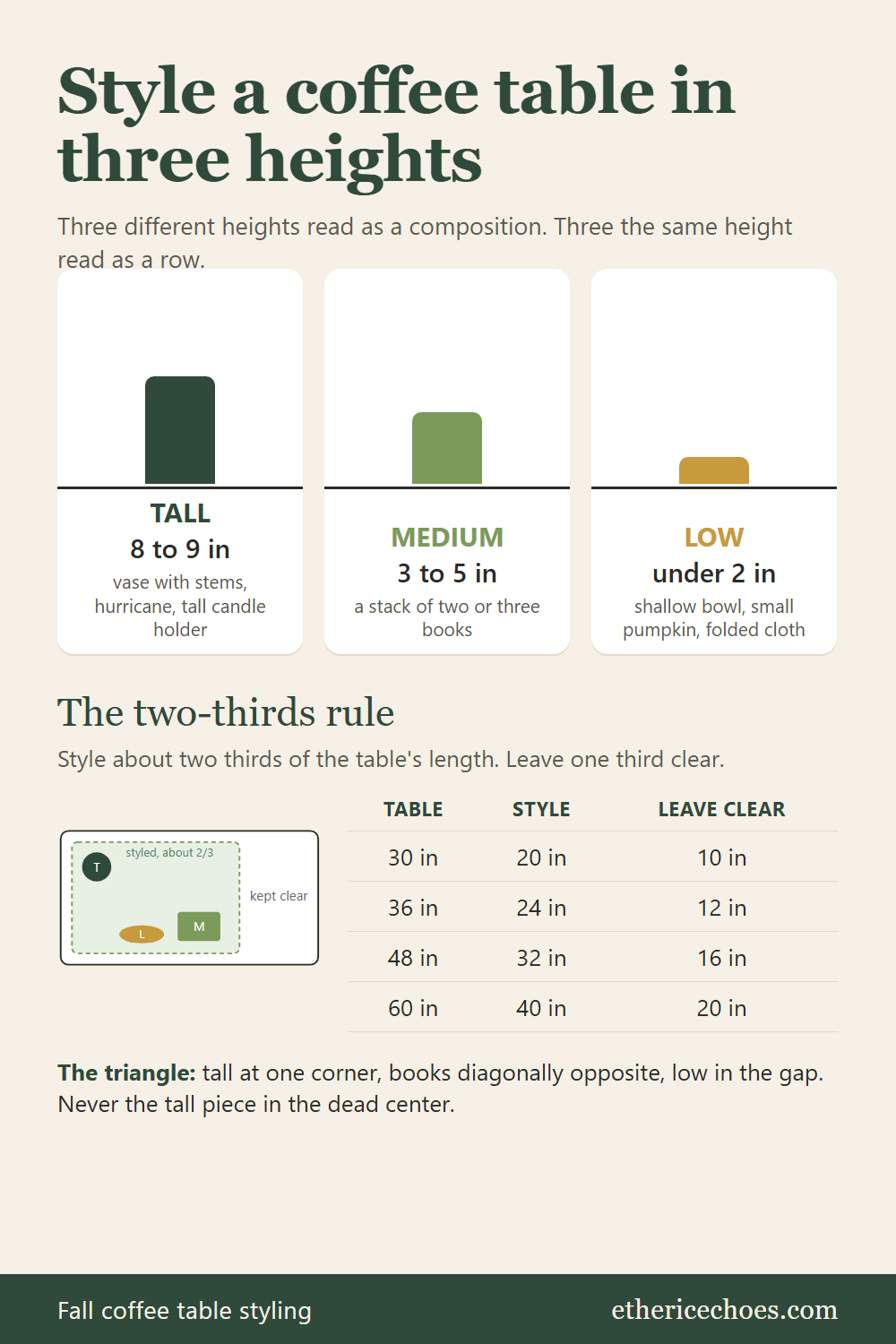
For fall coffee table decor, group a tray, a few objects at different heights, and leave about one third of the table open. That is the styling version of the 2/3 rule: the whole arrangement takes up roughly two thirds of the table length, not each individual item.
Fall Coffee Table Decor: The 2/3 Rule
Last updated:
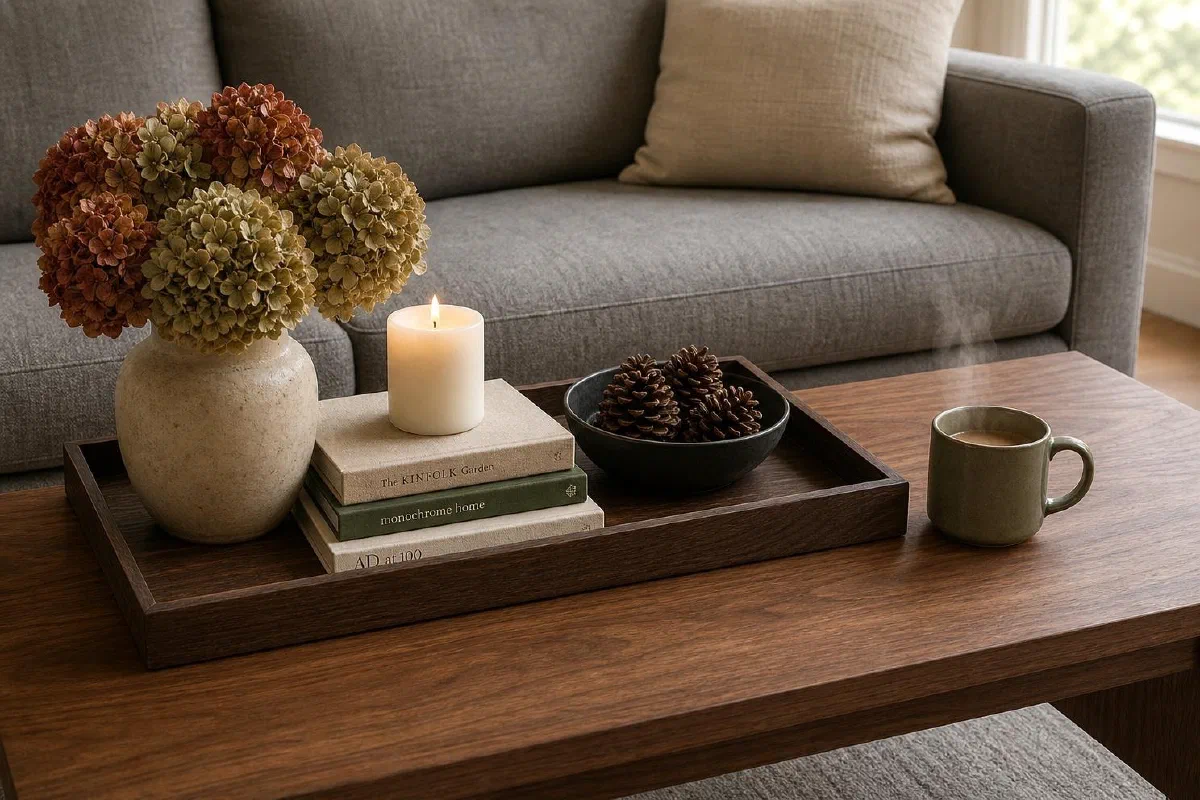
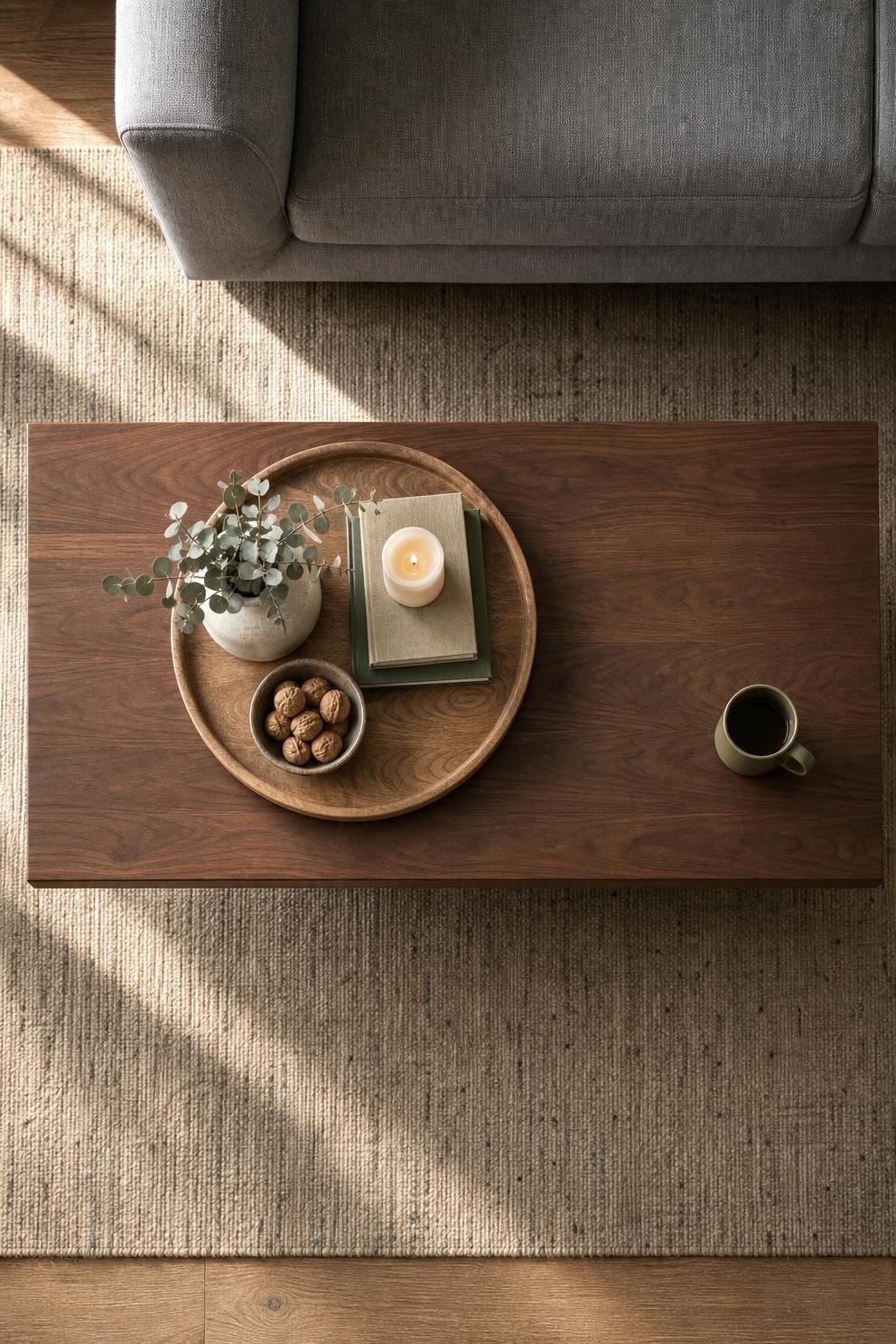
Start with a tray about half the table length, then add one taller piece, a book stack, and one low bowl or pumpkin. Check the view from the sofa and keep the open end clear for a mug or remote. It works year round; swap the stems and the small seasonal piece when fall comes around.
For finished layouts, see nine fall coffee table decor ideas for a small living room.
What the 2/3 rule measures
For this styling layout, let the arrangement span about two thirds of the coffee table’s length and leave the rest clear. Adjust it if you need more usable surface.
The proportion applies to the grouping as a whole. A separate 2/3 guideline compares the size of a coffee table with the sofa; that is a furniture-sizing question.
A tray or several pieces can make up that footprint. The point is to keep the arrangement together and leave a visible stretch of bare tabletop.
The arithmetic on common table sizes:
| Table length | Style this much | Leave clear |
|---|---|---|
| 30 inches | about 20 inches | about 10 inches |
| 36 inches | about 24 inches | about 12 inches |
| 48 inches | about 32 inches | about 16 inches |
| 60 inches | about 40 inches | about 20 inches |
The open third leaves room for a mug, remote or the book you are reading.
On a round table, use the diameter as your starting measurement. For a 36-inch table, try a grouping about 24 inches across, then shrink it if you need more space for drinks. An 18 to 20-inch tray leaves room for objects beside it.
Keep decor below your sightline
The 2/3 rule covers the tabletop footprint. Height is a separate check.
Sit on the sofa and look across the table. Keep tall decor below the sightline to the television or the person across from you. A height around eight or nine inches is a useful styling target, though your seat and table will change the view.
If a vase blocks the view, trim the stems or move it to a console.
A short book stack with a flameless pillar candle usually stays low. Dried stems can work too, as long as you trim them to fit the view from your seat.
How to choose a coffee table decor tray
A tray gathers loose pieces into one group and makes it easy to clear the table when you need the space.
Start at about half the table length. On a 36 inch table, try an 18 inch round tray or one around 20 by 12 inches. On a 48 inch table, a tray around 24 inches long is a reasonable starting point. Leave a little tabletop visible around it.
Match the shape to the table, or deliberately oppose it. A round tray breaks up the straight edges of a rectangular table. A rectangular tray follows them. On a round table, a round tray is usually the easiest fit.
Check the sides. A low lip keeps pieces in place while leaving them visible from the sofa. A deep tray can hide shorter objects.
On an ottoman, use a stable tray for drinks. A rigid base gives a glass a flat place to sit; test it before setting a drink down. Size it larger there, up to about two thirds of the ottoman, and choose something rigid with a solid base rather than woven.
Wood, rattan, metal, or stoneware can bring in fall color without a pumpkin motif. You can keep the tray out after the season changes.
Arrange three heights
Try one taller piece, a book stack and a low object.
Tall, around eight to nine inches. A vase with stems, a hurricane, a taller candle holder. One taller piece keeps the arrangement from looking flat. On a small table, use just one.
Medium, around three to five inches. A stack of two or three books gives a flameless candle some height without taking up much room. Put the largest book on the bottom.
Low, under two inches. Try a shallow bowl, coasters or a small pumpkin. Check its actual height before deciding where it belongs.
Try the heights below, then adjust from your usual seat. These are styling examples, not fixed limits.
Keep the grouping off center
Place the tallest piece off center.
Try the tall piece near one side, the book stack across from it, and the low object in the remaining space. Move them closer together if they look like three separate displays.
A centered, symmetrical arrangement can feel formal. An off-center grouping tends to work better when people sit around the table.
Keep the group small. A few larger pieces are easier to arrange than many tiny ones.
Add fall color
Everything above is year-round. For fall, change just a couple of pieces.
Try dried stems in the tall spot. Wheat, hydrangea, or eucalyptus can add fall color. Trim them so they stay below your sightline.
Add one small seasonal piece. A white pumpkin or a bowl of pinecones is enough. Keep the tray and the rest of the arrangement in place.
The same three-height logic works on other surfaces too. Corner shelf styling that actually gets used applies it vertically, and fall mantel decor ideas covers the proportions when the surface is long and narrow.
Coffee table styling mistakes
- Too many loose objects: gather a few on a tray and put the rest away.
- A vase in the view: check from the sofa, then trim the stems or move the vase.
- No room for a drink: shrink the arrangement until the open area is useful.
- Decor bought just for fall: change the stems or one small piece before replacing the whole grouping.
Style the table in a few steps
- Take everything off the table, including the remote.
- Measure the length and work out your two thirds. Write it down if it helps.
- Place a tray about half the table’s length, with space around its edges.
- Add the book stack, off to one side of the tray.
- Add the tall element diagonally opposite the books.
- Sit on the sofa. Trim the stems if they break the sightline.
- Add a flameless candle. Keep a burning candle in a suitable holder away from books and dried stems.
- Fill the last gap with one low object.
- Check the bare third is still bare.
- Put the remote back.
The layout can stay put when the season changes.
Coffee table styling questions
What is the 2/3 rule for coffee tables?
In this styling guide, it means grouping decor across roughly two thirds of the table and leaving the rest clear. On a 36-inch table, that is about 24 inches for the arrangement and 12 inches open. Treat it as a starting point; keep more space free when the table gets daily use.
What is the rule for a coffee table?
Leave room for a drink and keep the view clear from the sofa. The proportions in this guide help you start an arrangement; the table, seating and way you use the room decide the final size. Check the layout while sitting down.
What can I put in the middle of my coffee table?
Try a tray with a short vase, a book stack and a shallow bowl. A flameless candle can sit on the books. Keep the pieces easy to lift away when you need the surface, and move the vase if it blocks the view from your seat.
What is the best centerpiece for a coffee table?
Try a tray holding a few pieces at different heights. It is easy to lift away when you need the table. For one object, a flameless pillar on a short book stack is a simple option; check that it stays below the view from your seat.
What are some common mistakes to avoid when decorating a coffee table?
The most useful checks are a clear spot for a mug and an unobstructed view from the sofa. Gather loose objects on a tray and remove anything you have to shift every time you sit down.
How do I style a round coffee table?
Measure the diameter and try a round tray with space around it. Put a taller piece, books and a low bowl in a loose group rather than a row. Check from each seat, then leave the side people reach for most open.
What can I put on my coffee table to make it look nice?
Try a tray, two or three hardback books, a flameless candle, a short vase and a low bowl. That is enough to cover the three heights. You may already own most of it. Swap only the stems and the low object when the season changes.
These measurements are styling rules of thumb. Table and sofa heights vary, so use the seated view as your final check. If you use a real candle, follow the U.S. Consumer Product Safety Commission’s advice to keep it in sight and away from anything that can burn.
Sources
- Iowa State University Extension: Growing Hydrangeas in Iowa supports dried hydrangea as a practical seasonal stem.
- U.S. Consumer Product Safety Commission: Holiday decorating safety covers safe candle use and flameless alternatives.
What to read next
- Fall Coffee Table Decor: 9 Ideas for a Small Living Room turns the method into nine compact arrangements.
- Corner Shelf Styling That Actually Gets Used applies the same useful-space test to a vertical surface.
- Fall Mantel Decor Ideas That Fix the Proportions handles a taller focal point where sightlines work differently.
- Apartment Fall Decor: 8 Ideas With No Mantel Needed spreads fall color through a rental without relying on one large display.