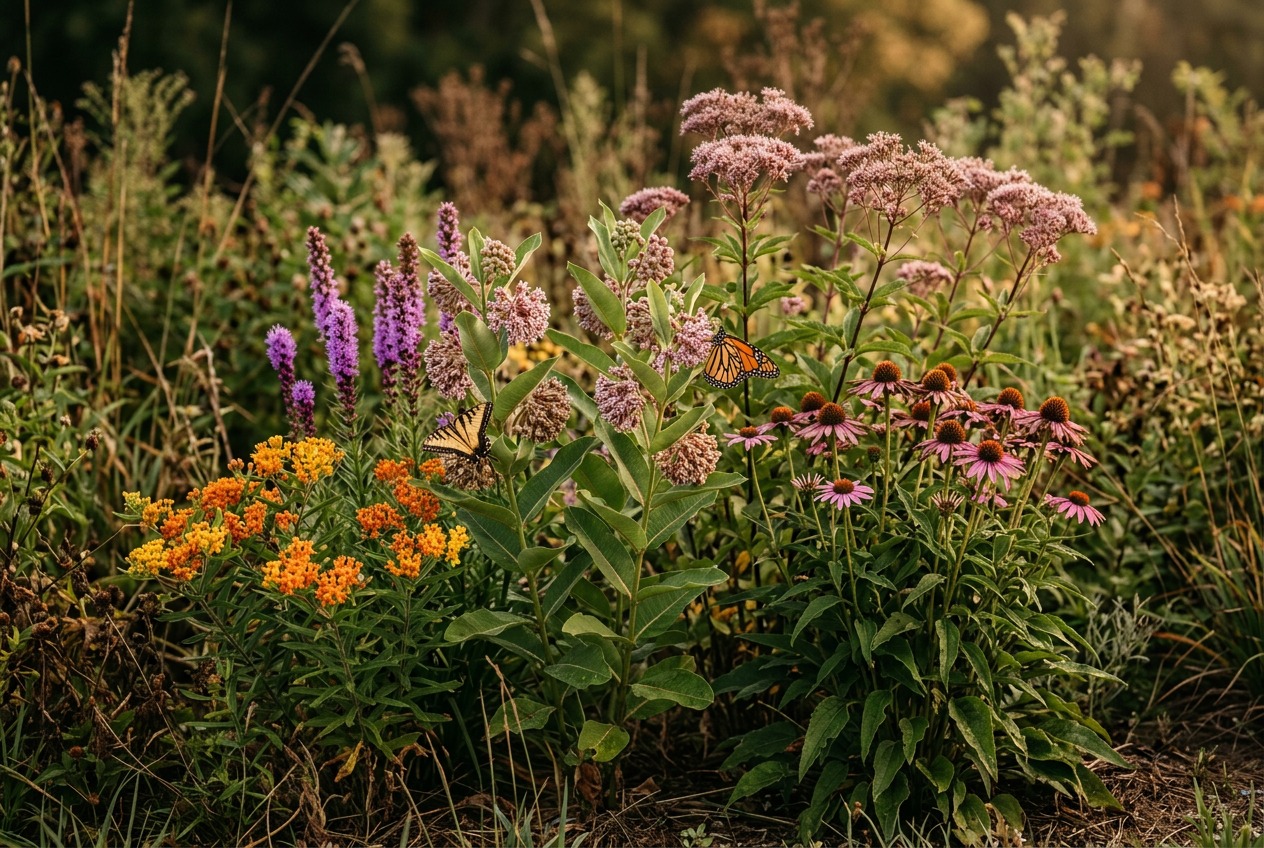
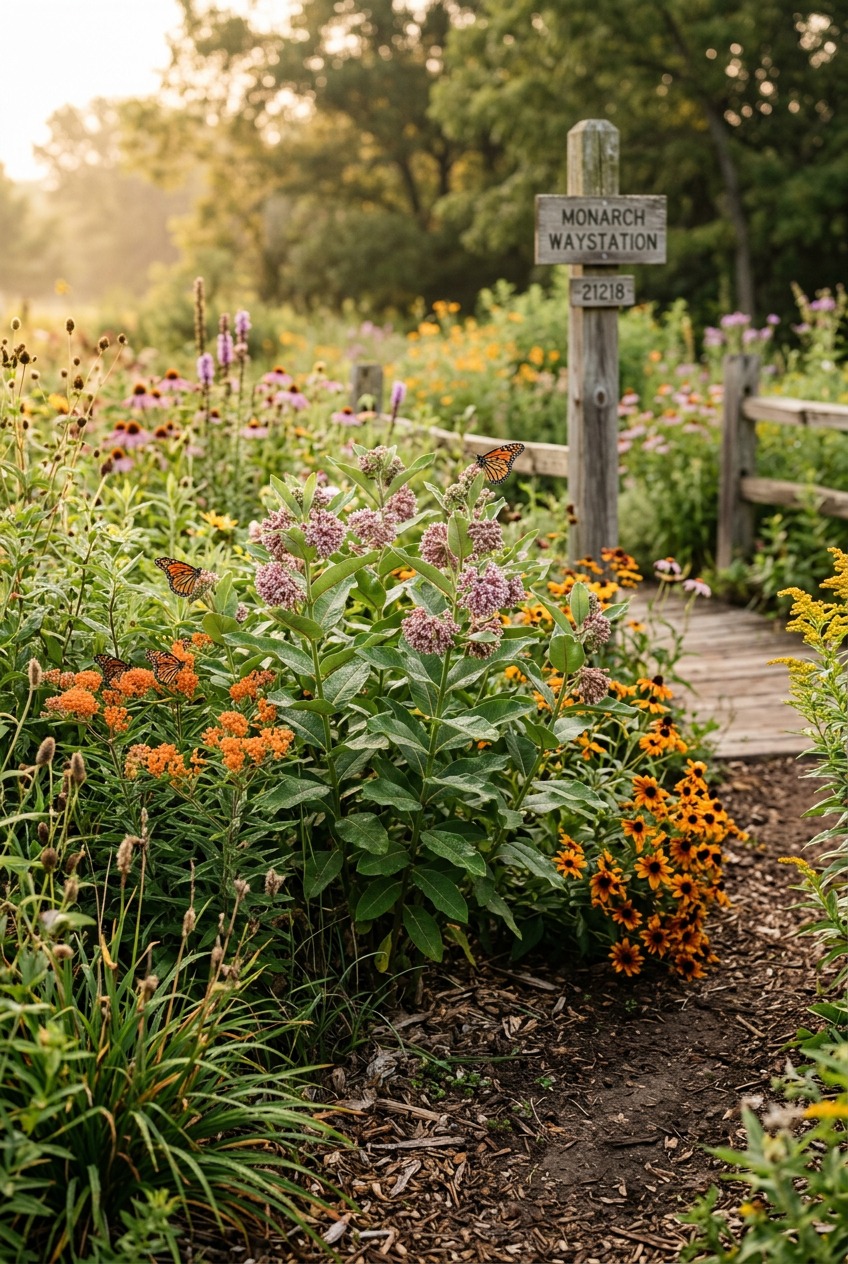
A monarch waystation is a patch of your yard planted specifically for migrating monarch butterflies. It gives them milkweed to lay eggs on and nectar flowers to fuel their trip. You can certify it through Monarch Watch for about $16, get a sign for your garden, and actually contribute to population data.
Here is everything you need: which milkweed to plant based on your region, what nectar sources to add, how to register, and what the realistic timeline looks like from bare soil to your first monarch caterpillar.
What Counts as a Monarch Waystation
Monarch Watch runs the official Waystation program out of the University of Kansas. To qualify, your site needs:
- At least 10 milkweed plants (two or more species preferred)
- At least four nectar plant species that bloom across the season
- A minimum garden area of 100 square feet
- Some sun exposure (six or more hours daily for milkweed)
- No broad-spectrum pesticide use in the waystation area
That 100 square feet is roughly a 10x10 foot bed. You can spread it across multiple beds as long as the total area qualifies.
Milkweed Species by Region
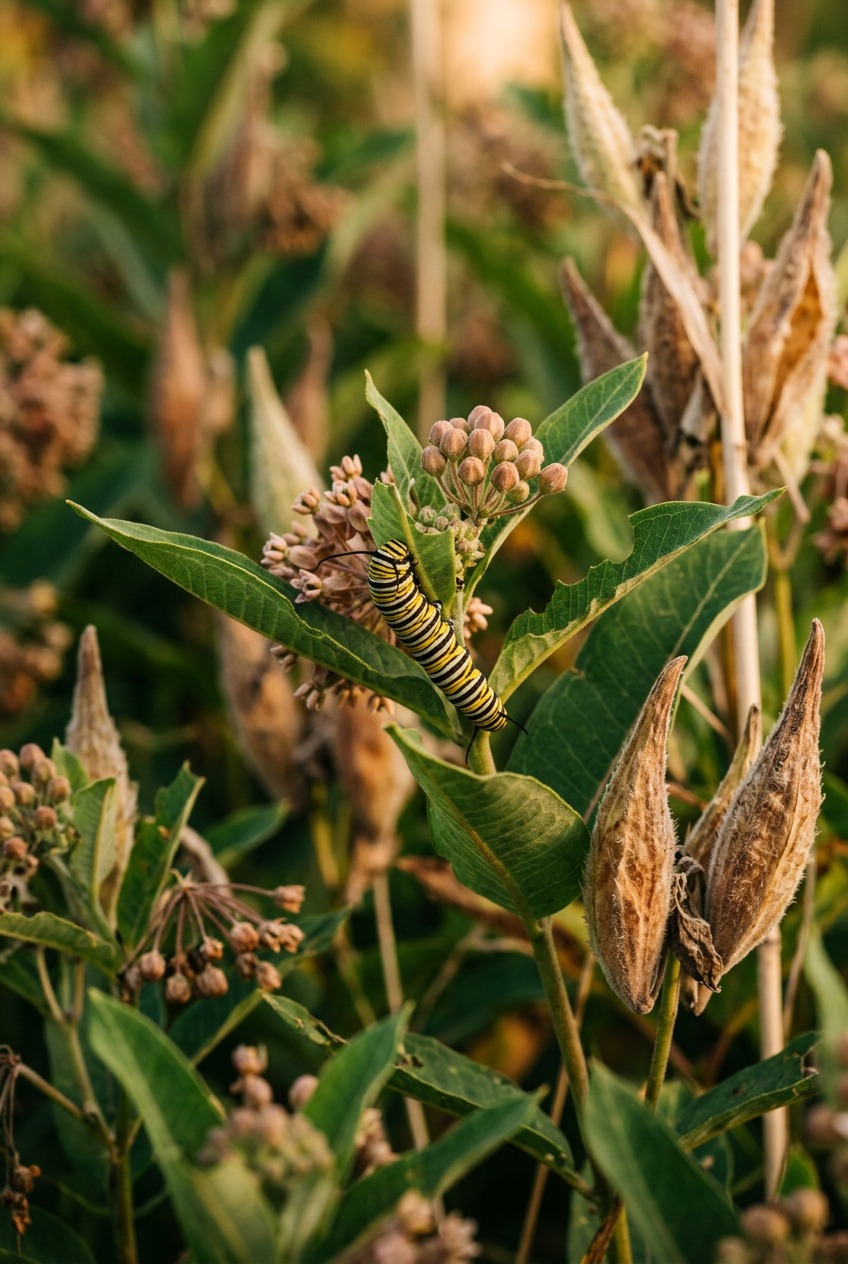
Monarchs lay eggs exclusively on milkweed. No milkweed, no monarchs. But not every milkweed works everywhere. Here are the best species by region.
Eastern United States (Zones 3 to 8)
Common Milkweed (Asclepias syriaca) is the workhorse. It grows 3 to 5 feet tall in full sun, spreads by rhizome, and thrives in average to poor soil. Monarchs prefer it over most other species. It can be aggressive, so plant it where spreading is fine. Zones 3 through 9.
Swamp Milkweed (Asclepias incarnata) is the polite cousin. It stays in a clump, grows 3 to 4 feet, and likes moist soil but tolerates average garden beds. Pink flowers. Zones 3 through 9. This is your best pick for a tidy garden bed near the house.
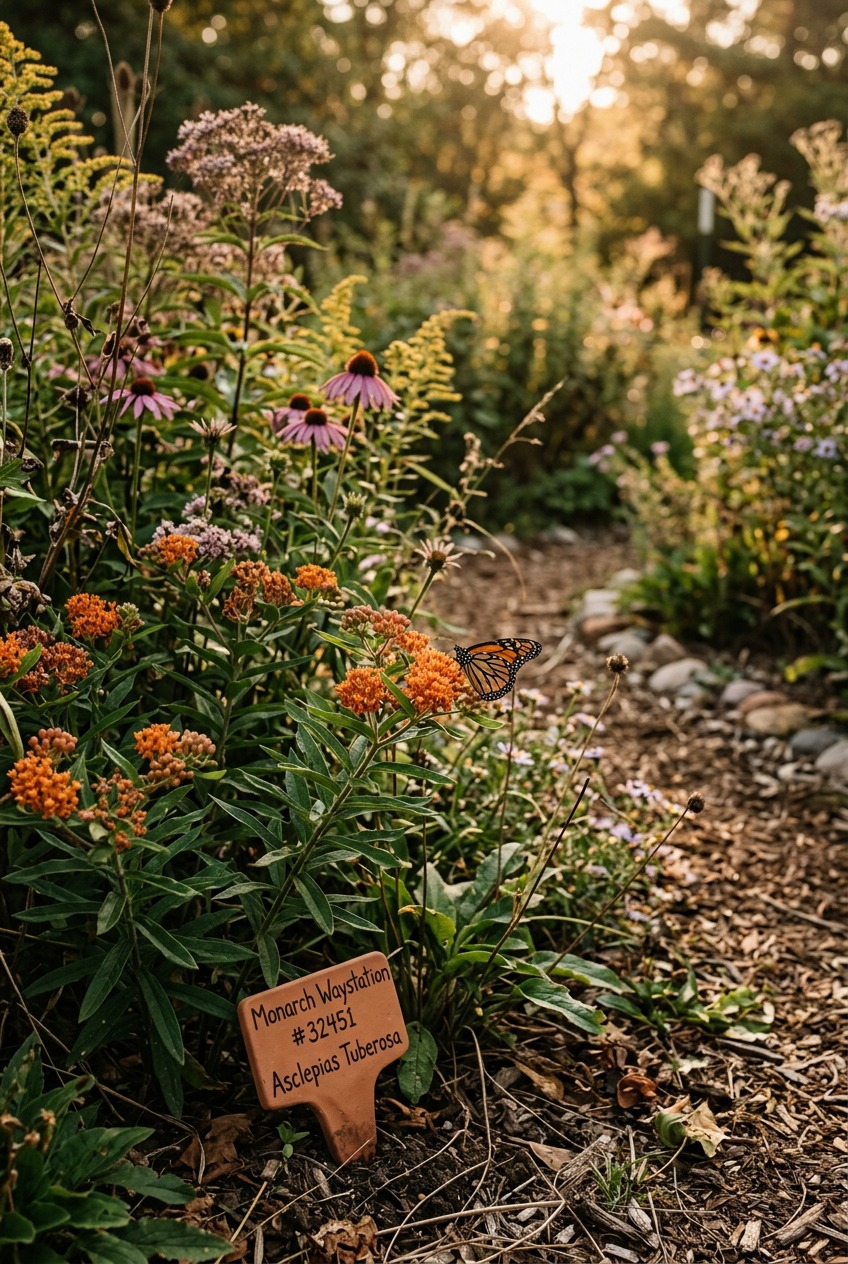
Butterfly Weed (Asclepias tuberosa) is the shortest at 1 to 2 feet. Bright orange flowers. Needs well-drained soil, thrives in dry and rocky conditions. Zones 3 through 9. Does not transplant well because of its taproot, so direct sow or buy plugs and plant them once.
Midwest and Plains (Zones 3 to 7)
All three eastern species work here. Add Whorled Milkweed (Asclepias verticillata) for dry prairie-type soils. It grows 1 to 2 feet tall with thin, delicate leaves and small white flowers. Zones 4 through 8.
Southern States (Zones 7 to 10)
Green Milkweed (Asclepias viridis) handles southern heat. It grows 1 to 2 feet, tolerates partial shade, and blooms from May through August. Zones 5 through 10.
Skip tropical milkweed (Asclepias curassavica) in southern zones. Research from the University of Georgia shows it can encourage monarchs to skip migration and harbor the OE parasite year-round. If you do grow it, cut it back to 6 inches every fall.
Western States (Zones 4 to 9)
Showy Milkweed (Asclepias speciosa) is the western equivalent of common milkweed. It grows 2 to 4 feet, has large pink flower clusters, and tolerates drier conditions. Zones 3 through 9.
Narrowleaf Milkweed (Asclepias fascicularis) works well in California and the Pacific Northwest. It grows 2 to 3 feet in dry soil and full sun. Zones 5 through 10.
Nectar Plants That Actually Work
Monarchs need nectar from late spring through fall. Here are proven performers, not just any pollinator plant, but species monarchs are consistently observed visiting.
Spring bloomers (April to June):
- Wild bergamot (Monarda fistulosa), Zones 3 to 9, 2 to 4 feet
- Purple coneflower (Echinacea purpurea), Zones 3 to 8, 2 to 5 feet
Summer bloomers (June to August):
- Black-eyed Susan (Rudbeckia hirta), Zones 3 to 7, 2 to 3 feet
- Blazing star (Liatris spicata), Zones 3 to 8, 2 to 4 feet
- Joe-Pye weed (Eutrochium purpureum), Zones 4 to 9, 4 to 7 feet
Fall bloomers (August to October):
- New England aster (Symphyotrichum novae-angliae), Zones 4 to 8, 3 to 6 feet
- Goldenrod (Solidago spp.), Zones 3 to 9, 2 to 5 feet
Goldenrod is critical for fall migration fuel. If you plant nothing else for fall, plant goldenrod.
How Much This Costs
For a basic 100 square foot waystation:
| Item | Quantity | Cost Range |
|---|---|---|
| Milkweed plugs (4-inch pots) | 10 to 15 | $4 to $7 each ($40 to $105) |
| Nectar plant plugs | 12 to 20 | $4 to $8 each ($48 to $160) |
| Milkweed seed packets | 2 to 3 | $3 to $5 each |
| Compost or soil amendment | 2 to 4 bags | $5 to $8 each |
| Monarch Watch registration | 1 | $16 |
| Waystation sign (optional) | 1 | $16 |
Budget approach: Start from seed. A packet of common milkweed seed costs about $3.50 and contains 50 to 100 seeds. Cold-stratify in the fridge for 30 days before spring planting, or direct sow in late fall and let winter do the work. Total cost from seed: under $50.
Faster approach: Buy plugs from a native plant nursery. Prairie Nursery, Prairie Moon Nursery, and American Meadows all ship bare-root and plug-size milkweed and nectar plants nationwide. Expect to spend $100 to $250 for a full 100 square foot planting with plugs.
Planting Layout and Spacing
Space milkweed plugs 18 to 24 inches apart. Common milkweed fills in fast, so give it the full 24 inches. Swamp milkweed and butterfly weed can go at 18 inches.
Nectar plants go in drifts of three to five of the same species. This helps pollinators find them. Space most perennials 12 to 18 inches apart, except Joe-Pye weed, which needs 24 to 36 inches.
Plant milkweed in the center or back of the bed. Put shorter nectar plants like butterfly weed and black-eyed Susans toward the front. Tall species like Joe-Pye weed go in the back.
Full sun is essential. Six hours minimum for milkweed, eight hours preferred. If your yard is mostly shade, this project needs your sunniest spot.
How to Register with Monarch Watch
- Plant your waystation with the minimum requirements (10 milkweed plants, four nectar species, 100 square feet)
- Go to monarchwatch.org and click “Waystations”
- Fill out the registration form with your location and planting details
- Pay the $16 registration fee
- You will receive a certificate and your site gets added to the national registry
- The optional $16 metal sign ships separately
The NWF Certified Wildlife Habitat program is a separate certification. It costs $20 and has broader requirements (food, water, cover, places to raise young, sustainable practices). You can do both if you want two signs.
Realistic Timeline
Year one: Plant milkweed and nectar plants in spring (after last frost) or fall. Milkweed grown from seed may not bloom the first year. Plugs usually bloom by midsummer. You may see monarchs visiting nectar flowers the first season, but egg-laying on young milkweed is less common in year one.
Year two: Milkweed is established and growing vigorously. This is when you will likely find your first monarch eggs and caterpillars. Common milkweed starts spreading. Nectar plants fill in and bloom reliably.
Year three and beyond: The waystation is fully mature. Milkweed colonies are thick. You should see monarch eggs, caterpillars, and chrysalises regularly during migration season (June through September in most of the eastern U.S.).
Peak monarch migration through the eastern U.S. runs August through October. In the western U.S., it is September through November. Your waystation will see the most monarch activity during these windows.
Common Mistakes to Avoid
Planting tropical milkweed in warm climates without cutting it back. It stays green all winter in Zones 9 and 10, which disrupts migration patterns.
Using pesticides near the waystation. Even “organic” Bt (Bacillus thuringiensis) kills monarch caterpillars. It targets all lepidoptera larvae, not just pests.
Planting too little milkweed. One or two plants is not enough. Monarch caterpillars eat an entire milkweed plant before pupating. Ten plants is the Monarch Watch minimum, but 20 to 30 gives caterpillars a better chance.
Mowing milkweed volunteers. Common milkweed pops up in lawns and field edges. If you can leave a strip unmowed from May through October, you have just added free monarch habitat.
A 10x10 foot patch of the right plants, registered with Monarch Watch, is a real contribution to monarch conservation. It costs less than a weekend dinner out, and you will have something worth watching from your back porch for years.