
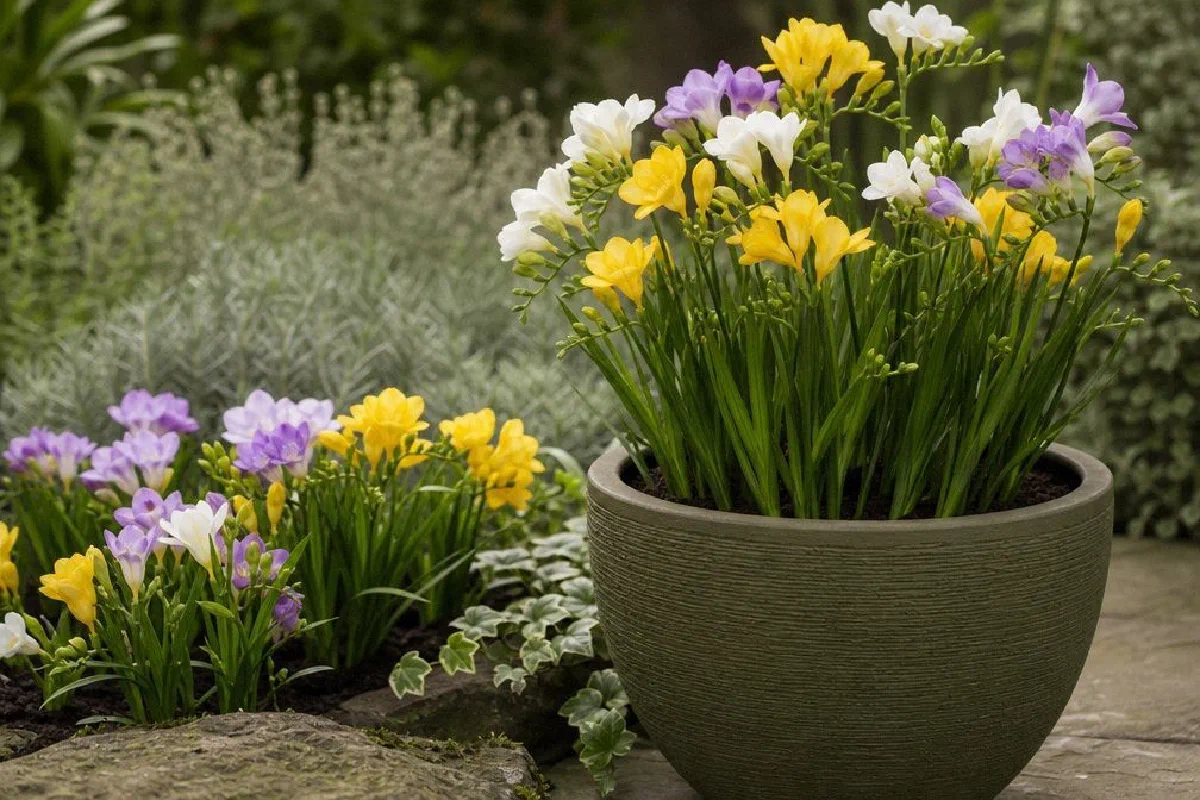
Freesias are easy to love and easy to disappoint. The bulbs are small, the flowers look delicate, and one soggy pot can ruin the whole batch before anything has a chance to bloom.
The main rule is simple: freesias want drainage more than pampering. Whether they go in a pot or a bed, the setup has to let water move through.
Choose The Better Spot First
Freesias like bright light and soil that does not stay wet. In warm climates they can go into garden beds in fall for spring bloom. In colder areas, they are usually grown in pots or planted after frost risk has passed.
If your soil is heavy clay, a pot is often easier. If your bed drains quickly and gets good light, the garden can work well.
Plant At The Right Depth
Plant freesia corms about 2 inches deep with the pointed end facing up. Penn State Extension’s bulb guide gives the general rule for bulbs and corms as pointed end up and root plate down, and it is honest about the rest: summer bulbs vary enough in their requirements that the instructions supplied with the bulbs should win. Space them a couple of inches apart in pots, or slightly farther apart in beds if you want air around the foliage.
Do not bury them too deep. A small corm planted too low has to spend too much energy just getting leaves to the surface.
Do Not Let The Pot Stay Wet
The fastest way to waste freesia bulbs is a pretty pot without enough drainage. Use a container with holes and a loose potting mix. If water sits in the saucer, empty it.
Water after planting, then let the top of the soil begin to dry before watering again. Freesias need moisture, but they do not want to sit in a cold, wet pot.
Should You Plant Freesia in a Pot or a Bed?
Choose the pot if your soil is heavy clay or your winters are cold, and the bed if the ground drains quickly and you garden somewhere mild.
| In a pot | In a bed | |
|---|---|---|
| Why pick it | Heavy clay, cold winters, or a spot you can move | Fast-draining soil and a mild winter |
| Drainage | Holes in the bottom, a loose potting mix, and a saucer you empty | Work in organic matter so water keeps moving |
| Depth | About 2 inches, pointed end up | About 2 inches, pointed end up |
| Spacing | A couple of inches apart | Slightly farther apart for airflow |
| Water | After planting, then let the top begin to dry | The same, and never leave the bed soggy |
| Support | A small ring or stakes, because pots lean | Stakes only on a windy site |
The pot wins on control. You can move it out of a cold snap, you can see when it needs water, and you can tip it out if the mix stays wet. The bed wins on space, which matters if you want enough stems to cut.
Support The Stems Early
Freesia stems can lean as they grow, especially in pots. Add a small ring support, thin bamboo stakes, or a few twiggy branches before the stems get tall.
The support disappears once the leaves fill in, and it keeps the flowers from flopping right when they finally open.
Quick Setup Checklist
- A container with drainage holes, and a saucer you will actually empty.
- A loose potting mix rather than heavy garden soil.
- Corms set about 2 inches deep, pointed end up, a couple of inches apart.
- A ring support, thin stakes, or twiggy branches in place before the stems get tall.
- Water after planting, then wait until the top of the soil begins to dry before watering again.
If freesias grow leaves but no flowers, check light, drainage, and planting depth before blaming the bulbs. The pot is often the problem.
Care After the Flowers Fade
The stretch most freesia guides skip is the one right after the blooms finish, and it decides whether you get a second year out of the same corms.
Keep watering while the leaves are still green. They are feeding the corm for next season, so cutting them down early works against you. The NC State Extension freesia profile suggests a liquid feed every two weeks once the plants are about six inches tall. When the foliage yellows and dies back on its own, stop watering.
Then you have two options:
- Lift and store them. That same profile is direct about winter: the corms need lifting from the soil and storing to protect them from cold temperatures, and they can be replanted each spring or replaced with fresh ones. Shake the soil off, let them dry somewhere airy for a week or two, then store them in a dry spot at 77 to 86 degrees F.
- Leave them in the pot if you garden somewhere mild. Freesias are listed as hardy in zones 9 and 10, so in a colder zone a pot left outside is a gamble, and a pot sits closer to the air temperature than the ground does.
Wet corms rot, which is why the pot needs drainage in the first place, so dry them properly before they go into storage and check them once or twice over winter for soft spots.
Plan the Rest of the Flower Bed
Freesias are easier to place when you know what else will carry the bed after their moment passes. For longer color, pair this guide with drought tolerant flowers that still bring color or 12 perennials that bloom all summer long. Those plants help the bed keep working after the bulbs are done.
If you are building a container instead of a bed, flower container combinations that bloom all season gives simple porch pot recipes. For seed timing around the same space, use direct sow flower seeds for early summer and seed starting indoors for beginners.
Source Note
For plant-specific reference, the NC State Extension freesia profile is useful for checking freesia growing habits and common pest or disease problems.
What to Read Next
- Flower Container Combinations That Bloom All Season keeps the pot going after the freesias finish.
- Drought Tolerant Flowers That Still Bring Color is the low-water half of the same bed or pot.
- 12 Perennials That Bloom All Summer Long covers what carries the space once the corms go dormant.
- Seed Starting Indoors for Beginners is the other way to fill the same pots cheaply next season.