To keep indoor plants alive in winter, make three immediate shifts as soon as the furnace clicks on: cut your watering schedule by 30 to 50 percent, pull leaves 3 to 6 inches away from freezing window glass and heating vents, and pause all fertilizer until March. Almost every winter houseplant collapse I see comes from treating a slow, semi-dormant January plant like it is still sitting in July sunlight.
How to Keep Indoor Plants Alive in Winter: 6 Simple Fixes
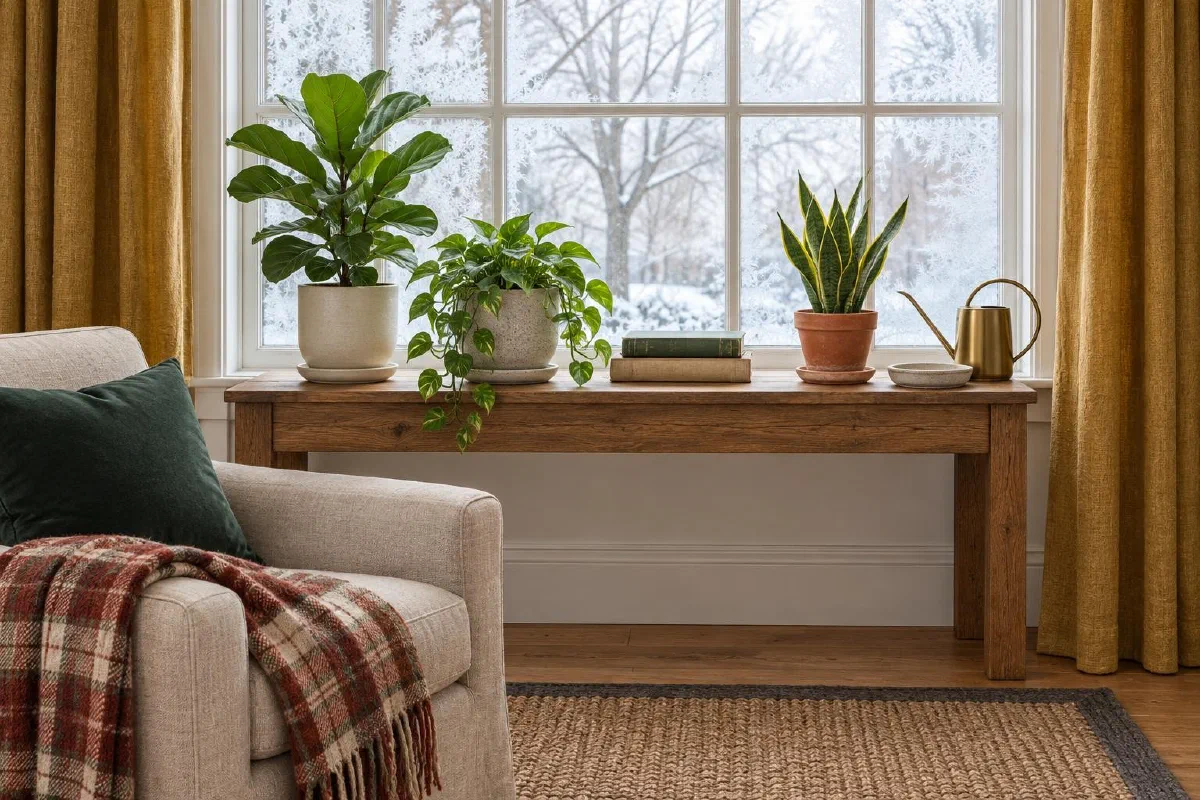
Pulling leaves a few inches off freezing glass and dialing back watering saves more winter houseplants than any humidifier.
When we help readers troubleshoot winter decline in our Indoor Plants Hub, the relief is always the same: you do not need expensive misting gadgets or a tropical greenhouse to carry houseplants through February. Follow our six-step winter survival checklist below, grounded in University of Maryland and Clemson Extension indoor care research.
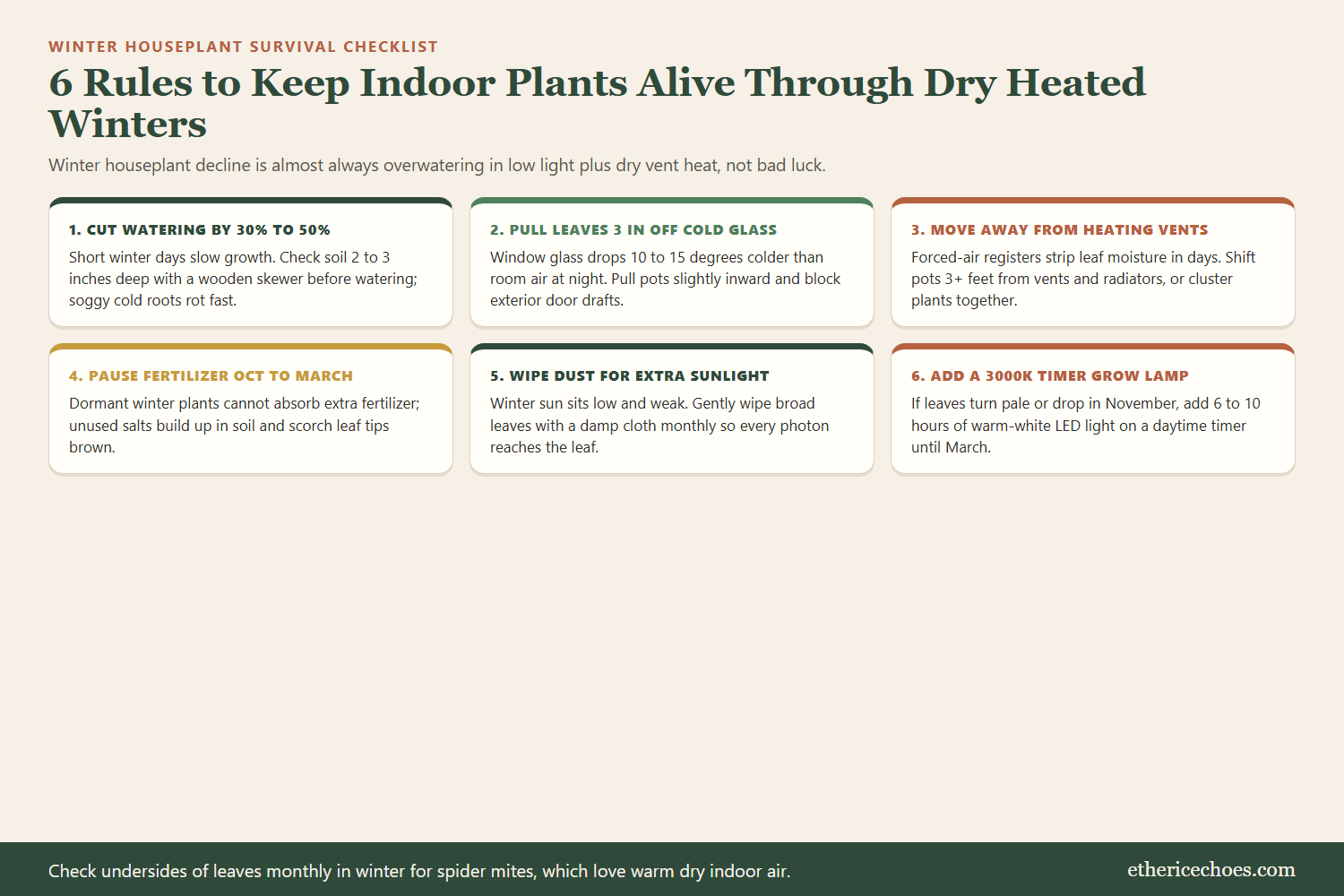
1. Cut Watering by 30 to 50 Percent (and Use Room-Temp Water)
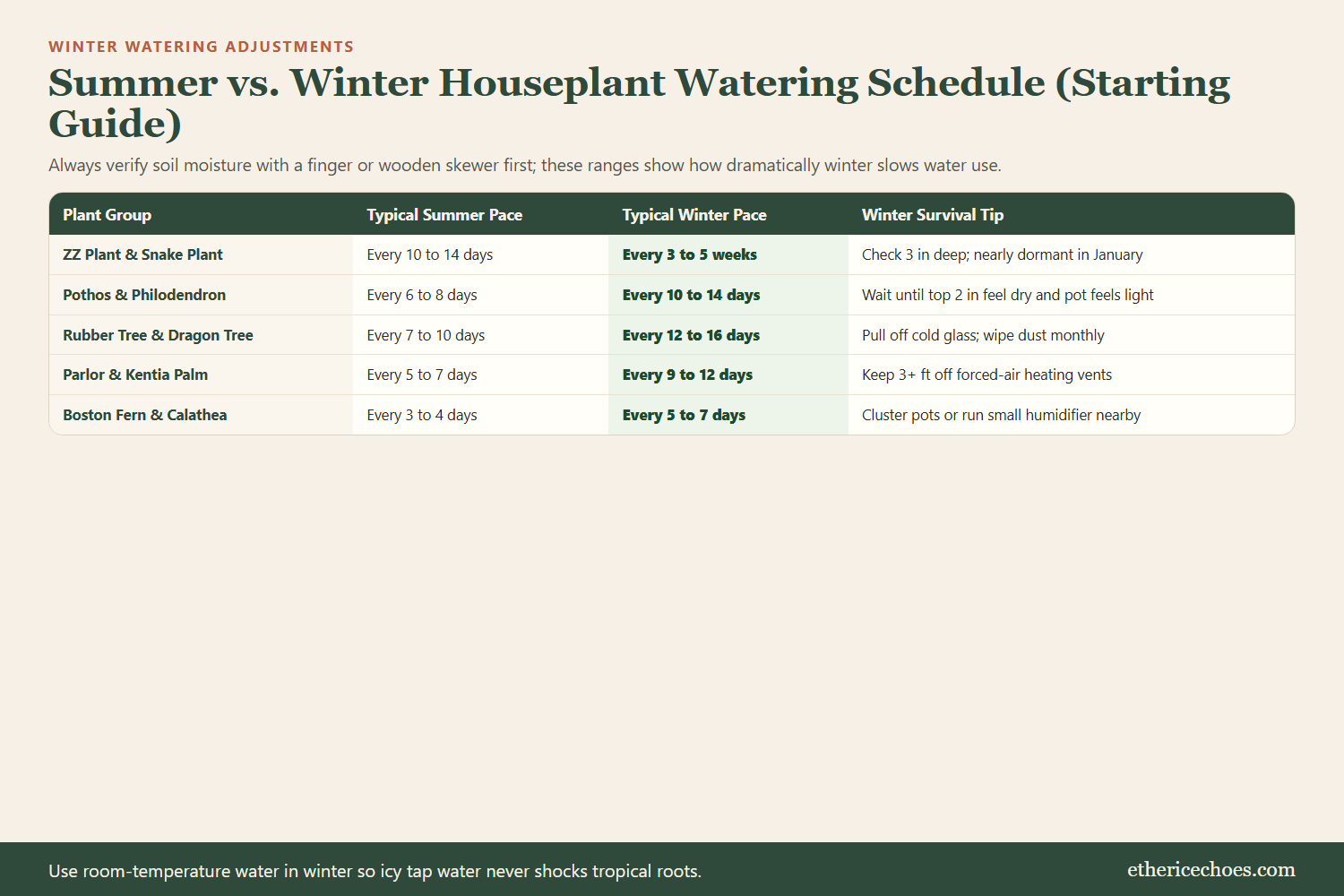
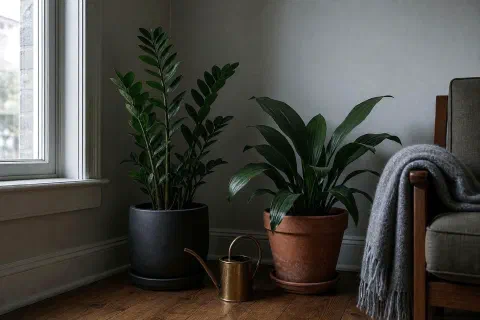
Short winter days slow photosynthesis dramatically, which means roots drink far less water. A pothos that needed water every 6 days in July may stay damp for 12 to 14 days in January, and a snake plant or ZZ plant often needs water barely once a month.
- Test deep, not just the crust: Dry winter heat dries the top half-inch of soil quickly while the bottom of the pot stays cold and sopping wet. Push a clean wooden skewer 2 to 3 inches deep before pouring.
- Warm up icy tap water: Cold winter tap water straight from frozen pipes can shock tropical roots. Let your watering can sit out overnight or blend in a splash of lukewarm water until it feels neutral on your wrist.
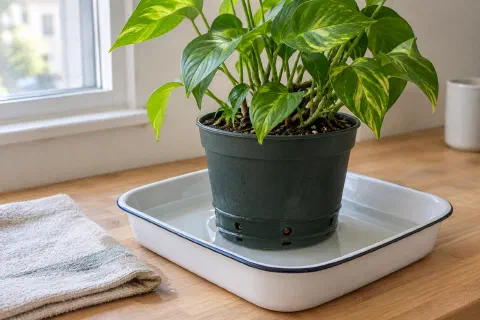
- Empty saucers every single time: Standing cold water in a saucer is the fastest path to winter root rot.
2. Pull Leaves Off Freezing Glass (and Block Door Drafts)
On a 20°F night, the air right against single- or double-pane glass runs 10 to 15 degrees colder than the rest of the room. If a rubber tree leaf or pothos vine presses directly against frosted glass, those cells freeze and turn black overnight.
- Slide windowsill pots inward 3 to 6 inches so no leaf touches the glass.
- Watch out for plants tucked right beside front doors or patio sliders that swing open into freezing gusts.
- On extreme sub-zero nights, draw curtains behind the plants (between the glass and the leaves) for a free thermal barrier.
3. Get Every Pot 3+ Feet Away From Heating Vents
Forced-air floor registers, baseboard heaters, and radiators blast bone-dry hot air straight up through foliage, turning calathea, parlor palm, and fern tips crispy brown in under a week.
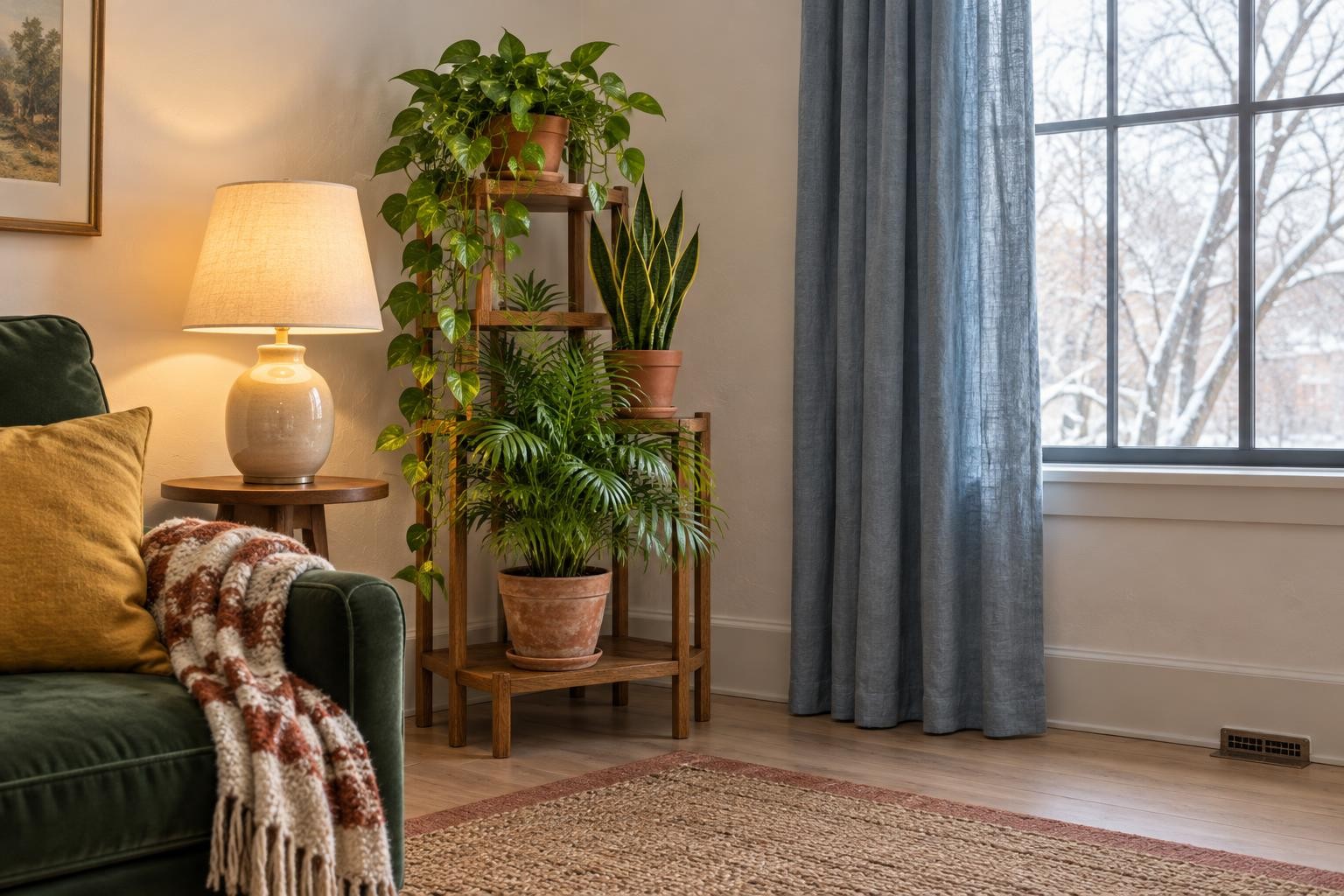
- Shift floor planters at least 3 feet away from active vents or snap on a simple magnetic vent deflector that steers hot air out into the room instead of straight into the leaves.
- Cluster plants together: Grouping three to five pots on one oak stand creates a mild microclimate as moisture evaporates gently from soil and leaves.
- Skip daily hand-misting (it raises air humidity for only a few minutes and can trigger fungal spots); if you grow fussy ferns or calatheas, run a small quiet room humidifier nearby instead.
4. Pause Fertilizer and Skip Repotting Until Spring
Per University of Maryland Extension and Clemson HGIC, most houseplants enter a quiet winter rest period from October through March.
- Put the fertilizer away: Feeding a slow winter plant leaves unused fertilizer salts behind in the soil, creating white crust on terracotta rims and burning tender leaf tips brown.
- Hold off repotting: Fresh oversized potting mix holds extra cold moisture around resting roots. Unless a pot is actively rotting or cracking apart, wait until April when fresh growth kicks off.
5. Wipe Dust Off Leaves & Move Pots Closer to Daylight
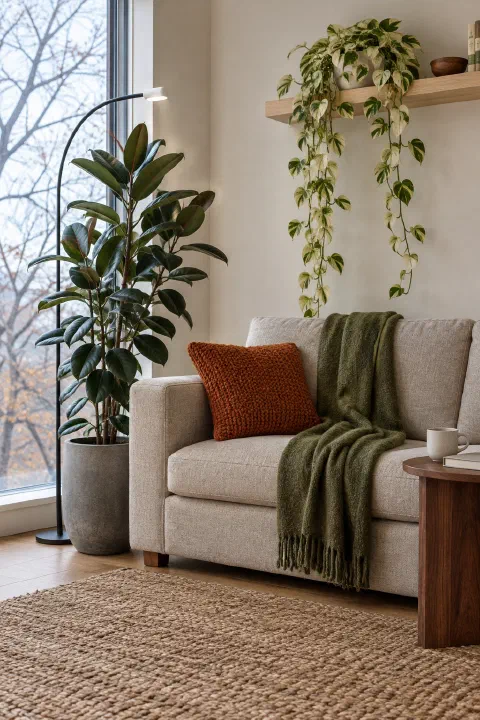
Winter sun rides low across the southern sky and delivers a fraction of summer intensity. A thin layer of household dust on broad rubber tree, monstera, or snake plant leaves blocks even more of that precious light.
- Once a month, wipe the top and underside of broad leaves gently with a soft damp microfiber cloth (skip greasy leaf-shine sprays that clog leaf pores).
- If a plant that thrived 6 feet from the window in June starts dropping yellow leaves in November, slide it 2 to 3 feet closer to bright glass until spring, or clip a warm 3000K decorative living room grow light onto a 10-hour daytime timer.
6. Do a 60-Second Monthly Pest Check
Warm, dry winter air is paradise for spider mites and fungus gnats. Catching them early takes five minutes instead of costing a whole plant.
- Spider mites: Flip over two or three leaves and look along the midrib for tiny dusty stippling or faint fine webbing. Rinse affected plants cleanly in the shower with lukewarm water and wipe stems thoroughly.
- Fungus gnats: Tiny dark flies hovering over soil are almost always a warning flag that winter soil is staying too damp. Let the top 2 inches dry completely and bottom-water for a month.
Frequently Asked Questions About Winter Houseplant Care
Is it normal for houseplants to drop a few leaves in winter?
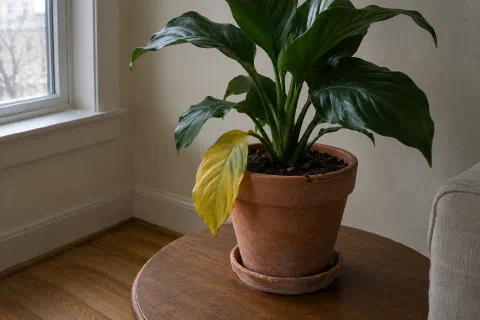
Yes. Losing a handful of older lower leaves as light drops in November and December is a normal adjustment as the plant trims foliage it cannot support in dimmer days. Heavy yellowing across the whole plant, however, usually signals overwatering or a cold draft.
Should I move outdoor patio plants indoors for winter?
Bring tender tropicals (hibiscus, mandevilla, rosemary, citrus, and potted ferns) inside before night temperatures dip below 45 to 50°F. Rinse the foliage outdoors first so hitchhiking aphids and scale do not come inside, and expect some initial leaf drop while they adjust to dimmer indoor glass.
What temperature is too cold for indoor houseplants?
Most tropical foliage houseplants prefer 65 to 75°F during the day and stay safe down to roughly 55 to 60°F at night. Sustained temperatures below 50°F cause dark water-soaked chill damage on tender tropical leaves.
Sources
- University of Maryland Extension: Winter Indoor Plant Problems: winter watering, light drop, and dry-air stress diagnostics.
- Clemson HGIC: Indoor Plants Cleaning, Fertilizing, Containers & Light: winter rest period and fertilizer thresholds.
- University of Minnesota Extension: Houseplant Care: soil checks, drainage, and seasonal repotting timing.