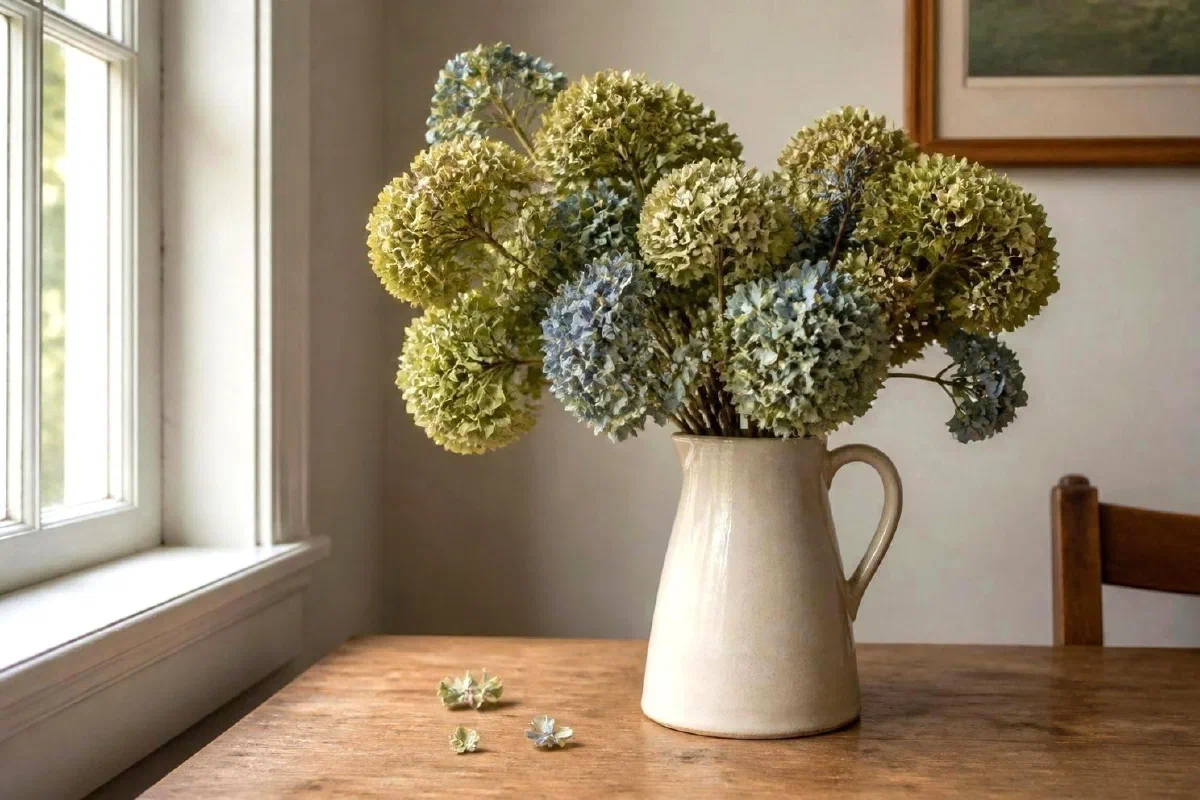
Cut a hydrangea the week it opens, stand it in a vase, and it will be slumped by morning. Not browning at the edges. Fully collapsed, like a lettuce leaf left on the counter.
That is the part most instructions on how to dry hydrangeas skip. A fresh bloom is full of water and has no stiffness of its own to fall back on once that water leaves. It has to do most of the drying while it is still attached to the plant, drawing down slowly over weeks while the roots are still feeding it. You are not really drying a hydrangea. You are catching one that already started.
Which is why the window is open right now. Late August through September is when most of the country reaches the stage you need, and it closes once the heads go brittle and brown.
When to cut hydrangeas for drying: the papery test
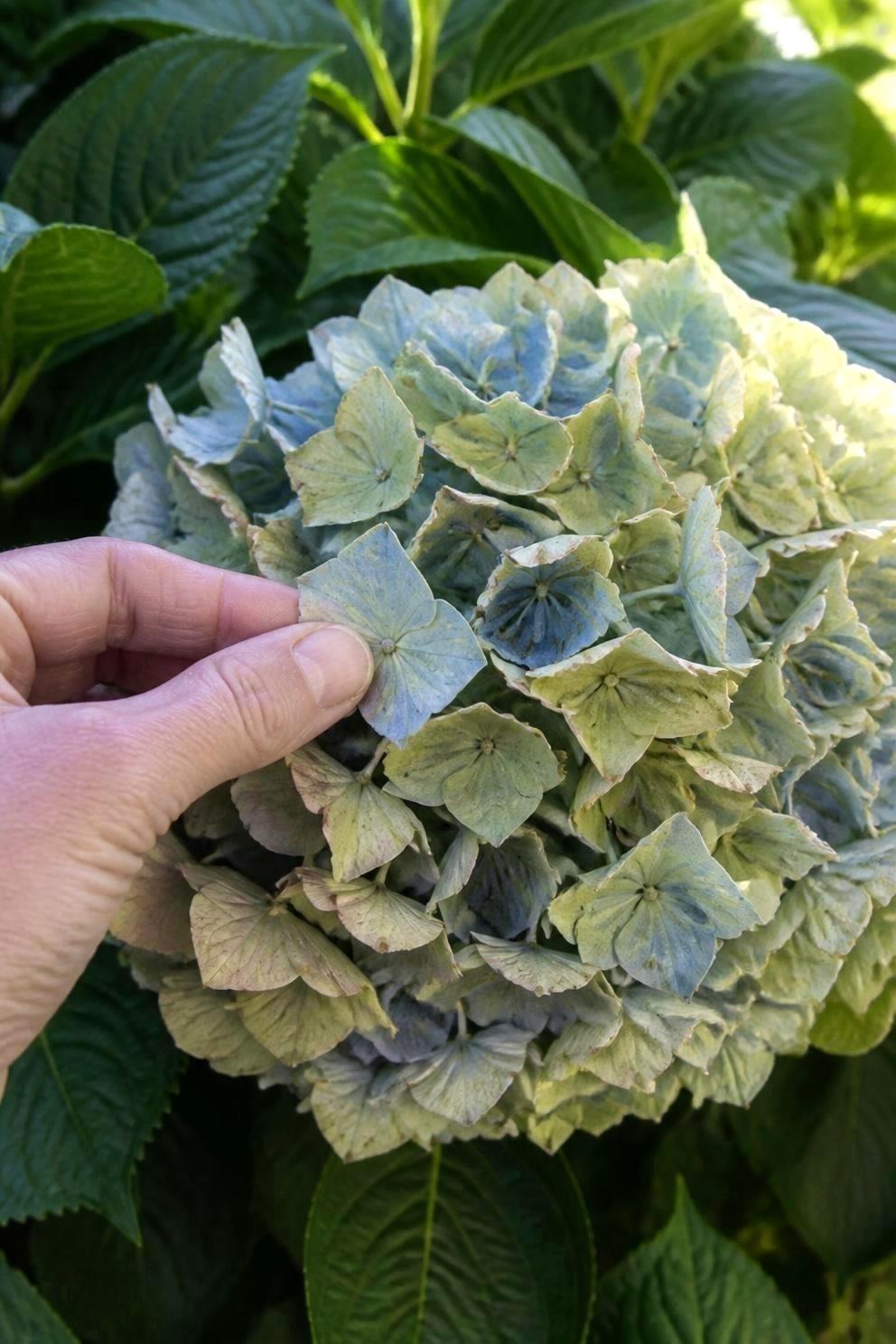
Forget the calendar and use your fingers. Squeeze a bract between thumb and forefinger. If it feels soft and cool and slightly fleshy, like a fresh petal, it is too early. If it feels dry and thin and makes the faintest crackle, like tissue paper, cut it.
Heather Sherwood, senior horticulturist at the Chicago Botanic Garden, gives the color half of the test . On white varieties, cut “when the top or center flowers begin to show a slight green tint.” On pink, blue, purple and red types, wait for that papery texture plus a color shift, usually with green working its way in.
There is a hard edge on the late side. Sherwood: “If they’ve already wilted, it’s too late.” A bloom that has gone limp, or that has already tanned to brown paper in the sun, shatters when you move it. On a mature shrub the heads do not all arrive at once, so walk it every few days.
Cut in the morning, after the dew has dried. Missouri Extension’s guide on drying flowers and foliage is specific that blooms be gathered “free of dew or rain,” since surface water only lengthens the drying time, and that stems go straight into water so nothing wilts on the walk back. Two in the afternoon works against you the other way, because the plant is already under water stress.
Cut long and strip every leaf. You can shorten a stem later and cannot add it back. Leaves hold far more water than the bracts, they mold before they dry, and they are why a jar of stems goes musty instead of crisp.
| What the bract feels like | What it means | Do this |
|---|---|---|
| Soft, cool, slightly fleshy | Too early, it will collapse | Wait two to three weeks |
| Thin and dry, faint crackle | Ready | Cut in the morning |
| Papery, green or tan creeping in | Ready, and the best color | Cut now |
| Limp, or brown and brittle | Too late | Check the other heads |
Which hydrangeas dry well, and which fight you
The species matters more than the method. Bract thickness and the way a flower ages are set by genetics, and no technique rescues a bloom that was never built to hold up.
| Type | Flower | How it dries | Verdict |
|---|---|---|---|
| Panicle (H. paniculata), incl. ‘Limelight’ | Conical panicles, 6 to 12 inches | Holds shape, green to parchment | Most forgiving. Start here |
| Oakleaf (H. quercifolia) | White cones turning pink with age | Reliable, sturdy bracts | Nearly as easy as panicle |
| Bigleaf (H. macrophylla) mophead | Rounded blue or pink heads | Best color, narrowest window | Worth the attention |
| Smooth (H. arborescens), incl. ‘Annabelle’ | White rounded heads, heavy enough to flop | Soft green, weak stems | Good heads, floppy stems |
| Mountain (H. serrata) | Small lacecaps | Fine, less per stem | Filler only |
Panicle is the easy answer. Clemson’s hydrangea factsheet describes the panicle type carrying 10 to 15 inch clusters that go “white fading to pink in autumn,” and that fade is the drying process happening in front of you. NC State Extension notes that on ‘Limelight’ the “blossoms make attractive fresh bouquets or dried arrangements.” A 6 to 12 inch panicle is a lot of flower per stem, so three fill a pitcher.
Oakleaf holds up almost as well. Clemson lists its flowers as “white, turning pinkish with age.” Thick bracts, and the cone shape gives an arrangement height without many stems.
Bigleaf mopheads give the color everyone wants. The blues and deep antique pinks in dried hydrangea arrangements come from H. macrophylla, and nothing else in the genus matches them. The trade is a tighter window. A week early and it flops. Two weeks late and it has gone tan. Check these every three days once the shift starts.
Smooth hydrangea dries fine and then falls over. NC State lists H. arborescens as “Good Dried,” so the heads are not the problem. The stems are. The same page notes ‘Annabelle’ has “white flowers on weak, floppy stems” needing support, and that “after a heavy rain, the stems supporting the clusters bend and droop.” Cut before a storm puts the heads in the mud.
The three methods, compared honestly
There are three real ways of preserving hydrangeas once they are cut. Only one is worth doing by default, and almost nobody mentions it.
| Method | Your effort | Time to dry | Color result | Best for |
|---|---|---|---|---|
| Water evaporation | Five minutes, once | About two weeks | Best shape retention | Almost everyone |
| Hanging upside down | Five minutes, once | Two to three weeks | Good color, some shape loss | Large batches at once |
| Silica gel | Twenty minutes plus | Three to seven days | Brightest color, most fragile | Blooms cut slightly early |
The water method, which is the one I would use
It sounds backward. You put the stems in water to dry them. The flower keeps drinking as the level drops, so it dries down from full instead of half empty, and never gets the shock that makes a bloom collapse.
Clemson’s drying flowers factsheet describes the mechanism plainly: “The stems of the flowers are initially placed in a couple of inches of water, then the water is allowed to evaporate and be taken up by the cut flowers.” It names hydrangeas first on the short list of flowers that dry well this way, alongside yarrow, bells-of-Ireland and celosia.
- Cut in the morning once the bracts pass the papery test, taking long stems.
- Strip every leaf, including the ones hiding right under the flower head.
- Recut the stem ends at an angle before they go in the jar.
- Add two to three inches of water to a clean jar. A full vase slows things down and rots the stem ends.
- Stand three to five stems in it, no more. Sherwood is emphatic that “airflow is important for the blooms to dry properly,” and a crowded jar traps damp air where the heads touch.
- Set it out of direct sun and leave it alone. No refilling, no fussing.
- Wait about two weeks. If the water is gone and the heads are not stiff yet, add another inch and let that evaporate too.
- Check by feel. The bracts should be stiff and the stem should snap rather than bend.
The reason to prefer this one is not color. It is shape. A head dried this way keeps the domed, slightly ruffled form it had on the plant, and that is what makes dried hydrangea arrangements read as flowers rather than brown paper.
Hanging upside down
The right method when you have twenty stems and one dark closet. Bundle three to five stems with a rubber band and hang them upside down.
Clemson is clear that location matters as much as method: hang them “in a warm, dark, dry place,” because “the darkness helps preserve the flower color.” Missouri Extension puts the timeline at two to three weeks and suggests an attic, a closet or a furnace room.
The cost is shape. Hanging pulls the bracts into a narrower form than the plant grew. On a wreath, where heads get packed together anyway, nobody notices. In a pitcher on a side table, you notice.
Silica gel
The fastest method, and the one for a bloom you cut before the papery stage. Bury the flower completely in the crystals in an airtight container. Clemson says about a week. The Chicago Botanic Garden puts hydrangeas at three to six days.
Two things decide whether it works. The container has to seal, because as Missouri Extension warns, “if a container is not sealed tightly, the silica gel absorbs moisture from the air, and flowers dry too slowly or not at all.” And leave the flower in the gel another 12 to 24 hours after it looks done, to finish and cool.
It keeps more of the original saturated color than either other method, and comes out far more brittle. Set a silica-dried mophead down once and do not move it again.
The room does more work than the method
Drying hydrangeas is mostly a question of where you put them. Three conditions decide the result, and none of them is technique.
Dark. The one people skip, and the reason a batch comes out tan when it should be blue. Light bleaches pigment while the flower is still damp, which is when it is most vulnerable. A closet beats a bright kitchen.
Dry. Dried hydrangeas pull moisture back out of the air. In a humid room the drying stalls, stem ends soften, and mold starts in the dense middle of the head where you cannot see it. A basement in August is the wrong room even though it is dark. Run a fan if it is all you have.
Moving air. Warm still air is worse than cool moving air. Missouri Extension specifies loose bunches, not tight, for this reason, and Clemson calls for a well-ventilated spot. Do not push the jar into a corner against the backsplash.
What the colors do, and why yours are the color they are
Some fading happens and it is not a failure. Clemson notes that air dried, “blue and yellow flowers retain their colors” while pink flowers fade. Missouri Extension adds the other end: “extremely dark flowers, especially in the red, purple and blue ranges, may appear almost black after drying.”
What tends to come out the other side:
- Blues hold best, settling into a dusty, slightly grey blue.
- Pinks lighten toward soft rose or tan.
- Whites turn cream, often with green or a pink blush.
- Panicle greens stay green, drift toward parchment, and stop there.
- Deep purples and reds darken. Sometimes attractively, sometimes to near black.
The faded look is the point. A dried hydrangea that still looked like a fresh July bloom would be plastic. What you want is the color a good linen curtain goes after ten summers.
Why your blooms are that color to begin with. Only bigleaf and mountain hydrangeas shift color with the soil, and the mechanism is aluminum availability rather than pH directly. Clemson gives the numbers: “In acidic soil (pH 5.0 to 5.5), where aluminum is readily available, the flowers are blue, while in alkaline soils (pH 6.0 and up), they are pink.” Panicle, oakleaf and smooth hydrangeas do not respond to this, which is why every Limelight on the street is the same green regardless of whose yard it is in.
That tells you what to plan on. If your mopheads come up pink every year you will have soft rose and tan dried fall stems, not blue ones, and no method changes it.
This article contains affiliate links. If you buy through them, Etheric Echoes may earn a commission at no extra cost to you. As an Amazon Associate I earn from qualifying purchases. Read the full disclosure.
What to do with them
The drying is the whole job. What comes after needs less than you think.
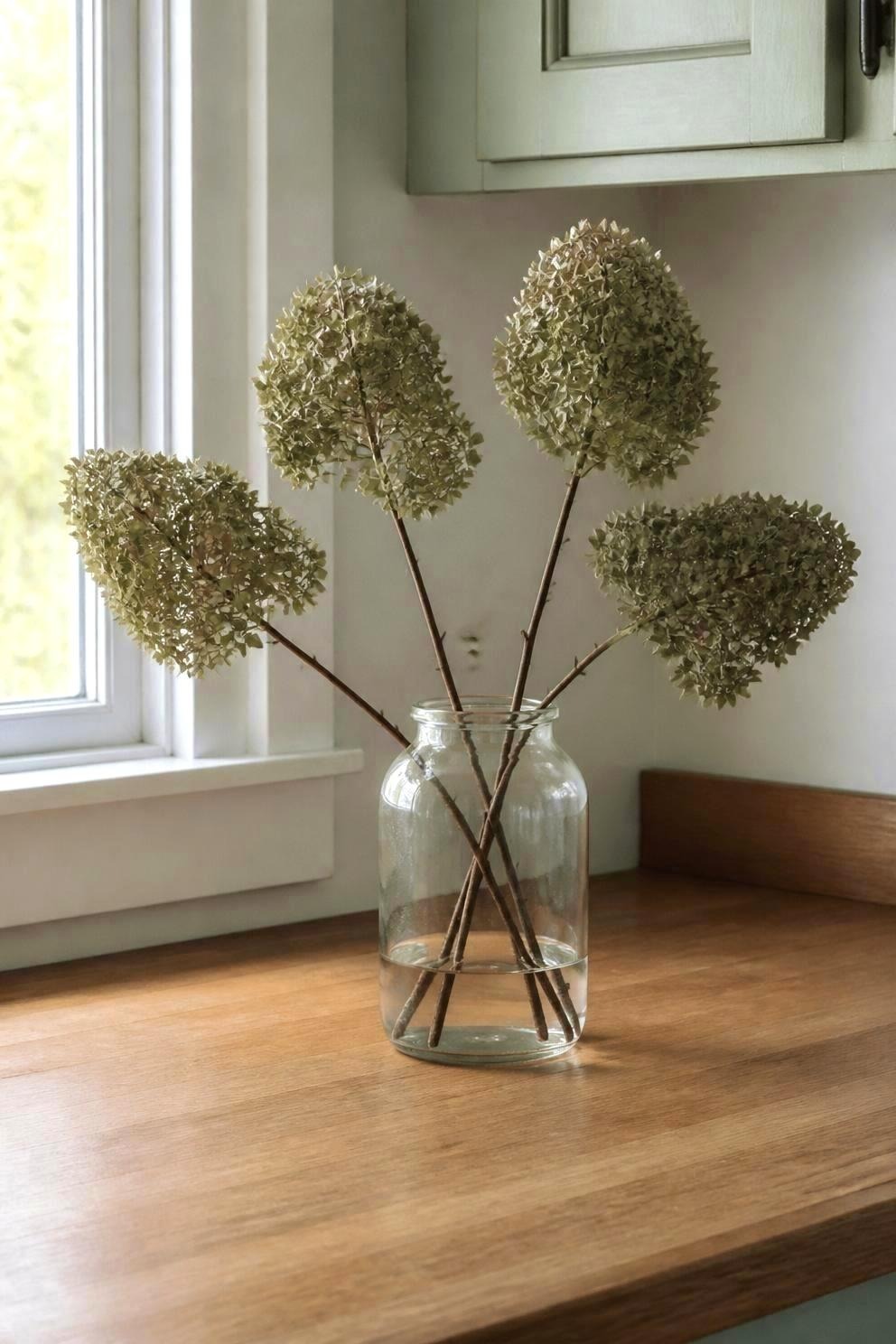
A pitcher of stems, and nothing else. Five to seven heads cut to different lengths. Dried hydrangeas need no water, so any container with no drainage and no seal works, which opens up every thrifted jug and crock you own. A 28-ounce stoneware pitcher (opens Amazon in a new tab) is the size that holds that many stems without looking stuffed.
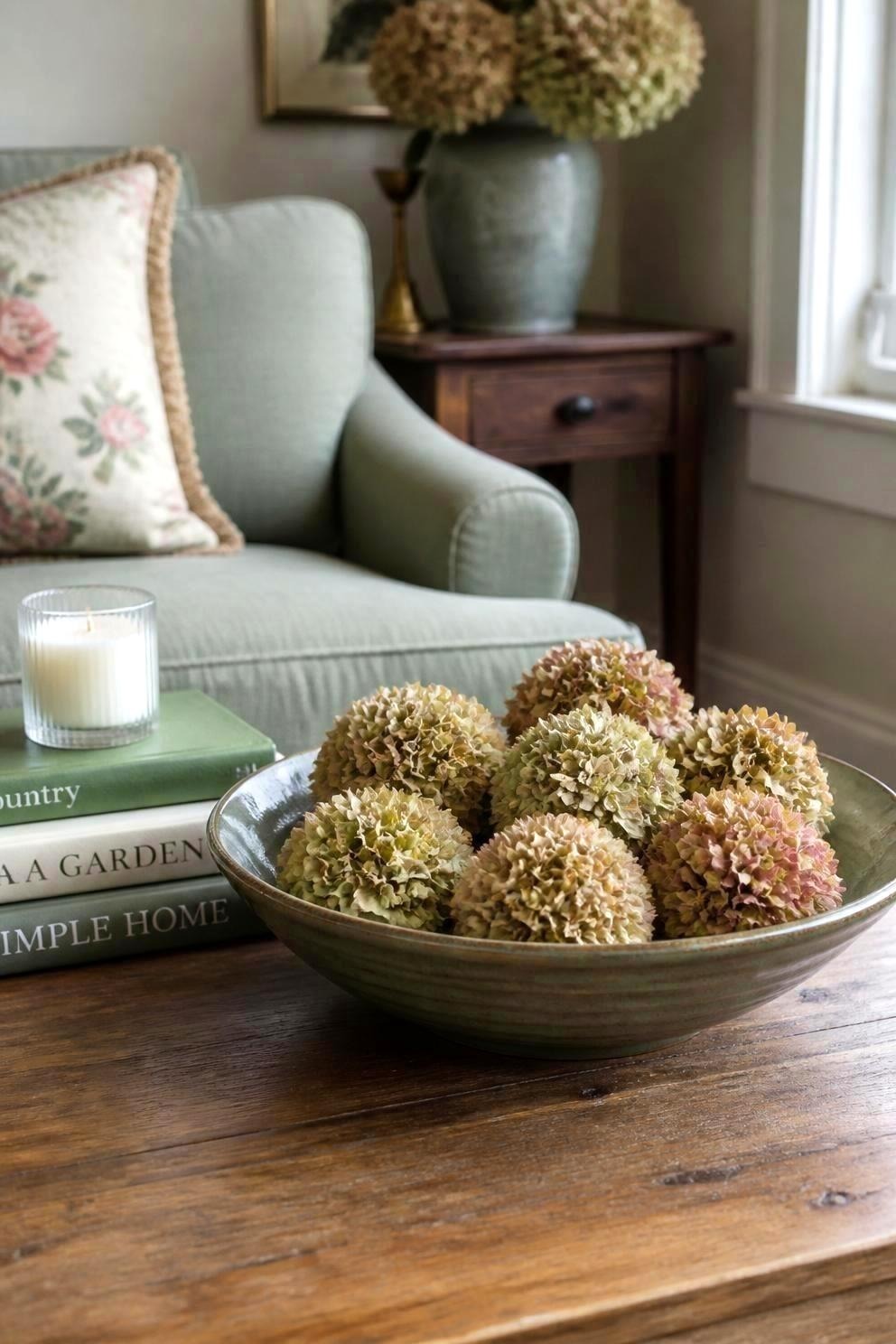
A shallow bowl of heads. Snip the stems to an inch and set six or seven heads in a wide low bowl. Thirty seconds of work.
A wreath. Where hanging-dried heads earn their keep, since they are already compressed. Wire them onto a grapevine base in overlapping clusters facing one direction. Hydrangea heads are one of the sturdier things you can put on a dried fall wreath that lasts past October , which matters if the door sees weather. The same heads also work on a small fall porch if you keep the rest of the display compact.
One stem on a shelf. A single panicle head laid flat on a stack of books does as much. If your shelves are crowded, the dried flower shelf approach covers keeping it from reading as clutter. On a table, dried hydrangea and a few candles carry a whole fall centerpiece with nothing to water.
Are dried hydrangeas safe around cats and dogs?
The ASPCA’s plant database lists hydrangea as toxic to dogs, cats, and horses, with a cyanogenic glycoside as the toxic principle. A bowl of dried heads on a coffee table sits at exactly the height a cat or a puppy investigates.
The entry names smooth hydrangea, Hydrangea arborescens, which is the ‘Annabelle’ type that dries so well. The signs it lists are vomiting, depression, and diarrhea, and it notes that cyanide intoxication is rare and that the usual result is a gastrointestinal upset instead.
None of that means giving up the arrangement. It means the bowl goes where a pet cannot reach it, the same way you would treat a houseplant, and clipped stems go in the bin rather than on the floor where a dog can find them. If a pet does get into one, the ASPCA’s guidance is to call its poison control line or your veterinarian right away rather than waiting for symptoms.
How long they last, and how to keep them
Well-dried hydrangeas hold up a year or more indoors. Missouri Extension’s guidance on dried arrangements is that “preferably, they should be replaced yearly, but with good care they often last longer,” and hydrangeas sit at the sturdy end of that range because the bracts are substantial. Two habits cut it short.
Do not mist them. The most common mistake, and it comes from good instincts. A dried hydrangea looks thirsty. It is not. Water on a dried bract rehydrates nothing. It gives mold a foothold in the middle of the head and softens the bracts until they tear.
Keep them out of direct sun. The bleaching that ruins a batch during drying keeps working on a finished arrangement. A head in a south-facing window goes flat tan in one season. Three feet back it holds color for years.
The mistakes that ruin a batch
- Cutting at peak bloom. The biggest failure, and why people decide they cannot dry hydrangeas.
- Leaving the leaves on. They mold, and they never look good dry.
- Crowding the jar, or filling it. Five stems maximum, two to three inches of water.
- Drying in a bright room, or a damp basement. Dark is right. Damp cancels it out.
- Misting the finished arrangement. Never.
If you missed the window this year
If your heads have already gone brown and brittle, leave them on the shrub. Panicle and oakleaf hydrangeas hold their dried heads through winter and look good with frost on them, and cutting now removes next year’s flower buds on some types anyway. Then note the date, because the papery stage arrives at close to the same time each year in the same yard. If you would rather not depend on one shrub, there are flowers worth growing for drying that give far more stems per square foot.
What I’d Actually Buy
The hydrangeas are free if you already grow them. The container is the only buy, and only if you do not already have a jug.
- Creative Co-Op 28 oz. stoneware pitcher (opens Amazon in a new tab) (Amazon’s Choice, 4.6 stars, about 270 reviews). Reactive glaze, so each one varies. No water needed once the heads are dry.
If you would rather not buy a new vessel, a thrifted crock or a jar you already own does the same job.
What to Read Next
- How to Dry Flowers: 6 Methods That Actually Work , for everything else in the garden.
- Flowers to Grow for Drying If You Want Arrangements All Winter , what to plant for next winter’s stems.
- Dried Flower Shelf Ideas for a Tidy Cozy Room , where the finished stems go indoors.
- 5 Fall Table Centerpiece Ideas That Last Past Thanksgiving , how dried heads work on a table.
- Fall Front Porch Decor for a Small Porch , if the dried heads are going on the door or step.