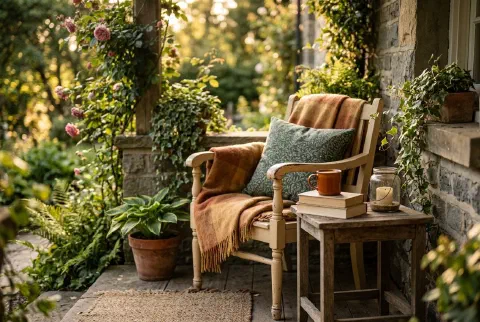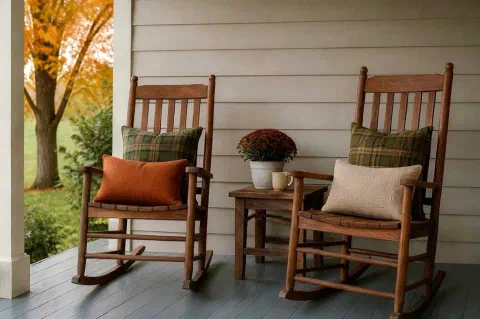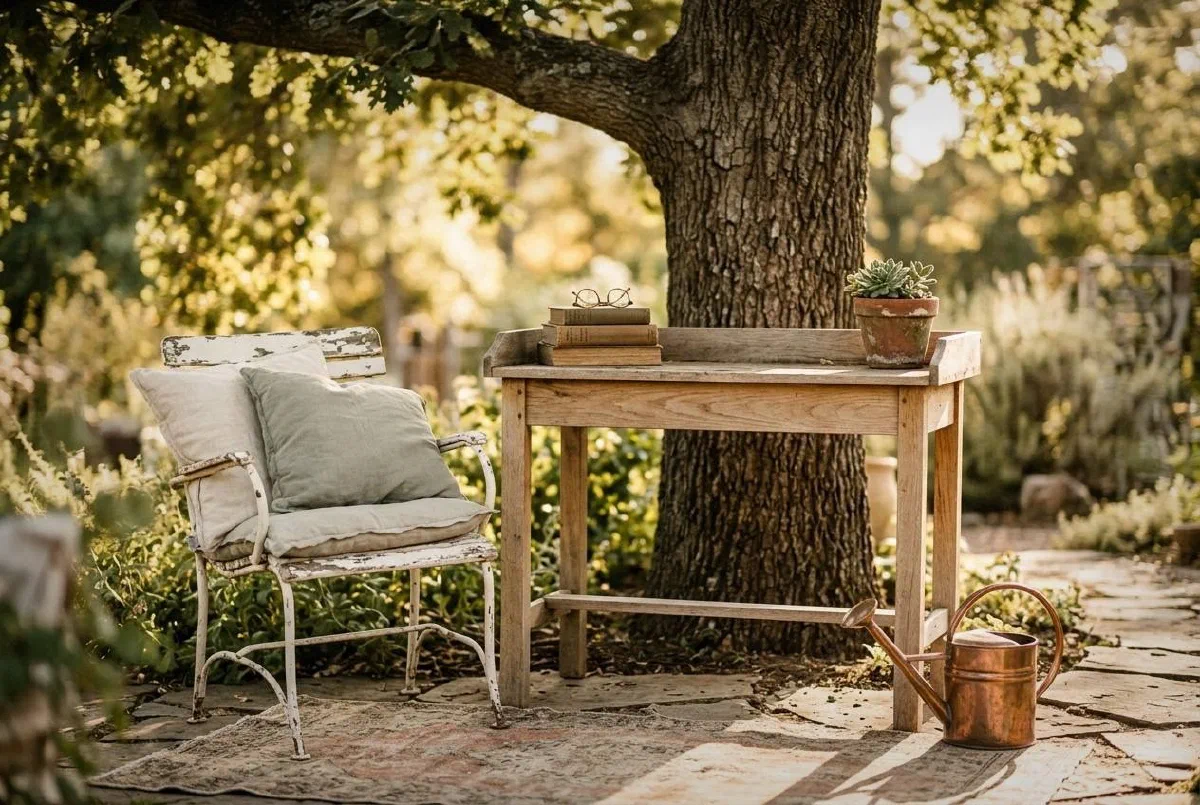
Most yards have one tree that is too shaded under for grass, too small under for a hammock, and too good a tree to ignore. If you do have the span for one, the perfect backyard hammock spot covers the distance and the anchors before you hang anything.
That tree is the reading nook waiting to happen.
Building an outdoor reading nook under a tree is mostly a matter of editing what is already there. Pick the right tree, prep the ground just enough, choose one chair, and add the small details that make a reading spot feel intentional rather than improvised. The whole project takes one weekend.
1. Pick the Right Tree
Not every tree makes a good reading nook.
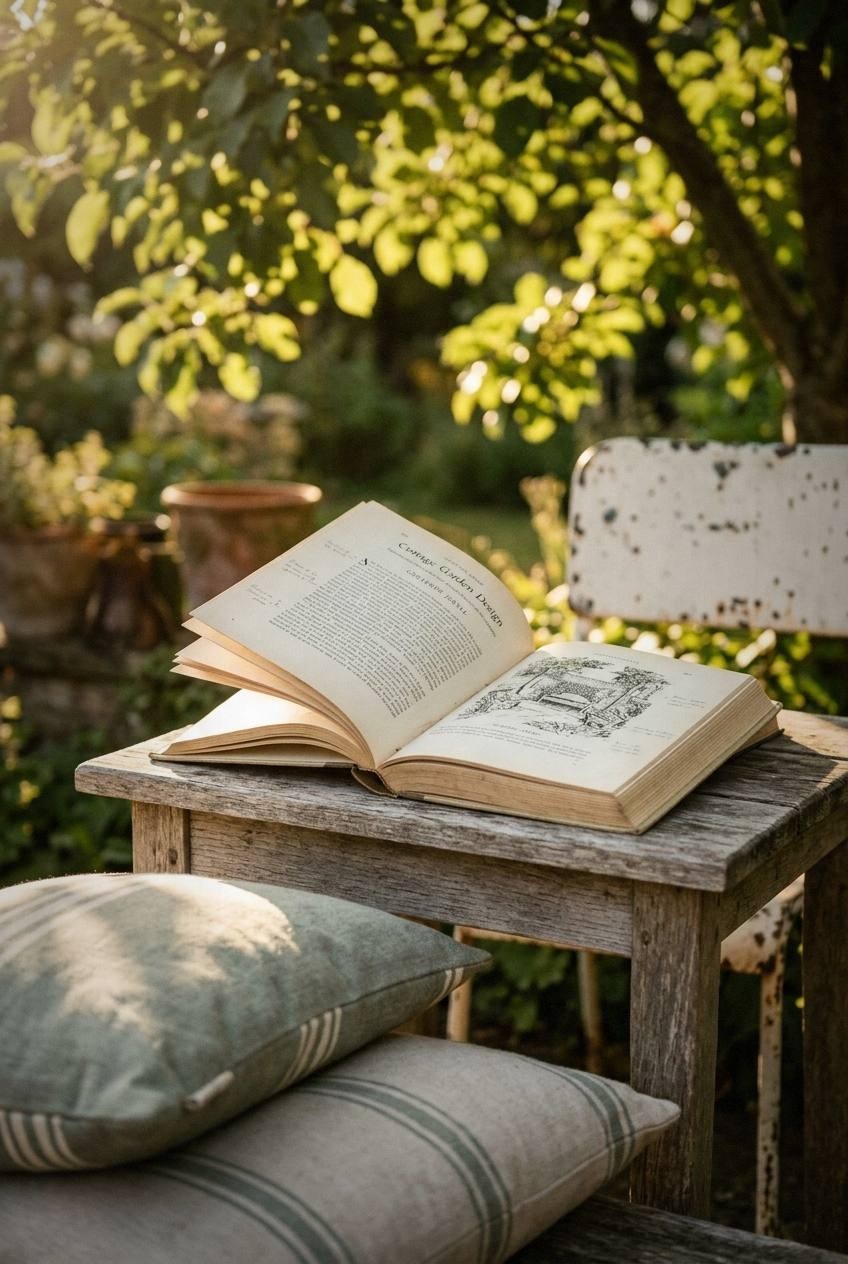
The right tree has a canopy that starts about 7 feet off the ground, gives dappled shade rather than dense shade, and has a level patch of ground beneath it. Maples, oaks, and dogwoods all work in most regions. Cherry trees and fruit trees are harder because they drop fruit, leaves, and sap on the chair.
| Tree | Shade it gives | What it drops on the chair | For a daily nook |
|---|---|---|---|
| Maple, oak, dogwood | Dappled, canopy starting around 7 feet | Leaves in fall | The all-round choice |
| Cherry and other fruit trees | Dappled, and often thinner than it looks | Fruit, leaves, and sap | Workable, but more cleaning |
| Spruce and pine | Dense, and often low to the ground | Needles year round, plus sap | Skip it |
Avoid evergreens like spruce or pine for daily reading nooks. The needles drop year-round and the sap lands on books and clothes.
A deciduous tree also earns its place twice: the Department of Energy’s Energy Saver guide notes that trees with high, spreading crowns shade the house in summer and let the winter sun through once the leaves drop.
Stand under the candidate tree for ten minutes before committing. Look up. If the canopy reads as a ceiling, it is a good reading nook tree. If you can see most of the sky through the branches, the shade will not hold during the hottest hours.
2. Prep the Ground (or Don’t)
The minimum ground prep is none. The maximum is laying a small stone or gravel pad.
For a casual reading nook, the lawn or bare dirt under the tree works fine. Place the chair, walk to it a few times until a path forms, and call it done. This is the lowest-cost and lowest-effort option, and it reads as found rather than designed.
For a slightly more finished nook, lay a 4-by-4 stone or gravel pad under where the chair will sit. Use 4 to 6 flat flagstones, or a small circle of pea gravel about 3 inches deep over landscape fabric. The pad keeps the chair from sinking after rain and gives the eye a clear floor.
Avoid concrete pads. The tree’s roots need to breathe. A flagstone or gravel pad lets water and air through.
3. Choose One Chair
A reading nook is one chair, not two.
The reason is that the nook is for the person reading, not for hosting. A second chair turns the nook into a conversation area, which it is not. If two people want to read together, they want two separate nooks, not one shared one.
Pick a chair that is comfortable to sit in for an hour at a time. Adirondack, Muskoka, or wide wooden chairs all work. The chair needs a high enough back to support the head, a slight recline so the legs are not at a right angle, and arms wide enough to hold a coffee cup or book.
For climate, pick a chair that can live outside through your wettest season. Eastern white cedar, recycled-plastic Adirondacks, and powder-coated steel all hold up. Untreated softwood will rot within two years if left out.
4. Add a Side Table
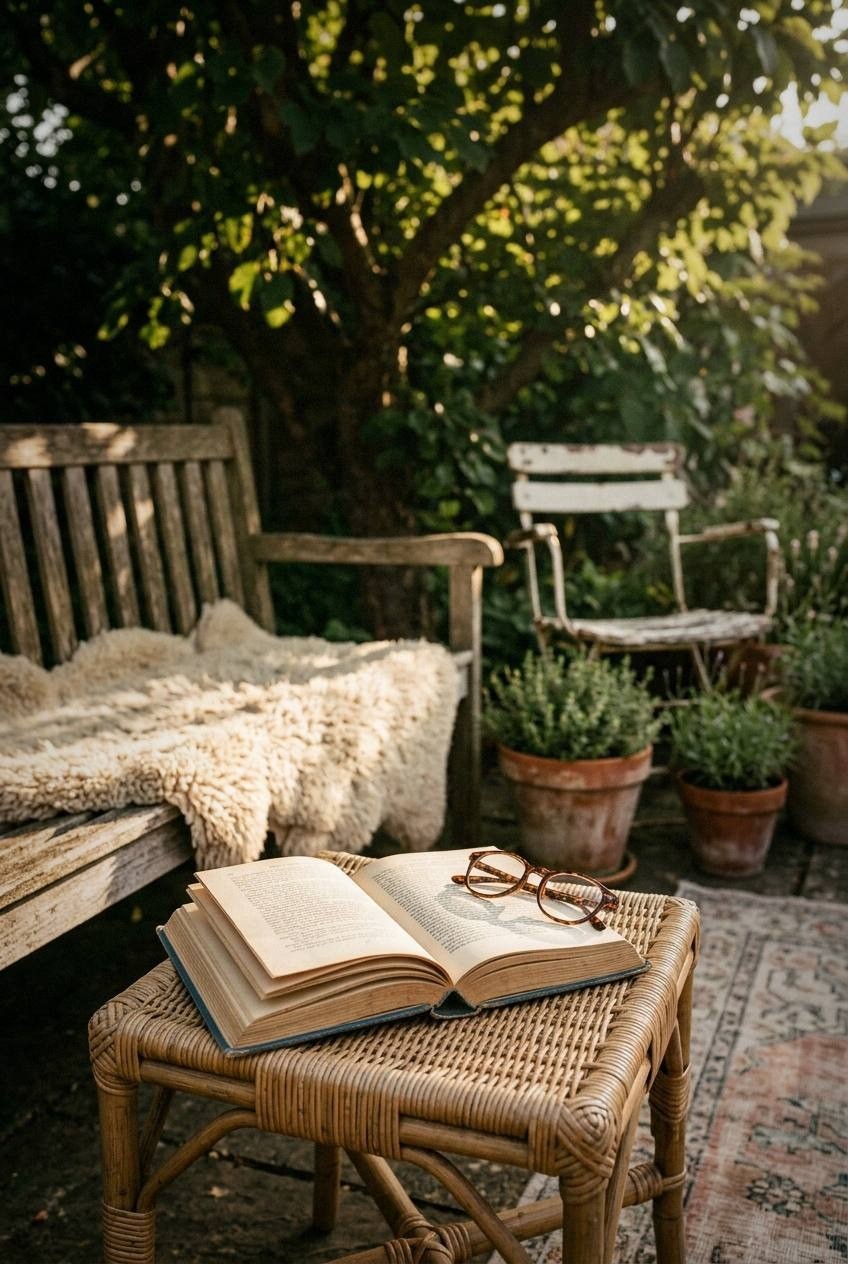
A reading nook needs a flat surface for a coffee, a glass of water, a book, and the reading glasses.
A 12-to-16-inch side table is the right size. Larger surfaces tempt clutter. Smaller surfaces leave nowhere for the coffee. The table can be metal, wood, an overturned terracotta pot, a small wooden crate, or a flat-topped tree stump.
Place the table on the side of the chair you are most likely to set the coffee on, which is usually the dominant hand side. The table goes within easy reach without requiring a stretch.
Anything that lives on this table permanently should survive rain. Glass cups, glazed ceramic, metal trays, and weatherproof candles all qualify. Books and reading glasses come outside for the reading session and go back in afterward.
5. Add Light for Evening
A reading nook with no light works only during the day.
For evening reading, add one source of warm light. A solar-powered lantern, a battery candle in a glass cylinder, or a small string-light strand wrapped through a low branch all work. Avoid spotlights or floodlights. The point is enough light to read by, not enough to light up the yard.
Warm-white (around 2700K) reads natural. Cool-white reads commercial. The lantern should produce roughly the same warmth as a single candle on a side table indoors.
If the reading nook is more than 20 feet from an outdoor outlet, skip plug-in lights entirely. Solar and battery options have improved enough that they cover everything needed for a reading nook with no wiring.
6. The Plant Frame Around the Nook
A reading nook reads finished when one or two plants frame the chair.
Two large pots flanking the chair work as a frame. A potted hosta, a potted fern, a small boxwood, or a tall ornamental grass each anchor the corner. Keep the pots smaller than the chair, so the chair stays the focal point.
If the ground around the tree allows planting, add ferns, hostas, lungwort, or astilbe in the bed under the tree’s drip line. These shade-tolerant perennials fill in within two seasons and turn the nook from a chair-on-grass into a real garden corner.
Planting under a tree only works if you know which light band you are in. Penn State Extension’s guide to planting tough spots counts full sun as six or more hours of direct sun, part shade as two to four, and shade as under two. A canopy that reads as a ceiling usually puts you in the last band, which is why the plants that work there are chosen for foliage first.
Avoid annual flowers in the reading nook. The maintenance does not match the calm-reading purpose. Perennials and one or two stable potted plants are the right fit.
7. The Book Bag That Lives Outside

The detail that turns a reading nook from an idea into a habit is the book bag.
Hang a canvas tote, a small basket, or a leather book bag on the back of the chair or on a low branch nearby. Keep one current book in it, plus a pair of reading glasses if you wear them, plus a small notebook for marking pages.
The bag means you do not have to make a trip back to the house to get the book. The trip back to the house is what kills most outdoor reading nooks.
The bag itself should be canvas or another washable fabric, since it lives outside. Bring it in for storms. Empty out any old books at the start of each season.
How to set up the nook with what is already in the garage
Most of this project can be done without buying anything, and the version built from what you own is usually the one that lasts, because you already know how the pieces behave outdoors.
The chair can come from the porch or the basement, as long as it is comfortable for an hour. The side table can be an overturned terracotta pot, a wooden crate, or a flat-topped stump. The book bag can be a canvas tote you already carry. The pad under the chair can be flagstones lifted from a path you are not using, or a bag of pea gravel left over from another job.
What is worth buying new is the one thing you cannot improvise: a chair that holds up to weather. Everything else is a stand-in that works until it does not.
Put the whole thing together in this order:
- Carry the chair out and sit in it for ten minutes where you think the nook belongs.
- Walk the route from the kitchen door and count the steps. If it feels long, move the nook closer to the house.
- Set the table on your dominant-hand side and put a full glass on it to test the reach.
- Hang the tote on the chair back and put the book in it before you go inside.
- Leave it set up for a week. Whatever you keep moving out of the way is the thing you did not need.
How to care for an outdoor reading nook
An outdoor nook takes about ten minutes of care a season, and skipping it is why so many of these end up as a mossy chair nobody sits in.
In fall, clear the leaves out of the pad and off the seat before they sit there wet all winter. Take the book bag and anything fabric indoors for the season, and bring the cushion in with it. Leave the chair and the table out if they are weatherproof, and store them if they are not.
In spring, check the chair for wobble before you sit down in it, and check wherever it meets the ground for rot. Untreated softwood that spent a wet winter is the usual casualty. A coat of exterior sealer on a wooden chair every year or two is the whole maintenance list.
What Makes the Nook Work
A reading nook works when you actually use it. Most outdoor reading nooks fail not because the setup is wrong, but because the path from the kitchen to the nook is too long, or the book is not pre-positioned, or the chair is uncomfortable after 20 minutes.
Pick the closest tree to the back door. Choose the comfortable chair. Pre-position the book. Read on a Tuesday afternoon, not just on the weekend.
The reading nook becomes itself the third or fourth time you sit in it.
What to Read Next
- Small Patio Ideas When You Barely Have Room is the starting point when the tree is fine but the space around it is not.
- Cozy Patio Ideas for Small Spaces: 7 Calm Layouts has the layout thinking for placing one chair so it reads as a room.
- Container Garden Ideas for Small Patios That Still Feel Full covers the pots that frame the nook without a planting bed.
- String Light Patio Ideas Without a Pergola or a Big Backyard Budget is the alternative if a single lantern turns out not to be enough light.
- A Weekend Patio Refresh You Can Do With What You Already Own is the same one-weekend scope applied to a whole patio.