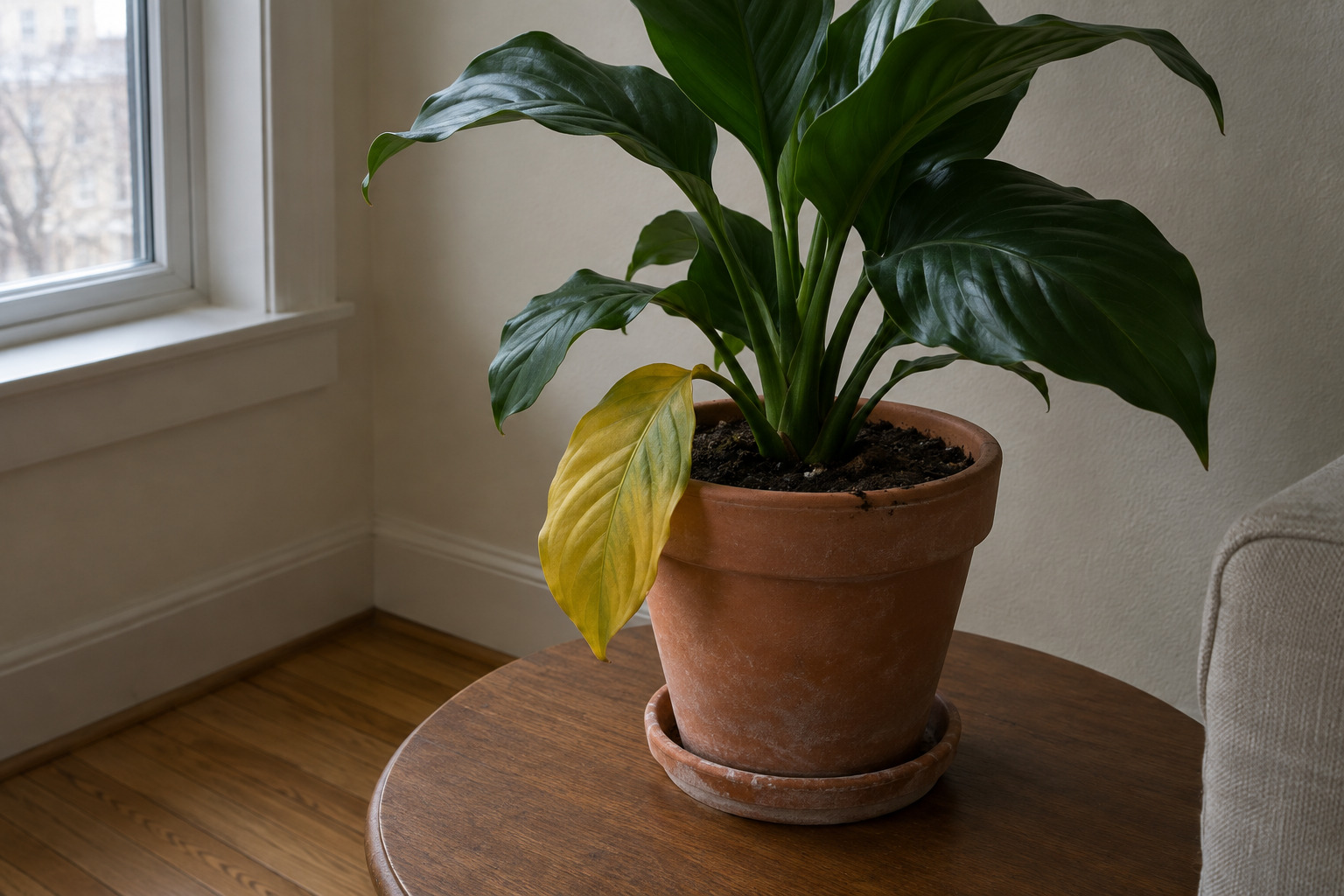
A plant does not fail quietly. It tells you which mistake it is reacting to, and the message is in the leaf, the stem, and the weight of the pot.
You are not bad with plants, and if a pet shares the room it is worth ruling out a chewed leaf before you assume the damage is yours, using the pet-safe apartment plant list . Most houseplant decline traces back to one habit, and the habit is not carelessness.
The short answer: most houseplant problems come down to watering, and overwatering causes more deaths than underwatering. Roots that stay wet rot, so the plant wilts and looks thirsty, and you water it again. Check soil moisture instead of watering on a schedule, and let the mix dry between waterings. Yellow lower leaves that feel soft, brown patches in the middle of a leaf, and a heavy pot all point to too much water. Crisp brown tips point somewhere else.
That wilting loop is the most useful thing on this page, so it gets its own section below. The prevention side of all of it, a routine rather than a rescue, is in the watering and repotting guide . Before that, here is the part you can use tonight.
Houseplant Problems by Symptom: Diagnosis Table
Read down the left column until a row looks like your plant. The middle columns are how to confirm it rather than guess.
| What you see | Most likely cause | How to confirm it | The fix |
|---|---|---|---|
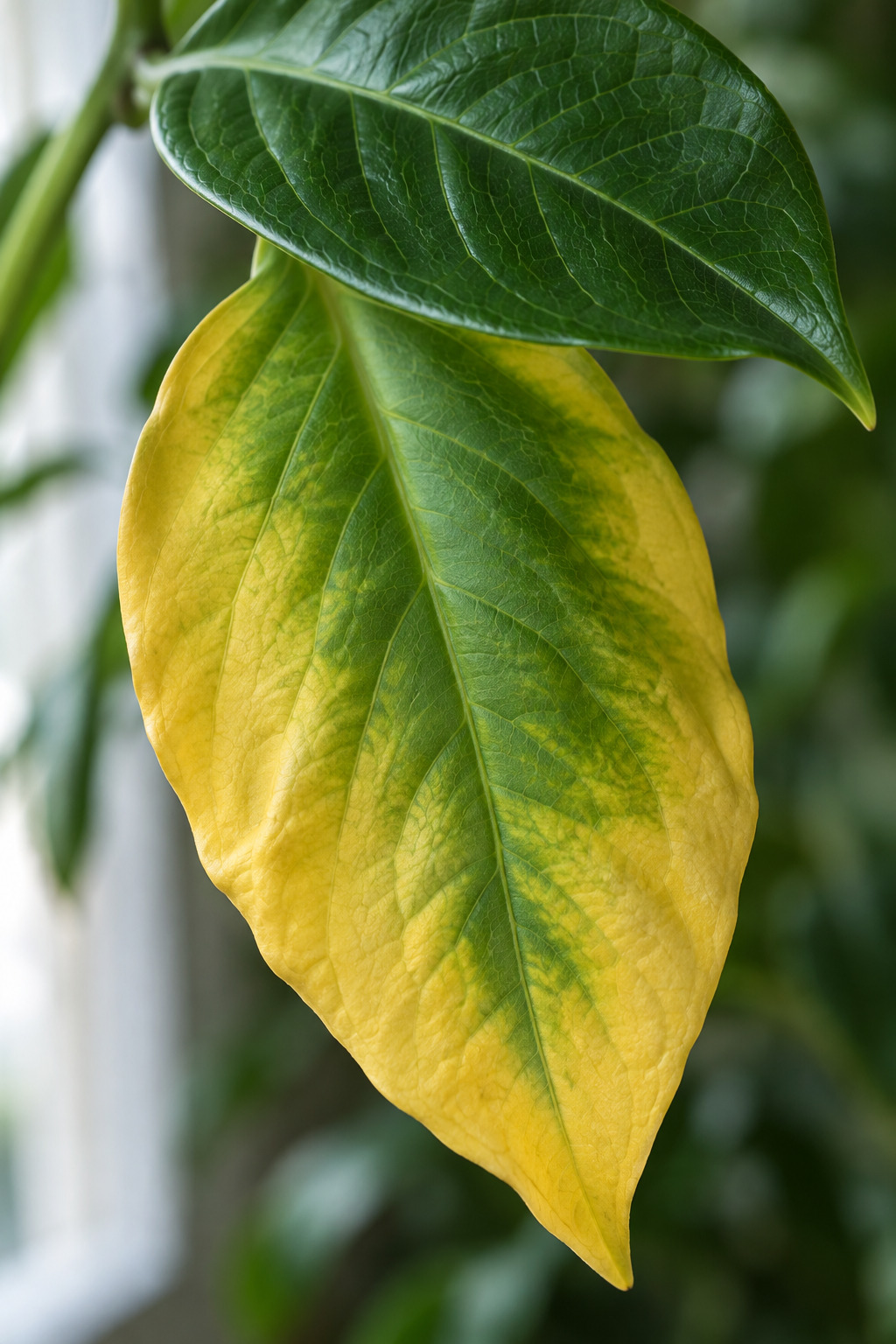
| Lower leaves yellowing and soft | Overwatering and early root damage | Finger two inches into the mix. Wet or damp, and the pot feels heavy | Stop watering. Let the mix dry down an inch or two before the next drink |
| Lower leaves yellowing and crisp | Underwatering, or water running past a dry root ball | Mix is bone dry and may have pulled away from the pot wall | Water thoroughly until it drains, then check more often |
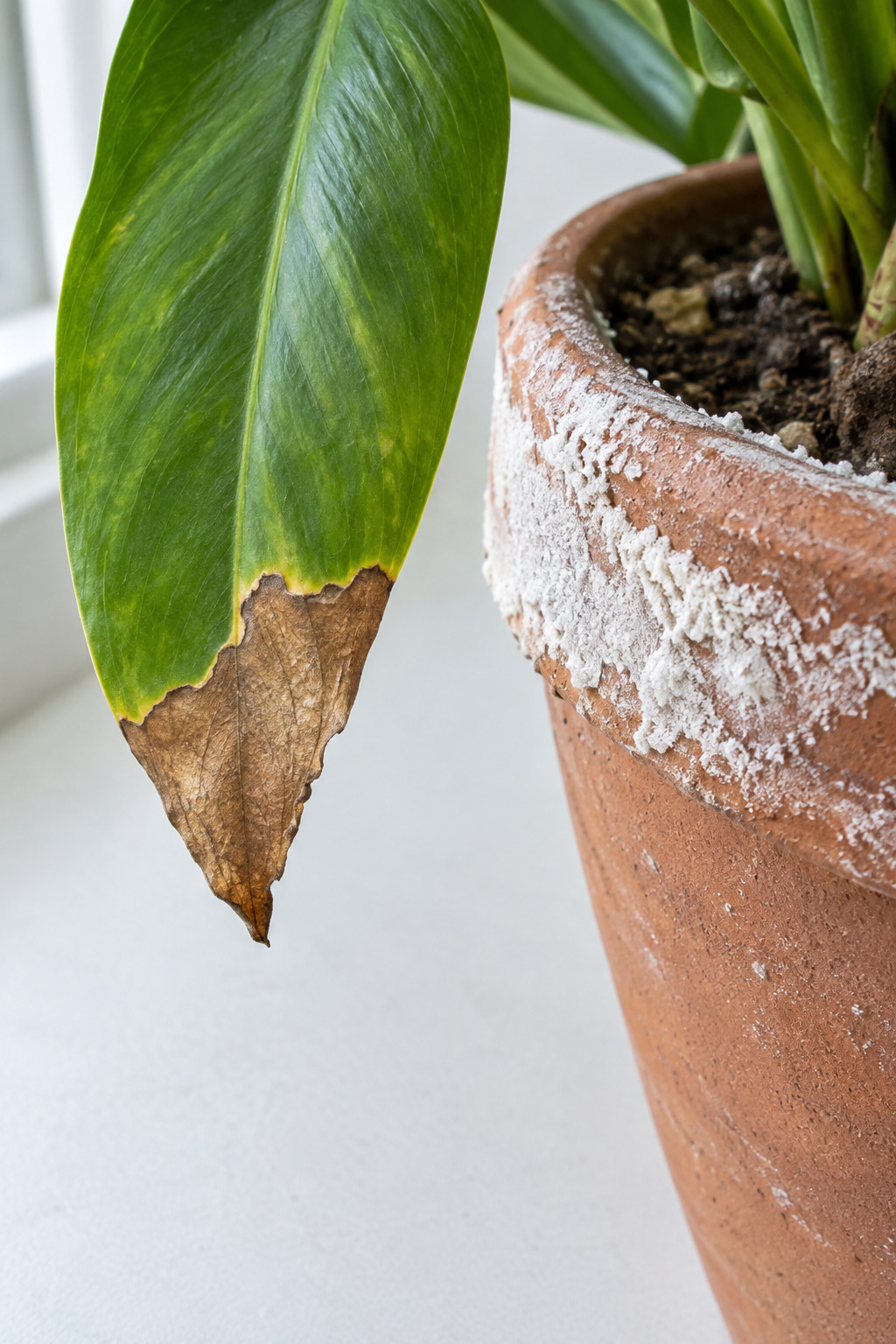
| Leaf tips brown and dry | Low humidity, often with inconsistent watering | Air feels dry, tips brown slowly over weeks rather than days | Raise humidity and water on a steady check instead of a schedule |
| Brown patches in the middle of the leaf | Overwatering, or direct sun burning a shade plant | Patch is soft and dark, or the leaf faces a hot window | Move out of the direct beam, and dry the mix out |
| New leaves small and pale | Not enough light | Growth is pale, spindly, or slow | Move closer to a window or add a light |
| Long bare stems between leaves | Not enough light, sometimes too much fertilizer | Gaps lengthen on new growth while old leaves drop | Move to brighter light, then cut the stems back |
| Leaves curling | Cold drafts, heat, or watering at one extreme | Feel the air near the plant, and check the mix | Move it away from the vent, door, or window glass |
| Whole plant collapsing quickly | Root rot or crown rot, often from a pot with no drainage | Lift the plant out and smell the base of the root ball | See the recovery check below before you spend effort on it |
| White crust on soil or pot rim | Fertilizer salt buildup | Crust on the soil surface, the saucer, or the outside of a clay pot | Flush the soil with clear water, or repot in fresh mix |
Two rows describe a plant that looks sad for opposite reasons. A plant wilting in wet soil is drowning. A plant wilting in dry soil is thirsty.
The Number One Houseplant Problem: Too Much Water
Iowa State Extension is direct about the ranking. Watering is the easiest and most difficult part of growing houseplants, and improper watering is the number one reason people have problems with them. Overwatering sits at the top of its poor-culture list. Roots that sit in wet soil for long stretches develop root rot, and a damaged root system cannot move water to the leaves, so the plant wilts. That looks exactly like thirst. The natural response is to water more, which makes it worse.
The same guide lists the symptoms of overwatering: yellowing or browning leaves, leaf drop, wilting, crown rot, fungus gnats, and death. That list overlaps heavily with underwatering, which is why the soil check matters more than the leaf.
Why a dim room makes overwatering worse
A plant in low light uses less water, so the mix stays wet for days longer than the same plant beside a bright window. Nothing else about your routine has to change for a pothos that was fine in a sunny apartment to rot in a hallway. The schedule that worked is now too much water. If the corner you are working with is genuinely dim, the low light indoor plants guide covers how little light some species tolerate.
Pot size matters for the same reason. A large pot holds a large reservoir of wet soil around a small root ball, and in a dim corner that reservoir never dries. Iowa State’s container guidance is plain: all containers must have a drainage hole, and without one the soil stays wet and roots rot and die. Gravel in the bottom does not make up for a missing hole, and it creates a wetter zone of soil right where new roots are growing. If you are choosing a pot for a plant you are trying to save, pot size for a tall indoor plant covers matching the container to the root ball.
Overwatered versus underwatered: how to tell them apart
Both look like droopy, yellowing leaves, so use the soil and the leaf texture.
- Check the soil first. Wet or damp two inches down means stop watering. Dry an inch or two down means water thoroughly. If you are unsure, Iowa State’s advice is to wait one more day.
- Feel the leaf. Soft, limp, and yellowing from the bottom up points to wet soil and root damage. Crisp, dry, and browning from the edges inward points to dry soil and low humidity.
- Lift the pot. A saturated pot is noticeably heavy. A dry one is light for its size.
- Look at the whole plant. If it is wilting and the soil is soaking, more water will kill it faster. This is the mistake that turns a struggling plant into a dead one.
How to dry out a waterlogged pot
- Stop watering immediately. No more water until the mix dries, no matter how sad the leaves look.
- Get the pot out of standing water. Empty the saucer or the outer sleeve. If the decorative pot has no hole, lift the nursery pot out of it.
- Move it somewhere brighter and airier. Both speed up how fast the mix dries.
- Loosen the top inch of mix with a fork so air can reach it.
- Let it dry completely before the next watering. Then water until it runs out of the drainage hole, and empty the saucer after about half an hour.
- Repot if the mix has broken down. Old, compacted potting soil holds more water and less air. Fresh mix is the durable fix.
Why Are My Plant Leaves Turning Brown on the Tips?
Iowa State Extension keeps a page on exactly this question, and the answer is usefully specific. Brown leaf tips and edges can happen on any indoor plant, but they are common on spider plant and dracaena. Four causes come up.
Low humidity is the most likely one. Home humidity is often low, especially in winter. Most indoor plants come from tropical areas and grow best around 40 to 50 percent humidity, while a heated home in winter can sit as low as 10 percent. The suggested fixes are a humidifier, a pebble tray, a terrarium, or grouping plants so their combined foliage holds more moisture in the air. Misting does not do the job, because it does not raise relative humidity for more than a few minutes and it can spread disease.
Inconsistent watering comes second. Letting a plant dry out too long between waterings brings on brown edges and tips. That is a different failure from a pot that drains too fast, which shows up as a plant that needs water every couple of days and is covered in the guide to container soil that keeps drying out too fast .
Fertilizer salt buildup comes third. Excess salts accumulate when you fertilize too much, and they burn leaf edges. Flush the soil with clear water, cut the fertilizer rate and frequency, and repot if the buildup is heavy. Watch for a crust on the soil surface, in the saucer, or on the outside of a porous clay pot.
Water quality comes fourth. High levels of chlorine and other chemicals, fluoride among them, can cause brown tips over an extended period on sensitive species. Iowa State names spider plant, ti plant, dracaena, prayer plant, and calathea. If you suspect it, switch water sources.
One honest limitation: brown tissue does not turn green again. It is dead. Trimming the brown portions off with scissors improves how the plant looks, and Iowa State says so, but it also says new browning will occur if you never address the cause.
How to Care for and Fix a Leggy Houseplant
Leggy means long, bare stretches of stem between leaves. Iowa State calls the same thing spindly growth, with two causes: not enough light, which is the typical one, and too much fertilizer, which pushes soft growth the plant cannot support.
The light part is the one people miss. A plant that cannot get enough light stretches toward whatever is available, spacing its leaves further apart as it reaches. It is spending its stored energy on distance. A stretched plant also loses the shape it was bought for, which is the problem styling a tall indoor plant runs into once a specimen outgrows its spot.
Fixing it takes three moves, and one of them is permanent.
- Move the plant closer to a window, or give it a supplemental light. Bright indirect light is the target for most houseplants: bright enough to cast a distinct shadow, without sun hitting the leaves directly.
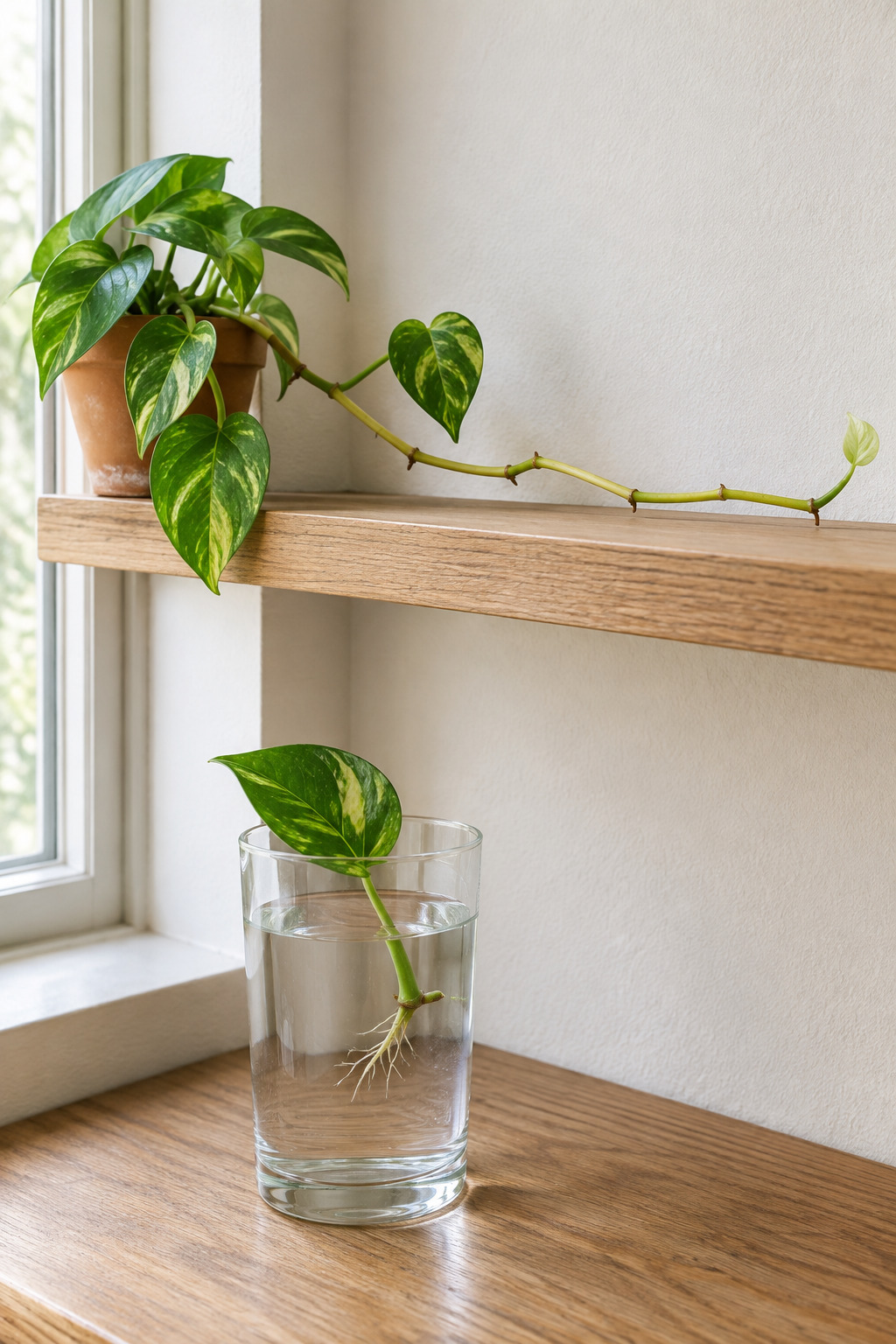
- Cut the stems back to a node. A node is the slight bump on the stem where a leaf or aerial root attaches. Cut just above one, and new growth branches from that point instead of continuing the bare run.
- Root the cuttings. This is why leggy is a manageable problem rather than a loss. Iowa State lists pothos, snake plant, spider plant, ZZ plant, and heartleaf philodendron among the easiest houseplants to propagate.
One caution. The old stretched growth does not shorten. Iowa State is blunt that once light is corrected, new growth looks better but the previous growth will always look spindly, so pruning is part of the repair. And propagate only from healthy, vigorously growing plants.
The pothos question
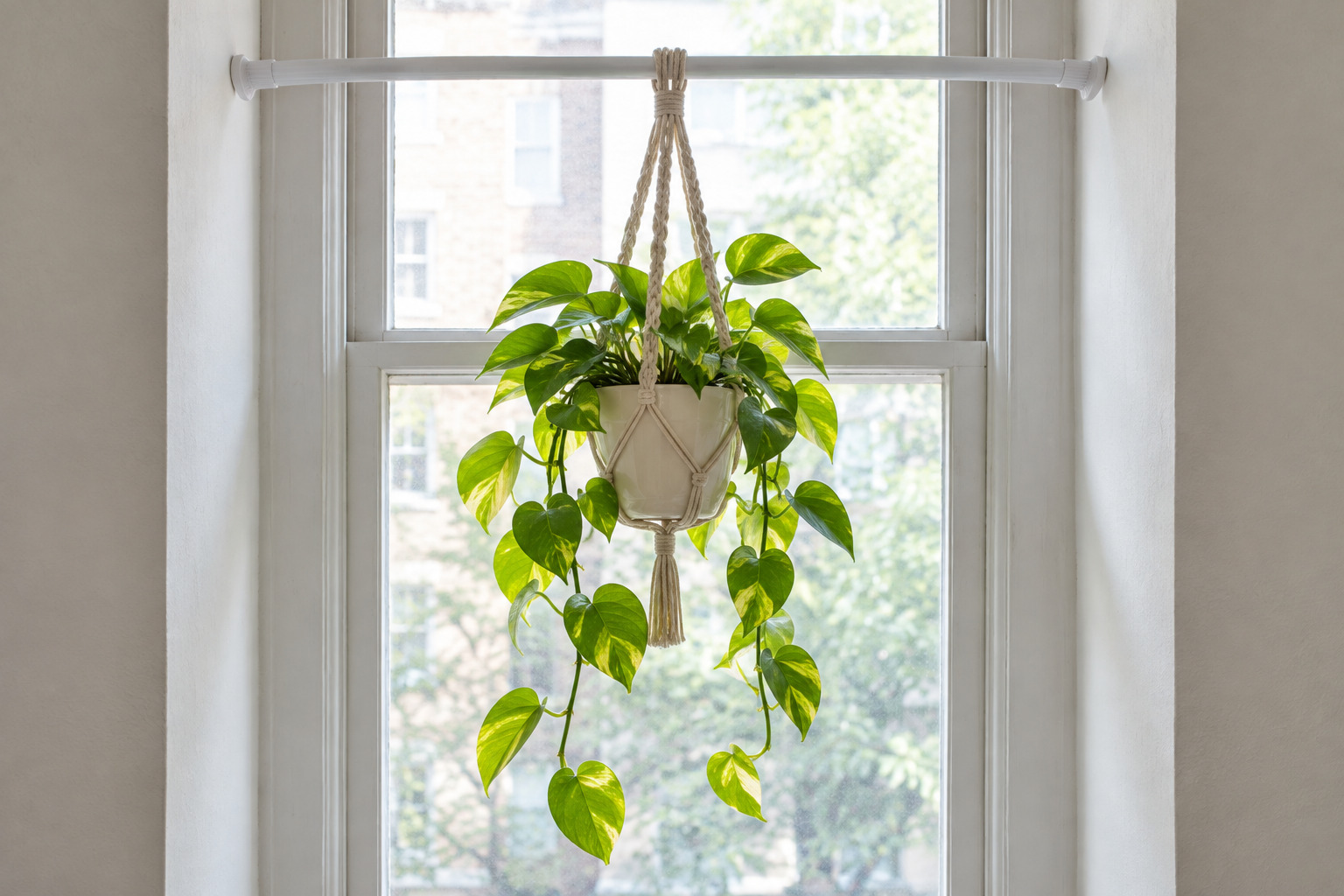
Pothos stretches faster than almost anything on a shelf, which is why it is the plant people ask about. It is also one of the easiest to save. Iowa State lists pothos among the easiest houseplants to propagate and gives it two working methods: stem cuttings and layering. Cut a vine a little below a node, strip the leaf from that node, and root it in water or fresh mix. The mother plant gets cut back to a node at the same time, so both ends keep going. One stretched vine becomes several fuller plants.
Is It Worth Saving? An Honest Recovery Check
Most plants are worth a try. Some are not, and you deserve to know which one you are holding before you spend a month on it.
The check is the roots. Lift the plant out of its pot and look. University of Maryland Extension puts the standard plainly: healthy roots should be light-colored and firm, while diseased roots appear dark and soft. Add your nose to that, because rot smells sour and decaying rather than earthy.
- Firm, pale roots with some dark sections: salvageable. Cut out the rotten portions, repot the healthy sections in fresh mix, and take a few cuttings as insurance.
- A firm crown and firm roots, with damage confined to leaves: very salvageable. Leaves are renewable. The root system and the growing point are not.
- A collapsed, mushy base and no firm roots left: not salvageable. When the crown has gone, there is nothing left for new growth to come from.
Iowa State agrees on the mechanics of the rescue: remove the plant from the pot, cut out the rotten portions, and replant the healthy sections. University of Maryland adds the honest alternative for a badly damaged plant, which is to take cuttings and root them in sterile potting mix rather than nurse the original back. Sometimes the cutting is the plant.
For the collapse that happens fast, days rather than weeks, check for crown rot and for a pot with no drainage hole. Speed is the tell. Slow yellowing is a care problem you can fix. A plant that goes down in three days is usually a root problem you can only triage.
What Not to Do to a Struggling Plant
Search interest in home remedies is high, and the honest answer is that most are not supported. A few can make things worse.
Do not fertilize a struggling plant. Feeding a plant whose problem is light or water does not fix it, and it can add salt damage on top. Iowa State’s care guide notes that more fertilizer means more growth, and when light, humidity, or moisture cannot support that growth the result is spindly, weak growth.
Do not add Epsom salt as a cure. Iowa State Extension’s guidance is about as clear as an Extension FAQ gets. The claimed benefits, which include better seed germination, improved nutrient uptake, more flowers, and pest deterrence, have no scientific evidence behind them, and some run against what research has shown. Epsom salt belongs in intensive crop production, and only where a soil test has found a magnesium deficiency.
Be skeptical of coffee grounds and baking soda. Both are popular suggestions with thin evidence behind them for houseplant decline. Coffee grounds are usually discussed as a soil amendment rather than a cure, and I could not find Extension guidance supporting them as a treatment for yellowing leaves or root rot. Claims that baking soda fixes a sickly houseplant are not backed by Extension research either.
Do not water more. This is the one that does real damage. If the soil is wet and the plant is wilting, the plant is drowning.
Do not skip the drainage hole. A pretty pot without one is the most common cause of a wet root ball. Keep the plant in a nursery pot with holes and lift it out to water, or use the ornamental pot as a sleeve.
The pattern behind all of these is the same: a struggling plant usually needs something taken away, not added. Less water, less fertilizer, less heat, more light.
Questions People Actually Ask
How do you fix yellow leaves on houseplants?
Work backward from the soil. Wet mix with yellowing lower leaves means stop watering and let it dry. Dry mix means water thoroughly until it drains. If the soil is fine and the plant is pale and spindly, the fix is more light.
How do I tell if yellow leaves are from overwatering or underwatering?
Wet soil with soft, limp lower leaves means overwatering. Dry soil with crisp leaves and brown edges means underwatering.
Can a yellowing leaf turn green again?
No. Once a leaf has yellowed, that tissue does not go back. Watch whether the next leaves come in green and normal-sized.
Should you cut yellow leaves off a plant?
You can, because a fully yellow leaf is no longer feeding the plant. Leave a partially yellow leaf while it still has green tissue.
Can a plant recover from yellow leaves?
Often, if the roots and the growing point are still sound. Firm, pale roots and a firm crown can regrow leaves once the cause is corrected.
Do brown leaves mean too much water?
Not on their own. Brown patches in the middle of a leaf with wet soil point to overwatering. Brown tips and edges point more often to low humidity, inconsistent watering, salt buildup, or water quality.
What do overwatered plant leaves look like?
Yellowing or browning leaves, leaf drop, and wilting, according to Iowa State’s list of overwatering symptoms, along with crown rot and fungus gnats.
How often should indoor plants be watered?
There is no number that works. Frequency depends on the species, the mix, the light, the temperature, the humidity, and the season. Check the soil on a regular schedule instead of watering on one.
What is the number one killer of houseplants?
Improper watering. Iowa State calls it the number one reason people have problems with houseplants, and overwatering is the more common direction of that mistake.
How can I fix my leggy houseplant?
Move it into brighter light, cut the bare stems back to a node, and root the cuttings. The light prevents new stretching, and the pruning removes growth that will not shorten on its own.
How can I revive a dying indoor plant?
Lift it out and look at the roots. Firm and pale means cut out any rot, repot in fresh mix, and give it brighter light and a proper wet-dry cycle. Mushy and black with a collapsed base means it is gone.
Sources
- Iowa State University Extension: Diagnosing houseplant problems related to poor culture : overwatering as a common cause of failure, the symptoms list, the wet-dry cycle, drainage, and fertilizer salt buildup.
- Iowa State University Extension: Why does my houseplant have brown leaf tips and edges? : the four causes of brown tips, the sensitive species list, and trimming as a cosmetic fix.
- Iowa State University Extension: Diagnosing houseplant problems from improper environmental conditions : spindly growth causes, wilting from both overwatering and underwatering, and the order to investigate yellowing.
- Iowa State University Extension: How to care for houseplants : improper watering as the number one problem, soil moisture checks, humidity levels, drainage, pot size, and fertilizer rates.
- Iowa State University Extension: Propagating houseplants : pothos and other easy species, stem cuttings, and propagation as a way to tame leggy growth.
- Iowa State University Extension: How can I use Epsom salts in my garden and landscape? : the unsupported claims behind Epsom salt as a plant cure.
- University of Maryland Extension: Diagnose indoor plant problems : healthy roots are light-colored and firm, diseased roots are dark and soft, and the guidance to cut out rot or take cuttings.
- ASPCA: Toxic and non-toxic plants : check any plant before it goes within a pet’s reach.
What to Read Next
- Low light indoor plants : if your diagnosis is a light problem, this is how to test the room and pick something that fits it.
- What to do when container soil keeps drying out too fast : the opposite failure, for a pot that will not hold water long enough.
- Plants that make an apartment feel less sterile : when the sick plant is gone and the room needs something living in it again.
- What size planter does a tall indoor plant need : pot size drives how long the mix stays wet, so read this before you repot.
- Herbs that survived my windowsill : the same watering and light lessons on edible plants, for a kitchen window instead of a corner.