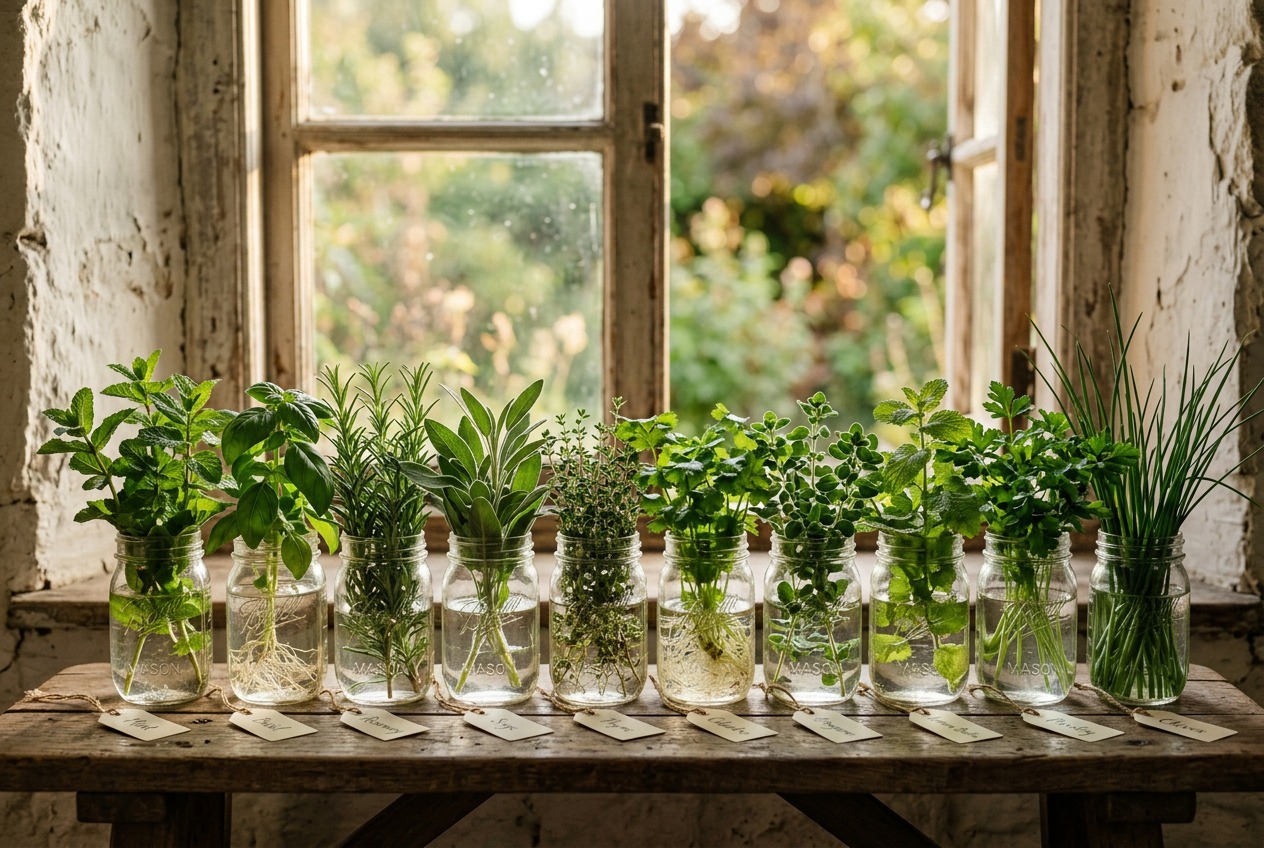
A handful of fresh basil costs $3 at the grocery store and wilts in two days. A single basil cutting in a jar of water will keep producing leaves for months. The math is simple. The process is even simpler.
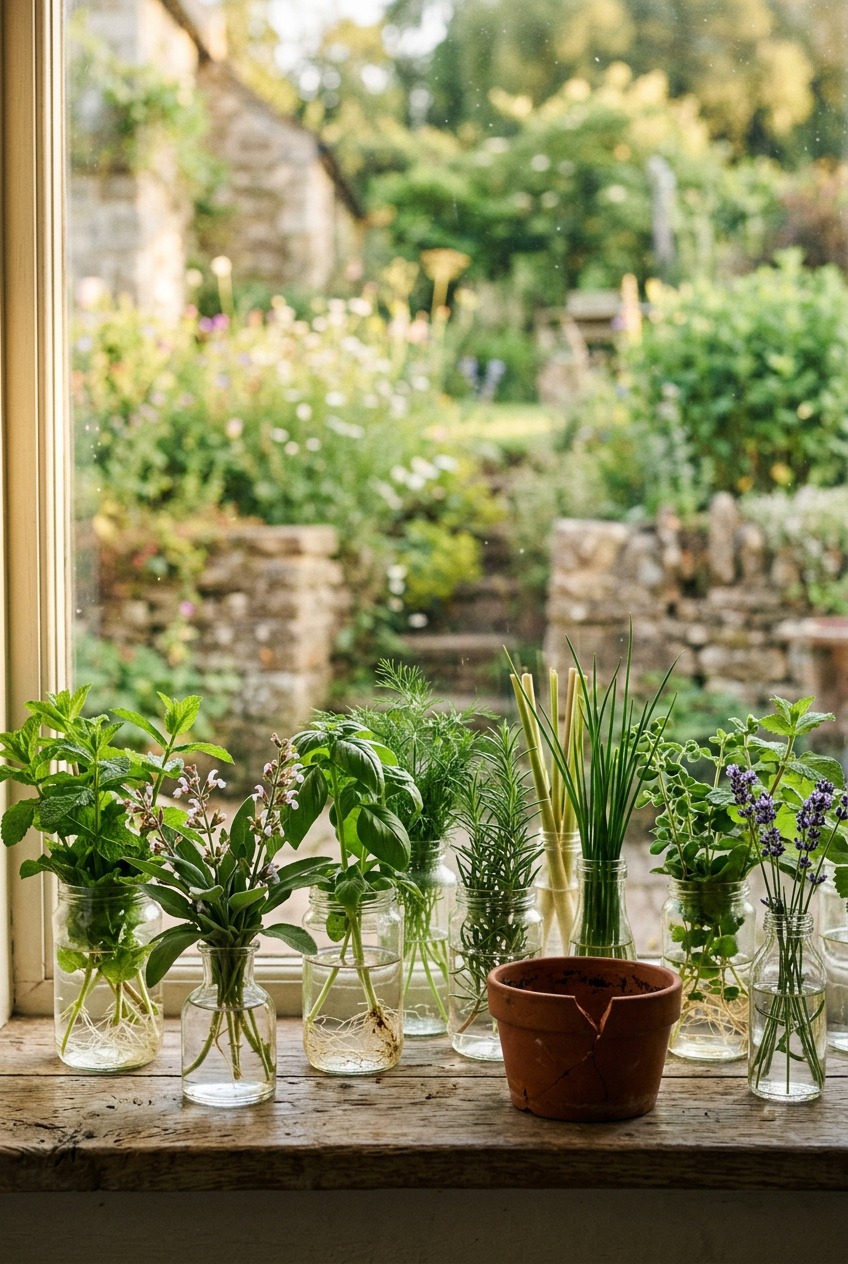
Growing herbs in water (called water propagation) works because many herb stems develop roots at their nodes when submerged. No soil, no drainage holes, no fungus gnats. Just a jar, water, and a sunny windowsill.
Here are ten herbs that root reliably in water, plus the ones you should skip.
1. Basil (Ocimum basilicum)
Basil is the easiest herb to grow in water. Period. Take a 4-to-6-inch cutting just below a leaf node. Strip the bottom two sets of leaves. Place it in a glass of room-temperature water.
Roots appear in 5 to 10 days. Genovese basil, Thai basil, and lemon basil all work well. Harvest leaves from the top to encourage branching.
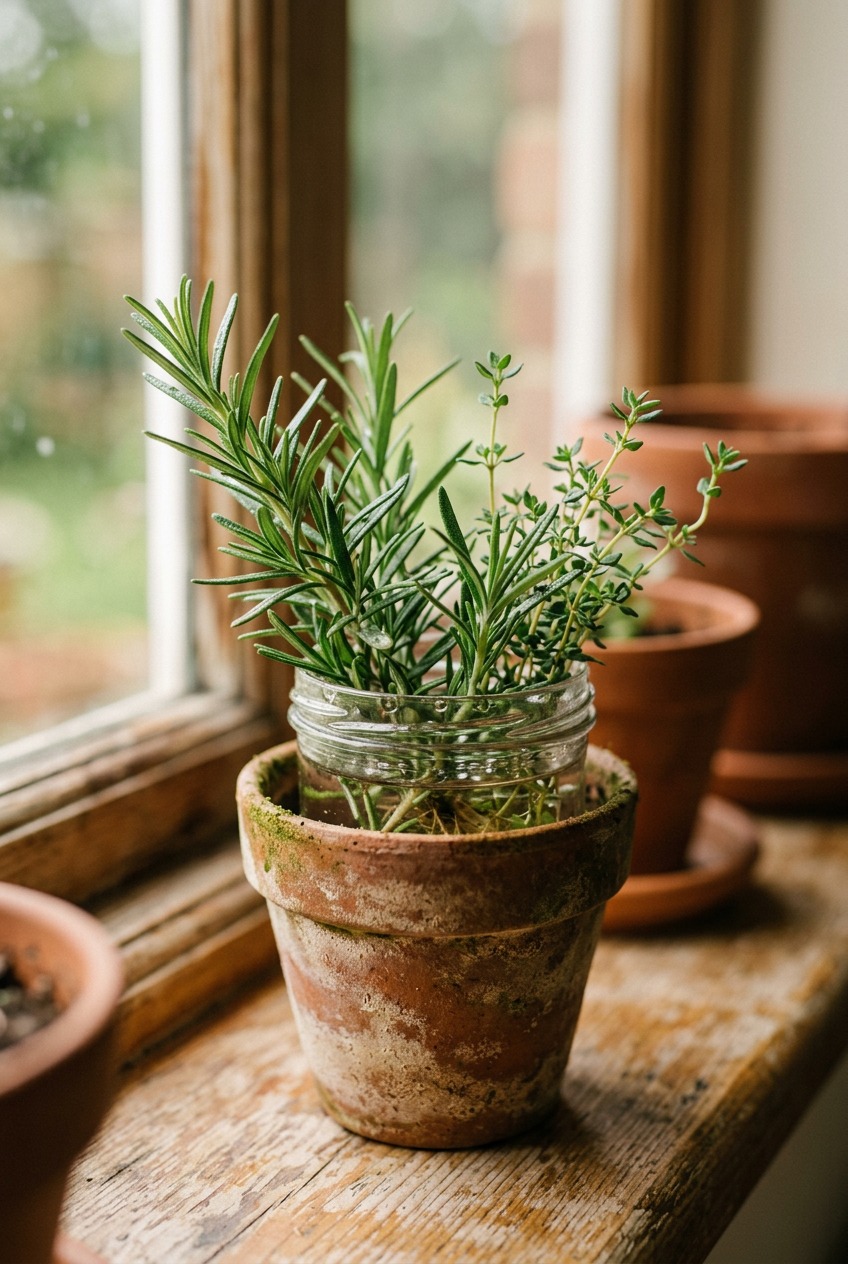
Key detail: Basil prefers warm water. If your kitchen dips below 60°F at night, move the jar away from the cold window glass.
2. Spearmint and Peppermint (Mentha spicata, Mentha x piperita)
Mint roots aggressively in water. A 5-inch cutting will show roots within 3 to 5 days. Both spearmint and peppermint work, along with chocolate mint and apple mint.
Mint actually does better in water than many herbs because it naturally spreads through runners. Cut just below a node, remove lower leaves, and drop it in water. You will have more mint than you can use within a month.
Key detail: Mint tolerates lower light than most herbs on this list. A north-facing window can work if it gets at least 4 hours of indirect light.
3. Rosemary (Salvia rosmarinus)
Rosemary is the slowpoke of water propagation. Expect 4 to 8 weeks before you see roots. Take a 5-inch cutting from new growth (green, flexible stems). Woody brown stems rarely root.
Strip the lower 2 inches of needles. Change the water every 3 days. Rosemary cuttings are prone to rot, so keep the water fresh and make sure no leaves sit below the waterline.
Key detail: Rosemary needs bright, direct light. At least 6 hours daily. A south-facing window is ideal.
4. Oregano (Origanum vulgare)
Greek oregano roots well in water within 7 to 14 days. Take 5-inch cuttings from non-flowering stems. Strip the bottom leaves and place in water.
Oregano produces a compact root system in water and will keep growing new leaves for several months. Harvest regularly to prevent legginess.
Key detail: If the stem tips start flowering, pinch off the buds. Flowering diverts energy from root development.
5. Thyme (Thymus vulgaris)
Common thyme and lemon thyme both root in water, though they take longer than basil or mint. Expect 2 to 4 weeks. Take 4-inch cuttings from fresh green growth, not the woody base.
Thyme stems are thin and delicate. Use a narrow-necked bottle or jar to keep the cuttings upright without the stems slipping underwater completely.
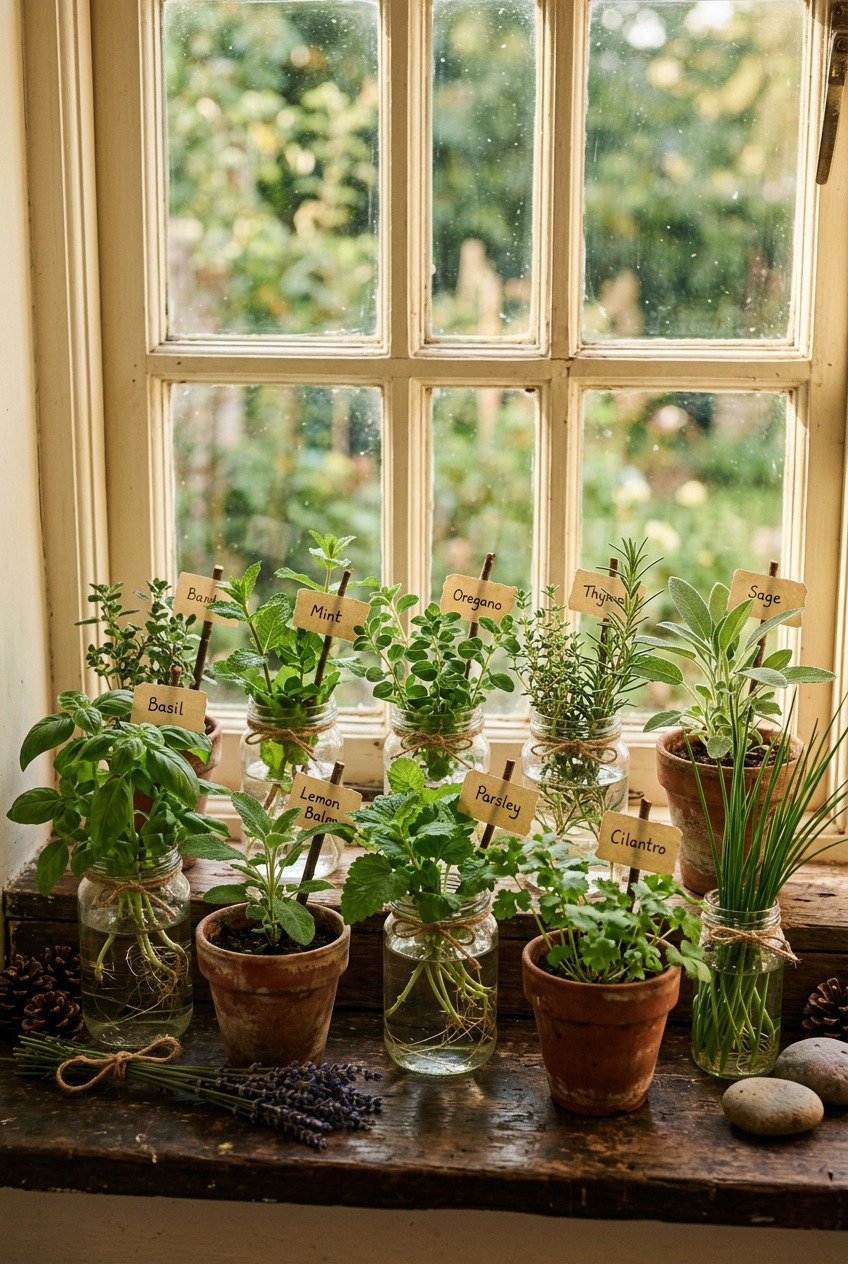
Key detail: Thyme needs excellent air circulation. If you notice any sliminess on the stem, replace the water immediately and trim the affected portion.
6. Lemon Balm (Melissa officinalis)
Lemon balm is a mint relative and roots just as easily. Take 6-inch cuttings, remove the lower leaves, and expect roots in 7 to 10 days. The lemony scent makes it a pleasant kitchen companion.
Lemon balm produces leaves generously in water. Pinch the growing tips every two weeks to keep the plant bushy rather than tall and spindly.
Key detail: Lemon balm leaves bruise easily. Handle cuttings gently when stripping lower leaves.
7. Sage (Salvia officinalis)
Common garden sage roots in water, but it takes patience. Allow 3 to 4 weeks. Use 4-to-5-inch softwood cuttings (the lighter green growth near the stem tips).
Sage is more susceptible to stem rot than other herbs. Use a clear container so you can spot any browning early. If the cut end turns mushy, trim it back to healthy tissue and put it in fresh water.
Key detail: Sage does best when you take cuttings in spring or early summer, when the plant is actively growing.
8. Stevia (Stevia rebaudiana)
A less obvious choice, but stevia roots readily in water within 7 to 14 days. Take 4-inch cuttings from the growing tips. The leaves are naturally sweet, roughly 30 times sweeter than sugar.
Drop a fresh leaf into hot tea instead of reaching for the sugar bowl. One plant in a jar produces enough leaves for daily use.
Key detail: Stevia needs warm temperatures. Below 55°F, growth stalls completely.
9. Tarragon (Artemisia dracunculus)
French tarragon roots slowly in water, taking 3 to 5 weeks. Russian tarragon roots faster but has almost no flavor, so stick with French. Take 5-inch cuttings from actively growing stems.
Tarragon goes dormant in winter even in water. If the leaves drop in late fall, the cutting is not dead. Move it to a cool spot and wait for spring regrowth.
Key detail: French tarragon cannot be grown from seed. Water propagation from cuttings is one of the best ways to multiply your plants.
10. Vietnamese Coriander (Persicaria odorata)
If you love cilantro flavor but struggle to grow cilantro (it bolts in about ten minutes), try Vietnamese coriander. It roots in water within a week, grows fast, and thrives on a windowsill year-round.
The flavor is similar to cilantro with a peppery finish. It is common in Southeast Asian cooking and makes an excellent addition to pho, spring rolls, and salads.
Key detail: Vietnamese coriander needs consistent warmth and humidity. Mist the leaves occasionally if your kitchen air is dry.
How to Take and Root Cuttings: Step by Step
- Choose the right stem. Look for healthy, non-flowering growth. Green and flexible beats brown and woody.
- Cut at a 45-degree angle just below a leaf node using clean scissors or a sharp knife. The angled cut increases the surface area for water absorption.
- Strip the lower leaves. Remove any leaves that would sit below the waterline. Submerged leaves rot and foul the water.
- Place in room-temperature water. Fill your container so the bottom 2 to 3 inches of stem are submerged.
- Set in bright, indirect light. Direct midday sun can heat the water and cook tender roots. Morning sun or filtered afternoon light works best.
- Change the water every 3 to 5 days. Fresh water prevents bacterial growth and keeps oxygen levels up. If the water turns cloudy, change it immediately.
- Wait. Some herbs root in days, others in weeks. Resist the urge to pull cuttings out and check.
Best Containers for Water Herbs
Clear glass jars work well because you can monitor root growth and water clarity. Mason jars, old jam jars, and clear drinking glasses are all fine.
Narrow-necked bottles (like repurposed olive oil or vinegar bottles) keep thin stems upright without support. Avoid metal containers, which can leach minerals into the water. Dark or opaque containers reduce algae growth but make it harder to spot problems.
For a tidier setup, look for propagation stations with individual glass tubes in a wooden rack. These run $10 to $20 and hold 3 to 5 cuttings neatly.
When to Transplant to Soil
Water-grown herbs can live in jars indefinitely, but they will eventually slow down. Roots in water are thinner and more fragile than soil roots. After 2 to 3 months, you may notice smaller leaves and slower growth.
To transplant: fill a 4-inch pot with moist potting mix. Make a hole with your finger, gently place the rooted cutting in, and firm the soil around it. Keep the soil consistently moist for the first two weeks while the roots adapt.
Not every herb needs to move to soil. Basil, mint, and lemon balm can thrive in water for 4 to 6 months with regular water changes and occasional liquid fertilizer (one drop of liquid kelp per jar, once a month).
Herbs That Don’t Work Well in Water
Cilantro (Coriandrum sativum). Cilantro is grown from seed, not cuttings. It has a taproot system and does not propagate in water.
Dill (Anethum graveolens). Same problem as cilantro. Taproot herb, grows from seed. Cuttings will wilt and rot.
Parsley (Petroselinum crispum). Technically possible but extremely slow and unreliable. Parsley cuttings often rot before rooting. Grow parsley from seed in soil instead.
Chives (Allium schoenoprasum). Chives grow from bulbs, not stem cuttings. You can divide an existing clump and grow it in a pot, but water propagation is not the right method.
Quick Reference Chart
| Herb | Days to Root | Light Needs | Difficulty |
|---|---|---|---|
| Basil | 5-10 | Bright indirect | Easy |
| Mint | 3-5 | Medium | Very easy |
| Rosemary | 28-56 | Direct, 6+ hrs | Moderate |
| Oregano | 7-14 | Bright indirect | Easy |
| Thyme | 14-28 | Bright indirect | Moderate |
| Lemon Balm | 7-10 | Medium | Easy |
| Sage | 21-28 | Bright indirect | Moderate |
| Stevia | 7-14 | Bright indirect | Easy |
| Tarragon | 21-35 | Bright indirect | Moderate |
| Vietnamese Coriander | 5-7 | Bright indirect | Easy |
Start with basil and mint. They are nearly foolproof. Once you have a windowsill full of jars with roots growing, you will never buy a $3 packet of wilted herbs again.