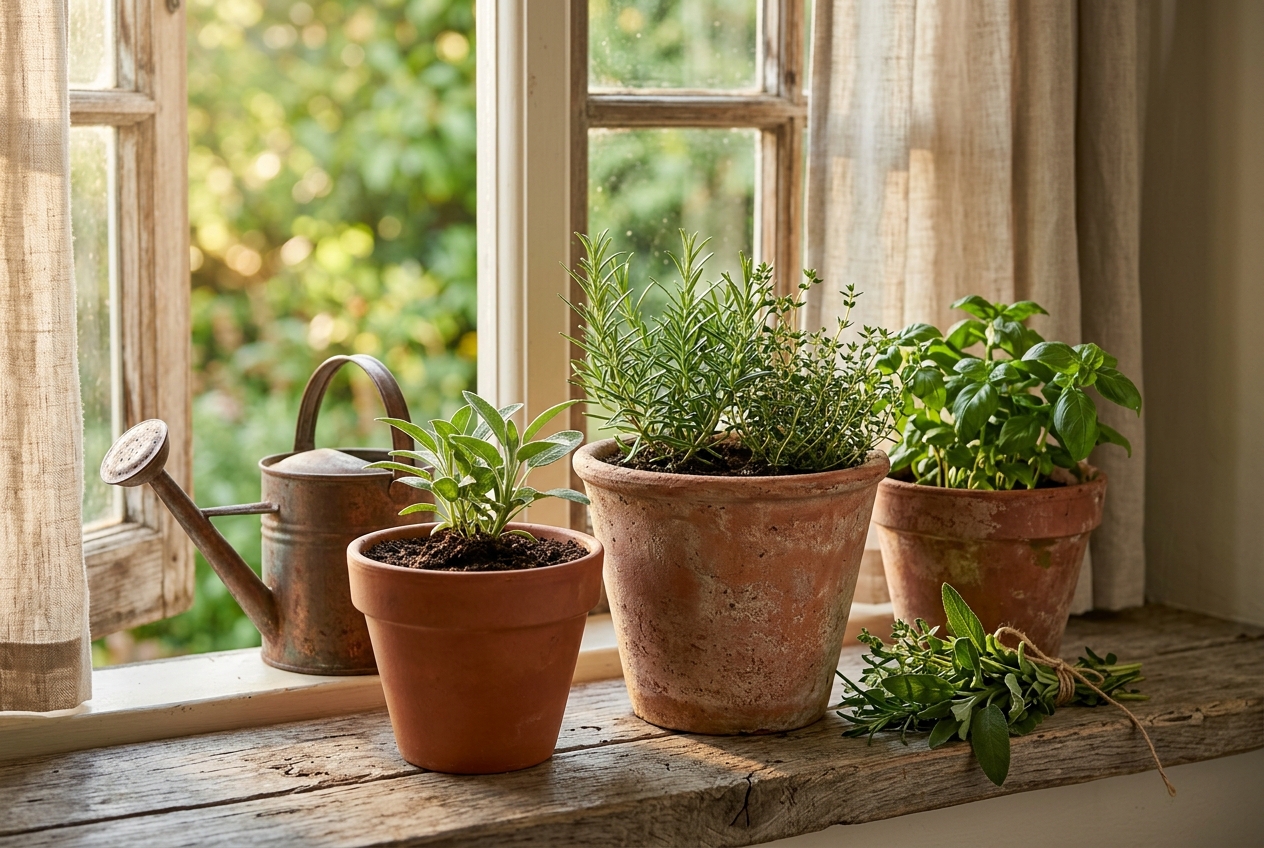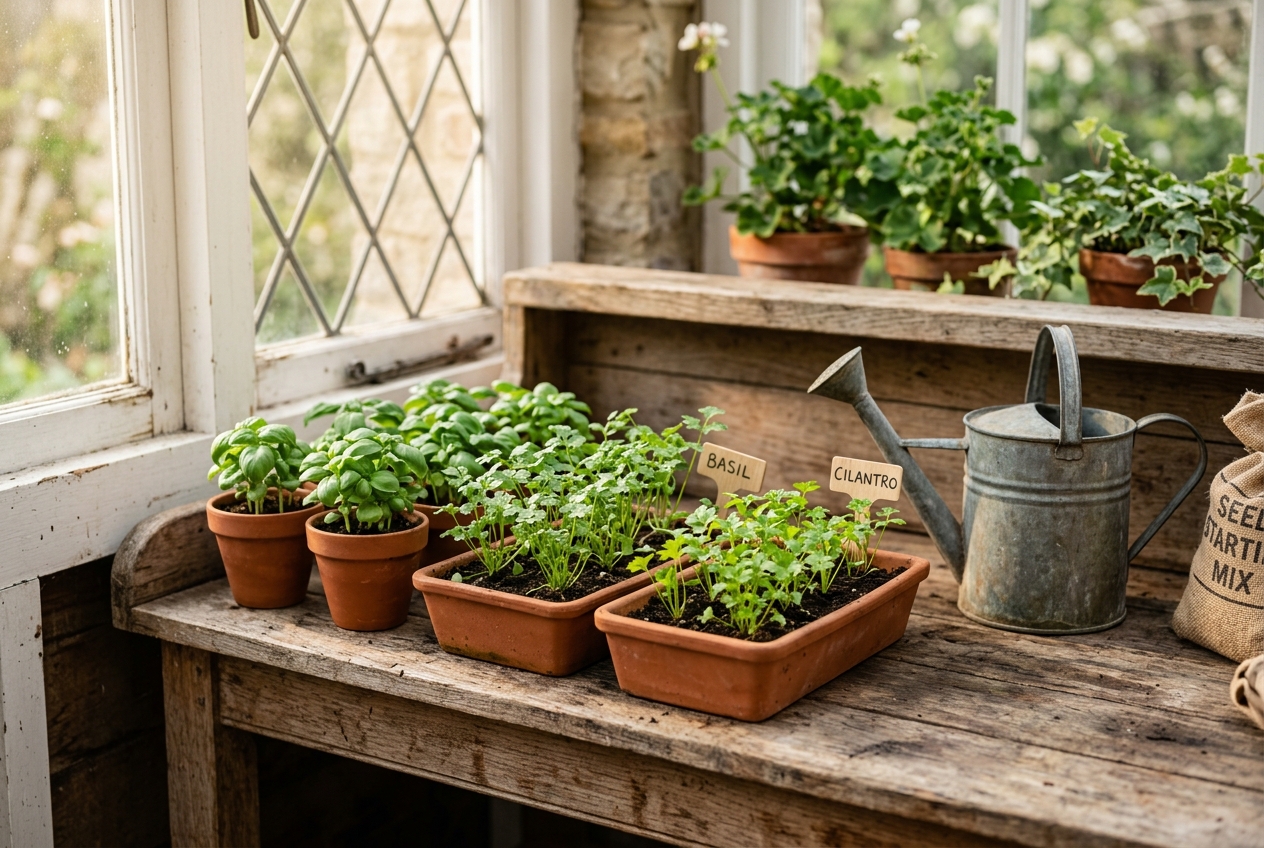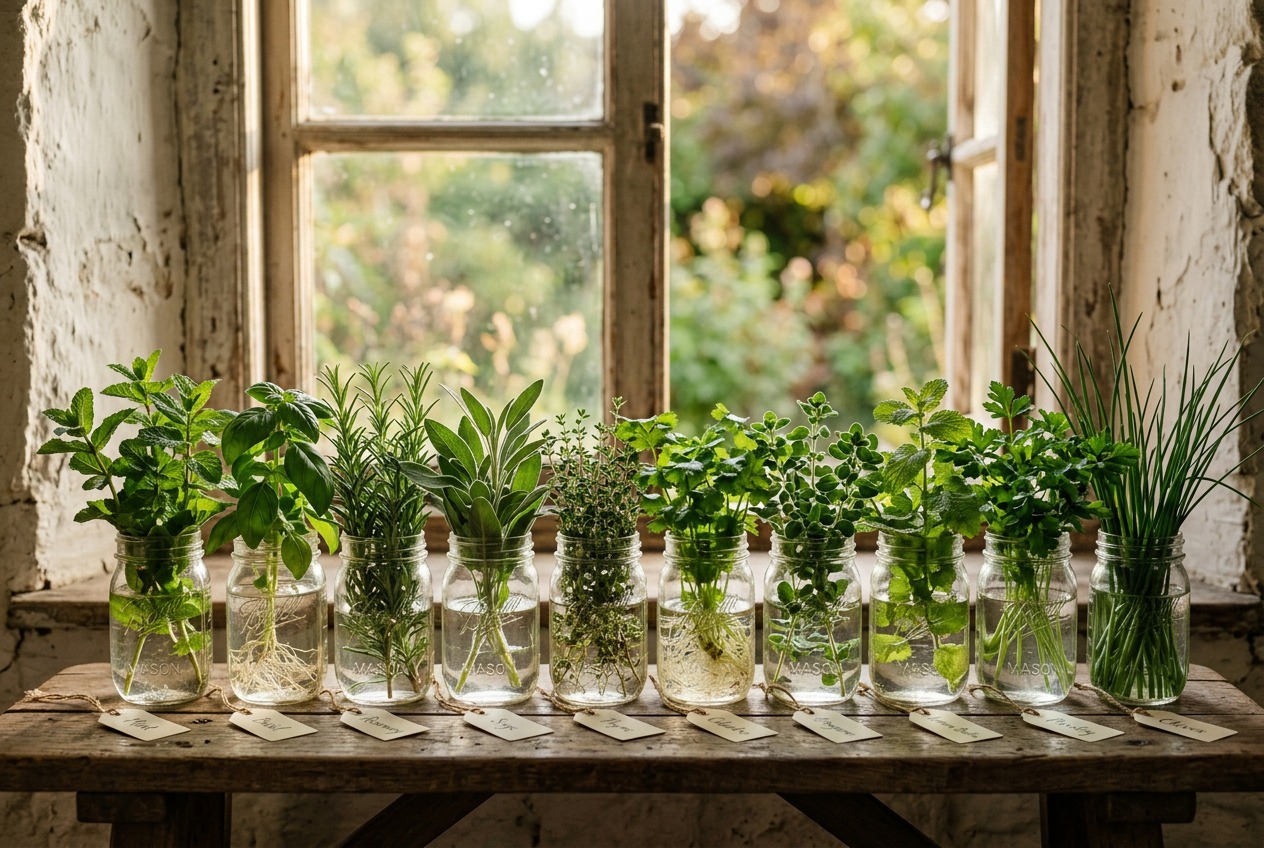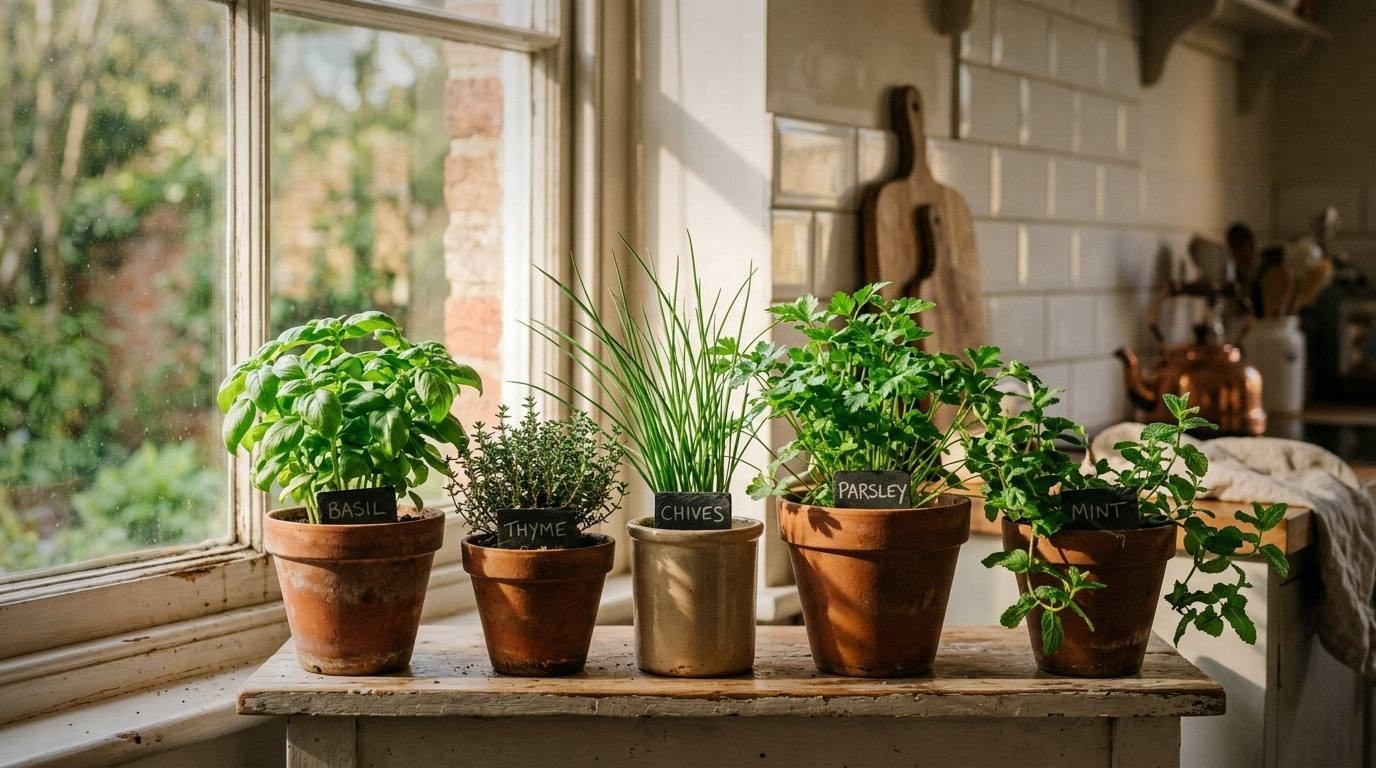
A windowsill herb garden takes up about two feet of counter space and puts fresh herbs within arm’s reach every time you cook. No backyard required. No grow lights required. Just a decent window, the right herbs, and a few terracotta pots.
This guide covers the seven best herbs for indoor growing, which windows actually provide enough light, how to set up containers and soil, and the harvesting techniques that keep plants producing for months instead of weeks.
I have killed more grocery store herb pots than I care to admit, so everything here comes from sorting out what actually works.
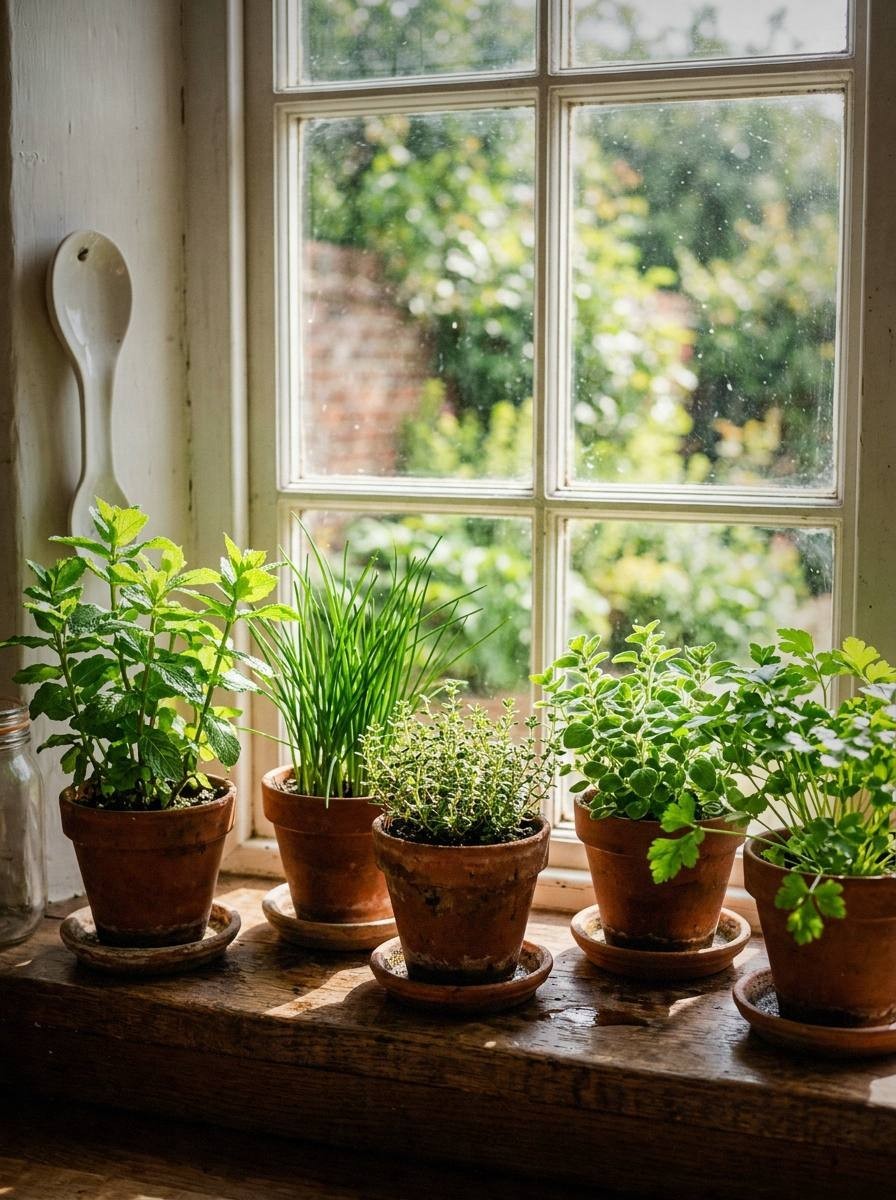
7 Best Herbs for an Indoor Herb Garden
Not every herb thrives indoors. The best windowsill herbs share a few traits: they tolerate lower light than garden conditions, they stay compact in containers, and they bounce back from regular harvesting.
Here are the seven most reliable herbs for indoor growing, ranked by difficulty.
| Herb | Botanical Name | Light Needs | Water Frequency | Pot Size | Difficulty | Best Cooking Uses |
|---|---|---|---|---|---|---|
| Mint | Mentha spicata | 3-4 hours direct | Every 4-5 days | 6-8 inch | Beginner | Tea, cocktails, salads, yogurt |
| Chives | Allium schoenoprasum | 4-5 hours direct | Every 5-6 days | 6 inch | Beginner | Eggs, potatoes, cream cheese, soups |
| Thyme | Thymus vulgaris | 5-6 hours direct | Every 8-10 days | 6 inch | Easy | Roasts, soups, stews, bread |
| Oregano | Origanum vulgare | 5-6 hours direct | Every 7-9 days | 6 inch | Easy | Pizza, pasta sauce, grilled vegetables |
| Flat-leaf Parsley | Petroselinum crispum | 5-6 hours direct | Every 5-7 days | 6-8 inch | Moderate | Tabbouleh, chimichurri, garnish, sauces |
| Basil | Ocimum basilicum | 6+ hours direct | Every 3-4 days | 8 inch | Moderate | Pesto, caprese, Thai curries, pizza |
| Rosemary | Salvia rosmarinus | 6+ hours direct | Every 10-14 days | 8-10 inch | Moderate | Roasted meats, focaccia, potatoes |
Mint (Mentha spicata)
Spearmint is the most forgiving indoor herb. It tolerates lower light than almost anything else on this list, grows fast enough to harvest weekly, and actually does well slightly root-bound in containers.
Start from a division or runner rather than seed. Plant in a 6 to 8-inch pot and pinch growing tips every two weeks to encourage bushy, lateral growth instead of leggy stems. Mint wants consistently moist soil but not standing water.
Chives (Allium schoenoprasum)
Chives store energy in their bulbs, which means they handle the lower light levels of a window better than most herbs. A division from an outdoor clump works better than starting from seed, and they settle into indoor growing within two to three weeks.
Cut with scissors about one inch above the soil line. The bulbs push new shoots continuously. You will be snipping chives onto scrambled eggs within a month.
Thyme (Thymus vulgaris)
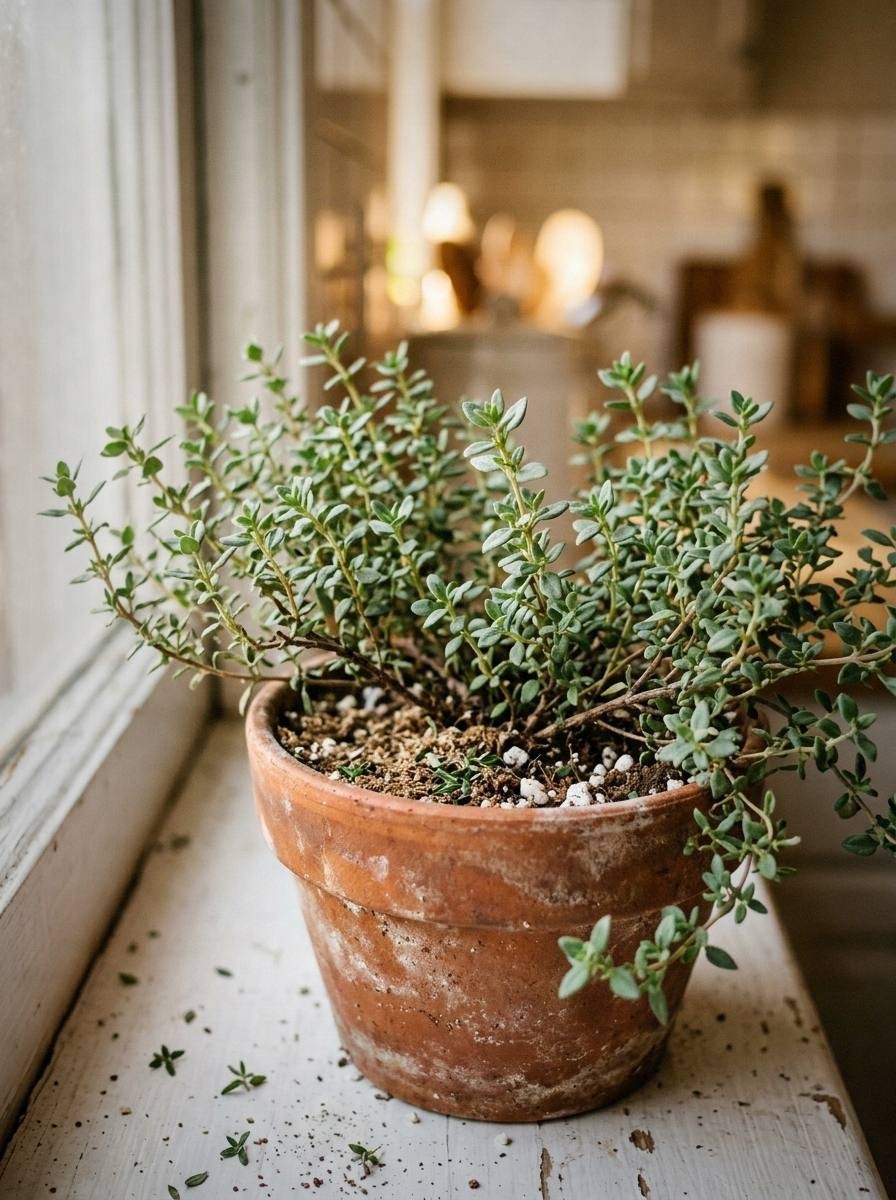
English thyme stays compact indoors and rarely gets leggy. It grows slowly through winter but produces enough for regular harvesting. The key is drainage: thyme is Mediterranean and hates wet roots. Mix perlite into the potting soil at a 1:3 ratio.
Water only when the soil is dry at least one inch down. Thyme would rather be slightly thirsty than slightly wet.
Oregano (Origanum vulgare)
Greek oregano (Origanum vulgare var. hirtum) is the best variety for indoor growing. Expect it to look rough for the first four to six weeks after transplanting indoors. Brown stems and no new growth is normal. It comes back.
Same watering rules as thyme: let it dry between waterings. Once established, oregano produces steadily and the flavor of fresh oregano in cooking is noticeably stronger than dried.
Flat-Leaf Parsley (Petroselinum crispum)
Flat-leaf Italian parsley does better indoors than curly varieties, which tend to get leggy faster in lower light. Start from a transplant rather than seed. Parsley seed germination takes three to four weeks and requires consistent moisture.
Give parsley your best light position. It needs the most sun of any herb in the beginner-to-moderate range. On overcast winter weeks, growth slows noticeably but the plant holds steady.
Basil (Ocimum basilicum)
Basil is the trickiest herb on this list for indoor growing. It needs warmth (above 65F/18C consistently), at least six hours of direct sun, and regular pinching to prevent flowering. Sweet basil (Genovese type) works best.
The failure rate with grocery store basil pots is high because those plants are grown under intense greenhouse lights and packed densely for shelf appearance, not long-term growth. Repot immediately into a larger container, thin to three or four stems, and give it your warmest, brightest window.
Rosemary (Salvia rosmarinus)
Rosemary is slow-growing indoors and needs the most light of any herb here. It also needs excellent air circulation, as stagnant indoor air can cause powdery mildew. Keep it near an occasionally opened window if possible.
Water deeply but infrequently. Rosemary roots rot fast in consistently moist soil. Let the pot dry almost completely between waterings.
Why Some Herbs Fail Indoors
Three popular herbs almost always fail on a windowsill, and understanding why helps set realistic expectations.
- Cilantro (Coriandrum sativum): Bolts to seed within two weeks of reduced light or increased warmth. It is an annual programmed to complete its life cycle quickly. Indoor conditions accelerate that cycle.
- Basil without enough light: Basil technically can grow indoors, but without 6+ hours of strong direct sun, it gets leggy, pale, and stops producing flavorful leaves. A south-facing window is nearly mandatory.
- Dill (Anethum graveolens): Grows tall and leggy indoors because it cannot get enough light to stay compact. The long taproot also struggles in shallow containers.
The pattern: annual herbs (cilantro, dill, basil) that are programmed to germinate, flower, seed, and die in one season struggle indoors. Perennial herbs (mint, chives, thyme, oregano) and biennials (parsley) store energy in their root systems and handle imperfect conditions far better.
Best Window Orientation for Indoor Herbs
The direction your window faces determines which herbs will actually grow. Light hours vary by season and latitude, but here are general guidelines for the northern hemisphere.
| Window Direction | Direct Sun Hours (Winter) | Direct Sun Hours (Summer) | Best Herbs | Notes |
|---|---|---|---|---|
| South-facing | 5-6 hours | 6-8 hours | All 7 herbs | Best orientation for a windowsill herb garden |
| East-facing | 3-4 hours (morning) | 4-5 hours (morning) | Mint, chives, parsley | Morning sun is gentler, good for leafy herbs |
| West-facing | 3-4 hours (afternoon) | 4-5 hours (afternoon) | Mint, chives, thyme | Afternoon sun runs hotter, watch for wilting |
| North-facing | 1-2 hours (indirect) | 2-3 hours (indirect) | Mint only | Not enough direct light for most culinary herbs |
Tip: If your best window gets fewer than four hours of direct sun, stick with mint and chives. They are the most shade-tolerant culinary herbs and will still produce usable harvests in lower light.
Container and Soil Setup
Choosing Pots: Terracotta vs. Plastic
| Feature | Terracotta | Plastic |
|---|---|---|
| Breathability | Porous walls wick moisture, reducing root rot risk | Non-porous, holds moisture longer |
| Weight | Heavier, more stable | Lighter, can tip over |
| Best for | Thyme, oregano, rosemary (drought-lovers) | Mint, basil, parsley (moisture-lovers) |
| Drainage | Must have drainage hole + saucer | Must have drainage hole + saucer |
Terracotta is the better default for most indoor herbs because the porous clay helps prevent the overwatering that kills most windowsill plants. Every pot needs a drainage hole. No exceptions.
Soil Mix
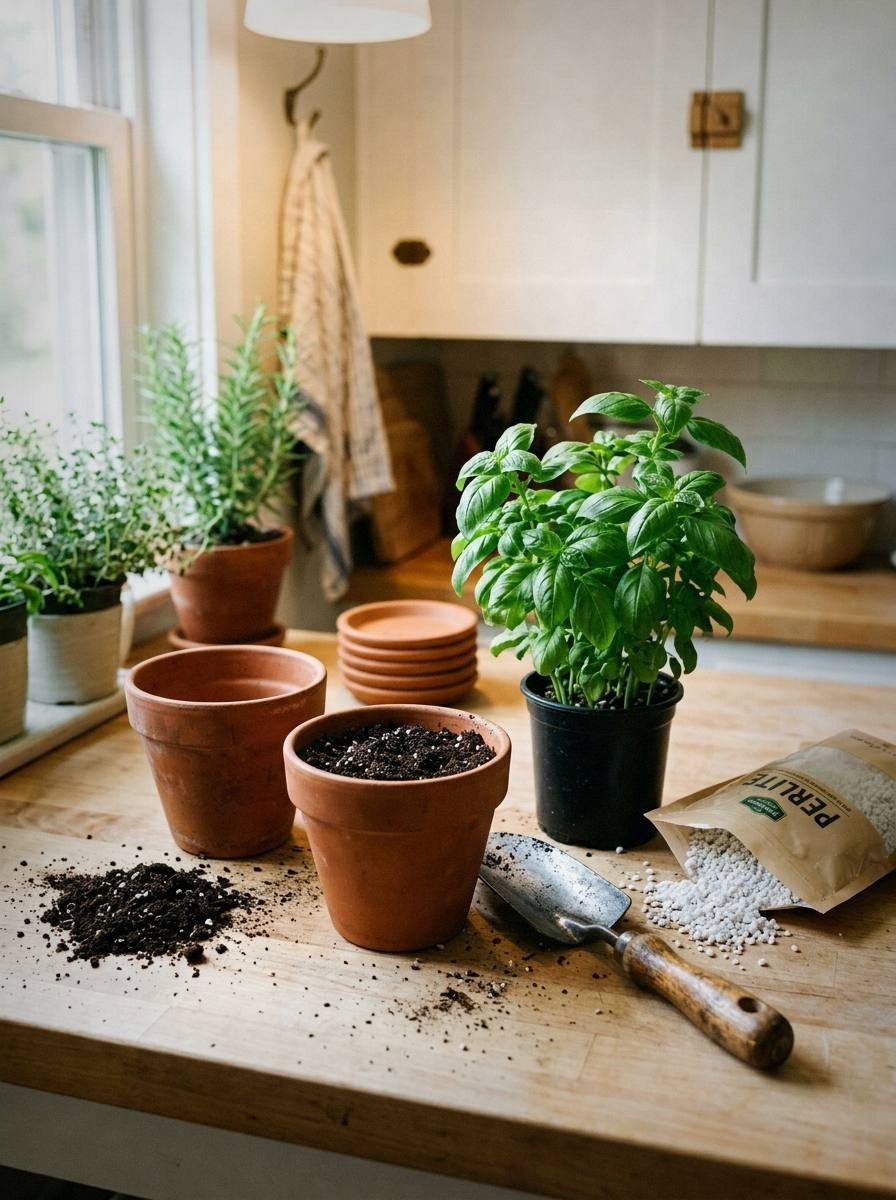
Use a standard indoor potting mix with added perlite for drainage. A ratio of roughly 3 parts potting mix to 1 part perlite works for most herbs. For thyme, oregano, and rosemary, increase the perlite to a 2:1 ratio.
Avoid garden soil in containers. It compacts, drains poorly, and can introduce pests or disease. Pre-mixed “herb and vegetable” potting soil from garden centers is fine but not necessary.
Pot Sizing
- 6-inch pots: Chives, thyme, oregano, parsley
- 6 to 8-inch pots: Mint (it fills space fast)
- 8 to 10-inch pots: Basil, rosemary (they need root room)
Watering Guide for Indoor Herbs
Overwatering kills more indoor herbs than underwatering. Here is how to tell the difference and get it right.
The Finger Test
Stick your finger one inch into the soil. If it feels dry, water. If it still feels damp, wait. This is more reliable than any fixed schedule because indoor conditions (heating, humidity, light levels) change constantly.
Signs of Overwatering vs. Underwatering
| Symptom | Overwatering | Underwatering |
|---|---|---|
| Leaves | Yellow, soft, droopy | Dry, crispy, curling |
| Soil | Stays wet, may smell sour | Pulls away from pot edges |
| Stems | Soft, mushy at base | Dry, brittle |
| Roots | Brown, mushy (root rot) | Dry, pale, tightly bound |
| Fix | Stop watering, improve drainage, repot if root rot is present | Water thoroughly until it drains from the bottom |
Watering Tips
- Water at the base of the plant, not over the leaves
- Use room-temperature water (cold water shocks roots)
- Empty saucers 30 minutes after watering to prevent standing water
- Reduce watering frequency in winter when growth slows
- Terracotta pots dry out faster than plastic, so check them more often
Common Indoor Herb Garden Mistakes (and How to Fix Them)
Using pots without drainage holes. Decorative pots without drainage trap water and cause root rot within weeks. Either drill a hole or use the decorative pot as a cachepot with a smaller nursery pot inside.
Placing herbs too far from the window. Light intensity drops dramatically even a foot away from the glass. Herbs need to be directly on the windowsill, not on a table nearby.
Keeping grocery store herb pots as-is. Supermarket herb pots are overgrown, root-bound, and grown for immediate use, not long-term survival. Repot into a larger container with fresh potting mix within a few days of purchase.
Watering on a fixed schedule. Soil drying rates change with season, humidity, and heating. Always use the finger test instead of a calendar.
Harvesting too little. Regular harvesting stimulates new growth. If you never cut your herbs, they get leggy and eventually flower, which signals the plant to stop producing leaves. Cut often and cut correctly (see below).
Grouping herbs with different water needs. Putting thyme and basil in the same planter guarantees one of them will be unhappy. Keep drought-loving Mediterranean herbs (thyme, oregano, rosemary) separate from moisture-loving herbs (mint, basil, parsley).
How to Harvest Indoor Herbs (to Keep Them Producing)
Proper harvesting is the difference between a herb plant that lasts three months and one that lasts a year. The goal is to encourage branching and prevent flowering.
- Mint: Pinch or cut stems just above a leaf node (where leaves emerge from the stem). The plant will branch at that point, producing two stems where there was one. Never remove more than one-third of the plant at once.
- Chives: Cut entire leaves at one inch above the soil with scissors. New shoots grow from the bulb. Harvest from the outside of the clump first.
- Thyme: Snip sprigs from the tips, cutting just above a leaf node. Avoid cutting into old woody growth, which is slow to regenerate.
- Oregano: Cut stems back to just above a set of leaves. Oregano responds well to aggressive harvesting and fills back in quickly once established.
- Parsley: Harvest outer stems first, cutting at the base of the stem. Leave the inner growth to continue developing. This mimics the natural growth pattern where new leaves push out from the center.
- Basil: Pinch stems just above a pair of leaves. Always harvest from the top to prevent the plant from becoming tall and spindly. If you see flower buds forming, pinch them off immediately.
- Rosemary: Snip 2 to 3-inch tips from the ends of branches. Rosemary is slow to regrow, so harvest sparingly and from multiple branches rather than stripping one.
General rule: Harvest in the morning when essential oil concentration is highest. Never remove more than one-third of any plant in a single harvest.
Frequently Asked Questions
Do indoor herbs need fertilizer?
Not in fall or winter when growth is slow. Starting in early spring, a half-strength liquid fertilizer (balanced 10-10-10 or fish emulsion) every four to six weeks supports new growth. Over-fertilizing causes weak, leggy stems with reduced flavor.
Can I grow herbs indoors without direct sunlight?
Mint and chives can manage with bright indirect light, but most culinary herbs need at least four hours of direct sun. If your space lacks natural light, a basic LED grow light positioned 6 to 12 inches above the plants for 10 to 12 hours daily is an effective substitute.
How long do indoor herb plants last?
Perennial herbs (mint, chives, thyme, oregano, rosemary) can last for years with proper care and harvesting. Parsley is biennial and typically produces well for 8 to 12 months before flowering and declining. Basil is annual and usually lasts 4 to 8 months indoors before it needs replacing.
Should I use grow lights for a windowsill herb garden?
A south-facing window is usually enough for all seven herbs on this list. Grow lights become useful if your window faces east, west, or north, or if you notice plants getting leggy and reaching toward the light. A simple clip-on LED grow light is inexpensive and solves most light shortage problems.
Is it better to start herbs from seed or transplants?
Transplants are faster and more reliable for indoor growing. Seed starting requires consistent moisture, warmth, and patience (parsley takes three to four weeks to germinate, basil about one week). If you want herbs producing within a month, start with nursery transplants or divisions from an outdoor garden.
How do I prevent pests on indoor herbs?
The most common indoor herb pests are fungus gnats (from overwatering), aphids, and spider mites. Allow the soil surface to dry between waterings to prevent fungus gnats. Inspect new plants before bringing them inside. A spray of diluted neem oil or insecticidal soap handles most infestations early.