
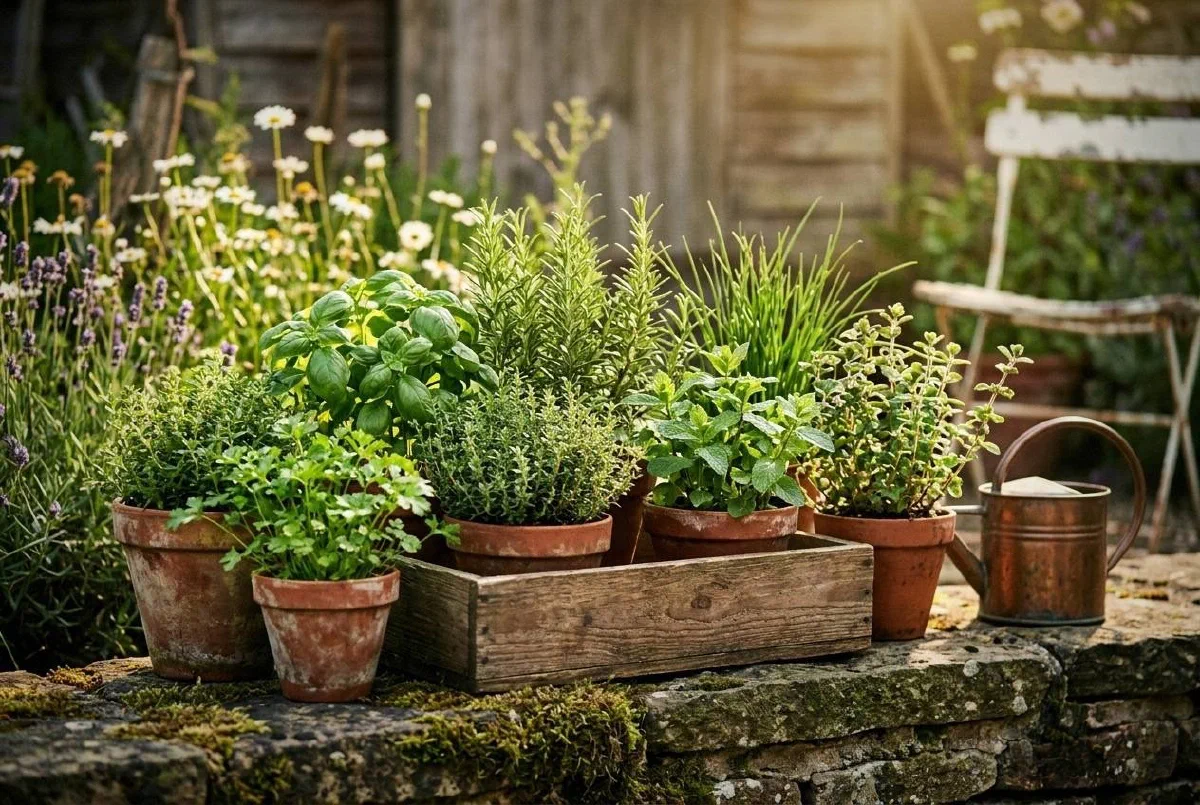
A kitchen herb garden fails for one of three reasons.
Wrong light, wrong combination, or wrong scale. Most windowsill herbs sold in spring assume you will use them daily. Most home cooks do not. The combos below are built for actual use: 3 to 4 herbs per window, picked for one cooking style, sized to a typical 24-inch sill.
Each combo lists which pot size, which light direction works best, and what you actually cook with it. Stop the herb garden from being decoration. Make it the supply for one real meal a week.
The Seven Combos Side by Side
Read this before you buy plants. Find the row that matches the cooking you already do, then check whether your window can give it the light.
| Combo | Light it wants | Pot size | What you cook with it |
|---|---|---|---|
| The Italian Classic | South or east, brightest spot on the sill | 6-inch | Tomato sauce, caprese, pesto, pizza |
| The Roasting Trio | South, hot and dry | 8-inch | Roasts, stews, braises, grilled meat |
| The Tea Garden | East or north, limited sun | 6-inch, one pot per herb | Fresh tea, morning and evening |
| The Salsa Starter | East or south | 6-inch | Salsa, beans, tacos, grain bowls |
| The Chef’s Basics | South or east, five hours or more | 6-inch | Eggs, potatoes, chicken, most recipes |
| The French Herbs | East | 6-inch | Omelets, sauces, roast chicken |
| The Mediterranean | South, handles dry indoor air | 8-inch for rosemary and bay | Greek, Italian, North African cooking |
Which Herbs to Keep Together, and Which to Grow Apart
Most failed windowsills are not a light problem. They are a water problem, because two herbs with opposite thirst got planted in the same pot.
Group by water first, then by light. Basil, parsley, cilantro, and chives want soil that stays a little damp. Rosemary, thyme, sage, oregano, and bay want to dry out between waterings. Put the two groups in separate pots and both stop sulking.
A few herbs need to keep their own pot no matter what:
- Mint and lemon balm spread by runners and will fill any pot they share.
- Bay laurel grows slowly into a small tree, so give it room it can stay in for years.
- Tarragon and chervil are the fussiest of the group and do better alone.
Everything else on the list will share a sill without a fight as long as the pots drain.
Mistakes That Kill a Windowsill Herb Garden
- Pots without drainage holes. Roots sit in water and rot, and no amount of careful watering fixes it.
- Garden soil in a pot. It compacts, drains badly, and holds far less air than a potting mix.
- One small pot per herb. A 4-inch pot dries out in a day on a sunny sill.
- Basil in a north window. It goes leggy and pale, then bolts.
- Watering on a schedule instead of by feel. Winter needs far less than July.
- Fertilizing hard in low light. You get soft leaves and no flavor.
1. The Italian Classic: Basil, Parsley, Oregano
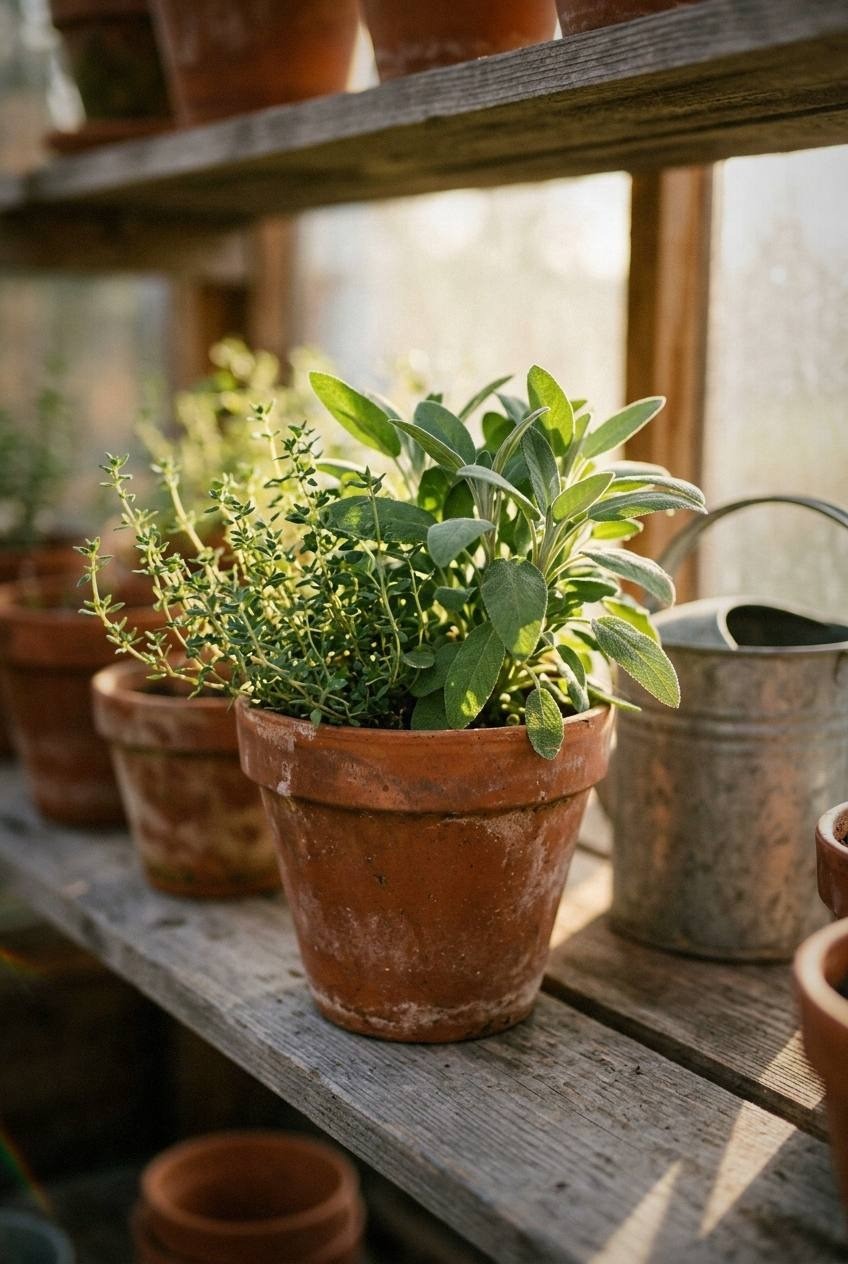
Three herbs, one cuisine, the most-used combination for any home that cooks pasta sauce, pizza, or roasted vegetables.
Use 6-inch pots for each herb. Basil wants the most sun, so put it in the brightest spot. Parsley and oregano tolerate slightly less. South or east-facing windows work best. Water basil when the top inch is dry. Parsley likes consistent moisture. Oregano prefers to dry out between waterings.
This combo supplies tomato sauce, caprese salad, pesto, focaccia toppings, roasted chicken, and Italian sausage. Cut basil leaves regularly to keep it bushy. Trim oregano stems for drying once they get woody at the base.
Best for: south or east-facing window, daily cooks who eat Italian once a week or more.
2. The Roasting Trio: Rosemary, Thyme, Sage
The combination that pairs with every roast, stew, and braise from October through April. Also useful in summer for grilled meat.
Use 8-inch pots. All three are woody perennials that prefer to dry slightly between waterings. They thrive on the same care: bright sun, well-drained potting mix, infrequent fertilizing. Combined in a single window, they read like a small Mediterranean herb shelf.
Rosemary grows largest, so give it the corner spot. Thyme stays compact. Sage spreads sideways and benefits from regular trimming. All three can move outside for the summer in any zone, then come back inside before frost.
Best for: south-facing window, anyone who roasts, grills, or makes Sunday dinner regularly.
3. The Tea Garden: Mint, Lemon Balm, Chamomile
A combination that supplies fresh tea every morning from one window.
Use 6-inch pots, but separate ones. Mint and lemon balm both spread aggressively and will choke other herbs if planted together. Keep them in their own pots and let them fight it out only in their own soil.
Chamomile is the prettiest of the three when it flowers in midsummer. Pinch flowers off and dry them on a paper towel for tea. Mint tolerates shade better than most herbs, so this combo works for a north or east-facing window where sun is limited.
Best for: east or north-facing window, tea drinkers, anyone with a window that does not get strong sun.
4. The Salsa Starter: Cilantro, Parsley, Chives
Three herbs that turn one tomato into a salsa or one bean into a side.
Use 6-inch pots. Cilantro is the trickiest of the three because it bolts (goes to flower and stops producing leaves) when the kitchen gets warm. Plant fresh cilantro from seed every 4 to 6 weeks for continuous supply, or buy a new starter plant from the garden center each spring.
Chives multiply easily once established. A single chive plant produces enough for daily use within two months. Parsley is the workhorse: cut the outer stems first, leave the inner ones to grow.
Best for: east or south-facing window, anyone who cooks Mexican, Mediterranean, or Middle Eastern food regularly.
5. The Chef’s Basics: Basil, Chives, Parsley, Thyme
If you are choosing one combo to cover the most cooking, this is it.
Four herbs in 6-inch pots. The combination covers 80% of recipes that call for fresh herbs. Basil for tomato dishes, chives for eggs and potatoes, parsley as the universal finisher, thyme for chicken and roasts.
Place the pots from tallest to shortest along the sill: basil and parsley at the back, chives in the middle, thyme low at the front. The visual gradient makes the herb garden read intentional rather than scattered.
This combo needs a south or east-facing window with at least 5 hours of direct sun. North-facing windows will produce leggy plants that bolt early.
Best for: south-facing window, the home cook who reaches for fresh herbs more than dried ones.
6. The French Herbs: Tarragon, Chervil, Parsley
The classic French fines herbes mix, useful for sauces, omelets, and roasted chicken.
Use 6-inch pots. Tarragon needs the most space because the stems get long and trail. Chervil is delicate and bolts quickly in heat, so plant fresh each spring. Parsley anchors the combo and supplies the largest volume of usable leaves.
This is the smaller specialty combo. Most home cooks reach for it weekly only if they cook from French recipes. For occasional French dishes, the Italian Classic plus chives covers the same ground with less effort.
Best for: east-facing window, home cooks who make sauces, omelets, or French-style chicken.
7. The Mediterranean: Oregano, Rosemary, Thyme, Bay
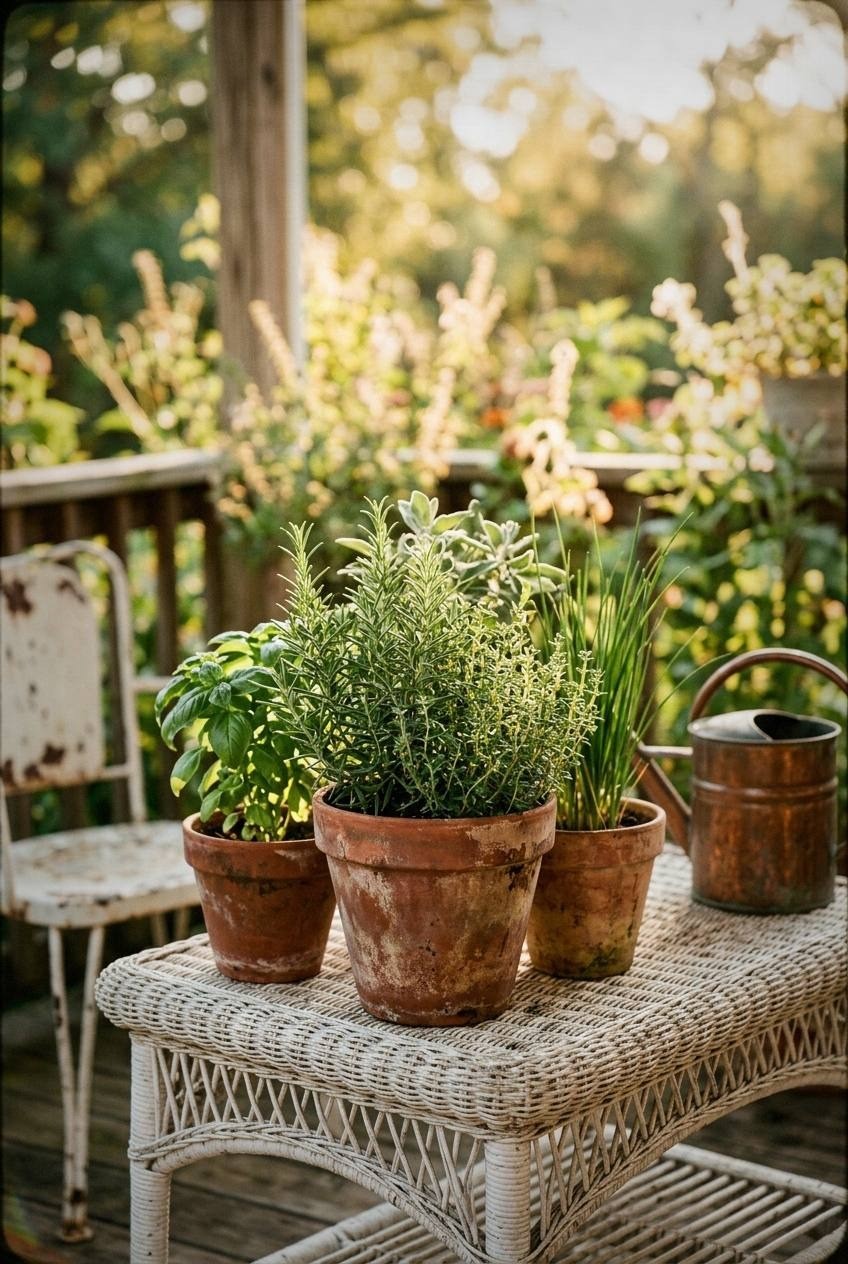
Four herbs that supply Greek, Italian, North African, and Middle Eastern cooking from one window.
Use 8-inch pots for rosemary and bay, 6-inch for oregano and thyme. Bay laurel grows slowly into a small tree and will live for years if kept in a pot it can grow into. The leaves dry well, which means you have bay leaves on hand without buying the dusty jar from the grocery store.
This combination tolerates dry indoor air and infrequent watering better than basil-based combos. It also stays useful all winter, when the basil is gone and the cooking shifts to braises and stews.
Best for: south-facing window, home cooks with Mediterranean tastes, anyone wanting one combo that runs all year.
How Much Sun Do Kitchen Window Herbs Need?
Six hours a day is the floor for most herbs, and indoors that usually means a south- or west-facing window. Clemson HGIC’s herb guide is where the six-hour number comes from, and it names parsley and mint as the two that will take partial shade instead.
The rest of the list: pots with drainage holes, which Iowa State Extension says every container herb garden needs . Standard potting mix, not garden soil. A watering can. The willingness to actually use them.
The herb garden that fails is the one that is decoration. The herb garden that works is the one that supplies one meal a week.
Pick One Combo and Start
You do not need all seven combos. Pick the one that fits the cooking you actually do. Two healthy basil plants supply more pesto than four neglected pots of mixed herbs.
- Pick the combo by the food you cook most, not by the prettiest plant at the garden center.
- Buy one pot per herb, 6-inch for most and 8-inch for rosemary, sage, and bay, and check that each one has a drainage hole.
- Fill with fresh potting mix rather than garden soil, and leave an inch of rim for watering.
- Set the tallest herb at the back of the sill and the shortest at the front so nothing gets shaded.
- Water by feel for the first two weeks, then settle into the rhythm each group wants.
- Cut something every week. A herb you never harvest stops producing.
The kitchen window herb garden is a supply chain, not a centerpiece. Build the supply chain that fits your kitchen.
Closing the Loop
The herb garden you do not think about is the herb garden that has been running long enough to work. That is the goal.
What to Read Next
- Container soil drying out too fast is the first thing to read if a windowsill pot is dusty again by mid-afternoon, because it works through pot size, mulch, and watering order before you blame the plant.
- Summer porch decor, six light and relaxed layouts is where the terracotta pots go once the herbs move outside for the summer.
- Backyard BBQ zones for a crowd is worth reading before a cookout, since the roasting trio and the Mediterranean combo are the two you cut for the grill.
- A backyard Belmont Stakes party runs on a mint pitcher, which is the one job the tea garden combo does best.
- The 4th of July backyard setup puts the chef’s basics and the salsa starter to work if the cooking moves outdoors for an afternoon.