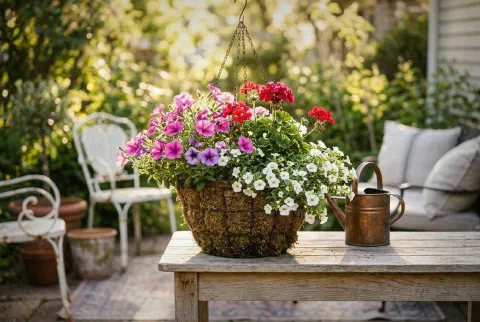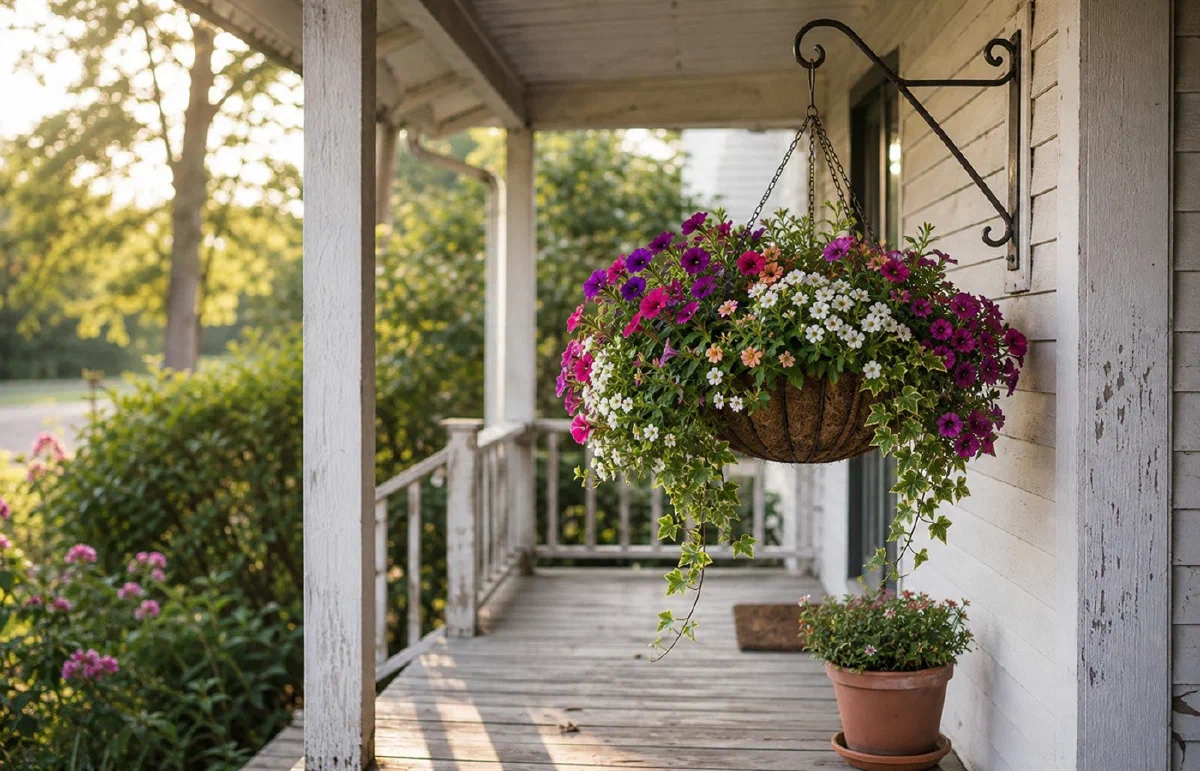
Some porches do not need a makeover. They need something alive at eye level.
That is why hanging baskets work so well. A plain porch can have old siding, a tired railing, and a front step that could use paint, but one good basket of flowers near the door makes the whole thing look like someone cares about it.
I like hanging baskets because they do not take up floor space. If your porch is narrow, cluttered, or already full of shoes and packages, the basket gets to float above all of that. It gives you flowers without asking for a bigger porch.
The trick is choosing a basket that fits real life. Not the perfect nursery basket that looks full for two weeks and then turns into a crunchy ball by July. Something you can water, trim, and actually keep looking decent.
Start With Where the Basket Will Hang
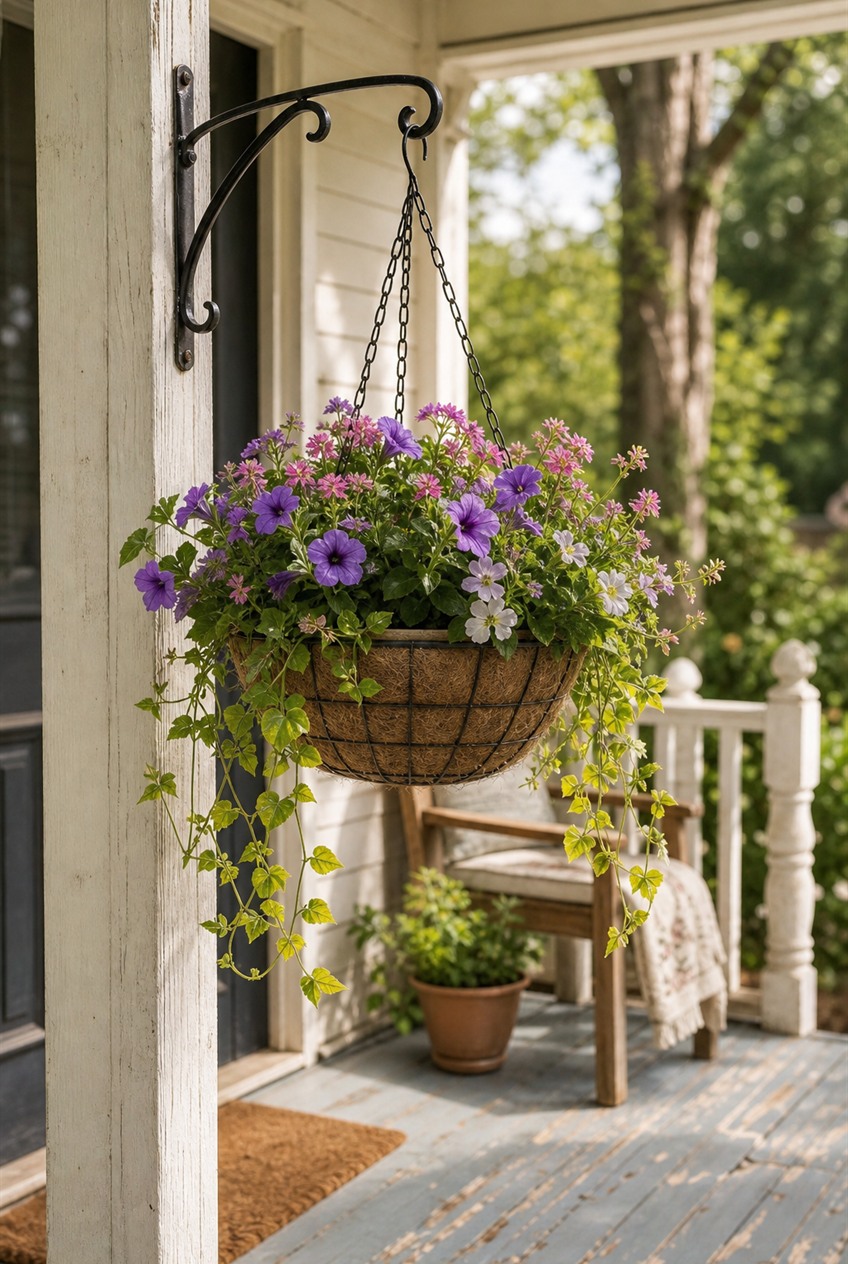
Before you buy plants, stand on the porch and look at the hook.
Is it in full sun all afternoon? Is it tucked under the roof where rain never reaches it? Is it right beside the door where people will bump it every time they carry groceries in?
That one spot decides almost everything.
Full sun baskets need tougher plants. Think petunias, calibrachoa, lantana, verbena, trailing vinca, portulaca, or geraniums. Shade baskets do better with ferns, begonias, impatiens, coleus, ivy, and creeping Jenny.
| The hook gets | Pick plants that | Water it | Try |
|---|---|---|---|
| Full afternoon sun | Take heat and wind | Once a day, twice in a heat wave | Petunias, calibrachoa, lantana, verbena, portulaca |
| Morning sun only | Flower hard, then rest | Once a day through summer | Geraniums, trailing vinca, bacopa |
| Roof shade, no rain | Take low light and steady moisture | Check by hand every day | Ferns, begonias, impatiens, coleus, ivy |
| A dry, windy corner | Tolerate drying out | Soak when the mix is dry an inch down | Lavender, trailing thyme, portulaca |
| Right beside the door | Trail, without brushing anyone’s head | Whatever the light asks for | Ivy, creeping Jenny, sweet potato vine |
If you would rather copy a mix than build one, five hanging basket combos that bloom all summer give the plant counts for each.
If the hook is very high, choose plants that trail enough to be seen from the sidewalk. If the basket hangs low, skip anything that will brush people’s heads. That sounds obvious, but I have absolutely ducked under my own flowers before.
Use One Main Plant and One Trailer
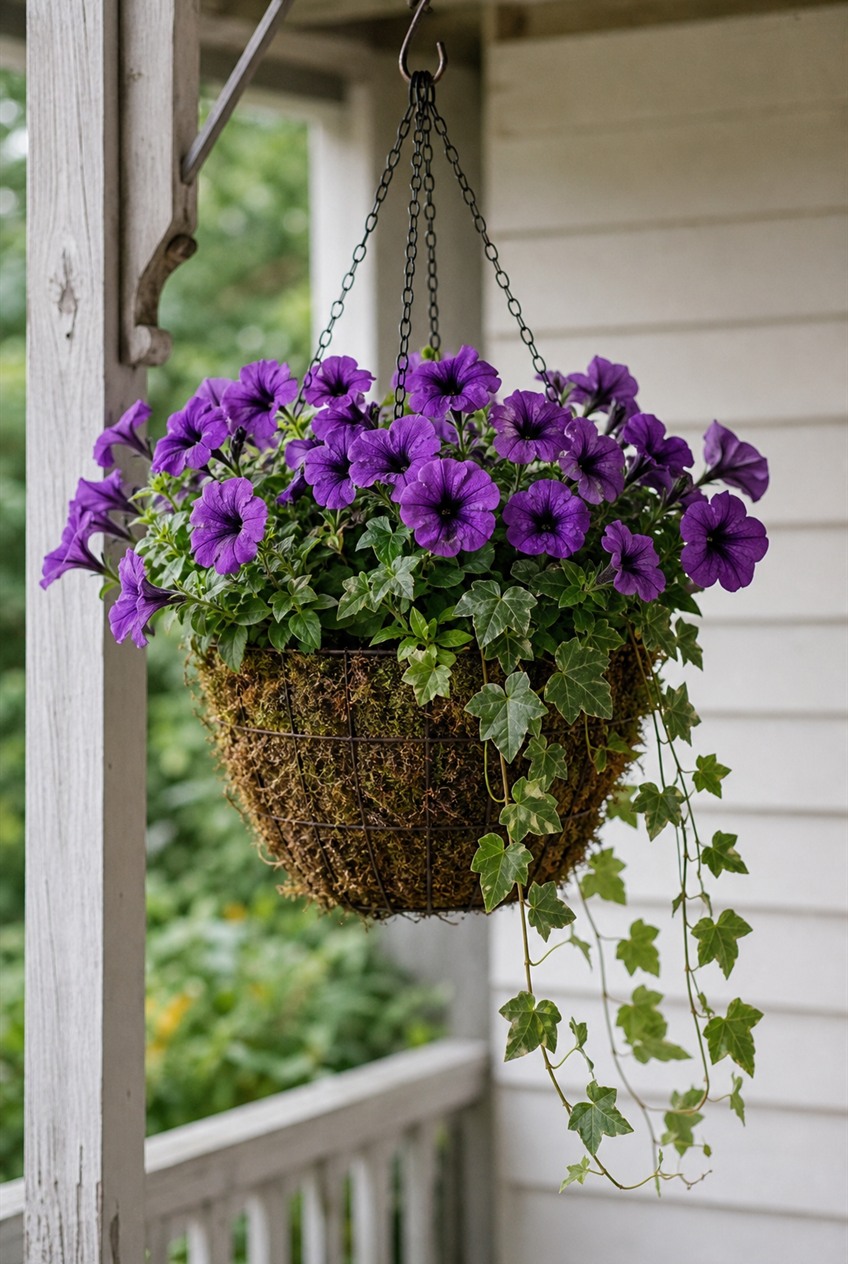
A lot of hanging baskets fail because they have too much going on.
You do not need six different plants crammed into one pot. One main plant and one trailing plant usually look better, especially on a small porch.
Try these simple combinations:
- Geranium with trailing ivy
- Fern with creeping Jenny
- Begonias with sweet potato vine
- Petunias with calibrachoa
- Coleus with trailing lobelia
- Lavender with trailing thyme in a sunny spot
The basket should look full, not busy. If you are standing at the curb, you should be able to tell what you are looking at.
Match the Basket to the Porch
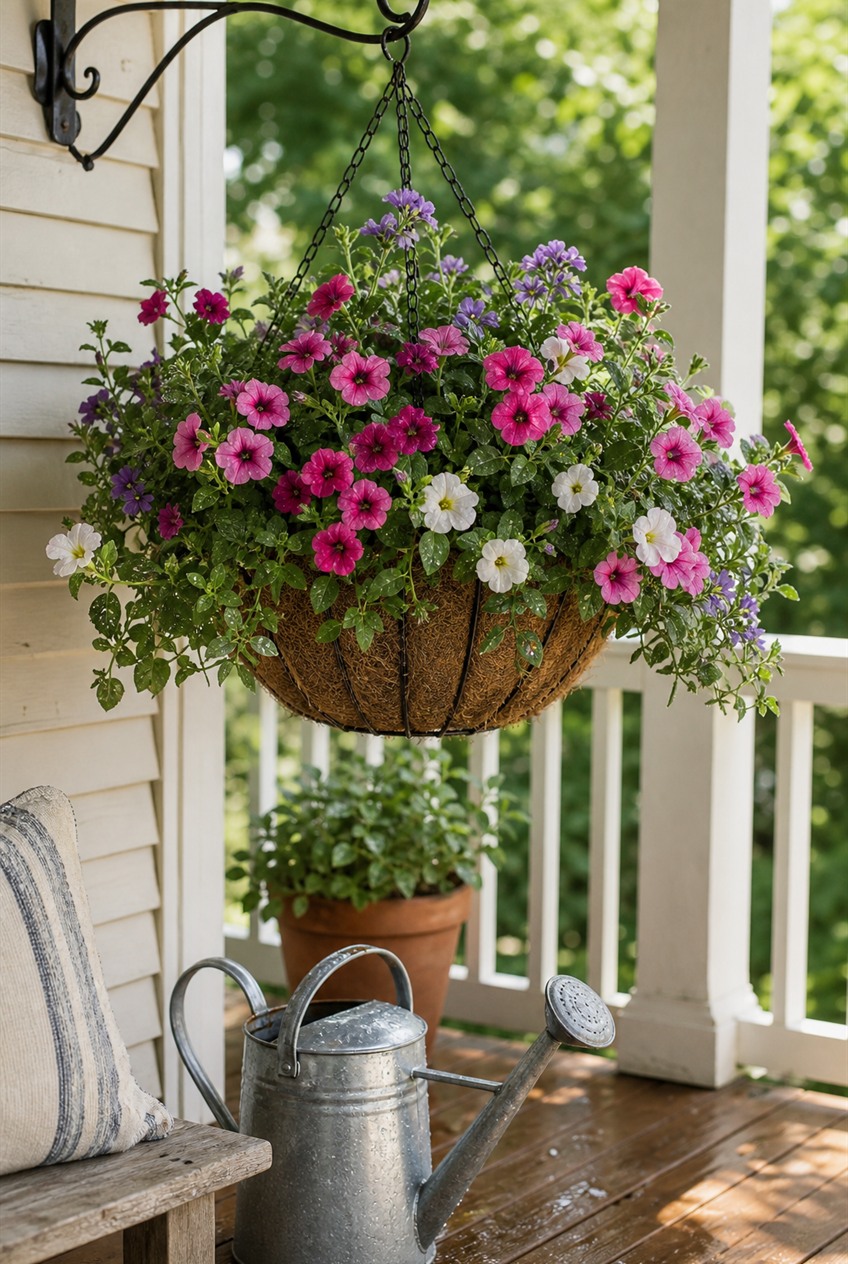
The container matters more than people think.
A plastic nursery basket can work, especially if the plants cover it. But if your porch is plain, the basket itself can help. A moss-lined basket looks relaxed. A simple black metal basket works on an older porch. A woven basket feels good with wood, brick, or painted siding.
I would avoid anything too bright unless the porch already has strong color. The flowers can be the color. The basket can stay quiet.
If you have more than one basket, use matching containers and let the plants vary a little. Matching baskets make the porch feel pulled together without making it look like a showroom.
Do Not Forget the Water Problem
How Often Do You Water a Hanging Basket?
Check it every day in summer, because a basket in full sun can need water once a day and sometimes twice, and Iowa State Extension says to water until it runs out the bottom so every root gets wet. Baskets dry out fast for two reasons: they get wind from all sides, and many are packed with more plants than the soil can really support.
That does not mean you should avoid them. It means you should make watering easy.
Keep a watering can near the door or run the hose close enough that it is not a whole production. If the basket is hard to reach, lower it with a chain. A basket you cannot water comfortably is a basket you will start ignoring by the end of June.
If a basket does dry out all the way, soaking works better than pouring. Set the whole basket in a tub of water for a couple of hours so the mix can take water back up from the bottom, then let it drain before you hang it again.
Also, check what is below it. Some baskets drip brown water after watering. Do not hang one directly over a chair cushion, welcome mat, or the spot where packages land.
Hang and Plant It in This Order
The sequence that saves you from buying the wrong basket first.
- Check the light and the rain at the hook before you choose a single plant.
- Decide on one main plant and one trailer rather than six varieties.
- Pick the container to suit the porch: moss-lined, black metal, or woven, and keep it quiet if the flowers are loud.
- Plant so the root ball sits about an inch below the rim, then water it in until water runs out of the bottom.
- Hang it at a height where the trailers clear people’s heads and packages.
- Check it every day in summer and water until it runs out of the bottom, not just until the surface looks wet.
- Once a week, pinch off dead blooms, pull yellow leaves, and turn the basket a quarter turn toward the sun.
- If it dries out completely, set the whole basket in a tub of water for a couple of hours and let it drain before hanging it back up.
One Basket Can Be Enough
Two matching baskets on either side of the porch can look great, but one basket is often enough.
Hang it where it frames the door, softens a blank corner, or gives color above a chair. If your porch has one sad spot that always looks empty in photos, that is probably where the basket belongs.
I like one generous basket more than three small ones. Small baskets dry out faster and can look skimpy unless they are planted well. A larger basket with fewer plant types usually feels more intentional.
Keep It Looking Alive
Hanging baskets need quick attention, not a complicated schedule.
Once or twice a week, pinch off dead blooms, pull out yellow leaves, and turn the basket if one side is growing toward the sun. If it starts looking flat, trim the longest trailers back a little. Most baskets fill back in better after a light haircut.
If the flowers stop blooming in midsummer, they may need food. A complete fertilizer with a 1:2:1 ratio, applied every one to three weeks , keeps flowers coming, while a high-nitrogen feed mostly grows leaves. Water, light, and deadheading matter more.
What I Would Put on a Plain Porch
If I had a very plain porch and wanted it to look welcoming quickly, I would choose one of these:
- A big fern in shade
- Red or coral geraniums in sun
- White begonias with trailing greenery
- Lavender and thyme for a sunny porch that gets dry
- Petunias in one color with a simple trailing plant
Then I would add one pot near the step in the same color family. That is enough to make the porch look cared for without turning it into a project.
Sometimes the front of the house does not need more decor. It needs one living thing that is watered, healthy, and easy to notice when you come home.
What to Read Next
- Front porch planter ideas that look full all season covers the pots at floor level, which is the second thing a plain porch needs.
- Cheap pots that look expensive on a front porch is worth reading before you buy a matching container for the basket.
- Flower container combinations that bloom all season gives the plant counts for the pots under the basket.
- Summer porch decor, six light and relaxed layouts places the basket in a whole porch scheme rather than on its own.