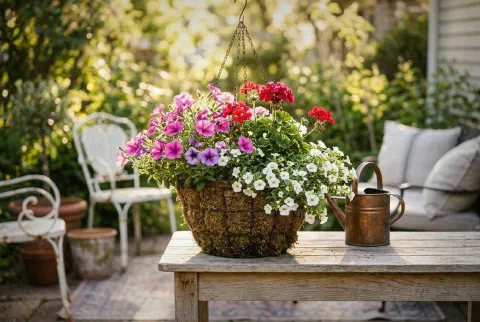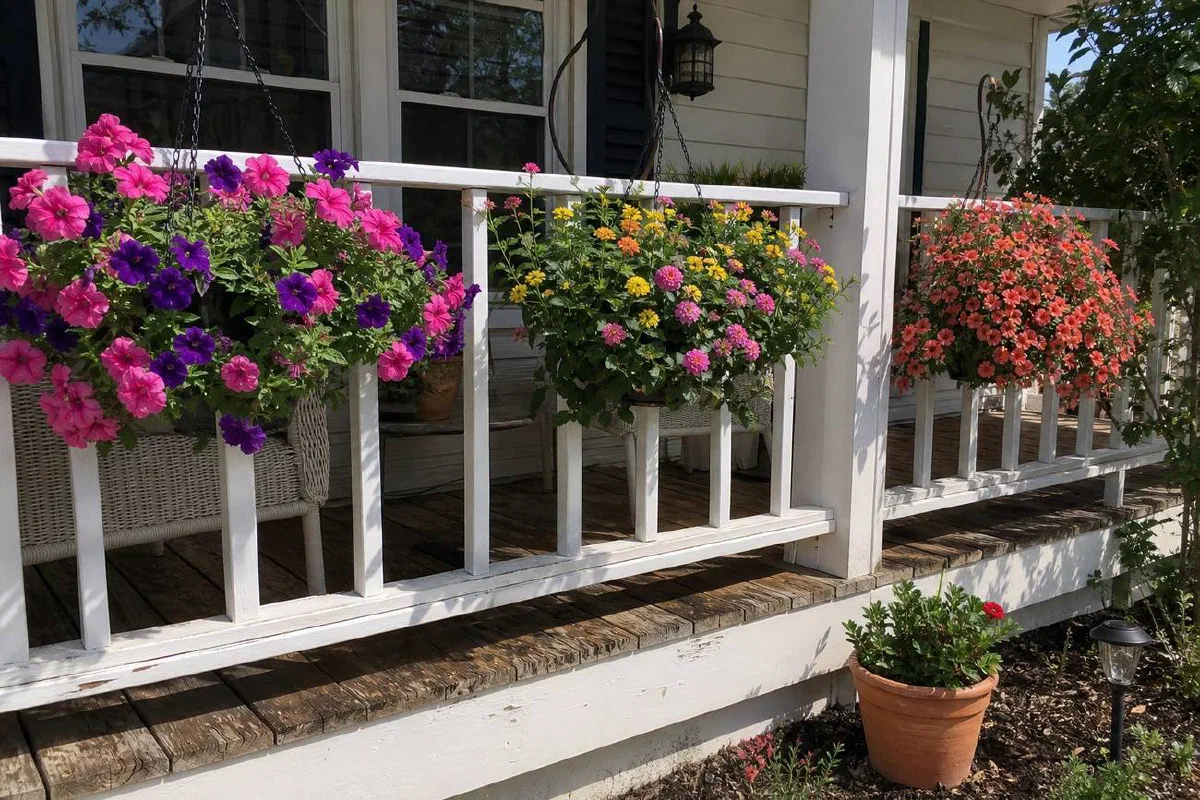
The hanging basket that quits in July almost always has the wrong plant in it.
A basket bought in May full of pansies, ivy, or fuchsia will look beautiful for six weeks and then collapse the first time the temperature hits ninety. Hanging baskets that bloom from May to October in full sun are a different category of plant, they want heat, they tolerate dry spells, and they bloom hardest when most other flowers slow down.
These eight plants all bloom continuously in full sun through August and into September. Full sun has a number attached to it: Penn State Extension counts six or more hours of direct sun , so a porch that only catches the morning does not qualify. Most of these plants are annuals in zones 5-7 and tender perennials south of zone 8. All of them tolerate the kind of porch and patio heat that kills standard hanging-basket flowers by July.
Which Plant Fits Your Porch
| Your porch and your habits | Start with | Why |
|---|---|---|
| Bakes from mid-morning to late afternoon | Portulaca | Its flowers open in strong sun, so a hot south-facing porch suits it |
| Hot, but you water on a schedule | Lantana | Drought-tolerant once established, and it looks better in August than in June |
| You forget to water | Portulaca or lantana | Both shrug off dry spells and missed feedings |
| Humid southeastern summer | Verbena, in a mildew-resistant series | Powdery mildew is its one real weakness in humid air |
| You want one plant to fill a 12-inch basket | Vinca | Five plants of one color make a tidy cascade |
| You want flowers without deadheading | Wave or Supertunia petunias | They self-clean, so the spent blooms drop on their own |
| You want the basket to look substantial | Sweet potato vine | Three to four feet of trail in a single summer |
| The porch is shaded by evening | Not portulaca | Its flowers close at night and on overcast days |
1. Wave or Supertunia Petunias
Standard petunias from the grocery store are not the same plant as Wave or Supertunia petunias from a real garden center.
Wave petunias (the brand-name spreading petunia) and Supertunias (Proven Winners’ line) are bred to keep blooming through heat without deadheading. A standard petunia needs the spent flowers pinched off every three days to keep producing. A Wave or Supertunia self-cleans, the old flowers drop on their own and the plant keeps making new ones.
Pick a hanging basket already planted with at least three Wave or Supertunia plants. Water deeply when the top inch of soil is dry. Feed once a week with a liquid fertilizer at half strength. In full sun and warm temperatures, expect blooms continuously from late May through first frost.
Colors: Easy Wave Red, Easy Wave Yellow, Supertunia Vista Bubblegum (the pink-purple that wins every “best summer petunia” list).
2. Calibrachoa (Million Bells)
Calibrachoa is the smaller, busier cousin of petunia, with thumbnail-sized flowers covering the plant in waterfall density.
The same Million Bells label appears on most garden-center calibrachoa, regardless of which breeder grew them. They tolerate full sun, bloom all summer, and don’t need deadheading. They want slightly more water than petunias, let the top half-inch dry before watering, not the top inch.
Calibrachoa shines in mixed baskets. Pair with one upright plant (like Diamond Frost euphorbia) and one trailing foliage plant (like sweet potato vine) for the classic “thriller, filler, spiller” combination.
3. Verbena (Trailing Verbena)
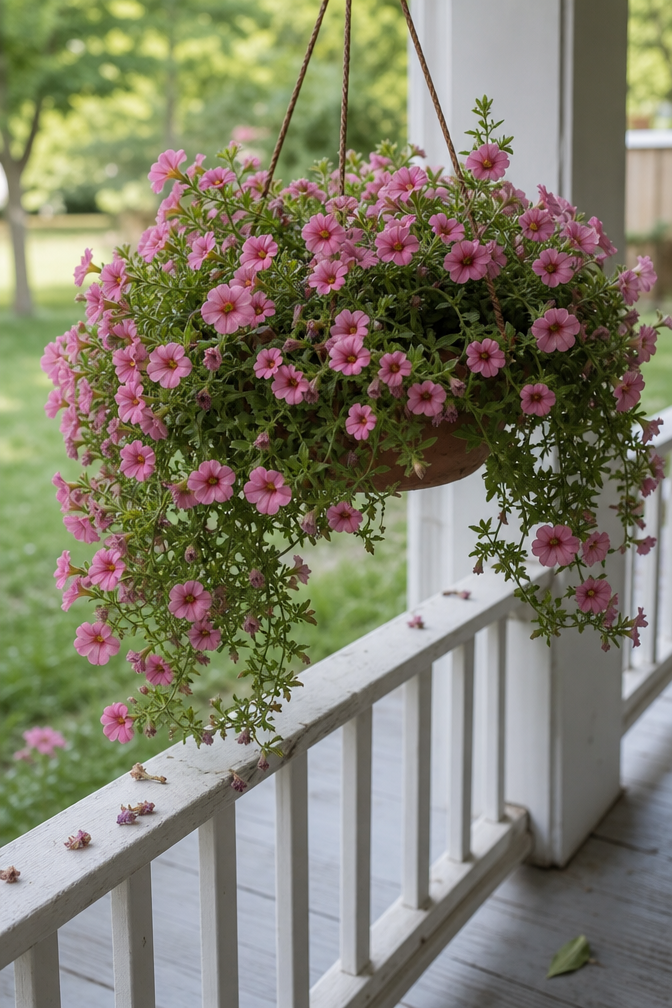
Trailing verbena (Verbena canadensis or Verbena hybrida) is a heat-loving perennial in zone 7+ and an annual everywhere else.
Verbena blooms in tight clusters of small flowers, pink, purple, red, white, and the plant trails 18 to 24 inches over the side of a basket. It needs less water than petunias and tolerates dry spells well. Powdery mildew is the one issue to watch for in humid climates; pick a mildew-resistant series like Superbena or Lanai if you live in the southeast.
Verbena pairs well with thymes or low oregano for a sun-loving herb-and-flower hanging basket that does double duty.
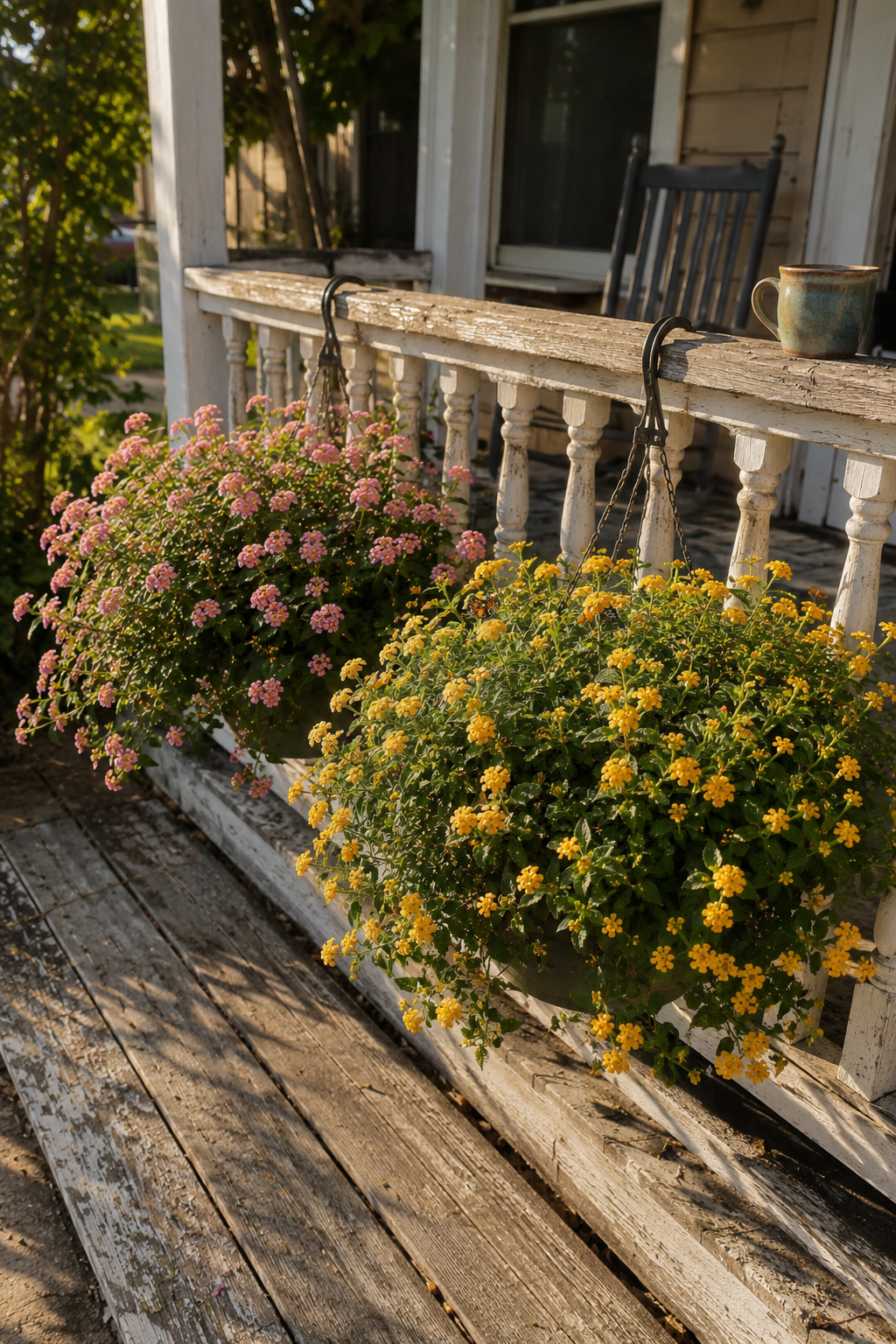
4. Lantana
Lantana is the most heat-tolerant flowering hanging-basket plant in any garden center.
A lantana basket in full sun in August looks better than it did in June. The plant evolved in tropical Americas and treats Texas summers as normal weather. Flowers come in clusters that shift color as they open, a single cluster can have orange, yellow, and pink florets at the same time.
Lantana is a perennial in zone 8 and warmer, an annual in zone 7 and cooler. It’s also drought-tolerant once established, let the soil dry between waterings rather than keeping it moist. The trailing varieties (look for “Trailing Lavender” or “Bandana Trailing Gold”) spread 24 to 30 inches over a basket edge.
Lantana attracts butterflies and hummingbirds, which makes a single basket on a porch into a small wildlife station.
5. Portulaca (Moss Rose)
Portulaca is the basket flower for the gardener who forgets to water.
Also called moss rose, portulaca has succulent-like fleshy leaves that store water. It blooms in vivid pink, red, orange, yellow, or white through the hottest part of summer and asks for almost nothing. Six hours of sun, well-draining soil, water once a week, and it keeps going.
The one quirk: portulaca flowers close at night and on overcast days. The bloom show happens in mid-morning to mid-afternoon. For a porch that gets evening shade, this is not the right plant. For a south-facing porch that bakes from 10am to 4pm, it’s perfect.
6. Sweet Potato Vine
Sweet potato vine (Ipomoea batatas) is not a flower, it’s a chartreuse, purple-black, or copper-leaved trailing vine that holds a hanging basket together visually.
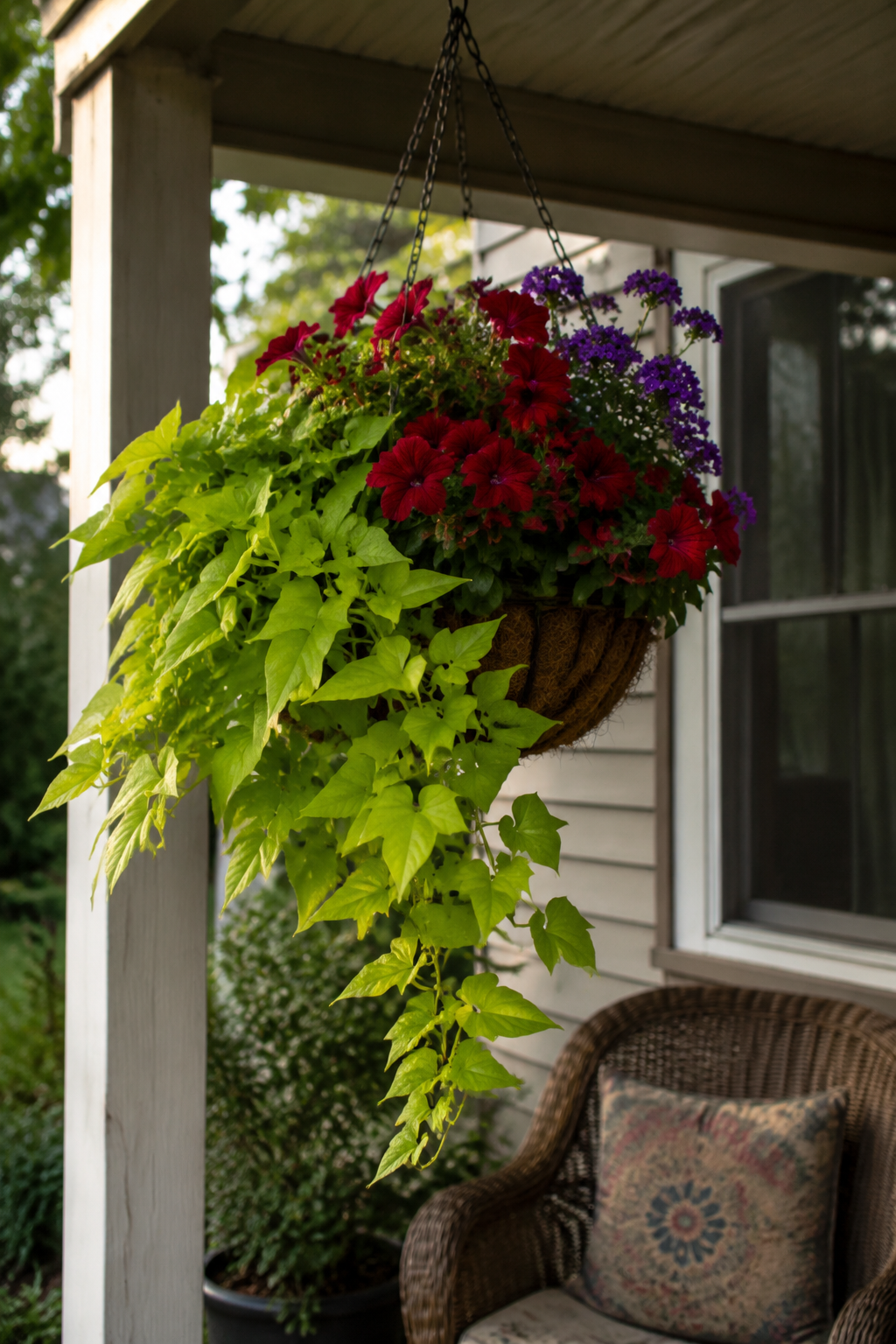
The chartreuse varieties (Marguerite, Sweet Caroline Light Green) glow against any dark wall or porch. The purple-black varieties (Blackie, Sweet Caroline Bewitched After Midnight) ground a basket full of bright flowers. Both grow fast, three to four feet of trail in one summer, and recover from missed waterings within hours.
Add a sweet potato vine to any basket that needs more drama. Three Wave petunias plus one sweet potato vine fills a 12-inch basket in four weeks and trails by month two.
7. Vinca (Madagascar Periwinkle)
Vinca (Catharanthus roseus, not the ground-cover vinca minor) is a heat-loving annual that blooms in pink, white, and burgundy from late spring through fall.
The plant likes hot, dry, and sunny. It tolerates poor soil. It does not want wet feet, overwatering is the only real way to kill vinca. Let the soil dry between deep waterings. Mildew can hit it in cool wet summers, so it’s not the right pick for the Pacific Northwest, but in zones 7-10 with hot summers it’s bulletproof.
Vinca makes a clean monoculture hanging basket, fill a 12-inch basket with five plants of one color and the result is a tidy cascade of bloom all summer. Pair white vinca with a chartreuse sweet potato vine for a porch basket that reads at night.
8. Bidens
Bidens (Bidens ferulifolia) is the underrated full-sun basket flower of the last few years.
Small daisy-like flowers in golden yellow, orange, or white cover the plant from May to frost. Bidens trails 18 to 24 inches and tolerates heat, drought, and forgetful watering. It’s also a pollinator magnet, bees and small butterflies work the flowers constantly.
The ‘Goldilocks Rocks’ series is the most reliable; ‘Beedance’ from Proven Winners is the newer line that holds up in humidity. Either pairs beautifully with purple verbena or pink calibrachoa for a complementary-color basket.
How to Build a Full-Sun Basket That Actually Lasts
A few rules that separate the basket that blooms all summer from the basket that quits in July:
- Use a 12-inch or larger basket. Anything smaller dries out too fast in real summer heat. The 10-inch baskets at the grocery store are designed for spring color, not summer staying power.
- Use real potting mix, not garden soil. A basket needs a peat-and-perlite-based mix that holds moisture and drains well. Garden soil compacts and suffocates roots.
- Water deeply, not often. Light daily watering encourages shallow roots and a stressed plant. Better to water deeply every two or three days (until water runs out the bottom) than to sprinkle every day. Iowa State Extension’s container care guide sets the finger test at 1 to 2 inches down and notes that the swing runs from once or twice a day for a small container in hot, windy weather to once or twice a week for a large one in cool weather.
- Feed every week at half strength. Hanging baskets exhaust their soil nutrients fast. A weekly half-strength liquid feed keeps blooms coming.
- Move the basket if it’s struggling. A plant that’s wilting daily by 1pm is in too much sun. A plant that’s not blooming is in too much shade. Adjust the location based on what the plant tells you.
For mixed baskets rather than single-plant ones, five easy hanging basket combos that bloom all summer pair a thriller, a filler, and a spiller that want the same water.
Basket Care Through the Season
- At planting, use fresh peat-and-perlite potting mix and work in a slow-release fertilizer so the basket is not running on empty by July.
- Through late May and June, water when the top inch is dry and feed once a week at half strength while the plants are still building.
- In the hottest weeks, check the basket by weight. A light basket needs water; a heavy one does not.
- In late July, cut back anything that has gone straggly. Verbena, petunias, and calibrachoa all push fresh growth after a trim.
- By September, stop feeding and let the basket wind down, or bring in the plants you plan to overwinter before the first frost.
What These Eight Have in Common
Every plant on this list evolved in a hot dry climate (tropical Americas, Mediterranean, southern Africa) and treats American summers as normal weather. The hanging basket that fails by July is usually a plant that evolved for cool moist conditions, pansies, fuchsia, ivy geraniums, placed in a setting it can’t survive.
Pick from this list and the basket will look better in August than it did in May.
FAQ
How often should I water a full-sun hanging basket in summer?
In hot weather (85°F+) most full-sun baskets need water every one to two days. In milder weather every two to three days. The actual test is the weight of the basket, lift it; if it’s heavy, skip watering; if it’s light, water deeply until water runs out the drainage holes.
What’s the easiest full-sun hanging basket plant for a beginner?
Lantana or portulaca. Both tolerate heat, dry spells, and missed feedings. Both bloom continuously without deadheading. Either makes a forgiving first hanging basket for a new gardener.
Can I bring hanging baskets indoors over winter?
Lantana, vinca, and verbena can overwinter indoors in a sunny window in zones 5-7, though they often don’t bloom much until they go back outside. Sweet potato vine overwinters as a tuber in a paper bag in the garage. The rest are best treated as one-season annuals.
What to Read Next
- Front porch planter ideas that look full all season covers the pots at ground level, so the baskets are not carrying the whole porch alone.
- Cheap pots that look expensive on a front porch is worth reading before you buy the basket, since the hanger and the pot should read as one decision.
- Flower container combinations that bloom all season gives you plant pairings if you would rather copy a proven mix than build one from this list.
- Hanging baskets that make a plain porch look welcoming is about where to hang them and how many a porch can carry.
- Summer porch decor with light relaxed layouts shows the layered look that hanging baskets fit into when the porch also has seating.