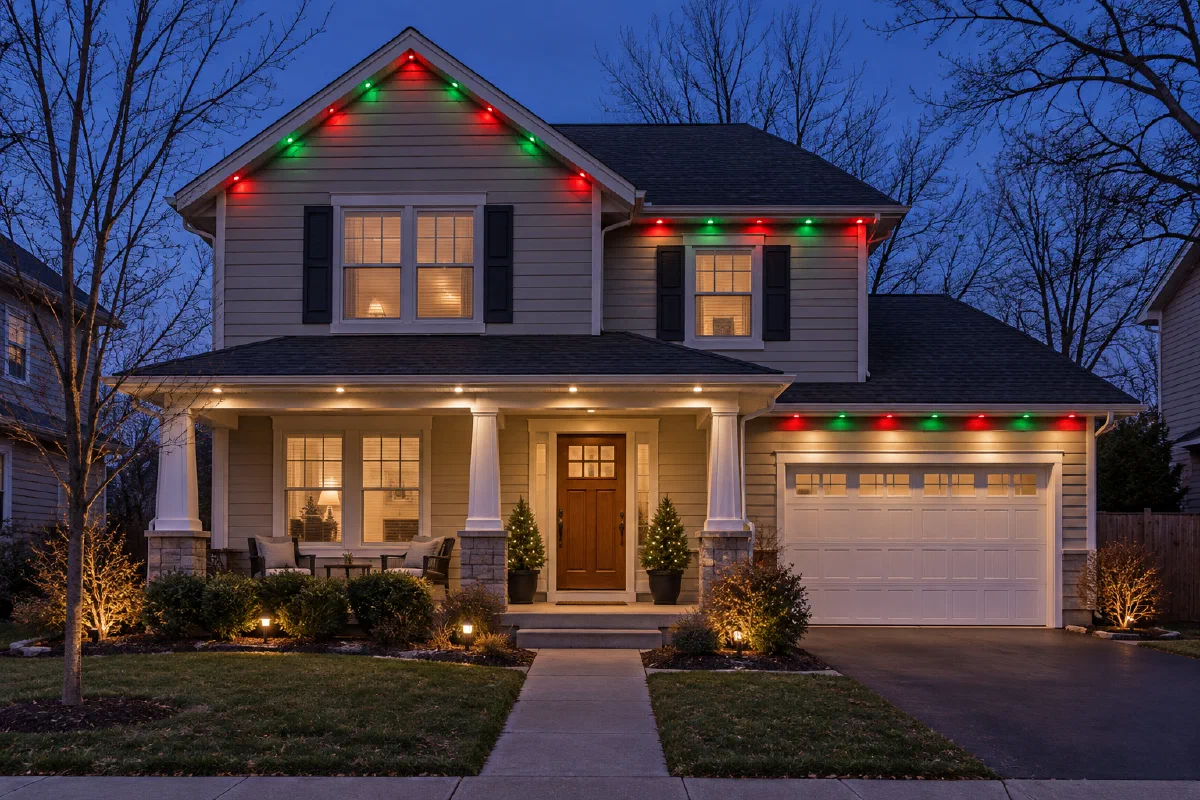
Buy Govee Permanent Outdoor Lights 2 if your lights will run along a straight eave of 150 feet or less and nothing has to be cut. Buy the Pro if the run has corners, gables or a dormer to work around, needs more than 150 feet (the Pro goes to 200), or you want a white that moves from warm to cool.
The rest is a handful of numbers. The Pro is brighter, at 50 lumens per light against 40, and it can be cut to fit. The Lights 2 puts more lights on each foot of cable (72 per 100 feet against 60) and costs less for the same length. Both are IP67 waterproof, and both work with the Govee app, Alexa, Google Assistant and Matter.
There are four permanent light lines with close names, so check the model number before you order. The two in this guide are the Lights 2 (H705D, H705E, H705F) and the Pro (H706A, H706B, H706C).
Govee Permanent Outdoor Lights 2 vs Pro at a glance
| Lights 2 | Pro | |
|---|---|---|
| Kit sizes | 50, 100 and 150 ft | 100, 150 and 200 ft |
| Can you cut it? | No | Yes |
| Longest run, extensions included | 150 ft (9 light sections, 4 extension cables) | 200 ft |
| Lights per 100 ft | 72, about 16 inches apart | 60, about 20 inches apart |
| Brightness | 40 lumens per light | 50 lumens per light |
| White light | One white, up to 4000K | Warm and cool white, 2700K to 6500K |
| Scene modes | 100, plus AI-made scenes | 75 |
| Alexa, Google Assistant, Matter | All three | All three |
| Waterproof rating | Lights IP67, control box and adapter IP65 | Lights IP67, control box IP65, adapter for indoor use only |
| Price tier | $$$ | $$$ |
Some links below are Amazon affiliate links. If you buy through them, Etheric Echoes earns a small commission at no extra cost to you.
Kits and prices change, so match the model number and kit length to your plan at checkout.
Are Govee Permanent Outdoor Lights 2 and Elite the same?
Yes. Elite is the same kit under another name, and it is the one you see at Costco. The lights, the 150 foot limit and the features match the Lights 2, so a page that lists them as two choices is counting one product twice.
The first-generation permanent lights (H705A, H705B, H705C) are an older set. They do not connect to the Lights 2, so do not buy them as extensions.
Is the Govee Pro the same as the Lights 2 Pro or the Prism?
No, and the names make it easy to mix up. The Lights 2 Pro (H3A51 and H3A53, in 100 and 200 foot kits) is a newer, pricier light. Each light shows two layers of color, the whites run from 1000K to 10000K, it reaches 55 lumens, the lights are IP68, and a Y connector lets one run branch into two. The Prism has three color zones in each light, 60 lumens and IP68, and it cuts and extends up to 200 feet. Its lights sit about 33 inches apart, so a run has fewer of them.
Both cost more than the Pro. If a post compares the Pro with a “Pro 2”, it means the Lights 2 Pro. This guide sticks to the Lights 2 and the Pro, the two most people are choosing between.
Can you cut Govee Permanent Outdoor Lights 2?
No. The strip cannot be cut, and a run can hold at most nine light sections and four extension cables, 150 feet in all. Each section ends where it ends, so plan where the dark gaps fall before you peel any tape. Short extension cables let you jump past a window, a column or a corner without a light sitting in the wrong place.
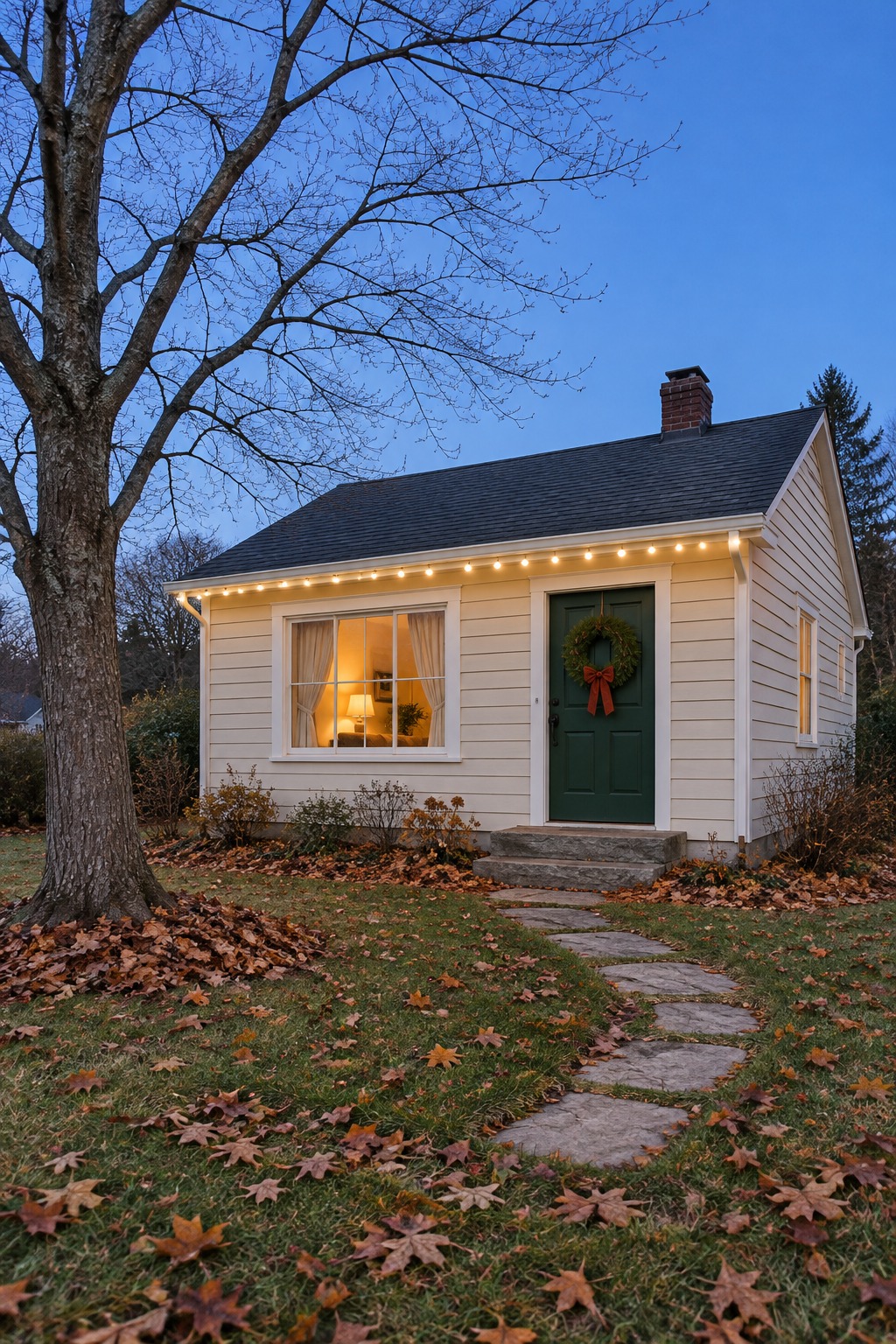
That is a smaller limit than it sounds. On a ranch, a porch or one long front eave, an uncut 100 or 150 foot run is often the cleaner install, and you are not paying for splicing you will never do.
Pick the Lights 2 when:
- the measured route is 150 feet or less;
- the path can stay continuous without a cut;
- 40 lumens and one steady white are enough;
- you would rather spend less.
Can you cut Govee Pro permanent outdoor lights?
Yes. Cut the wire between two lights and rejoin it with the waterproof splice connectors, following the steps in the manual. That is why the Pro is the one for corners, gables, a dormer, or a porch roof at a different height: you can end a run exactly where the house ends and start the next one where you need it. The whole run, extensions included, still tops out at 200 feet.
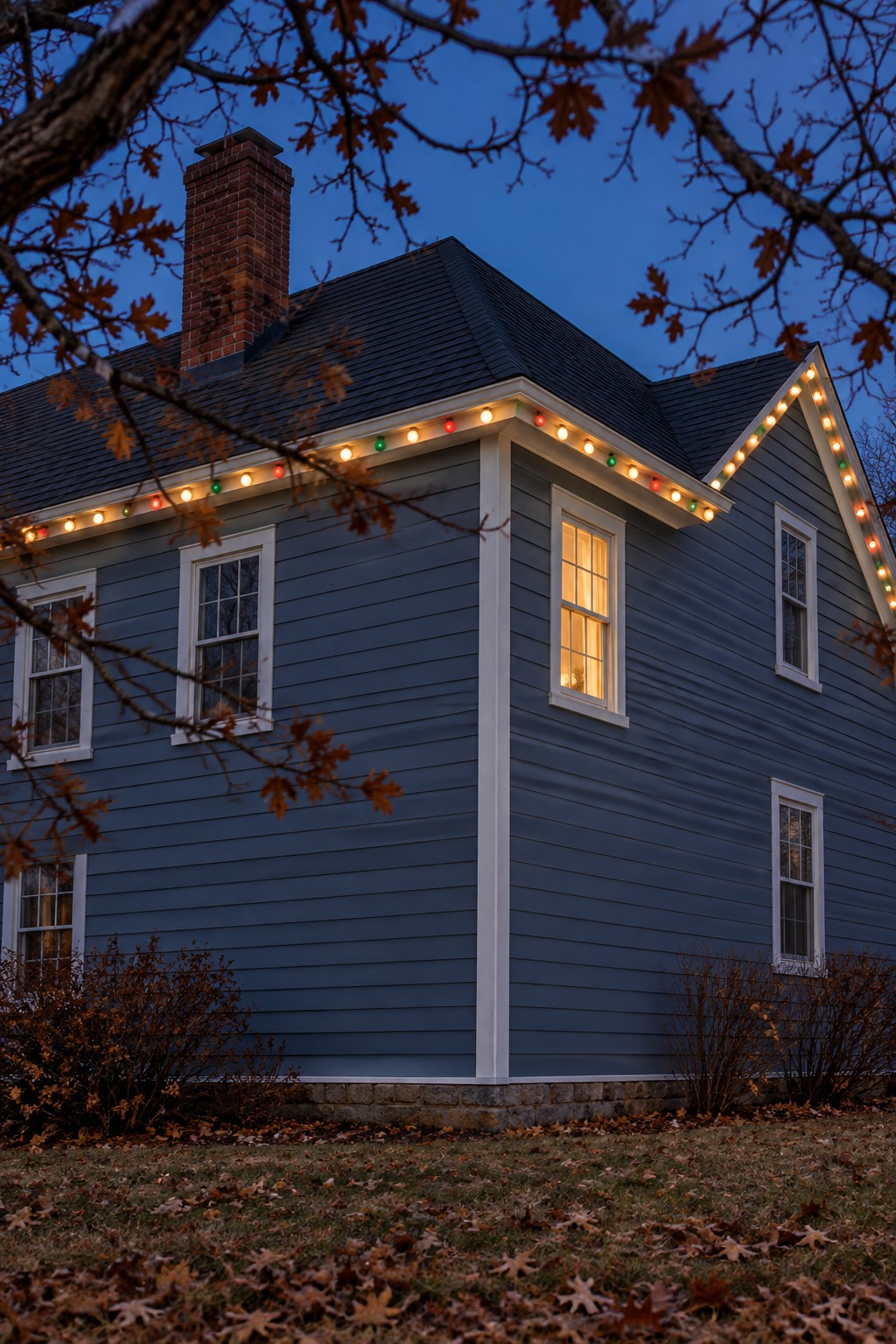
One catch is easy to miss: past 150 feet the Pro needs a driver module. The 200 foot kit comes with one; the 100 and 150 foot kits do not. In a 200 foot kit it joins in after the fifth strand. And the newer black 200 foot Pro will not connect to the older 200 foot version, so match the model on the box before you order extensions.
Pick the Pro when:
- a stretch of the roof should stay dark;
- the last light has to land exactly on a corner;
- the route is longer than 150 feet;
- you want a warm or cool white to match the house.
How many feet of lights do you need?
Measure the path the cable will follow, not the width of the house. Eaves step in and out, peaks add distance, and the first light starts well after the power adapter.
- Sketch every lit run. Mark straight eaves, peaks and corners, and the stretches you want dark.
- Measure each run with a tape from the ground or a helper, and add the numbers. Do not guess from the front of the house.
- Mark where the control box and the plug go, and allow a few feet for the cable between them and the first light.
- Add a little for corners. A turn uses more cable than it looks like on paper.
- Pick the kit. A tiny home or small two-story usually fits 50 to 100 feet, a cottage or bigger family house 100 to 150, and a large home 150 to 200. One continuous run of 150 feet or less points to the Lights 2. Cuts, splices or 200 feet point to the Pro.
If you are stuck between two sizes, go longer. Extension lights exist, but a short kit means a second order.
Do not mix models on one house. The Lights 2 and the Pro differ in spacing, color and brightness, and the seams show where they meet.
Which is brighter, and which has the better white light?
The Pro. Each light puts out up to 50 lumens against 40 on the Lights 2, and it has separate warm white and cool white LEDs, so the white can sit anywhere from a soft 2700K to a crisp 6500K. The Lights 2 has one white LED that tops out at 4000K. It gives a white with no purple tint, but no cool daylight setting.
If the lights will glow white on the eaves most nights and wear color only for the holidays, that warm-to-cool range is the best reason to pay more. If they mainly do Christmas, Halloween and game-day colors, the Lights 2 looks great, and it has more scenes (100 against 75) and AI-made lighting effects.
Both run from the Govee Home app, with schedules, music sync and DIY scenes. Both pair with Alexa, Google Assistant and Matter, so they fit into a smart home setup. Setup needs a 2.4 GHz Wi-Fi network, not 5 GHz, and the router should be within about 30 feet of the control box.
How do you mount Govee permanent outdoor lights?
Use the glue and the screws. Each light has a strip of VHB adhesive on the back and a clip with screws in the kit. Clean the surface with alcohol, press each light on for at least five seconds, then fasten the clip over it. Adhesive alone can let go after a season of heat and cold, so the screws are what keep the lights up for years.
A few habits make the line look neat from the street:
- Test every strand on the ground before it goes up.
- Start at the end nearest the outlet and work outward.
- Hold the lights 2 to 4 inches from the wall, level with each other, on the fascia or under the soffit.
- Do not bend the cable sharply or run it over rough edges.
- A typical installation takes 2 to 4 hours on a ladder.
If you do not want clips and cable showing in daylight, some people set the lights in aluminum track instead. For a rental or a balcony where you cannot drill, this is the wrong kind of light. The balcony Christmas lights without drilling guide keeps things removable.
Where does the power adapter go?
The Lights 2 adapter is rated IP65, so it can sit outside under cover near an outlet, and the first light starts about 15 feet down the cable. The Pro adapter is for indoor use only, so it lives in a garage or a dry room with the cable running out through the wall. That difference alone can decide which kit works for a house with no outdoor outlet near the eave. Both kits need a plug within reach of the first light.
Are Govee permanent outdoor lights worth it?
For most people who hang lights every year, yes. The LEDs are rated up to 50,000 hours, which works out to about 17 years at eight hours a night. The Pro handles temperatures from -4°F to 140°F.
The downsides are real. They cost more than a box of Christmas lights, a failed section means replacing that section because you cannot swap one bulb, and the screws and the ladder time are part of the price. If the eave is two stories up, hiring an installer is a fair call. The lights are also spaced out, about 16 to 20 inches, so they look like a row of glowing dots rather than a solid line.
What to buy
- Govee Permanent Outdoor Lights 2, 100 ft (opens Amazon in a new tab)As an Amazon Associate, we earn from qualifying purchases. Full disclosure. (paid link): a straight eave or a porch front.
- Govee Permanent Outdoor Lights 2, 150 ft (opens Amazon in a new tab)As an Amazon Associate, we earn from qualifying purchases. Full disclosure. (paid link): one long, continuous run.
- Govee Permanent Outdoor Lights Pro, 200 ft (opens Amazon in a new tab)As an Amazon Associate, we earn from qualifying purchases. Full disclosure. (paid link): corners, gables and long routes.
Save the model name, your route sketch, the measured length and the plug location in one note. It prevents ordering the wrong extension next year.
Related outdoor and Christmas guides
- Christmas porch decor that still leaves the entry usable helps place seasonal pieces under a lit roofline.
- Christmas front door decor for the door you have handles the eye-level focal point below the eaves.
- Ten cozy patio lighting ideas for tiny backyards covers softer lighting that permanent roofline lights do not replace.
- String light patio ideas without a pergola suits a small yard that needs seasonal rather than permanent light.
- Christmas balcony decor for a small apartment keeps the display scaled to a rental.
- More ideas for the yard and porch are on the outside hub, and seasonal projects are on this month’s page.