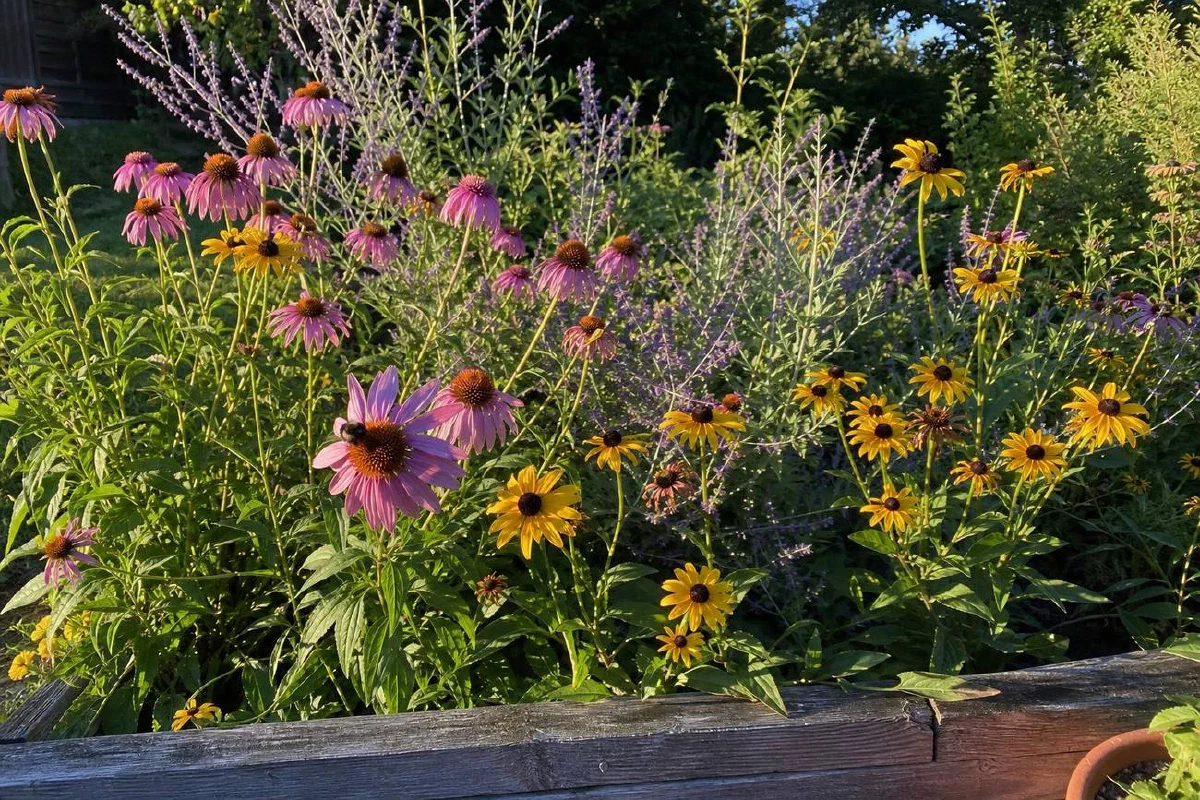
The perennials that survive a real American summer are the ones that evolved in dry prairies, hot meadows, and rocky Mediterranean hillsides.
Most full-sun perennials in catalogs need babying, the kind of fertilizer schedule, water schedule, and pest schedule that turns a garden into a chore. These twelve do not. Each plant on this list comes back every year, blooms from June through August (some through October), tolerates drought once established, and doesn’t need deadheading or staking to look good.
Zone notes apply to USDA hardiness zones. Watering notes assume the plant has been in the ground for at least one full growing season.
“Six hours of sun minimum” is a measurement rather than a guess. Penn State Extension puts full sun at six or more hours of direct sun , part sun at four to six, part shade at two to four, and shade at less than two. The zone numbers below follow the USDA Plant Hardiness Zone Map , which sorts locations by average annual extreme minimum winter temperature rather than by how cold one bad night felt.
The same plant-once logic works above ground if you choose for root depth. Perennials for window boxes that actually come back covers the shallow-box version of this list.
1. Black-Eyed Susan (Rudbeckia)
Black-eyed Susan is the workhorse perennial of the American summer garden.
Goldenrod-yellow petals around a dark brown cone. Blooms from June into September. Zones 3-9. Six hours of sun minimum. Tolerates poor soil, clay soil, drought, and heat. Doesn’t need deadheading. The ‘Goldsturm’ cultivar is the most reliable for most regions; ‘American Gold Rush’ is the newer disease-resistant version.
Spreads slowly by rhizome and self-seeds where it’s happy. One plant bought for under $10 in spring becomes a clump three feet across in three years.
2. Coneflower (Echinacea)
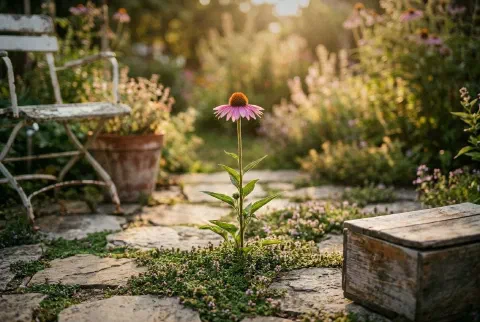
Purple coneflower (Echinacea purpurea) is the second American native that anchors most low-maintenance sunny beds.
Three-inch daisy-like flowers in purple-pink, with a spiky orange-bronze cone in the center. Blooms June through August. Zones 3-9. Tolerates drought. Goldfinches eat the seeds in fall, which is reason enough to skip the deadheading.
New colors (white, orange, yellow) exist but the original purple-pink is the most reliable and the most pollinator-friendly. Plant in groups of three or five, coneflower looks awkward as a single plant.
3. Russian Sage (Perovskia)
Russian sage is not a sage and not Russian, but it’s the perennial that makes any sunny bed look intentional.
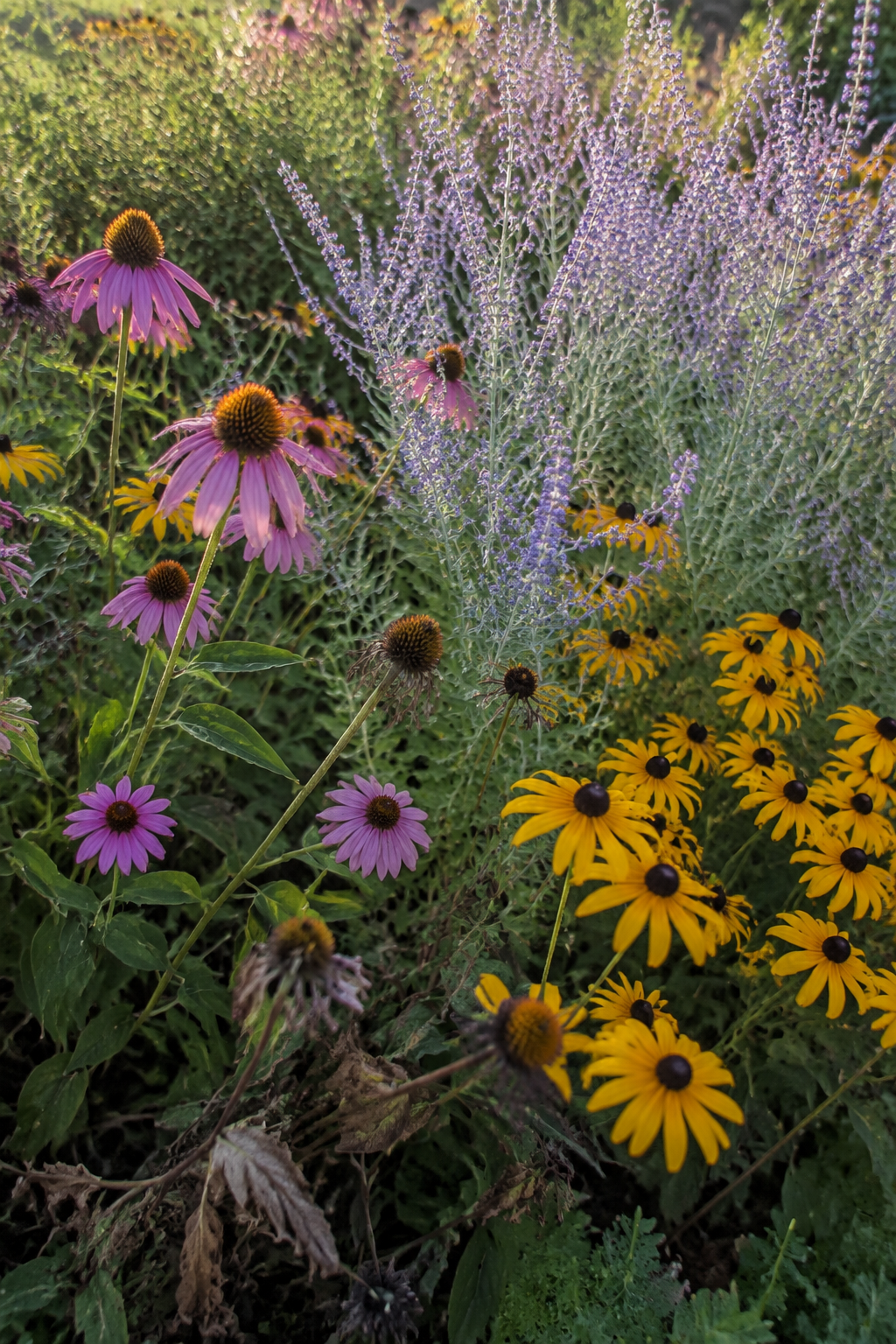
Lavender-blue spikes on silvery stems, 3-4 feet tall, with a hazy cloud effect. Blooms July through September. Zones 4-9. Drought-tolerant, deer-resistant, and pest-free. The ‘Denim n Lace’ cultivar stays more upright than the species; ‘Little Spire’ is the dwarf version for smaller beds.
Cut Russian sage back to 6 inches in early spring before new growth starts. That’s the only maintenance the plant requires all year.
4. Daylily (Hemerocallis)
Daylilies are the perennial bullies of low-maintenance gardens, they outlive everything, multiply themselves, and bloom regardless of what the weather does.
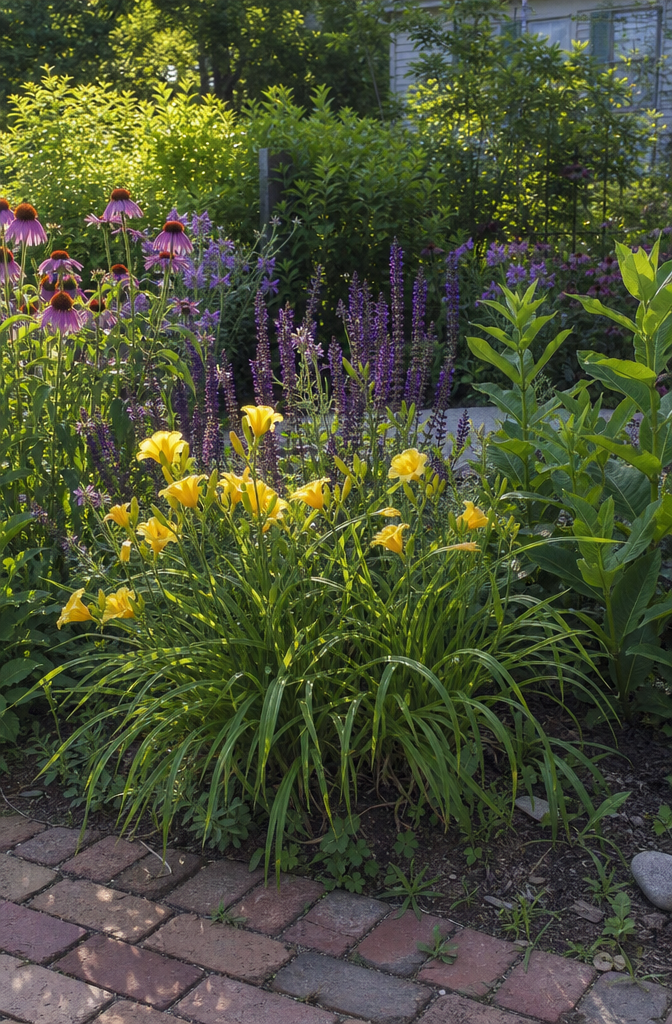
Each flower lasts one day, but each plant produces dozens of buds over four to six weeks. The ‘Stella d’Oro’ cultivar reblooms from June into October and is the most-planted daylily in America for good reason. ‘Happy Returns’ is similar in soft yellow.
Zones 3-9. Six hours of sun minimum. Tolerates any soil, any moisture level, any neglect. Divide every five years if the clump stops blooming heavily.
5. Catmint (Nepeta)
Catmint is the perennial that should be at the front of every sunny border.
Soft gray-green foliage, lavender-blue flower spikes, 18-30 inches tall. Blooms from May to July, then again in fall if cut back after the first flush. Zones 3-8. Drought-tolerant, deer-resistant, pollinator-magnet. The ‘Walker’s Low’ cultivar is the standard; ‘Cat’s Pajamas’ is a newer compact version.
Bees love catmint. A patch of it in bloom is the loudest part of the garden on a warm afternoon.
6. Sedum ‘Autumn Joy’
Sedum ‘Autumn Joy’ (now reclassified as Hylotelephium) is the perennial that carries a sunny bed through August and September. It is the backbone of most fall flower beds that still have color after summer , because it peaks exactly when the summer annuals give out.
Thick succulent leaves all season, then broccoli-like flower heads that open pale pink in August, deepen to rose in September, and dry to russet brown for winter interest. Zones 3-9. Tolerates drought, poor soil, and full sun. Does not tolerate wet feet, well-drained soil only.
Cut last year’s stems back in early spring. New growth starts in April. By June the plant has formed a solid mound; by August it’s covered in flower clusters.
7. Salvia ‘May Night’
Salvia (Salvia nemorosa) is the deep-purple spike that anchors the front of a sunny bed in June.
‘May Night’ (also called ‘Mainacht’) is the most-awarded perennial salvia. Eighteen-inch spikes of inky purple-blue flowers, blooming heavily in June and again in late summer if cut back. Zones 4-8. Drought-tolerant, hummingbird-attractive, deer-resistant.
Pair with yellow daylilies or peach achillea for a high-contrast June combination.
8. Lavender
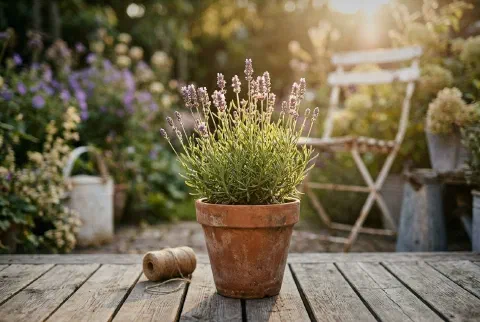
Lavender is the perennial that smells like summer.
English lavender (Lavandula angustifolia) is the hardiest type, surviving to zone 5 with good drainage. Spanish lavender (Lavandula stoechas) is more flamboyant but only hardy to zone 7. ‘Munstead’ and ‘Hidcote’ are the two English varieties most reliable in cold climates.
Lavender wants poor soil, full sun, and almost no water once established. The single biggest reason lavender dies is too much love, rich soil, frequent watering, or shade kills it. Treat it like a Mediterranean plant and it lives for ten years.
9. Yarrow (Achillea)
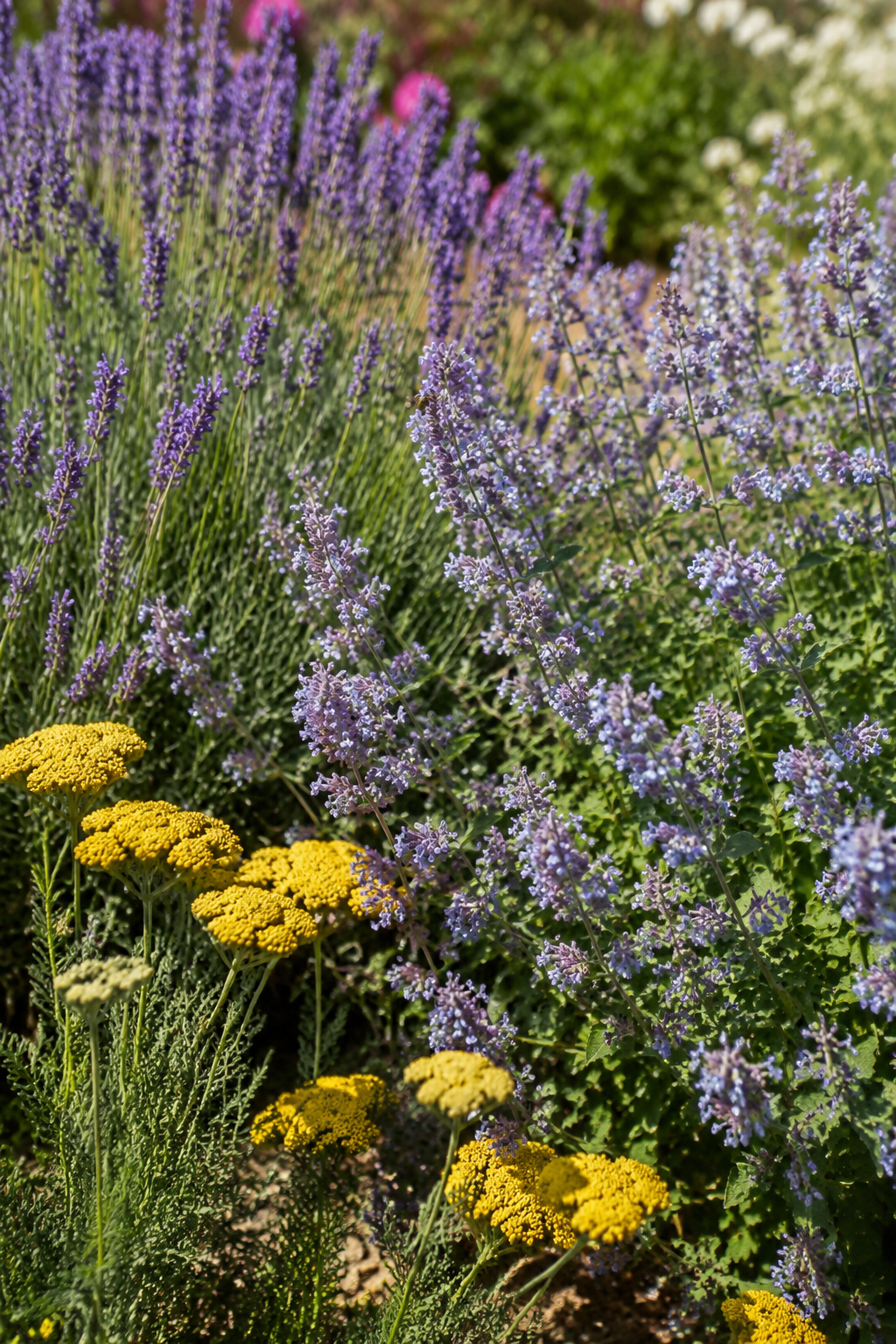
Yarrow blooms in flat clusters of small flowers from June into August, and the dried flower heads stand into winter.
Zones 3-9. Six hours of sun. Drought-tolerant to the point of preferring dry soil. Comes in white (the wild form), yellow (‘Coronation Gold’ is the standard), peach (‘Apricot Delight’), and red (‘Paprika’). The flat flower heads are landing pads for butterflies and beneficial insects.
Yarrow spreads by rhizome. The wild white form can become aggressive; the cultivars stay better-behaved. Divide every three years to keep the plant blooming strongly.
10. Coreopsis (Tickseed)
Coreopsis is the all-summer yellow daisy that fills the middle of a sunny bed.
The threadleaf type (Coreopsis verticillata ‘Moonbeam’ or ‘Zagreb’) has fine ferny foliage and small yellow flowers from June to September. The lance-leaved type (Coreopsis lanceolata) is larger and shorter-blooming. Both are drought-tolerant and zone 4-9 hardy.
‘Moonbeam’ is one of the longest-blooming perennials available, a single plant produces flowers for four months straight without deadheading.
11. Phlox ‘David’
Tall garden phlox (Phlox paniculata) is the perennial that scents a summer evening garden.
‘David’ is the white-flowered, powdery-mildew-resistant cultivar that earned the Perennial Plant of the Year award. Three to four feet tall, blooming July through September. Zones 4-8. Full sun, average water, good air circulation to prevent mildew.
The white flowers glow at dusk. Plant near a porch or a path used in the evening for the full effect.
12. Shasta Daisy (Leucanthemum)
Shasta daisies are the classic white daisies of summer, clean white petals around a yellow center, 2-3 feet tall.
‘Becky’ is the cultivar to plant, taller, longer-blooming, and stronger-stemmed than the standard. Zones 4-9. Full sun. Average to dry soil. Blooms June into August. Cut spent flowers back to encourage rebloom.
Shasta daisies pair with anything. White is the neutral color of the perennial bed.
Which perennials survive a real summer?
The ones that evolved in dry, sunny, open habitat, which is every plant on this list. American prairie, Mediterranean hillside, Eastern European steppe, and Asian rocky meadow all produce plants that want lean soil, sun, and room to dry out. The perennials that fail in low-maintenance American beds are usually plants that evolved for cool moist woodland, astilbe, bleeding heart, lupines, placed in conditions they can’t survive.
Pick from this list, plant in well-drained soil, water through the first season, then leave the plants alone. The reward is a sunny bed that blooms from May through October with one hour of maintenance per month.
How to set up a 6x8-foot sunny bed
Set the bed up in rows by height and you will not have to move anything next year.
- Mark the bed and work the top few inches of soil so water drains instead of pooling.
- Plant the back row first, at the height you actually want to screen.
- Fill the middle, then the front, keeping the shortest plants at the edge where you will brush past them.
- Water everything in, mulch, and leave it alone until the following spring.
| Row | Plants | Finished height |
|---|---|---|
| Back | 1 Russian sage + 2 ‘David’ phlox | 3 to 4 ft |
| Middle | 3 black-eyed Susan + 3 coneflower + 2 daylily | 2 to 3 ft |
| Front | 5 catmint + 3 ‘Moonbeam’ coreopsis + 3 sedum ‘Autumn Joy’ | 12 to 18 in |
That’s a 22-plant bed that costs around $200 in 1-gallon pots and blooms from June through October with no deadheading. Add yarrow or lavender if you want to extend the Mediterranean palette.
Do these perennials need much care?
No. Not one of the twelve needs deadheading, staking, or a fertilizer schedule to keep blooming, which is the whole reason they made the list. Cutting catmint and salvia back after their first flush buys a second round in late summer, but that is optional rather than required.
The longest bloomers here are coreopsis ‘Moonbeam’ and daylily ‘Stella d’Oro’, both of which flower from June into October without help. On pollinators, the strongest plants on the list are catmint, coneflower, salvia, lavender, and yarrow for bees, coneflower, phlox, and daylily for butterflies, and salvia and phlox for hummingbirds.
What to Read Next
- Cottage garden front yard layout if you want these plants arranged in a plan with counts and spacing.
- Drought tolerant flowers that still bring color when the bed bakes against pavement or brick.
- 10 easy cottage garden perennials for a shorter list when you are starting from bare ground.
- Perennials for window boxes and shallow boxes for the same plant-once thinking above ground, where the roots have less room.