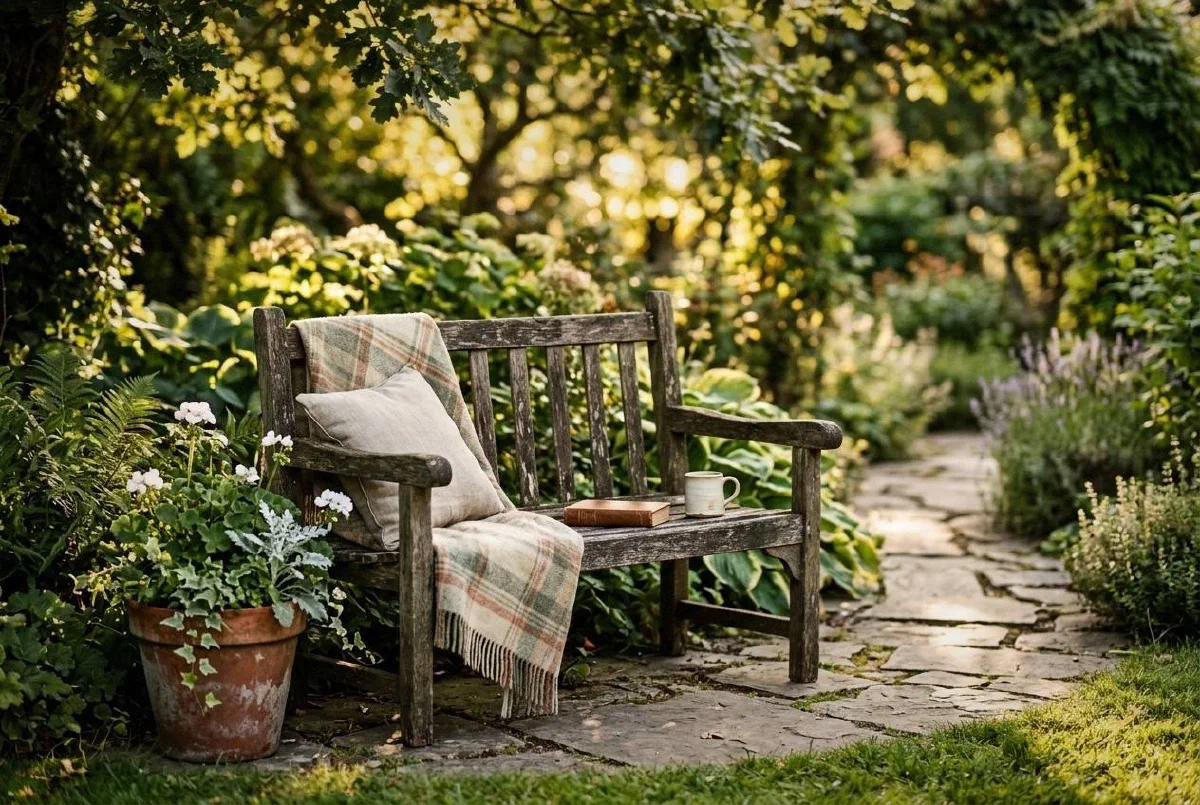
The front yard is the part of your property you walk through, not the part you sit in. Most people never think to put a chair there.
That is the opportunity.
A front yard sitting area changes how the whole property feels. The walk to the mailbox stops being a chore. The neighbor wave becomes a conversation. The five minutes between getting home and going inside become real time, not transition time.
These six spots all work in a typical suburban front yard. None require taking out the lawn, building a wall, or putting in irrigation. Each one uses what is already there.
What Makes a Front Yard Spot Worth Sitting In?
Three things, and none of them is furniture: something at your back, something to look at that is not the street, and shade by the time you actually sit down. The six spots below are just different ways of getting those three. A chair alone on open lawn tends to go unused. The same chair with a trunk behind it and a flower bed in front becomes the spot you drift to every morning.
Which Spot Fits Your Yard
| Spot | What your yard needs | What you look at | Watch for |
|---|---|---|---|
| Single chair under a front-yard tree | A tree in the front yard | Branches and a trunk at your back | Set it on the side away from the street |
| Bench by the path | A driveway-to-door walk | A flower bed at seat height | Perpendicular to the walk, about two-thirds of the way down |
| Porch-end corner | A porch with open ground just past it | The porch edge on one side, the lawn on the other | The two feet outside the house is the whole point |
| Bistro setup at the side of the house | Space between the wall and the property line | The house wall and a pot of herbs | Takes about a 4-by-4 footprint, so it fits a narrow side yard |
| Reading chair by the mailbox bed | A planted bed at the mailbox | Perennials instead of the street | The chair can live in the garage between sits |
| Small bench in the perennial border | A border along the property line or driveway | Flowers in front, the house behind | Sit it slightly back from the front edge so it reads as found |
1. The Single Chair Under a Front-Yard Tree
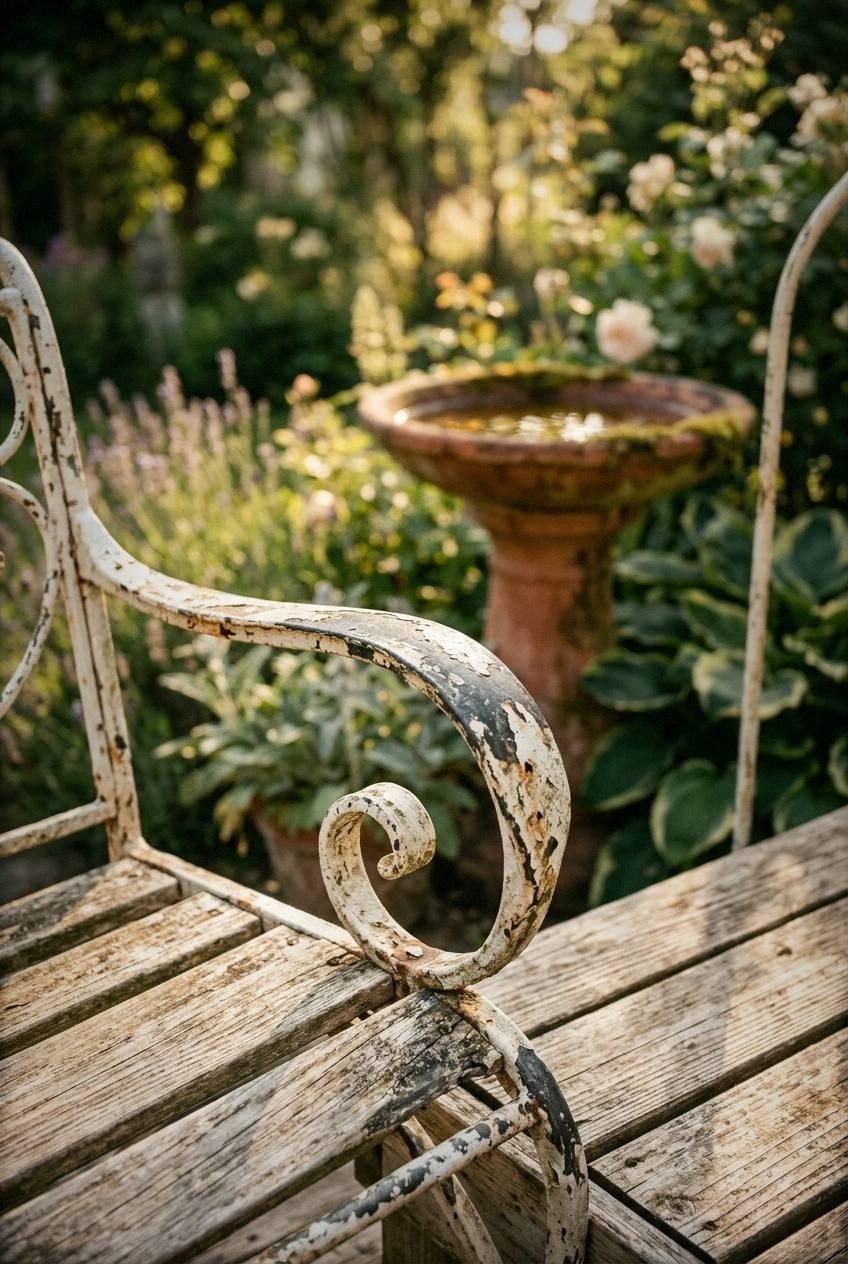
If you have a tree in the front yard, you have a sitting area.
Pick the side of the tree that faces away from the street. Set one chair there, angled toward the house or the side yard, not toward the road. The trunk gives you back-cover and the branches give you shade.
Wood, metal, or recycled-plastic Adirondacks all work. Choose a chair that can live outside through your wettest season. If the chair has cushions, they live by the front door and come out when you actually sit.
This is the spot for the morning coffee that is not on the back porch. The light is different. The view is different. The sound is different.
2. The Bench by the Path
The walk from the driveway to the front door is the most-used path in any yard.
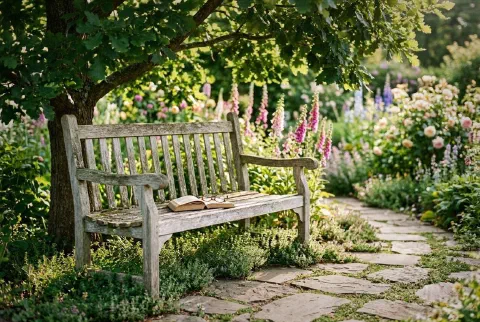
A bench placed about two-thirds of the way down that path turns it into a sitting area. Set the bench perpendicular to the walk, with the seat facing a flower bed, not the road. A 4-foot bench in metal, wood, or stone all reads natural in a front yard.
Around the bench, plant low summer perennials that bloom at eye level when seated. Catmint, salvia, lavender, or coneflower all hold their height in Zones 4 through 9. If you are not sure which zone you garden in, the USDA Plant Hardiness Zone Map is the standard reference, and it is built on the average annual extreme minimum winter temperature.
The bench by the path becomes the spot where you set down a grocery bag and end up staying for ten minutes. That is the point of it.
3. The Corner Where the Porch Ends and the Lawn Begins
Most front porches end at the house. The ground just past the porch is usually open, often grass, sometimes a small bed.
Drag one chair off the porch and set it on that ground. The chair sits between two zones: covered porch on one side, front yard on the other. That edge has the half-indoor, half-outdoor feeling that the porch alone never quite has.
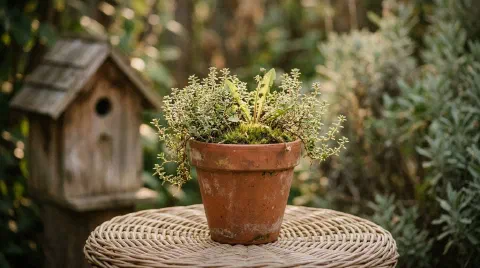
A small side table beside the chair holds a coffee or a book. One pot of lavender or rosemary anchors the corner. That is the entire setup.
This is the spot most people skip because it is two feet outside the house. It is also the spot that gets the most use once it exists.
4. The Bistro Setup at the Side of the House
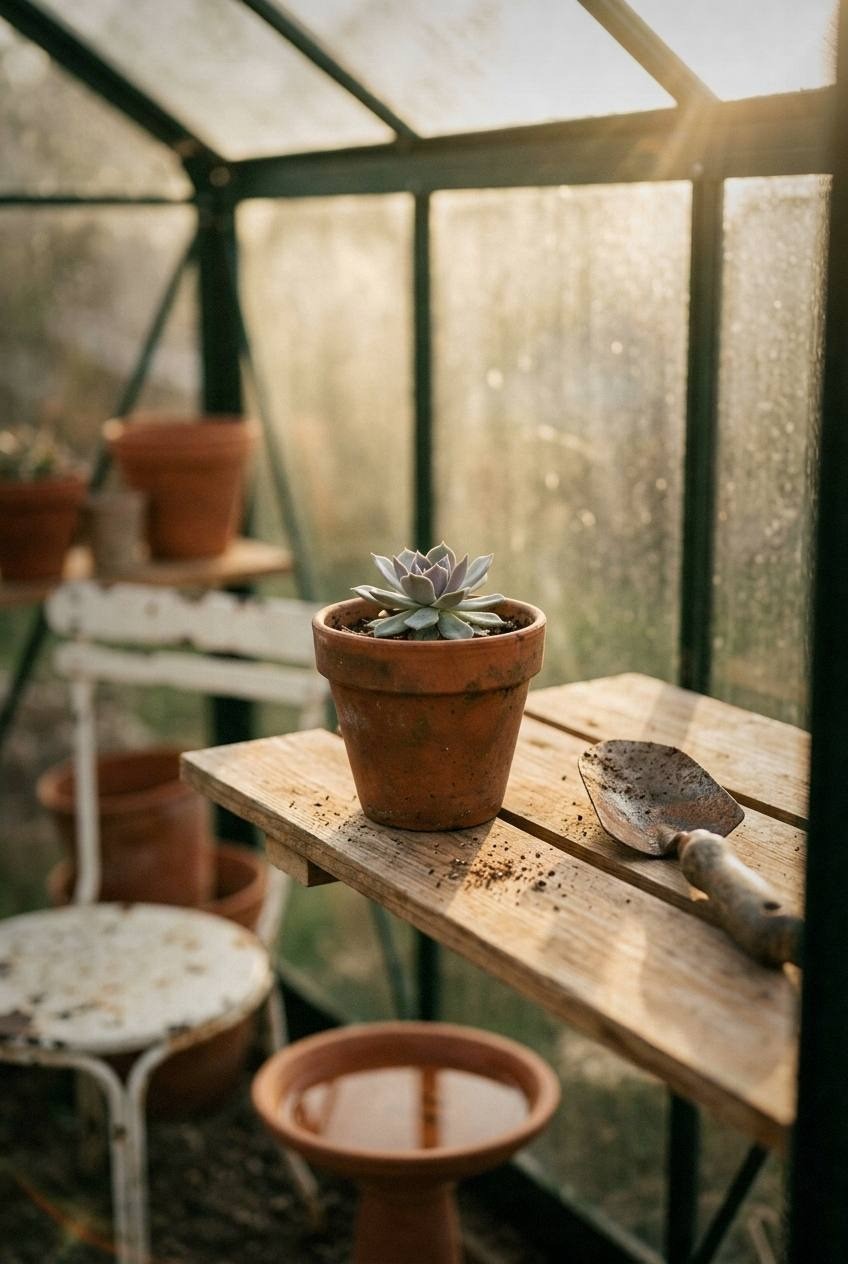
The side of the house is technically front yard but feels like back yard.
A two-chair bistro set placed at the side, between the house wall and the property line, creates a sitting area that is private, shaded for half the day, and almost never used by most homeowners.
A 24-inch round metal table and two folding chairs take up about a 4-by-4 footprint. Set them within reach of a window, where you can hear the kettle from the kitchen. Add one tall pot of basil or rosemary at the corner of the table.
The side bistro is for the second cup of coffee, the late-afternoon break, the call you take while you actually go outside. It works because no one ever expects you to be there.
5. The Reading Chair Beside the Mailbox Bed
If your mailbox has a flower bed at its base, the area around it is a sitting area waiting for a chair.
Set a single chair on the lawn or path edge near the mailbox bed, facing the house. The mailbox bed gives you something to look at that is not the street. The plants do the visual work that a fence or hedge would otherwise do.
For the mailbox bed itself, use 3 to 5 perennials that bloom from May through September: black-eyed Susan, coneflower, salvia, daylily, and yarrow. Coneflower has the longest track record of the group. The Wildflower Center’s Echinacea purpurea entry lists it as a perennial that blooms from April into September and is a documented nectar source for butterflies and hummingbirds. These come back every year in Zones 3 through 9 and look right in a small bed.
The chair does not have to be there permanently. A folding wood chair that lives in the garage and comes out for an hour in the evening works fine. The point is the spot, not the chair.
6. The Small Bench at the Back of the Perennial Border
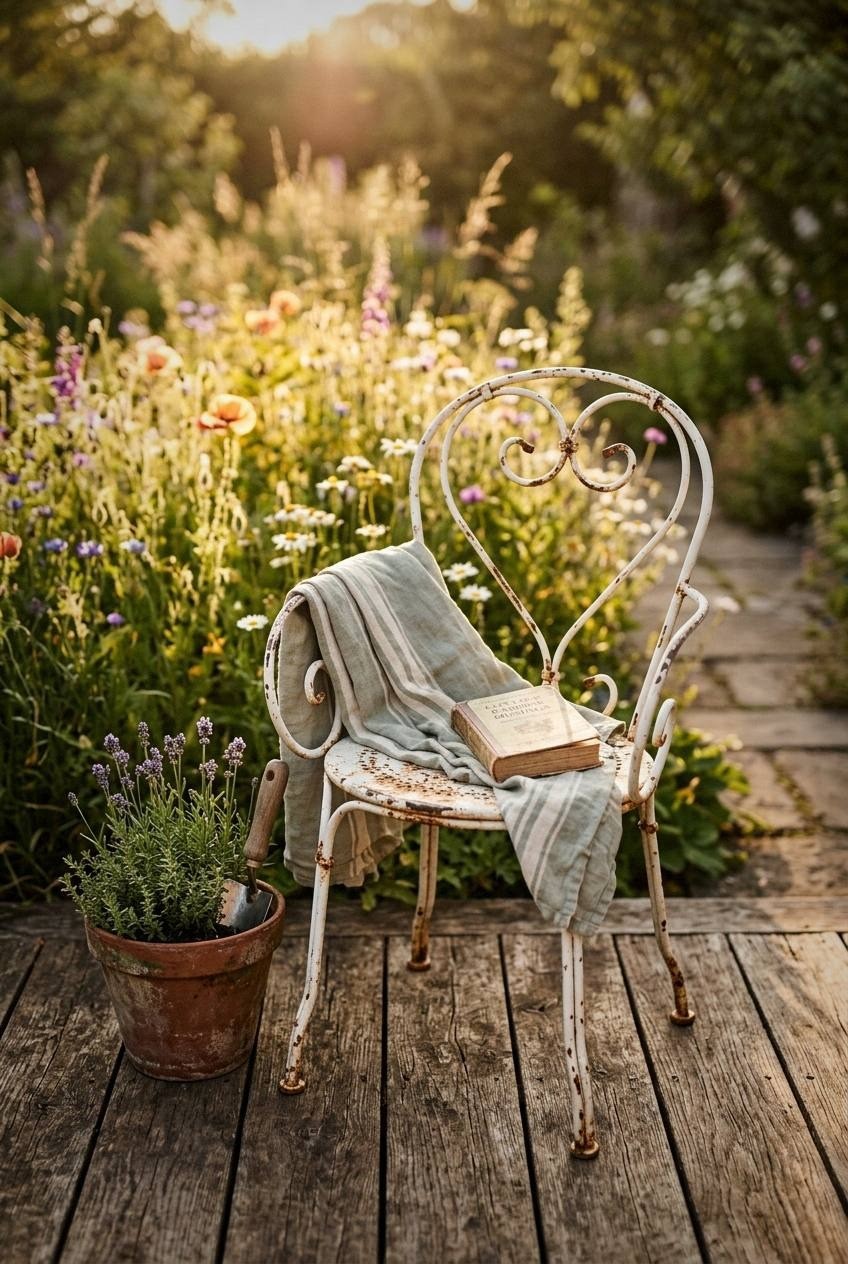
If your front yard has a perennial border along the property line or between the lawn and the driveway, the back of that border is a sitting area.
Put a small bench tucked into the border, half-hidden by the plants. A 3-to-4-foot wood or metal bench works. The bench should sit slightly back from the front edge of the bed, with the taller perennials in front of it and shorter ones behind.
This spot reads as found rather than placed. From the street, you barely see it. That half-hidden feeling is what a secret garden corner is built on, aimed at the front of the house instead of the back. From the bench, you see flowers in the foreground and the house in the background.
The plants you want around this bench are the ones that grow tall in summer: phlox, monarda, Russian sage, ornamental grasses. In Zones 4 through 8, these all hold height by July. Repeating three or four of them down the border is also the cheapest way to make a bed look tended without adding weekend work .
Mistakes That Leave a Front Yard Chair Unused
Almost every unused front yard chair fails for the same short list of reasons.
- Facing the street. A chair pointed at the road puts passing traffic in your eyeline, and you sit in it twice.
- Nothing at your back. Open lawn on all four sides feels exposed, even in a quiet neighborhood.
- Sitting in the wrong hour’s shade. Check the spot at the time of day you would actually use it, not at noon on a Saturday.
- Cushions left out. Damp cushions are the fastest way to stop sitting somewhere. Keep them by the door and carry them out with you.
- A long walk from a door you use. The closer the spot is to the door you already go through, the more often you end up in it.
Pick One This Week
You do not need to set up all six. Pick the one closest to a door you already walk through, or the one near a tree you already have.
- Stand where you think the spot should go and look at what is in front of you. If it is the street, move.
- Check that hour of the day for shade rather than guessing from a bright afternoon.
- Choose the spot from the table that asks the least from your yard.
- Put one chair there today and sit in it for ten minutes before you buy or plant anything else.
A front yard sitting area becomes itself once you actually sit in it. The first time is awkward. The fifth time, it is just the spot where you have your coffee.
What to Read Next
- Secret Garden Ideas for a Backyard Hidden Away : the half-hidden feeling that makes a bench behind a border work.
- Low-Maintenance Landscaping Ideas on a Budget : repeating a few plants down a border, which is what keeps a front bed looking tended from the street.
- Front Yard Landscaping Ideas That Make the House Look Cared For : the wider front-of-house picture around whichever spot you pick.
- Best Mailbox Flowers for Full Sun and Road Heat : a longer plant list for the mailbox bed in spot five.
- Container Garden Ideas for Small Patios That Still Feel Full : pots for a corner where you would rather not dig.