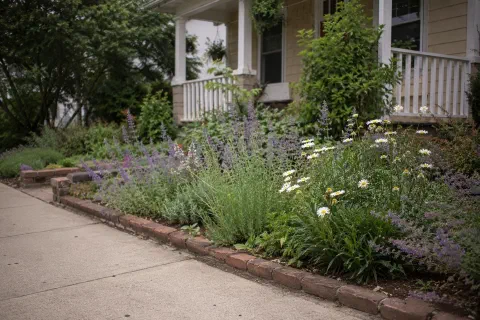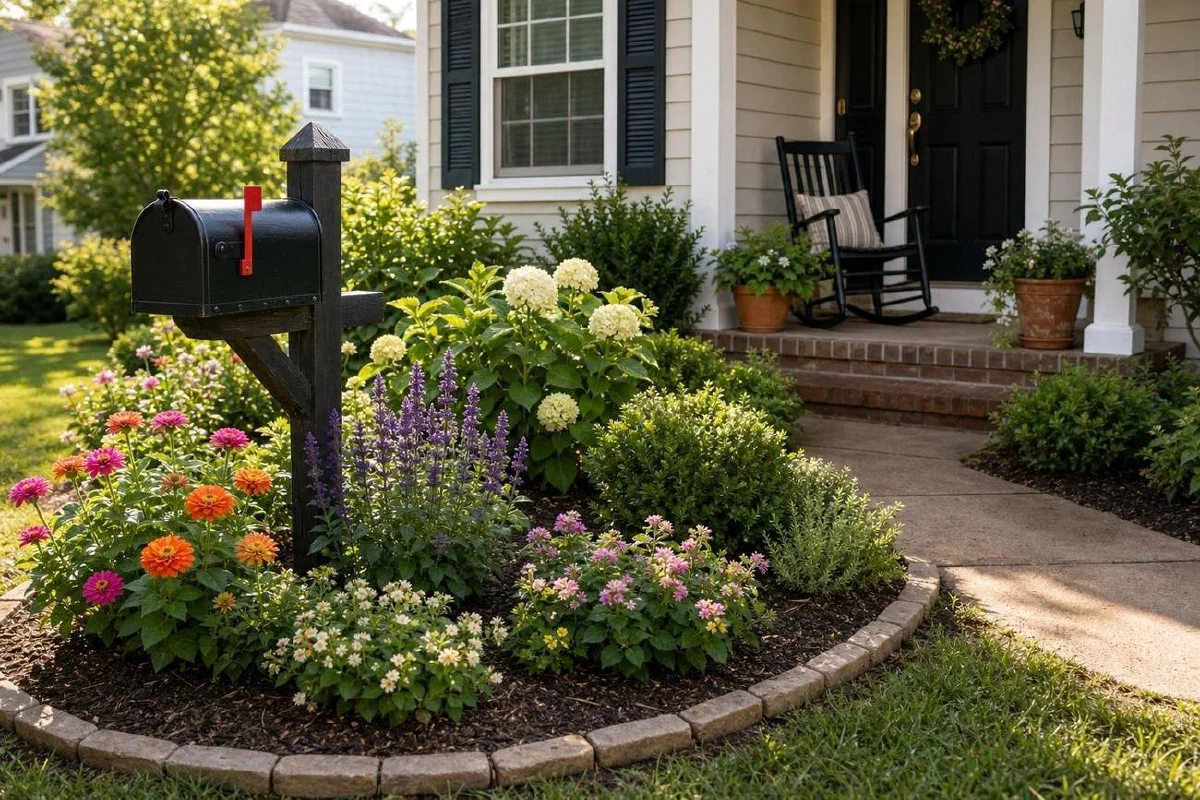
Front yard landscaping gets overwhelming fast because every idea seems to turn into a full plan.
New walkway. New shrubs. New porch. New everything.
Most houses do not need that much drama. They need a few signs that someone is paying attention. A clean edge. Plants that repeat. A path that makes sense. Something near the mailbox that is not half weeds. The front yard can look cared for before it looks finished, and honestly, cared for is the part people notice first.
These ideas are for ordinary front yards. Small lawns, plain porches, tired beds, builder shrubs, awkward mailbox posts, and all the spots that look fine until you see them in a photo.
The Six Fixes at a Glance
| Fix | Time it takes | What changes from the street |
|---|---|---|
| Cut one clean edge | An hour or less | The lawn and the bed stop blending into each other |
| Rebuild the mailbox bed | One afternoon | The weedy patch by the road goes away |
| Repeat one plant or color | One trip to the nursery | The yard reads as planned instead of random |
| Plant along the walkway | One afternoon | The path stops floating in bare mulch |
| Add one vertical plant | An hour or less | A flat, knee-high bed gains a place for the eye to land |
| Tidy the porch | One afternoon | The house gets a face instead of a slab |
1. Cut One Clean Edge Before You Buy Plants
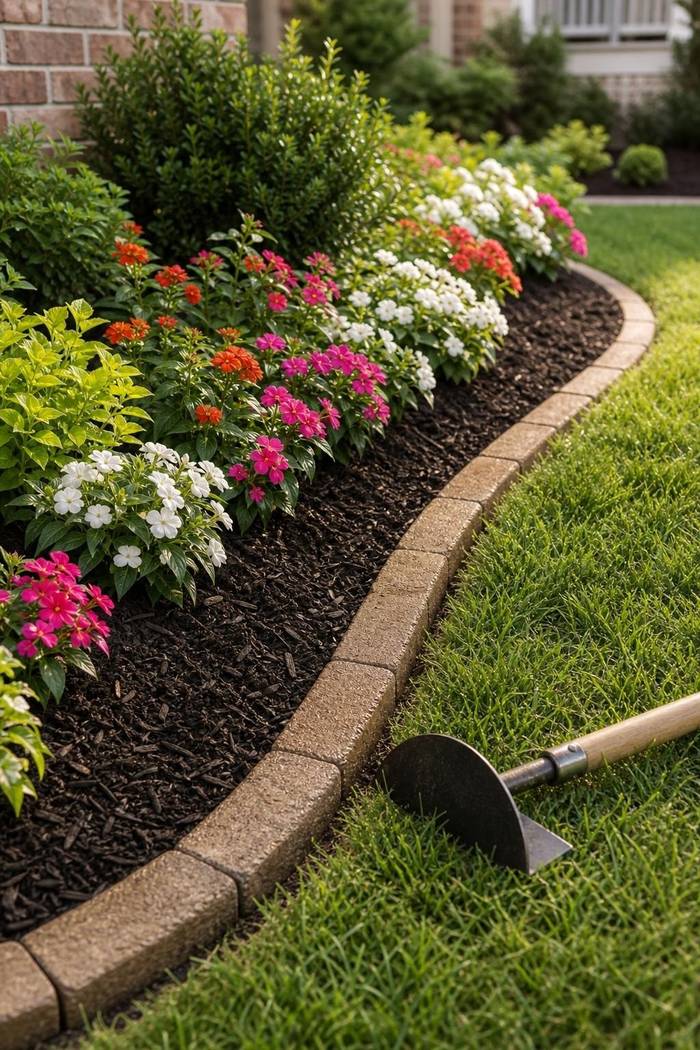
The cheapest front yard improvement is usually an edge.
If the bed line is blurry, even healthy plants look messy. Use a half-moon edger or a sharp shovel and cut one clear line where the lawn meets the bed. A soft curve usually looks better than a wavy one. Stand at the street and check it before you mulch.
This is the part people skip because it feels too basic. It is also the part that makes the rest of the yard read as intentional.
After the edge is cut, add mulch only where the bed already exists. Do not make the bed bigger unless you are willing to weed it. A small clean bed beats a huge tired one every time.
2. Make the Mailbox Bed Small Enough to Maintain
The mailbox is a tiny spot with a big job. It sits near the street, takes heat, gets road dust, and somehow has to look decent from a moving car.
Keep the bed small. A circle, half circle, or kidney shape around the post is enough. Use tough flowers that handle reflected heat: zinnias, salvia, lantana, marigolds, daylilies, black-eyed Susan, or coneflower depending on your hardiness zone . Pavement makes that heat worse than a plant tag suggests. Penn State Extension puts heat stress from adjacent pavement on the short list of problems a curb-side planting has to survive, right beside compacted soil. Mailbox flowers picked for full sun and road heat covers the ones that keep blooming through it.
If you want a fuller guide, the mailbox bed article goes deeper into plant choices and spacing: mailbox flowers that look good without a full landscaping project .
The trick is not making it fancy. The trick is making it easy to weed in three minutes.
3. Repeat One Plant Near the Porch and the Walk
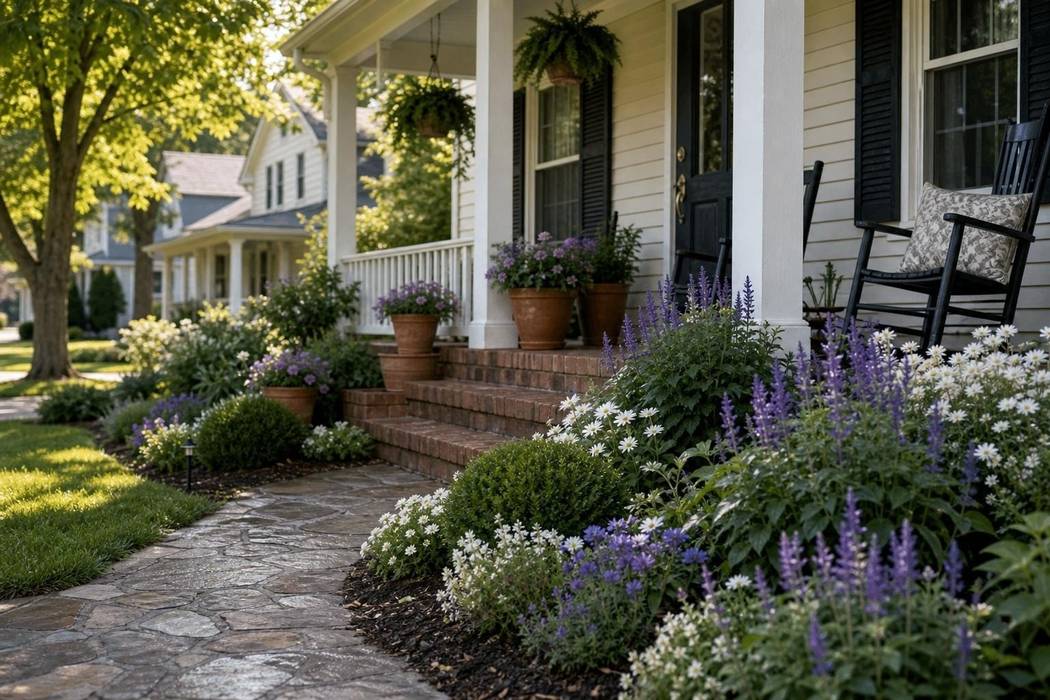
Repetition is what makes a front yard look pulled together.
Pick one plant or one color and use it in two places. White begonias in the porch pots and along the walk. Purple salvia at the mailbox and near the steps. Boxwood balls beside the porch and one more near the path.
You do not need matching everything. In fact, too much matching can look stiff. You only need one repeat so the eye understands the yard on purpose.
Porch pots are useful here because they let you repeat a color without digging up the bed. If your beds are still thin, a few pots near the steps can carry the front yard until the plants fill in.
4. Give the Walkway a Little Company
A bare walkway can make a house feel disconnected from the yard. You do not have to replace the path. You can plant beside it.
Keep the plants low for the first foot or two along the edge. Anything in this group works, depending on how much sun the strip gets:
- creeping thyme
- low sedum
- sweet alyssum
- dwarf catmint
- compact annuals
- small ornamental grasses
Taller plants can sit farther back.
The goal is to make the path feel like it belongs there. A few plants leaning near the edge do that better than a big empty strip of mulch.
If your walkway is narrow, stay modest. Nobody wants to fight wet flowers every time they carry groceries.
5. Use One Vertical Plant to Break Up the Flatness
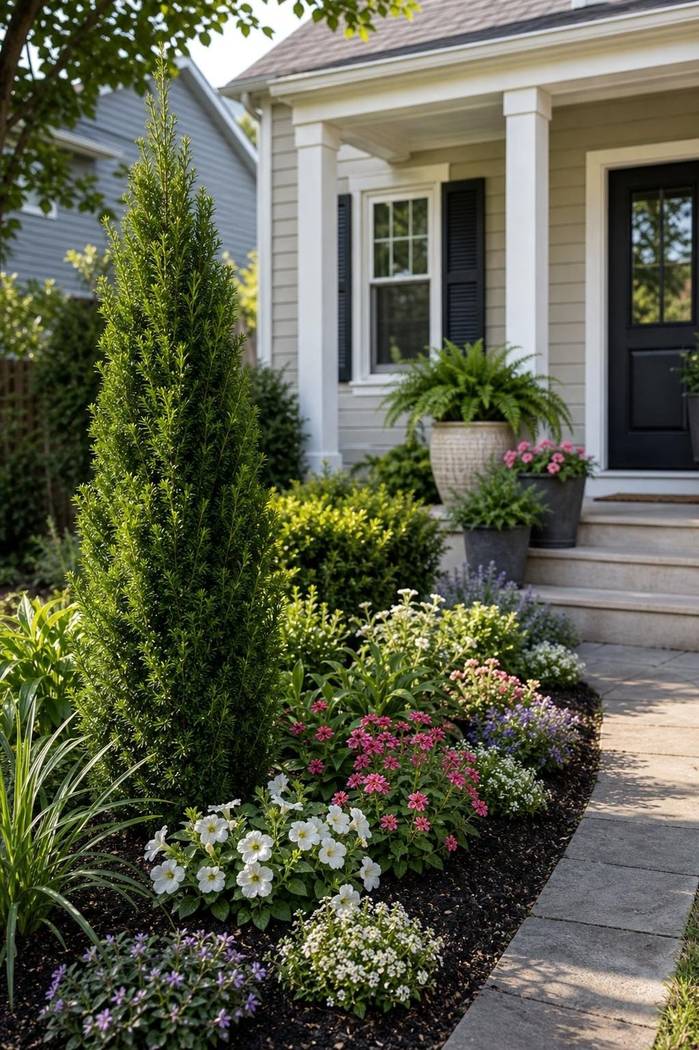
Many front beds are too flat. Everything sits at knee height, so the house looks like it is floating above a green strip.
Add one vertical plant. It could be a narrow evergreen, a small hydrangea standard, an obelisk with a vine, a tall grass, or a trellis with clematis. One is enough in a small yard.
Place it near a corner of the porch, beside the walk, or at the back of a bed where it can connect the ground to the house. Do not put a tall plant right in front of a window unless you want the room inside to feel smaller.
This works especially well with plain ranch houses and builder-grade porches because it gives the eye somewhere to land.
6. Make the Porch Part of the Landscaping
The porch is not separate from the front yard. It is the front yard’s face.
One chair, one pot, and one small table can make the whole house feel more cared for. You do not need a full furniture set. A single useful corner is better than a porch staged with things nobody touches.
If the porch is narrow, use a hanging basket instead of floor pots. If it is wide, group two or three containers near the step. Keep the colors close to what is already in the beds so the porch and yard talk to each other.
What I Would Do First
If the yard feels tired, I would start here:
- Cut a clean bed edge.
- Freshen the mulch, but only where the bed already exists.
- Fix the mailbox bed.
- Repeat one porch color near the walkway.
- Add one upright plant.
That is not a complete landscape plan. It is better than that. It is the version you can actually finish before the weekend gets away from you.
What to Read Next
- Front Yard Cottage Garden Edges That Still Look Tidy From the Street keeps loose planting looking deliberate from the sidewalk.
- Low Maintenance Landscaping Ideas on a Budget covers the plants that stay tidy without a weekend of work.
- Cottage Garden Front Yard Layout is for making the beds relate to the walk and the porch.
- Cheap Pots That Look Expensive on a Front Porch handles the container half of the repeat-one-color idea.