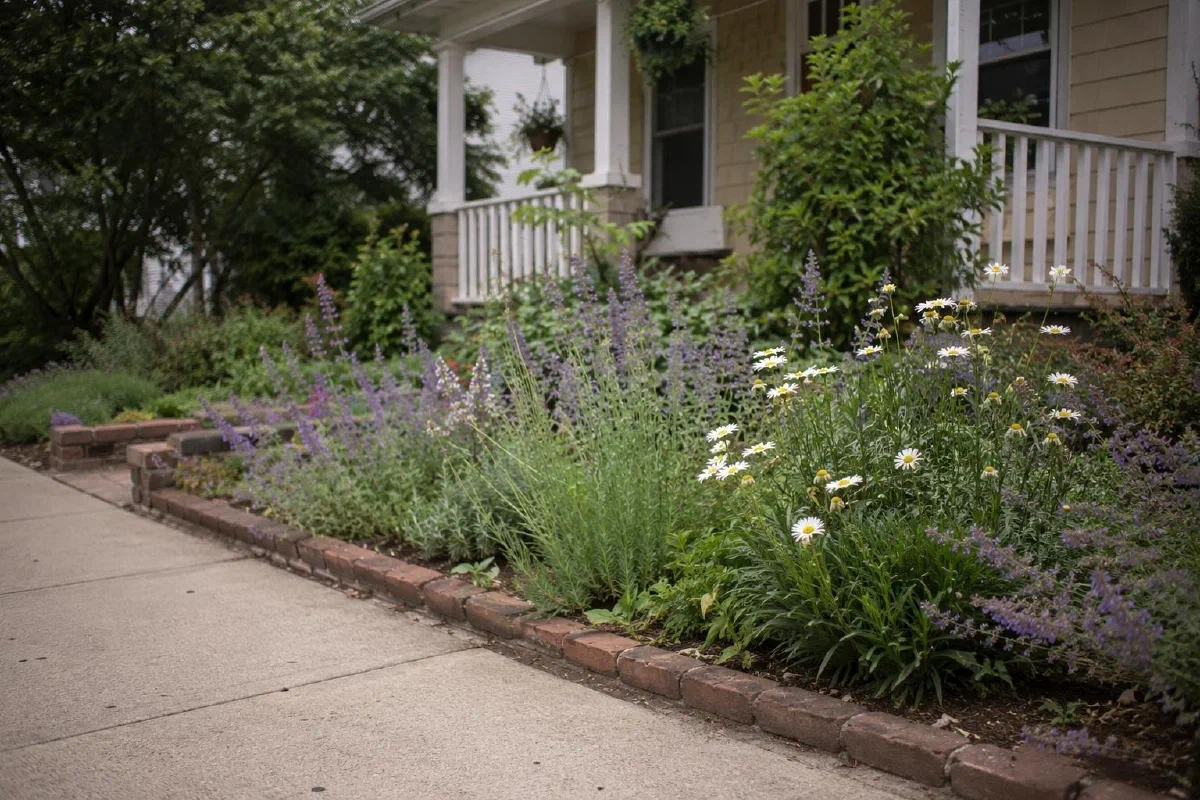
A front yard cottage garden needs one thing a backyard border can sometimes skip: a clean edge.
The flowers can be loose. The herbs can spill. The perennials can lean a little. But from the sidewalk, the garden still needs to look like someone meant for it to be there.
That does not mean making it formal. It means giving the softness a frame.
Start With the Street View
Stand where a neighbor or delivery driver sees the garden first.
Not right inside the bed. Not crouched lovingly beside the salvia. Stand at the sidewalk, driveway, or curb and look at the whole front yard in one glance.
Ask what reads first:
- Is there a visible border?
- Does the bed have a clear shape?
- Are plants spilling into the path?
- Is there one repeated color or texture?
- Does anything look dead, floppy, or forgotten?
Cottage gardens often look better close up than they do from a distance. A tidy edge fixes that distance problem.
Choose a Border That Shows Through the Plants
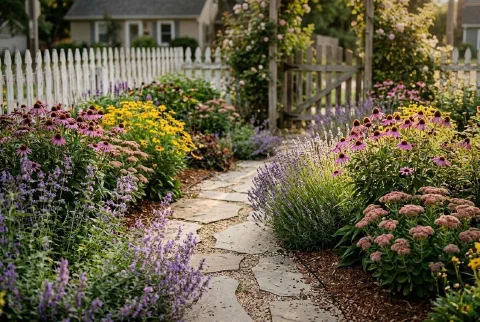
A front yard cottage bed needs a border strong enough to show even when plants are full.
Good options:
- brick set low into the soil
- stone edging
- a narrow paver strip
- metal edging
- a crisp spade-cut edge
- a low woven willow or twig edge
The border does not have to be expensive. It just has to be visible.
| Edge material | What it looks like from the street | Upkeep |
|---|---|---|
| Brick set low into the soil | Warm and solid, and it holds a straight line | Re-level a brick now and then |
| Stone edging | Heavier and more rustic | Rarely needs anything |
| A narrow paver strip | The cleanest, most modern line | Sweep the line clear each spring |
| Metal edging | Nearly invisible, so the plants do the talking | Can heave in a hard frost |
| A crisp spade-cut edge | Free, and sharper than anything you can buy | Recut once or twice a season |
| Woven willow or twig | Soft and cottagey | Refresh it as it breaks down |
If you like a softer look, plant loose flowers behind the edge, not instead of it. Catmint, alyssum, thyme, violas, and hardy geranium can soften the line without erasing it. Catmint and wild geranium both appear on Penn State Extension’s list of plants for a narrow strip beside pavement , where catmint is called highly tolerant, and a street-side edge asks roughly the same of a plant.
For more structured front yard ideas, the same principle shows up in front yard landscaping that looks cared for : the eye trusts a clear boundary.
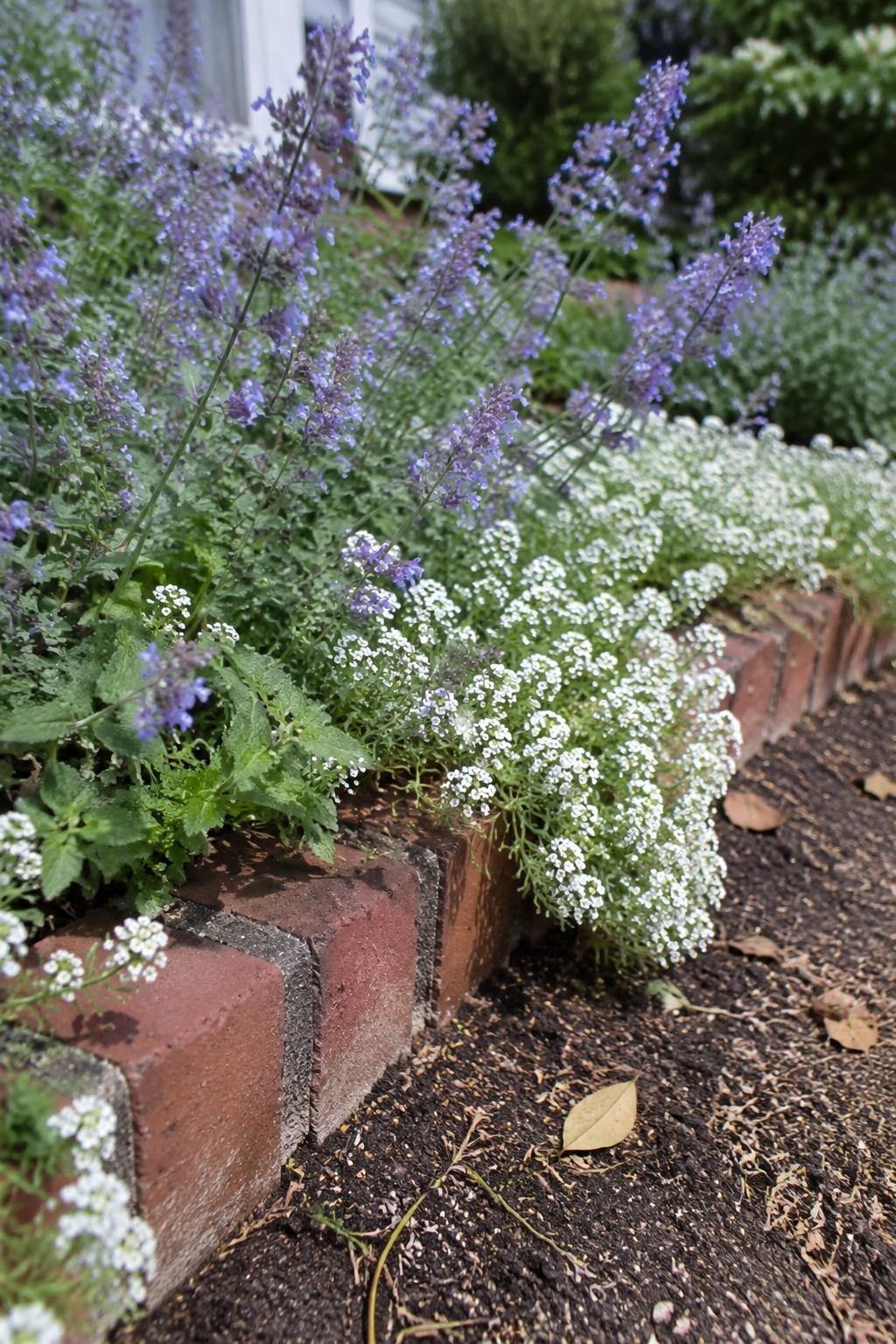
Keep the First Twelve Inches Lower
The front strip of the bed does a lot of work.
If the first row is too tall, the whole garden can look like it is falling into the lawn. Keep the edge lower and let height build farther back.
Good front-edge plants:
- creeping thyme
- sweet alyssum
- low dianthus
- violas
- lamb’s ear
- dwarf nepeta
- low hardy geranium
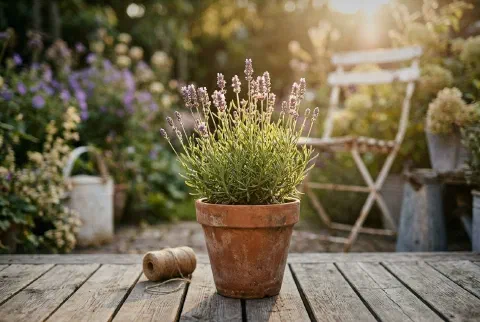
- compact lavender in sunny dry spots, which is the one place it does well. Clemson HGIC notes that lavender wants full sun and excellent drainage, and that a gravel mulch helps.
This low layer makes the bed look intentional even when taller plants are blooming wildly behind it.
Repeat One Plant Along the Edge
Repetition is what keeps cottage planting from looking random.
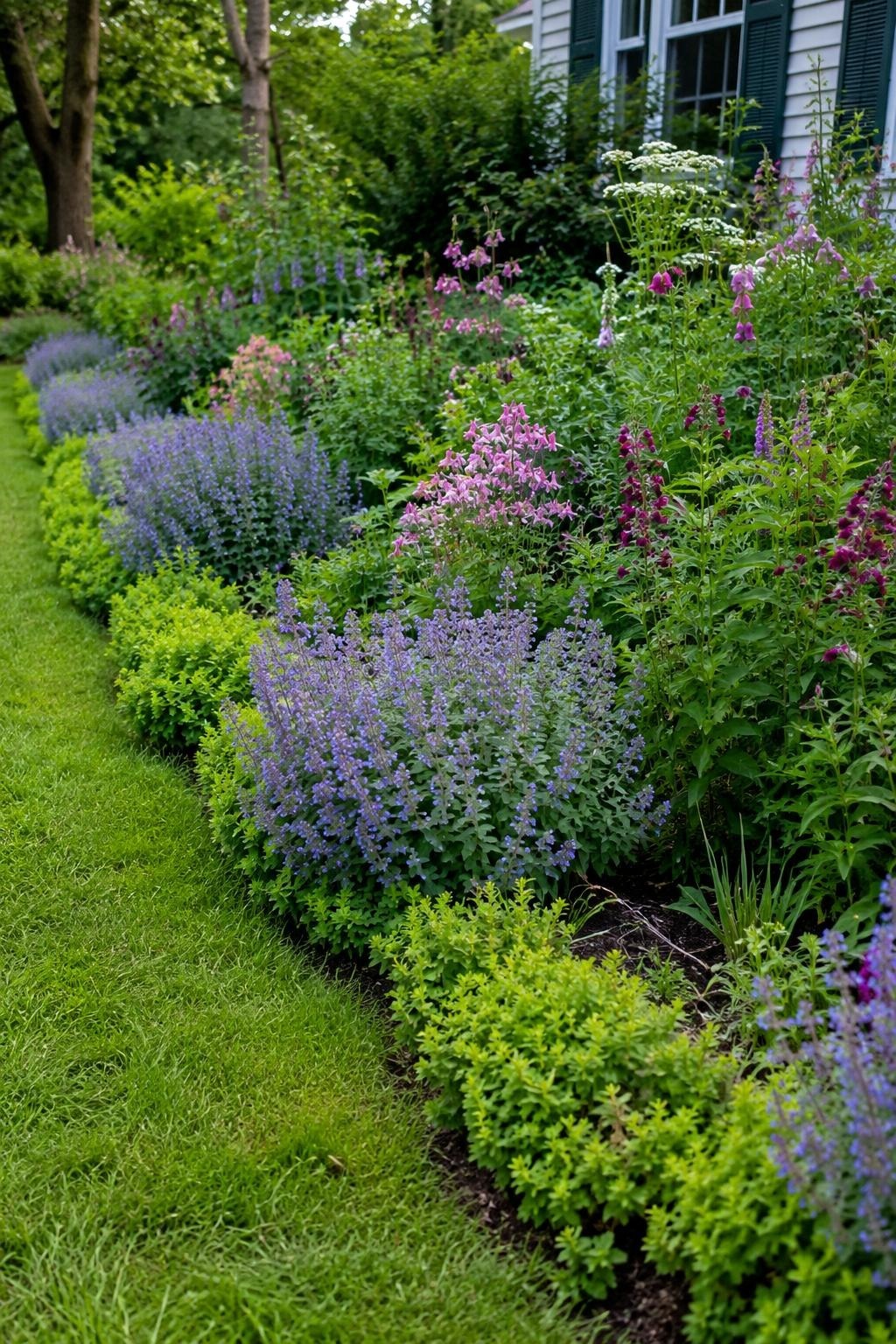
You can still mix flowers. Just repeat one reliable edge plant every few feet. It might be lavender, catmint, thyme, lamb’s ear, or a low grass. The repeated plant becomes the rhythm that holds everything else together.
This is especially helpful in a front yard because the garden is read quickly. People are walking by. They are not studying your plant list. A repeated edge tells them the bed has a plan.
If you want a looser cottage look, repeat by texture instead of exact plant. Silver leaves, low mounds, or soft trailing greenery can all create the same steady line.
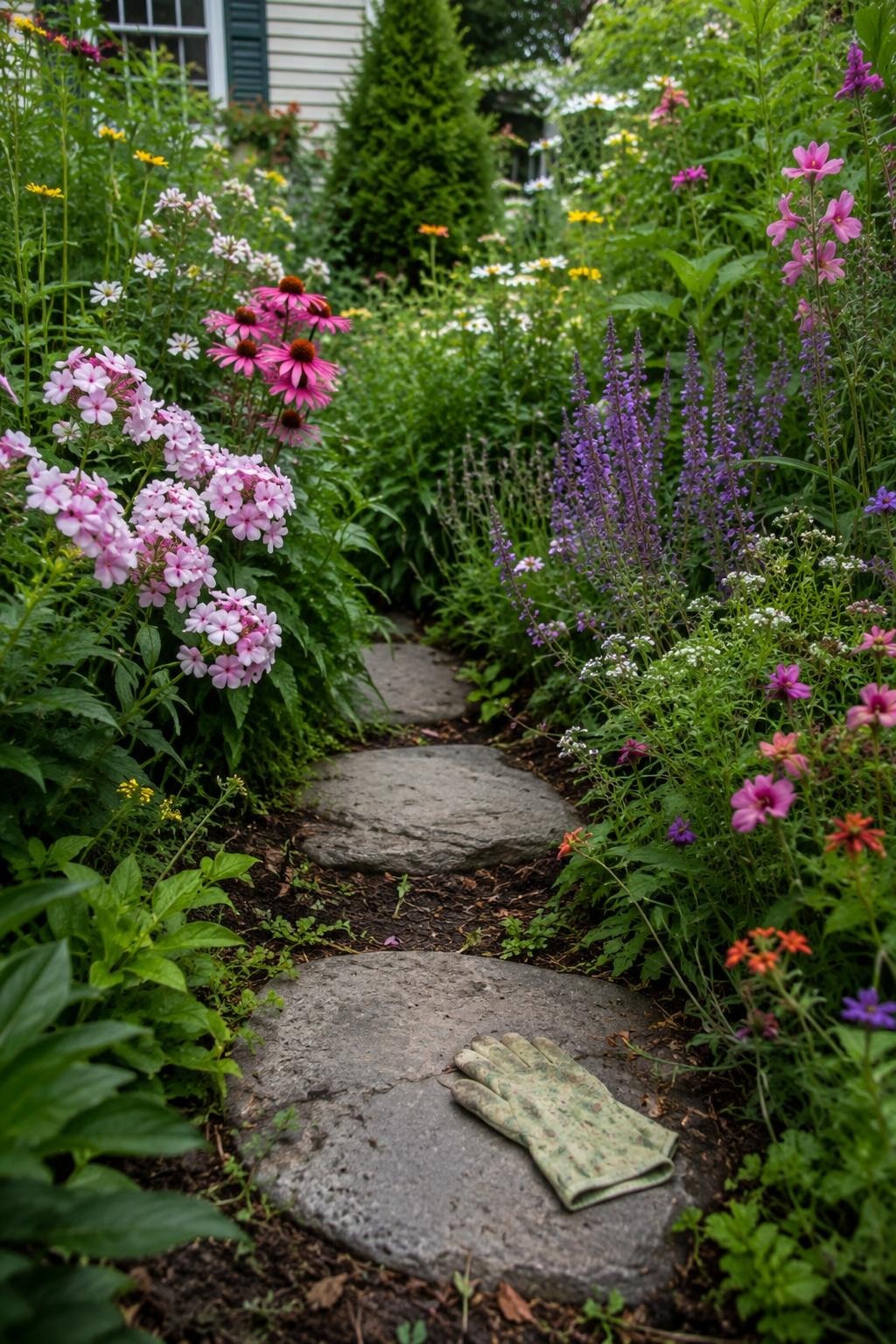
Leave a Visible Path or Access Point
Front yard beds need maintenance access, even if they look romantic.
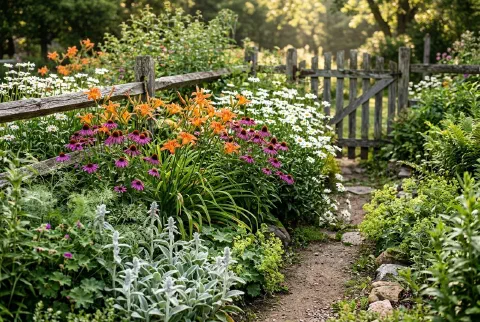
A small stepping stone, narrow gravel strip, or open gap keeps you from crushing plants when you deadhead, weed, or cut flowers. It also makes the garden look more cared for because there is a way into it.
Without an access point, the middle of the bed often gets ignored. That is when dead stems and weeds start taking over, and the front yard loses its charm.
Use the path as part of the design. One simple stepping stone near the deepest part of the bed can be enough.
Edit the Floppy Plants
Some cottage plants are beautiful until they collapse.
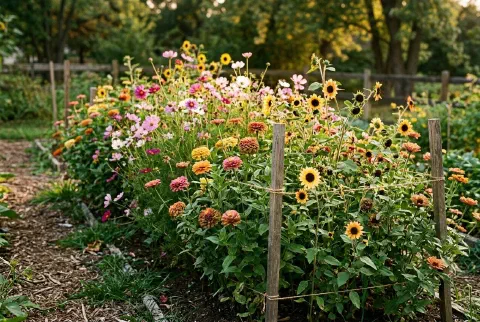
That does not mean you cannot grow them in the front yard. It means they need a plan. Put floppy plants behind sturdier neighbors, use discreet stakes early, or choose shorter varieties near the edge.
Plants that may need support:
- tall cosmos
- hollyhocks
- delphiniums
- tall phlox
- yarrow in rich soil
- heavy-headed dahlias
If staking sounds like one more chore you will avoid, choose lower plants for the front yard and save the dramatic leaners for the backyard.
The Tidy Cottage Formula
For a front yard cottage edge that looks soft but not messy, use this:
- one visible border
- one low repeated edge plant
- one clear access point
- taller flowers set behind the first row
- one color repeated through the bed
- quick deadheading where the street can see it
The edge does not ruin the cottage feeling. It protects it.
Loose flowers look better when the garden has enough structure to hold them.
What to Read Next
- Front Yard Landscaping Ideas That Make the House Look Cared For covers the rest of the yard around this edge.
- Cottage Garden Front Yard Layout is for deciding where the beds and the path actually go.
- Low Maintenance Landscaping Ideas on a Budget keeps a tidy edge from turning into a second job.
- Mailbox Flowers for Full Sun and Road Heat handles the hottest, dustiest corner of the same front yard.
- Cottage Garden Plant Sources: 8 Free Ways to Start is the cheap way to fill the bed behind the border.