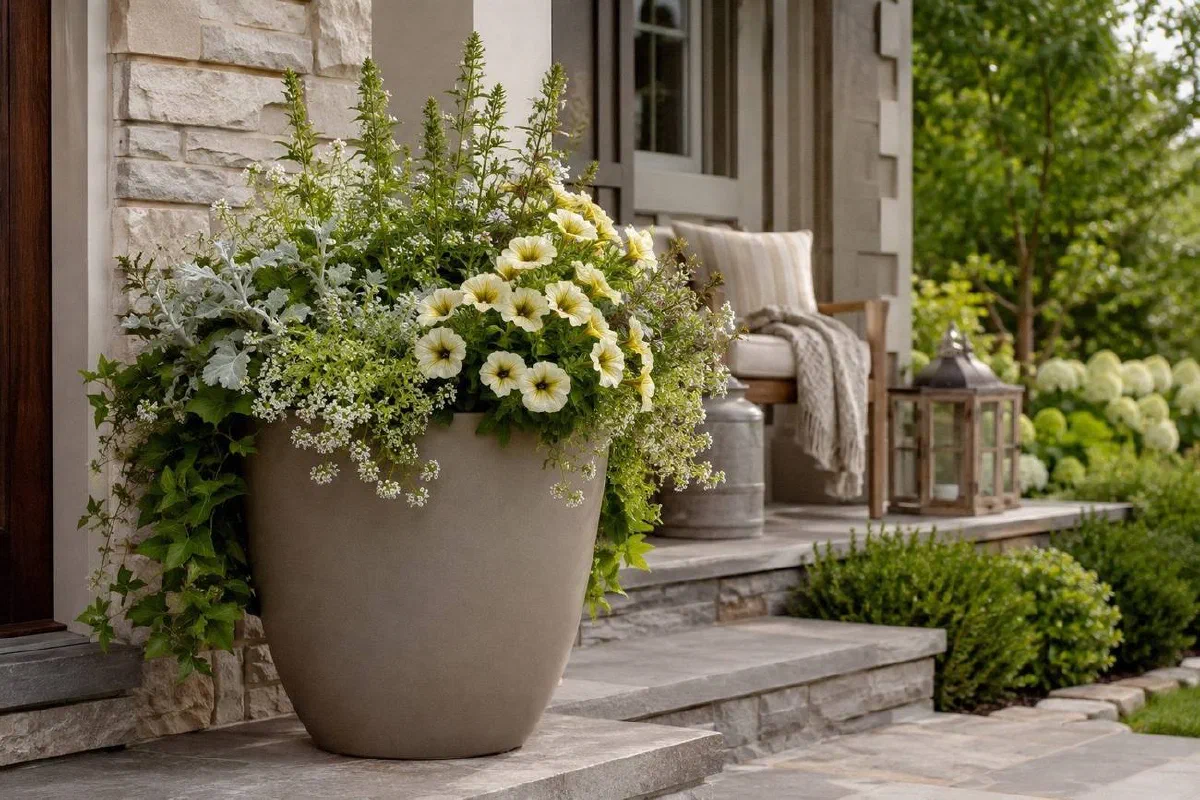
Porch pots usually look their best the week they come home from the nursery. By July, the middle has opened up, the trailing plants have quit, and the whole pot starts looking like a few flowers sitting in dirt.
The fix is rarely buying twice as many plants. A full-looking porch planter comes from the right pot size, one strong height, enough filler, and at least one plant that spills over the rim. Get those layers right and two good pots can look better than six thin ones.
A full porch planter needs enough soil, one upright anchor, one mounding filler, and one trailing plant. Repeat the same color in more than one pot so the porch looks planned instead of crowded.
Start With A Pot That Can Hold Moisture
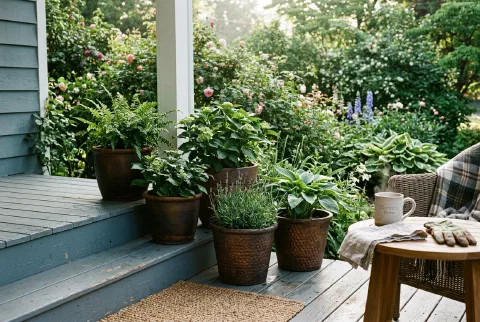
Small pots dry out fast, and once the roots have filled them you may be watering twice a day to keep up. Maryland Extension’s container guidance says some containers need watering every day when the weather is hot and dry, and points at concrete and reflective surfaces as heat sinks that make it worse. When a porch gets afternoon sun, that means wilted flowers by dinner and bare soil by midsummer. For front steps, I like one 14 to 18 inch pot on each side of the door instead of several small containers lined up.
Bigger pots are easier to keep alive, but only if watering them is easy. The container garden tools I would buy before more pots is the short list that makes the difference.
If the pot is already small, keep the planting simple. One upright plant, one mounding filler, and one trailing plant is enough. A crowded tiny pot does not stay prettier. It just asks for more water.
Use The Three-Layer Rule
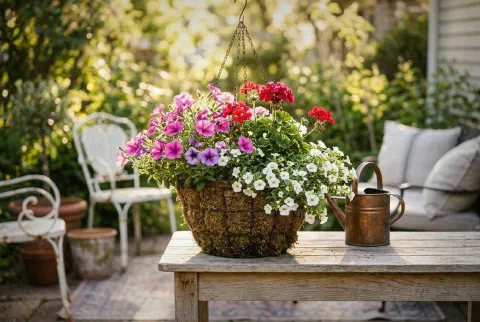
The old thriller, filler, spiller formula works because it solves a real visual problem. The tall plant gives the pot height. The filler covers the middle. The spiller hides the rim and softens the edge.
A porch pot looks unfinished when one of those layers is missing. If you can see bare soil from the sidewalk, the pot probably needs filler or a trailer, not another tall centerpiece.
Choose Fewer Colors And More Repetition
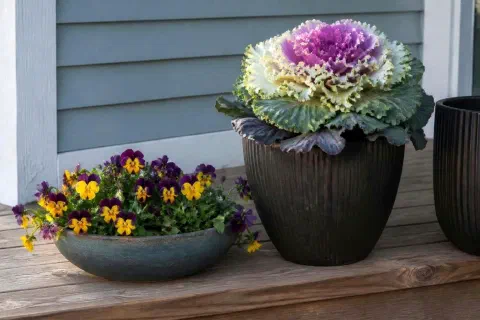
A planter with six flower colors can look busy even when it is full. A planter with two colors and repeated foliage usually reads calmer and more expensive.
Try one main flower color, one foliage color, and one trailing texture. White flowers with green sweet potato vine, coral geraniums with silver foliage, or purple petunias with chartreuse trailing leaves all work because the eye knows where to land.
Fix Flat Pots Before You Replace Them
If the pot looked good in May and flat by July, the plants are usually not the problem. By midsummer the roots have filled the soil volume, and every watering runs through the pot faster than the plant can drink it. That is why a pot that looked lush in June can look tired in July even though nothing died. The repair takes about ten minutes:
- Trim the tired flowers and any dead growth.
- Work a slow-release fertilizer into the top inch of soil. Clemson’s container guidance notes that a mix with fertilizer already in it feeds a pot for about eight to 10 weeks, which is roughly how long a spring planting lasts before it needs help.
- Tuck in one new filler plant to close the gap in the middle.
- Add a trailer near the front edge so the rim is covered again.
That small repair often does more than starting over.
Before buying more plants, stand on the sidewalk and look at the pot from the angle guests actually see. The gap you notice from there is the one to fix first.
Quick Setup Checklist
Pot size first. One 14 to 18 inch pot on each side of the door holds moisture better than several small containers lined up.
All three layers present. One upright for height, one mounding filler to cover the soil, one trailing plant to soften the rim.
Two colors, repeated. One main flower color plus one foliage color, repeated across more than one pot so the porch reads planned instead of crowded.
Watering you will actually do. Bigger pots stay damp longer, but only if refilling them is easy from where you stand.
A midsummer repair instead of a replant. Trim, feed, and tuck in one filler and one trailer instead of starting the pot over.
The sidewalk test. Look at the pot from where guests actually stand and fix the gap you see from there.
A front porch does not need a nursery’s worth of plants to look cared for. It needs pots with enough size, simple layers, and a little restraint. Full beats crowded every time.
Keep the Porch Planter Looking Intentional
If the porch still feels thin after the planters are full, look at the whole entry instead of adding more plants. Affordable pots that look high-end on a front porch can help with scale and finish, while porch cushions and old chairs adds the lived-in pieces that make the doorway feel used.
For plant combinations, use flower container combinations that bloom all season and hanging baskets that make a plain porch feel welcoming. If you need a larger seasonal refresh, summer porch decor keeps the same practical porch logic.
What I’d Buy First
- Larger planters with enough soil volume.
- Slow-release fertilizer and fresh potting mix.
- A watering can or hose wand you will actually use.
- Plants by role: upright, filler, trailer.
What to Read Next
Cheap porch pots that look expensive if the layers are right but the containers are what is holding the entry back.
Flower container combinations that bloom all season for actual plant pairings once you know you need one upright, one filler, and one trailer.
Container gardening for a porch that needs color fast if the porch is bare right now and you want color in weeks rather than a season.
Porch cushions, old chairs, and the entry because a full planter next to an empty chair still reads unfinished.
Hanging baskets that make a plain porch look welcoming for the height layer above the pots, which is the one most porches skip.