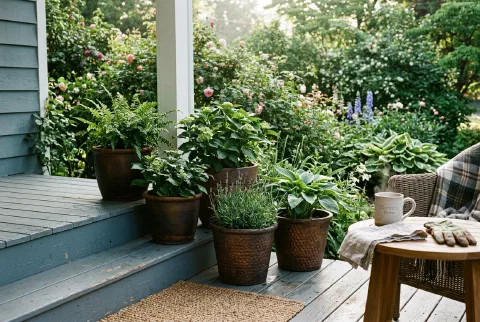
My neighbor Maria stopped me last week while I was hauling bags from Dollar Tree up my front steps. “Are you really decorating with that stuff?” she asked, eyebrows raised. Three hours later, she was back with her phone out, taking pictures of my porch.
Here’s the thing about Mediterranean style: it’s not about expensive imports or designer furniture. It’s sun-warmed terracotta, herbs spilling over pot edges, and that specific calm that comes from white walls and blue accents. Most of that can be done with thrifted pieces, dollar-store basics, and a little patience.
I spent two Saturdays turning my builder-grade concrete porch into something that feels like a Greek island doorstep. Not perfect, not Instagram-filtered. But genuinely nice to sit on with morning coffee. The fastest win was making plain containers look older than they were, which is the same trick behind these front porch pots that look expensive.
The Foundation: Paint and Pots (Week One)
Start with what you have. My porch had brown vinyl siding and a concrete floor the color of old dishwater. I wasn’t repainting the house, but I could work with containers and textiles.
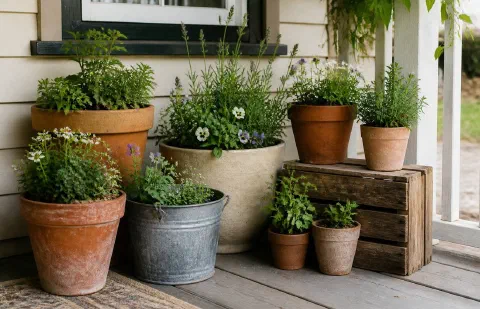
I bought six small plastic pots from a dollar store and spray painted them with a chalky terracotta finish. The method is four steps and an overnight wait between coats:
- Wipe each pot down and let it dry completely. Paint does not stick to dust, or to a damp rim.
- Two light coats beat one heavy one. A heavy coat runs and pools along the rim, then lifts.
- Leave them overnight between coats, and again before anything goes in them.
- Skip the inside. Nobody sees it, and you get twice as many pots out of a can.
Here is how the options compare if you are standing in the aisle deciding:
| What goes on the porch | What it costs you | How it reads |
|---|---|---|
| Plastic pot, spray painted terracotta | A can of paint and two evenings | Real terracotta from five feet away |
| Small real terracotta pot | More per pot, and it chips in a freeze | Honest, and better with age |
| Glazed ceramic | The most of the three | Sharper and cooler, and less Mediterranean |
| Any pot with no drainage hole | Free, and it will drown the plant | Fine in June, finished by August |
For the floor, I grabbed two thin outdoor rugs from the seasonal section. They will last maybe two summers, which is fine for an experiment. They are striped in cream and rust tones, and I layered them at angles to cover the worst of the concrete staining.
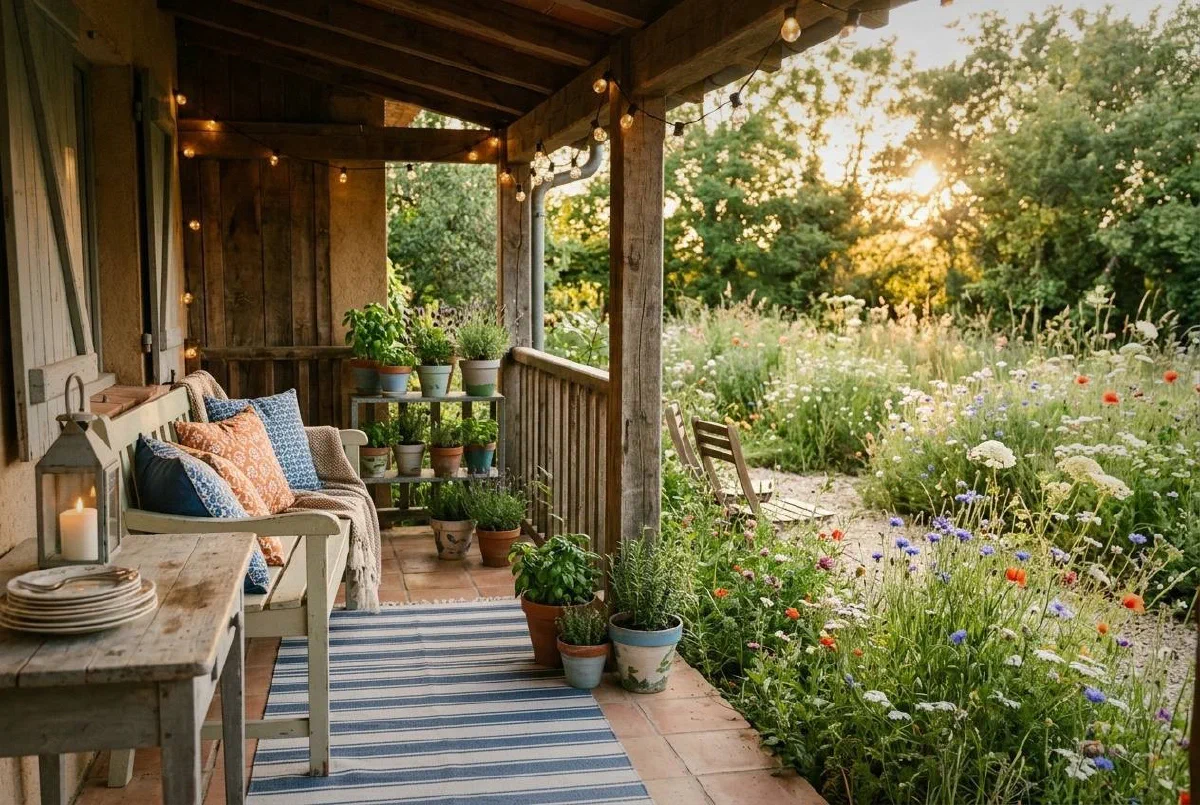
At this point, the porch already felt warmer.
The Plants: Herbs and Lavender (Week Two)
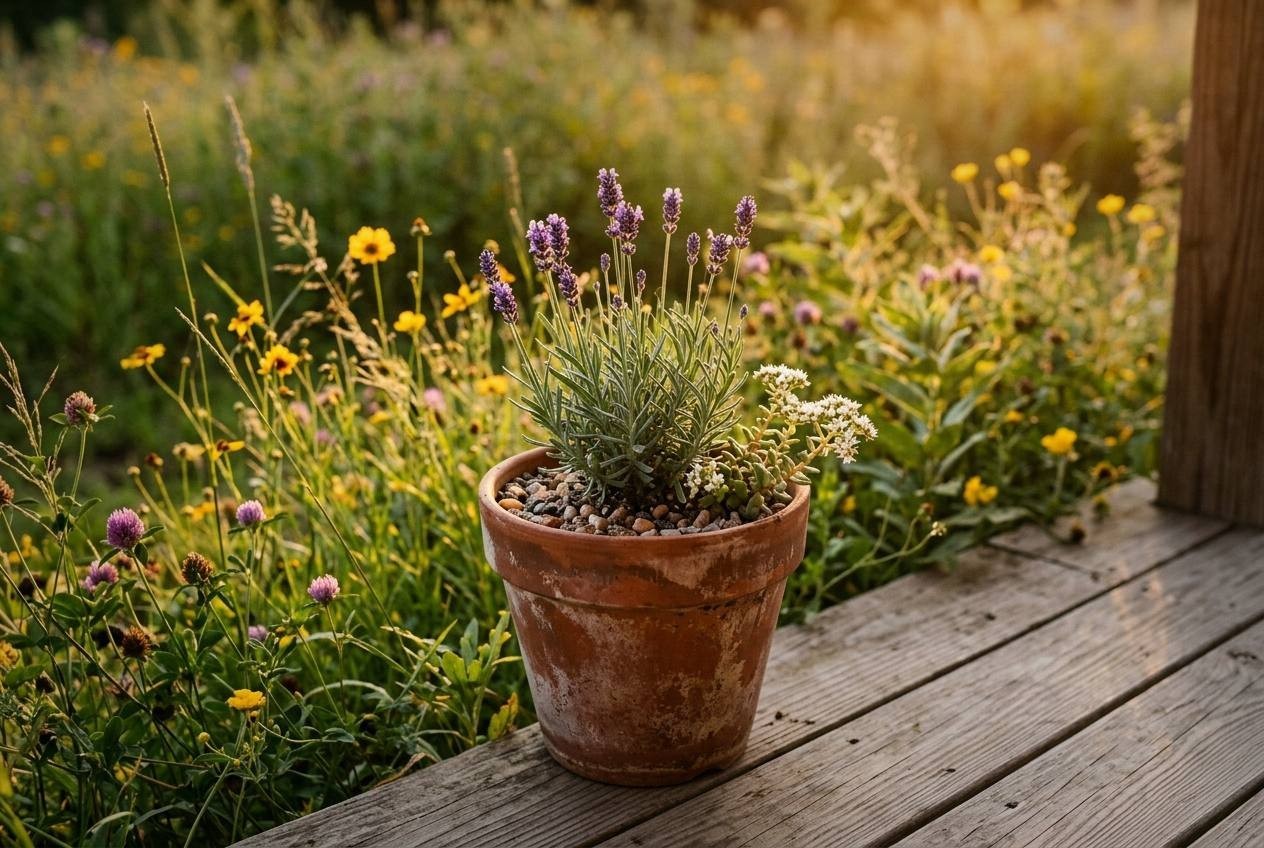
Mediterranean gardens run on herbs. The good news: most of them are cheap, and they want the same two things, which are a lot of sun and soil that drains fast. Lavender, rosemary, thyme, and oregano are full sun plants, and Penn State Extension’s definition of full sun is six or more hours of direct light a day, which is worth measuring on your own porch before you buy. The part I got wrong the first year was drainage. Those plants come from dry, rocky ground, and a pot that stays wet is what actually kills them, not cold. Clemson’s herb guide is blunt about it: very few herbs grow in wet soils, and lavender and rosemary both want a well-drained site in the sun. In a container, that means a hole in the bottom and soil that drains.
I hit up the garden center on a weekday morning, when the sad-looking plants were marked down. Found:
- Three lavender plants in 4-inch pots
- Two rosemary starts
- One trailing oregano
- A six-pack of mixed thyme varieties
That was enough for actual Mediterranean plants without turning the porch into a full nursery run. I potted them in my fake terracotta containers using basic potting soil.
The lavender went in the two largest pots flanking my front door. Rosemary in the next size down. The oregano and thyme I tucked into a long rectangular planter I already owned, but a Dollar Tree window box would work fine.
Here’s what nobody tells you: these plants look scraggly for about three weeks. Then they bush out. By week six, my lavender had doubled in size. The rosemary is now two feet tall and I trim it for cooking every week.
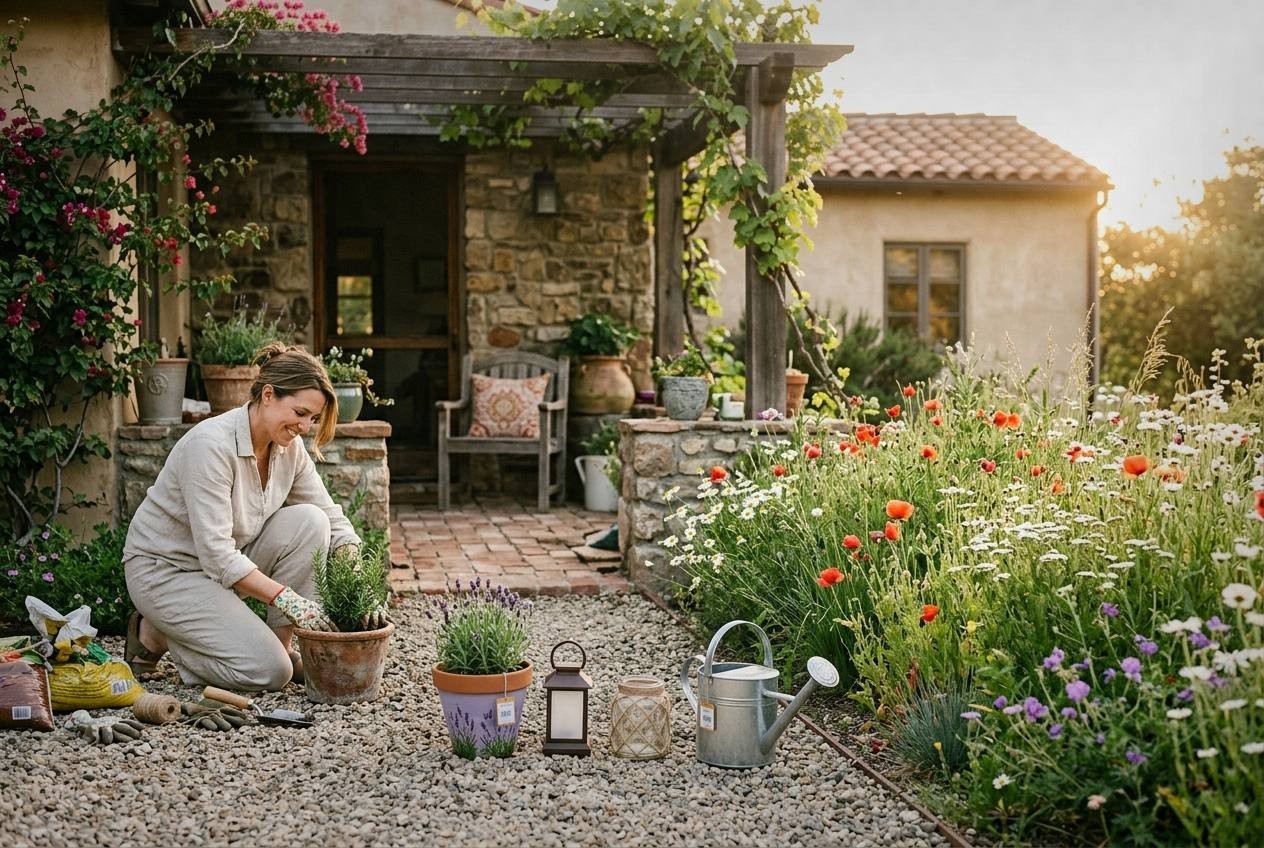
Running total: about $50.
The Accents: Blue, White, and Texture
Mediterranean style lives in the details. You need pops of cobalt blue, some white to cool things down, texture that catches afternoon light.
Dollar Tree saves you here:
- Two white pillar candles in glass cylinders
- One blue and white striped table runner
- Three small glass bottles in blue tones
- White string lights, 10 feet
All four together came in under $10.
I draped the table runner over an old wooden bench I’d been meaning to get rid of. Suddenly it looked intentional. The candles went on either end of the bench. The blue bottles I filled with olive branches (cut from a neighbor’s ornamental olive tree with permission) and set them on my porch rail.
The string lights I wove through the porch railing. They’re not fancy. But at dusk they make everything feel softer.
One splurge: I bought a white outdoor throw pillow from Target’s dollar spot section for about $5. It lives on the bench and ties the whole color scheme together.
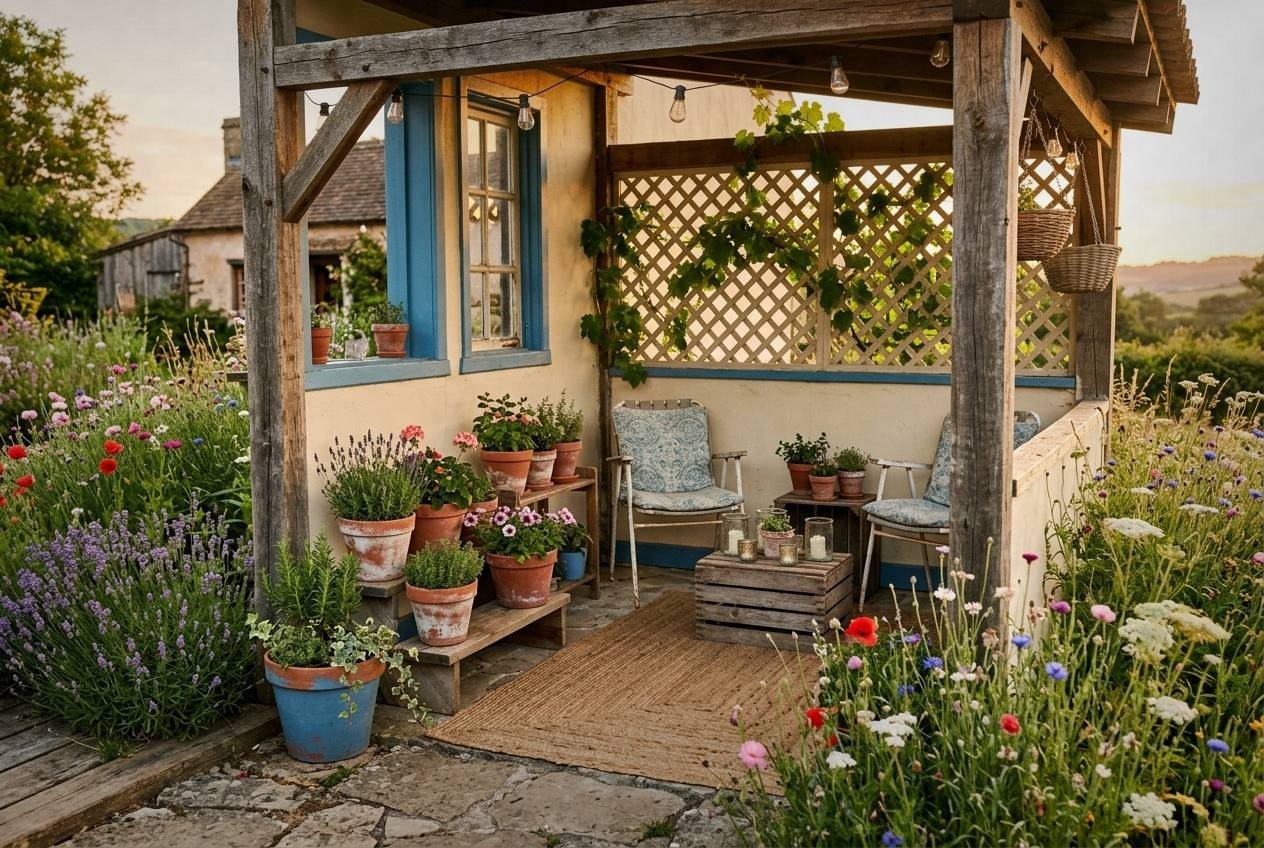
New total: about $65.
The Finishing Touches: Making It Feel Lived In
A Mediterranean porch isn’t a museum. It’s where you shell peas and read the paper and leave your garden clogs by the door.
I added:
- A terracotta saucer that holds my keys and sunglasses
- A small wooden crate from Dollar Tree that stores my watering can
- Loose lavender stems in a jar, free from my own plants once they bloomed
The crate I left unfinished because weathered wood reads more authentic than anything painted. The terracotta saucer sits on the bench arm. The lavender jar goes on a small side table (also something I already owned, but a plant stand from Dollar Tree would work).
One thing I learned: real Mediterranean porches have things growing up walls. I didn’t have the budget for a trellis. But I did train my oregano to trail over the edge of its planter. In two months, it cascaded down a full foot. Free vertical interest.
Final cost: under $70.
What Actually Works After Two Months
The spray-painted pots still look good. A few chips around the rims from watering, but that adds to the weathered effect.
The lavender bloomed in week eight. I cut stems for the house and it kept producing. The rosemary is a workhorse. The thyme spreads slowly but steadily.
The Dollar Tree rugs are fading, but I expected that. They’ll make it through this summer. Next spring I might upgrade to something from HomeGoods. Or I might just replace them with another $10 set.
The string lights burned out after six weeks. I replaced them with another cheap set from Dollar General. At that price point, they’re basically disposable, and the second set is still going.
What I’d change: I wish I’d bought one more large pot for a statement plant. Maybe a small olive tree or a big rosemary shrub. That would have cost another $20-30. But it would anchor the whole setup better.
Mistakes to Avoid With a Budget Porch
Almost everything that goes wrong on a porch like this is decided before the plants go in.
- A pot with no drainage hole. Some dollar store pots have a dimple where the hole should be and nothing through it. Drill one, or sit a nursery pot inside and treat the painted pot as a cover.
- One heavy coat of paint. It looks faster and it pools in the rim, then peels. Two thin coats and a full night between them is the whole method.
- Ten-foot string lights, expected to last. The cheap strands are a season of light, not a fixture. Buy them knowing that, and put the money into the pots instead.
- Plants bought before the sun is measured. Lavender and rosemary want six hours or more of direct sun. On a porch that gets four, plant thyme and oregano and leave the lavender for the sunniest corner you have.
How to Keep the Pots Going Past the First Season
The paint is not the part that needs looking after. Keeping Mediterranean herbs alive in a container is.
- Let the soil dry between waterings. These plants come from rocky ground and they handle drought far better than wet feet. If a saucer still holds water an hour after you watered, tip it out.
- Feed lightly, and only while they are growing. A dilute liquid feed every few weeks through spring and summer is plenty. Rich soil pushes soft, floppy growth and the flavor goes with it.
- Cut rosemary and thyme through the season. Trimming for the kitchen keeps them bushy instead of woody and leggy, and it is the easiest pruning there is.
- Give lavender and rosemary the free-draining spot. Drainage matters more to them than shelter, so a pot that empties quickly beats one wrapped up with wet roots.
- Repaint a chipped rim in spring instead of replacing the pot. The chips are the cheap part to fix, and a repaint is twenty minutes.
That is the whole maintenance list for the season, and none of it takes an afternoon.
The Feeling You’re Actually After
Mediterranean style isn’t really about Greece or Italy or Spain. It’s about creating a space that feels warm in the morning and cool in the evening. A spot where you want to linger.
My porch isn’t perfect. The paint on my house is still builder beige. The concrete still has cracks. But now when I open the front door, I smell lavender and rosemary instead of hot asphalt. The blue bottles catch morning light. The herbs brush against my legs when I water them.
Maria came back last week with her own Dollar Tree bags. She’s doing her back patio in the same style. We compared notes on where to find cheap olive branches (craft stores, surprisingly) and whether the solar lights are worth it (verdict still out).
For under $70 and four hours of work spread across two weekends, my front porch became the place I actually want to sit. Not because it looks like a magazine spread. Because it feels intentional. Like someone thought about what would make this small concrete square feel like a threshold worth crossing.
That’s the real Mediterranean secret: it’s not about the Aegean Sea. It’s about making your own doorstep feel like somewhere you’d want to arrive.
What to Read Next
Cheap porch pots that look expensive for the longer version of the aged-terracotta trick, plus four other container types I did not try here.
Front porch planter ideas that look full all season because Mediterranean pots go flat by midsummer if you skip the filler and trailer layers.
String light patio ideas without a pergola or a big budget if the ten-foot strand burned out and you want a set that survives more than one season.
Cozy front porch ideas for early spring for the cool-weather version of this porch, since Mediterranean containers start bare in March.
Walmart solar lights for a softer garden path if you are still deciding on the dusk layer for the steps.