Dried flowers are one of those small comforts that make winter feel less bare.
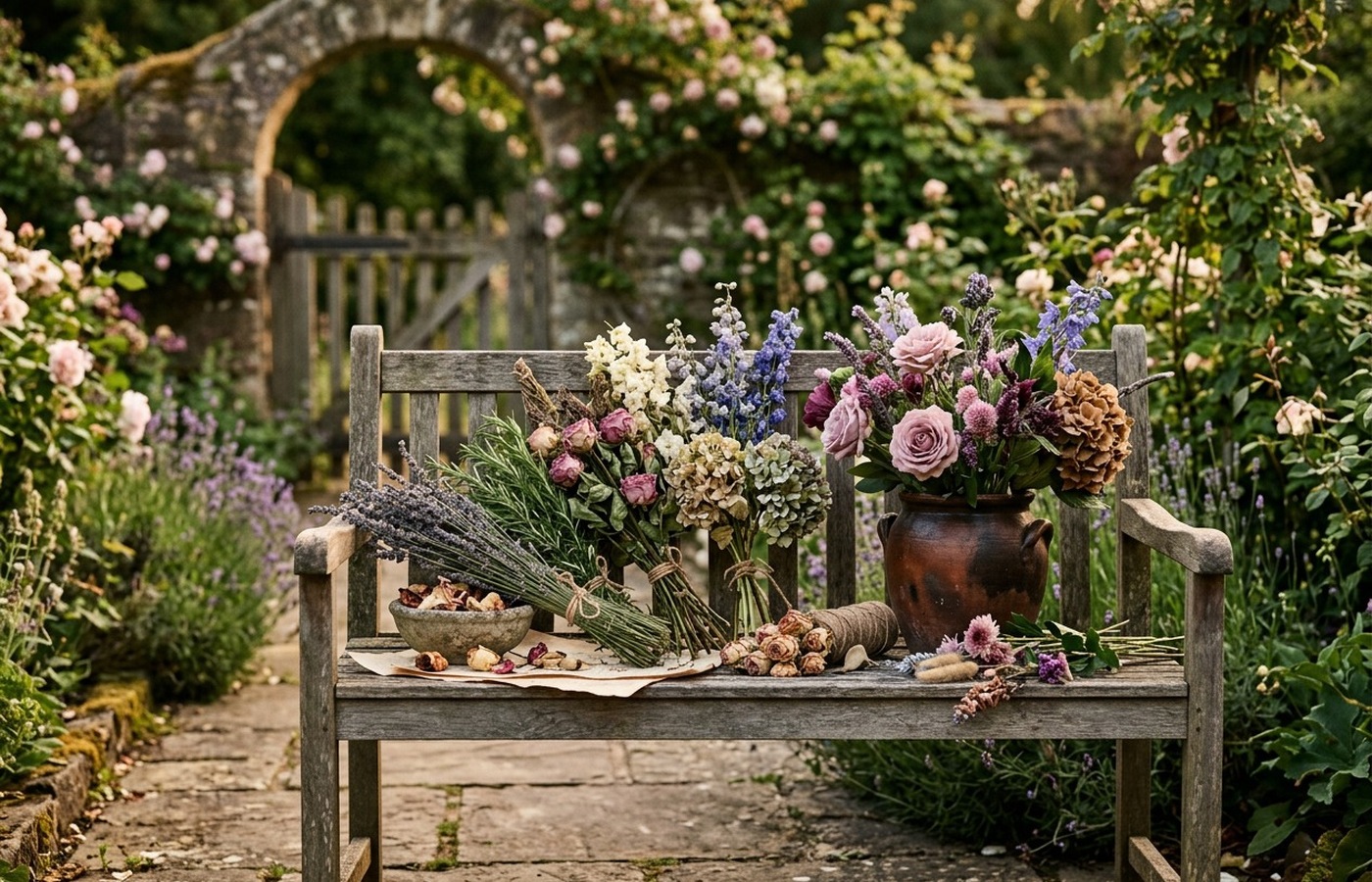
A bundle of strawflowers in a jar. Lavender tied with string. Seed heads in a brown bottle on the kitchen windowsill. None of it is fancy, and that is why I like it. You grew it once, cut it at the right time, and it keeps giving you something pretty long after the garden has gone quiet.
If you want dried arrangements this winter, start with flowers that are good at drying. Some blooms collapse into sad tissue paper. Others hold their color, shape, and texture for months.
The Best Beginner Flowers for Drying
Strawflower is the easiest win. The petals already feel papery when fresh, so they dry almost exactly as they look in the garden. Grow them in full sun and cut when the outer petals open but the center is still tight.
Statice keeps its color better than almost anything else. Purple, white, yellow, and pink varieties all dry well. Cut when most of the tiny flowers on the stem are open.
Gomphrena looks like little clover buttons. It dries hard and cheerful, and it does not shed all over the table. I like it in small jars and wreaths.
Celosia gives you drama. The plumed types dry like soft flames. The crested types look almost strange, in a good way. Cut before the flowers get too heavy.
Lavender is worth growing even if you only get a handful of stems. Cut when the lower buds have opened and the top buds are still closed. Hang it in small bundles so air can move through.
Yarrow dries flat and sturdy, which makes it useful in wreaths. Yellow yarrow holds color best, but white yarrow has that old-garden feeling that works in almost any room.
If you already start flowers indoors, fold a few of these into your seed starting trays . You do not need a separate cutting garden to begin.
Give Them a Small Patch, Not the Whole Yard
A drying flower patch can be tiny. One 4-by-4-foot bed is enough for jars, small bundles, and a wreath or two.
Plant taller flowers in the back: strawflower, celosia, statice. Put gomphrena and lavender near the front where you can clip them often. Yarrow can go at the edge of a border because it comes back and spreads over time.
Most drying flowers want full sun and soil that drains. Too much fertilizer gives you leafy plants with weaker stems. Compost at planting time is plenty for most annuals.
Cut Earlier Than You Think
The mistake is waiting until the flowers look perfect in the garden.
For drying, cut when blooms are almost open, not fully mature. They keep opening a little after harvest. If you wait too long, petals shatter, colors fade, and stems bend.
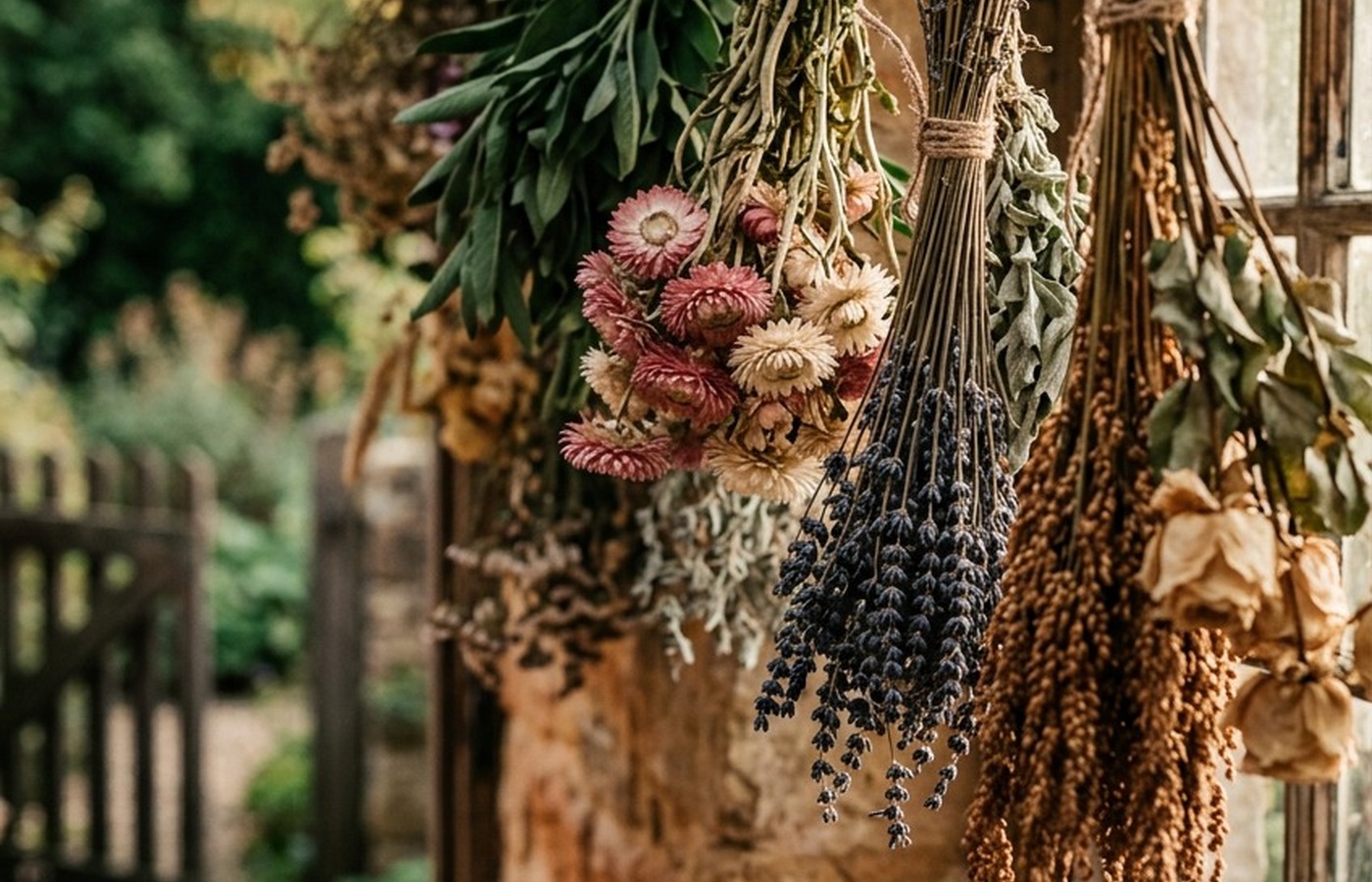
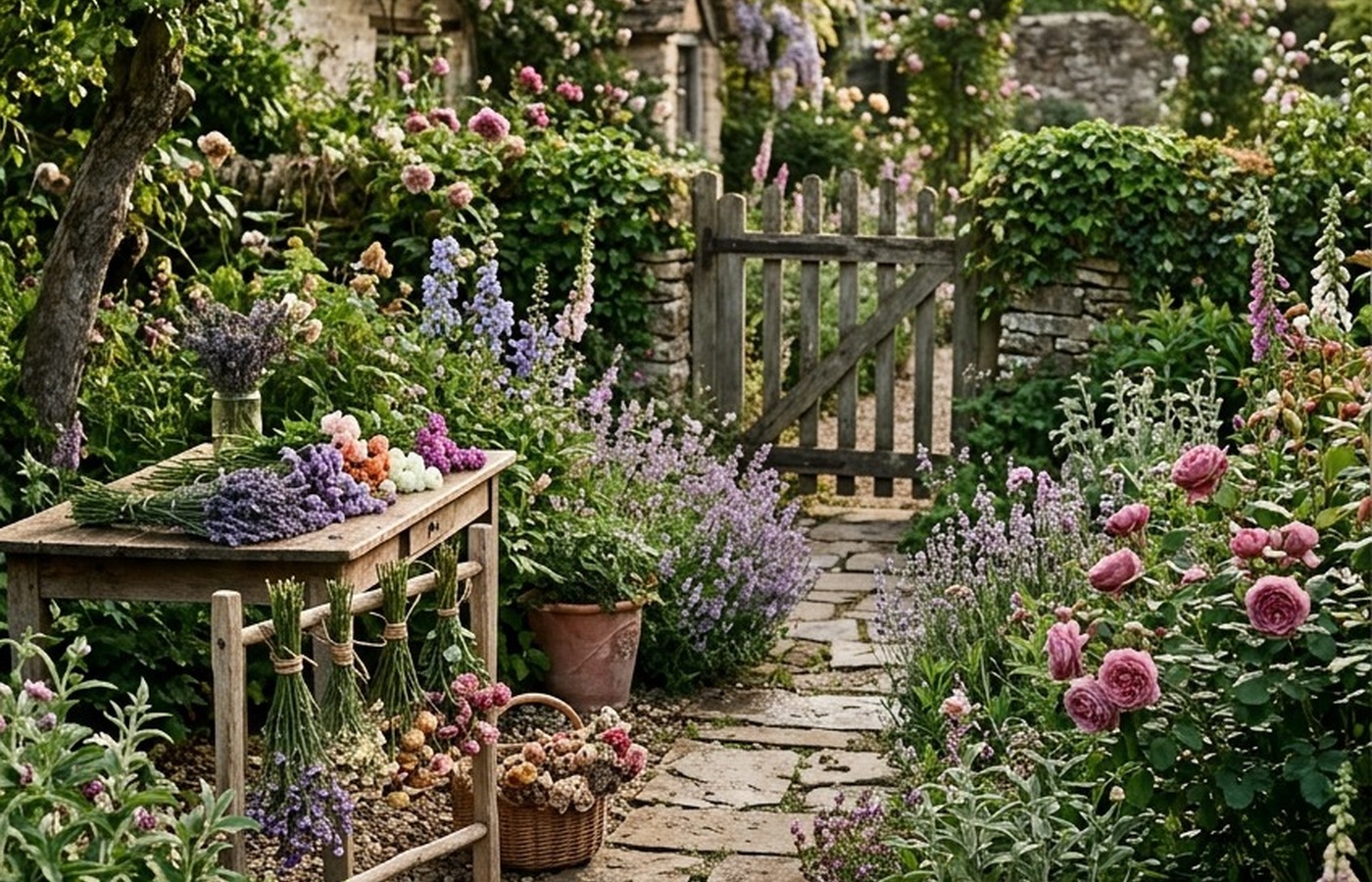
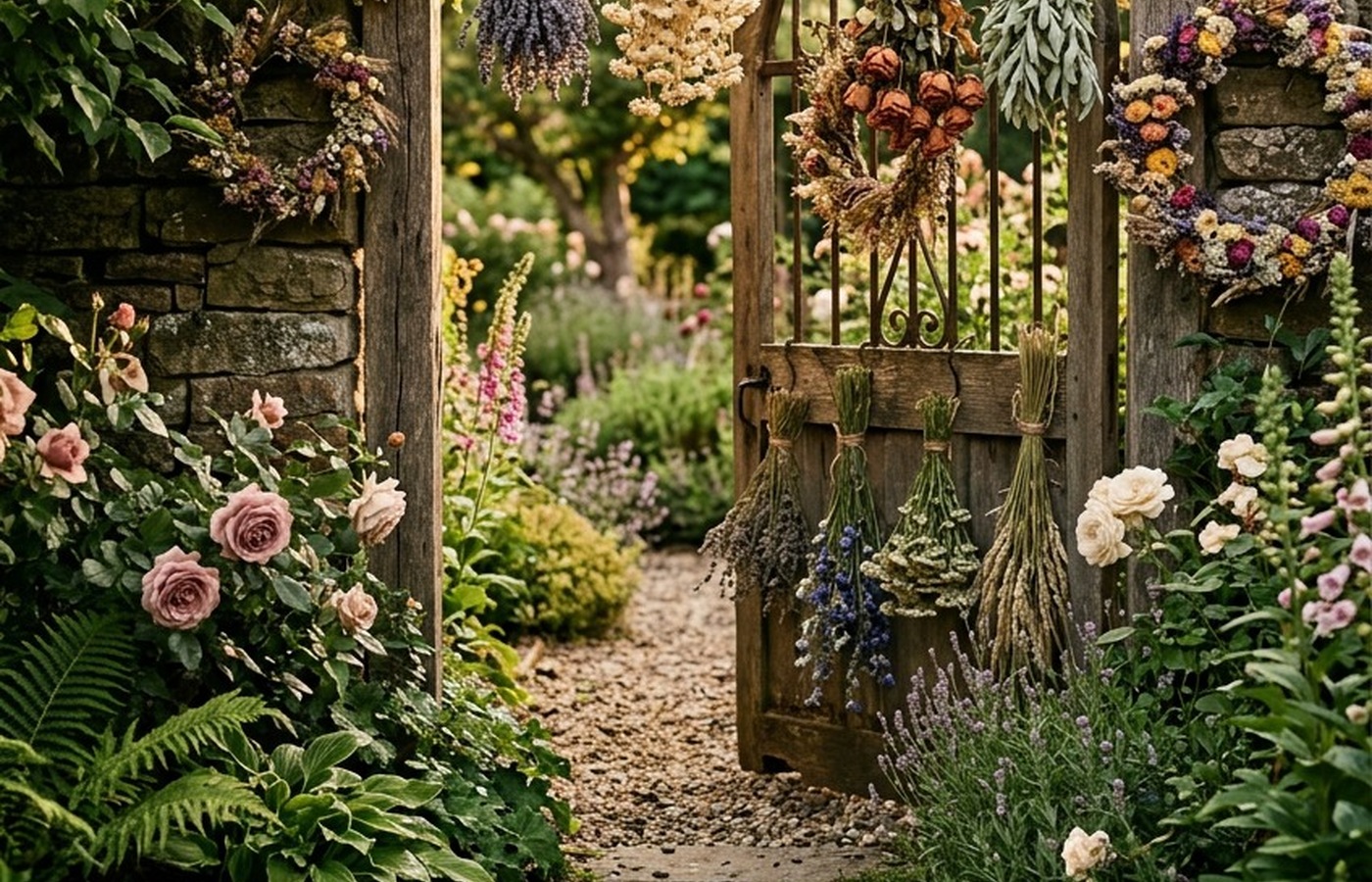
Cut in the morning after dew dries. Strip the lower leaves right away. Leaves hold moisture and slow the drying. Tie small bundles with twine or rubber bands and hang them upside down in a dark, dry place.
A closet, attic, pantry, or spare room works. Sunlight bleaches color. Humidity makes flowers mold. Air movement helps, but do not put a fan directly on delicate blooms.
Most flowers dry in two to three weeks. They are ready when stems snap instead of bend.
What to Do With Them in Winter
Start simple.
Put short stems in jam jars. Tuck lavender into a drawer. Tie strawflowers into a small bundle and hang it from a peg rail. Add yarrow and statice to a grapevine wreath. Mix seed heads with evergreen clippings in December.
The wreath is where a season of drying pays off longest. A dried fall wreath that lasts past October walks through which of these stems survive an outdoor door and which belong inside.
You can also refresh older arrangements by adding one fresh-looking element: a new ribbon, a sprig of cedar, a few dried orange slices, or a single brighter flower tucked into the front.
I like dried flowers best when they are not trying too hard. A small bundle on a shelf feels more honest than a huge arrangement that looks like it came from a hotel lobby.
Save Seeds While You Are At It
Let a few of your best plants go fully to seed. Strawflower, gomphrena, calendula, and celosia can all give you seed for next year.
Label the seed heads before you cut anything. By October, you will not remember which pink strawflower was the good one. I have made that mistake more than once.
If you are already saving zinnias, the process will feel familiar. The same patience you use to save flower seeds works here too.
A drying patch is a small promise to your winter self. Plant it in spring, clip it in summer, hang it in fall. Then one cold morning you find a little jar of color still sitting on the shelf.