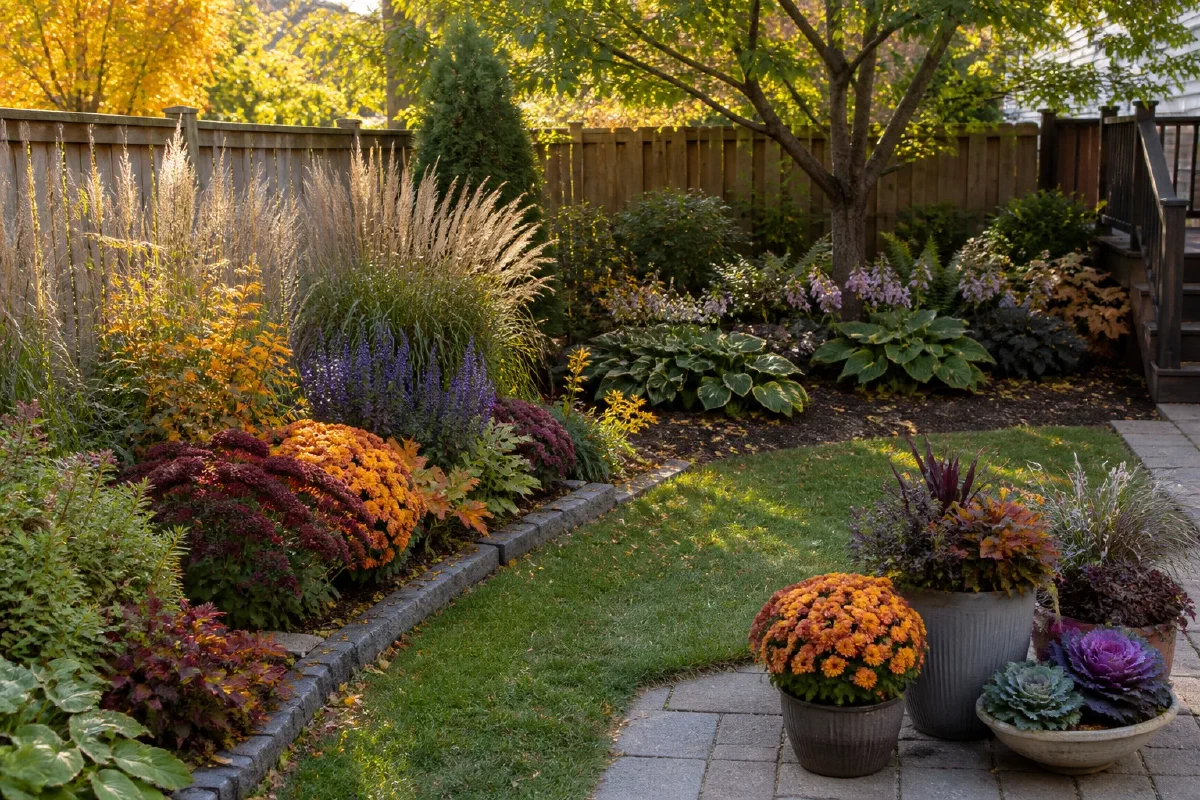
Fall flower beds give you color when most gardens are winding down, and the right plan makes planting straightforward instead of overwhelming. These five designs account for the light your yard actually gets, the space you have to work with, and the maintenance you want to keep up with through October and November. Each plan lists specific plants and where everything goes so you can buy what you need and get it in the ground without guessing.
What Makes These Plans Different
Most fall planting advice mixes sun and shade plants without separating them, or it assumes you have a wide border to fill. These plans split by condition: full sun means six or more hours of direct sun, part shade is two to four hours, and shade is less than two, and small yard means a bed no wider than four feet or a cluster of containers. Each plan uses plants that peak between late August and the first hard frost, and all five skip anything that needs weekly deadheading or constant water.
| Plan | Best For | What to Know |
|---|---|---|
| Full Sun Perennial Border | South-facing beds, open yards | Needs well-drained soil, tolerates dry spells once established |
| Shade Garden with Late Bloomers | North walls, under trees | Prefers consistent moisture, blooms lighter than sun plants |
| Small-Yard Layered Bed | Narrow borders, townhouse yards | Fits in four feet of depth, uses compact varieties |
| Mixed Light Transition Bed | East or west exposures, dappled shade | Plants handle morning sun or afternoon shade |
| Extended Season Succession Bed | Yards where frost comes late | Blooms stagger from August through November |
1. Full Sun Perennial Border
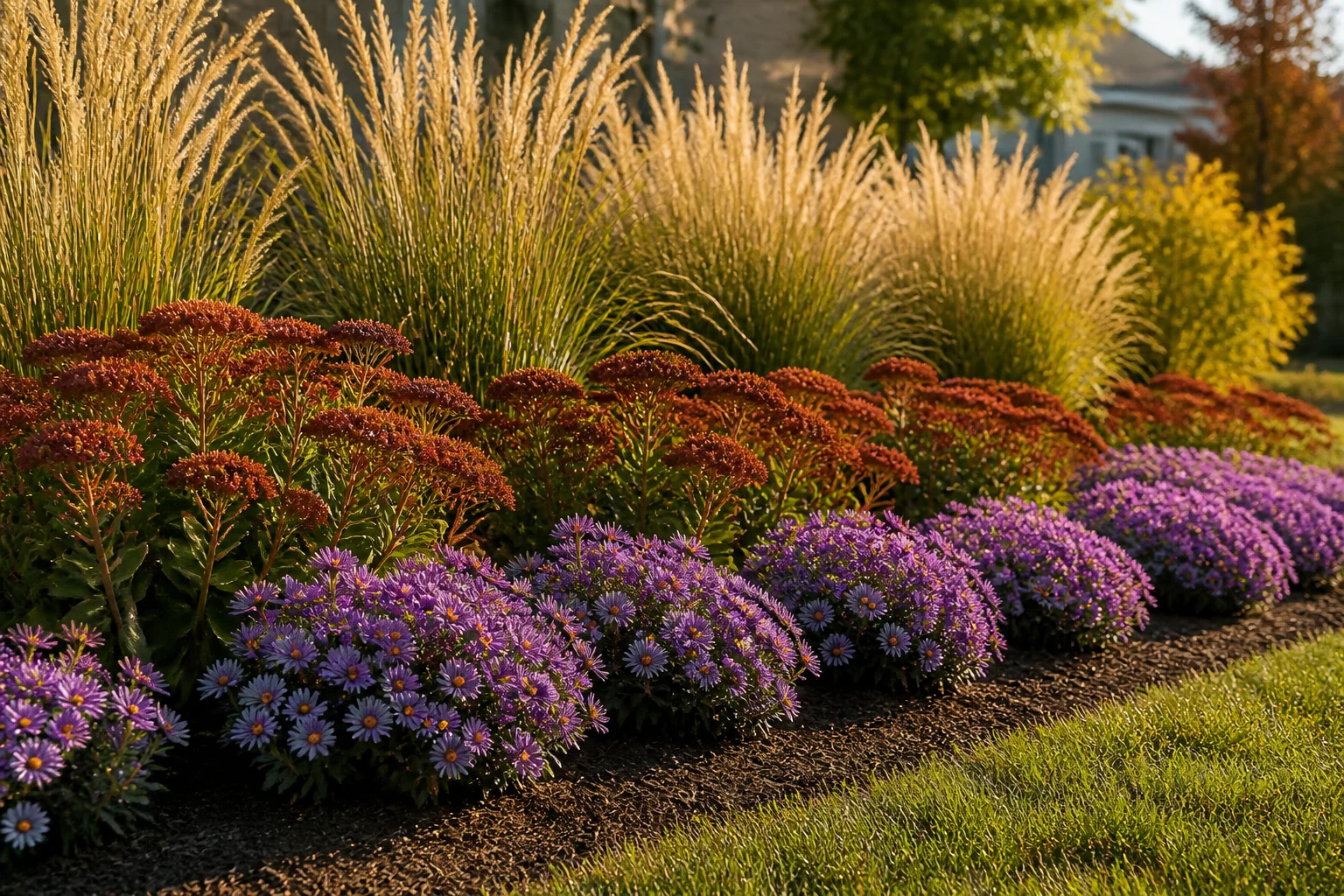
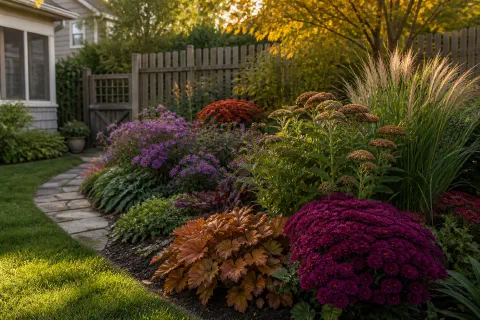
By mid-September, this bed glows amber and burgundy in the late afternoon light, with grasses catching the low sun and asters drawing butterflies until the first freeze. The back row holds clumps of feather reed grass, the middle layer uses sedum, and the front edge gets asters that stay compact and bloom heavily without staking.
Space plants according to the mature width listed on their tags. Check your local extension office for your area’s first expected frost date, then aim for about six weeks before that date so roots have time to settle. Check the soil rather than following a fixed watering calendar, because rain, temperature, soil, and container size change how quickly it dries.
2. Shade Garden with Late Bloomers
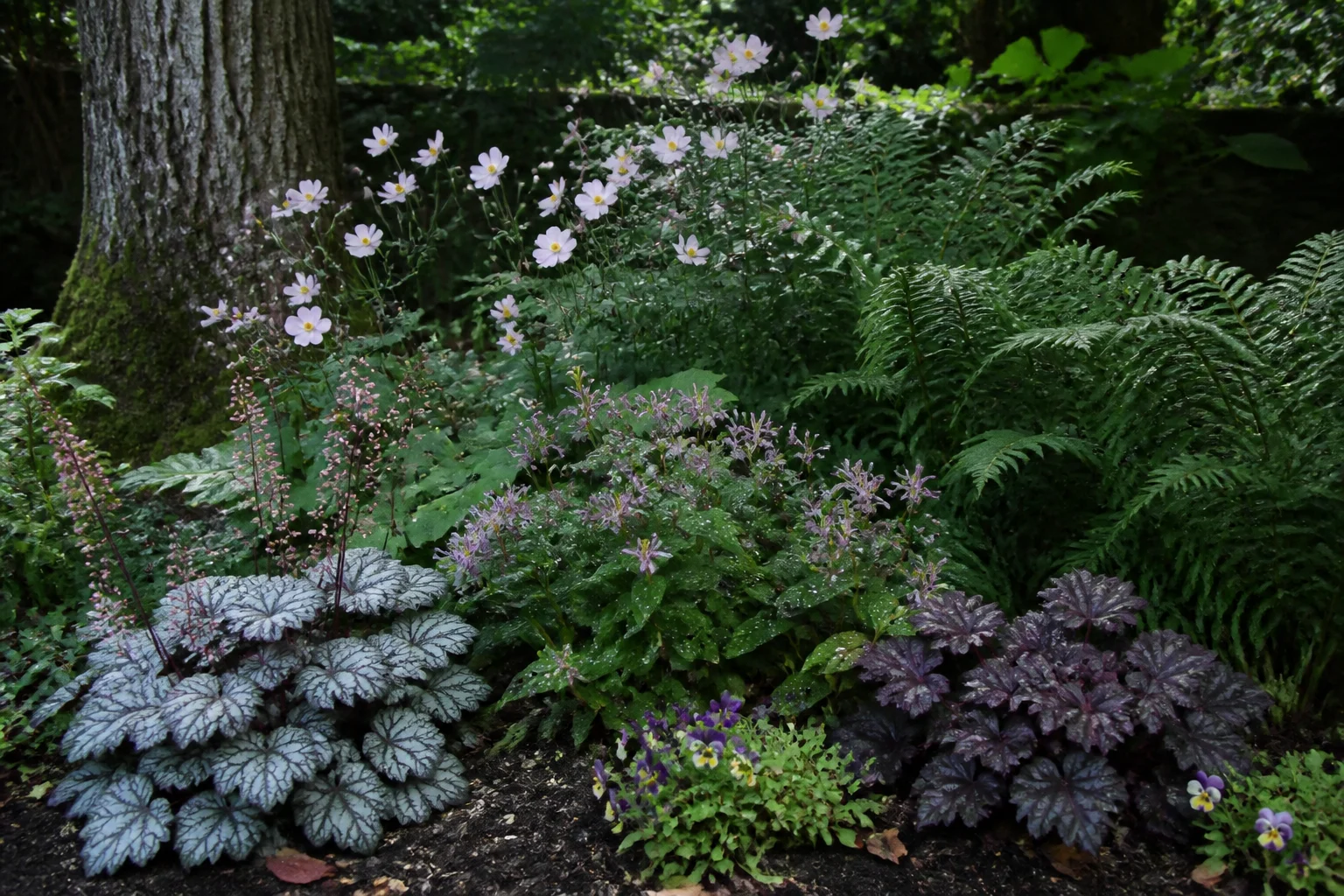
Under a maple or along a north wall, this bed offers soft pink and white flowers where most shade plants have already finished. The back layer holds Japanese anemones that bloom from late August into October, the middle gets toad lilies with spotted purple flowers that open in September, and the front row uses pansies that handle shade better than most annuals.
All three layers prefer soil that holds moisture without staying soggy. Use a soil test and local guidance before adding amendments, then mulch lightly without burying plant crowns. Check the root zone and water when it is drying.
3. Small-Yard Layered Bed
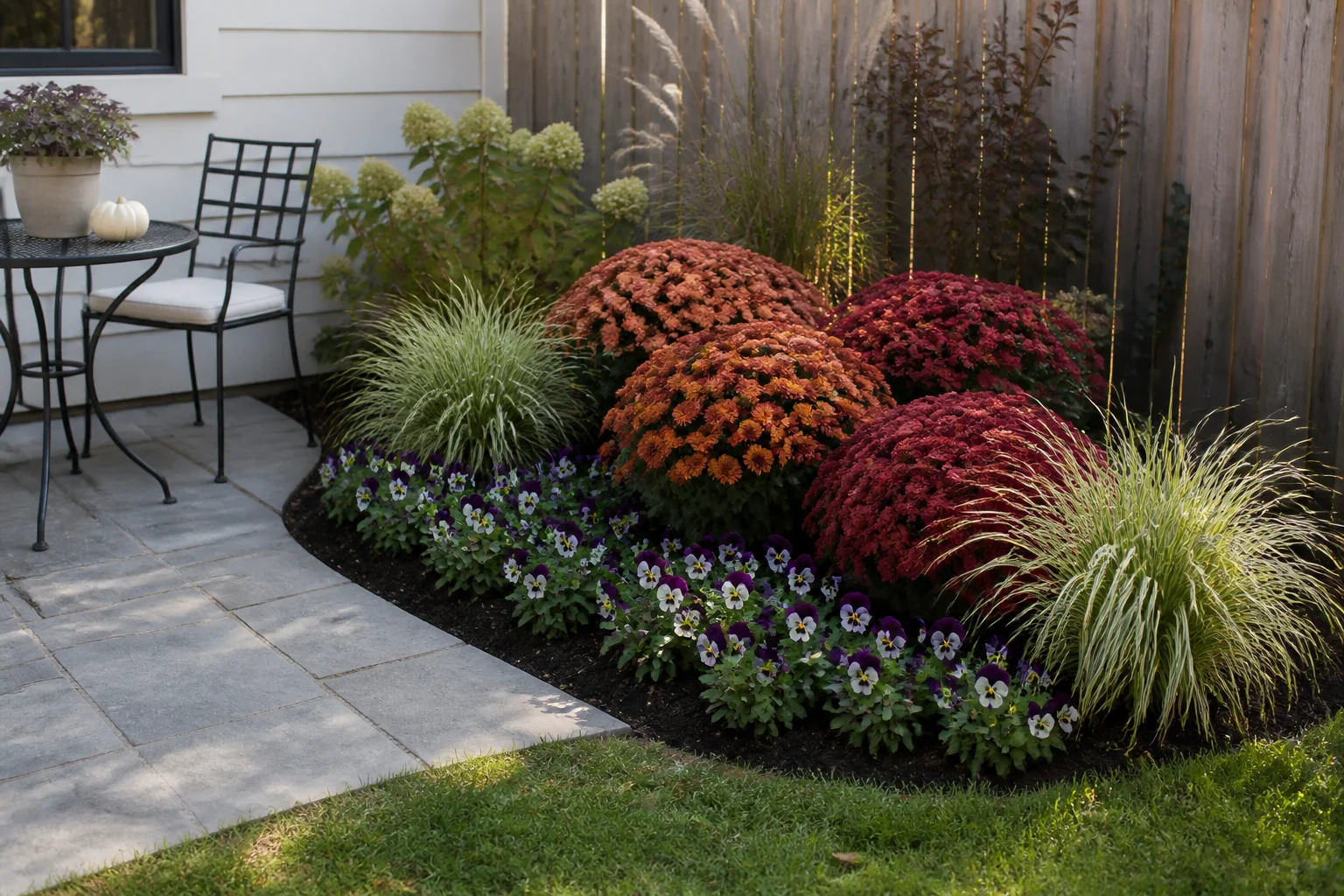
This plan fits a bed four feet deep and eight feet long, or it works in three large containers grouped on a patio. The back holds dwarf fountain grasses in opposite corners, the middle layer uses compact chrysanthemums in rust, gold, and burgundy, and the front edge gets violas that tolerate more cold than pansies.
Space plants using the mature width on their tags. Mums are shallow-rooted and want steady water through hot, dry spells, and a mum planted in fall while it is blooming may struggle to survive winter because its energy is going into flowers instead of roots. Once a hard frost kills the foliage, cut the plant back to ground level and mulch lightly. If you are using containers, choose pots at least twelve inches deep and group them in a triangle so the grasses anchor the back corners and the mums fill the center.
4. Mixed Light Transition Bed
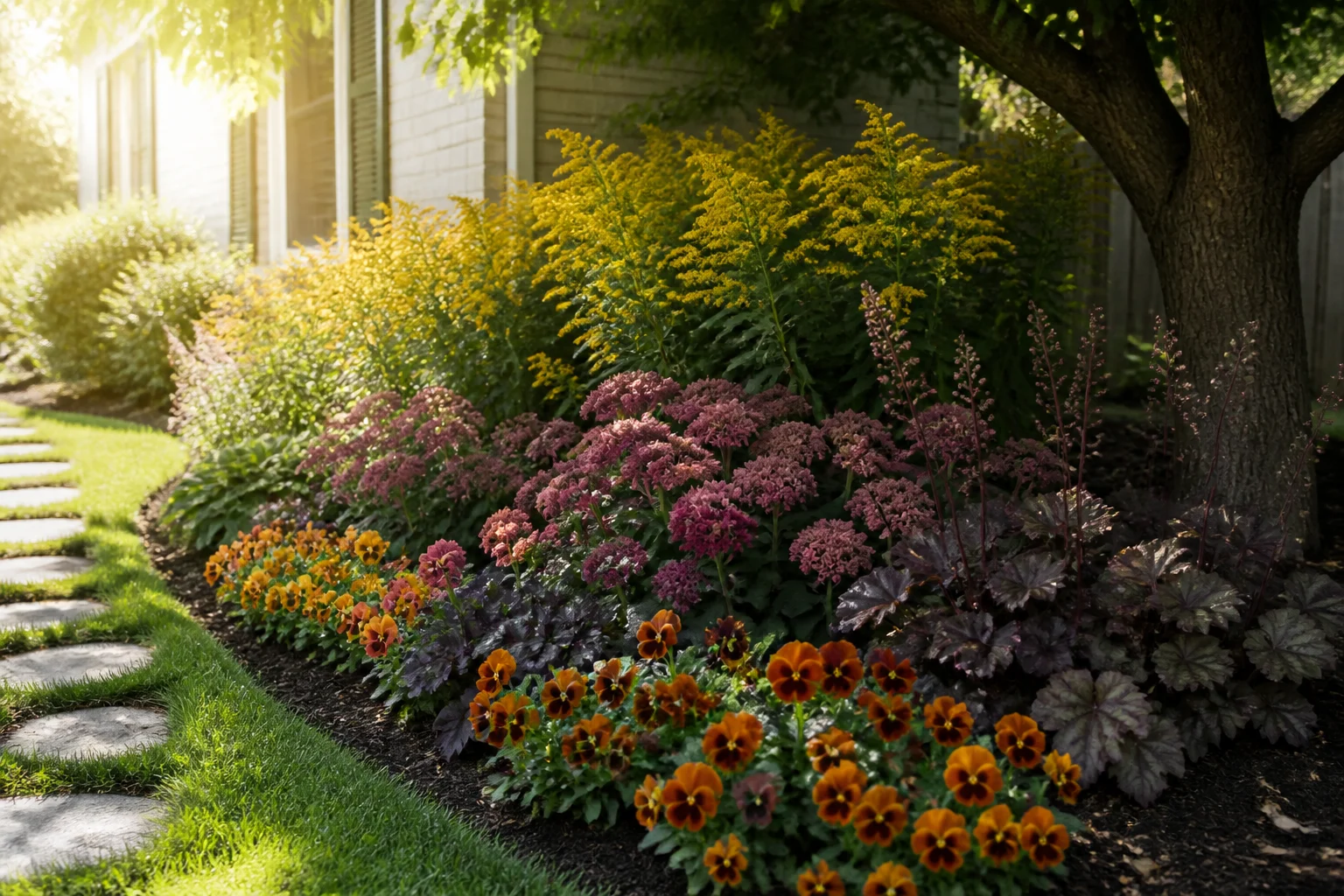
This bed works where morning sun gives way to afternoon shade, or where a tree canopy filters light all day. The back row holds rough goldenrod that blooms bright yellow in September and handles part shade better than most fall bloomers, the middle layer uses sedum with blue-gray leaves and dusty pink flowers, and the front gets pansies in orange and bronze that look warmer in lower light.
These plants need soil that drains while retaining some moisture. Check the plant tags and the bed itself before watering, and use a light mulch layer that stays clear of stems and crowns.
5. Extended Season Succession Bed
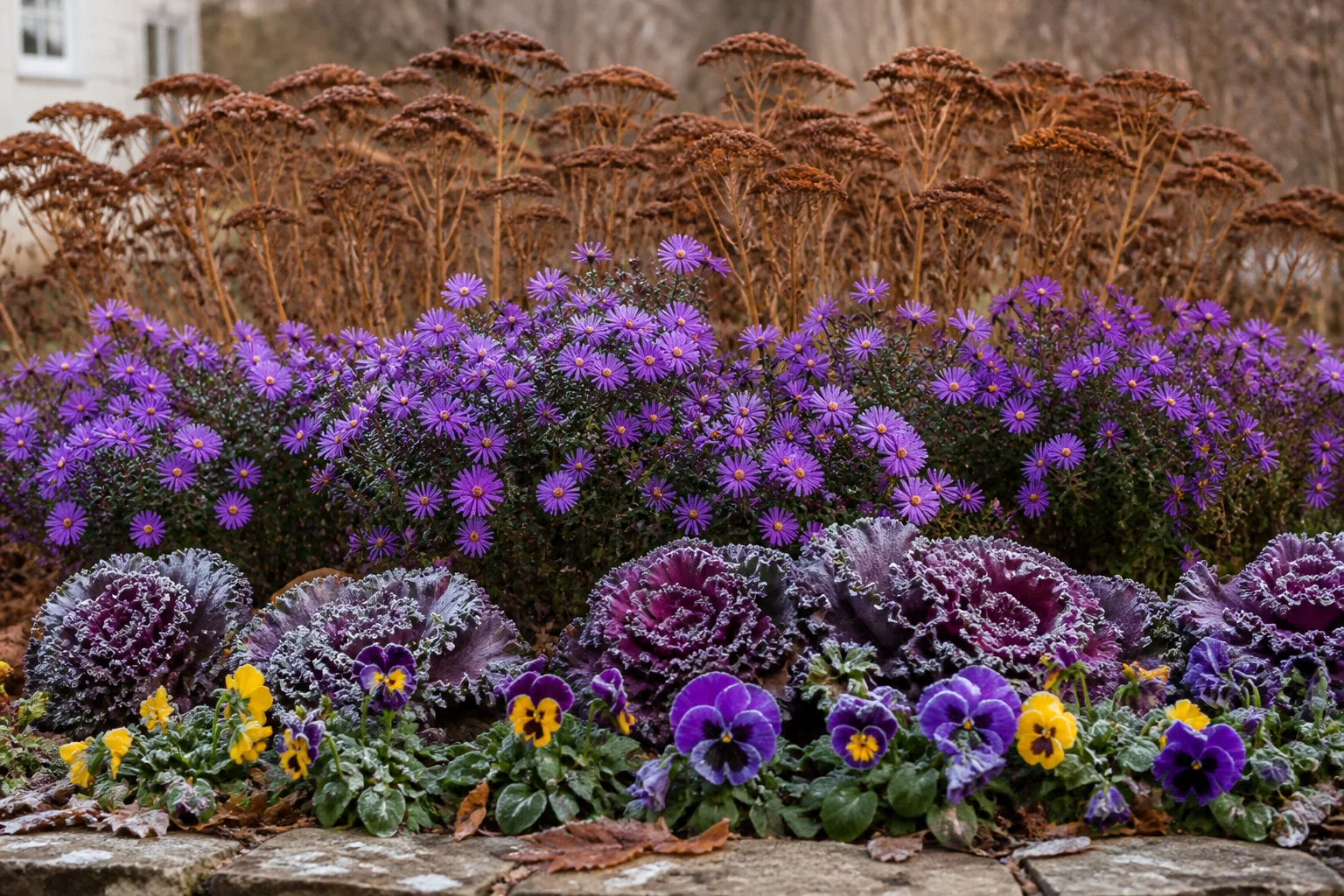
This plan delivers color from late August through the first hard freeze by layering plants that peak at different times. The back row holds sedum that starts blooming in late August while still green, then shifts to copper by October, the middle layer uses asters that bloom later than most varieties, and the front edge gets a mix of ornamental kale and pansies.
Space plants according to the mature width on their tags. Kale does not bloom, but cold weather can deepen its leaf color, so it can carry the front edge after some flowers fade. Water according to soil moisture and recent rain rather than the month on the calendar.
Planting and Soil Preparation
Fall-planted perennials want at least six weeks before the first expected frost, which gives roots time to settle without the stress of summer heat. The order you plant in matters as much as the date:
- Set every pot out in its final position first, and check the spacing against the mature width on the tag.
- Dig each hole twice as wide as the nursery pot and just as deep.
- Loosen the root ball before the plant goes in.
- Backfill with the soil you removed. Skip the potting mix, which can create a moisture barrier.
- Soak the root zone, then mulch, keeping the mulch clear of stems and crowns.
If your soil is heavy clay or very sandy, start with a soil test rather than adding the same amendment to every yard.
Timing by Zone
Check your local extension office for your area’s first expected frost date, then count back six to eight weeks to find your planting window. Annuals like pansies and violas can go in later because they do not need to establish a deep root system before winter.
Maintenance Through Fall and Winter
New plants need closer moisture checks than established ones, but the schedule depends on rain, temperature, drainage, and the species you chose. Check below the surface and water the root zone when it is drying, following local extension guidance for your soil and climate. Do not add late-season fertilizer unless a soil test or local guidance supports it.
Deadhead mums and asters when faded blooms make the display look tired, but leave sound sedum heads if you want winter structure. After a hard frost, remove collapsed or diseased growth and leave sturdy, healthy stems where they do not block paths.
Overwintering Perennials
Hardiness ratings are only a starting point; drainage, exposure, freeze-thaw cycles, and container growing can change winter survival. Check local extension guidance before adding winter mulch or choosing a cutback date, then clear old growth carefully before new shoots are damaged.
How to Choose Plants and Where to Buy Them
- Garden center timing: Stock arrives from late July through September, with best selection in August before inventory gets picked over
- Garden mums vs florist mums: Garden mums are usually sold as hardy perennials and florist mums as gift plants, so ask whether the variety you are buying is sold as winter-hardy where you live
- Where to find perennials: Asters, sedum, and grasses are usually sold in the perennial section year-round, with widest variety in late summer
- What to look for: Buy plants that look compact and healthy rather than ones already covered in flowers, because they establish faster and bloom longer once in the ground
- What to avoid: Skip anything with yellow leaves, mushy stems, or roots circling the bottom of the pot
- Special orders: If the nursery does not carry a suitable variety, ask whether it can order one and when it would arrive
Adapting Plans for Your Yard
If your yard gets five hours of sun instead of six, the full sun plan will still work but flowers may open a few days later and colors might be slightly less intense. Beds that get only morning sun can use the mixed light plan, while beds that get only afternoon sun should follow the shade plan because afternoon light is hotter and more intense. Small yards with no in-ground space can adapt any plan to containers by choosing pots at least twelve inches deep and grouping them so taller plants go in back.
Check with your local extension office about which plants perform best in your area and what adjustments to make for your climate. If deer browse your yard, replace asters with Russian sage and skip the pansies entirely; sedum and ornamental grasses are usually left alone.
Frequently Asked Questions
Can I plant these beds in spring instead of fall?
Perennials like asters, sedum, and grasses establish faster when planted in spring because they have a whole growing season to root in before winter. Annuals like pansies and violas are cool-season plants, so they perform best when planted in fall or very early spring. If you plant the perennial plans in April or May, they will bloom lightly the first fall and more heavily the second year.
How long do fall flower beds stay colorful?
- Most of these beds peak in September and October, then hold through the first few light frosts
- Pansies, violas, and ornamental kale keep going until temperatures drop into the teens
- Perennials like sedum and grasses add structure and dried seed heads that look good all winter
- Check your local extension office for typical frost dates in your area
Do I need to replace plants every year?
Perennials may return when the species, hardiness rating, soil drainage, and local winter conditions align. Pansies, violas, and garden mums behave differently across climates, so check the tag and local extension guidance before treating any of them as reliably annual or perennial.
What if my soil drains poorly?
Persistent saturated soil can damage many fall perennials, but the correction depends on why the water stays. Test the site after rain and seek local drainage or soil advice before adding amendments, mounding soil, or changing the grade.
Can I mix plants from different plans?
Combine plants only when their light, water, soil, and mature-space needs overlap. Use the actual plant tags because species and cultivars vary, even when the common names sound similar.
How do I keep these beds looking good next year?
Plan spring cleanup around local weather and the plants you chose. Remove damaged material carefully, divide a clump when crowding or a thinning center shows it needs attention, and replace only what failed or no longer suits the plan.
Getting Started
Pick the plan that matches your yard’s light and space, then make a list before visiting the nursery. Measure the bed, use mature widths to calculate quantities, and set everything out in its pot before planting so you can correct the spacing without buying extras by guesswork.
The first season gives you a useful preview of color and structure, even when perennials have not reached mature size. Photograph the bed, note gaps, and use that evidence for next year’s adjustments.
What to Read Next
- Fall Flower Beds With Color After Summer compares the three light conditions before you commit to one of these plans.
- Fall Flowers for Pots That Get Better in the Cold is the container version if your fall color lives on a porch instead of in a bed.
- 10 Easy Cottage Garden Perennials fills the gaps these plans leave once the asters and sedum finish.
- Shade Perennials That Flower goes deeper on plan 2 if your bed sits under a tree.