The first frost forecast can make every pot on the porch feel urgent. It isn’t. Start with the plants that cannot take frost, the food you still want to harvest, and the containers whose roots will spend winter above ground. Hardy perennials and cool-season vegetables can wait while you handle those three things.
This first frost checklist is sized for a porch, balcony, window box, or small garden. You will make seven decisions: check the real forecast, sort plants by cold tolerance, harvest, move what is portable, cover what is worth extending, protect container roots, and clean only what needs to go.
The same lookup works in spring. Our planting calendar covers how to find your last-frost date and count the weeks forward from it.
Read the Frost Advisory Before You Touch a Plant
An average first-frost date is a planning clue, not an appointment. NOAA’s climate normals can show when a freeze usually arrives, but the local National Weather Service forecast tells you whether tonight is the night to act.
| Forecast signal | What it usually means | Best small-garden response |
|---|---|---|
| Frost advisory, often 33°F to 36°F | Frost may form on exposed surfaces even though the standard air reading stays above 32°F | Move the most tender pots and cover sensitive plants you want to keep producing |
| Freeze warning, 32°F or lower | Tender annuals and warm-season vegetables may be badly damaged or killed | Harvest, move, or cover before evening; do not depend on a thin sheet for a long freeze |
| Hard freeze, 28°F or lower | Most seasonal plants are at serious risk | End the season for tender plants and switch from overnight protection to winter storage |
The National Weather Service also notes that frost and freeze are not the same thing. Frost can form when the official reading is in the mid-30s, while a freeze can happen without visible frost. Check the hourly low, how long the cold will last, wind, and whether your pots sit in a low or open spot.
1. Check the coldest corner first
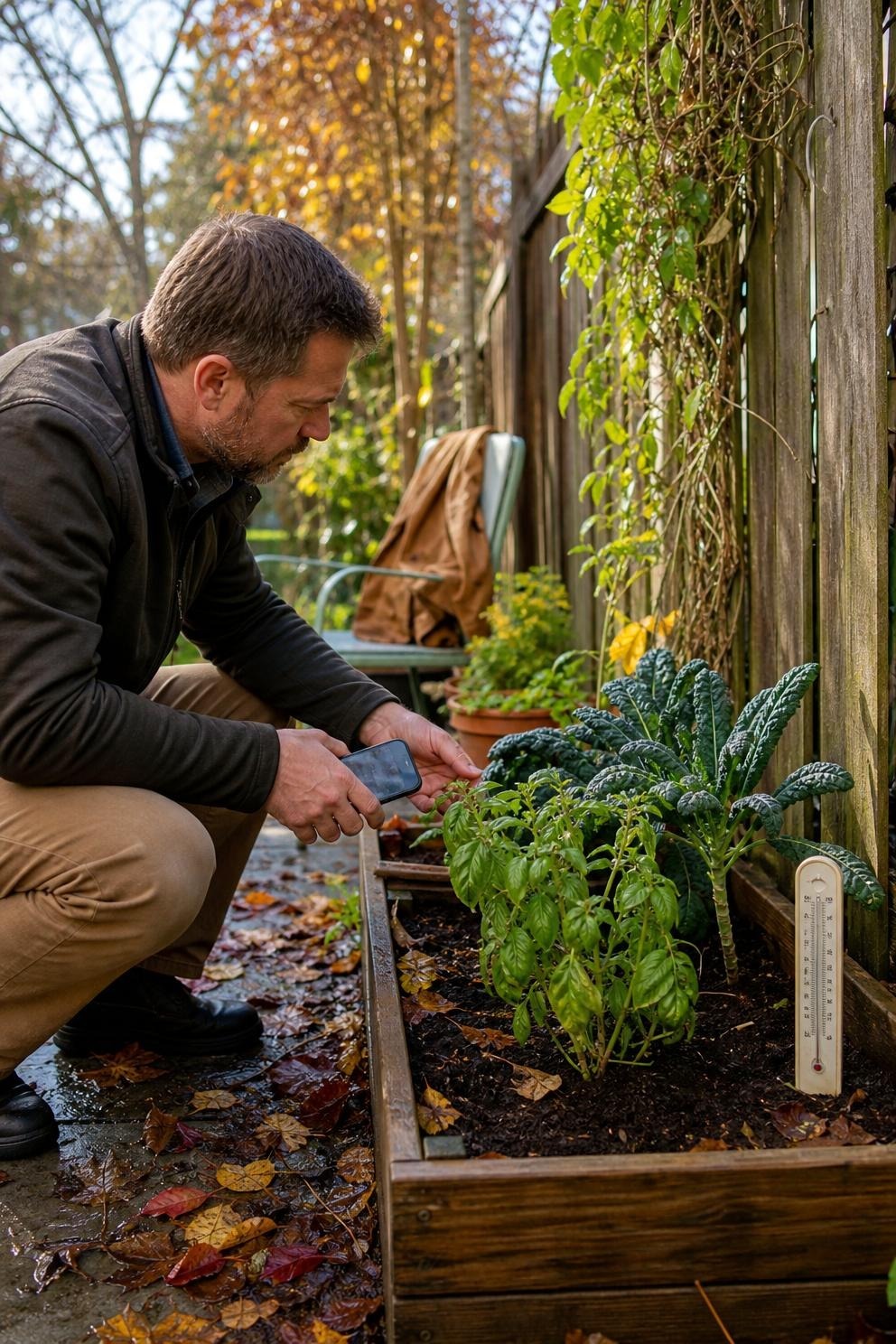
Walk the space once before you start moving anything. Low spots, open railings, rooftops, and clear views of the night sky can cool quickly. A sheltered wall may hold warmth longer. Two pots only a few yards apart can have different mornings.
Check these places first:
- A window box hanging away from the house
- A balcony corner exposed to wind
- Pots on metal, concrete, or stone
- A low end of a raised bed
- Plants beside a warm wall or under an overhang
Do not use your USDA zone as tonight’s forecast. The USDA Plant Hardiness Zone Map is based on average annual extreme winter lows. It helps with long-term perennial survival, but it does not tell you the first frost date or how cold one balcony will get tonight.
2. Sort Tender Annuals Into Move, Cover, or Leave
Make three groups instead of treating every plant like a crisis.
Move or harvest first: basil, coleus, impatiens, tropical foliage, tomatoes, peppers, eggplants, cucumbers, melons, beans, and summer squash. The University of Minnesota’s vegetable frost-tolerance guide places many of those warm-season crops in the no-frost group.
Cover if you want more time: flowering annuals that still look good, an almost-ripe crop, and cool-season plants in an unusually exposed box. A cover may buy a light-frost night. It does not turn a tender plant into a hardy one.
Leave outside: established hardy perennials, kale, cabbage, collards, spinach, arugula, radishes, and other plants suited to the predicted low. Cold tolerance still varies by variety, plant condition, and how long the temperature stays low, so keep the seed packet or plant label handy.
3. Harvest before you build a shelter
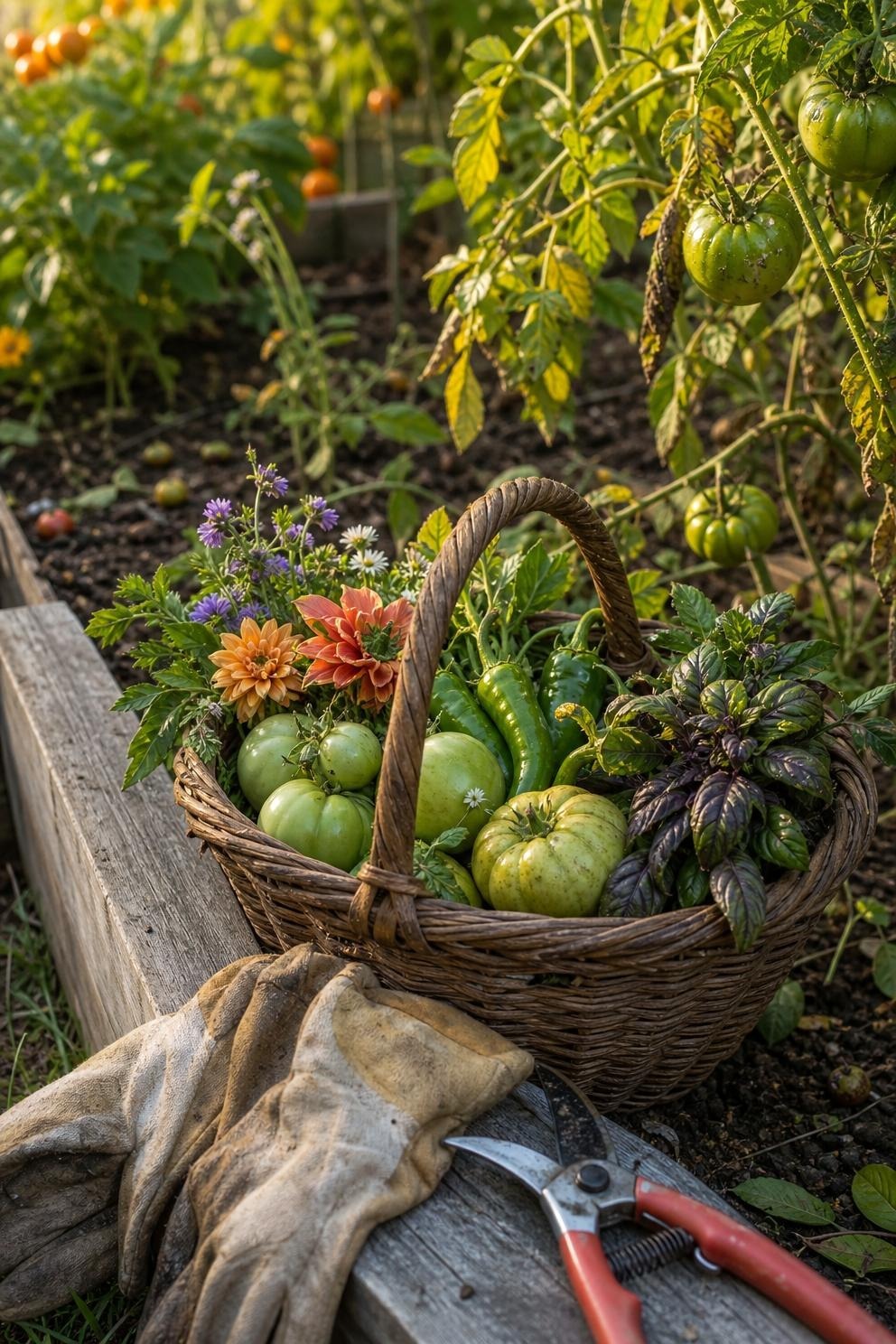
Harvesting is often faster than covering. Pick ripe tomatoes, peppers, beans, cucumbers, herbs, and cut flowers before the temperature drops. Bring in mature winter squash only if it is ready; immature fruit does not become fully mature just because frost is coming.
Decide what is worth one more week. A basil plant with clean leaves may deserve a final harvest. A tired tomato vine with two small green fruits may not deserve an elaborate tent.
For herbs you want to bring indoors, take a moderate harvest and check the whole plant for pests. Illinois Extension’s container herb guidance recommends acclimating herbs gradually in early fall and watching for aphids, spider mites, thrips, and whiteflies. A sunny indoor spot is not useful if the pot carries a pest problem with it.
4. Move portable pots before sunset
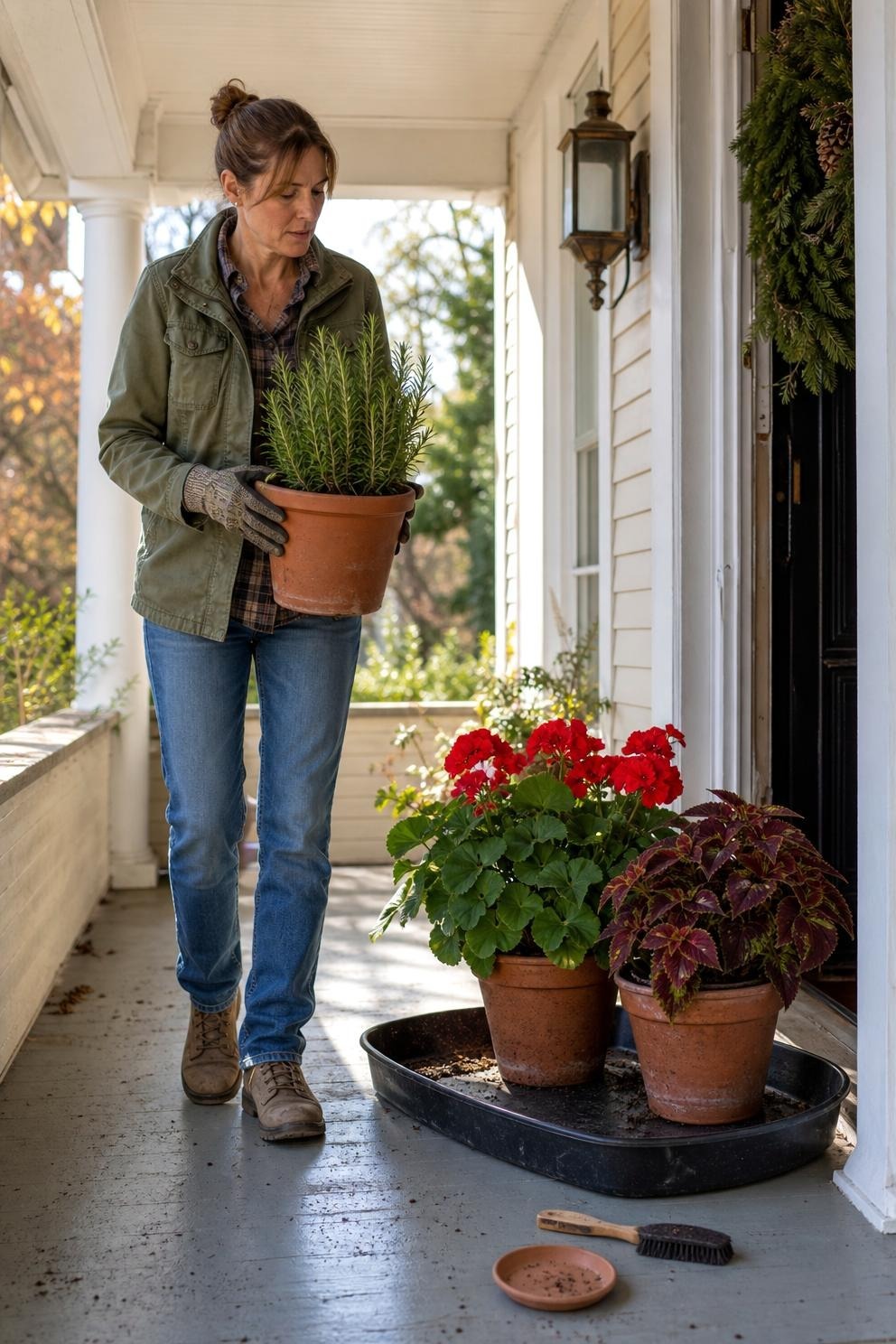
Bring tender houseplants and tropicals into their frost-free winter space. Move short-term plants into a garage, enclosed porch, or other protected place for the night. A dark garage works for a brief cold spell, not for weeks of active growth.
Before any plant enters the house:
- Check the undersides of leaves and where stems meet
- Remove dead leaves from the soil surface
- Wipe the outside and bottom of the pot
- Let excess water drain
- Keep newly moved plants away from the main houseplant group for a while
Group large outdoor containers close to a sheltered wall if they cannot be moved inside. Close grouping slows heat loss a little and makes wrapping easier, but it is not enough protection for a tender tropical during a hard freeze.
5. Water dry soil, then cover to the ground
If the soil is dry, water it earlier in the day and let foliage dry before evening. Do not soak an already wet container. The goal is evenly moist soil, not a waterlogged pot that will become colder and heavier.
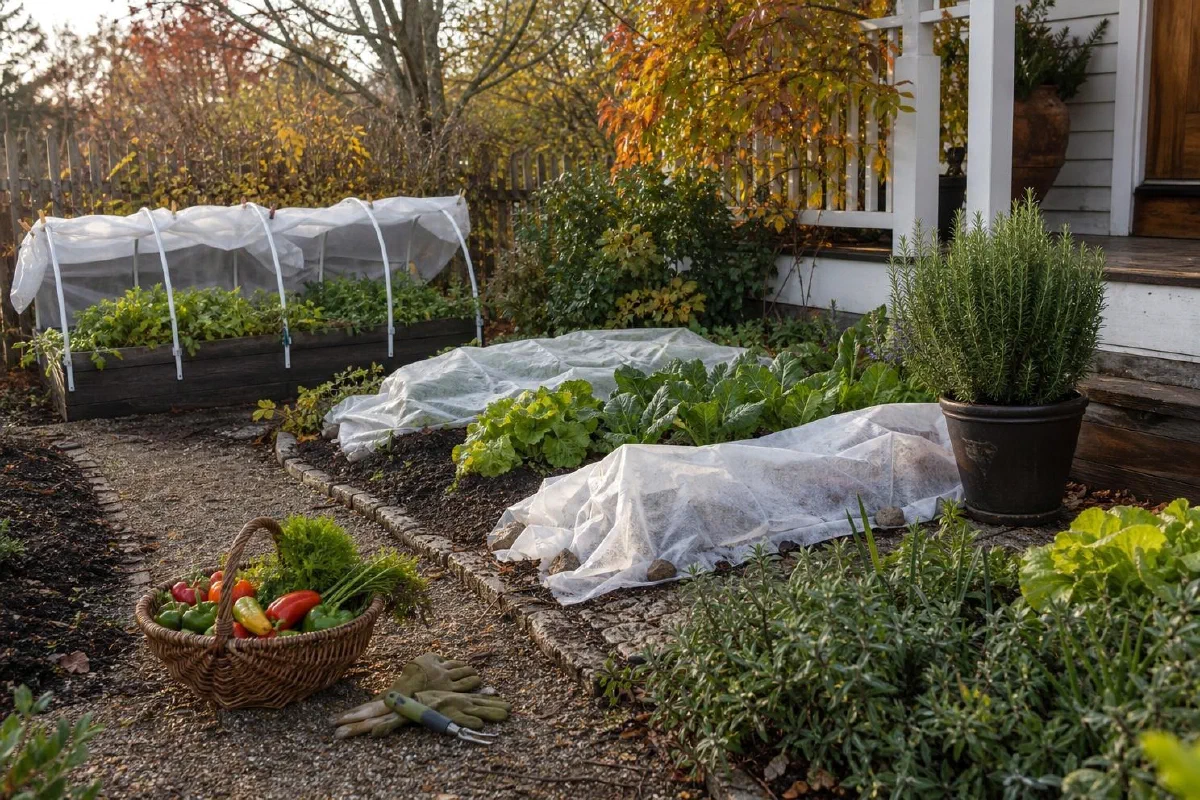
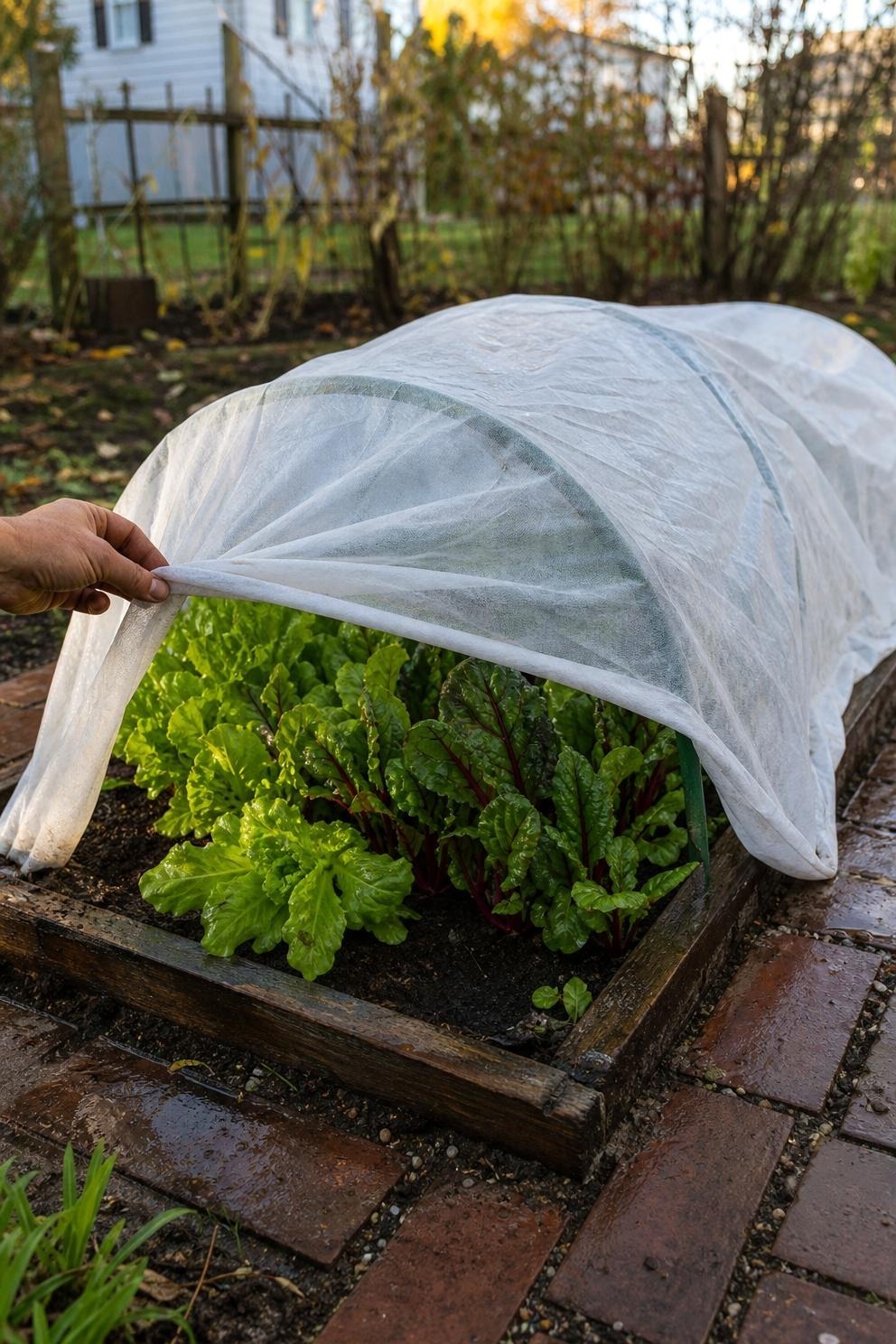
Cover plants before the temperature falls. Old sheets and purpose-made row cover both work for a light frost. Illinois Extension explains that hoops create an air gap, which adds insulation. Let the cover reach the soil on all sides and secure the edges so wind cannot lift it.
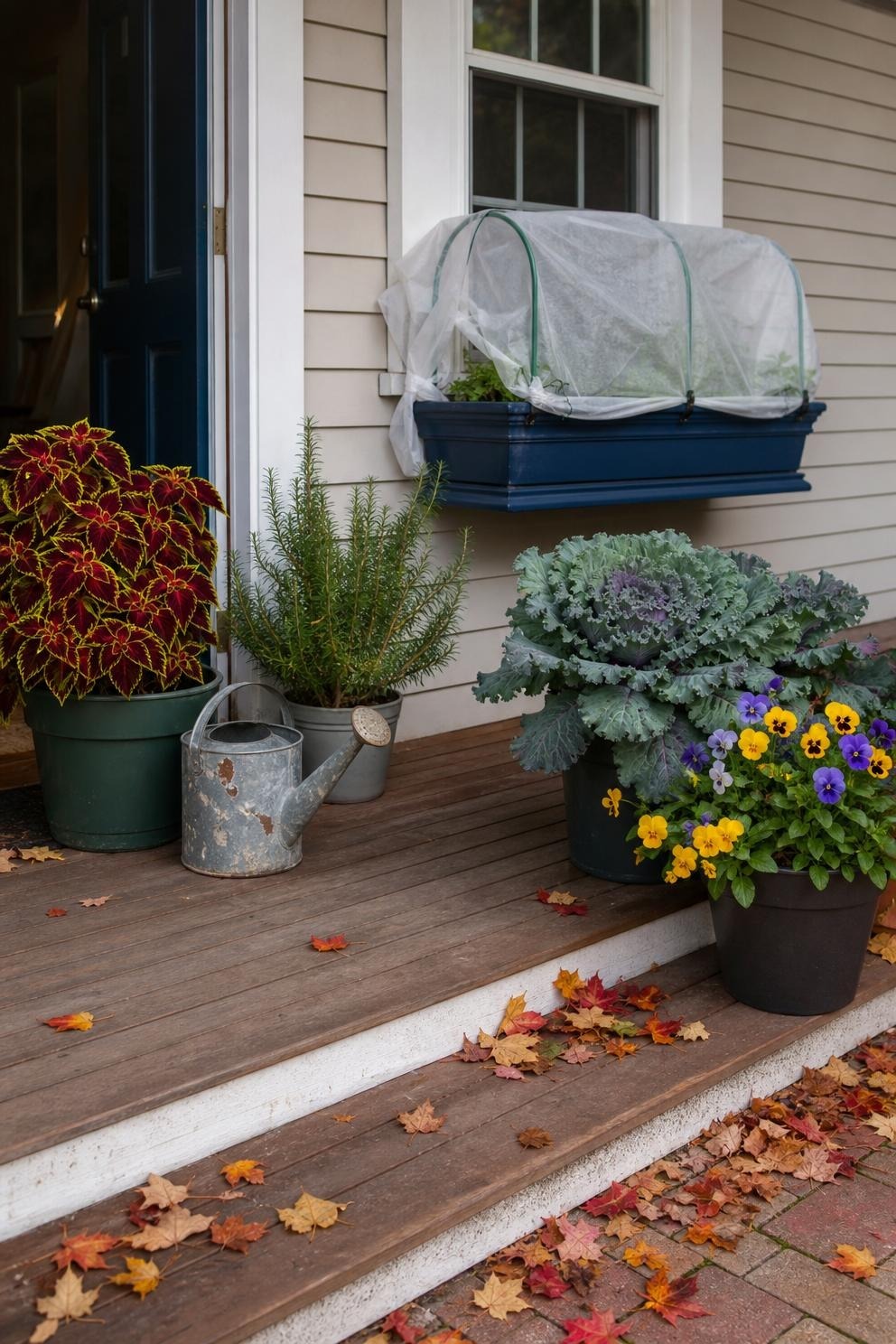
For a window box, use short hoops or stakes so the fabric does not crush the plants. For one pot, an upside-down basket under the sheet can create the same air space.
Avoid letting plastic touch leaves. Plastic can transfer cold at contact points and can heat quickly in sun, so it needs support and prompt daytime venting. Remove or open covers in the morning once temperatures rise.
6. Give every perennial pot a winter plan
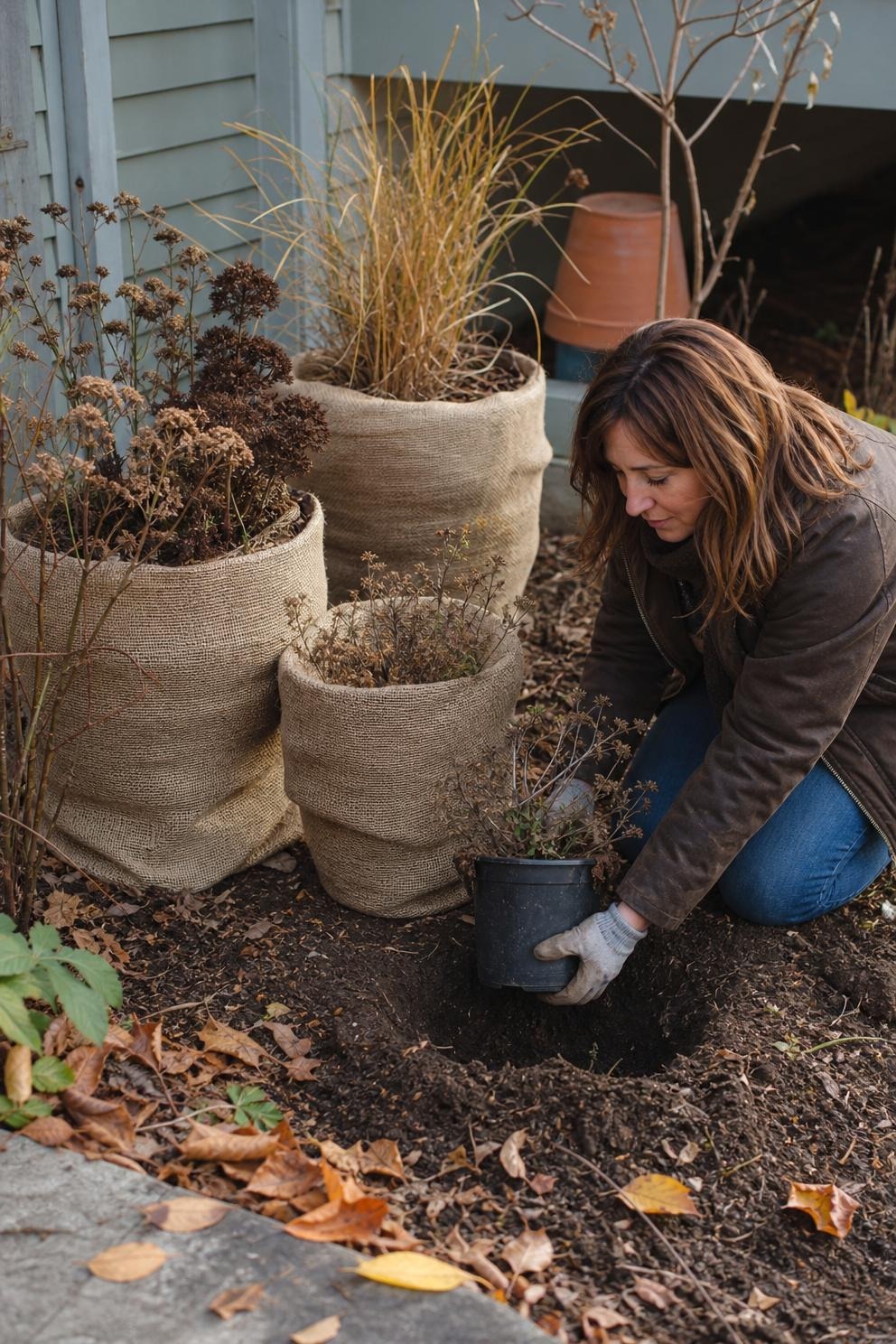
A hardy perennial in a pot is more exposed than the same plant in the ground. The root ball has only a few inches of potting mix between it and winter air. That is why a plant rated for your zone can still fail in an above-ground container.
Choose one plan before the soil freezes:
- Plant the perennial in the ground if there is enough time for it to settle in
- Sink the entire pot into a spare bed after dormancy
- Group and wrap a winter-safe container in a sheltered place
- Move it to a monitored unheated space that stays cold but not brutally cold
Iowa State Extension recommends burying container-grown perennials in the ground after dormancy and before the soil freezes. It also describes a protected space that stays roughly 20°F to 45°F as another option, though real garages can swing outside that range.
Pot material matters too. Penn State’s winter container guidance advises storing pottery and terracotta where freezing moisture will not crack them. Plastic and metal pots need open drainage holes so water does not freeze in the bottom.
7. Clean disease, not the whole season
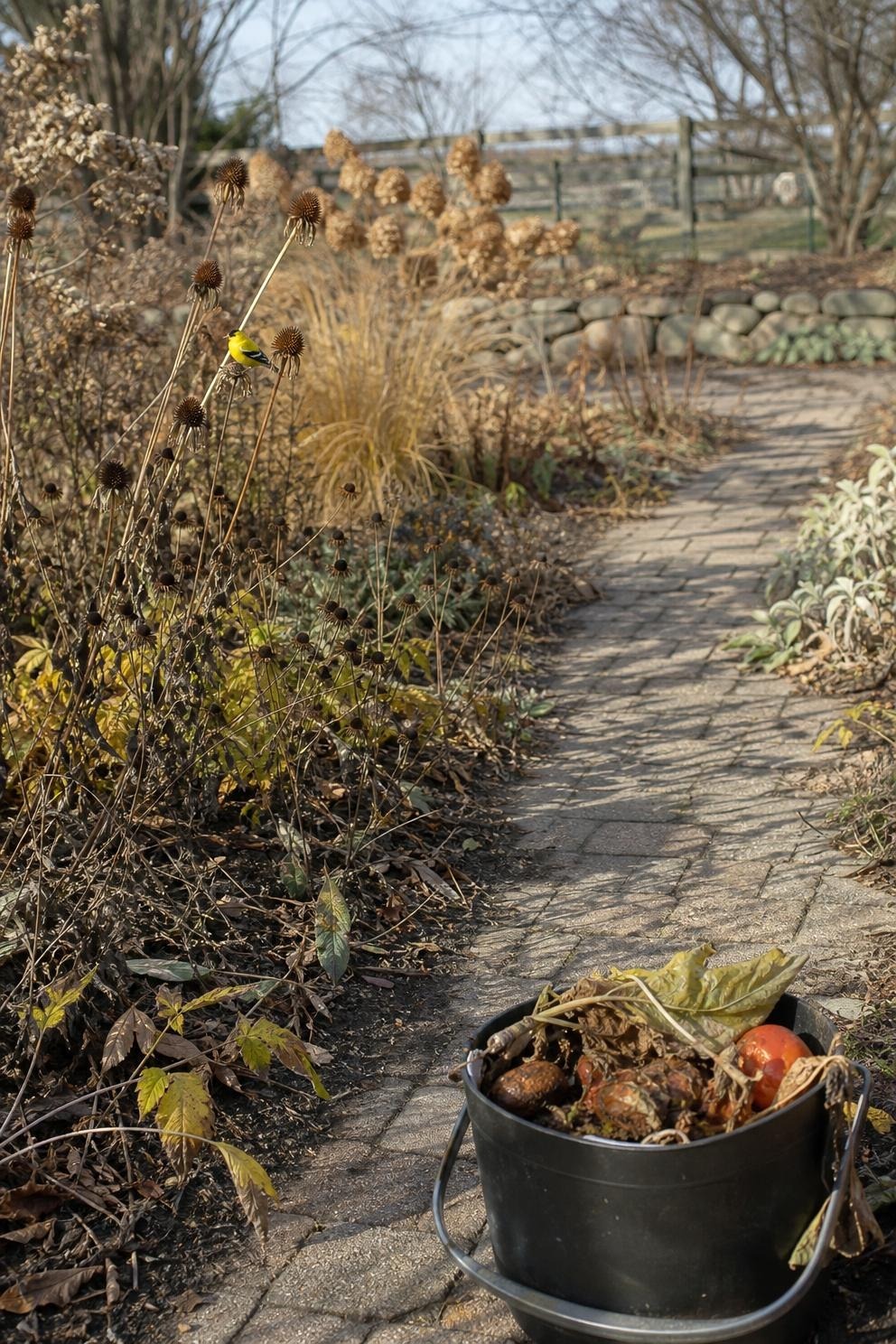
Remove confirmed diseased foliage, rotten vegetables, invasive seed heads, and slippery stems that block a step or path. Empty tender annuals that are finished. Drain hoses and small irrigation lines before trapped water freezes.
You do not need to cut every healthy perennial to the ground. Seed heads and sturdy stems can add winter structure and support birds and insects. Our bird-friendly fall garden guide has a fuller keep, cut, or move test for small beds.
If you plan to mulch hardy perennials, wait until the ground has frozen rather than piling a deep insulating layer onto warm soil. The University of Minnesota’s winter mulch guidance explains that mulch helps reduce damaging freeze-thaw swings after the soil is cold.
First Frost Setup: A 20-Minute Order for a Cold Evening
When time is short, do the jobs in this order:
- Pick the food and flowers you want to keep.
- Carry tender portable pots to shelter.
- Check indoor-bound plants for pests.
- Cover one or two high-value plants to the ground.
- Photograph the remaining containers and write down their winter plan for the weekend.
That is enough for tonight. Wrapping empty pots, cleaning tools, and rearranging the whole garden can wait for daylight.
After the first frost
Uncover protected plants once the air warms. If a tender plant has blackened, water-soaked leaves, wait until you can see the full damage before cutting. A brief frost may take the top growth while lower stems remain sound; a hard freeze usually ends the season for warm-weather annuals.
When a window box needs a new display after the damage is clear, the after-frost window-box setups compare what can stay and what needs replacing.
Keep checking container moisture until the potting mix freezes. Winter sun and wind can dry an exposed evergreen or perennial pot even when growth has stopped. Water only when the mix is dry and temperatures allow water to drain rather than freeze around the roots.
Most of all, update the checklist with what happened in your own space. Note the official low, which corner frosted first, which cover stayed put, and which pot material cracked or survived. That short record will be more useful next fall than a national calendar date.
What to Read Next
- Fall Flowers for Pots explains which cool-season flowers can replace tired summer annuals and keep a porch pot going into colder weather.
- Perennials for Shallow Window Boxes helps you choose plants whose roots and mature size suit a narrow box before next year’s planting season.
- Plants That Feed Birds Through Fall and Winter gives the next planting ideas if you want the standing winter garden to do more than look tidy.
- Fall Flower Beds With Color After Summer is useful when you are planning a bed that does not collapse into one empty week after the first cold night.
- When to Plant Spring Bulbs Before the Ground Freezes uses the same soil-temperature check as this checklist, so both jobs can share one afternoon in the garden.