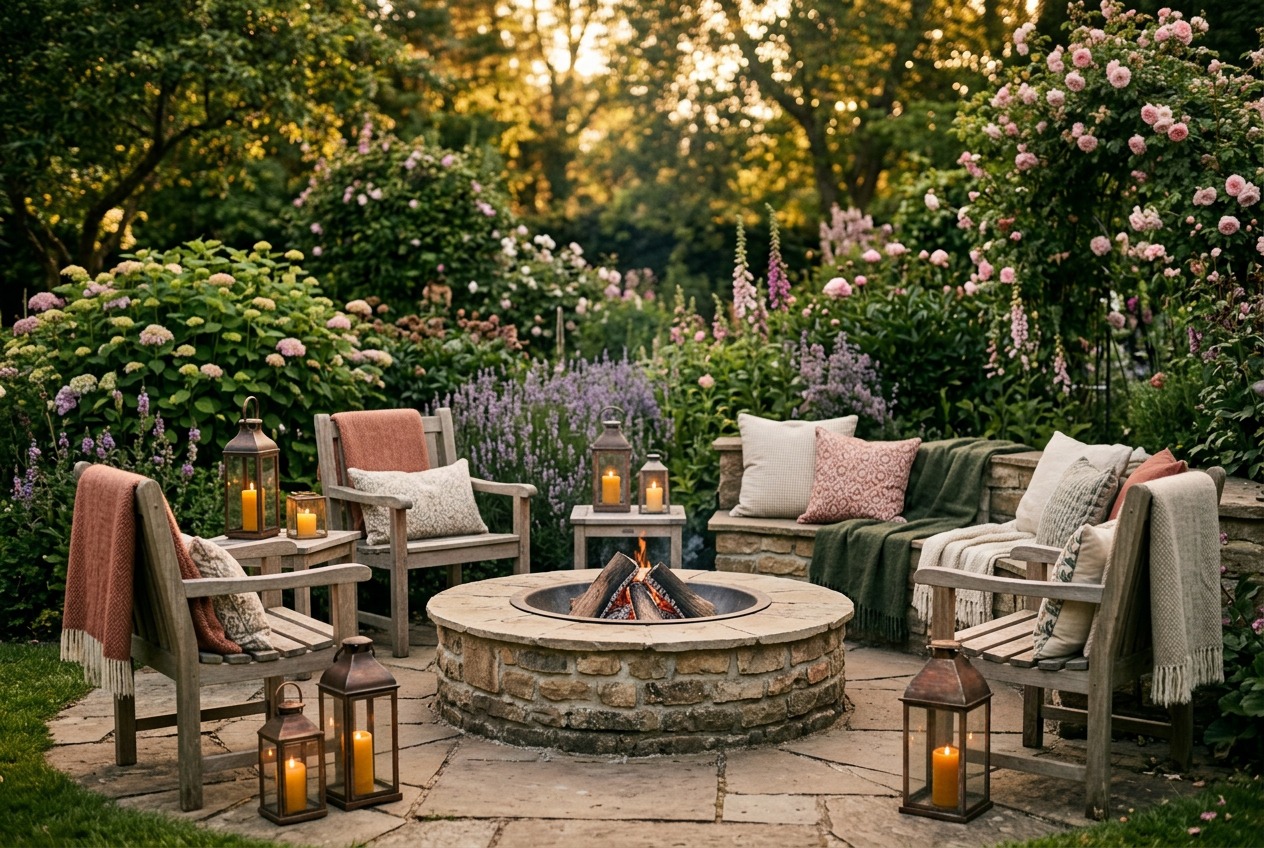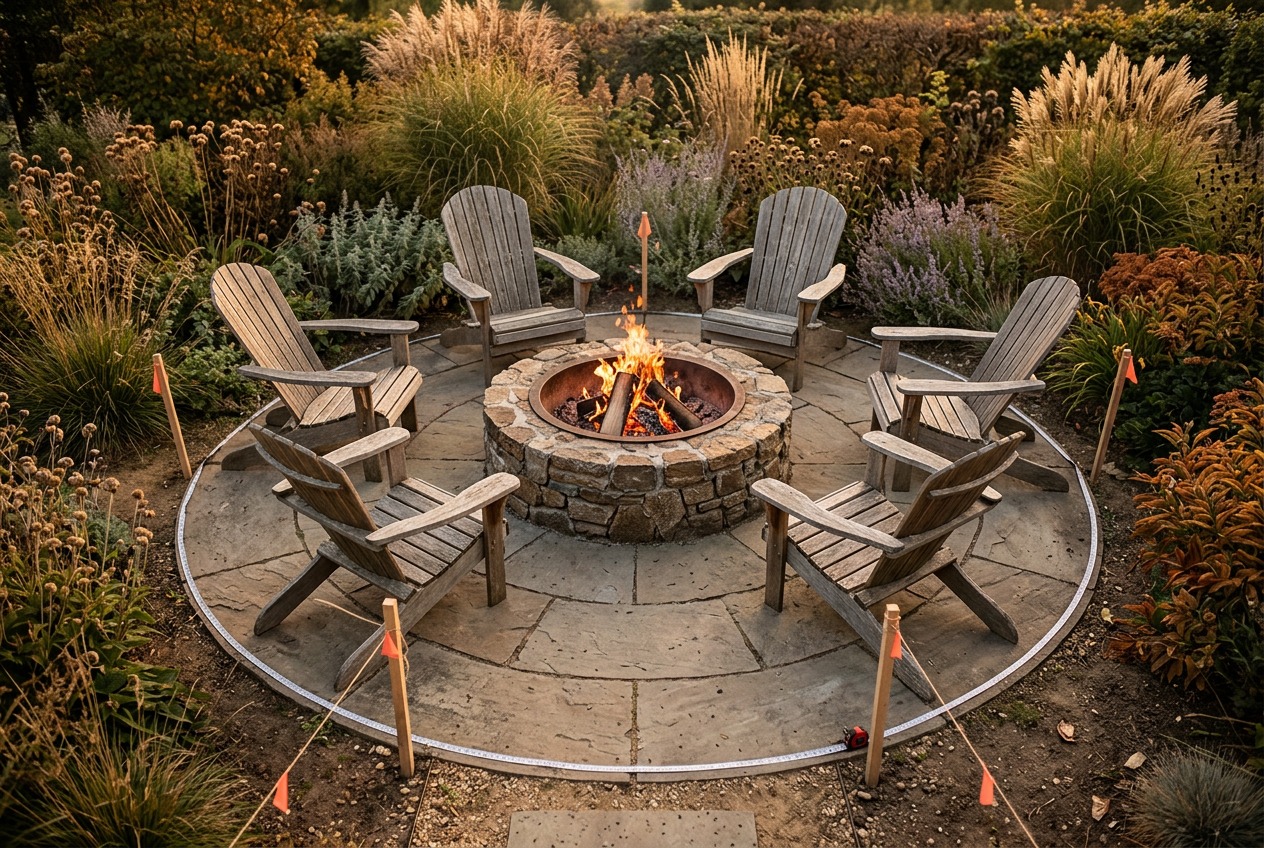
A fire pit seating area for 6-8 people needs a 15 to 20 foot diameter circle. That includes the fire pit itself (3-4 feet), a safety ring (2-3 feet from pit edge to chair front legs), the chairs (2 feet deep), and a walkway behind the chairs (3 feet minimum). Smaller groups of 4 can work in 12-14 feet. Larger gatherings of 10-12 need 22-25 feet.
What You Need
| Item | Measurement | Notes |
|---|---|---|
| Fire pit diameter | 36-48 inches | Wood-burning pits run larger; propane models are more compact |
| Safety clearance | 24-36 inches | From pit edge to nearest chair leg |
| Chair depth | 24-30 inches | Adirondack chairs are deeper than metal bistro chairs |
| Chair spacing | 30-36 inches | Center-to-center measurement between seats |
| Walkway width | 36-42 inches | Behind chairs for people to pass through |
| Overhead clearance | 21 feet minimum | Required by most fire codes for tree branches |
| Distance to structures | 10-25 feet | Check local codes; some require 25 feet from house |
You also need level ground or pavers. A 2% slope is the maximum safe grade for chair stability.
How to Do It
Mark the fire pit center. Drive a stake or use spray paint. This is your reference point for all measurements.
Measure your safety ring. Add 24 inches minimum from the pit’s outer edge. For wood-burning pits that throw sparks, use 36 inches. Mark this circle with landscape paint or a garden hose.
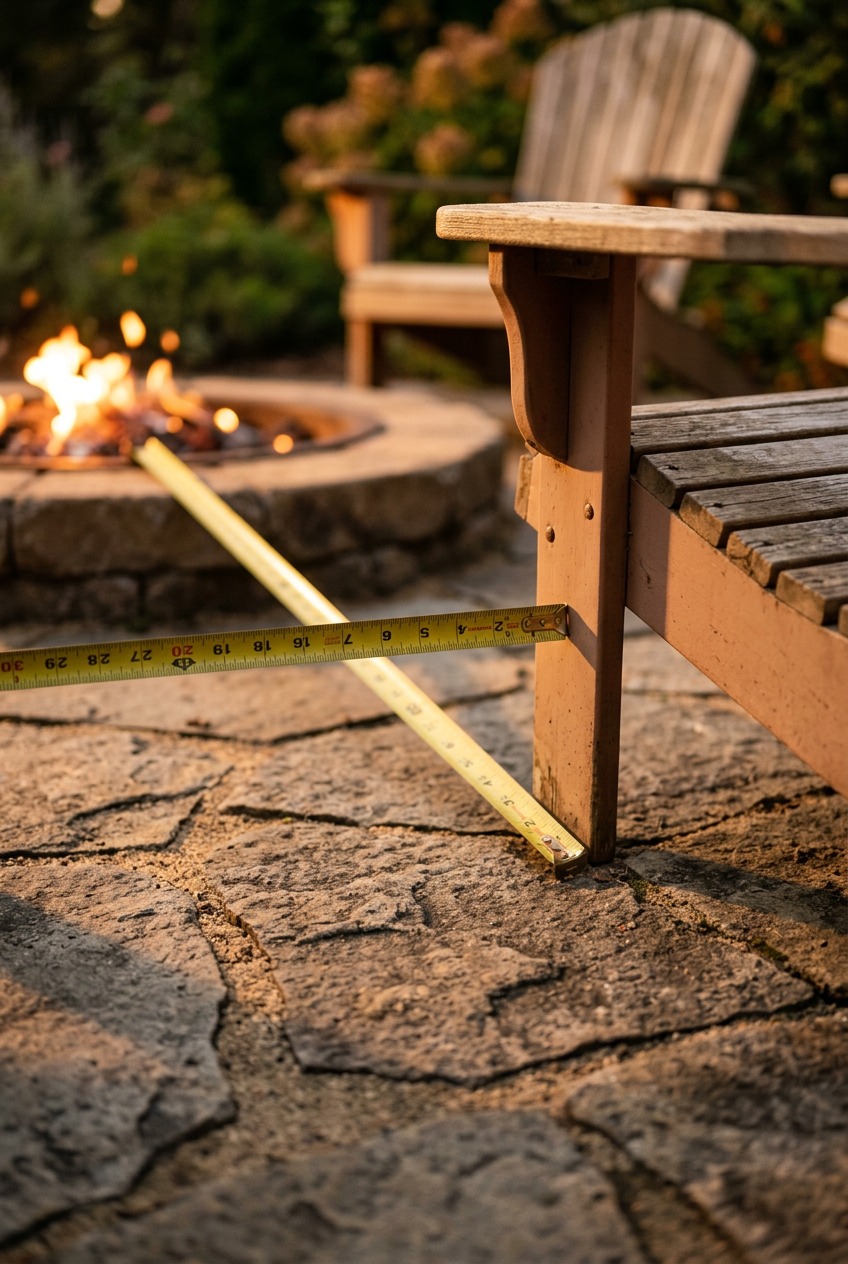
Place your first chair. Set it at the safety ring line. Measure 24-30 inches from the back of the chair outward. This is where your walkway begins.
Calculate chair positions. For 6 chairs around a circle, divide 360 degrees by 6. That’s 60 degrees between each chair center. Use a protractor or a string compass to mark these points.
Test walkway clearance. Stand behind a chair and extend your arms. You need 36 inches minimum to pass comfortably. If someone is sitting, 42 inches is better.
Measure to property lines. Most codes require 10 feet from fences, 15 feet from wood structures, 25 feet from your house. Check with your city building department before you dig.
Quick Tip: Use a 50-foot measuring tape and two people. One holds the center stake, the other walks the perimeter marking chair spots with flags. Adjust before you buy materials.
What to Watch For
Uneven ground throws off your measurements. A 3-inch dip under one chair leg makes that seat unusable. Level the area before you measure, or plan to use pavers with sand leveling.
Wind direction changes your layout. If prevailing winds blow smoke toward the house, rotate your seating 90 degrees so smoke exits over the yard. I placed my pit downwind of the deck and spent two seasons moving chairs every time we lit a fire.
Trees drop embers back into the seating area. Measure up, not just out. A low oak branch 12 feet overhead will catch sparks. The 21-foot clearance rule exists because embers rise, cool, and fall back down.
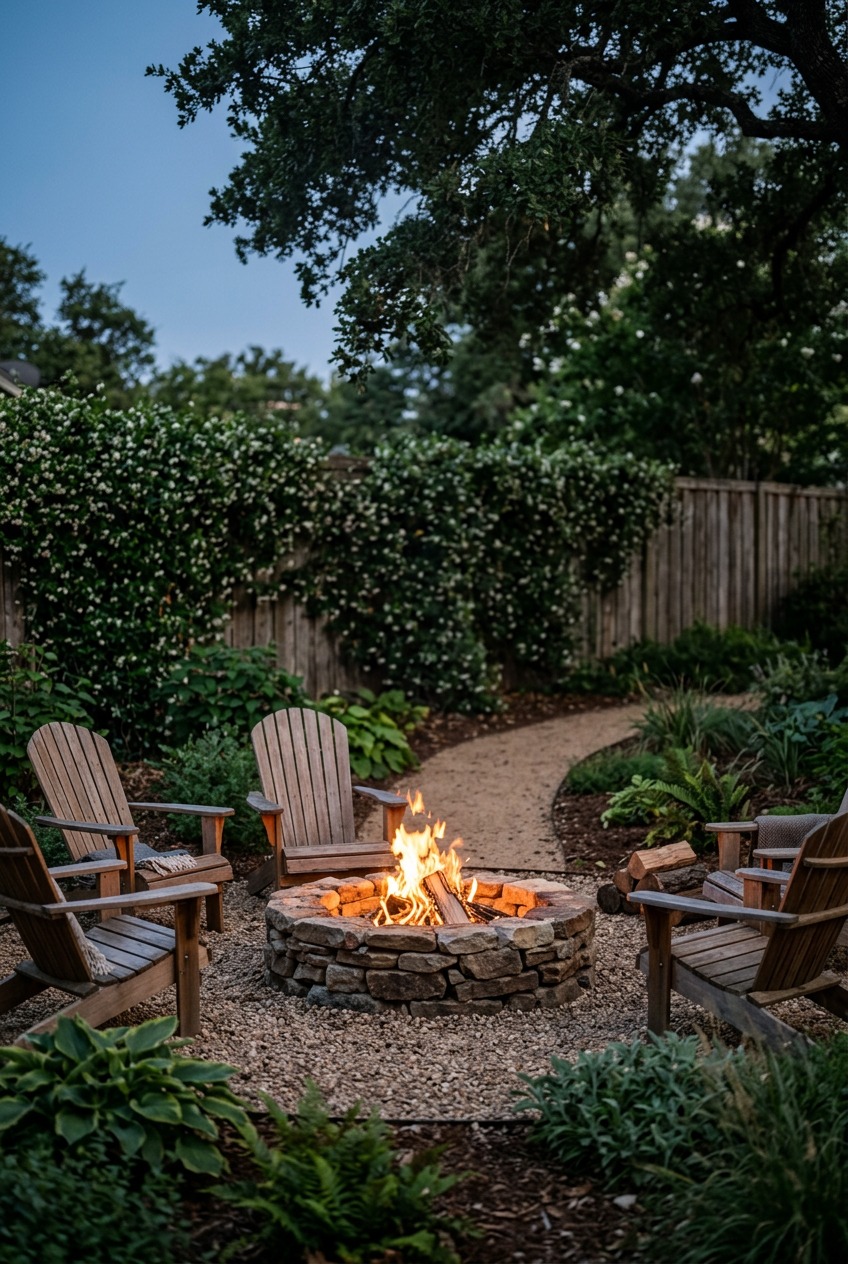
From my experience: I built my first fire pit with 18 inches between the pit and chairs because it looked cozy in the sketch. The heat was unbearable. At 30 inches, you can feel warmth without sweating through your shirt. At 36 inches, you need the fire on a cold night but it’s comfortable in fall.
Make It Your Own
For 4 people, a 12-foot diameter works. You can tighten the safety ring to 24 inches and use smaller bistro chairs (20 inches deep). Total space: 12 x 12 feet.
For 10-12 people, go to 22-25 feet diameter. You’ll need two walkway breaks (gaps with no chairs) so people can enter and exit without climbing over seats. Each gap should be 4-5 feet wide.
If your yard is narrow, use a linear layout instead of a circle. Place the fire pit on one long side with seating in a semicircle or L-shape. You lose some seats but gain flexibility in tight spaces.
Gravel bases are cheaper than pavers but harder to level. Budget $150-200 for a 15-foot diameter gravel pad (4 inches deep, compacted). Pavers cost $400-600 for the same area but stay level for years.

Before You Start
Check local fire codes before you measure anything. Some cities ban wood-burning fire pits entirely. Others require permits for permanent installations. Propane pits usually have fewer restrictions but still need setback distances.
Consider your fuel source. Wood-burning pits need storage space for logs within 10-15 feet of the pit. That adds another 4 x 4 foot area to your layout. Propane pits need access for a 20-pound tank, either hidden in a base or tucked beside a chair.
Think about lighting after dark. You’ll want path lights along walkways and low-voltage lights near chairs. Plan conduit runs before you lay pavers. I added lights as an afterthought and had to trench through finished gravel.
FAQ
How far should chairs be from a 36-inch fire pit?
Place chair front legs 30 inches from the pit’s outer edge for wood-burning fires, 24 inches for propane. That puts you 4.5 to 5 feet from the flame center, close enough for heat without sparks landing on clothing.
Can I fit 8 chairs around a 48-inch fire pit?
Yes, if you use a 20-foot diameter layout. Each chair gets 7.85 feet of arc space (circumference divided by 8). With 24-inch-wide chairs, you’ll have 6-10 inches between armrests, enough to avoid crowding.
What if my yard is only 18 feet wide?
Use a semicircle or three-quarter circle layout. Place the fire pit along one edge with seating wrapping 180-270 degrees around it. You’ll seat 4-6 people in a 12 x 18 foot space instead of a full circle.
How much does it cost to build a fire pit seating area?
Budget $800-1,500 for a DIY 15-foot diameter area. That includes a $200-300 steel fire pit, $400-600 in pavers or gravel, $150 for sand base, and $50-100 for edging. Pre-made fire pit kits with seating walls cost $2,000-4,000 installed.
Do I need a permit for a backyard fire pit?
Most cities require permits for permanent in-ground pits or those with built seating walls. Portable above-ground pits under 48 inches usually don’t need permits but must follow setback rules (10-25 feet from structures). Call your local building department with your planned dimensions before you start.