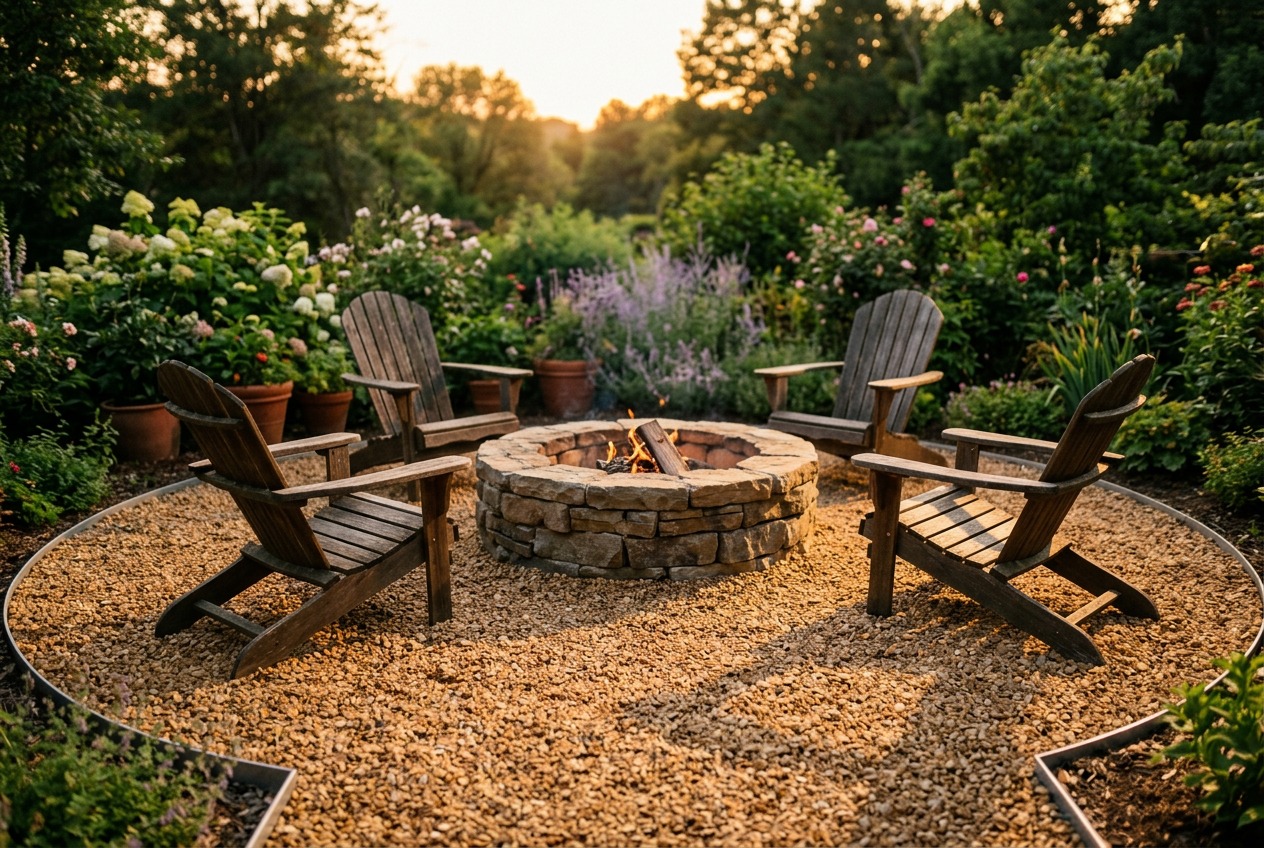
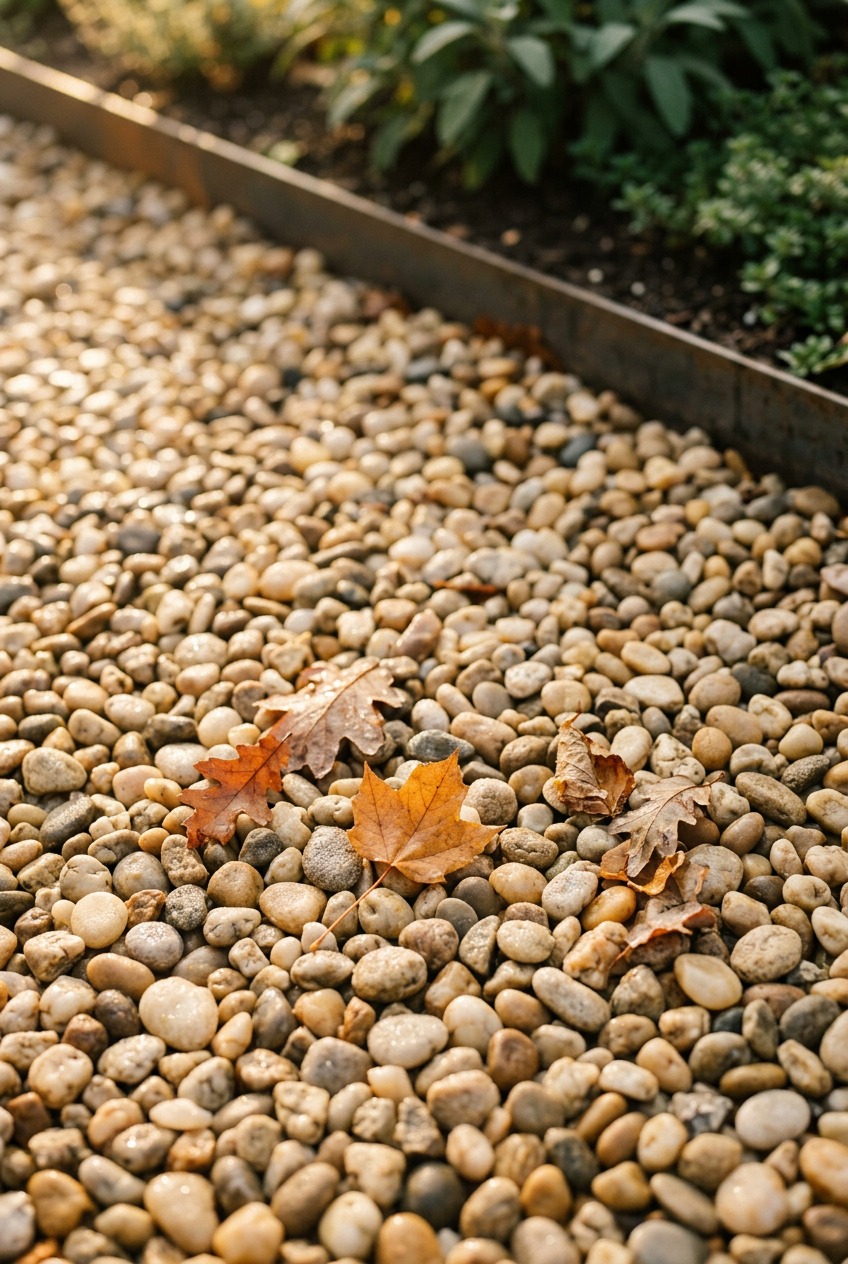
Pea gravel works best for most fire pit seating areas because it drains in under 30 minutes after rain, costs $30-50 per ton, and stays cool enough to walk on barefoot within an hour of the fire going out. You’ll need 3-4 inches of gravel over landscape fabric for a stable base that won’t shift under chairs.
What You Need
| Material | Cost per Ton | Coverage (3" depth) | Best For |
|---|---|---|---|
| Pea gravel (3/8") | $30-50 | 80 sq ft | Most fire pits, foot traffic |
| Crushed granite | $40-65 | 80 sq ft | High traffic, compacts firm |
| River rock (1-2") | $60-90 | 70 sq ft | Decorative, low traffic |
| Lava rock | $80-120 | 90 sq ft | Heat resistance, drainage |
| Decomposed granite | $35-55 | 85 sq ft | Compacts hard, dusty |
For a 12-foot diameter seating area (113 sq ft), you’ll need:
- 1.5 tons of gravel (3-4" depth)
- Landscape fabric: $25-40 for 100 sq ft roll
- Steel or aluminum edging: $2-4 per linear foot (38 feet needed)
- Compactable base (optional): $25 per ton if soil is soft
How to Do It
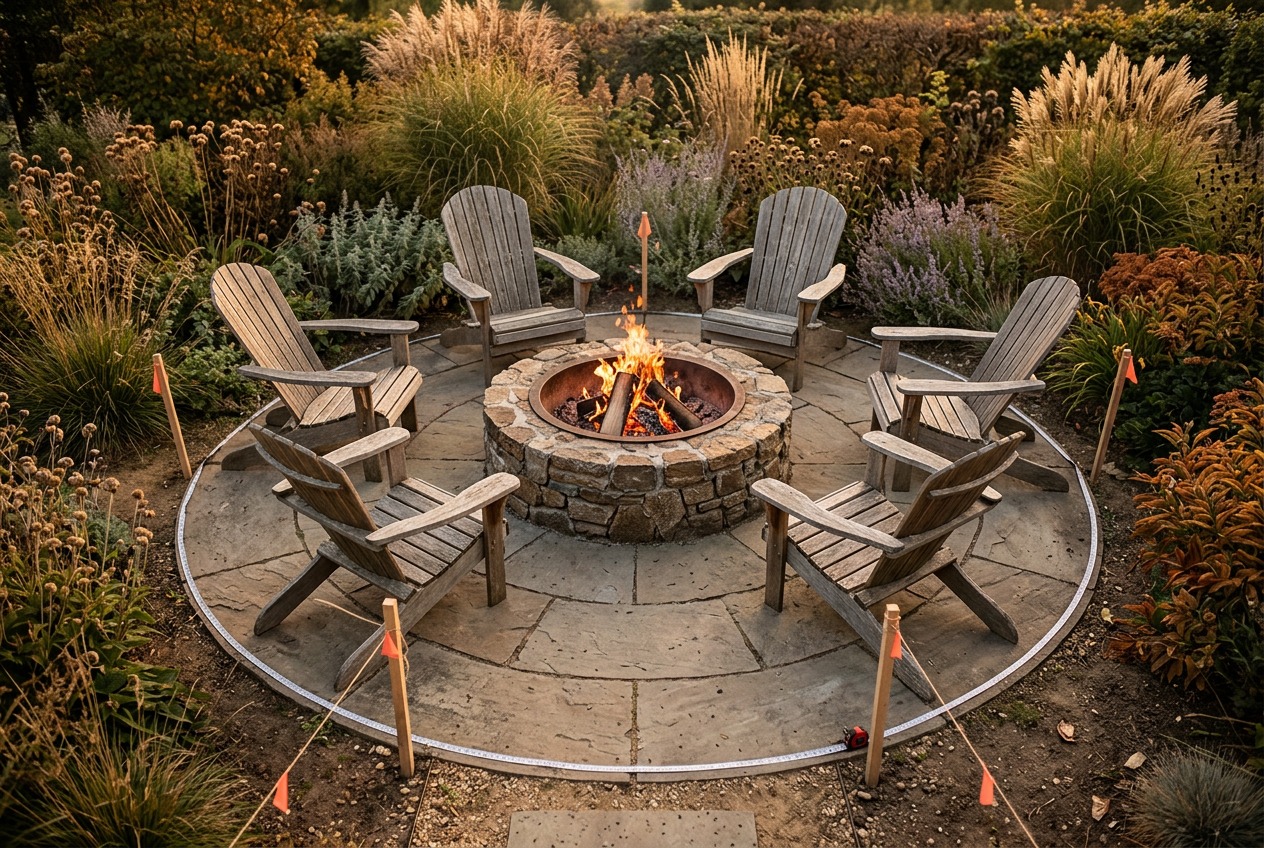
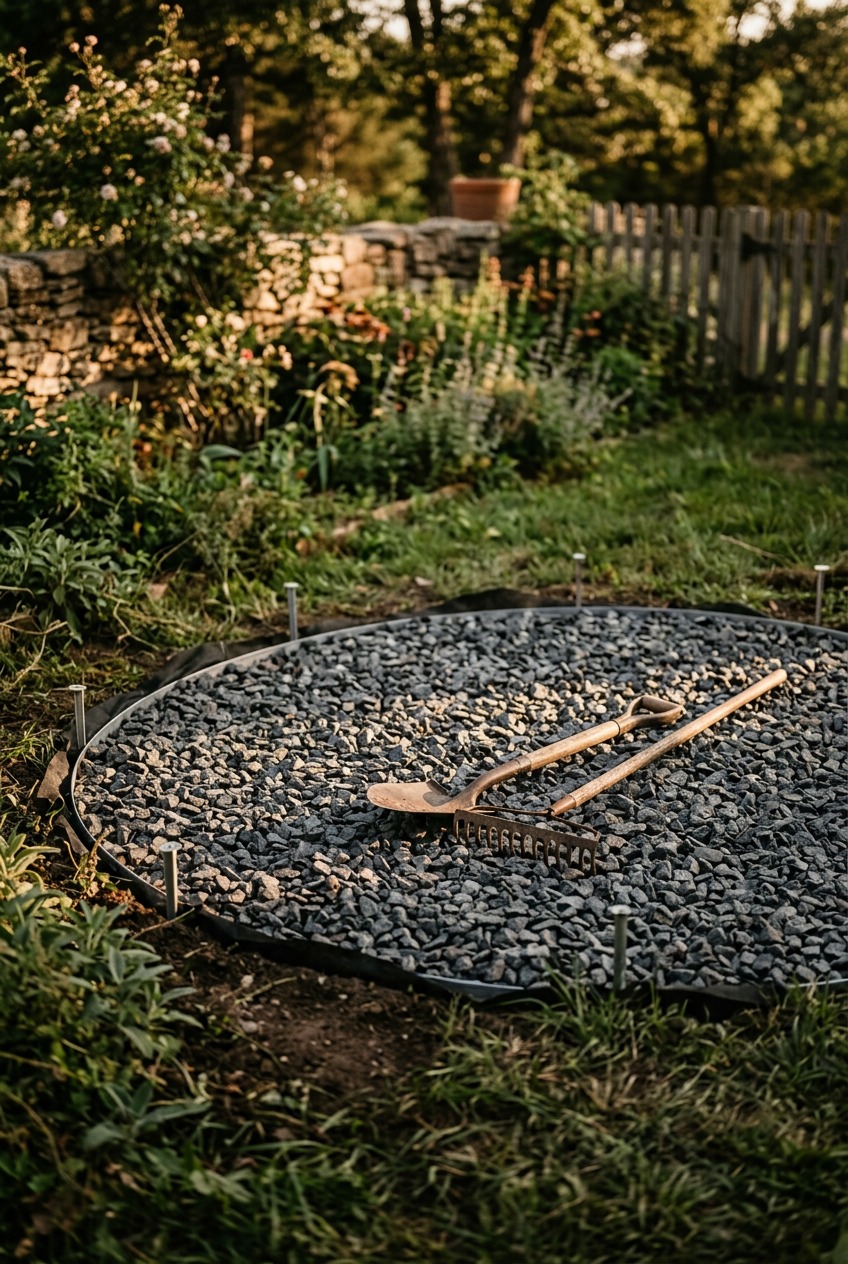
Mark and excavate the area. Spray paint a circle 12-14 feet across (6-7 foot radius from fire pit center). Dig down 4-5 inches. Remove grass, roots, and soft topsoil. Slope the base 1 inch per 10 feet away from the fire pit for drainage.
Install edging first. Pound stakes every 3 feet around the perimeter. Attach steel edging with screws or use aluminum coil stock bent to shape. The top edge should sit 1 inch above final gravel level to contain stones.
Lay landscape fabric. Overlap seams by 6 inches. Pin with landscape staples every 2 feet. This stops weeds but lets water through. Skip the fabric if you’re using decomposed granite (it needs to bond with soil).
Spread base layer. Pour 2 inches of your chosen gravel. Rake level. Walk over it or use a hand tamper to settle stones. Check for low spots where water would pool.
Add top layer. Spread final 1-2 inches of gravel. Rake smooth. Water lightly with a hose to settle dust (except lava rock, which floats). The surface should be level with the bottom of your edging.
Quick Tip: Order 10% extra gravel. Stones settle and migrate, especially in the first season. You’ll top off bare spots in spring.
5 Gravel Types Compared
Pea Gravel (3/8 inch)
Round stones the size of peas. Drains fastest of any option. Stays loose, so chairs rock slightly but don’t sink. Comes in tan, white, or mixed colors. Best all-around choice for Zones 3-9. Doesn’t compact, which means it shifts under heavy furniture. Add a paver under each chair leg if you have wrought iron seating.
Crushed Granite
Angular stones that lock together when compacted. Creates a firm surface that chairs don’t sink into. Dusty until it rains the first time. Common in Zones 7-10 where it’s locally quarried. Drains slower than pea gravel but faster than decomposed granite. Gray, tan, or reddish depending on your region.
River Rock (1-2 inches)
Smooth, rounded stones larger than pea gravel. Looks polished. Terrible for walking barefoot because stones roll under your feet. Use this only if the seating area gets light traffic and you want a decorative look. Drains well but stones migrate out of the fire pit area within one season. Needs edging maintenance every spring.
Lava Rock
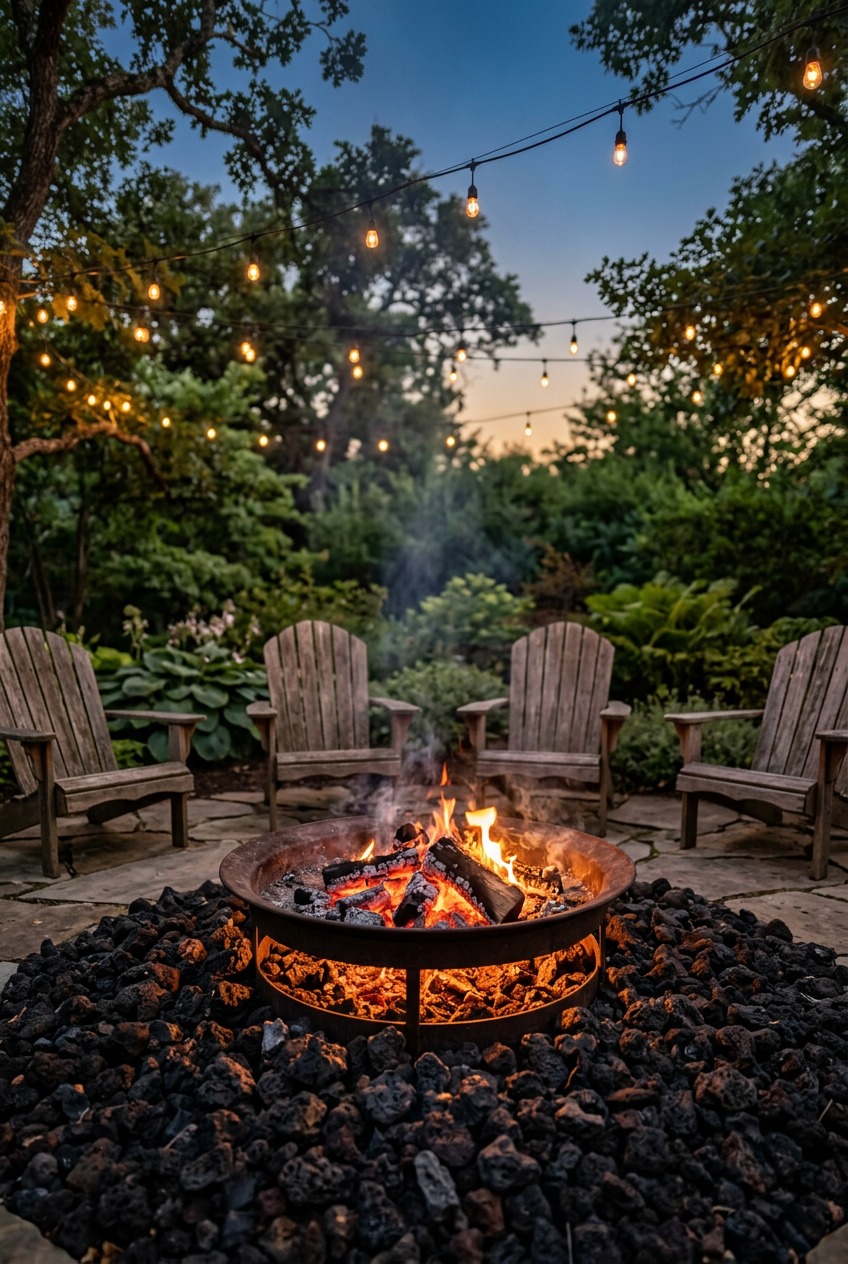
Porous volcanic rock, red or black. Lightest option (weighs half as much as river rock per cubic foot). Drains instantly because it’s full of air pockets. Reflects heat back toward the fire, which makes the seating area warmer on cold nights. Sharp edges when new. Rounds off after one season of foot traffic. Expensive but lasts 20+ years without replacement. Best in Zones 4-8 where freeze-thaw cycles would crack denser stone.
From my experience: I used lava rock around a fire pit in Zone 5 and it stayed completely stable through three winters. No cracking, no shifting. The black color hides soot and ash better than tan pea gravel, which shows every spill.
Decomposed Granite (DG)
Granite crushed to sand-sized particles. Compacts into a surface as hard as concrete when wet and tamped. Popular in California and the Southwest (Zones 8-10). Dusty in summer, muddy after rain until it dries. No landscape fabric needed because DG bonds with the soil below. Cheapest option per ton but requires the most labor to install correctly. Reapply stabilizer every 2-3 years or it erodes.
What to Watch For
Heat retention. Dark stones (black lava rock, dark river rock) stay hot 2-3 hours after the fire dies. Light-colored pea gravel or tan granite cools in under an hour. Test with your hand before letting kids or dogs run through the area.
Weed growth. Landscape fabric stops 90% of weeds but not 100%. Spray emerged weeds with vinegar (20% acetic acid) in early spring. Don’t use Roundup near fire pits because the heat can release residual chemicals into the air.
Stone migration. Gravel spreads beyond the edging over time. You’ll rake stones back toward the center every few months. Crushed granite and decomposed granite migrate the least. River rock migrates the most.
Make It Your Own
For heavy clay soil (common in Zones 5-7): Add a 2-inch base layer of 3/4-inch crushed stone under the landscape fabric. This creates a drainage channel so water doesn’t pool on top of the clay. Costs an extra $20-30 per ton.
For sandy soil (Zones 8-10): Skip the landscape fabric. Gravel will settle into sand naturally and lock in place. You’ll use 20% less gravel because there’s no fabric layer lifting stones above the soil line.
For high-traffic areas: Use crushed granite or decomposed granite. Compact every layer with a plate compactor (rent for $60/day). Creates a surface firm enough for rolling coolers or wheelbarrows.
For decorative looks: Mix two gravel types. Lay crushed granite as the base (2 inches), then top with 1 inch of contrasting pea gravel or river rock. The base stays firm, the top layer looks finished.
For cold climates (Zones 3-5): Choose lava rock or pea gravel. Both handle freeze-thaw cycles without cracking. Avoid river rock, which can split when water freezes inside surface cracks.
Before You Start
Check local fire codes. Some cities require 10-15 feet of non-combustible surface around fire pits. Gravel counts as non-combustible, but you might need a larger area than you planned. Call your city’s building department before ordering materials.
Measure twice. A 12-foot diameter circle needs 113 square feet of coverage. At 3 inches deep, that’s 1.4 tons of gravel (round up to 1.5 tons). Use an online gravel calculator or ask your supplier to calculate based on your dimensions. Ordering too little means a second delivery fee ($50-75).
Plan for settling. Gravel compresses 10-15% in the first month. If you want a final depth of 3 inches, install 3.5 inches initially. The surface will settle to the right height after rain and foot traffic.
FAQ
How deep should gravel be around a fire pit?
3-4 inches of gravel over landscape fabric gives enough depth to stay stable under chairs and foot traffic. Less than 3 inches and you’ll see fabric showing through in high-traffic spots within one season. More than 4 inches wastes money because the bottom layer never settles or compacts.
What’s the cheapest gravel for a fire pit area?
Pea gravel costs $30-50 per ton in most regions, making it the cheapest option that still drains well and handles foot traffic. Decomposed granite runs $35-55 per ton but requires more labor to install correctly. Avoid using driveway gravel (3/4-inch crushed stone), which is $25 per ton but too coarse and sharp for bare feet.
Does gravel around a fire pit get too hot to walk on?
Light-colored pea gravel cools to barefoot-safe temperatures within 45-60 minutes after the fire goes out. Dark lava rock or river rock stays hot for 2-3 hours. Test the surface with your hand before walking barefoot, especially if you’ve had a large fire burning for several hours.
How do I keep gravel from spreading into the yard?
Install metal or aluminum edging that sits 1 inch above the gravel surface. Pound stakes every 3 feet to anchor it. Even with edging, expect to rake stones back toward the fire pit every 2-3 months. Crushed granite migrates less than pea gravel because the angular stones lock together.
Can I install gravel directly on grass?
No. You’ll have weeds growing through the gravel within 4-6 weeks. Remove grass and roots, dig down 4-5 inches, lay landscape fabric, then add gravel. Skipping this step means you’ll spend hours pulling weeds every month instead of enjoying the fire pit.