A lot of farmhouse bedrooms photograph beautifully and feel like a hotel room to actually sleep in.
The pattern is usually the same: a matching plaid duvet set, a distressed-paint headboard bought new to look old, a wood sign on the wall, and a ceiling fan light left on overhead. Every piece is technically farmhouse. Together they feel staged, because nothing in the room looks like it arrived there over time. Real farmhouse bedrooms, the ones people actually grew up sleeping in, are warmer and messier than that.
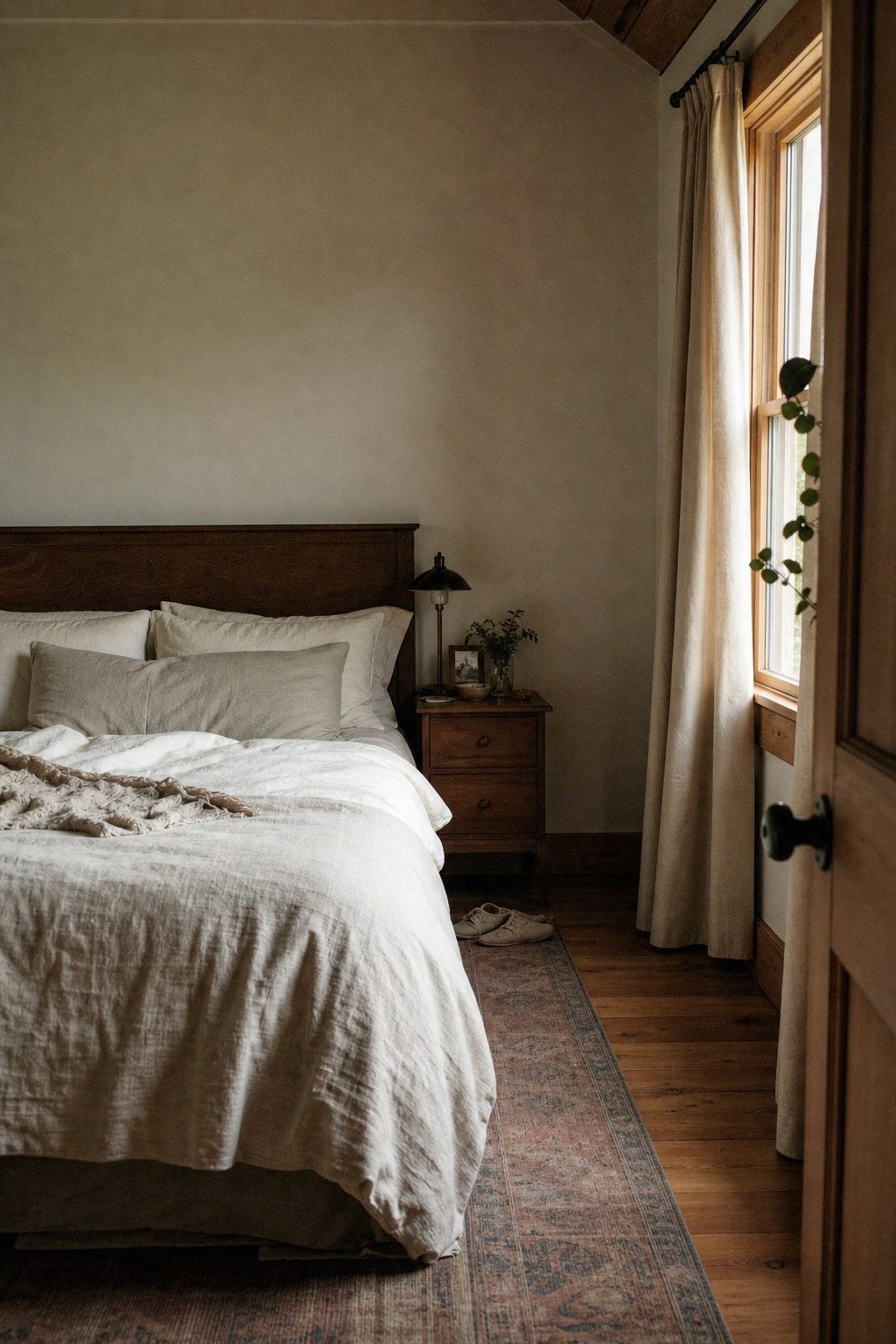
The difference is easier to see side by side:
| The staged version | What it reads as | What reads warm instead |
|---|---|---|
| A matching plaid duvet set | A showroom display | One plain linen or cotton duvet in a warm neutral |
| A new headboard painted to look distressed | New furniture pretending to be old | One secondhand piece with real grain and real wear |
| A wood sign over the bed | Filler on a wall that needed nothing | One wall left bare |
| The ceiling fan light left on | Flat light that flattens every texture | One warm lamp per side, overhead off after dinner |
The sections below take them one at a time.
Choose real linen over printed farmhouse patterns
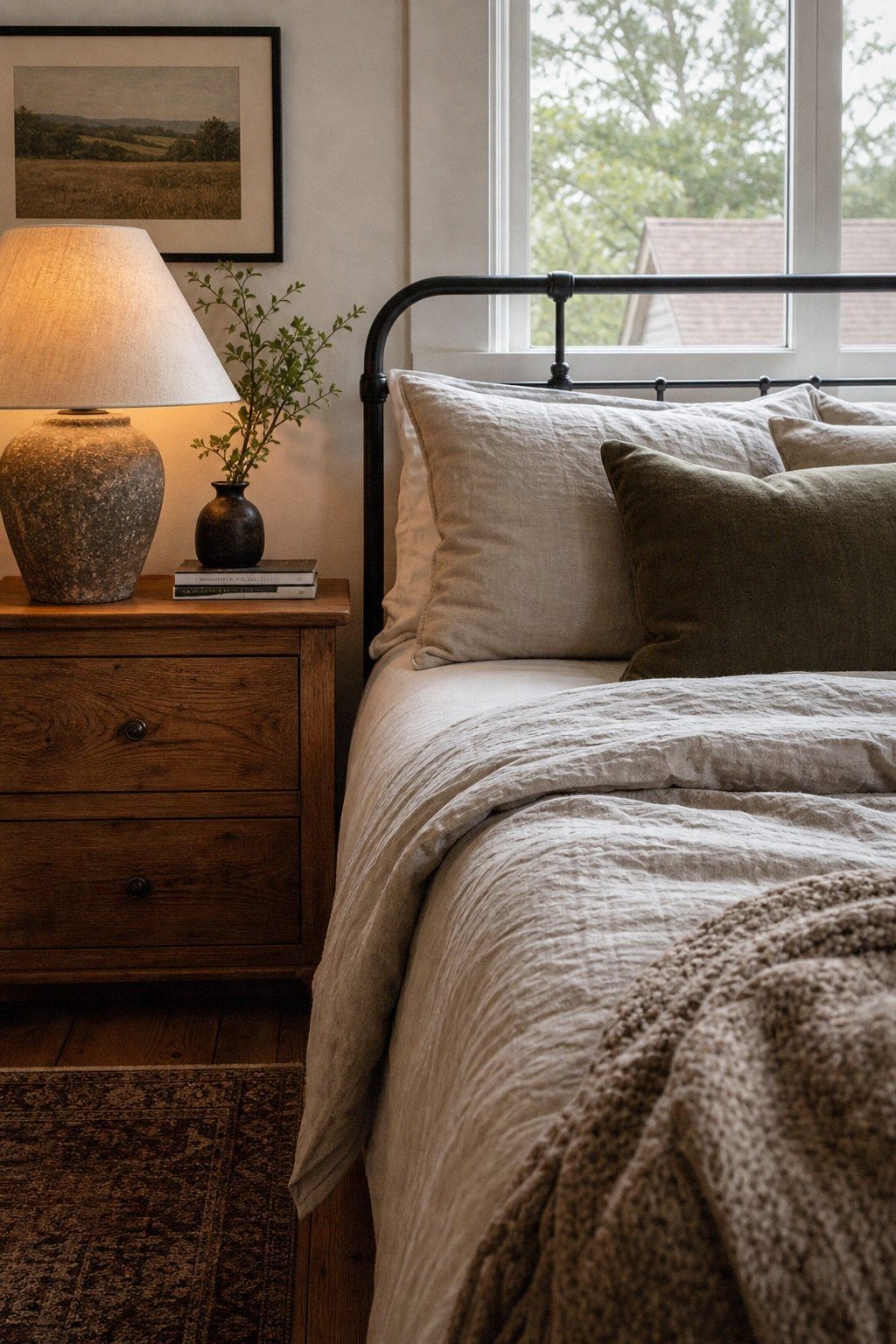
A plaid or gingham duvet cover reads as costume the second you notice it is a pattern rather than a material. Washed linen or cotton in a plain oat, cream, or soft sage color does more of the actual work farmhouse bedding is supposed to do: it looks slightly rumpled even when made, and it softens with every wash instead of staying stiff.
If you already own a patterned set, keep the pattern to one pillow or a folded throw at the foot of the bed instead of the whole duvet. One patterned accent reads intentional. A patterned duvet, patterned curtains, and a patterned rug together reads like a showroom display.
Pick one wood piece with real age or grain
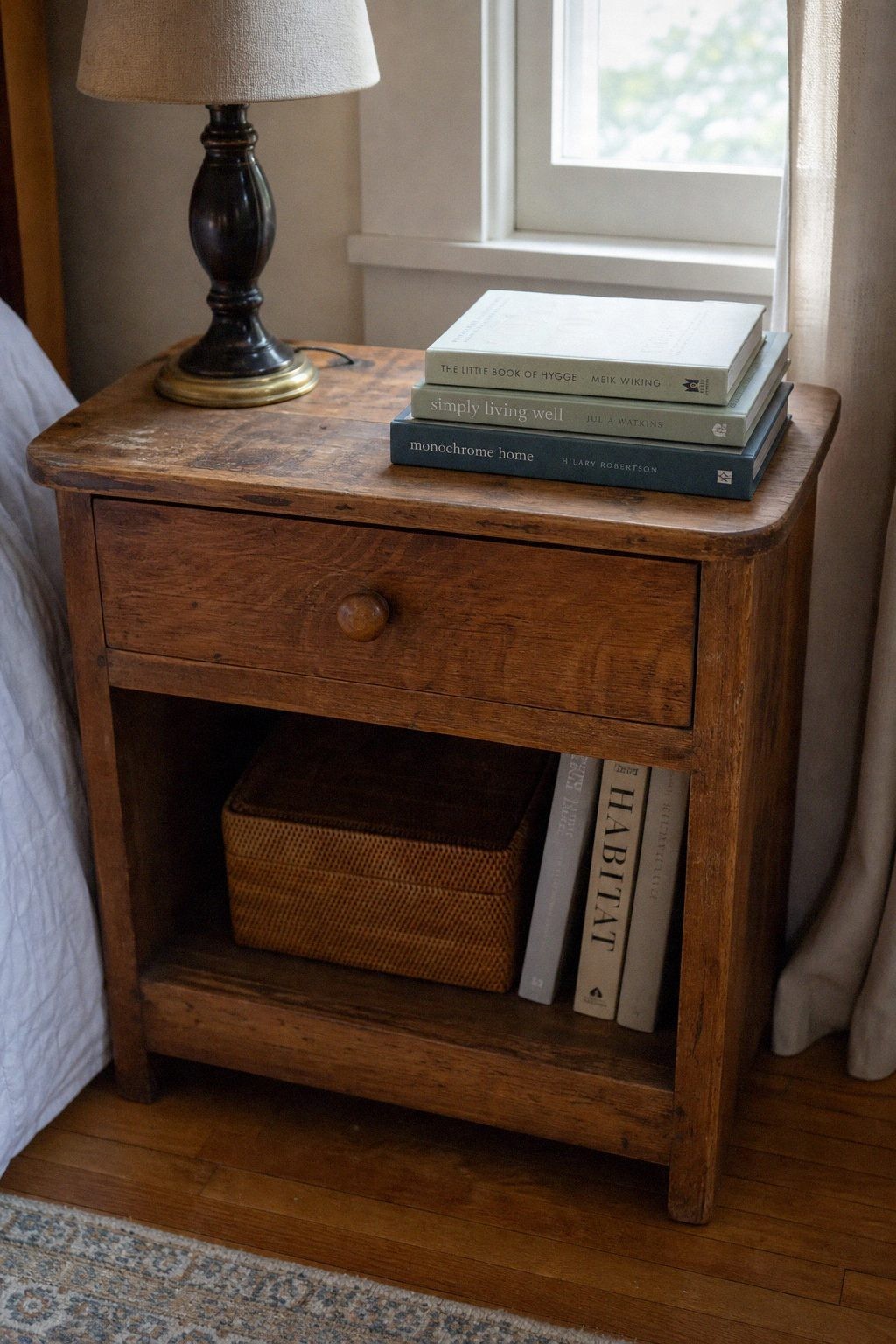
A single nightstand or dresser with visible wood grain, real dovetail joints, or an actual worn edge does more for a farmhouse bedroom than three pieces of new furniture painted to look distressed. An inexpensive secondhand nightstand from a local marketplace listing usually has this kind of real wear built in already.
If you are buying new, look for solid wood over painted MDF. The grain and the small imperfections are what read as farmhouse. A perfectly smooth painted finish reads as new, no matter what color it is.
Turn off the overhead light after dinner
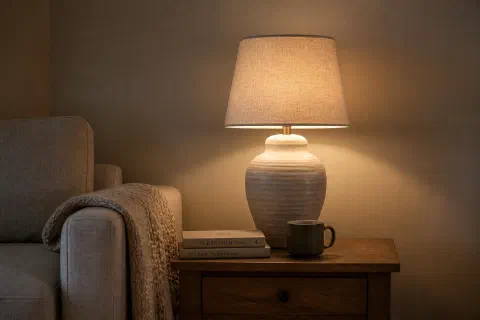
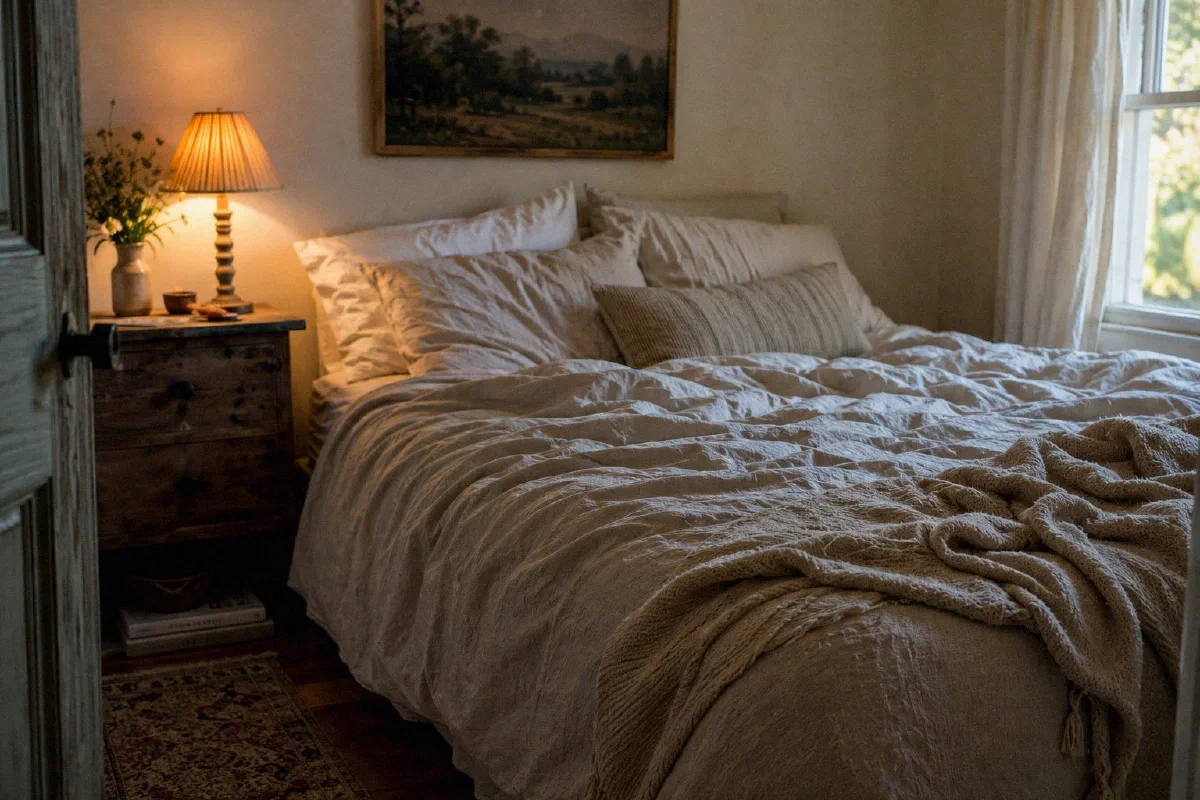
Most bedroom ceiling fixtures put out a flat, even light that flattens every texture in the room, including linen and wood grain. A single warm bedside lamp, or two if you have nightstands on both sides, casts shadow and warmth that overhead light cannot.
Swap in a warm 2700K bulb if the lamp currently has a bright white one. The DOE’s Energy Saver guide groups warm and soft light at 2700 to 3000 K and cool or bright light at 3500 to 4100 K, so the number on the box tells you which side of that line you are buying. That single change affects how the whole room reads in photos and in person more than most furniture swaps do.
Layer textures instead of matching them
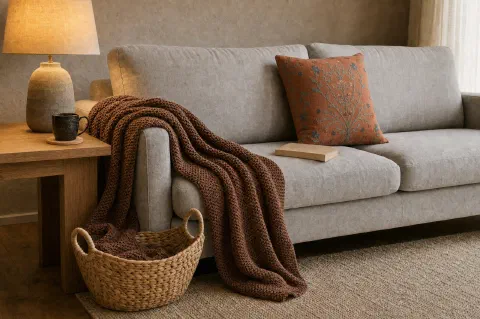
A farmhouse bedroom that uses one linen duvet, one wool or cotton waffle-knit throw, and one woven jute or wool rug will read warmer than a bedroom where the duvet, curtains, and rug are all the same fabric and color. Different textures catch light differently, and that variation keeps the room from looking purchased as a set.
If you bought a matching bedding set, keep the duvet and swap the shams or the throw for something in a different texture. That one change breaks up the matchy-matchy feel without buying anything new.
Leave one wall bare
Not every farmhouse wall needs a sign, a shelf, or a piece of art. A bare wall, especially behind the headboard or opposite the window, gives the eye a place to rest and keeps the room from feeling like every surface was styled for a photo.
If a wall has felt unfinished for months and you keep almost hanging something on it, that hesitation is worth listening to. It might be the one wall that works better empty.
Mistakes That Make a Room Look Staged
Most of the staged look comes from four decisions, and every one of them is easy to undo.
- Buying the set instead of the pieces. A duvet, curtains, and rug that arrived in the same box will always read as a display. Break it with one different texture.
- Choosing a pattern over a material. Plaid and gingham read as costume the moment the eye notices the print rather than the cloth. Plain linen in a warm neutral does the work the pattern was supposed to do.
- Buying new furniture distressed to look old. Manufactured wear is too even to fool anyone. One genuinely secondhand piece beats three new ones with a finish on them.
- Styling every surface. A sign, a shelf, and a gallery wall in one room leaves the eye nowhere to rest. The bare wall is what makes the other four look chosen rather than filled.
The five-piece starting point
- Bedding: plain linen or cotton in one warm neutral color
- Furniture: one piece of real or real-grain wood
- Light: one warm bedside lamp per side. Look for 2700K, which the DOE’s bulb buying guidance lists as warm light suited to homes and says complements wood finishes, furniture, and fabrics
- Texture: one different fabric for the throw or shams
- Wall: one wall left intentionally bare
Five real choices, made once, will outlast a matching farmhouse set that starts to look dated.
What to Read Next
Warm living room color palettes to choose paint, fabric, and wood tones that do not fight each other. It is the same palette problem, with more combinations worked through.
Warm white light bulbs for a living room if you want the longer version of the 2700K argument before you buy a box of bulbs for the whole house.
Cozy fall bedroom ideas for a small room if the bedroom is tight and you need the warm version at a smaller scale than this list assumes.
Make your bedroom feel like a spa without buying all new stuff for a calmer, less farmhouse-specific take on the same room.