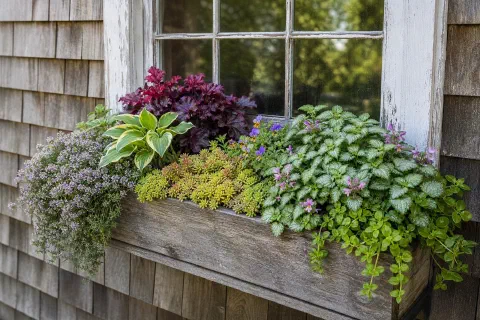
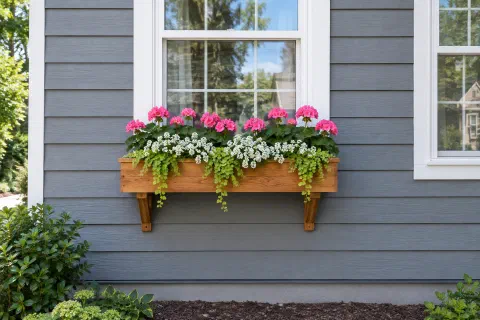
After the first frost, a window box can use cold-tolerant living plants for a suitable local season, or cut boughs, twigs and cones for a display without living roots. Choose by exposure, soil depth, drainage and the forecast. A plant hardy in the ground is not guaranteed to survive winter in an exposed box.
Fall Window Box Ideas After Frost: 7 Options
Last updated:
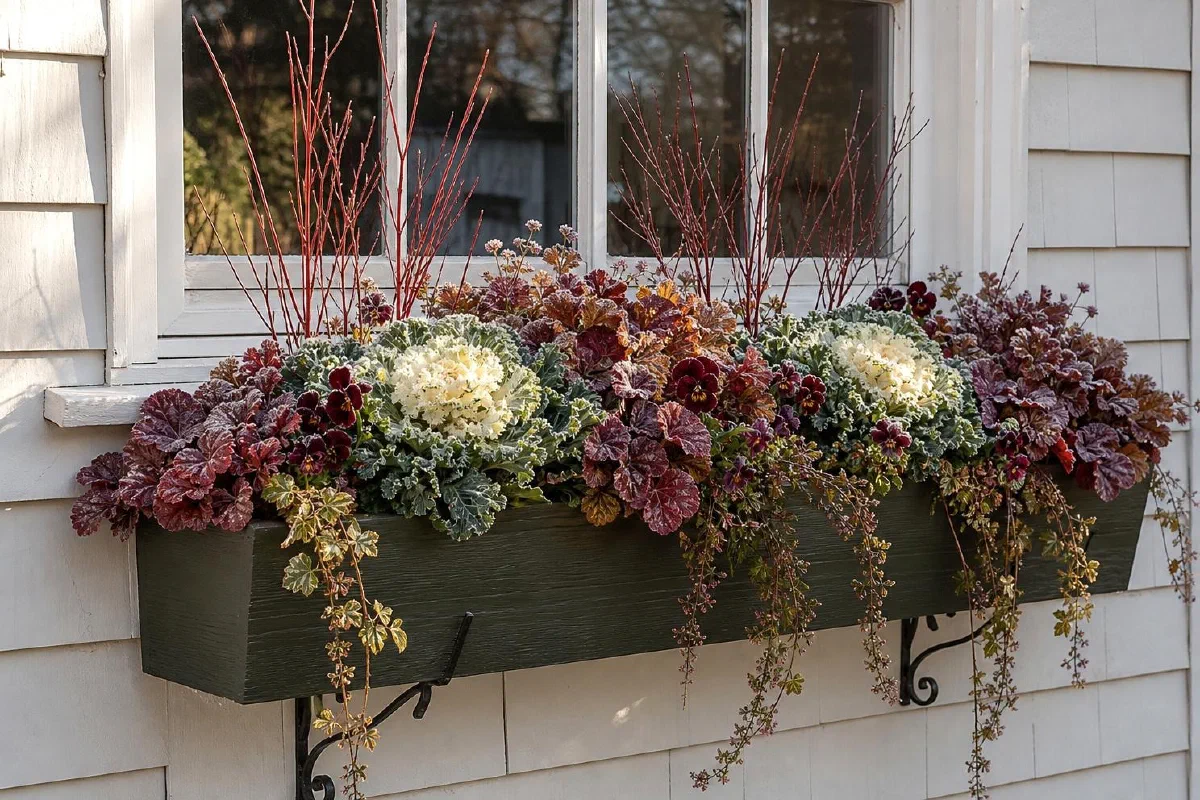
Illustrative scene, not a photograph of the linked products.
These fall window box ideas use two approaches: plant cold-tolerant material for the stretch of light frosts, or switch to cut and dried material before repeated freezes turn the box into a rescue project. Ornamental kale and pansies can carry early color. Evergreen boughs, dogwood stems, cones, and dried seed heads take over when the soil starts freezing hard.
The box depth changes that decision. A shallow box has less soil around each root ball and loses heat faster than a deep container, while a high box is harder to cover safely on a cold night. If you cannot reach the box without a ladder, plan for cut material before the hard-freeze forecast instead of promising yourself a nightly cover routine.
Compare living plants and cut-material options, or go straight to the setup sequence.
Choose the Box by the Weather Ahead
| If your next few weeks look like… | Start with… | Know the limit |
|---|---|---|
| Cool days and occasional light frost | Ornamental kale with violas | Keep watering; the box is alive even when growth slows |
| Light frost with a hard-frost warning now and then | Pansies with twig structure | Cover the box or accept flower damage during the colder event |
| Bright shade and mild late fall | Heuchera with low sedum | Foliage can hold, but exposed roots are not promised through winter |
| A sheltered spot and a plan to transplant | One compact evergreen | The root ball still needs moisture and protection from deep freezing |
| Repeated freezes | Cut evergreen boughs with dogwood stems | No rooting claim; this is an outdoor arrangement |
| Cold, dry weather with little upkeep | Dried hydrangeas and seed heads | Wind and wet snow are the main risks |
| The box needs to last into winter | Cones, bark, moss, and bare branches | Secure everything and keep drainage open |
Illinois Extension places ornamental cabbage and kale, pansies, snapdragons, sweet alyssum, calendula, and dusty miller among the hardy annuals that can tolerate cool conditions and light frost. That does not make every plant winter-hardy in a narrow box. A first frost, a 26-degree night, and a week of frozen soil are different tests.
If you are deciding which existing plants to save, use the first-frost checklist for pots and window boxes before clearing the box.
Before shopping, check three things:
- The lowest forecast temperature, not just the frost icon
- Whether the box sits against a warm wall or faces open wind
- Whether you want to water living plants or be finished for the season
1. Ornamental Kale, Violas, and One Twig Line
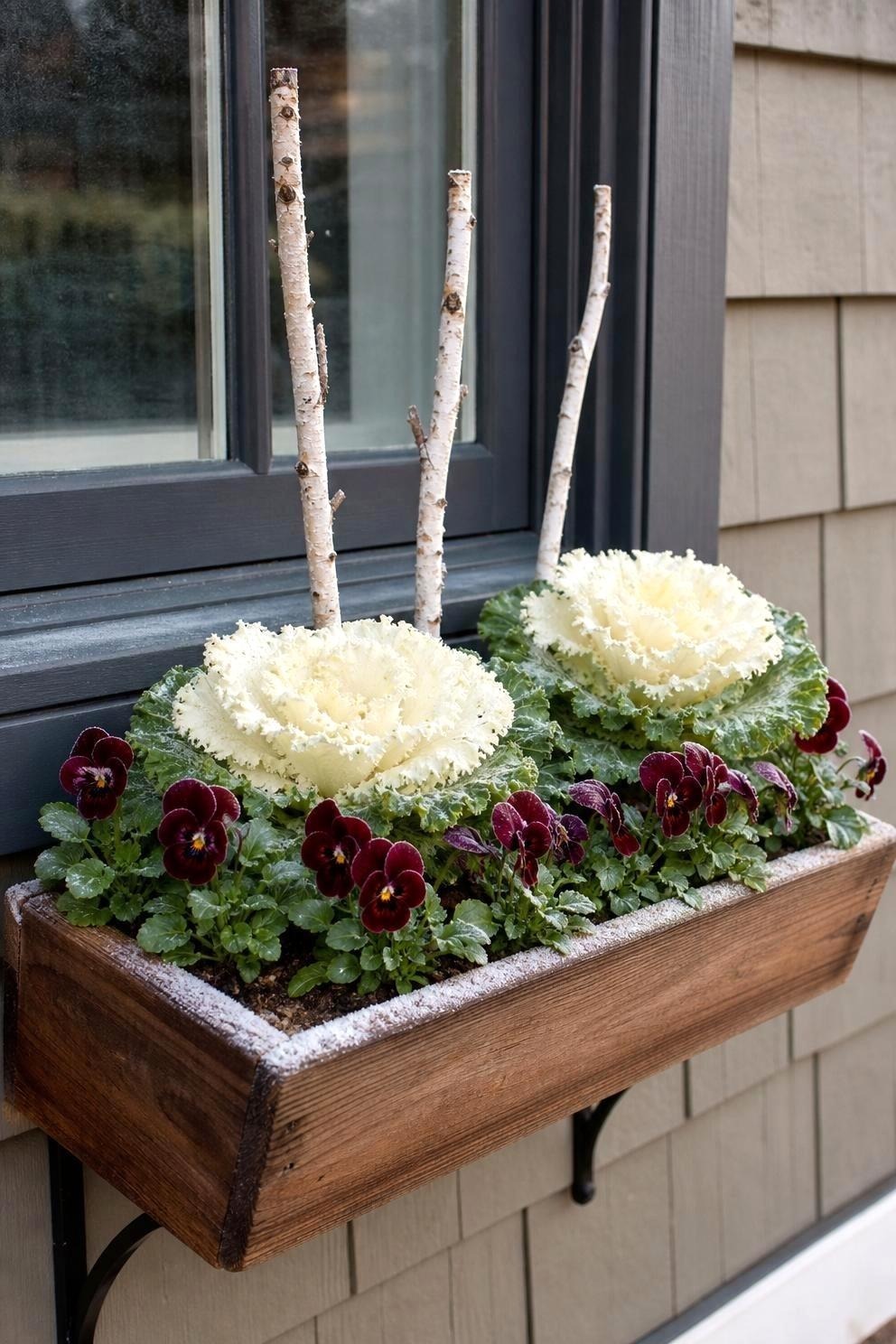
This is one living combination to consider for cool weather. Put one or two compact ornamental kales in the middle, tuck violas along the front, then add three slim birch or willow stems for height. The stems matter because both living plants stay low.
Ornamental kale gets better-looking as nights cool. Illinois Extension reports that its color intensifies below about 55 degrees and can remain colorful to roughly 20 degrees, although a narrow exposed box can be harsher than a garden bed. Treat that number as plant guidance, not a promise for your wall.
Best for: sun to part sun, occasional frost, regular watering. Switch point: when the forecast starts bringing repeated lows near or below 20 degrees, or the root ball stays frozen through the day.
Set the kale slightly behind the violas so its rosette stays visible. Skip a whole row of tiny pumpkins. Once they soften, the arrangement looks worse than an empty patch.
2. Pansies, Dusty Miller, and Upright Branches
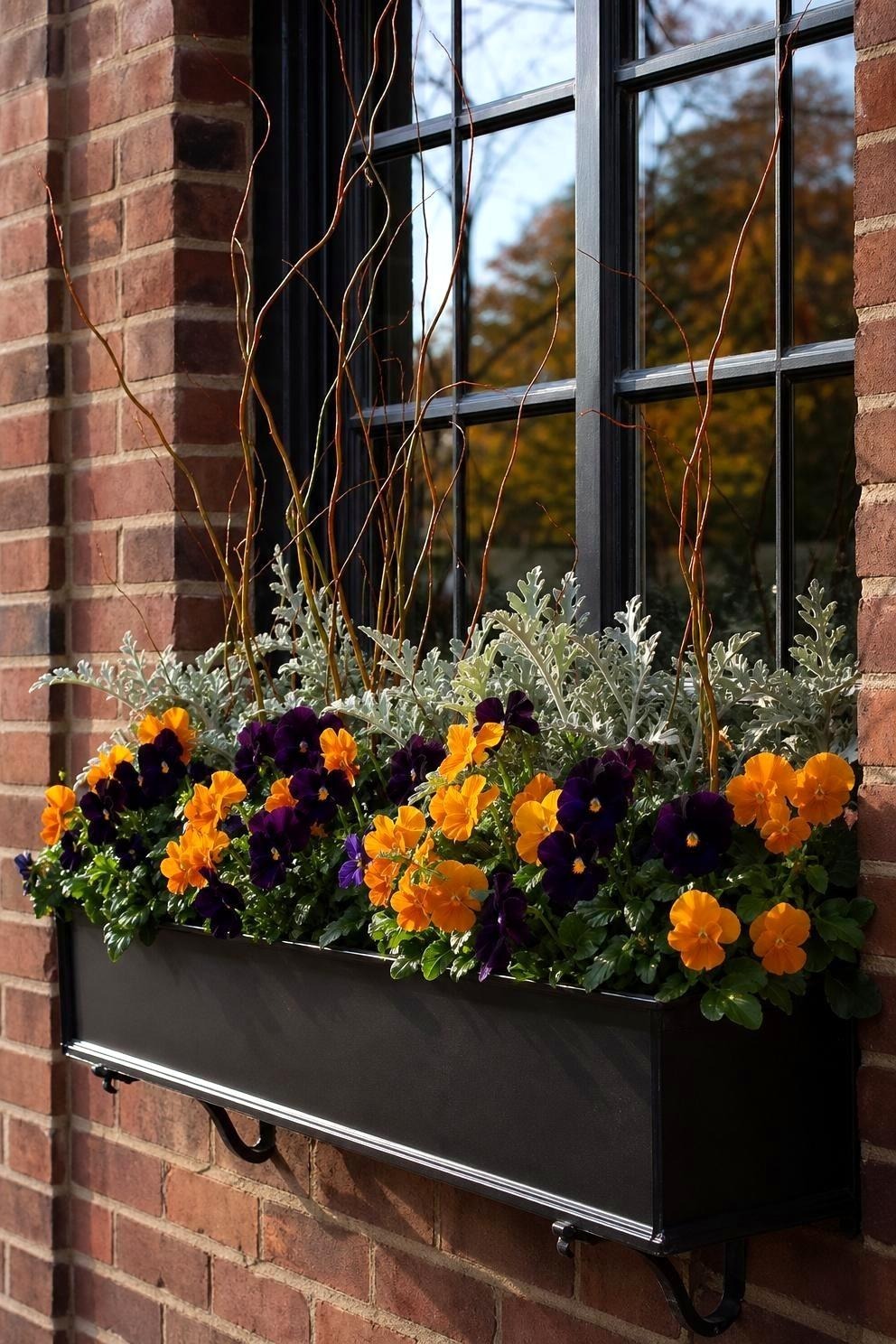
Pansies bring the clearest flower color after summer annuals are gone. Space them according to the variety, place dusty miller behind them, and push curly willow or thin bare branches into the back third of the box.
Pansies are compact and may tolerate a light freeze, but Illinois Extension still advises protection when a hard frost is forecast. A fitted piece of frost cloth can buy time on a removable box. If the box is high, fixed, or hard to reach safely, choose a cut-material design instead of planning midnight cover duty.
Best for: bright boxes where you still want flowers. Switch point: after a hard freeze damages most blooms or the cover routine stops feeling worth it.
Deadhead the collapsed flowers after a cold night. The foliage may be fine even when a few open blooms are not.
3. Heuchera, Low Sedum, and a Quiet Edge
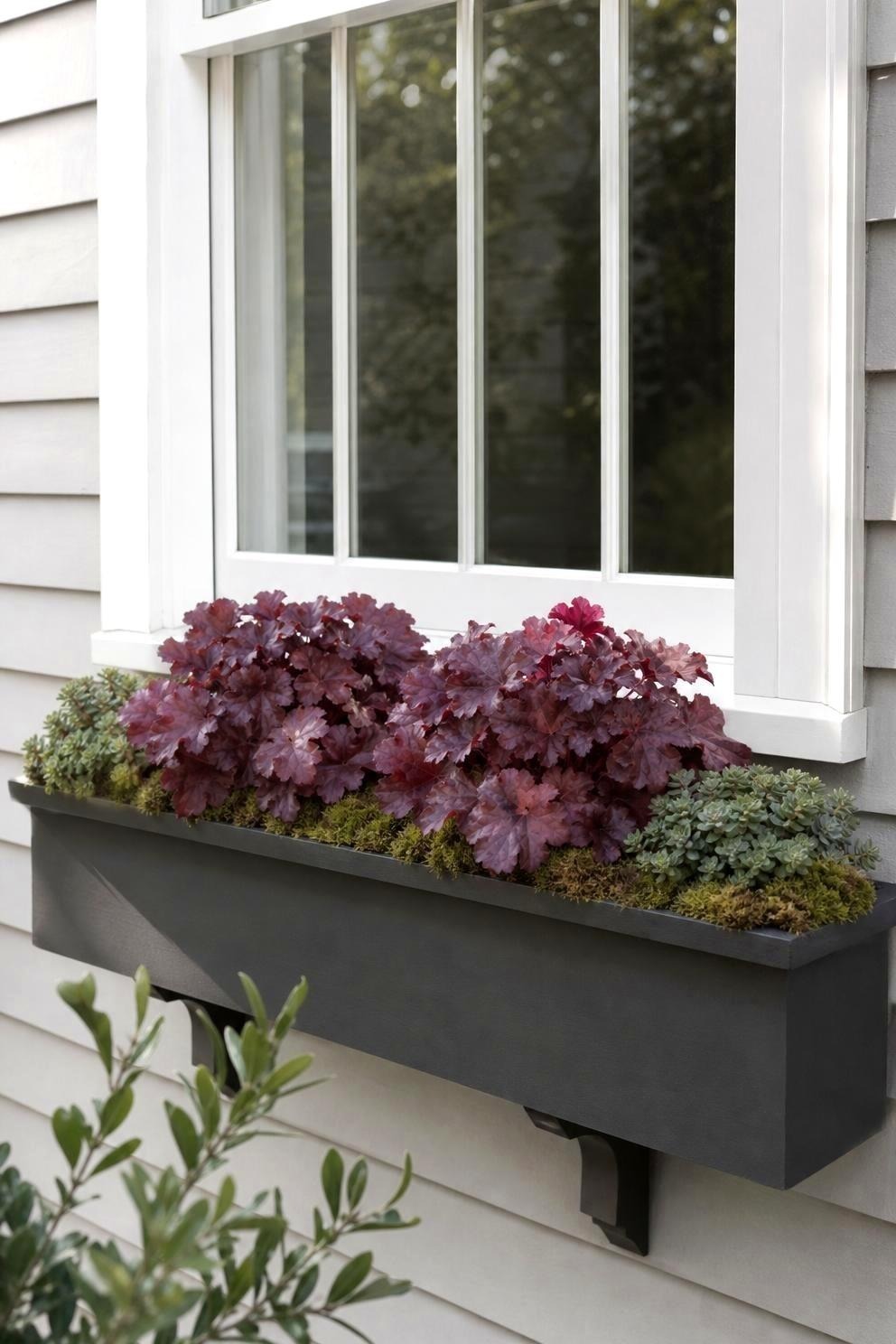
For a shaded window, let foliage do the work. A burgundy or caramel heuchera gives the box a broad leaf shape. Low sedum fills the ends without turning the planting into a flower hunt. A narrow mossed edge hides bare potting mix.
Heuchera can grow in containers, but winter foliage retention depends on the cultivar and the severity of the weather. Missouri Botanical Garden also notes that freeze-thaw cycles can heave roots. In a window box, those roots have less soil around them than they would in the ground.
Best for: sheltered part shade and a reader willing to move or transplant the perennial. Switch point: before the box freezes repeatedly, move the plants to a protected container or plant them in the ground if your local planting window is still open.
Do not buy heuchera on leaf color alone. Check the cultivar’s mature width and hardiness, then decide where it will live after the display.
4. One Dwarf Evergreen With a Low Collar
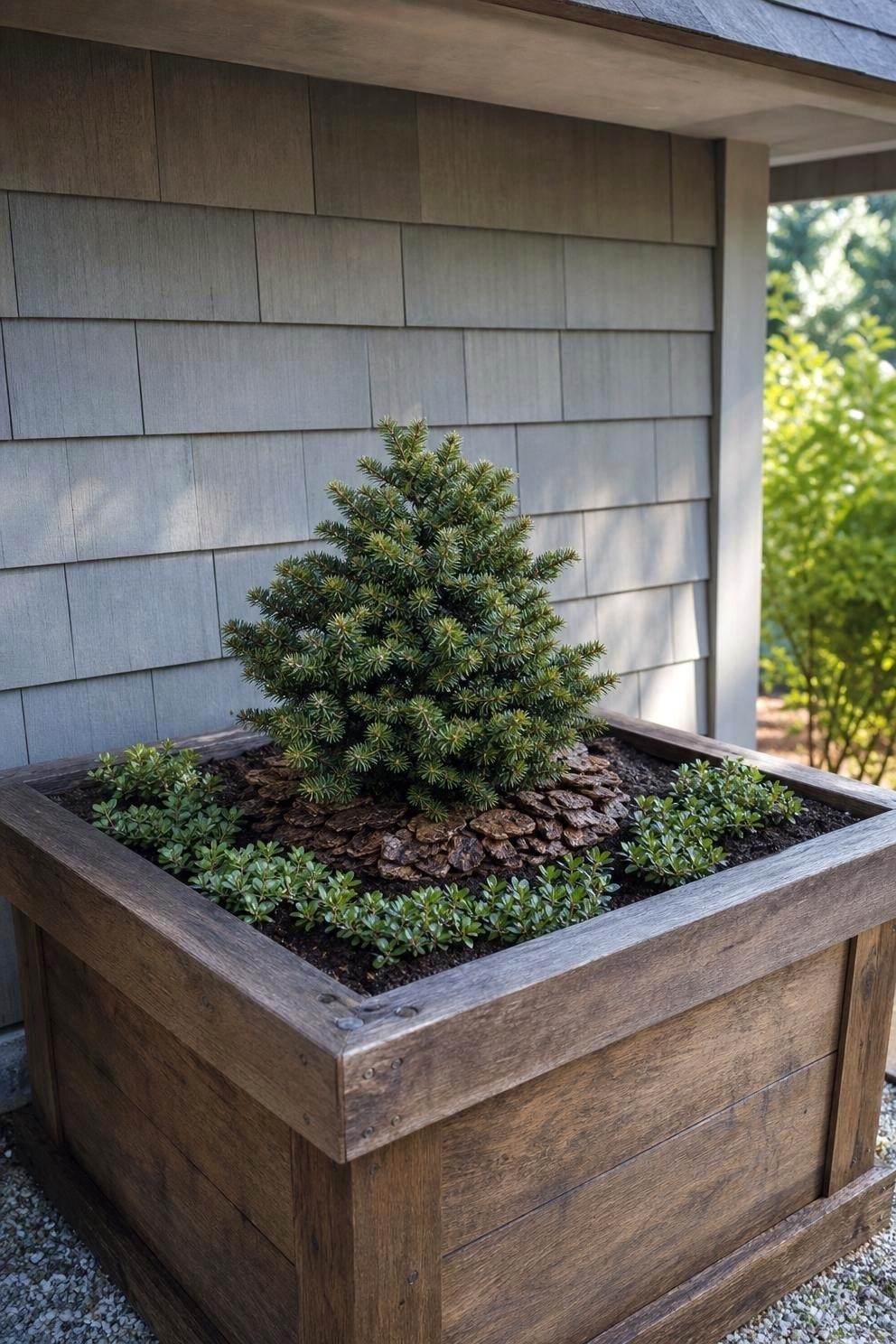
A single compact evergreen can carry a deep box when the rest of the planting is quiet. Center it, keep the lower layer to bark, moss, or one restrained foliage plant, and leave breathing room around the trunk.
The important word is deep. A small nursery plant set into six inches of mix is not the same as an evergreen growing in the ground. Illinois Extension says living evergreens in containers need moisture through winter and a root mass protected from freezing. If your box is shallow or fully exposed, use cut boughs instead.
Best for: a deep, sturdy box in a sheltered location, with a spring transplant plan. Switch point: before prolonged freezing if the root ball cannot be insulated or moved.
Water on a mild day when the mix is thawed and dry. Do not pour water into frozen soil, and do not let a saucer or clogged drain hold it around the roots.
5. Cut Evergreen Boughs and Red Twig Dogwood
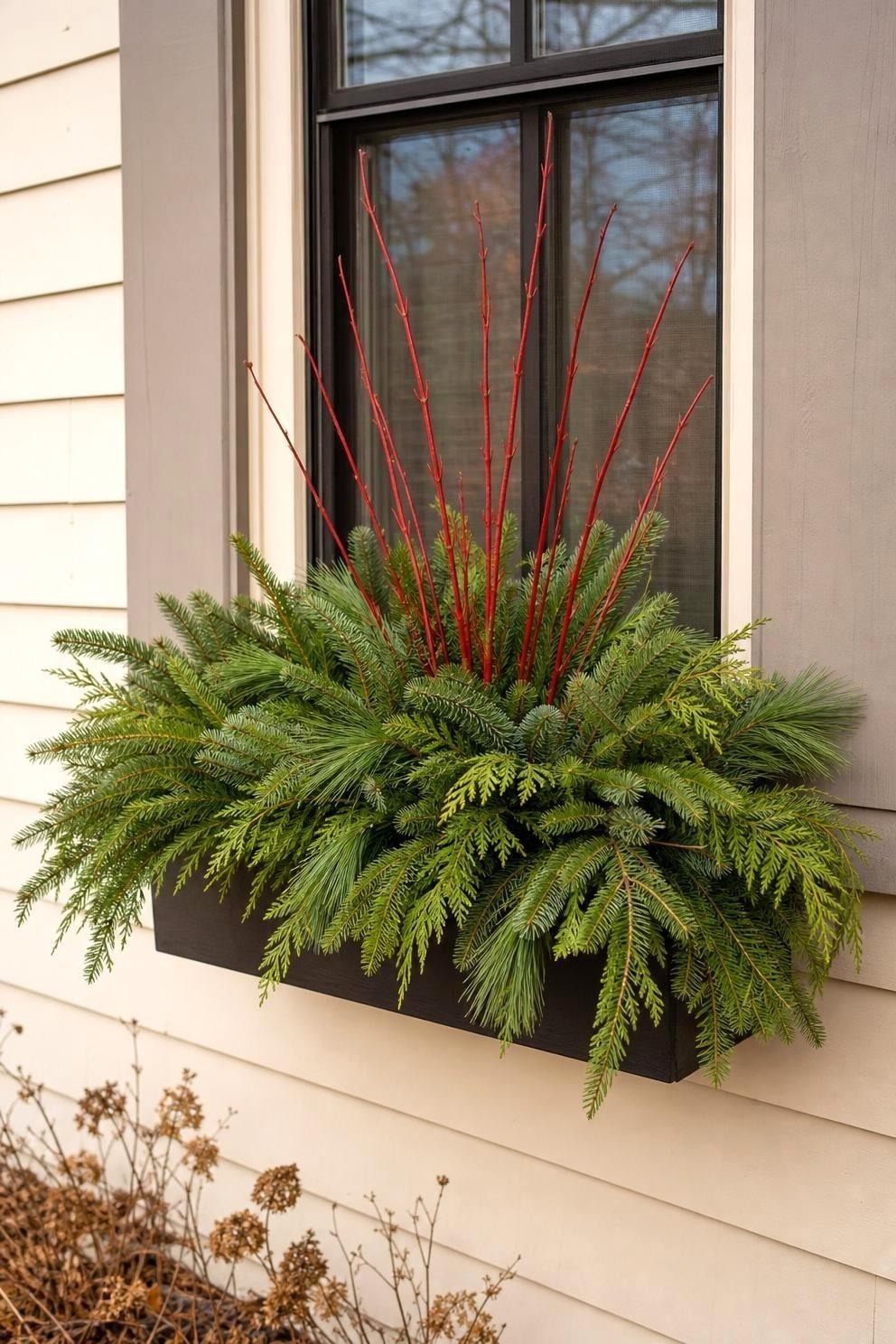
This design can carry from late fall into winter without a living root system. Leave the old root mass in the box for support, cut spent annuals at soil level, then insert mixed evergreen boughs at a shallow outward angle. Add five or seven red dogwood stems in the center.
Penn State Extension recommends the old root mass as an anchor for winter stems and uses evergreen boughs, berries, twigs, cones, and seed pods as the working material. Mix needle shapes so the box does not become one flat green hedge. Fir gives a soft surface, pine gives length, and cedar can spill over the edge.
Best for: repeated freezes and low-maintenance winter structure. Switch point: remove it when needles brown badly, wind loosens stems, or spring thaw begins.
Take small amounts from several parts of a tree or buy pruned boughs. Penn State warns against cutting one large branch that leaves a lasting hole in the plant.
6. Dried Hydrangeas, Seed Heads, and Juniper Tips
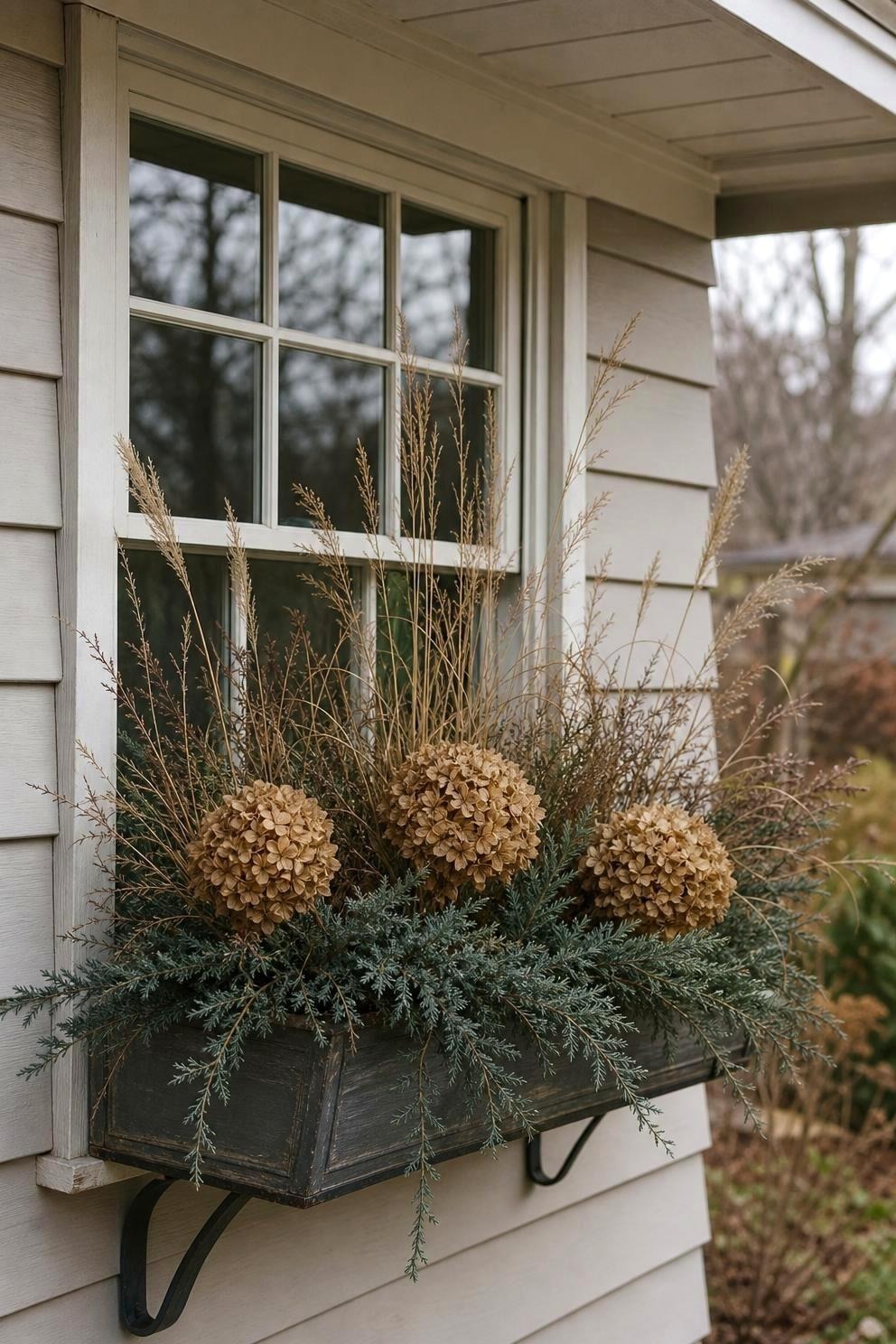
If your late fall is cold and fairly dry, use the garden’s finished textures. Place three dried hydrangea heads low across the box, add sturdy grass seed heads for height, then tuck short juniper tips between them.
This design does not need a survival claim. Its risks are practical: wet snow can crush papery flower heads, and strong wind can pull loose stems free. Use a suitable support and check each stem is held securely without obstructing drainage.
Best for: a sheltered box under an eave and a soft, faded color palette. Switch point: after prolonged wet weather, heavy snow, or visible mold.
Use only dry, clean plant material. Check plant identity and any treatment history before collecting stems; follow product labels and local wildlife guidance.
7. Cones, Bark, Moss, and Bare Branches
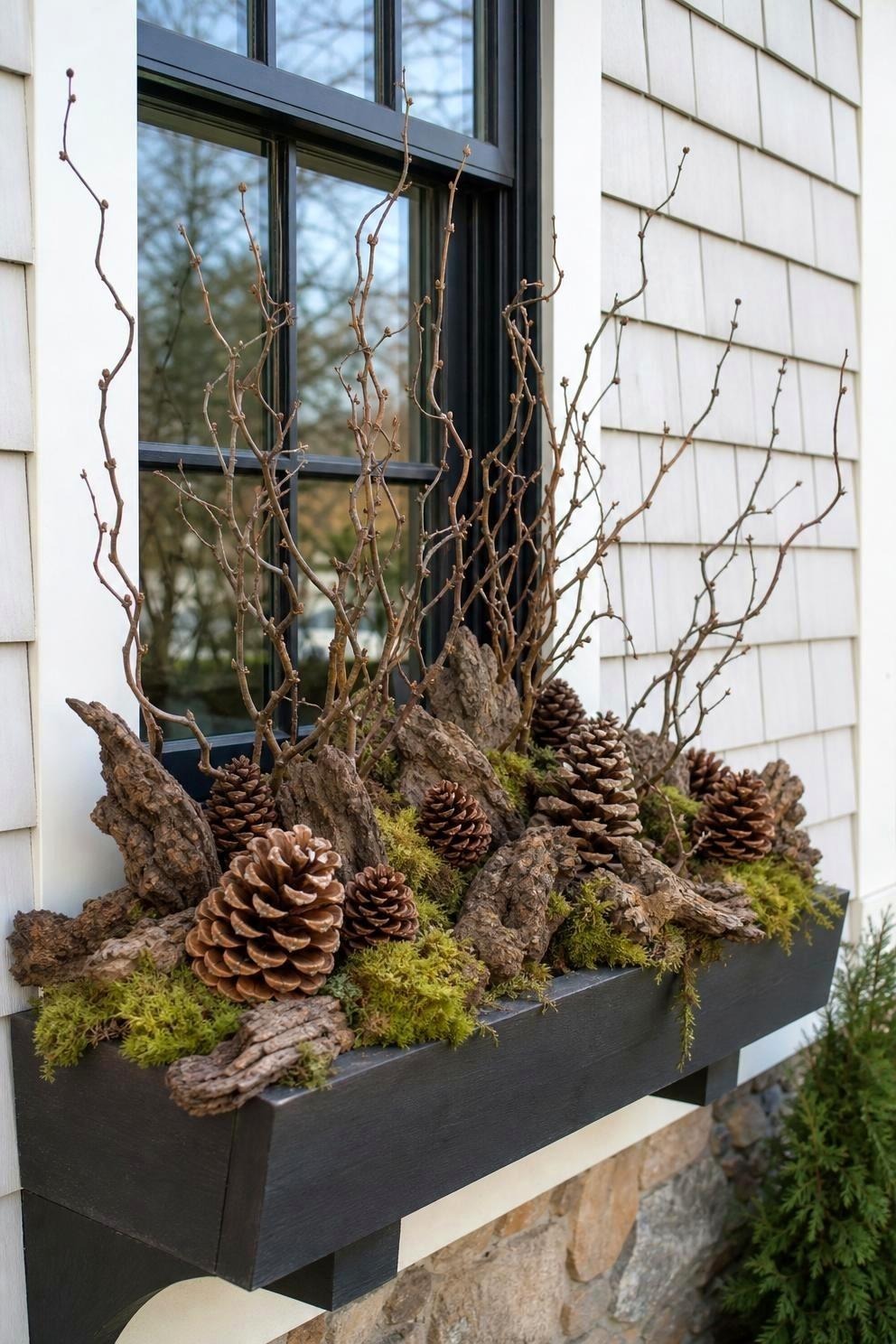
This option uses structure rather than flowers, with fewer living-plant care tasks. Bank damp sheet moss over the soil, nestle in large cones and rough bark pieces, then add branching hazel or willow stems toward the back.
Secure light material with florist wire tied to a buried bamboo skewer or to the box’s interior support. Do not wire anything to siding, window hardware, or a drain opening. The goal is a stable arrangement, not a pile that blows across the walk.
Best for: exposed boxes, very cold climates, and anyone finished with fall watering. Switch point: when the moss fades or the spring planting window arrives.
The materials can be reused in a porch pot or composted if they are clean and untreated.
Set Up the Box Once, Then Watch the Forecast
Use this order so the box drains, the tallest material stays secure, and living plants do not get buried:
- Clear dead summer annuals, but keep a healthy root mass if you will use it to anchor cut stems.
- Confirm the box is firmly mounted and every drainage hole is open.
- Add or refresh container mix only for a living design. Do not use dense garden soil.
- Place the largest living plant or tallest branch line first.
- Add the low foliage, boughs, or dried material around it.
- Water living plants thoroughly, let the box drain, and recheck it after the first cold night.
Drainage is not optional in cold weather. Illinois Extension notes that freeze-thaw cycles can damage containers, especially porous materials, and that every container needs drainage holes. A waterlogged box is harder on roots and heavier on the mounting hardware.
What a Frost-Tolerant Box Does Not Mean
It does not mean plant it once and ignore the forecast. It does not mean a perennial rated for your garden will keep its leaves in a shallow box. It does not mean a hardy annual will flower through every hard freeze.
Review the box after cold weather and change the material when it is damaged or the care no longer suits you.
Three supplies for the seasonal change
| Current listing | Useful job | Check before using |
|---|---|---|
| Fiskars bypass pruning shears (opens Amazon in a new tab)As an Amazon Associate, we earn from qualifying purchases. Full disclosure. | Cutting appropriate twigs and spent stems | The 5/8-inch capacity and the source plant’s pruning needs |
| Giftsfaloy two-gallon watering can (opens Amazon in a new tab)As an Amazon Associate, we earn from qualifying purchases. Full disclosure. | Watering reachable living designs | Full weight and safe access; do not build a routine around reaching from a ladder |
| Miracle-Gro Moisture Control mix, 8-quart two-pack (opens Amazon in a new tab)As an Amazon Associate, we earn from qualifying purchases. Full disclosure. | A container mix to compare when refreshing a living planting | Plant compatibility, label directions and the box’s drainage; cut-only designs do not need new growing mix |
On October 11, 2026 all were in stock. These are different supplies; use what the chosen design needs rather than buying all three as a set.
Related Fall Window Box Guides
- Choose perennials for a shallow window box if you want a base planting that may return and you can give it the right depth and winter care.
- Use window-box flowers to give a plain facade more color when your next decision is the full warm-season planting.
- Build a fall container with more flower color if the window box is only one part of a porch or patio grouping.
- Decide what to leave standing for birds before collecting seed heads and branches from the rest of the garden.
Horticulture sources checked
- Illinois Extension: Annuals and cold tolerance
- Illinois Extension: Ornamental kale in fall
- Illinois Extension: Cool-season annuals for containers
- Illinois Extension: Overwintering plants in containers
- Missouri Botanical Garden: Heuchera ‘Frosty’
- Penn State Extension: Winter outdoor arrangements
- Illinois Extension: Container drainage and winter protection