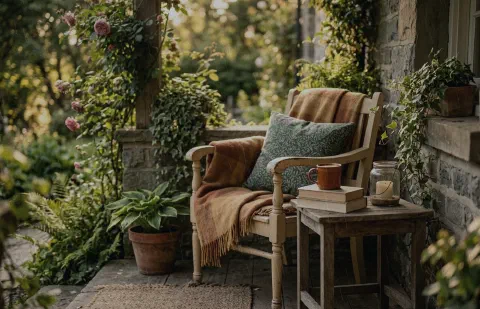
For fall porch decor in wind and rain, choose stable containers with drainage, keep pumpkins low and dry, and use a door attachment suited to its surface. Check outdoor labels for mats and lights. Bring movable decoration inside before severe weather; a roof does not protect every part of a porch.
6 Fall Porch Decor Fixes for Wind and Rain
Last updated:
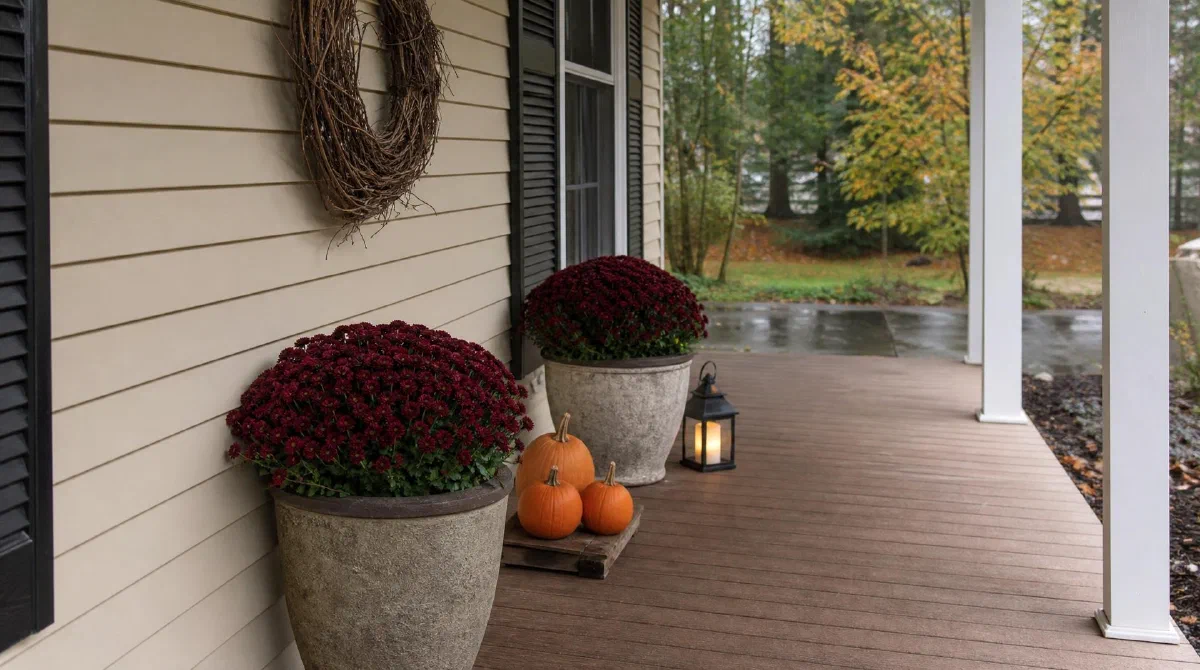
Illustrative scene, not a photograph of the linked products.
The best fall porch decor for wind and rain begins with the porch you actually have. Stand at the door during an ordinary shower and notice where water lands, which corner catches gusts, and where runoff crosses the step. Then open the door fully and measure the clear walking path. Those observations matter more than a shopping list: they tell you which pieces can remain in place, which need a sheltered zone, and which should never be part of the display. If an item blocks the door, rocks when nudged, or takes two people to move before a storm, it is not earning its space.
Compare what stays outside, check planter stability, or go to the five-minute storm reset.
The Quick Weatherproof Porch Plan
| Porch condition | Leave outside | Move before bad weather |
|---|---|---|
| Covered and sheltered | Heavy pots, secured wreath, outdoor mat, intact pumpkins | Loose blankets, paper signs, open candles |
| Covered but windy | Low planters, tied wreath, grouped pumpkins | Tall stems, lightweight lanterns, loose pillows |
| Uncovered | Drainage-ready pots, outdoor-rated mat, Suitably rated battery lantern | Fabric, dried leaves, untreated wood, plug-in lights |
| High-wind watch or warning | Nothing loose | Bring in every movable decoration |
The National Weather Service recommends securing or bringing loose outdoor objects inside before high wind. That last row is not a styling preference. It is the point where the porch display comes down until the weather passes. See the National Weather Service wind safety guidance for current preparation advice.
1. Choose a Weighted Planter With Drainage
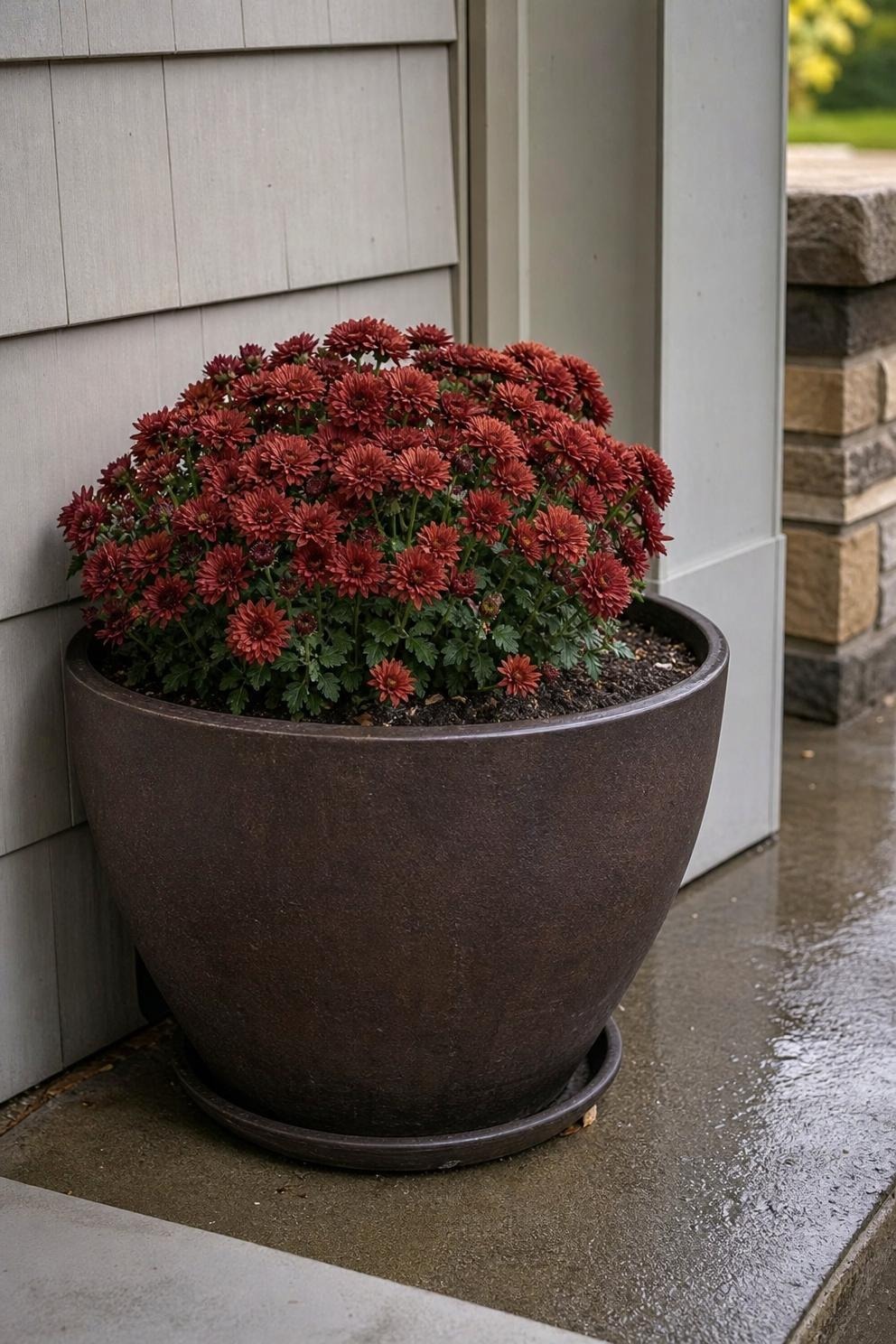
Choose a pot that fits the root ball and mature planting without crowding the route. Stone, concrete, thick ceramic, and weighted composite resist tipping better than thin nursery pots. Whatever material you choose, the container still needs open drainage holes. Water trapped around roots can ruin a plant long before the first frost.
Penn State Extension notes that heavier cement and stone containers resist tipping and that containers need drainage holes. Their container gardening guidance applies to seasonal porch planters too.
Place the pot against a wall or railing, not on the exposed corner of a step. If you want height, use the plant itself. Tall stacks, narrow urns, and branches that act like sails are the first things to wobble.
A useful planter check
- The base sits flat without rocking.
- Water can drain without running across the walking path.
- The leaves do not catch the door when it opens.
- You can lift or roll the planter indoors before a hard freeze.
2. Keep Pumpkins in Low, Dry Groups
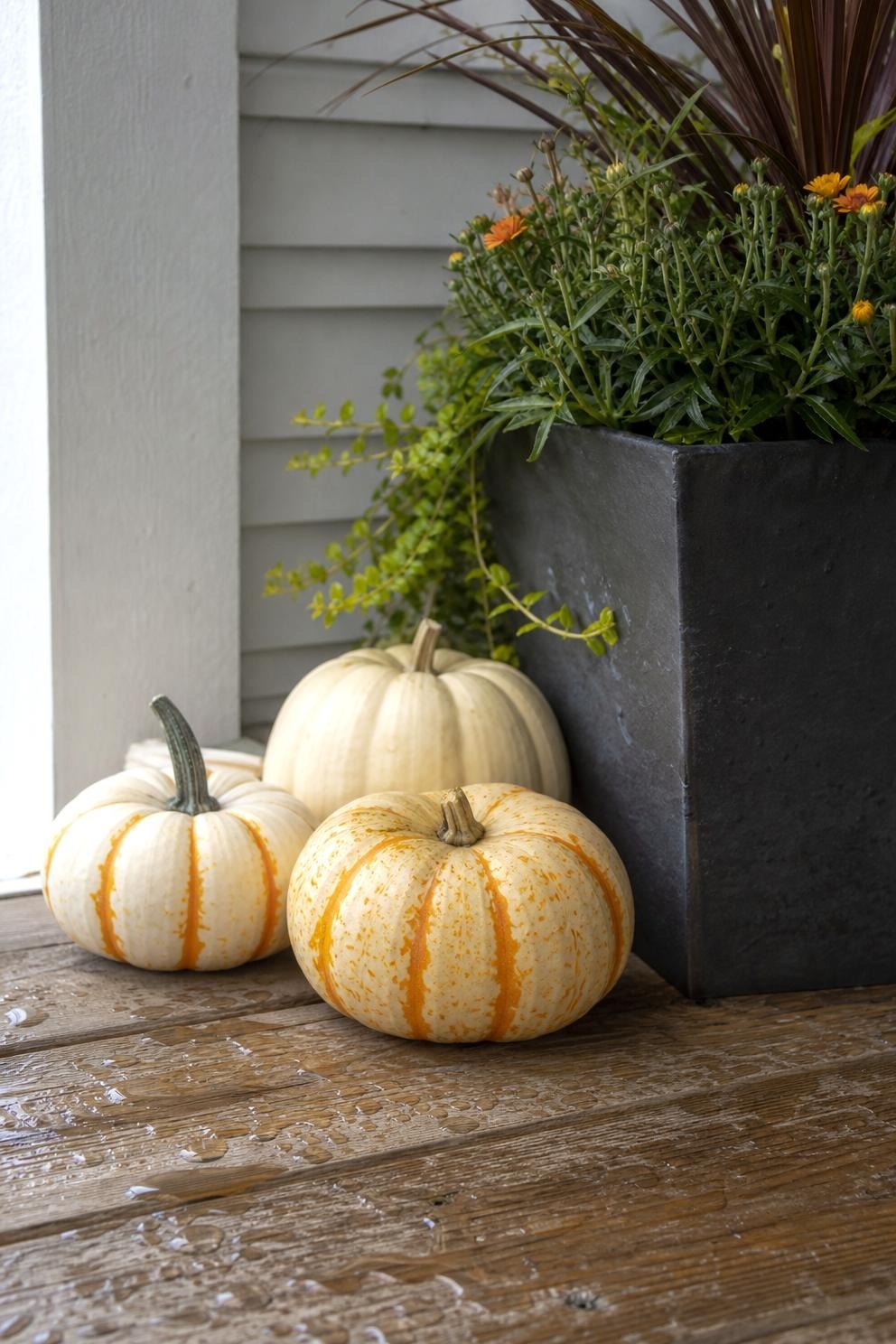
Keep pumpkins in a low group on a stable surface rather than stacking them. Set them on a dry board, plant saucer, or low riser so they do not sit in a puddle, with the support clear of the walking route. Keep stems intact and turn bruised sides toward you so you notice soft spots early.
Penn State Extension explains that hard freezes weaken pumpkin rinds and that bruised or punctured fruit stores poorly. If a hard freeze is coming, carry good pumpkins into a cool, dry spot. Iowa State Extension’s storage guidance puts that spot at 50 to 55 degrees, laid in a single layer where the fruit never touches, with air moving around it. A carved pumpkin has a shorter life and belongs in the easy-to-move part of the display.
3. Use One Door Piece and Secure It Well
A wreath has a lower wind profile than a long hanging sign. Use an attachment approved for the door material and decoration weight. Confirm the door closes, latches and clears its weather seal. Do not add ties to door hardware unless its instructions permit that use.
Skip loose dried leaves and long ribbon tails on an exposed entry. Preserved eucalyptus, a tight grapevine base, or faux foliage wired directly to the frame holds its shape better. If the forecast turns severe, the wreath comes inside with everything else. For a longer seasonal display, outdoor Christmas garland in winter weather covers the material and attachment decisions; for Halloween pieces, use the outdoor decor rain guide before adding them to this porch.
4. Choose Textiles That Can Actually Get Wet
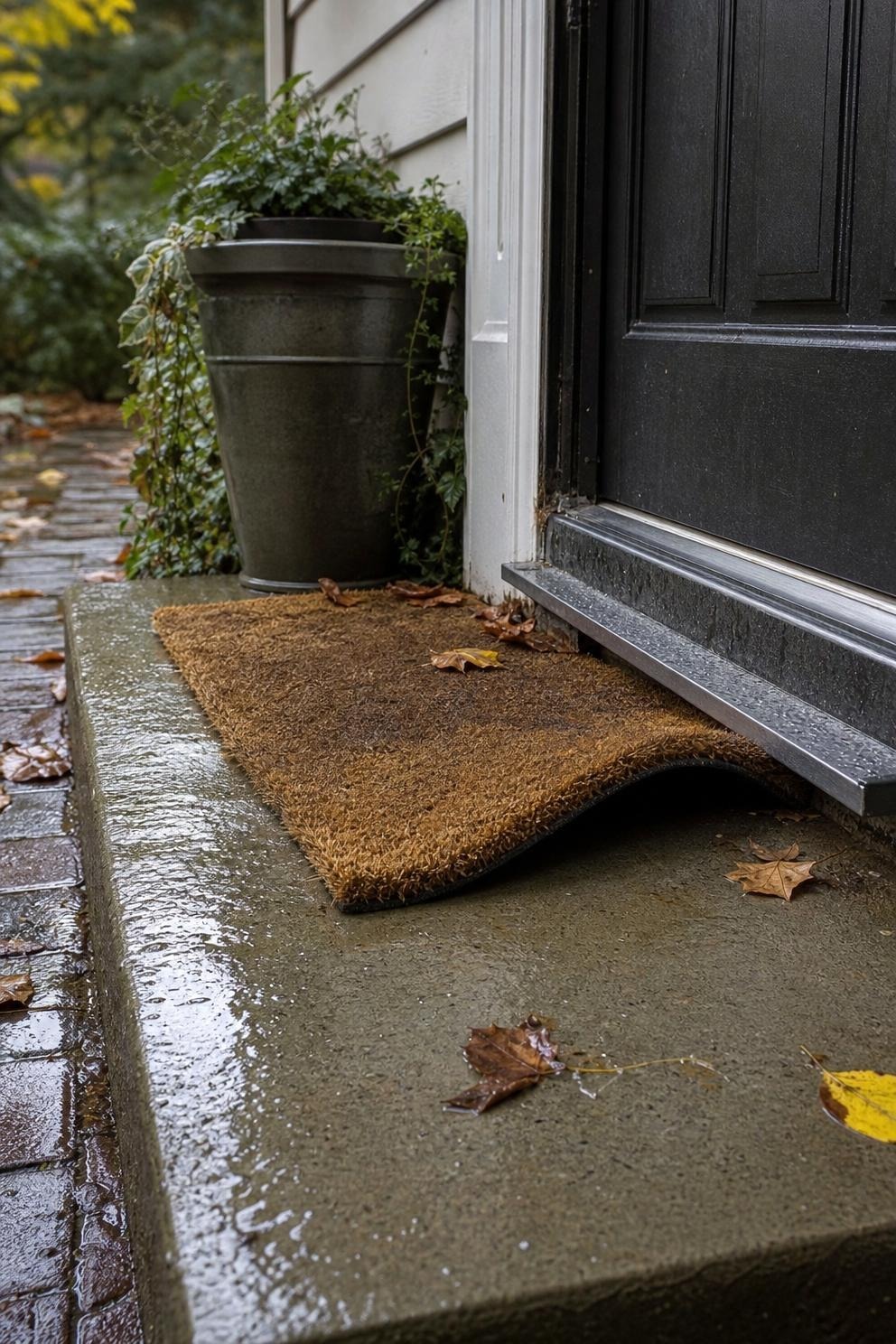
An uncovered porch needs one outdoor-rated, low-profile mat. The popular layered-rug look works best under a deep roof. On an open step, the bottom rug holds water, curls at the corners, and can catch the door.
Check the label for outdoor use and confirm the mat does not slide when wet. Shake it out after rain and stand it on edge to dry. Save the soft plaid throw and accent pillow for a screened or deeply covered porch, or carry them out only when you plan to sit.
5. Use an Outdoor Extension Cord or Go Cord-Free
A battery lantern can avoid a cord, but it still needs the right exposure rating. Use a flameless model and follow its storage and battery instructions. A timer gives you the evening glow without opening the door in the rain.
If you use plug-in lights, every light string and outdoor extension cord must be marked for outdoor use. Inspect cords for cuts, loose plugs, and damaged insulation, and don’t overload them. The U.S. Consumer Product Safety Commission extension-cord guide covers the basic checks.
Keep every cord out of the walking path and away from standing water. An indoor cord under a doormat isn’t a weatherproof shortcut.
6. Keep a Five-Minute Storm Reset
Keep one handled bin just inside the door. When wind or heavy rain is in the forecast:
- Put pillows, throws, signs, and dried stems in the bin.
- Carry lanterns and electrical pieces inside.
- Move carved or damaged pumpkins to a dry spot.
- Push sturdy planters against the wall, if conditions remain below warning level.
- Bring in every loose item when a high-wind watch, wind advisory, or warning is issued.
After the weather passes, wipe the step, empty saucers, and return only the pieces that earned their place. Keep the pieces few enough that you can move them before the weather worsens.
What Usually Fails First
- Tall branch arrangements: they catch wind and make a light pot top-heavy.
- Loose wood signs: they slide, warp, or become projectiles.
- Real candles: wind moves the flame toward dry wreath material and leaves. Use flameless candles.
- Layered indoor rugs: they hold water and curl.
- Pumpkin towers: one soft pumpkin makes the whole stack unstable.
- Hidden indoor cords: a rug does not make an indoor cord safe outdoors.
A Porch That Still Feels Like Fall
Weather-ready does not mean empty. Repeat one warm color across the wreath, planter, and pumpkin cluster. Let the plant provide movement, the pumpkins provide shape, and the lantern provide the evening glow. Remove pieces that are difficult to secure or bring indoors.
Three practical supplies to compare
| Exact listing | Useful for | Check first |
|---|---|---|
| SnugNiture 22-inch black planters, pair (opens Amazon in a new tab)As an Amazon Associate, we earn from qualifying purchases. Full disclosure. | A matching container group | Root room, drainage, footprint and stability; height alone does not make a pot wind-safe |
| Giftsfaloy two-gallon watering can (opens Amazon in a new tab)As an Amazon Associate, we earn from qualifying purchases. Full disclosure. | Watering containers without laying a hose across the entry | Carrying weight and a place to store it |
| Fiskars bypass pruning shears (opens Amazon in a new tab)As an Amazon Associate, we earn from qualifying purchases. Full disclosure. | Cutting suitable stems during seasonal cleanup | The listed 5/8-inch capacity and tool instructions; keep blades away from electrical cords |
All were in stock on October 11, 2026. Choose only the supply your display needs. None makes decoration safe to leave loose in a storm.
What to Read Next
- Fall Front Porch Decor for a Small Porch has the measurements for a tighter entry, where a planter that is too wide costs you the walking path.
- Small Fall Patio Ideas for After Dark picks up where this stops, if your porch is protected from the weather but dark by five.
- Fall Flowers for Pots goes deeper on the plants themselves, including which ones hold through a light frost.
- Rainy Porch Ideas for Days You Still Want to Sit Outside covers the seating and drainage choices underneath the fall layer.