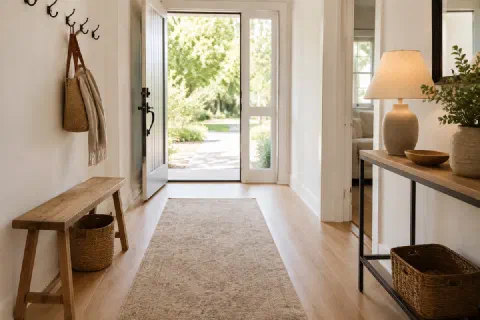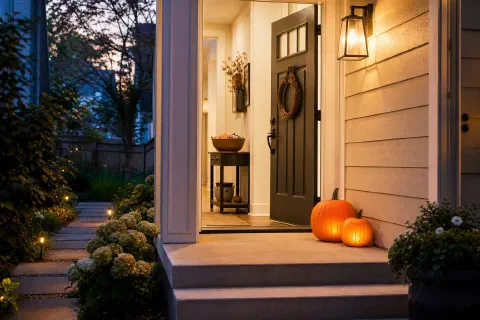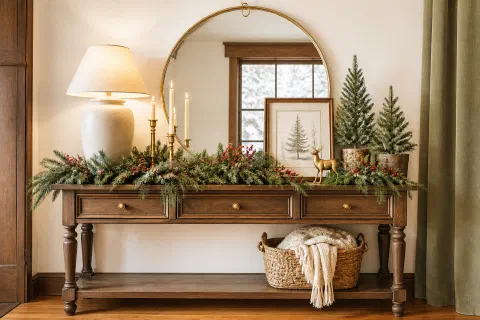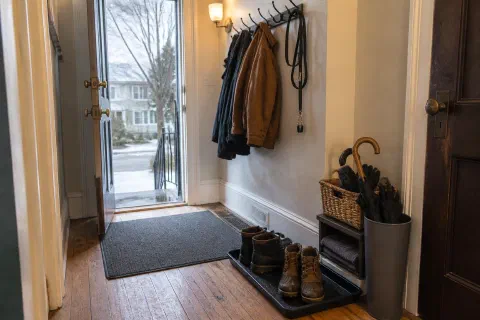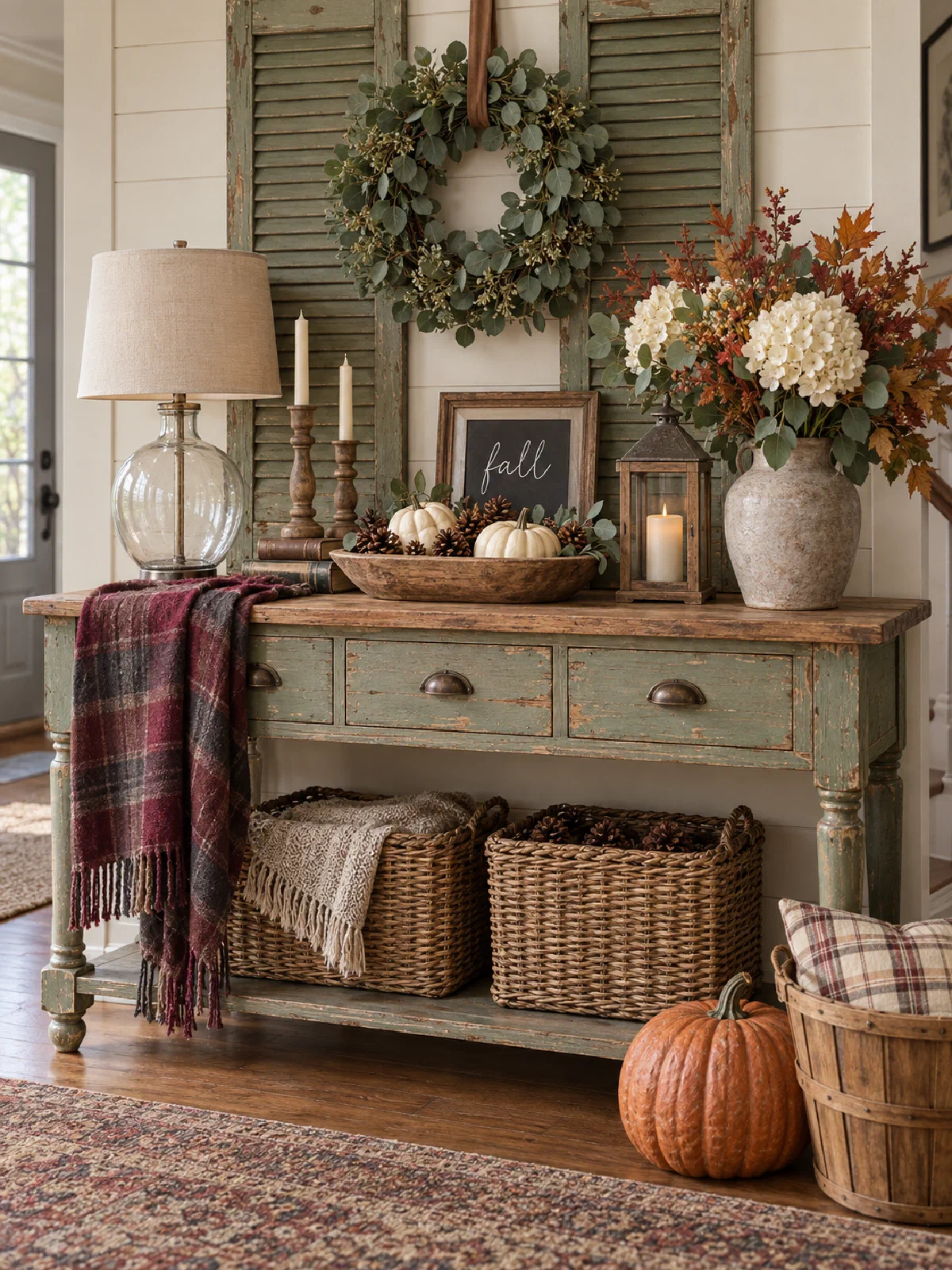
You do not need a pile of pumpkins to make a narrow entry feel like fall. A better goal is one pretty view when you come in: a warm color on the door, something natural at eye level, and a surface that still has room for keys.
Before you set anything down, open the door once. If it clears, you are good. Then pick one of these looks and let the rest of the entry stay simple.
| If the entry has | Use | Keep clear |
|---|---|---|
| A shallow console | Amber glass and dried branches | The key-and-mail landing spot |
| No floor room | An inside-door wreath | The full door swing |
| An existing mirror | One clipped stem or ribbon | Most of the glass |
| Only a threshold | A flat coir doormat | Every curled edge and trip point |
1. Start with an amber-and-branches console
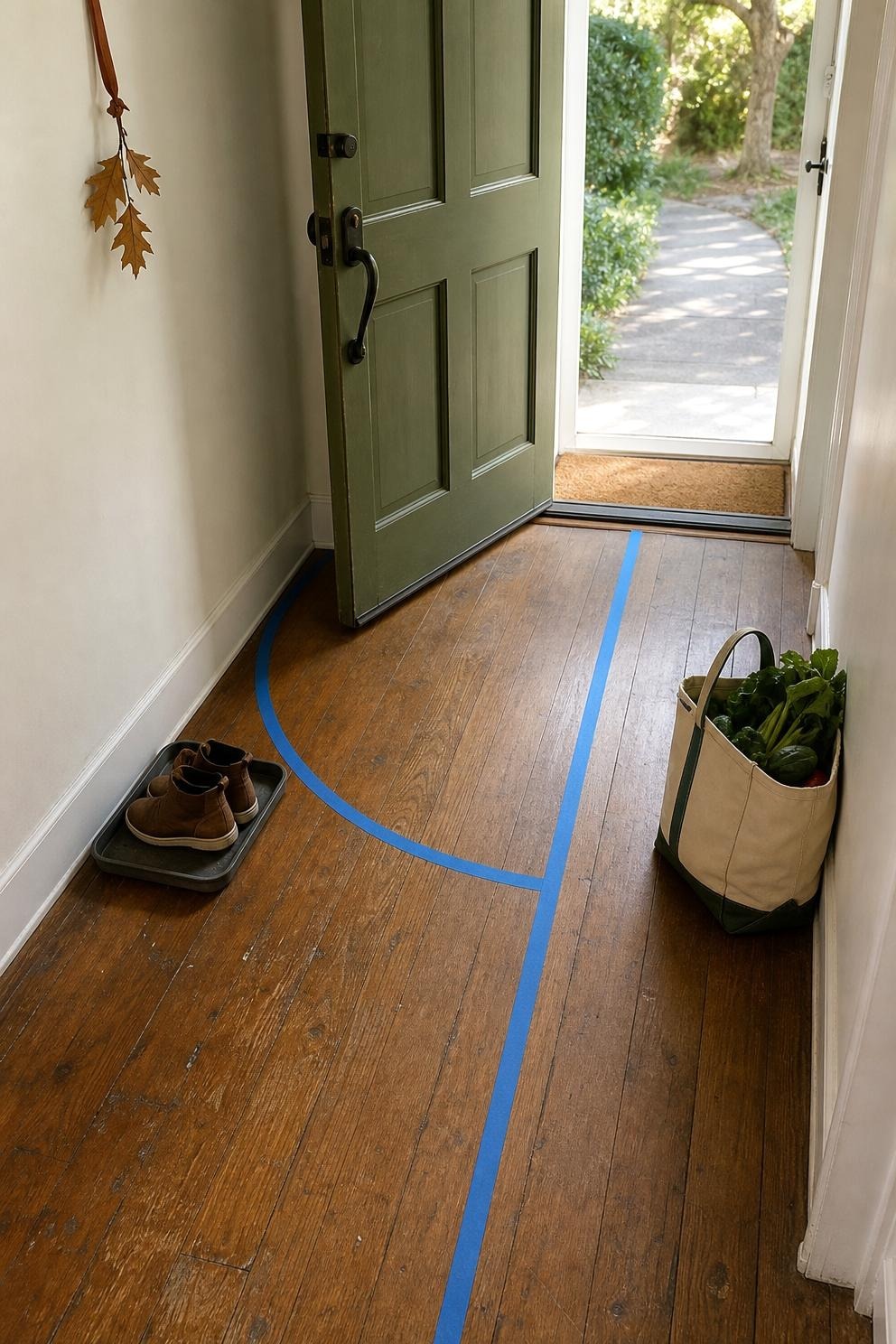
If you have even a slim console, make it the whole fall moment. A vase of dried oak or beech branches gives height, then a small amber candle and a wooden bowl keep the top from looking empty. A rust taper is enough color to make the scene feel seasonal without a sign or a themed pillow.
Keep the floor beneath it bare. That little bit of open space makes a narrow hall feel calmer.
2. Hang an Inside-Door Wreath
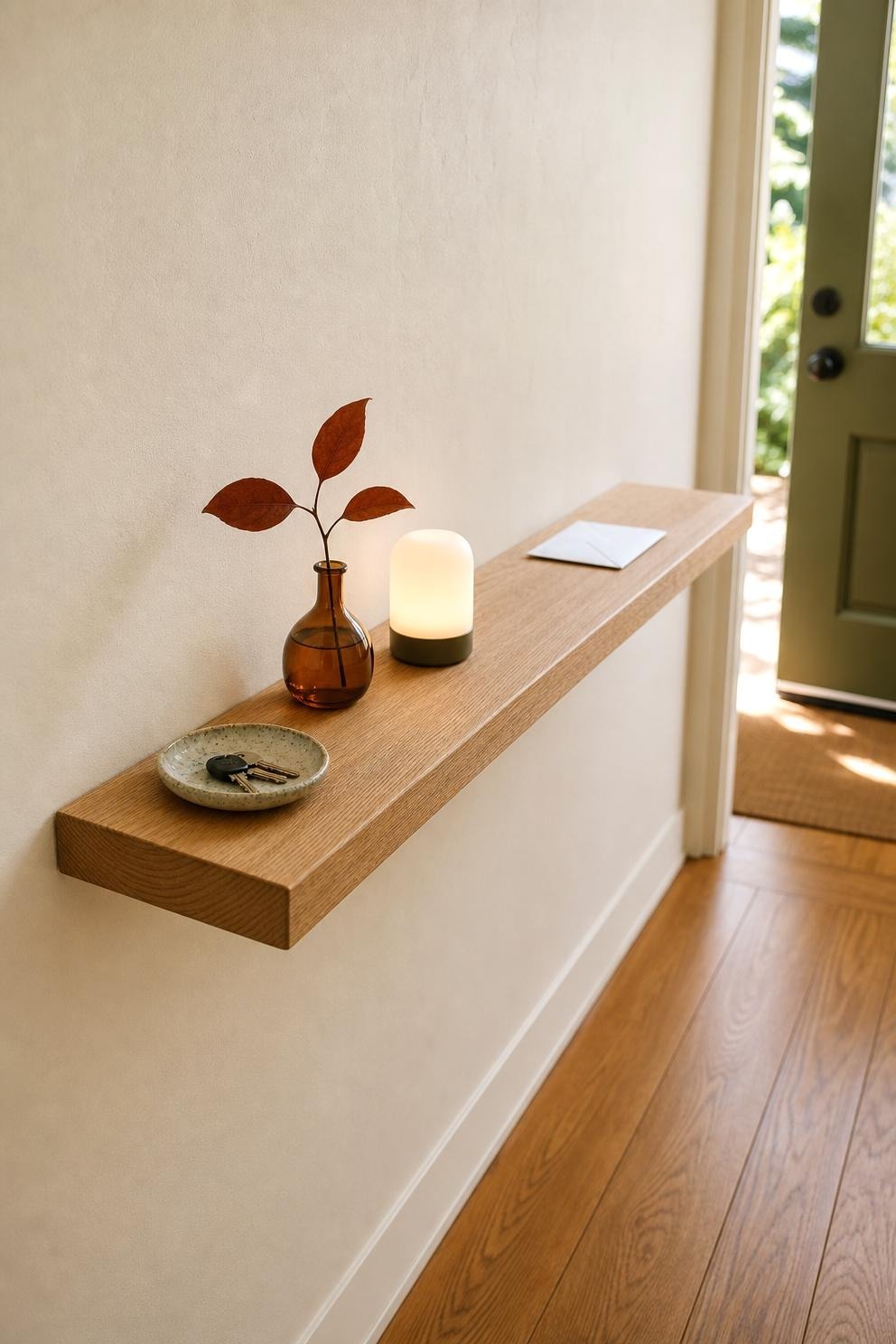
The inside of the front door is usually the best blank wall in a small entry. A modest dried-leaf wreath in tobacco, olive, and warm brown catches the eye the minute you walk in. It also keeps the seasonal layer out of the way of bags, shoes, and the route to the kitchen.
Use a wreath that sits inside the door edges. It should feel like a finishing touch, not something you need to steer around.
3. Let the Entry Mirror Hold the Color
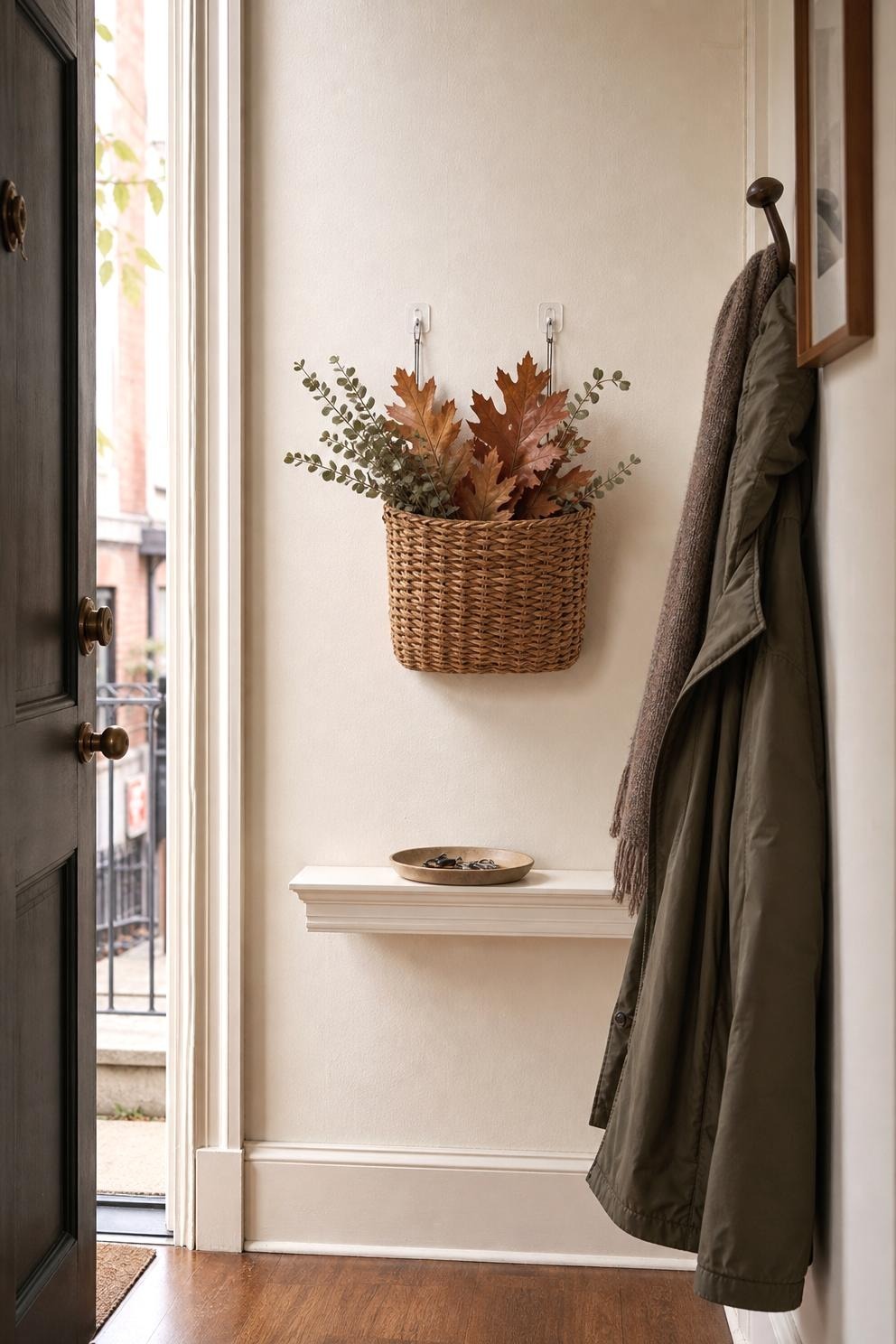
An existing mirror is the easy answer when there is no room for another shelf. Clip two dry leaves to one corner, tuck a little stem behind the frame, or tie a narrow rust ribbon at the top. The glass still does its useful last-look job, but the entry gets a little fall color at eye level.
4. Try a framed autumn print with one candle
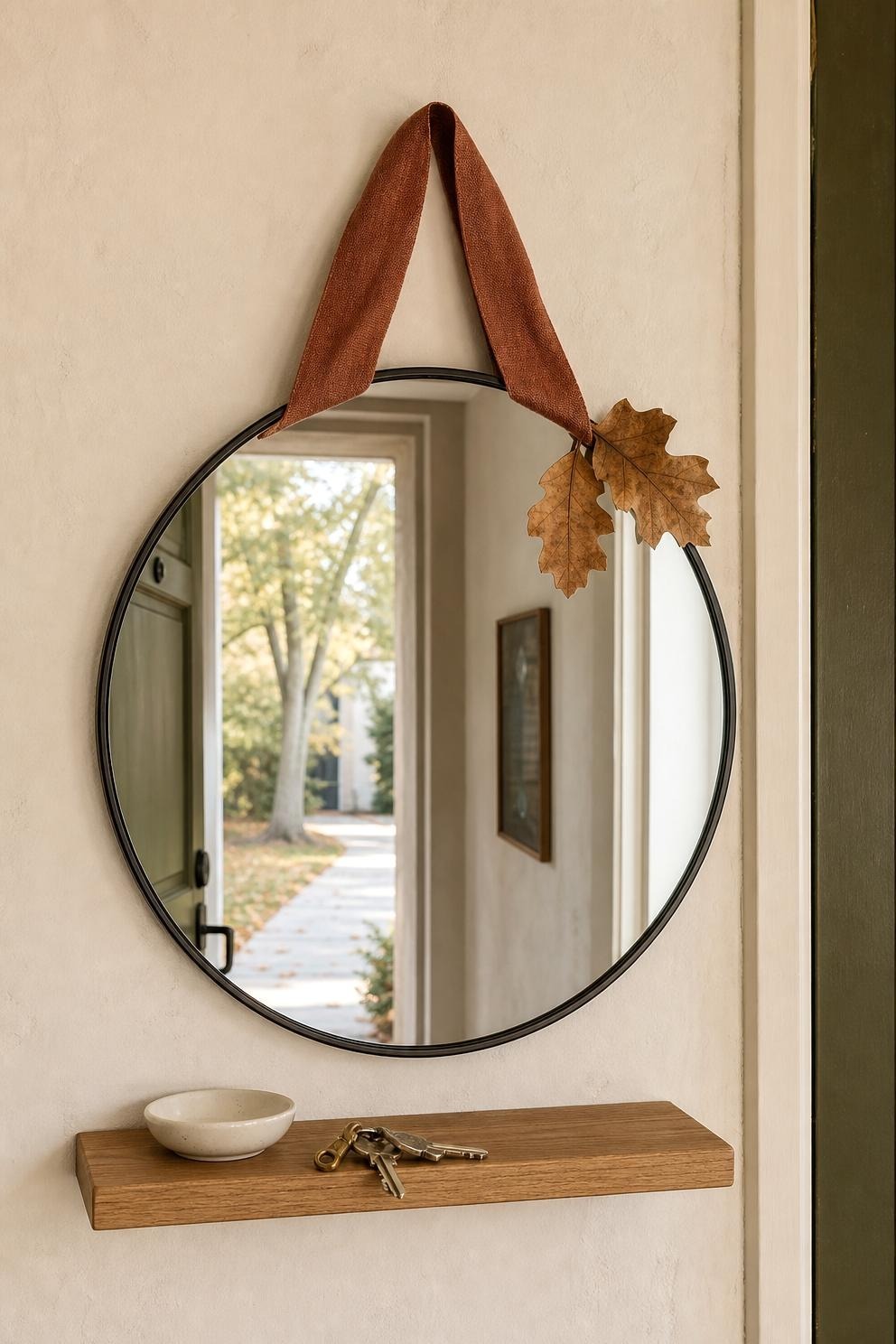
One small landscape or botanical print can change the mood more than six little objects. Lean it on a ledge or console beside an amber votive. Choose a quiet scene with brown, moss, rust, or faded gold so it works from September into November.
If the entry gets busy after dark, use a flameless candle instead of an open flame.
5. Use a Patterned Coir Doormat as the Floor Detail
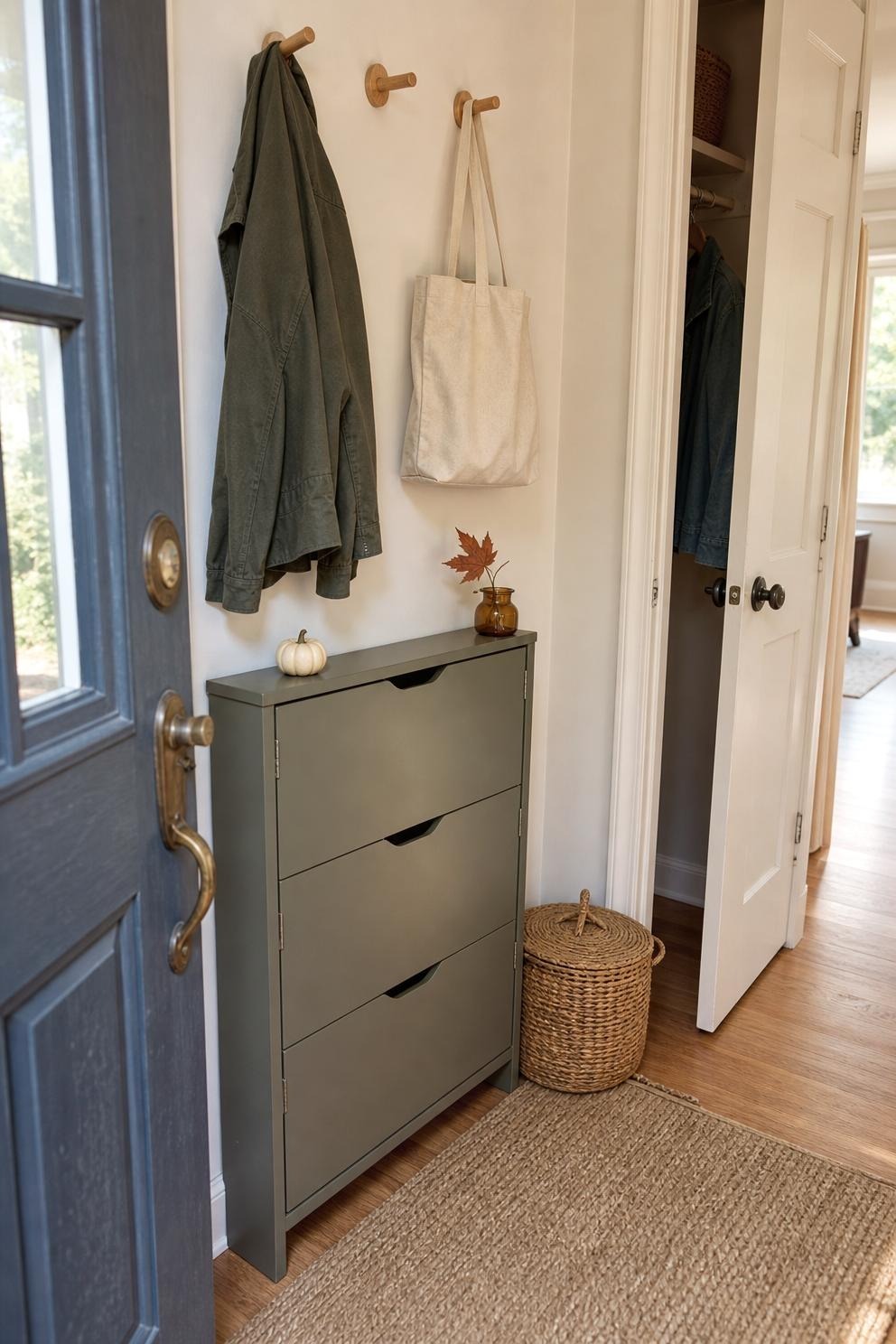
The mat right inside the door is a good place for a little personality because it already belongs there. Look for a low, flat coir mat with leaves, acorns, or a thin rust border. Skip thick rugs that curl up at the edge or anything you would trip over while carrying groceries.
6. Make one basket earn its place
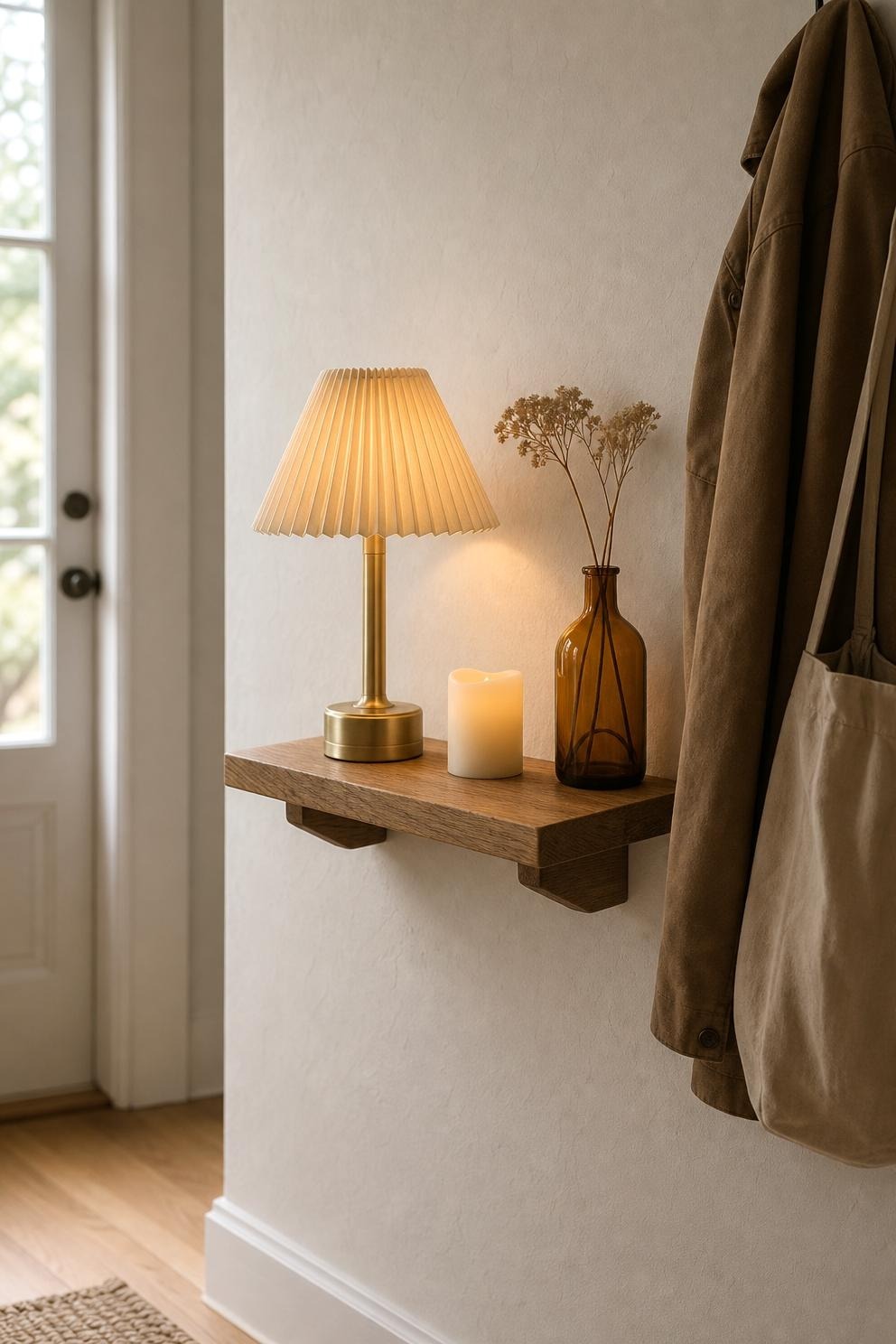
A basket can be part of the look if it solves a daily problem. Tuck one completely under a console with a folded throw, gloves, or dog leash inside. The autumn color comes from the textile, but the basket is still doing real work.
If it ends up in the door opening, skip it. The prettier choice is the one you will not kick every morning.
7. Build the palette around what you already own
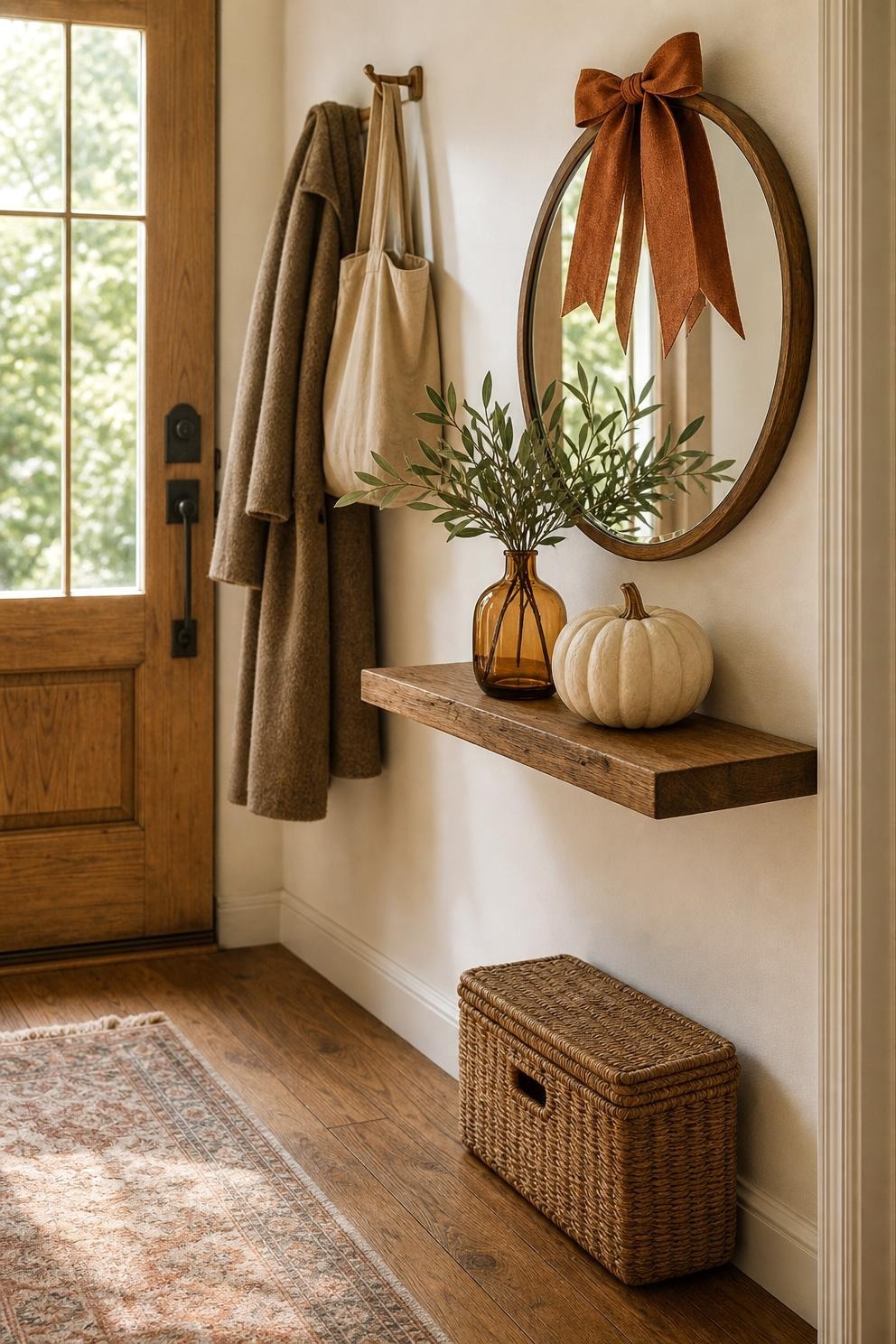
Fall does not need to mean orange everywhere. Start with the colors already in the entry, then bring in two or three of these: rust, amber, olive, cream, and dark wood. A brown frame, green door, or old brass hook can be part of the palette too.
The fastest edit is often removing something. Leave space around the pieces you keep and the entry will feel more like a home someone actually walks through.
How to Set Up the Entry Without Blocking It
- Open the front door fully and mark the swing with painter’s tape.
- Carry a grocery bag through the narrowest part of the route.
- Place one seasonal focal point outside that route.
- Put keys, shoes, and bags back where they normally land.
- Remove anything you’ll have to step around or move every day.
Common Mistakes in a Narrow Fall Entry
- Setting a basket inside the door swing because the door clears it only when opened carefully.
- Adding a thick rug whose edge catches shoes or blocks the door.
- Filling the console until there isn’t a place for keys and mail.
- Hanging a wreath or branch where a shoulder bag will catch it.
A quick way to choose your look
- Have a console? Start with dried branches and amber glass.
- Have a blank door? Use a small dried wreath.
- Have a mirror? Give it one ribbon or clipped stem.
- Have no extra surface? Let the doormat carry the pattern.
- Have a drop zone that gets messy? Make one basket useful before you add anything decorative.
Sources
- U.S. Access Board: Accessible Routes provides a useful benchmark for clear paths and stable, slip-resistant surfaces. Those federal standards do not automatically govern a private home, but the measurements make a sensible planning check.
- U.S. Consumer Product Safety Commission: Holiday Safety recommends keeping burning candles in sight and away from flammable items, with flameless candles when possible.
What to Read Next
- Small Entryway Ideas Without a Mudroom helps with the everyday shoes, bags, and keys that tend to overwhelm a narrow hall.
- A Dried Fall Wreath That Lasts Past October walks through a natural wreath that can stay up through Thanksgiving.
- Apartment Fall Decor With No Mantel Needed takes the same restrained fall palette into a living room and kitchen.
- Christmas Entryway Decor for a Narrow Entry carries the clear-path approach into greenery, candles, and winter light.