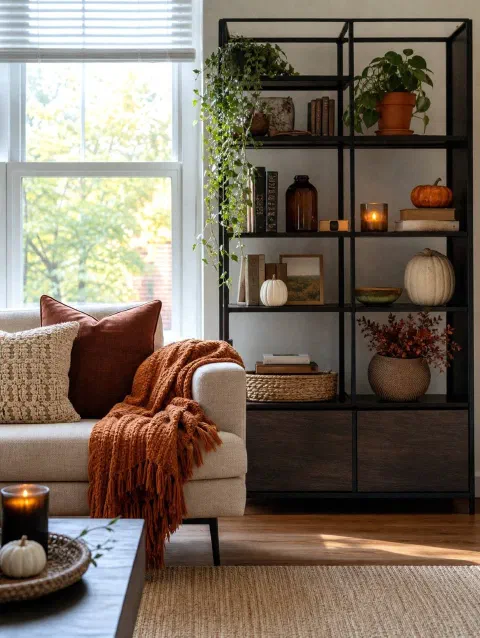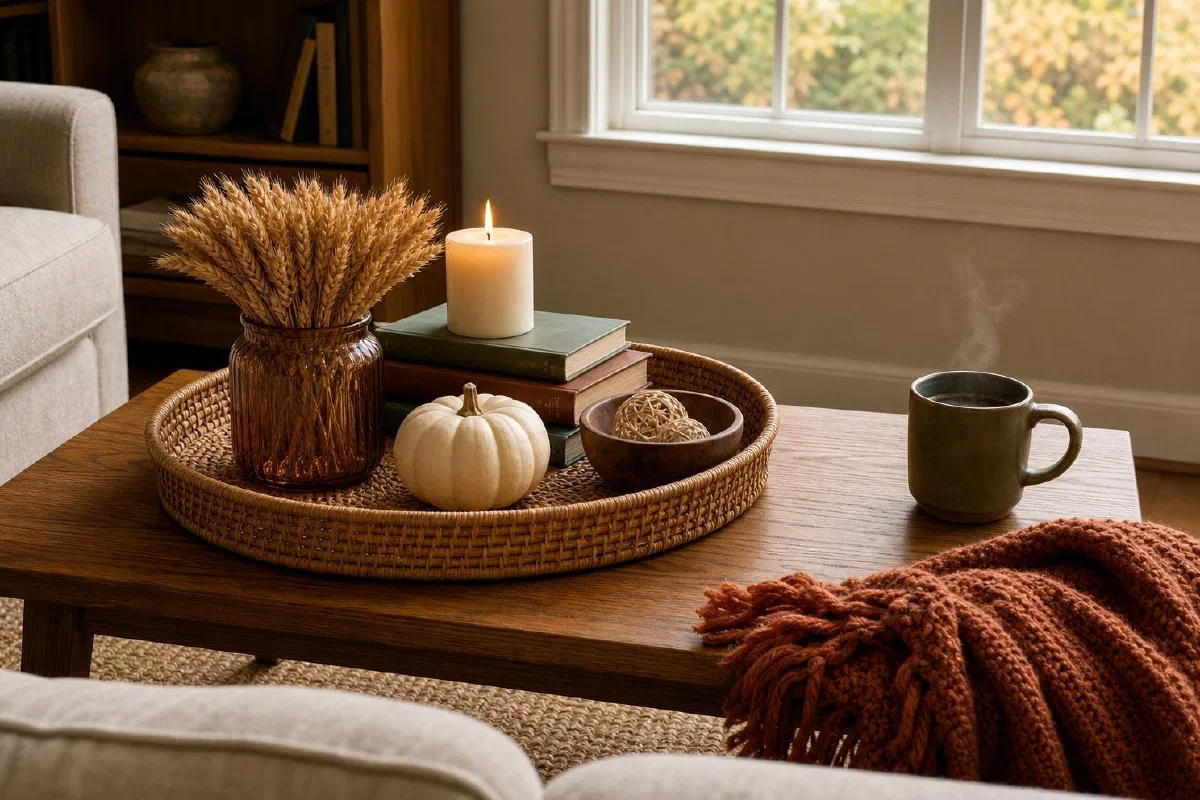
Most fall coffee table decor you have saved was photographed on a table about four feet long, in a room where nobody was about to put a laptop down.
That is the whole problem. The ideas are fine. The scale is wrong. A small coffee table is often 36 to 40 inches long and 20 inches deep, and it is also the only surface in the room, which means it holds the remote, the mug, the mail, and somebody’s feet. Decorate it like a photo and you lose the table. Skip it entirely and the room never turns the corner into fall.
The fix is not fewer ideas. It is knowing which two thirds of the table you get to use, and keeping everything under the height where it starts blocking the television. Those two numbers do most of the work, and the nine ideas below are built inside them.
If you want the underlying method rather than the ideas, how to style a coffee table for fall walks through the proportions on their own.
Product details can change; check the listing before you buy.
Which Piece Fixes Which Problem?
| If the table feels… | Start with… | Keep clear… |
|---|---|---|
| Scattered | One tray around the smallest objects | At least one third of the tabletop |
| Flat | A short vase or candle for a second height | The television sightline |
| Too orange | Wheat, wood, cream, or one white pumpkin | Extra themed signs and filler |
| Impractical | A lift-off tray | The spot where a mug or laptop lands |
The Two Rules That Govern a Small Coffee Table
Two thirds of the length, and nothing over nine inches tall.
The two thirds is the older of the two rules, and it is the one designers reach for first. Your arrangement occupies roughly two thirds of the table’s length, centred, leaving a third of the surface bare. On a 36 inch table that is about 24 inches of styling and 12 inches of open wood. That open third is not wasted. It is where the mug goes, and it is the reason the table reads as decorated rather than covered.
The nine inches is about sightlines. Sit down on your sofa and look at the television. Anything on the coffee table that rises into that line gets moved within a week, which is how good intentions end up in a cupboard by October. Nine inches clears the view from a standard sofa seat while still giving you enough height to look deliberate. Tall dried stems are the usual offender here, and they are easy to trim.
Two numbers, and the rest is choosing objects.
1. Start With a Tray, Not With Decor
A tray is the single piece that makes a small table work, and it is the thing most people skip.
Everything you put on the table without a tray reads as clutter, because there is no edge telling the eye where the arrangement stops. Put the same objects on a tray and they become one object. The tray also means the whole arrangement lifts off in a single motion when you need the table for dinner or a jigsaw puzzle, which is the difference between decor that survives October and decor that gets dismantled in week two.
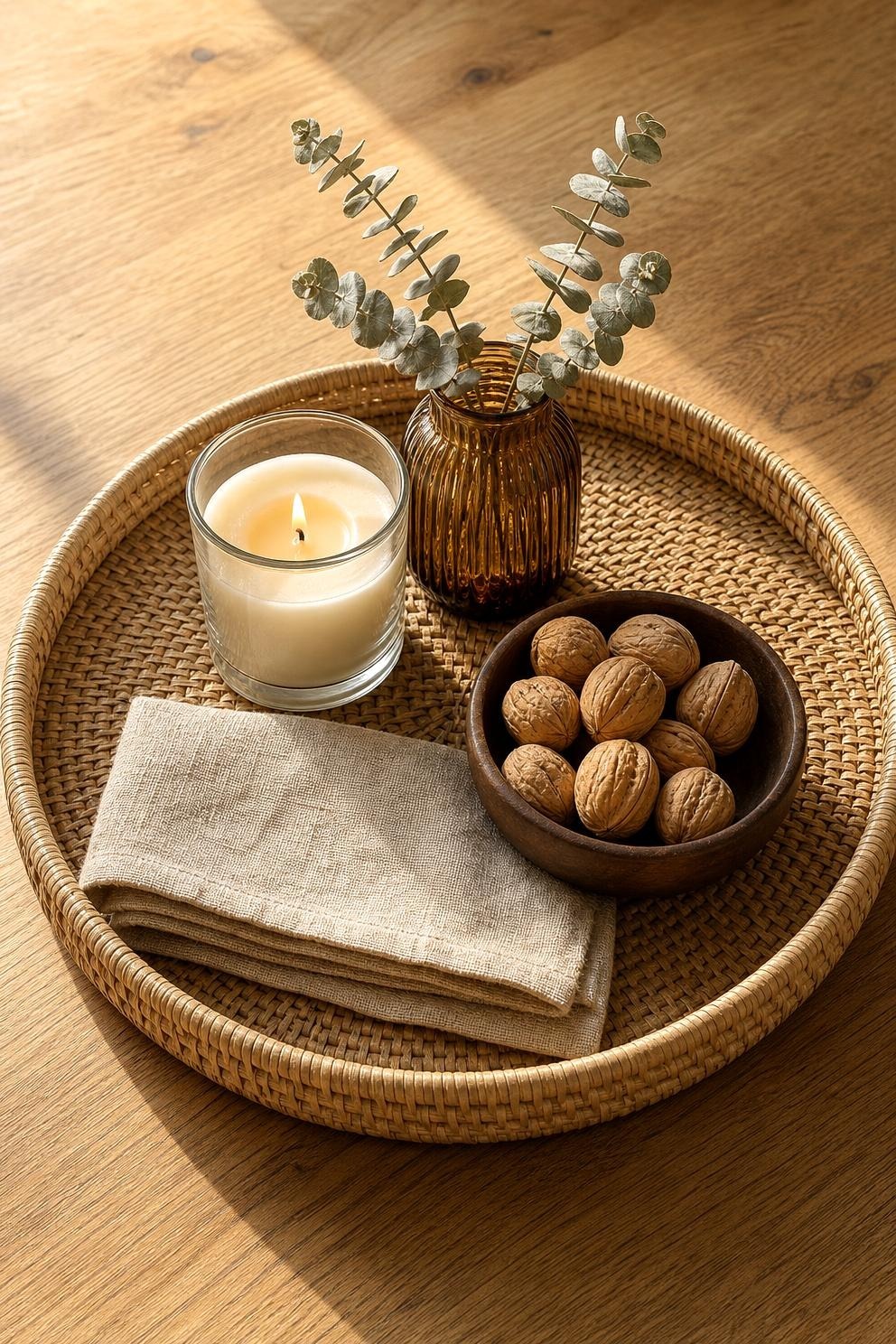
Size it to roughly half the table’s length. On a 36 inch table, an 18 inch round or a 20 by 12 rectangle sits right. Round trays soften a rectangular table and are more forgiving in a room where people walk past on all sides. Wood, rattan and dark metal all read as autumn without any orange involved.
2. Dried Wheat, Cut Down to Size
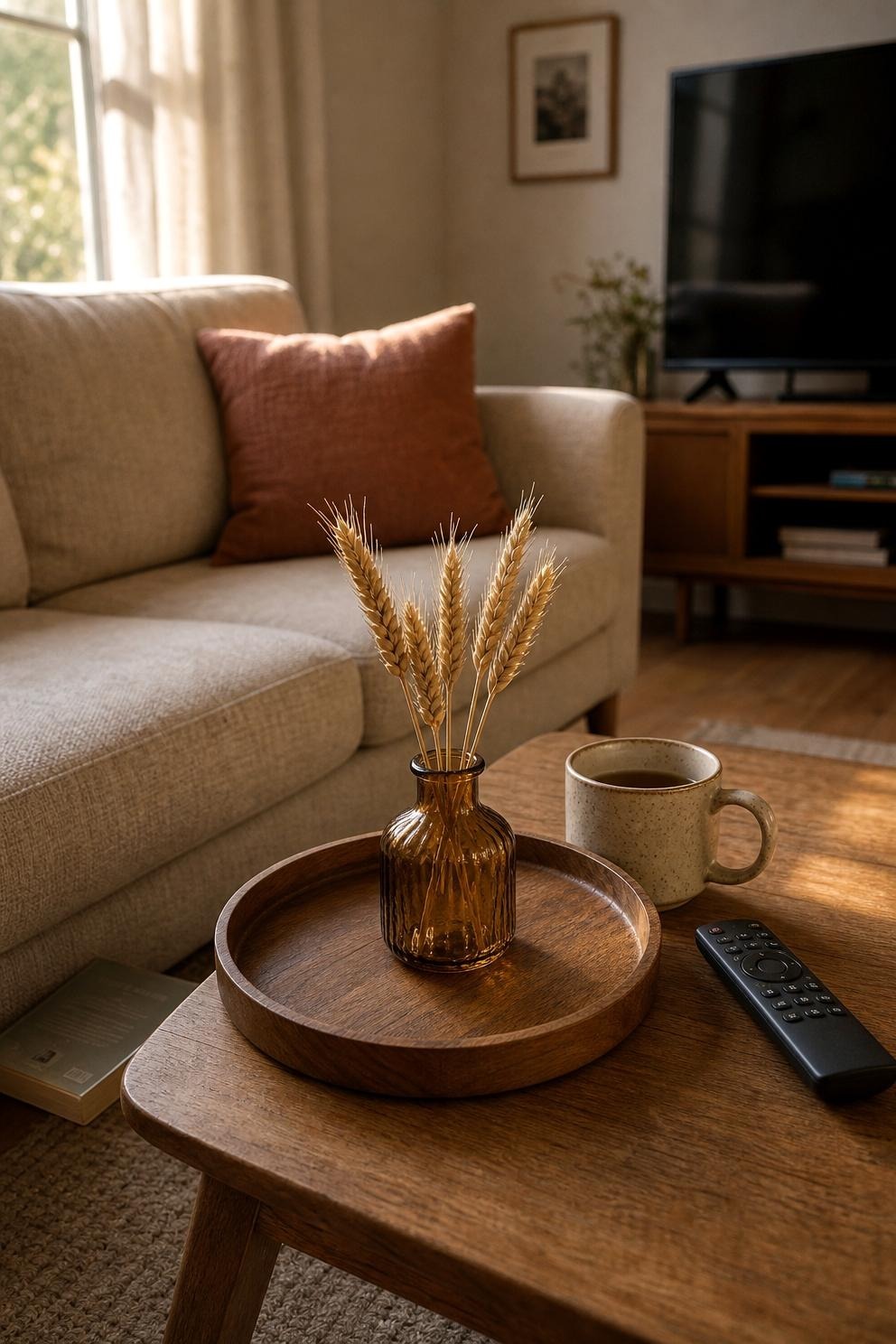
Dried wheat is the fall stem that costs the least and lasts the longest, and it arrives far too tall.
A bundle sold as 12 or 17 inch stems will put the heads well above the nine inch ceiling once it is standing in a vase. Cut them. Kitchen shears, cut from the bottom, and take more off than feels comfortable, because the heads are what you are looking at and the stalks are just delivery. In a six inch vase you want the overall silhouette landing around eight to nine inches.
Wheat also solves the colour problem without shouting. It is a warm gold-beige that reads as autumn against almost any sofa, and it does not fight a room that is already grey or blue. Pampas grass does the same job with more drama and considerably more shedding; if you have a cat or a toddler, wheat is the calmer choice.
3. One White Pumpkin, Not Five Orange Ones
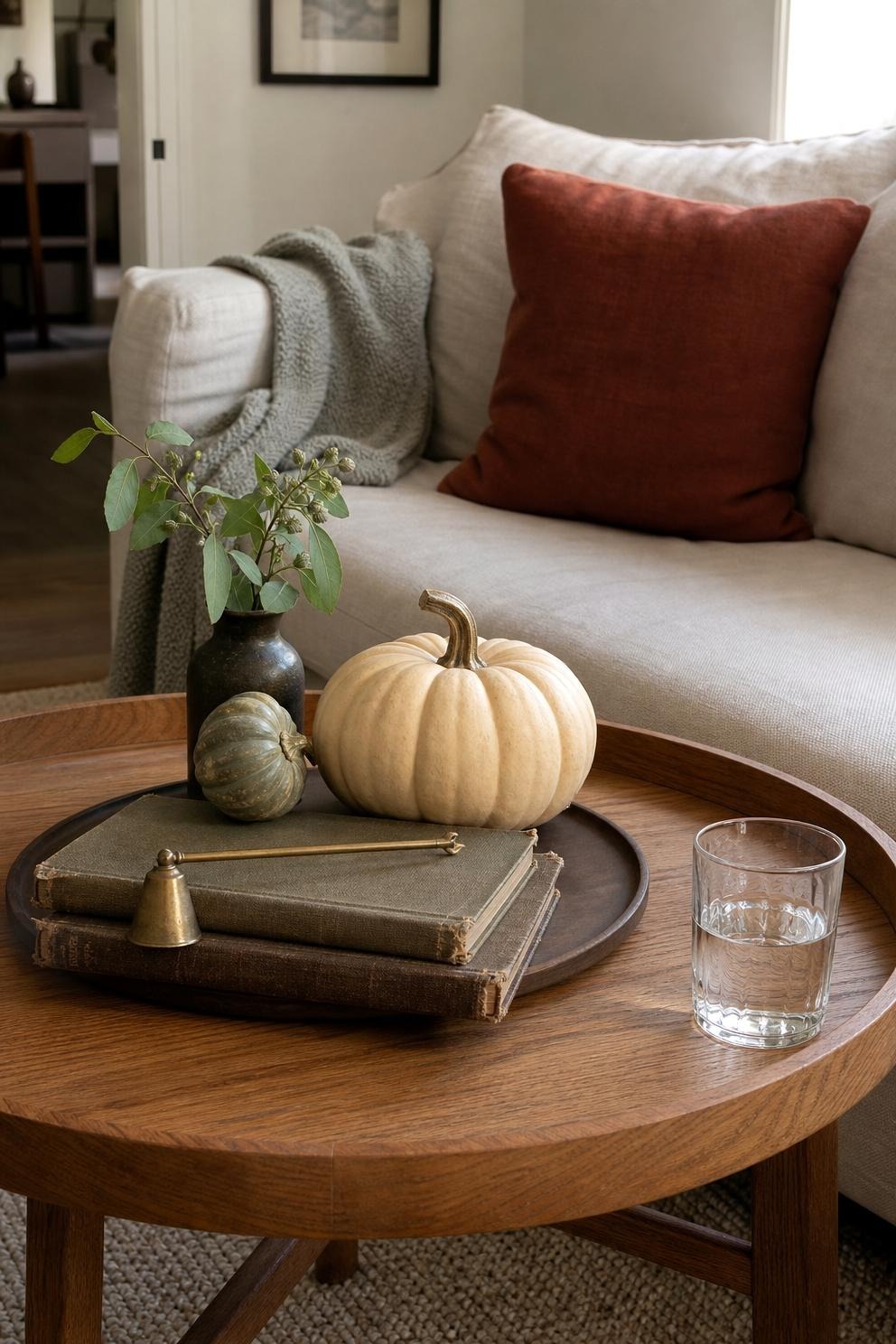
The instinct on a small table is to add several small pumpkins. It backfires, because five small objects read as scatter and one medium object reads as a decision.
A single white or pale green pumpkin about five to six inches across, sitting on the tray beside the vase, does more than a cluster. White also stays credible from early September through Thanksgiving, where bright orange announces Halloween and looks stale by mid-November. If you want a second one, make it noticeably smaller and set it touching the first rather than spaced apart, so the two read as one shape.
Real pumpkins on a coffee table last about six weeks indoors and will eventually weep onto the surface, which is another quiet argument for the tray.
4. Books as the Riser Underneath Everything
Two or three hardbacks stacked flat are the cheapest height you will ever buy, and you already own them.
The stack does two jobs. It lifts a candle or a small vase up out of the flat plane so the arrangement has a middle layer, and it fills horizontal space so the tray does not need more objects. Stack largest on the bottom, spines facing out if the covers are ugly and covers up if they are good. Three books is roughly two inches of lift, which is exactly the amount most arrangements are missing.
This is also where the two thirds rule matters. Books spread sideways, so they let you occupy the width you are allowed without adding anything tall.
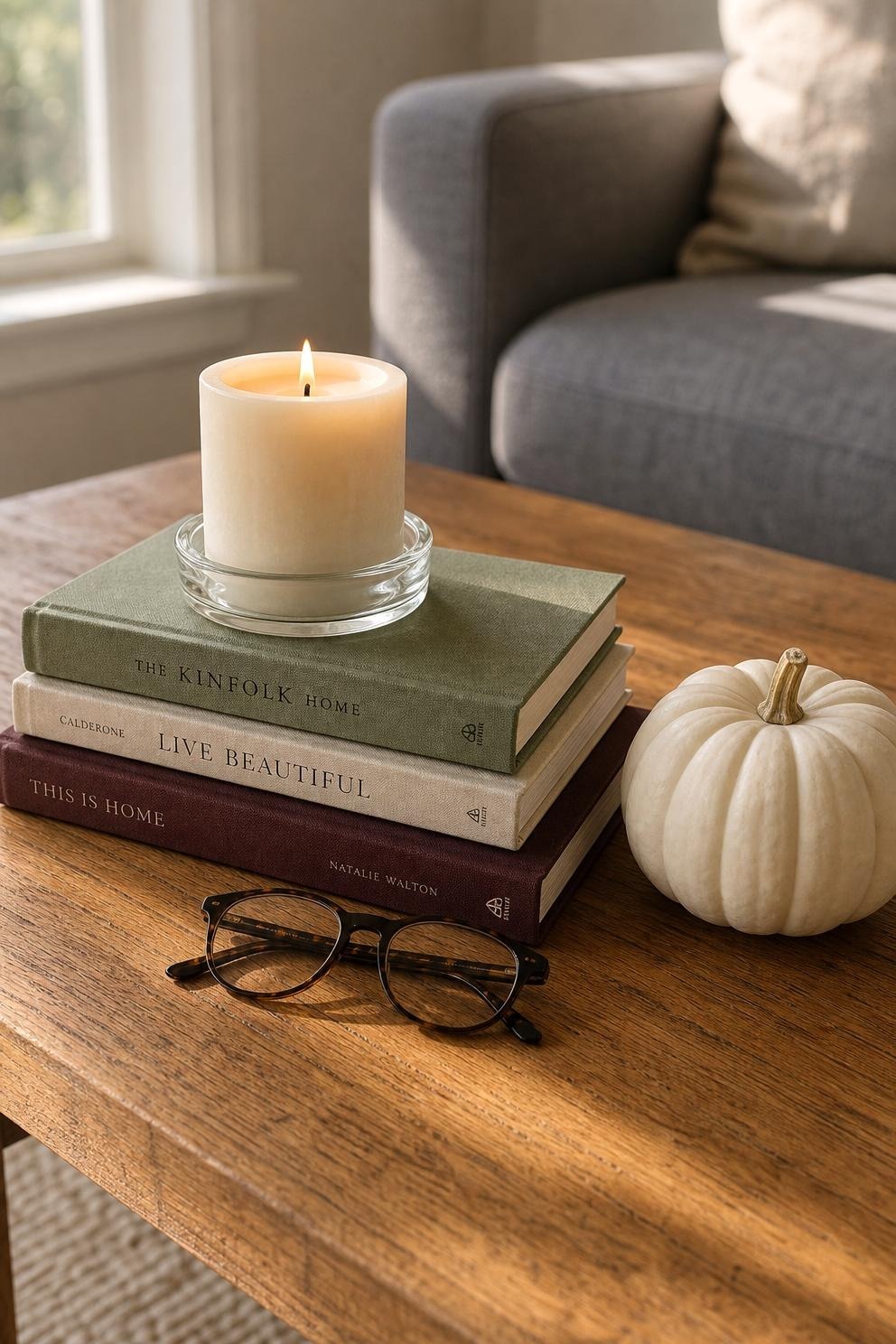
5. One Candle That Is Actually Lit
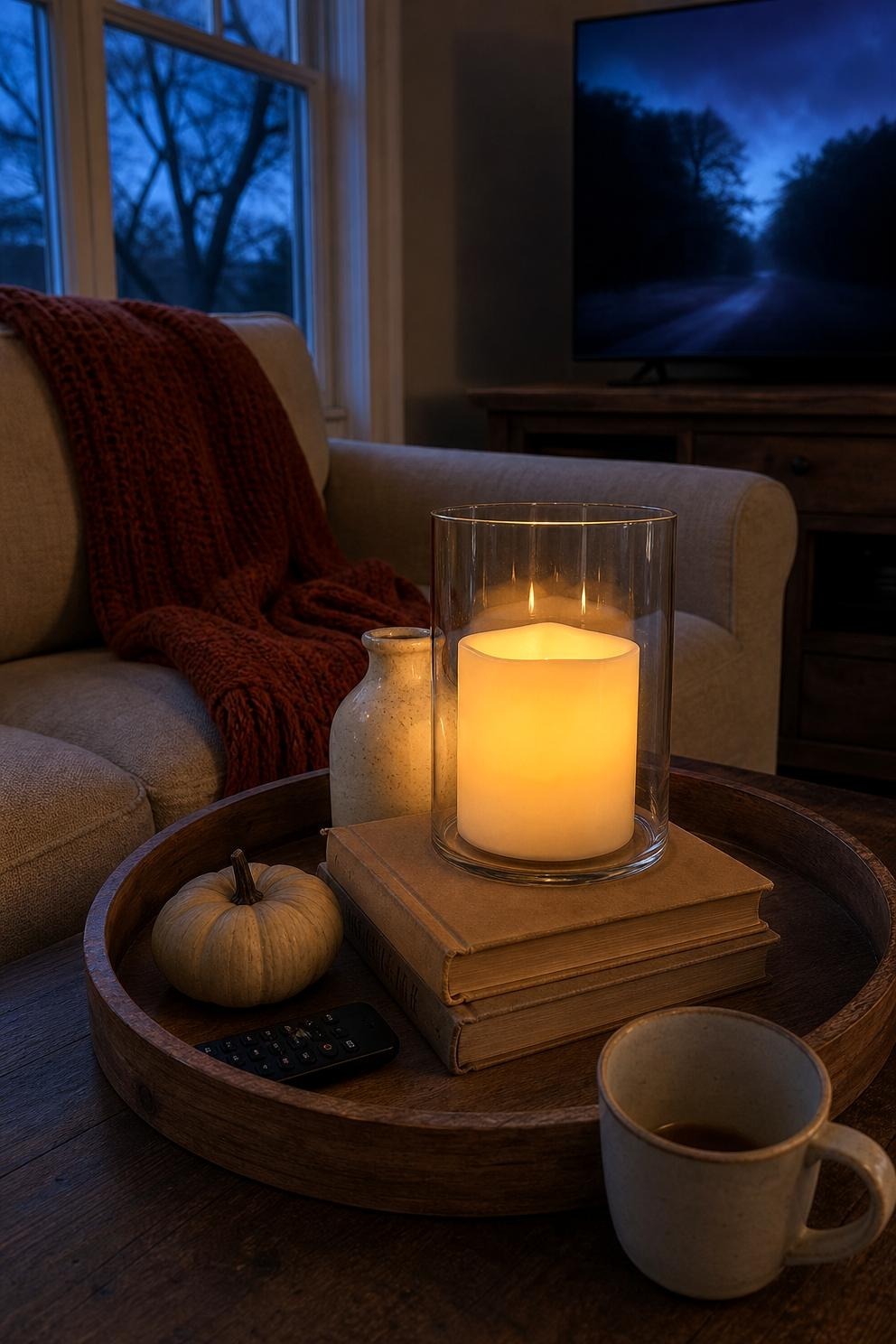
An unlit decorative candle is an ornament. A lit one changes the room, and on a small table it is the highest return per inch of surface you will find.
A wide pillar in a simple glass holder is the safest shape near a table that people reach across. Skip the tall taper on a coffee table, because it sits directly in the sightline and directly in the path of a sleeve. Scent matters more here than on a mantel, since you are within three feet of it: warm and low is better than sweet and loud, and anything that smells like a bakery gets tiring by week two.
Battery pillars have become genuinely convincing and are the right answer if the table is where a cat sits. Look for one with a flickering warm bulb rather than a steady cool one.
6. A Bowl, and Something Textured In It
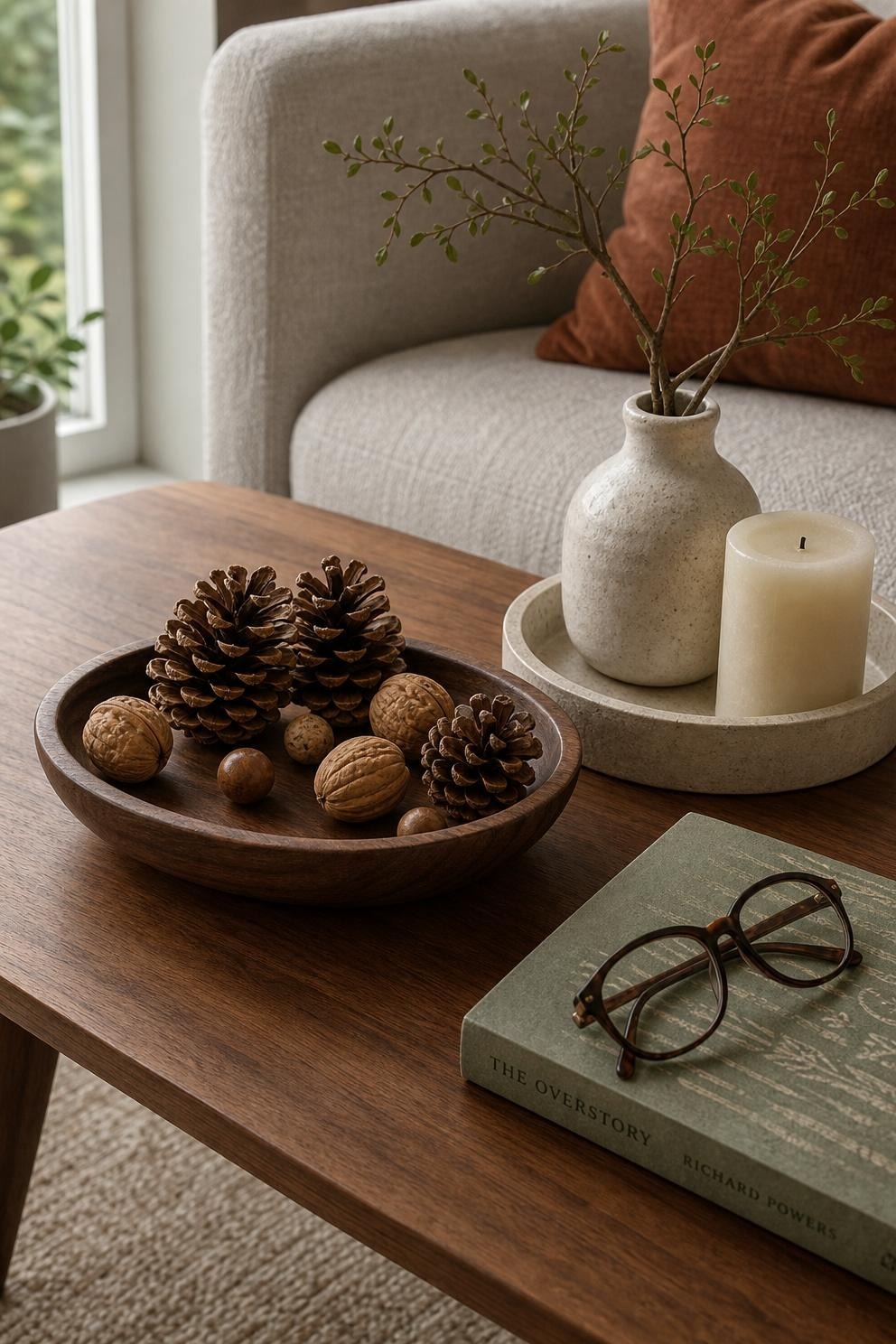
A shallow bowl with texture in it is the trick that makes a small arrangement look finished, and it is endlessly cheap to refill.
Twine balls, wooden beads, pinecones from a walk, small dried gourds, unshelled walnuts. All of it reads as autumn and none of it needs to be bought new every year. The bowl gives the eye somewhere to rest between the tall thing and the flat thing, and it is the layer most small tables skip.
Keep the bowl low and wide rather than deep. A deep bowl hides its own contents from someone sitting on the sofa above it, which defeats the point.
7. Dried Hydrangea Instead of a Bouquet
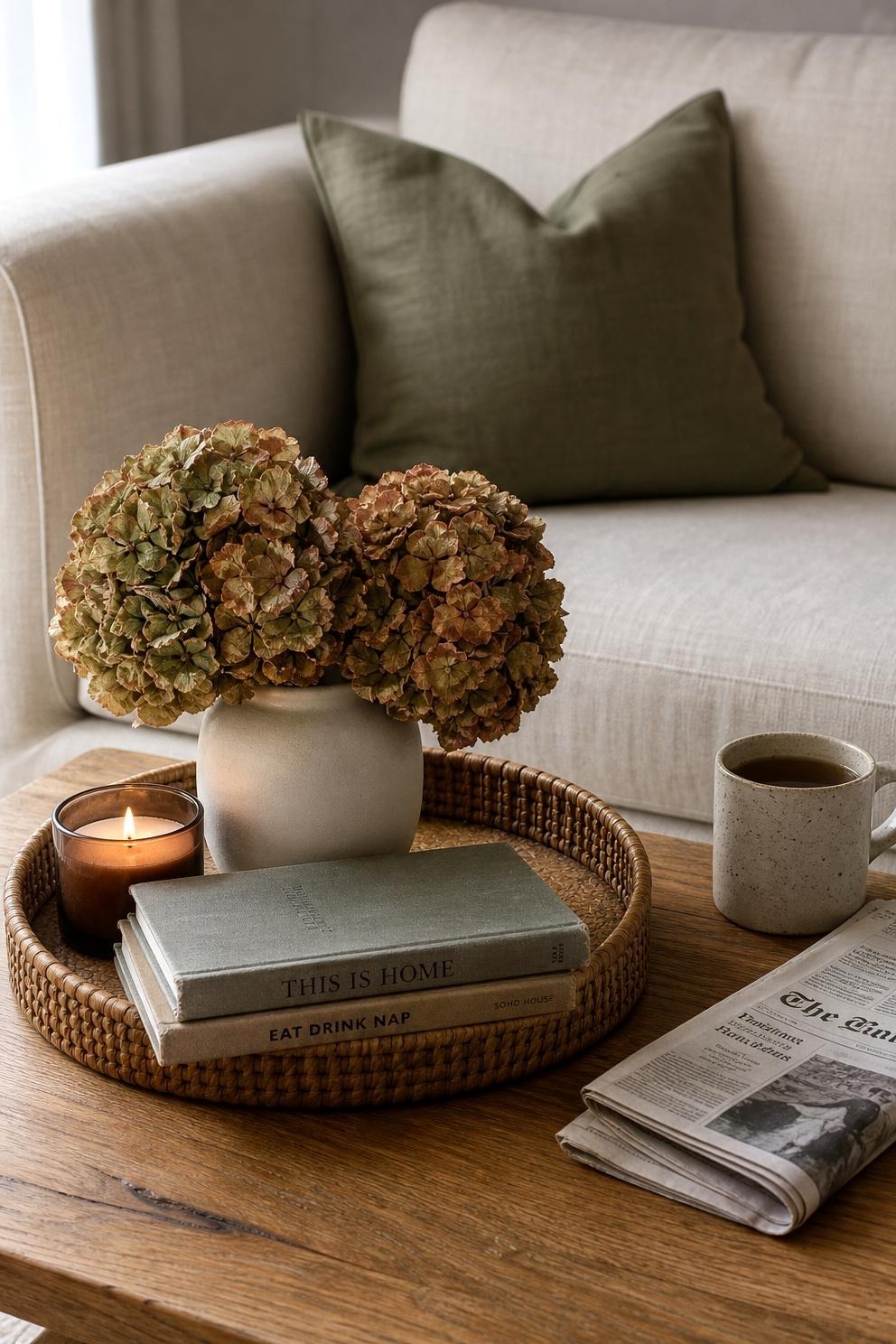
Fresh flowers on a coffee table are lovely for four days and a chore on the fifth.
Dried hydrangea heads solve it. They hold their shape for a full season, they come in the exact faded rust, sage and antique pink that fall wants, and one or two heads fill a small vase completely, so you are not buying a bunch. If you have hydrangeas in the garden or a neighbour who does, cut them in late summer once the heads feel papery rather than soft, and they dry standing in an empty vase with no further effort.
Three heads in a squat opaque vessel is a complete arrangement on its own. It is also the single easiest thing on this list to get right.
8. Texture From the Sofa, Pulled Onto the Table
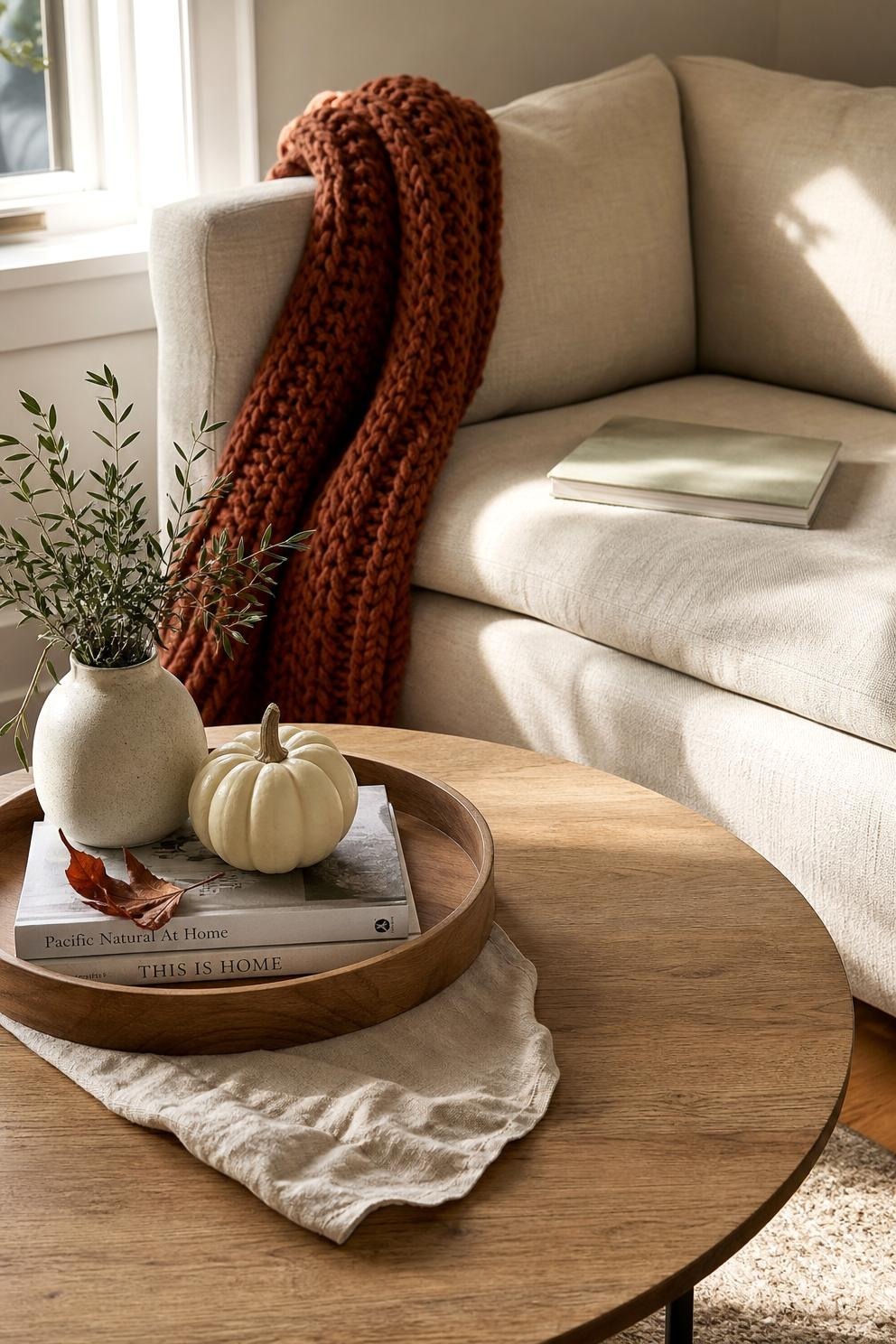
The coffee table does not have to carry fall on its own, and on a small table it should not try.
A chunky knit throw with one corner falling onto the table edge, or a linen napkin folded under the tray, connects the table to the rest of the room and adds warmth without occupying surface area. This is the move that stops a styled tray from looking like an island in the middle of an unchanged room. Deep rust, oatmeal, sage and burgundy all do the job; if the sofa is already a strong colour, go quieter on the table.
For the wider version of this, cozying up a living room for fall without a new sofa covers what to change around the table.
9. Leave the Last Third Empty and Mean It
The hardest idea on the list is the one that involves not adding anything.
Once the tray is styled, stop. The bare third of the table is doing structural work: it is what makes the styled part look intentional, and it is the only reason the table is still usable. Every time you fill it, you are trading a working surface for a slightly fuller photograph, and you will take it back within a fortnight anyway when you need somewhere to put a plate.
If the empty space genuinely bothers you, the answer is a bigger tray, not more objects. Same footprint, more contained.
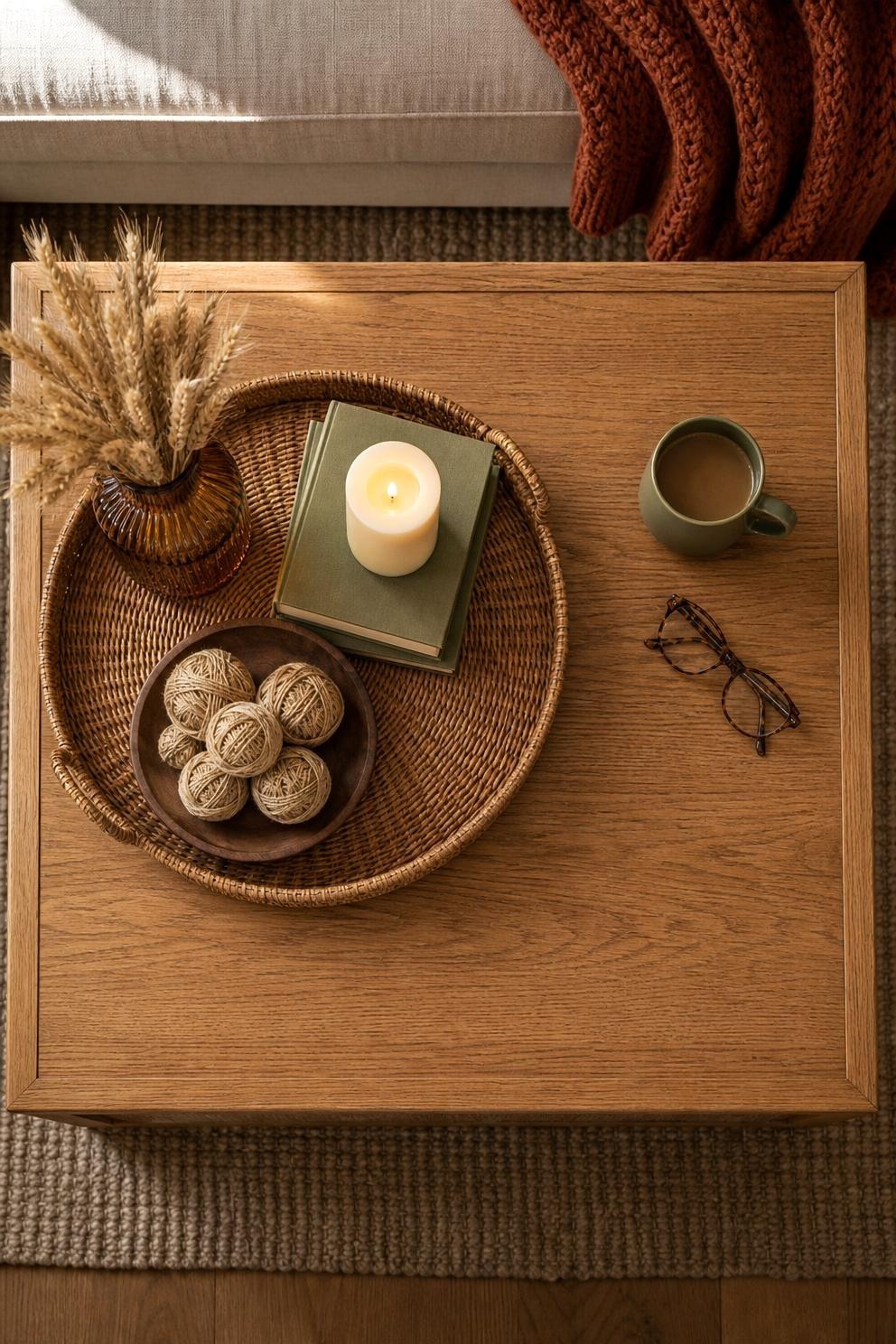
Putting the Nine Together in Order
Build it in this sequence and it comes together in about ten minutes.
- Clear the table completely. Everything off, including the remote.
- Set the tray, centred, occupying about half the length.
- Add the book stack on one side of the tray.
- Put the tallest thing, usually the vase of wheat or hydrangea, diagonally opposite the books.
- Sit down on the sofa. If the stems break the sightline to the television, trim them now rather than later.
- Set the candle on the book stack.
- Add the pumpkin and the bowl in the remaining gaps, filling low.
- Put the remote back. It lives here, and pretending otherwise is how the arrangement dies.
The diagonal in step four matters more than it sounds. Tall on one corner and low on the opposite corner gives the arrangement a direction, where tall in the middle gives you a centrepiece that looks marooned.
How to Keep the Table Working
Lift the tray once a week and wipe beneath it, especially if the table holds drinks. Dust dried stems outdoors or over a sink. If real-wax flameless candles sit in direct sun, move them before the wax softens. Most important, keep the open third open; once mail and remotes fill that space, clear those daily-use pieces rather than adding another basket to the arrangement.
Questions People Actually Ask
How do you decorate a coffee table for fall?
Work in three heights inside one tray. A tall element around eight or nine inches such as dried wheat or hydrangea, a middle layer from a stack of books with a candle on top, and a low element like a small pumpkin or a bowl of textured filler. Keep the whole arrangement to roughly two thirds of the table’s length and leave the last third bare so the table still works.
What is the 2/3 rule for coffee tables?
The arrangement should span about two thirds of the coffee table’s length, leaving a third of the surface clear. On a 36 inch table that is roughly 24 inches of styling. It applies to the tray or grouping as a whole rather than to any single object, and it is the fastest way to stop a small table looking crowded.
What should I put in the middle of my coffee table?
On a small table, put a tray in the middle and build inside it. The tray gives the grouping an edge, keeps the pieces reading as one object rather than as clutter, and lets you lift the whole arrangement off in one motion when you need the table. Then fill it with one tall element, a book stack, and one low element.
What are some good fall centerpiece ideas for a coffee table?
Dried wheat cut to about nine inches in a squat vase, two or three dried hydrangea heads, or a wide pillar candle sitting on a stack of books. All three hold for the whole season, stay under the sightline to the television, and cost very little. Skip fresh flowers, which need replacing weekly, and skip tall tapers, which sit directly in the way.
How tall should coffee table decor be?
Keep it under about nine inches. Sit on your sofa and look across the table at the television or at whoever is sitting opposite. Anything that interrupts that line gets moved within a week. Nine inches is tall enough to give the arrangement a real silhouette and short enough to stay out of the way.
How do I decorate a small coffee table without it looking cluttered?
Use one tray, cap the arrangement at two thirds of the table’s length, and work in odd numbers with three objects rather than five or six. Clutter on a small table is almost always a scatter problem rather than a quantity problem: five small items spread across the surface look messy, while the same five grouped on a tray look styled.
When should I put out fall decor?
Late August through the first week of September is when it stops feeling early. Choosing white pumpkins, dried wheat and hydrangea over bright orange and Halloween motifs buys you a longer run, because that palette still reads correctly right through to Thanksgiving without a second swap.
Sources
- Iowa State University Extension: Growing Hydrangeas in Iowa confirms that hydrangea blooms can be used as cut and dried flowers.
- U.S. Consumer Product Safety Commission: Holiday Safety recommends keeping burning candles in sight and away from flammable items, with flameless candles as the easier option.
What to Read Next
- How to Style a Coffee Table for Fall explains the tray, height, and open-space method behind these nine looks.
- Apartment Fall Decor: 8 Ideas With No Mantel Needed carries the palette into shelves and windows without adding floor clutter.
- Cozy Up a Living Room for Fall Without a New Sofa handles the larger room once the table is settled.
- Warm Color Palettes for a Cozy Living Room helps match rust, cream, brown, and green to the colors already in the room.