Fall cleaning does not have to mean pulling the whole house apart on the first cool Saturday.
Start with the things that make the coming season safer or make ordinary days easier. Test the alarms. Check the filter and dryer area. Clear the entry. Look through the pantry and medicine cabinet. If you still have energy after that, move into the softer work: blankets, dust, crowded surfaces, and the chair that collects everything.
This fall cleaning checklist is split into two rounds on purpose. The first round is enough for one weekend. The second is optional.
Start with smoke alarms, the HVAC filter, and the dryer vent
These are the jobs to do before buying storage bins or styling the porch. Put a check beside each one and stop when the round is finished.
- Test the smoke and carbon monoxide alarms.
- Check the HVAC filter and replace it only if it is due.
- Clean the dryer lint area and inspect the dryer vent path.
- Clear the entry drop zone and the walking routes you use every day.
- Make a quick pantry inventory before writing a fall grocery list.
- Pull expired or unused medicine for a medicine take-back option.
Test the alarms you depend on
Press the test button on every smoke and carbon monoxide alarm. The U.S. Consumer Product Safety Commission recommends testing these alarms monthly and replacing their batteries annually. It also recommends smoke alarms on every level, outside sleeping areas, and inside each bedroom, with carbon monoxide alarms on each level and outside sleeping areas.
If an alarm is missing, damaged, past the replacement date printed by its manufacturer, or still chirps after a fresh battery, follow the product instructions or replace it. Do not wait for a seasonal checklist if an alarm needs attention now. See the CPSC’s current carbon monoxide alarm guidance .
Check the HVAC filter instead of changing it by habit
Pull the filter and look at its condition. Write the filter size and replacement date on your phone or on the furnace door so the next check does not begin with guesswork.
The EPA says to replace furnace and HVAC filters according to the manufacturer’s recommendations. Many manufacturers suggest 60 to 90 days, but dust, pets, smoke, system use, and the filter itself can change that interval. The EPA also warns that a higher-efficiency filter has to fit the system, so do not force a thick or highly rated filter into equipment that cannot use it. Its guide to air cleaners and HVAC filters explains the limits.
How often should you replace a furnace filter in fall?
Replace it when it looks dirty, not on the calendar. Dust, pets, smoke, and system use all change how fast a filter loads up, so a fixed fall date can waste a filter that still has life in it or leave a clogged one in place. When you buy, the EPA suggests at least MERV 13, or as high a rating as your system can handle.
That last half is the part people skip. A filter thicker than the equipment can pull air through makes the system work harder without cleaning the air any better. The EPA’s guide to air cleaners and HVAC filters frames it as a match between filter and system, so your furnace or air handler sets the ceiling and the filter’s condition sets the timing.
Give the dryer vent and lint area one careful look
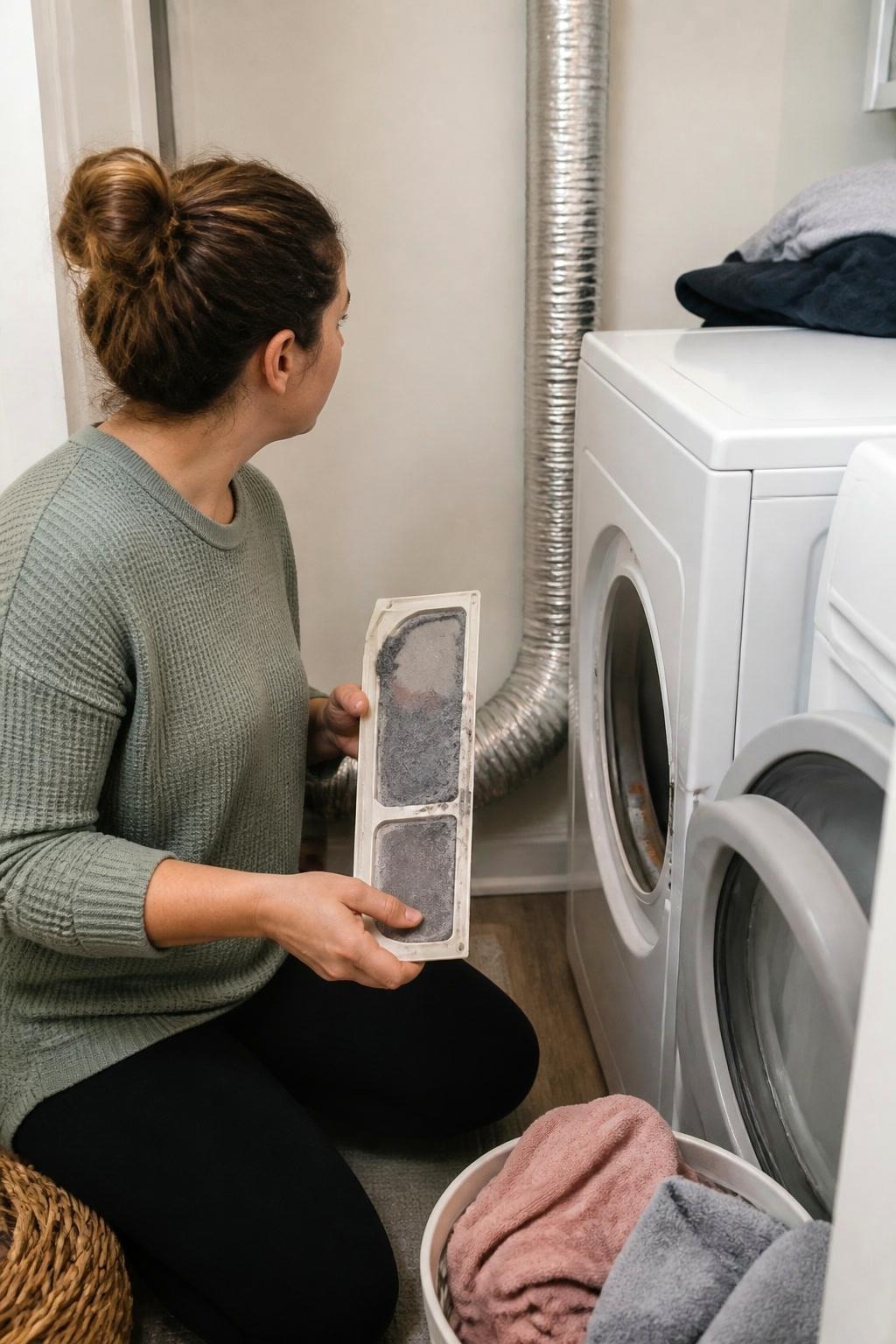
Clean the lint filter, then look behind the dryer if you can do so safely without straining the cord or gas line. The vent should not be crushed, kinked, or blocked. Confirm that the outdoor vent cover opens while the dryer runs.
The U.S. Fire Administration says to clean the lint filter before and after each cycle, check the venting system for damage or restriction, and keep the area behind the dryer free of lint. Its clothes dryer fire-safety guidance is worth saving. If the appliance is gas-powered, difficult to move, or the vent needs service, call a qualified professional instead of turning a cleaning day into a repair job.
Clear the entry drop zone before you clear a closet
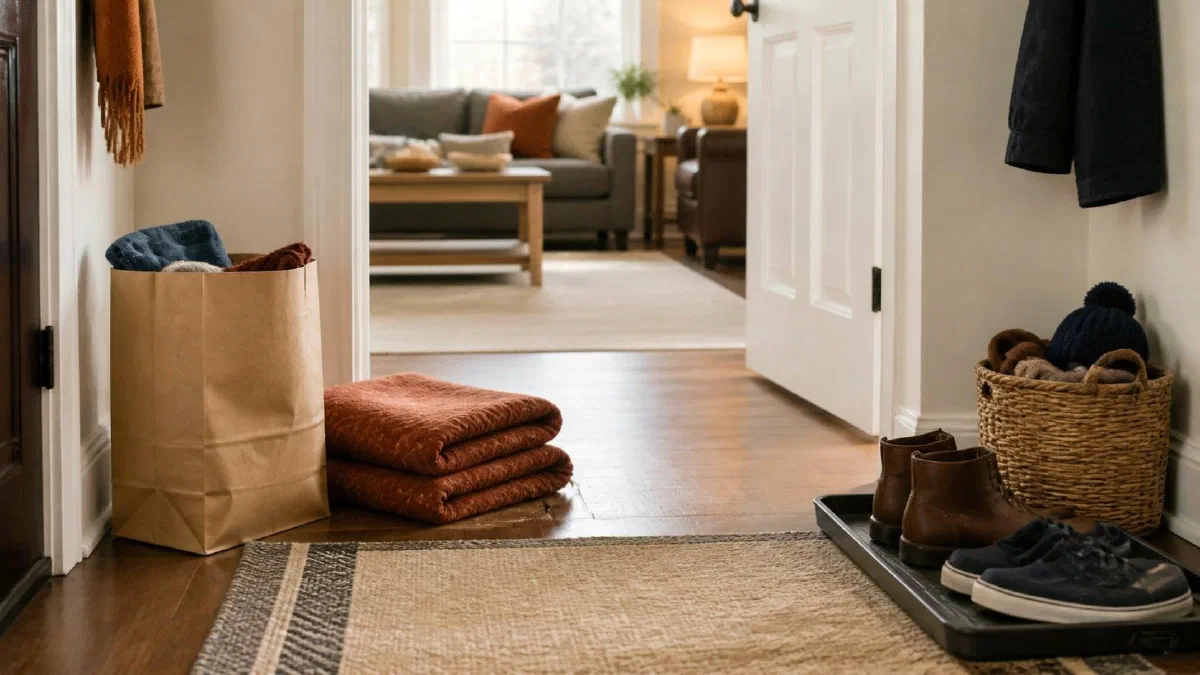
Walk from the main door to the kitchen, bathroom, and bedrooms. Move shoes, delivery boxes, baskets, cords, and anything else you step around. Give the entry one landing spot for the things that arrive with colder weather: a tray for wet shoes, hooks for daily coats, or one basket for hats and gloves.
Do not organize every coat you own. Make the route you use tomorrow morning work better.
Make a pantry inventory before the store
Pull forward the cans, grains, soup, tea, and baking supplies you already want to use this fall. Make a short meal list around them before you add seasonal groceries.
Do not throw away shelf-stable food only because a quality date has passed. The USDA explains that, except for infant formula, common food date labels generally describe quality rather than food safety. Look for damaged packaging, rust, leaks, deep dents, pests, moisture, or spoilage, and follow the product’s storage instructions. The USDA’s food date-labeling guide gives the useful distinction.
Set unused medicine aside for a take-back option
Check the medicine cabinet for expired, unwanted, or unused medicines. Put them in a bag or box away from children and pets while you arrange disposal.
The FDA says a drug take-back location or mail-back program is the best option for most unused medicines. It also says not to flush medicine unless it is specifically on the FDA flush list. Follow the FDA’s medicine-disposal instructions or ask a pharmacist when you are unsure. A medicine take-back bag is only a temporary holding step, so keep it secured until you can drop it off or mail it.
Choose the comfort jobs that will help most
Round two is not a test of whether you care about your home. Pick two jobs, not all four.
A useful stopping rule: If round one is finished and two comfort jobs are done, close the checklist. Do not add a hidden third round.
| If this is bothering you | Do this one job | Leave this for later |
|---|---|---|
| The sofa smells stale or looks tired | Wash one throw and the washable covers you use most | Every blanket in storage |
| Dust shows when the lamps come on | Vacuum one room’s baseboards, vents, and furniture edges | Moving every heavy piece |
| Every surface has a little pile | Clear one flat surface in each main room | Buying organizers |
| Mornings start with a search | Set up one cold-weather landing spot | Reworking the whole closet |
Wash the washable textiles that will stay within reach
Choose the washable textiles you will actually use this fall: the throw, pillow covers, bath mat, or entry rug. Read each care label, wash only what is due, and return it to the room dry and ready.
This is not the day to wash every curtain and comforter. The goal is to make the things you touch feel good again without creating a mountain of laundry.
Vacuum where warm lamplight gives dust away

Turn on the lamps you use after dinner. They will show you the edges that matter: the baseboard behind the chair, the vent near the sofa, the underside of the coffee table, and the dust line beside the bed.
Work through one room. Stop before the house becomes a maze of moved furniture.
Clear one flat surface in each main room
Take a bag or basket with you. Clear the kitchen counter where breakfast happens, the table beside the sofa, the bathroom counter, and the bedroom chair or dresser top.
Put away what already has a home. Throw away rubbish. Place donations in one bag. Anything without a home goes in the basket for one short decision round later. Do not buy a container for it yet.
Build one cold-weather landing spot
Finish with the spot that receives you at the door. It might be a boot tray, two sturdy hooks, and a small basket. In an apartment, it may be the back of a closet door and a washable mat. In a house with children, it may be one labeled hook or bin per person.
Keep the walking path clear and choose only what the household reaches for every day. Off-season coats and special-occasion gear can stay somewhere else.
Fall cleaning mistakes to avoid this weekend
Leave these jobs off this fall cleaning checklist unless they solve a current problem:
- emptying every cabinet
- washing every wall
- buying matching storage containers
- changing decor in rooms you rarely use
- pulling out furniture you cannot move safely
- sorting sentimental boxes when you are already tired
The house does not need to look newly staged. It needs safer equipment, clearer paths, useful food, and a few rooms that feel easier at the end of the day.
The same restraint works outside. Leaving the seed heads and hollow stems standing is less work than a full garden cutback, and the birds spend the winter on what you leave.
Keep the reset from becoming another routine to manage
Keep the checklist where you can find it next fall, but do not turn it into a weekly system. Add dates only to the safety and maintenance jobs that truly need them. Let the comfort round change with the house.
If all you finish is round one, the reset still counts.
Related reading for a calmer home
- 10 things to declutter this week helps when one room feels too full but a whole-house clean is too much.
- 9 slow living habits that change how home feels keeps the focus on routines that reduce pressure instead of adding productivity rules.
- A five-step slow morning routine gives the cleared entry and kitchen a gentler job the next morning.
- The living-room edit that started with taking things out is the next step if crowded surfaces are the part that keeps bothering you.