The easiest inexpensive fall centerpiece may already be in your kitchen: set a bowl of apples beside two flameless candles on a folded tea towel. For another option, put dried stems in a clean jar or line up small gourds down the table. Start with what you own and buy only what the arrangement needs.
Inexpensive Fall Centerpiece Ideas
Last updated:
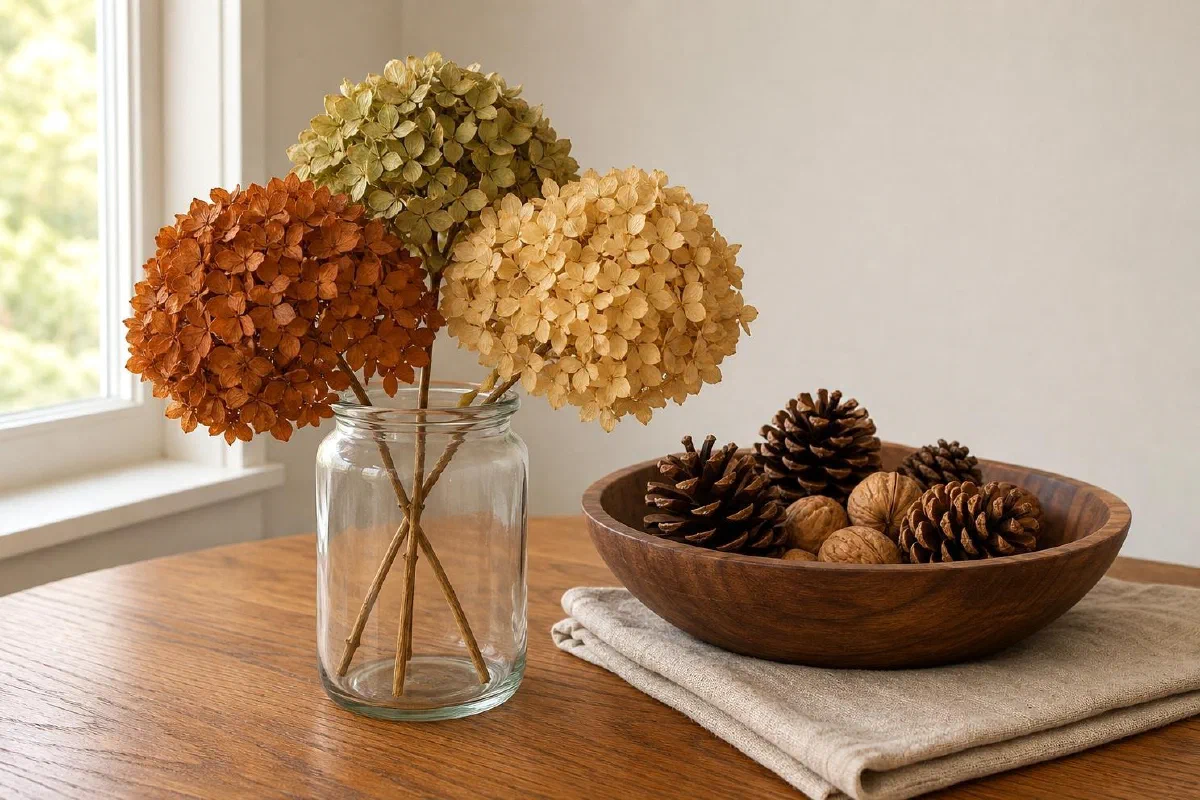
A plain jar and a few stems are enough. Check the cupboards before buying another vase.
Which source fits your budget?
| Start here | Useful material | What to skip |
|---|---|---|
| Kitchen | A shallow bowl, jar, tray, or jug | Buying a new vessel before checking cupboards |
| Garden | Dried hydrangea, branches, seed heads | Wet or insect-damaged material brought straight inside |
| Grocery store | Pears, gourds, eucalyptus | A large bouquet that blocks the sightline |
| Dollar store | Plain glass and flameless candles | Glitter, imitation leaves, and slogan signs |
For arrangements sorted by effort rather than cost, eight easy fall centerpiece ideas that need no crafting covers the same ground from the other direction.
Start with your own kitchen
Try a wide serving bowl for fruit, nuts or pinecones. A shallow bowl lets people see the contents from their seats.
A cleaned glass jar works as a vase. Soak off the label in warm water and remove any leftover adhesive. For taller branches, choose a jug heavy enough to stay upright.
A tray groups a few smaller objects and lets you lift the arrangement away for dinner. Add apples or pears, walnuts in their shells, or a folded tea towel you already own.
Try the pieces on the table before buying a filler. Leave room for plates and serving dishes.
Add dried hydrangeas or branches
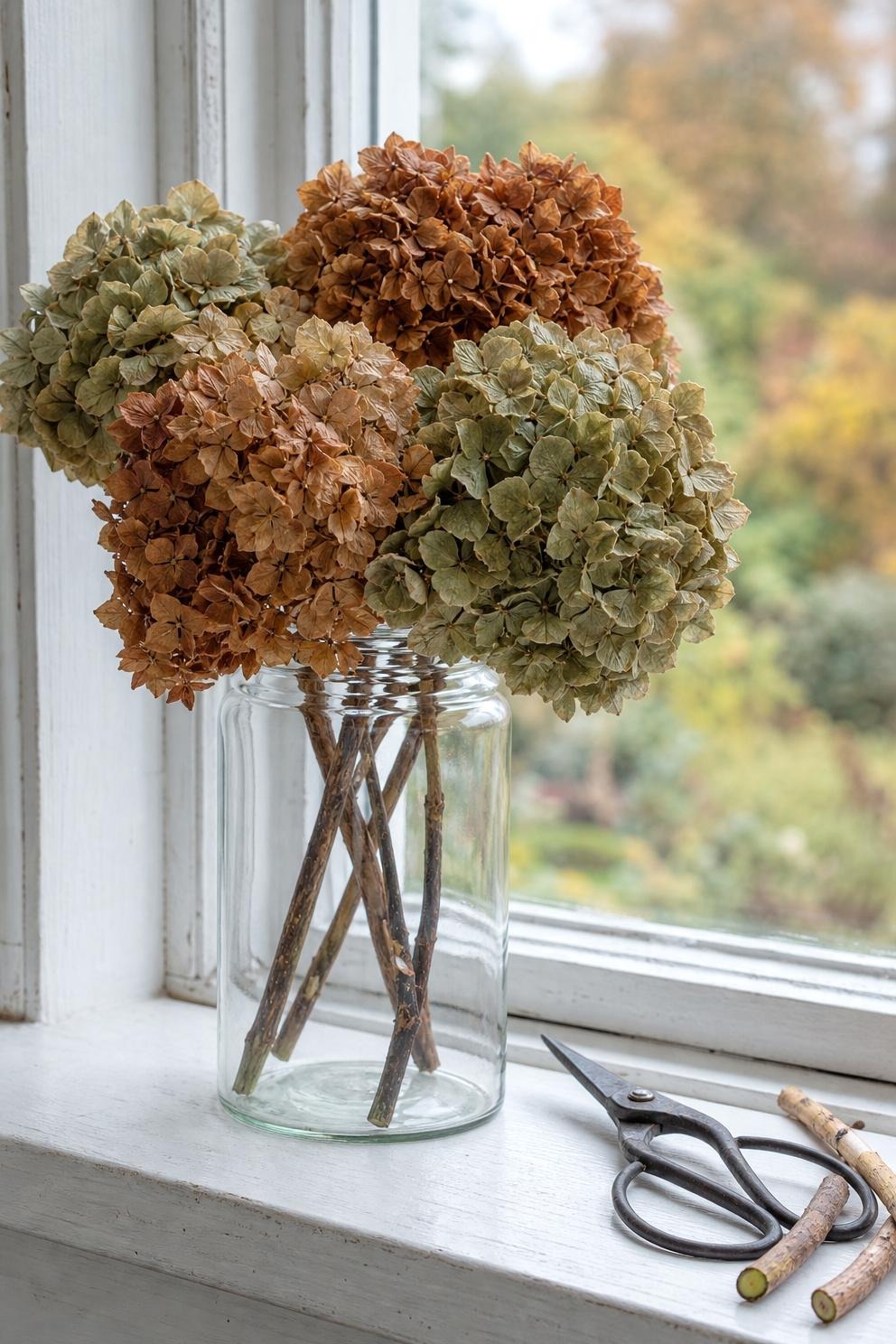
For dried hydrangeas, wait until the heads begin to dry on the plant and feel papery. Cut a few stems and let them finish drying in an airy spot. Mississippi State Extension explains when to harvest hydrangeas for drying.
Use seed heads from plants you know, or one branch from your own garden. Get permission before collecting elsewhere. Choose material that is dry and free of visible pests or mold.
Pinecones can fill a shallow bowl. Let damp ones dry in an airy spot and check for insects before bringing them inside.
Use fruit, gourds or a small bunch of stems
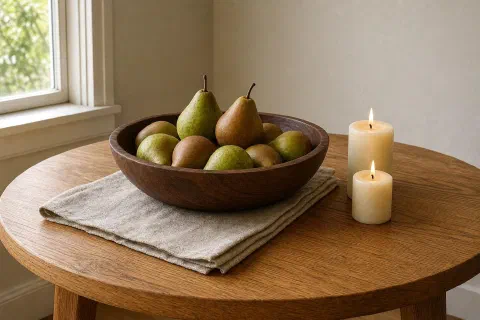
A few apples or pears in a bowl can be the centerpiece and part of the week’s groceries. Check them daily and replace any that soften or spoil.
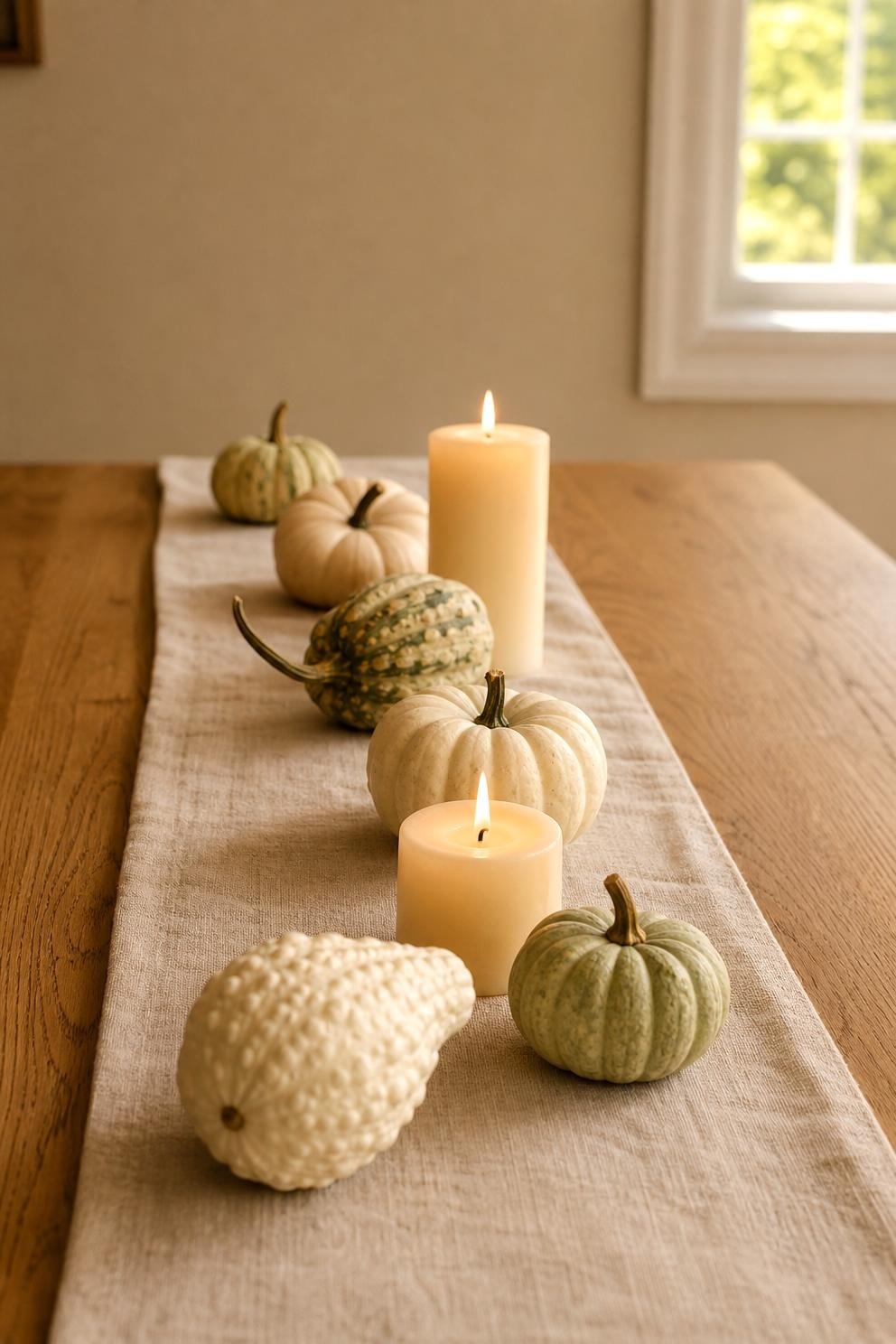
Small ornamental gourds can sit in a line or a shallow dish. Do not assume a decorative gourd is edible. Choose enough to fill the container you have, rather than buying a large bag for a small table.
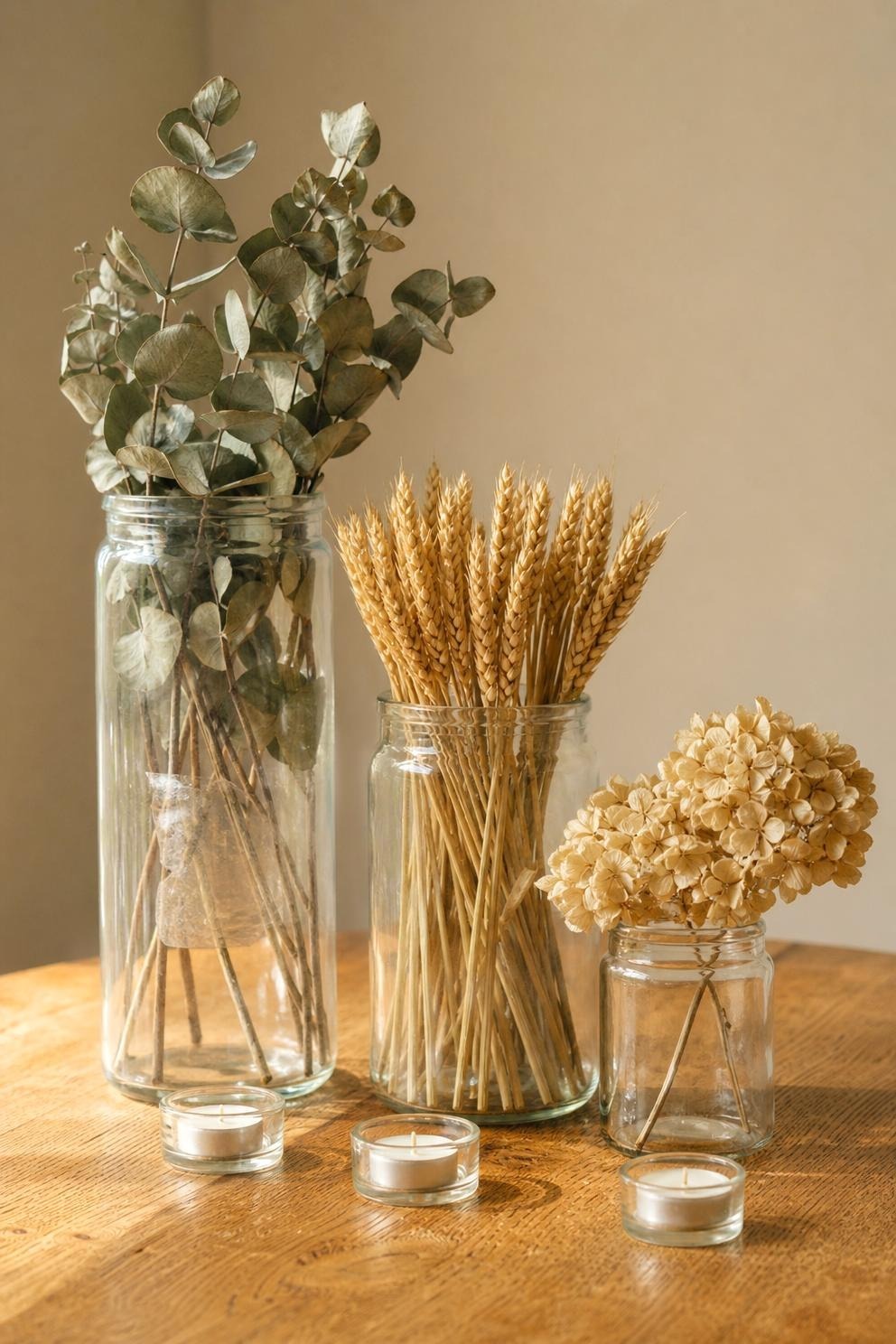
If you buy a bunch of flowers, divide it among a few jars and trim it so people can see across the table. Eucalyptus or dried grasses also suit a plain glass vase. Choose by the current cost and the size of the arrangement.
Buy the container only if you need it
A plain glass vase, wooden bowl or tray can be used after fall. Check the dimensions before ordering; a tall vase that blocks the view may end up on another shelf.
Use flameless candles near dried material. If you use burning candles, put them in suitable holders and keep them away from anything that can burn.
Four arrangements to try
From the kitchen: put apples in a shallow bowl, with a folded tea towel underneath. Add flameless candles if you already have them.
From the garden: fill a few jars with dried hydrangea, grasses or seed heads, and set a bowl of pinecones beside them.
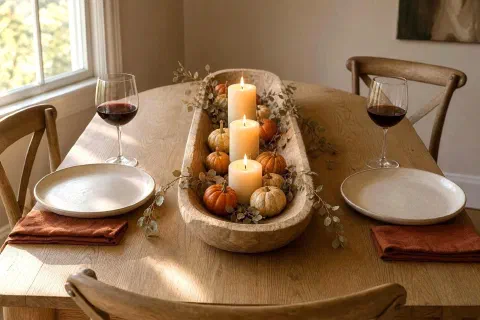
From the grocery store: line up small gourds down the table and add two flameless pillars. Leave room for the plates before buying more gourds.
A mix of both: put supermarket eucalyptus in a plain vase on a kitchen tray, then add a bowl of walnuts and a few flameless tealights.
Keep the centerpiece low enough that people can see one another. If you use burning candles, follow the U.S. Consumer Product Safety Commission’s guidance to keep them in sight and away from flammable items.
Keep the table useful
Repeat a jar shape or one kind of stem if the arrangement feels busy. Move the pieces closer together, then remove anything that crowds the place settings.
Sit down before calling it finished. If a branch blocks the person opposite, trim it or move it to another surface. Leave enough open table to set down the food.
How to set up the table in five minutes
- Put the plates or place mats down first so the centerpiece gets only the space that remains.
- Choose one vessel or tray and one main material.
- Keep the grouping low enough to see over from a chair.
- Add a few smaller pieces only if the table still has room.
- Lift the whole arrangement once to confirm it can move quickly for dinner.
Questions people actually ask
What are some inexpensive ideas for fall centerpieces?
Try a bowl of apples, a few glass jars of dried stems, a line of small gourds or one garden branch in a sturdy jug. Use the container you already have and leave room for dinner.
How do I make a simple centerpiece look good?
Repeat one material, keep the grouping small and check it from a chair. A table that still has room for plates will be easier to keep arranged.
What can I use as a vase if I do not have one?
A cleaned glass jar, jug or mug can hold stems. Check that it is watertight for fresh flowers and stable enough for the stems you choose.
When should I cut hydrangeas for drying?
Wait until the heads feel papery rather than soft and fresh. The timing varies by plant and climate. Cut a few test stems before taking every bloom.
How long does a fall centerpiece last?
It depends on the materials and the room. Check fresh fruit and gourds for soft spots or mold, and replace cut flowers as they fade. Keep dried stems dry.
Sources
- Mississippi State University Extension: Hydrangeas for Mississippi Gardens explains harvesting blooms for drying.
- U.S. Consumer Product Safety Commission: Holiday decorating safety gives current candle-safety guidance for decorated tables.
What to read next
- 8 Easy Fall Centerpiece Ideas That Need No Crafting gives eight five-minute arrangements built from ordinary bowls, jars, and trays.
- 5 Fall Table Centerpiece Ideas That Last Past Thanksgiving narrows the choices to pieces that still work in November.
- Thanksgiving Table Ideas for a Small Space shows how to keep the table useful once serving dishes arrive.
- Fall Coffee Table Decor: 9 Ideas for a Small Living Room moves the same low-cost materials to a smaller surface.