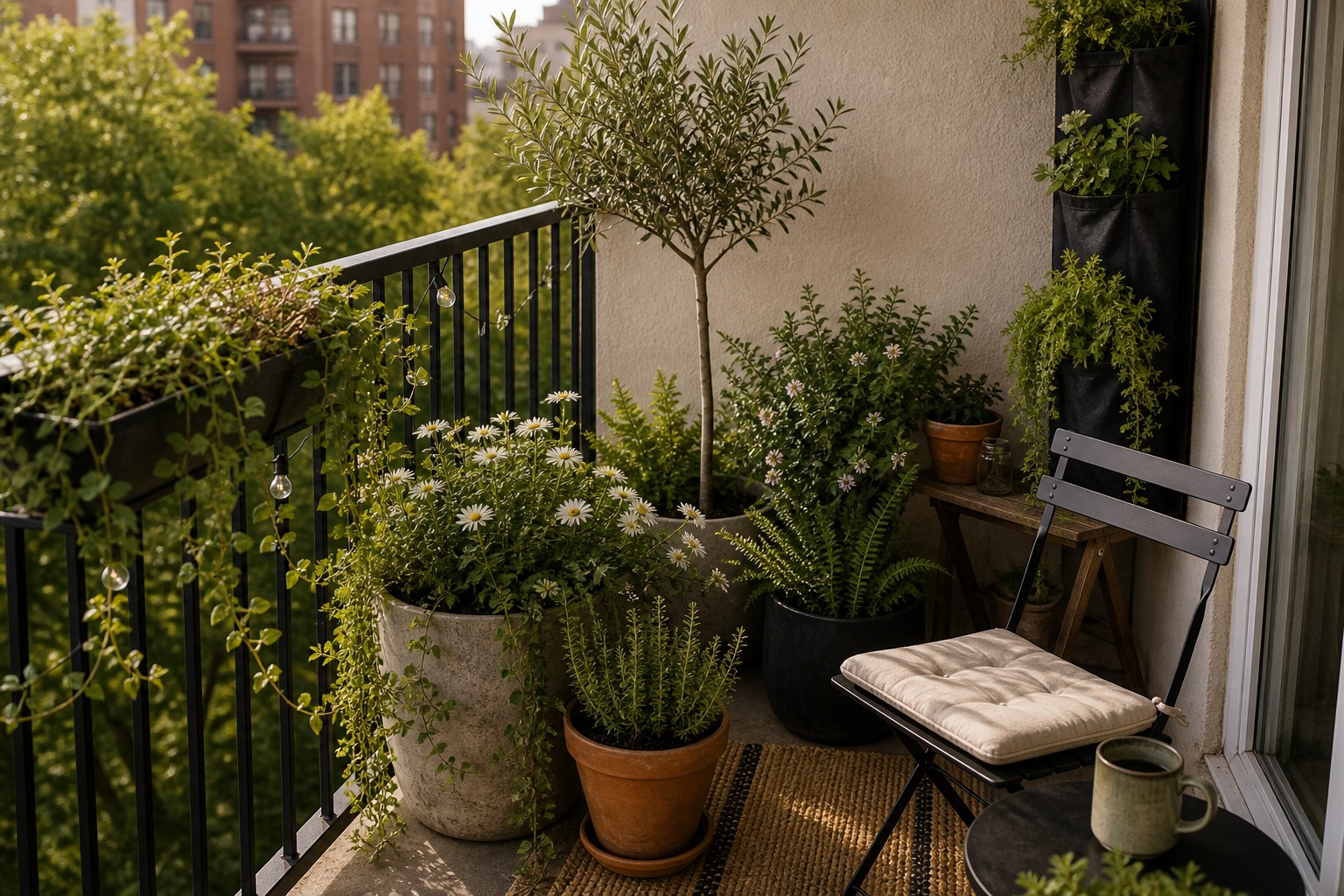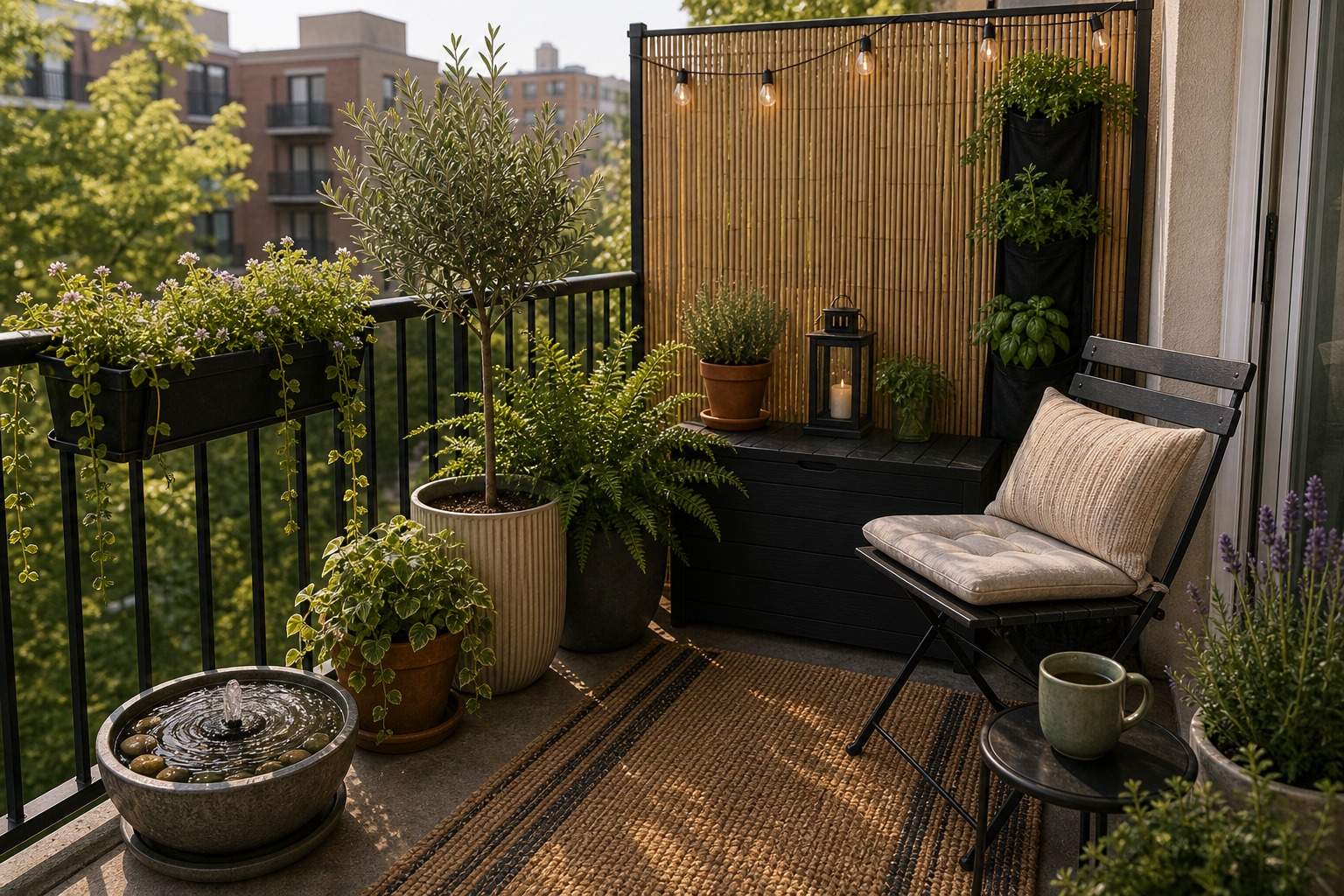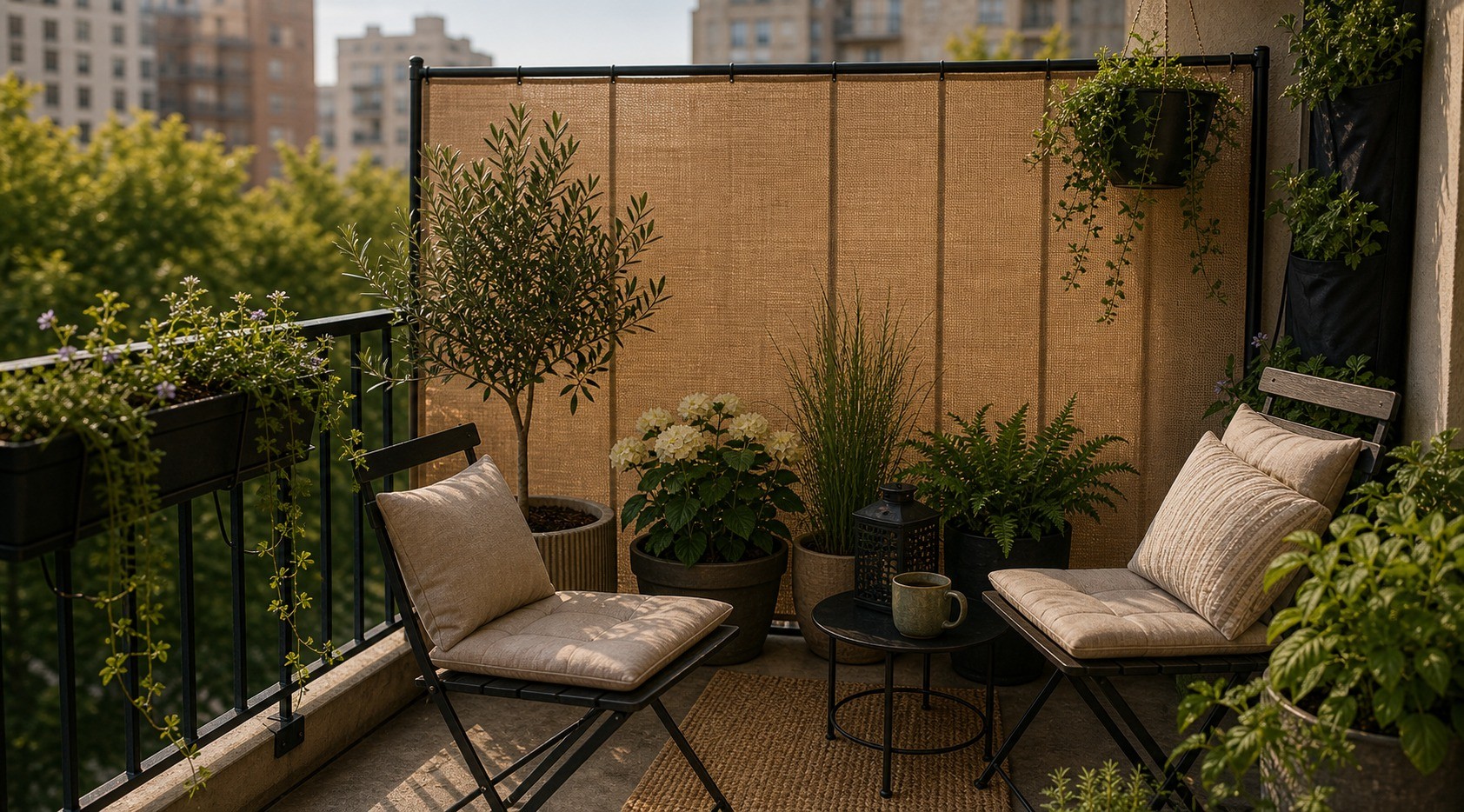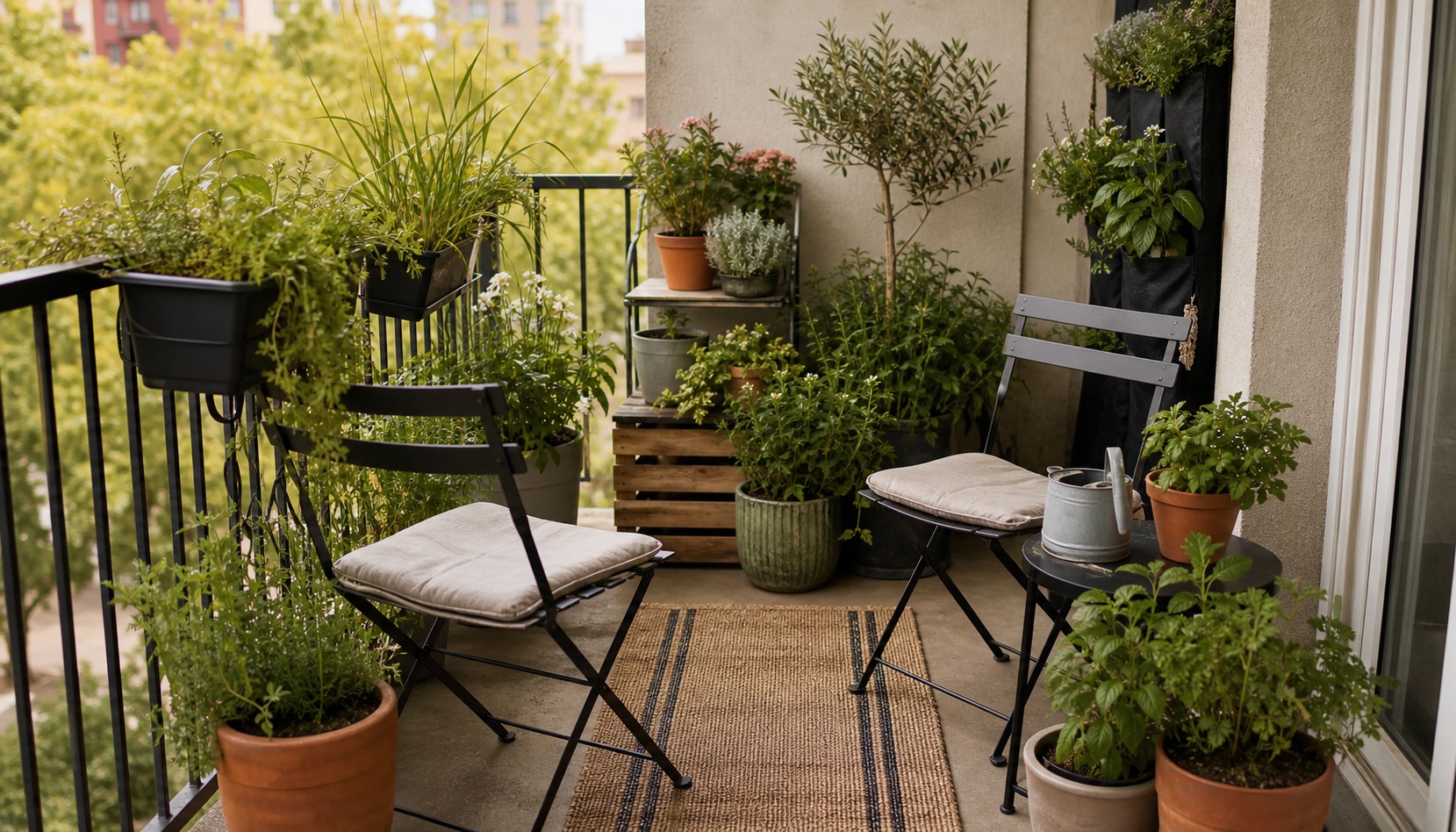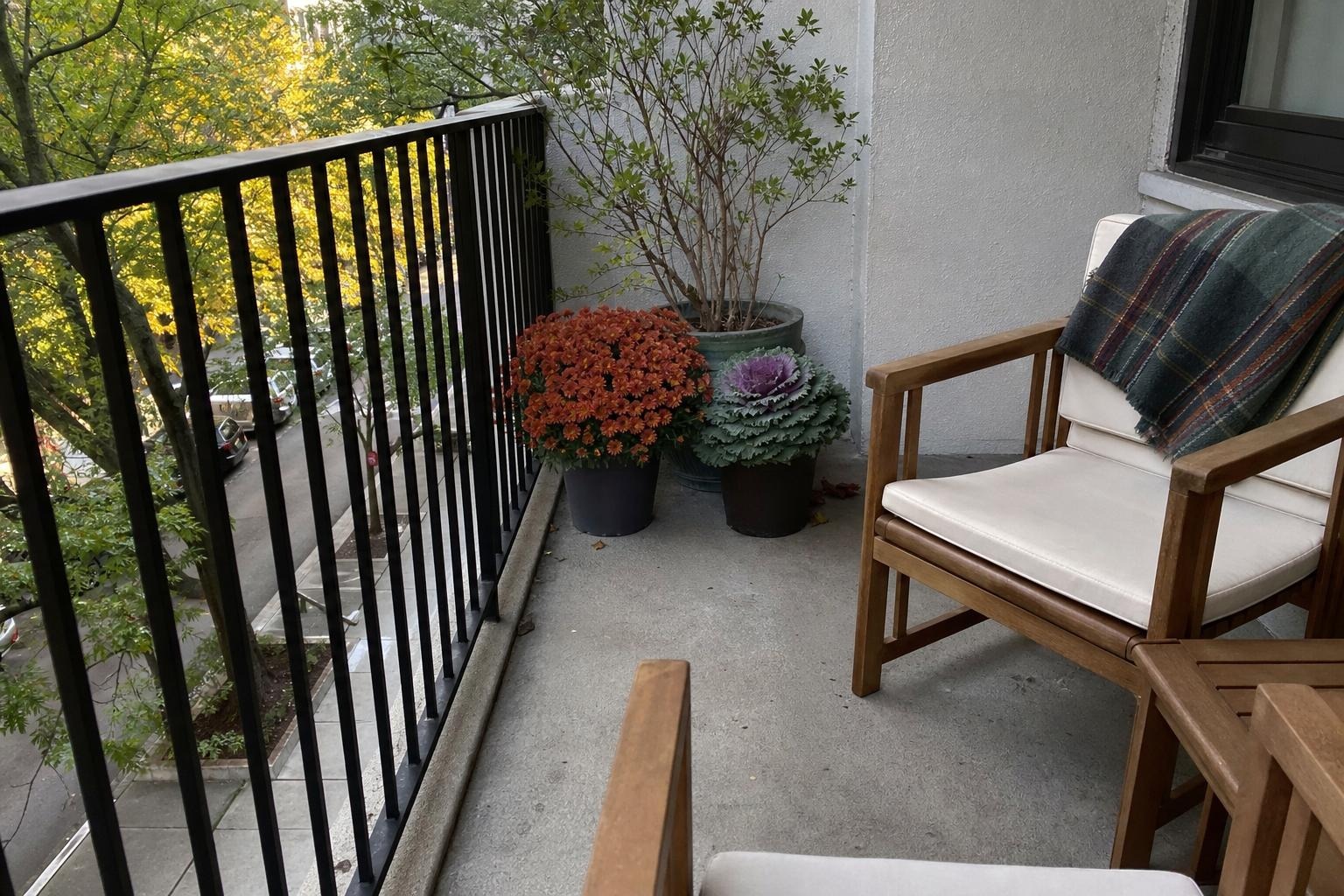
A small apartment balcony changes fast once the afternoons get shorter. The cushions that felt fine in July go cold and damp overnight, the plants that loved the heat start to look tired, and there is usually no outlet, no drill, and no permission to change anything permanent. Fall balcony ideas that work for a renter have to survive that reality: a few square feet, a lease, and weather that swings.
You do not need new furniture or a full redecorate. You need plants that can actually take a cold night, a couple of textile swaps, one no-drill wreath, and a light plan that clips on and comes off clean.
Start with hardy mums and ornamental kale, not florist-shop annuals
Skip the florist mums sold in foil-wrapped pots by the grocery checkout. Those are bred for a week indoors, not a balcony railing. Look for “garden mum” or “hardy mum” on the tag instead. Garden mums are hardy in USDA zones 4 through 9 when planted in the ground, according to University of Missouri Extension’s guide to overwintering hardy mums . A container is a different story: the roots sit above ground with far less insulation, so even a hardy variety usually will not survive winter in a pot the way it would in a garden bed. Treat container mums as a fall annual, not a perennial investment, unless you plan to sink the whole pot into the ground before the hard freezes start.
Ornamental kale earns its spot for a different reason. The color gets better after a frost, not worse. Clemson Cooperative Extension’s guide to seasonal container gardening lists flowering kale and cabbage as reliable choices once summer annuals fade, and it keeps its shape through cooler nights better than most fall filler. Pair one head of kale with two or three mums in a single pot and you get color that lasts from early October well past the point where petunias would have turned to mush.
Check your USDA hardiness zone before you buy anything labeled “cold tolerant.” The USDA Plant Hardiness Zone Map takes your ZIP code and tells you the coldest temperatures your balcony is likely to see, which matters more than the season on the calendar.
For more plant options sized to an actual balcony rail and floor space, potted plants for an apartment balcony that still feels bare covers what fills in without crowding a small footprint.
Pick the container before you pick the plant
The pot matters as much as what is growing in it. Terracotta pots are porous, and water that soaks into the clay expands when it freezes. Repeated overnight freezes crack terracotta pots over a single season, which is the opposite of what you want on a balcony you cannot easily replace pots from mid-week. Fiberglass and resin containers do not absorb water the same way, so they handle a fall cold snap without splitting.
| Container material | Freeze risk | Weight | Renter notes |
|---|---|---|---|
| Terracotta | Cracks with repeated freeze-thaw cycles | Heavy, hard to move | Fine for a mild fall; bring in or empty before a hard freeze |
| Glazed ceramic | Lower risk if fully glazed and drained well | Heavy | Check the drainage hole is not blocked; standing water freezes and splits the glaze |
| Fiberglass | Very low freeze risk | Light | Easiest to reposition for wind or sun without help |
| Resin/plastic | Very low freeze risk | Lightest | Least expensive option that survives a freeze without cracking |
A cracked pot on the third floor is also a hazard below you, not just a mess on your own balcony. If you already own terracotta, keep it and just plan to bring the pot inside or empty it before the first hard freeze instead of replacing it outright.
Swap the summer cushions for wool or fleece
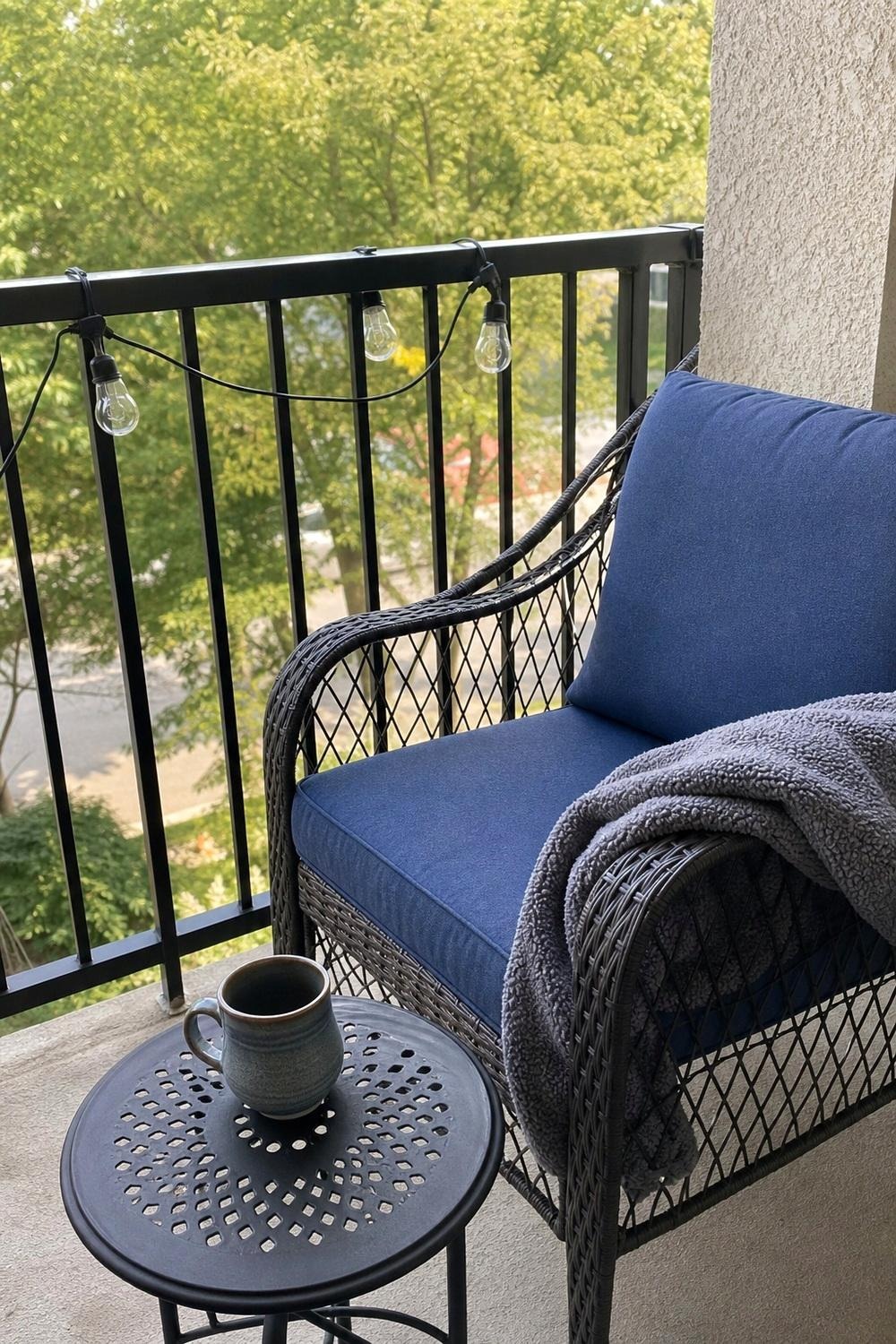
Canvas cushions that were fine in July hold overnight dampness once the temperature drops, and cold, damp fabric is not something anyone wants to sit on before coffee. A chunky knit throw (opens Amazon in a new tab) or fleece blanket folded over the seat does two things a cushion cannot: it insulates against a cold chair back, and it comes inside easily when you are done, so it never gets a chance to get damp in the first place.
Keep one heavier throw by the door for the chair and a lighter one for your lap if you are staying out past dusk. Store the summer cushions somewhere dry the moment you stop using them daily. Tiny balcony storage ideas for cushions, soil, and plant stuff has options sized for a space that does not have a closet to spare.
Hang a wreath without touching the door frame
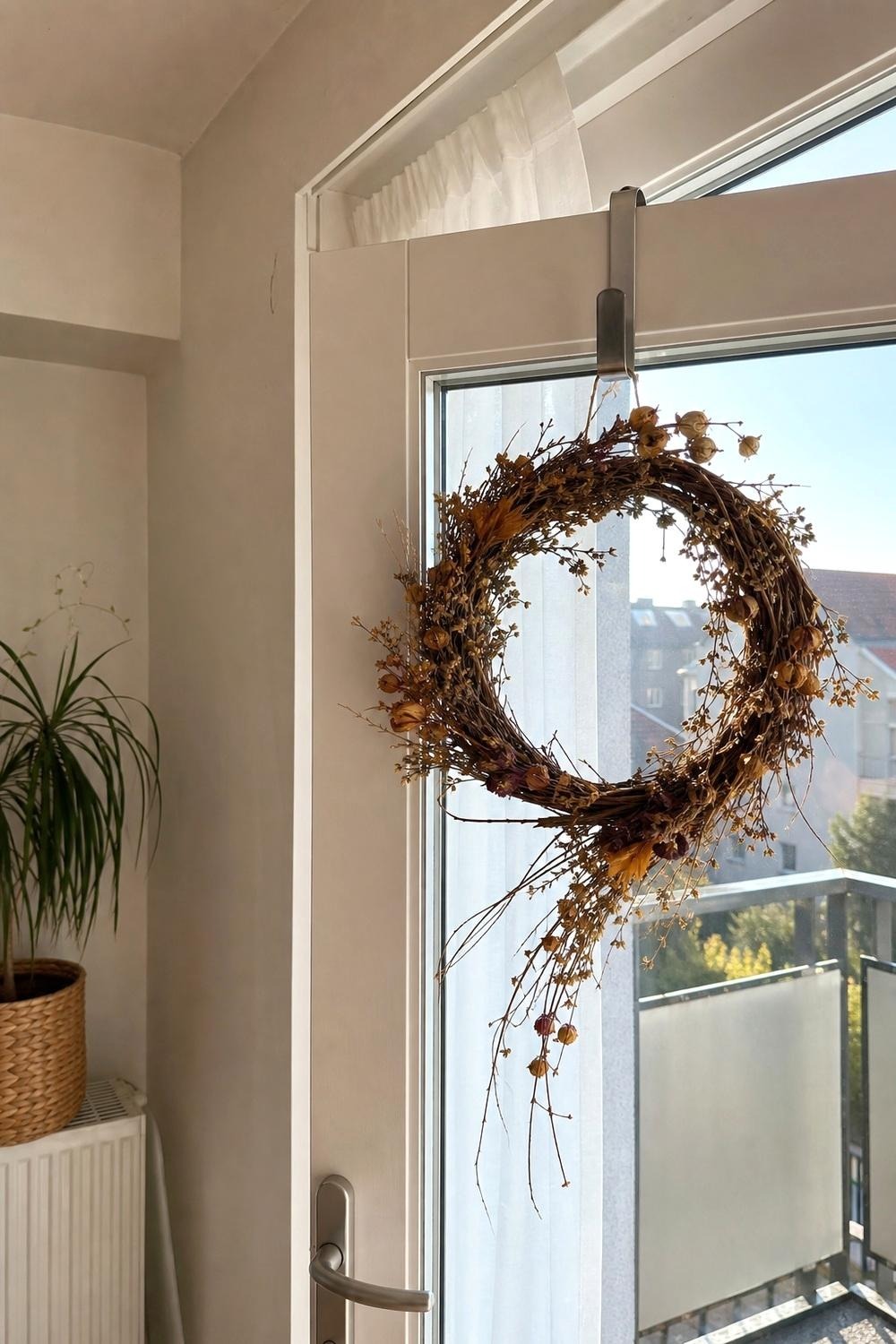
An over-door wreath hook (opens Amazon in a new tab) , the flat metal kind sold for hanging coats or towels, works on most balcony and patio doors and needs nothing more than the door itself.
- Slide the hook over the top of the door on the side that opens outward.
- Close and lock the door to confirm it still latches normally with the hook in place.
- Hang the wreath from the hook’s inside curve, checking that it clears the door frame when the door swings.
Check the hook’s weight rating before you commit to a heavy dried-stem or eucalyptus wreath. A lightweight grapevine or faux-foliage wreath in the 1 to 2 pound range works on almost any over-door hook. On a narrow balcony door, a mini wreath six to ten inches across clears the frame more easily and weighs almost nothing. A dense, wet-look wreath can be heavier than it looks and may need a hook rated for more.
Add clip string lights you can control without rewiring
Battery fairy lights (opens Amazon in a new tab) that clip or drape on a railing or the edge of a planter shelf give you a warm glow after dinner without an outlet or a landlord’s permission. Battery and solar versions both skip cords entirely, which matters on a balcony where the only outlet is inside. For a full plan on choosing between solar, battery, and plug-in lights, plus where to clip them so nothing droops into your walking path, this renter-friendly lighting breakdown walks through the tradeoffs.

Give yourself one place to set down a hot drink
A small folding or nesting side table solves a problem most balcony setups skip: where the mug, book, or phone goes once your hands are full. On a balcony where every square foot counts, a table that folds flat or stacks under a chair when you are not using it earns its space back the rest of the time. Look for a weather-rated finish, aluminum or resin over untreated wood, since a table left out will see rain and frost the same as everything else on the balcony.
Know your wind exposure before you buy anything tall
Wind is the constraint that trips up a lot of fall balcony setups, and it gets worse the higher up you are. A gust that barely moves a patio at ground level can knock over a tall planter or send a lightweight table sliding on a fourth-floor balcony. Before adding anything with height or a wide surface area, walk out and notice what the wind is actually doing up there, not what it does at street level.
- Choose wider, lower pots over tall narrow ones for anything you cannot secure to a wall or railing.
- Fill large pots at least partway with the heaviest material you are using (soil over lightweight filler) so wind has more to move.
- Skip freestanding umbrellas and tall trellises on an upper-floor balcony unless they are rated and rigged for wind, not just sold for patios.
- Double-check that clip lights and the over-door wreath hook are seated firmly; wind works hardware loose faster than gravity does.
- Move anything genuinely lightweight, like a paper lantern or fabric banner, inside before a forecasted windy night instead of hoping it holds.
Mistakes that undo a fall balcony setup fast
- Buying florist mums expecting them to act like a hardy perennial in a pot.
- Leaving a terracotta pot out through the first hard freeze instead of before it.
- Hanging a heavy wreath on a hook rated for a light coat.
- Running a string-light cord or wreath ribbon across the door swing or the walking path to your chair.
- Leaving a canvas cushion outside overnight once the dew starts coming back with the cooler weather.
A first-freeze checklist
- Bring in or empty any terracotta and glazed ceramic pots.
- Fold in the wool throws and any fabric that is not weather-rated.
- Check that clip lights and the wreath hook are still seated tight.
- Move ornamental kale and hardy mums into a slightly more sheltered spot if a hard freeze is forecast; both can take cold, but a sudden deep freeze is harder on a container than a garden bed.
- Confirm the door still closes fully with the over-door hook in place.
The balcony that carries you through fall
None of this requires a renovation or a landlord’s sign-off. A hardy plant in the right container, a throw that comes inside dry, a hook instead of a nail, and lights that clip on and off get a small balcony through the whole season without a single hole in the wall. Start with the plant and the pot since those are the pieces the cold actually threatens, then layer in the throw, the wreath, and the lights once the framework is solid.
What I’d Actually Buy
The plant and the pot first. Then the hook and the throw, because those two come inside when the weather turns.
- Quarut 10-inch planter 3-pack (opens Amazon in a new tab) . Owners like the barrel look, drainage holes, and light weight. Some received cracked rims, and the saucers can feel undersized, so inspect the set before filling it with soil.
- FYY over-the-door hooks, 4-pack (opens Amazon in a new tab) . The rubber coating helps with scratches and slipping. Door fit varies, and some doors will not close cleanly with the hook installed. Test the empty hook before adding a lightweight 18-inch wreath (opens Amazon in a new tab) ; the wreath’s colors review well, but some owners say it looks smaller than expected.
- Bigacogo chunky knit throw, 40 by 60 (opens Amazon in a new tab) . Owners repeatedly mention the soft, expensive-looking knit. The size feels small to some buyers, and durability is mixed after washing, so bring it inside every night and treat it as a lap throw rather than outdoor upholstery.
- 24-pack warm white fairy lights (opens Amazon in a new tab) . The warm light and simple battery setup suit a railing or planter shelf. Brightness can fade as the batteries weaken, and some strands fail early. Clip them to the rail, never across the door swing.
Check each listing for the current weight rating on the hook and the wreath weight before you combine them.
Related balcony and patio ideas
- Potted plants for an apartment balcony that still feels bare helps you round out the planting once the mums and kale are in place.
- Tiny balcony storage ideas for cushions, soil, and plant stuff covers where the summer cushions and extra pots go once you swap them out.
- Fall balcony lighting for renters who cannot add wiring goes deeper on choosing between solar, battery, and plug-in string lights.
- Balcony privacy ideas that do not look cheap is worth a look if wind exposure has you rethinking a screen or windbreak for the space.
More help with this project
- Choose balcony flooring renters can undo before layering fall pots and textiles over the slab.
- Use these apartment balcony Halloween decor ideas when the fall setup needs a removable October layer.