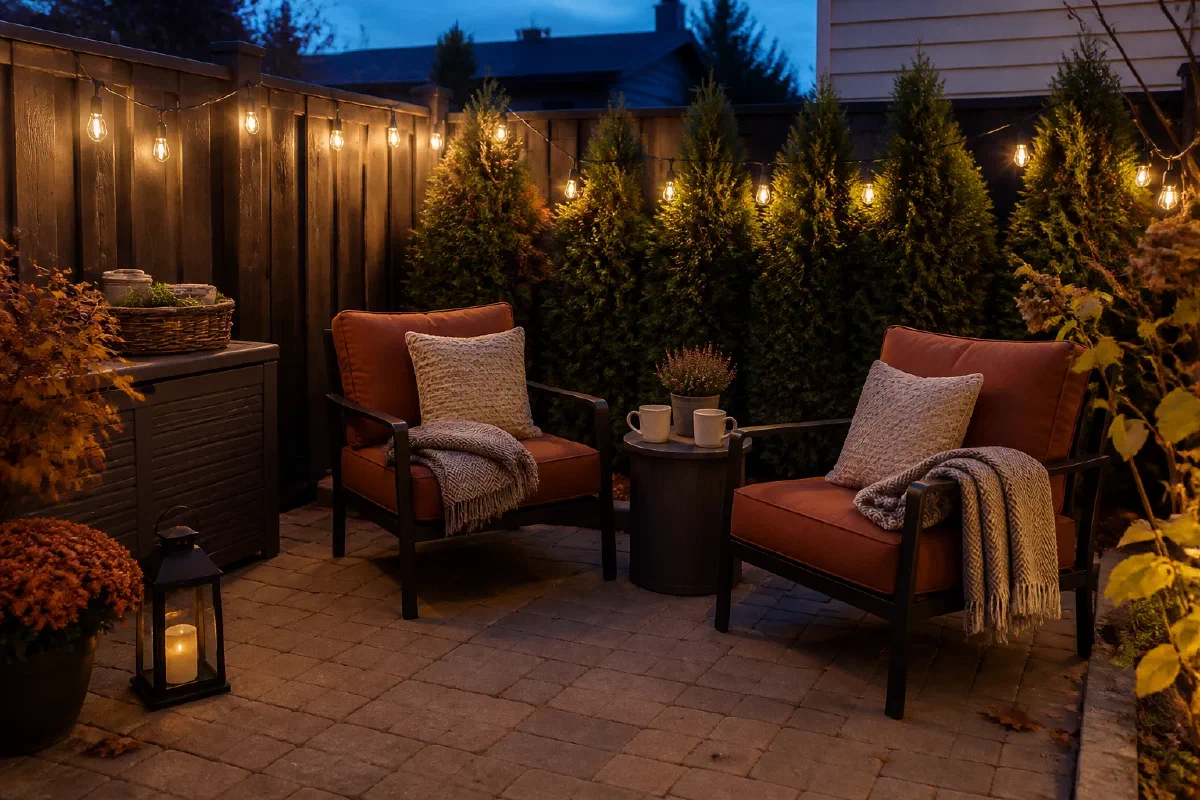
A backyard corner in fall can be the warmest spot on the property or the first place you abandon when the temperature drops. The difference comes down to three things: where you put the seating, how you block the wind, and whether you can see well enough after six o’clock to want to stay. Get those right and the corner becomes the place you reach for a sweater and go sit, not the place you look at through the window.
Why Corners Work in Fall if You Set Them Up Right
Two walls or fence lines create a natural windbreak, and that matters more in October than it does in July. The challenge is that corners collect leaves, lose light early, and often sit in shade by mid-afternoon depending on orientation.
South-facing corners get the most sun and stay warm longest. East-facing corners catch morning light but cool off fast. North-facing corners need extra light to stay usable past dinner. West-facing corners can be too hot in summer but feel just right in fall when the sun is lower.
The goal is a space you actually use, not one you decorate and photograph once. That means thinking about where your feet go, where the light falls, and whether you can carry a mug of tea out there without tripping over a planter.
Set Up Seating That Handles the Cold
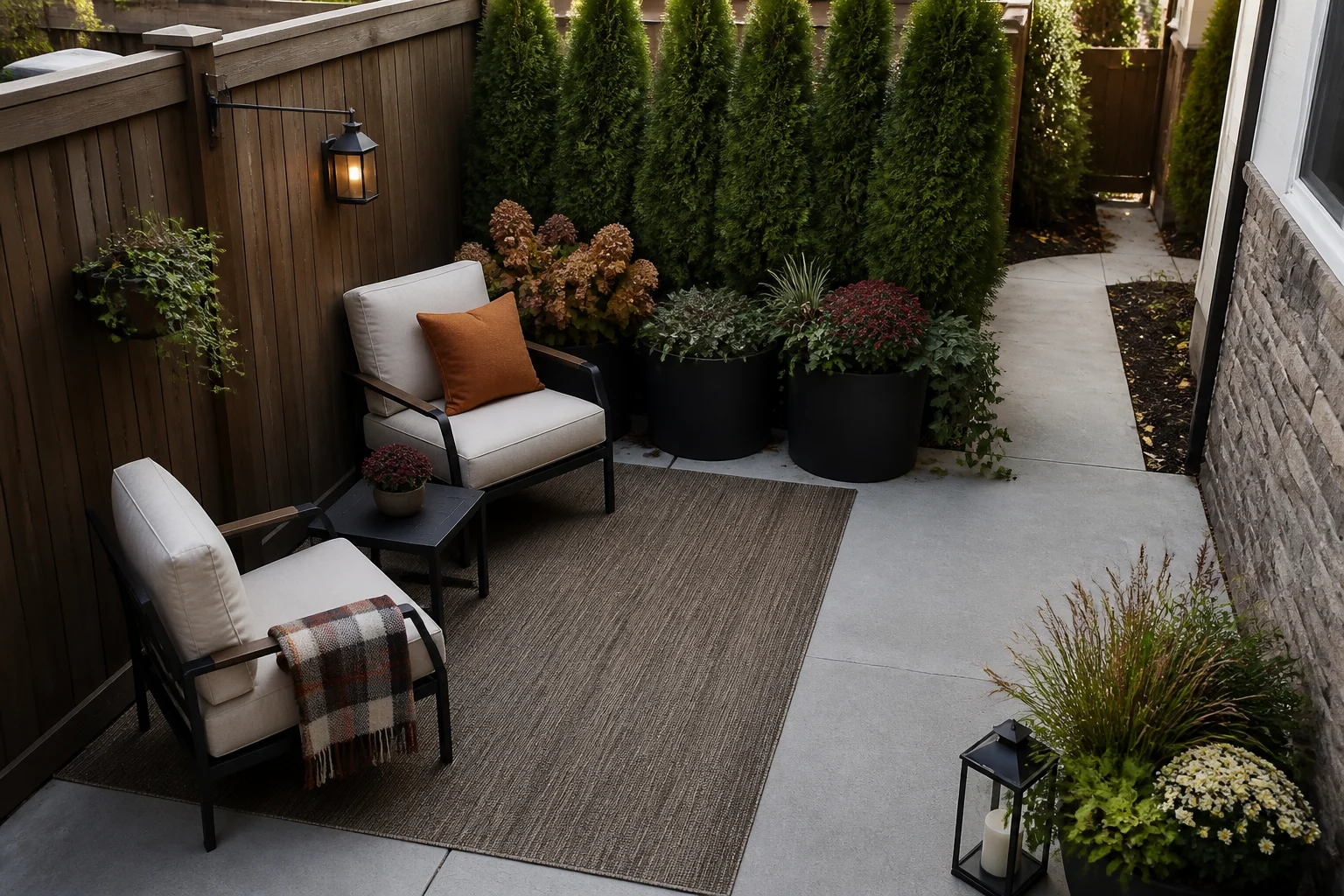
Metal furniture gets cold to sit on by mid-October unless you layer it with cushions. Resin wicker holds up in weather and stays closer to air temperature. Teak and cedar age well outdoors and don’t need to be brought in, but they’re heavy if you want to shift the layout.
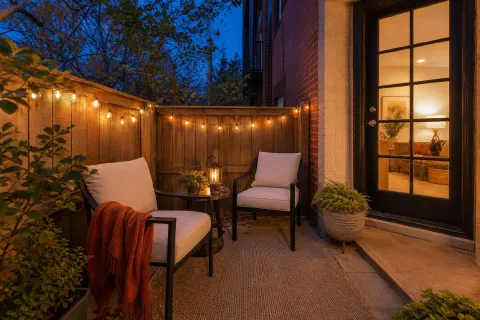
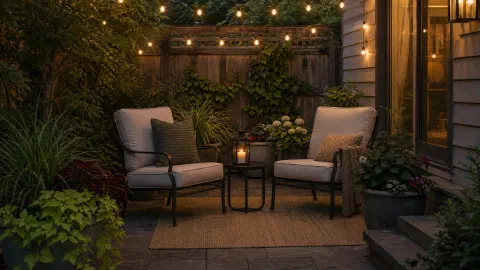
Two chairs and a small side table fit most corners without crowding the space. Angle the chairs toward each other rather than facing straight out so the corner feels like a room instead of a waiting area. Leave at least two feet of clearance behind each chair so you can walk through without moving furniture.
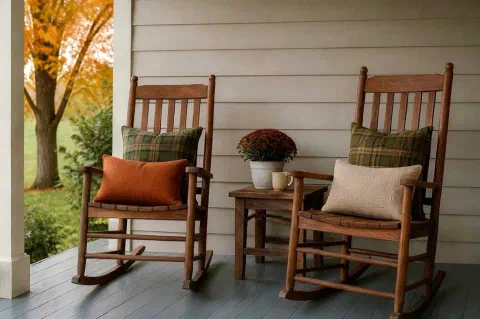
Add outdoor cushions in darker colors that won’t show every leaf stain. A folded fleece throw over the back of each chair signals the space is ready to use and gives you a layer when the sun drops. Store cushions in a deck box nearby instead of carrying them in and out every time.
Which Heat Source Fits the Corner
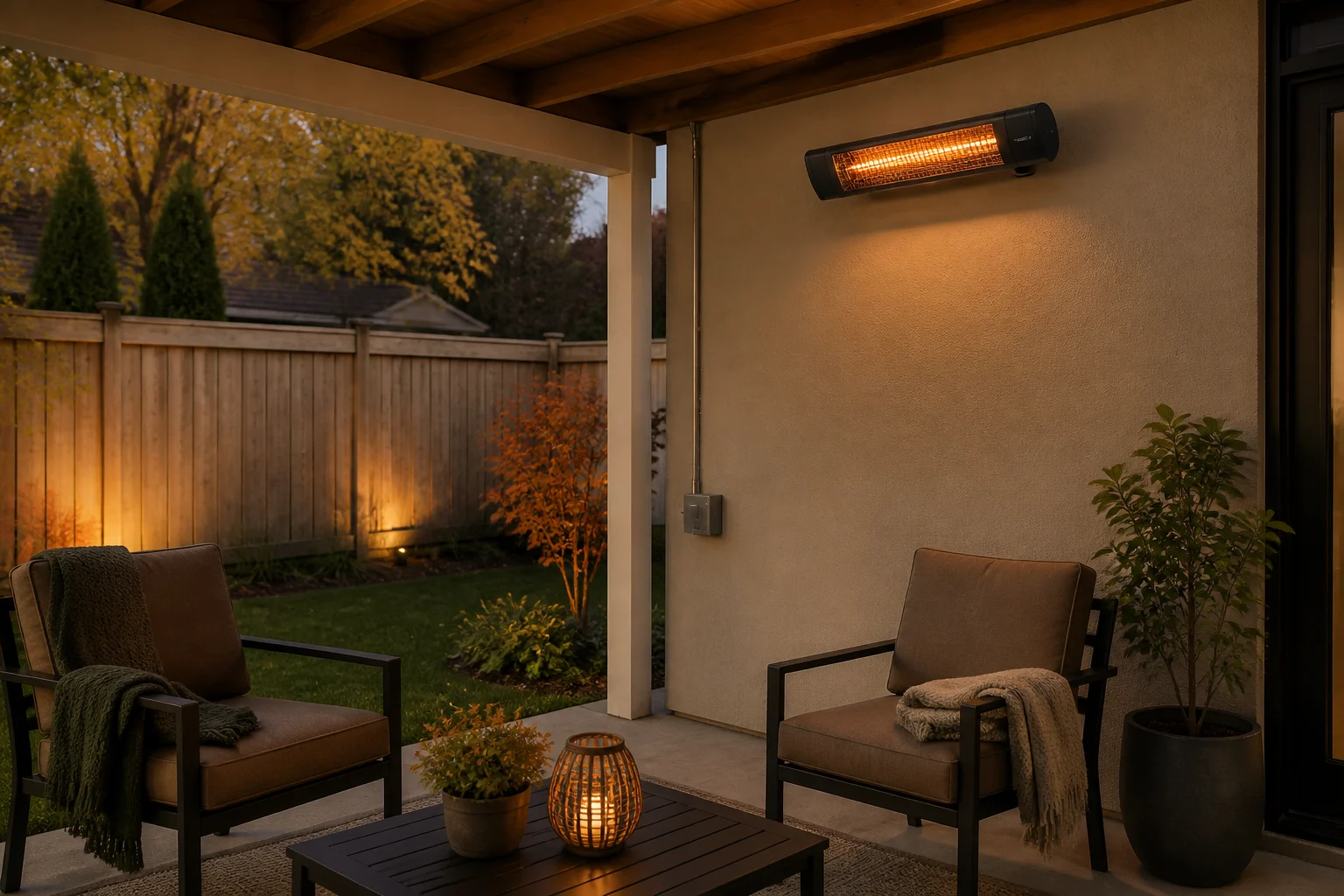
According to NFPA guidance on outdoor heaters, the clearances from the heating element, the ventilation required, and where a heater can and cannot be used all have to come from the manufacturer’s instructions and the product listing, and NFPA notes these heaters cannot be used in enclosed locations. If your corner cannot meet those clearance requirements, focus on layered seating with throws and good lighting instead of adding an open flame.
Electric patio heaters that mount to a wall or fence can aim heat down at seating level where space allows and local codes permit. Check the manufacturer’s instructions for required clearances and installation. Plug it into a weatherproof outdoor outlet and run the cord along the fence line so no one trips.
If you have room for a fire pit and your local rules allow it, NFPA recommends placing fire pits outdoors at least 10 feet from combustibles, on a level noncombustible surface, and using them under local regulations and manufacturer instructions. The same guidance keeps children and pets out of a 3-foot safety zone around the pit. A steel bowl with a grate on top lets you see the fire and manage the wood. Set it on pavers or gravel, not directly on grass.
| Heat Source | Best For | What to Know |
|---|---|---|
| Wall-mount electric heater | Covered corners, consistent use, no open flame | Requires outlet, follow manufacturer clearances, no refills |
| Steel fire pit | Open corners, larger spaces, wood fire | Needs 10 ft clearance per NFPA, ongoing fuel, higher maintenance |
| Layered throws and lighting | Small corners, renters, minimal clearance | No installation, no flame hazard, moves easily |
Light the Space So You Can Actually Use It After Dark
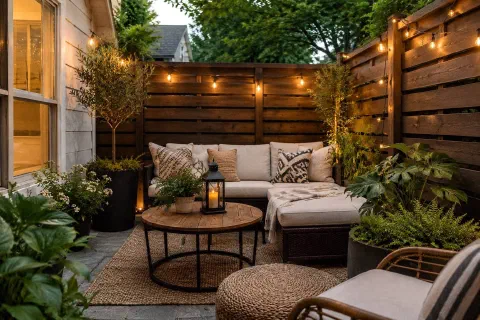
String lights along the top of the fence create ambient light without glare. Warm white LEDs look softer than daylight bulbs and don’t wash out the fire glow. Space the bulbs about a foot apart and use outdoor-rated cords with grounded plugs.
A solar path light pressed into a large planter on each side of the seating area adds task light where you set down a book or a glass. Choose lights with stakes long enough to stay stable in potting soil. They charge during the day and turn on automatically at dusk.
If the corner is covered or gets no direct sun, plug-in lanterns with LED candles work better than solar. Set them on the side table or hang them from shepherd’s hooks at the back of the space. Battery-powered versions provide light for a period that varies by model and battery capacity.
Define the Corner Without Closing It Off
A trellis attached to the fence at a right angle creates a partial wall without blocking sightlines. Plant a clematis or climbing hydrangea at the base in spring and it will fill in over time. For faster coverage, lean a folding bamboo screen against the trellis.
Evergreen shrubs like boxwood or inkberry holly planted in a line along one edge of the corner add year-round structure. Space them according to the cultivar’s mature width. They stay green through winter and block wind better than deciduous plants.
A tall planter with ornamental grasses anchors the corner and moves easily if you change the layout. Grasses like Karl Foerster feather reed grass or morning light maiden grass grow tall and hold their shape through fall. Plant them in a container with drainage holes.
Add Fall Color That Doesn’t Take Over the Space
Mums in pots clustered near the seating bring in rust, burgundy, and gold without a planting project. Set three pots together on one side of the corner rather than spacing them out. Water them when the soil surface feels dry and deadhead spent blooms to keep them flowering longer.
Asters bloom later than most perennials and attract the last butterflies of the season. Check the cultivar’s hardiness range before planting in the ground, or keep them in containers if you’re renting. They need full sun and well-drained soil.
Ornamental kale and pansies handle frost and stay colorful longer than many annuals. Plant them in shallow bowls or window boxes and set them on the side table or along the edge of the seating area. They tolerate shade better than mums and need less water as temperatures drop.
Keep the Floor Clear and Dry
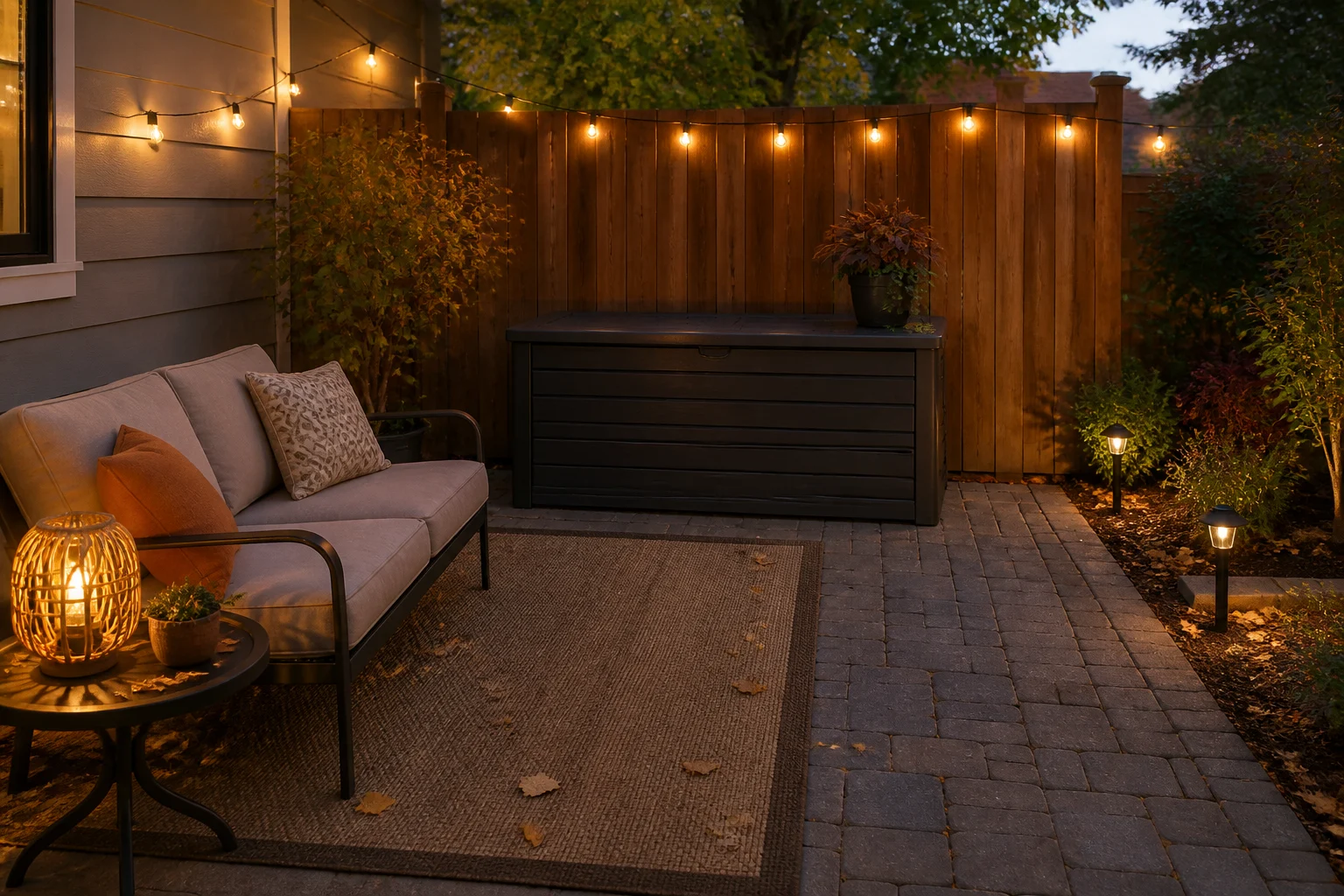
A jute or polypropylene outdoor rug under the seating area defines the space and keeps your feet off cold pavers. Choose a rug large enough so the front legs of both chairs sit on it. Shake it out weekly to clear leaves and let it dry completely before rolling it up for winter.
If the corner collects water after rain, add a layer of pea gravel over landscape fabric. It drains faster than mulch and doesn’t mat down. Slope the gravel slightly away from the seating area so water moves toward the yard.
Rake leaves out of the corner regularly once trees start dropping. Wet leaves stain rugs, clog drainage, and make pavers slippery. A small hand rake and a bucket stored behind the seating keep cleanup quick.
Transition the Space as the Season Changes
Move summer annuals out of the corner by late September and replace them with containers of fall bloomers. Store lightweight furniture like folding chairs and side tables in a shed or garage and bring out heavier pieces that won’t blow over in wind.
Add a weatherproof storage box to hold throws, cushions, and fire-starting supplies. A deck box fits under a side table or against the fence and keeps everything dry. You’re more likely to use the space if you don’t have to carry things from the house every time.
Test the space on a cool evening before you call it finished. Sit in the chair farthest from the heat source and see if you’re comfortable. If you reach for a second blanket or move closer to the fire, the layout needs adjusting.
How to Set Up the Corner in One Afternoon
The whole plan, in the order that saves the most rework.
- Pick the corner with the best late-afternoon light and at least one wall or fence line for wind.
- Set two chairs and a small side table first, angled toward each other, with two feet of clearance behind each chair.
- Check clearance before you buy any heat source, and read the manufacturer’s instructions for the one you choose.
- Add light at two heights: a string run along the fence or roof line, plus a lantern or lamp at table height.
- Fix the floor, with a rug over cold pavers or a pea gravel layer if the corner holds water.
- Put one storage box within reach of the seating so throws and cushions never have to come from the house.
- Plant the edges rather than the middle: evergreens for structure, grasses in a tall planter, mums or asters for the color.
- Sit in the farthest chair on a cool evening and adjust whatever you reached for.
Frequently Asked Questions
What plants add fall color to a shady corner?
Pansies, ornamental kale, and heuchera tolerate shade and stay colorful through frost. Toad lily blooms in late fall and grows well in part shade where the cultivar is hardy. Avoid mums and asters in full shade because they get leggy and bloom poorly.
How do I keep a corner warm without a fire pit?
A wall-mounted electric heater or a propane patio heater may work in corners where clearances and local codes allow. Layer seating with outdoor cushions and fleece throws. Plant evergreen shrubs along the open side to block wind.
What furniture materials hold up best in fall weather?
Resin wicker, powder-coated aluminum, and teak handle rain and temperature swings without warping or rusting. Avoid untreated wood and fabric slings, which absorb water and take days to dry. Bring cushions inside during heavy rain.
How do I light a corner that gets no direct sun for solar lights?
Use plug-in LED string lights or battery-powered lanterns instead of solar. A low-voltage landscape lighting kit with a transformer lets you run wired path lights to the corner from an outlet.
What’s the easiest way to define a corner without building anything?
Set a tall planter with ornamental grasses or a small evergreen shrub at the open edge of the seating area. Add a trellis panel leaned against the fence or a folding screen that moves when you need to change the layout.
How do I manage leaves in a corner without constant raking?
Replace mulch with pea gravel or river rock, which doesn’t trap leaves. Keep a small hand rake and bucket in a deck box so cleanup takes minutes. Trim back overhanging branches that drop the most debris directly into the seating area.
Make It a Space You Reach For
A fall corner that works is one you use without thinking about it. The chair is dry, the light is on, and you can see where you’re walking. You don’t have to haul things out or move furniture every time you want to sit down.
The best test is whether you go there on an ordinary Wednesday evening, not just when you’re hosting or the light is perfect. If the space pulls you outside on a cool night, it’s doing what it’s supposed to do.
What to Read Next
- A small fall patio that still feels good after dark takes the lighting and wind plan down to a patio-sized footprint.
- A shady backyard corner with moss, ferns, and stone is the answer if your corner never gets the afternoon sun this layout assumes.
- The tiny patio outdoor room with two chairs and lighting works through the same two-chair arrangement when the space is smaller than a corner.