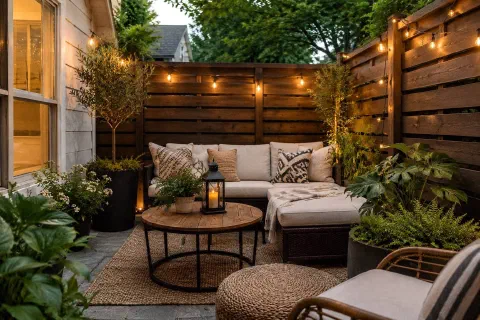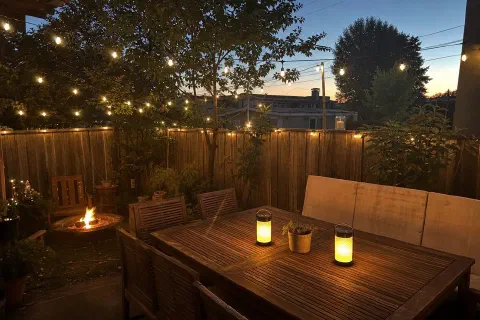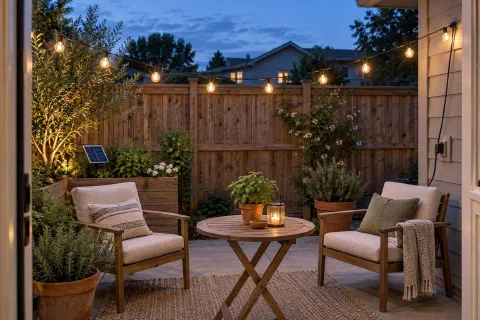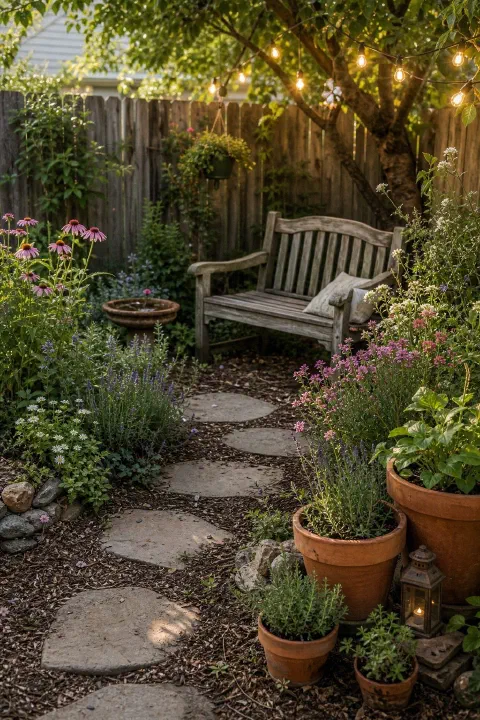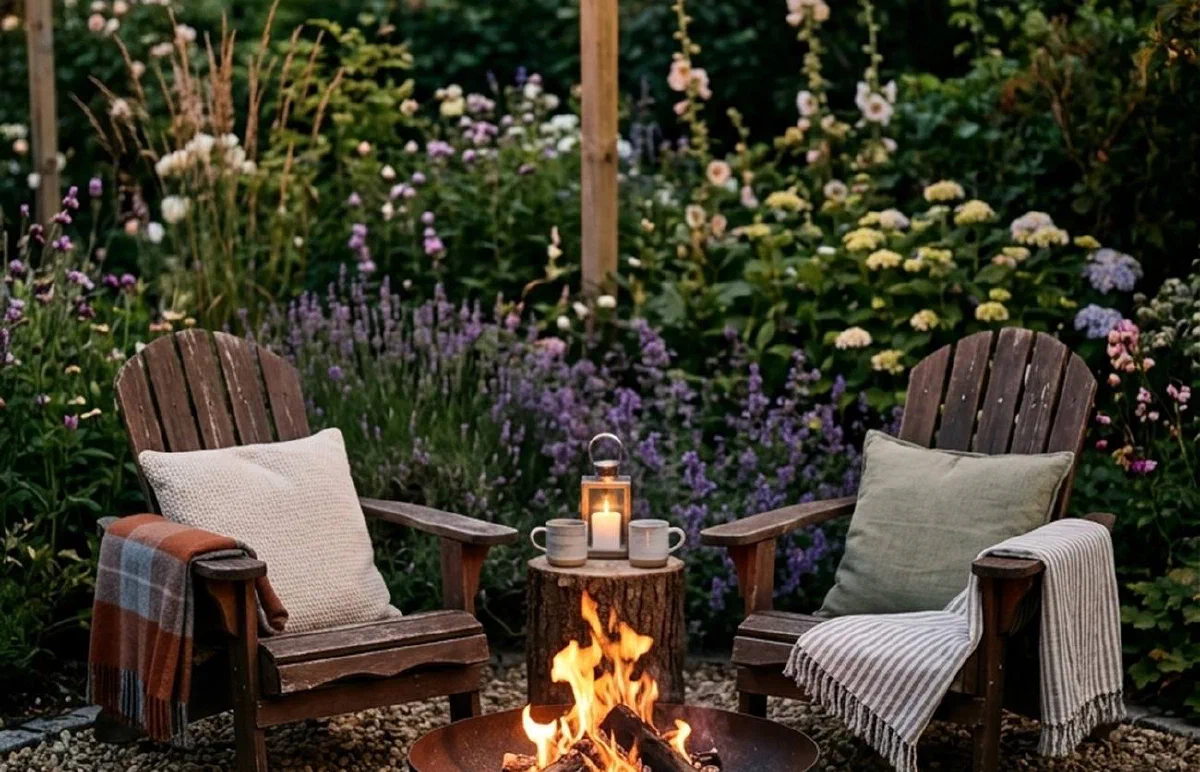
A backyard can lose its whole mood with one bad light.
You know the kind. Bright white porch light, glare bouncing off every window, moths throwing themselves at the bulb while the rest of the yard turns flat and strange. It makes the space usable, technically, but it does not make you want to sit there.
Dusk-friendly lighting works differently. It keeps the path visible, gives faces a soft glow, and lets the darker parts of the garden stay dark. That last part matters. A little shadow is what makes a backyard feel tucked away.
No Outdoor Outlet? Which Light Goes Where
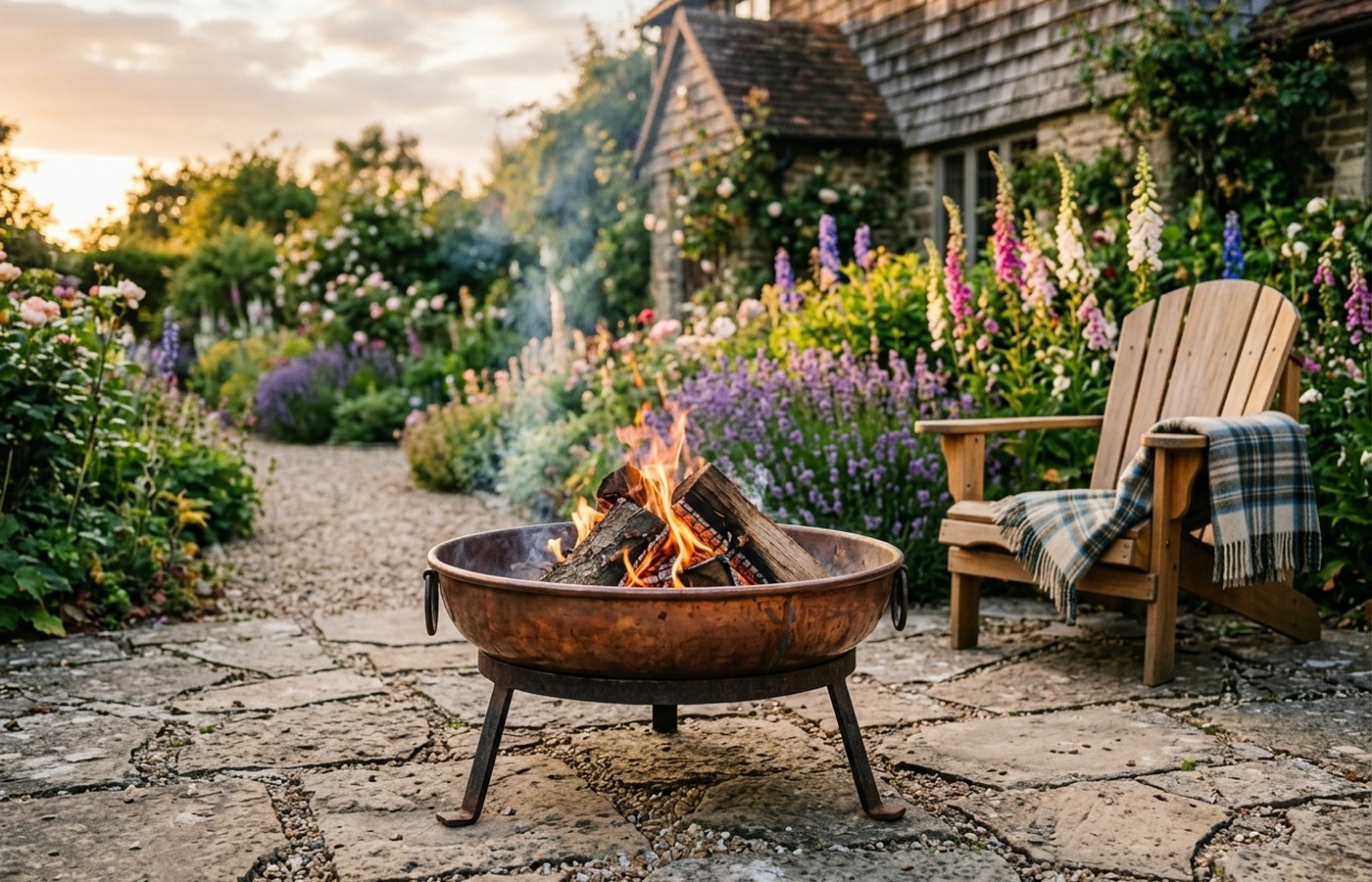
No outlet does not rule out useful backyard light. Use solar lights where the panel can collect daylight, rechargeable or replaceable-battery lights around shaded seating, and motion-activated lights where you need a brief pool of light at a gate or step. That keeps cords out of walking paths and lets you put the light where people actually need it.
| Place you need light | Best no-outlet starting point | Check before you buy |
|---|---|---|
| Sunny path or garden-bed edge | Solar path or deck lights | Put the panel where plants, fences, or rooflines will not shade it for most of the day. |
| Shaded table or seating area | Rechargeable outdoor lantern or battery table lamp | Make sure the label says it is made for outdoor use, then check that one charge covers the hours you normally sit outside. |
| Fence, trellis, or pergola | Solar string lights if the panel can sit in sun; outdoor battery string lights if it cannot | Check panel-cable reach, weather rating, and how you will secure the strand without sagging across a walkway. |
| Gate, side path, or step | Solar or battery motion-sensor light | Aim it down at the walking surface and test the sensor from the direction people approach. |
The U.S. Department of Energy includes solar outdoor lighting, automatic daylight shutoff, and motion sensors among practical outdoor options. Solar runtime still depends on the light, battery, weather, and the daylight that reaches the panel, so skip any promise that every fixture will run the same number of hours.
Whichever power source you choose, keep the beam warm, low, and pointed at the place that needs it. DarkSky International recommends targeted, low-level, controlled, warm-colored outdoor light. Also check the label before leaving a cordless lamp or string outside. The NFPA’s home safety messaging is to use only outdoor devices that are weatherproof or marked for outdoor use, and to keep them protected from moisture.
Use Warm Light First
Start with bulb temperature. Look for warm white bulbs around 2200K to 2700K. The lower end feels more like candlelight. The higher end still works for steps, doors, and places where you need a bit more visibility.
Avoid cool white outdoor bulbs unless you need task lighting. They make plants look washed out and they pull attention away from the garden.
If you already have a bright porch fixture, try changing the bulb before replacing the fixture. That one swap can make the whole yard feel calmer.
Keep Light Low
The best garden lighting usually sits below eye level.
Low path lights, step lights, lanterns on a table, and small lights tucked behind pots all do the same thing: they help you move through the yard without turning the whole space into a stage.
I like path lights that point down, not out. A shielded top is better than a clear globe because it keeps glare out of your eyes. Test spacing on the actual route and keep steps and trip hazards visible. You do not need a runway. You need little pools of light showing where your feet go.
This works especially well near a bird bath or quiet backyard corner, where the whole point is softness.
Light the Edges, Not the Whole Yard
Pick three places to light:
- The door or entry point
- The path or step people might trip on
- The seating area where faces need a little glow
Leave the rest alone.
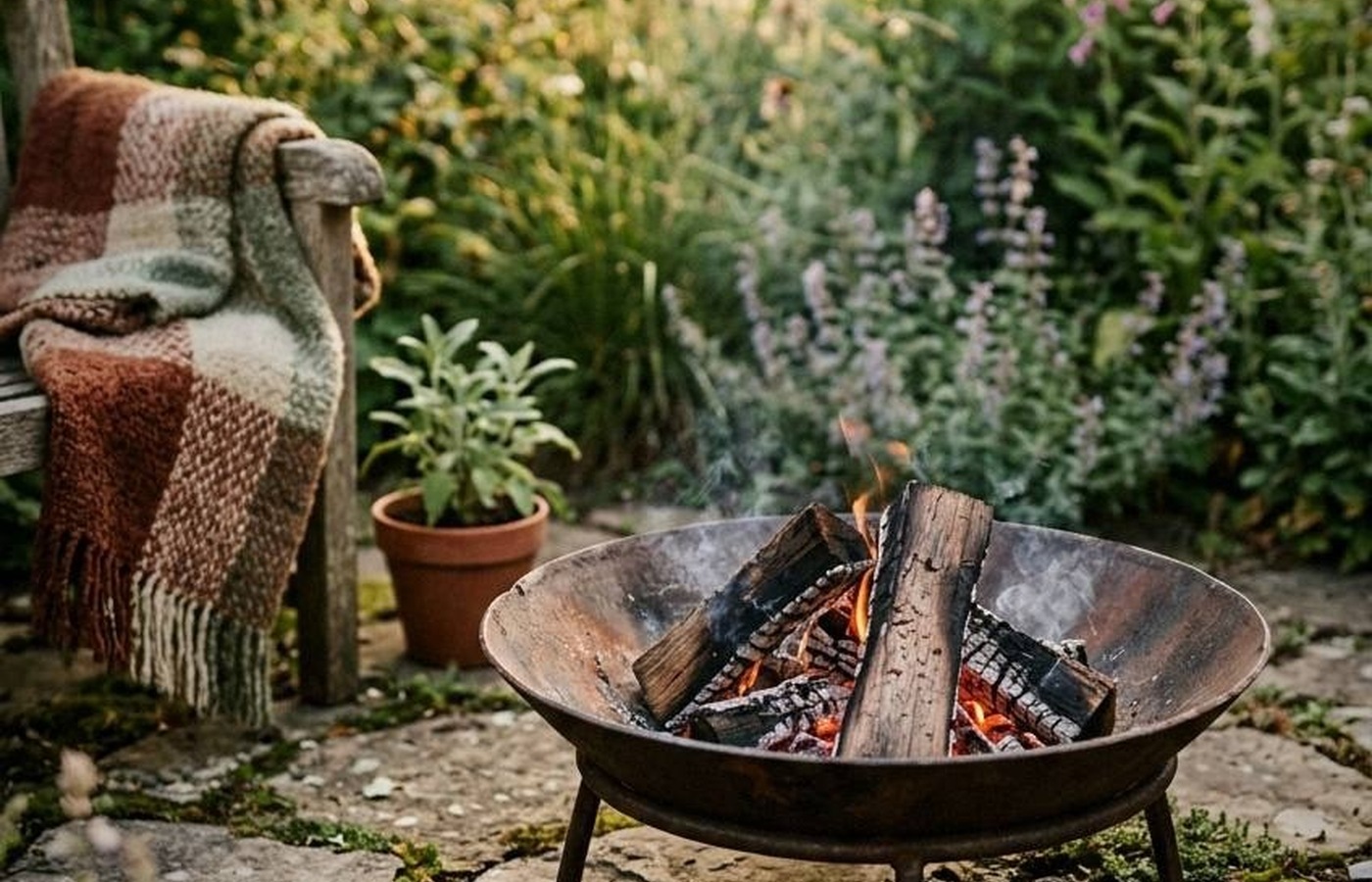
A garden feels bigger when parts of it fade into shadow. If you light every fence line and every bed, the yard can feel smaller and more exposed. Let the shrubs and trees hold some darkness. That contrast is what makes a lantern on the table feel special.
Put Lights on Timers
A dusk-friendly yard does not need to glow until morning.
Use timers or smart plugs so lights turn off after the time you actually use the space. Motion sensors work well near gates, trash bins, and side paths. For seating areas, I prefer a simple plug-in timer that turns lights off around bedtime.
Nighttime wildlife needs dark hours. So do plants. You do not have to make the backyard pitch black every night, but you can stop lighting it when no one is outside.
The Order to Set It Up In
For a small backyard sanctuary, this is the whole kit, and the sequence matters more than the shopping list:
- Change the porch bulb first. One warm bulb, and it is the change you can see from every window in the house.
- Light the route with low path lights, positioned to show steps and trip hazards without glare; the number depends on the route.
- Add one lantern on the table, so the seating area has a pool of its own.
- Add a shielded accent light only if needed, aimed down at a useful feature rather than into the sky.
- Put the lot on one timer and leave the rest of the yard dark.
That is enough for most yards, and it is five decisions instead of a lighting scheme.
If you have a moon garden, keep the lights even softer. White flowers, silver foliage, and pale gravel show up beautifully at dusk. Too much artificial light steals that effect.

Common Lighting Mistakes to Skip
Skip blue-white solar stakes. Skip clear globe lights at eye level. Skip spotlights aimed across the yard. Skip anything that shines into a neighbor’s window.
Also skip the urge to make every corner visible. A sanctuary needs some mystery. Not spooky. Just quiet enough that your eyes can rest. That half-lit quality is where the small whimsical details in a backyard do their best work.
The best test is simple. Walk outside after dark and sit in the chair you actually use. If the light hits your eyes before it hits the path, move it. If you can see the path but still notice the sky, you are close. By October that chair needs more than light, so plan the wind cover and dry storage that keep a fall corner in use too.
A backyard does not need to be bright to feel welcoming.
What to Read Next
- See more ways to light a backyard for soft summer evenings when you want a fuller mix of path, table, and overhead light.
- Hang patio string lights without a pergola if the missing support points are the harder problem.
- Plant a moon garden that shows up after dark when you would rather let pale flowers and foliage do part of the work.
- Make a very small patio easier to use if lighting is only one piece of an awkward layout.