
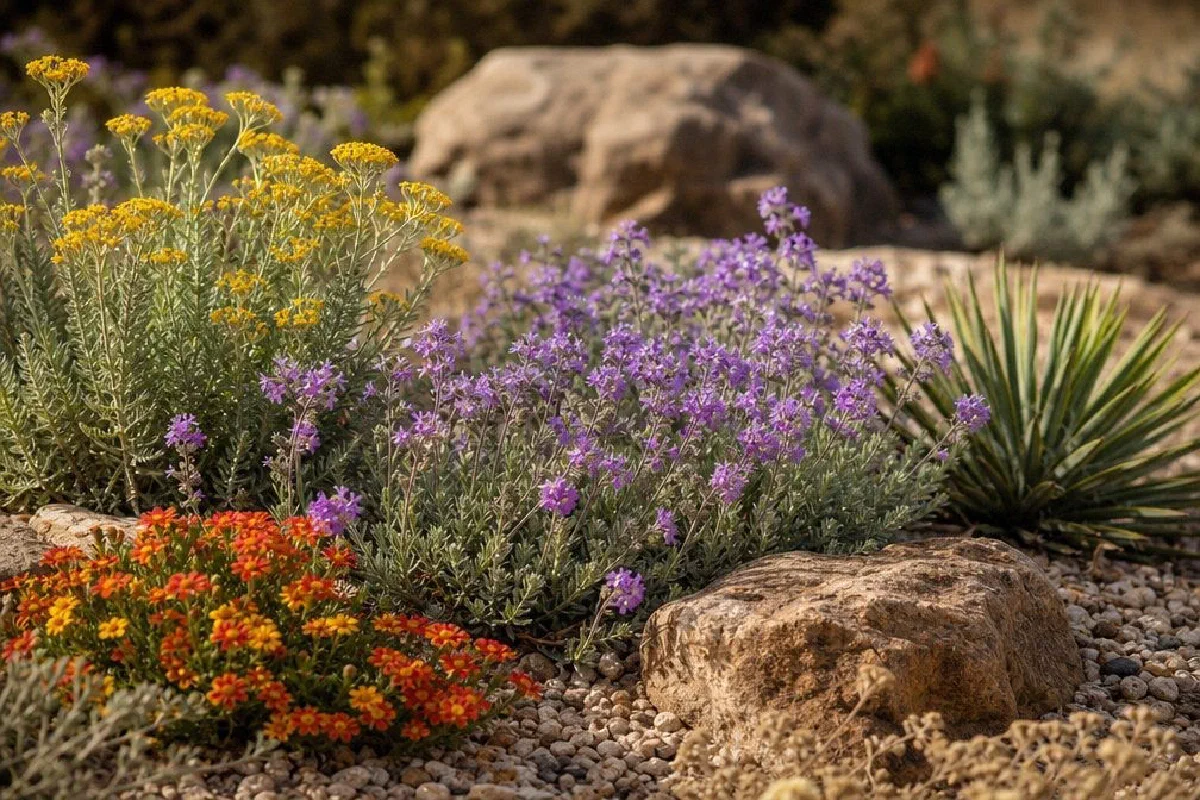
A hot flower bed can make you feel like you are throwing money into the sun. The plants look fine for a week, then one heat wave turns them crispy and the whole bed starts over.
Drought tolerant flowers help, but the plant list is only half the job. The bed still needs mulch, decent soil, and flowers that actually want the light they are getting.
Plant For The Heat You Really Have
Full sun on a plant tag does not always mean full afternoon sun against brick, concrete, or a south-facing driveway. Those spots hold heat after the air cools down. Penn State Extension puts full sun at six or more hours of direct sun, part sun at four to six, part shade at two to four, and shade at less than two, so a bed that bakes from noon to six is a full sun bed with none of the mercy. A mailbox bed at the edge of the road is the worst of them, which is why mailbox flowers for full sun and road heat works from a shorter list than a regular bed does.
For the hottest beds, look at zinnias, lantana, gaillardia, salvia, yarrow, coneflower, lavender, coreopsis, portulaca, and blanket flower. They still need water while they establish, but they don’t collapse as quickly as thirsty bedding annuals.
Mulch Is Not Optional In A Dry Bed
Bare soil loses moisture fast. It also bakes around shallow roots. A two inch mulch layer helps the bed stay more even through hot afternoons.
Keep mulch pulled back from the plant stems, but don’t leave the whole surface exposed. If the mulch has thinned out, the flowers are working harder than they need to.
How much water does a dry flower bed actually need?
About an inch a week is the number most gardeners work from, and University of Minnesota Extension treats it as a good rule of thumb, with the detail that matters more than the total: you want that water to reach the top 6 to 9 inches of soil rather than sit on the surface. Water in the morning, soak less often instead of sprinkling daily, and check with your hands before you reach for the hose. If the top 6 inches are dry, water. If they aren’t, wait.
The University of Minnesota Extension drought guide is worth reading in full when restrictions hit, because it also covers how to prioritize which plants get the water you have.
Use Color In Blocks
Drought planting can look sparse if every plant is different. Repeating one flower in small groups gives the bed more color from the street without requiring more water.
Try three zinnias together, then a clump of salvia, then a repeated drift of yarrow or coreopsis. The repetition makes a dry bed feel intentional instead of patched together.
The same trick carries a bed into October once the summer flowers thin out. Fall flower beds with color after summer covers what to drop in when the heat finally breaks.
Replace The Thirsty Plants First
You don’t have to redo the whole bed. Start with the plants that fail every July. If one corner always wilts first, swap that corner before replacing anything else.
The goal isn’t a zero-water garden. It’s a garden that doesn’t need babysitting every evening just to stay presentable.
How to set up a dry bed before summer
- Measure the light at the hottest part of the day, not the greenest part of the morning.
- Work compost into the top few inches so the soil holds water instead of shedding it.
- Mulch two inches deep, pulled back from the stems so nothing rots at the crown.
- Water deeply and less often through the first season, while roots are still shallow.
- Mark the corner that wilts first every July, and plan to replace that one plant next spring.
Color and low water can live in the same bed. The trick is matching the plant to the heat, covering the soil, and replacing the plants that keep punishing you.
Build a Lower-Water Flower Plan
After you choose drought-tolerant flowers, check the rest of the planting plan so the bed does not become a patchwork of stressed plants. Full-sun perennials that bloom without asking much is a strong next read for hot beds, and front yard cottage garden edges helps keep loose planting from looking messy at the curb.
For containers, pair lower-water flowers with succulent container combos for summer heat or what to do when container soil keeps drying out too fast. If you want pollinator value too, native plants for wildlife habitat is the better long-term companion.
What to Read Next
- Full-sun perennials that bloom without asking much when you want the bed to come back every year instead of reseeding.
- Mailbox flowers that look good without a full landscaping project for the hottest strip of pavement on the property.
- Native plants for wildlife habitat if the dry bed should feed pollinators as well as look good.
- Flower container combinations that bloom all season for pots, where drought stress shows up first.