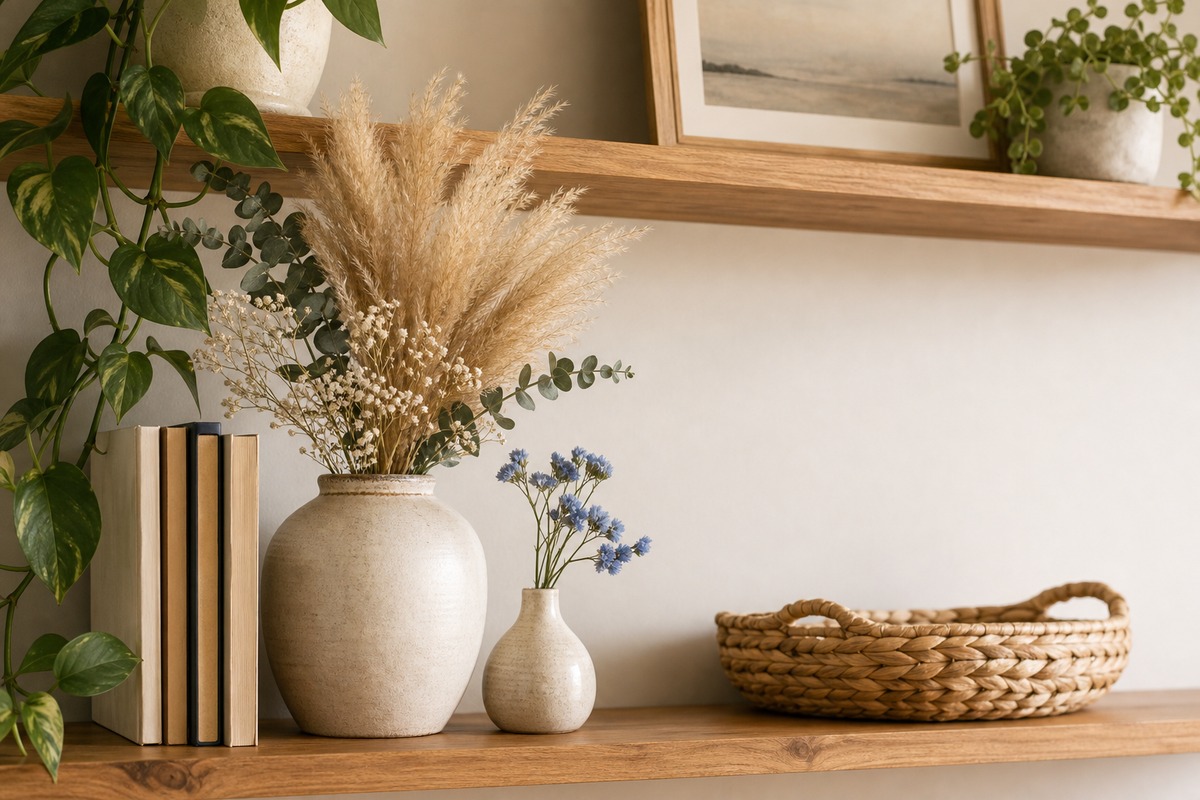
A shelf can go from cozy to cluttered in about five minutes.
I have done it plenty of times. One jar of dried flowers looks lovely, so I add a candle, then a stack of books, then a little dish, then another jar because the first one looked lonely. Suddenly the shelf feels like a thrift store window.
Dried flowers work best when they have room to breathe. They already bring texture, age, and a little wildness. You do not need much around them.
Start With One Anchor
Pick one main thing for the shelf before you touch anything else.
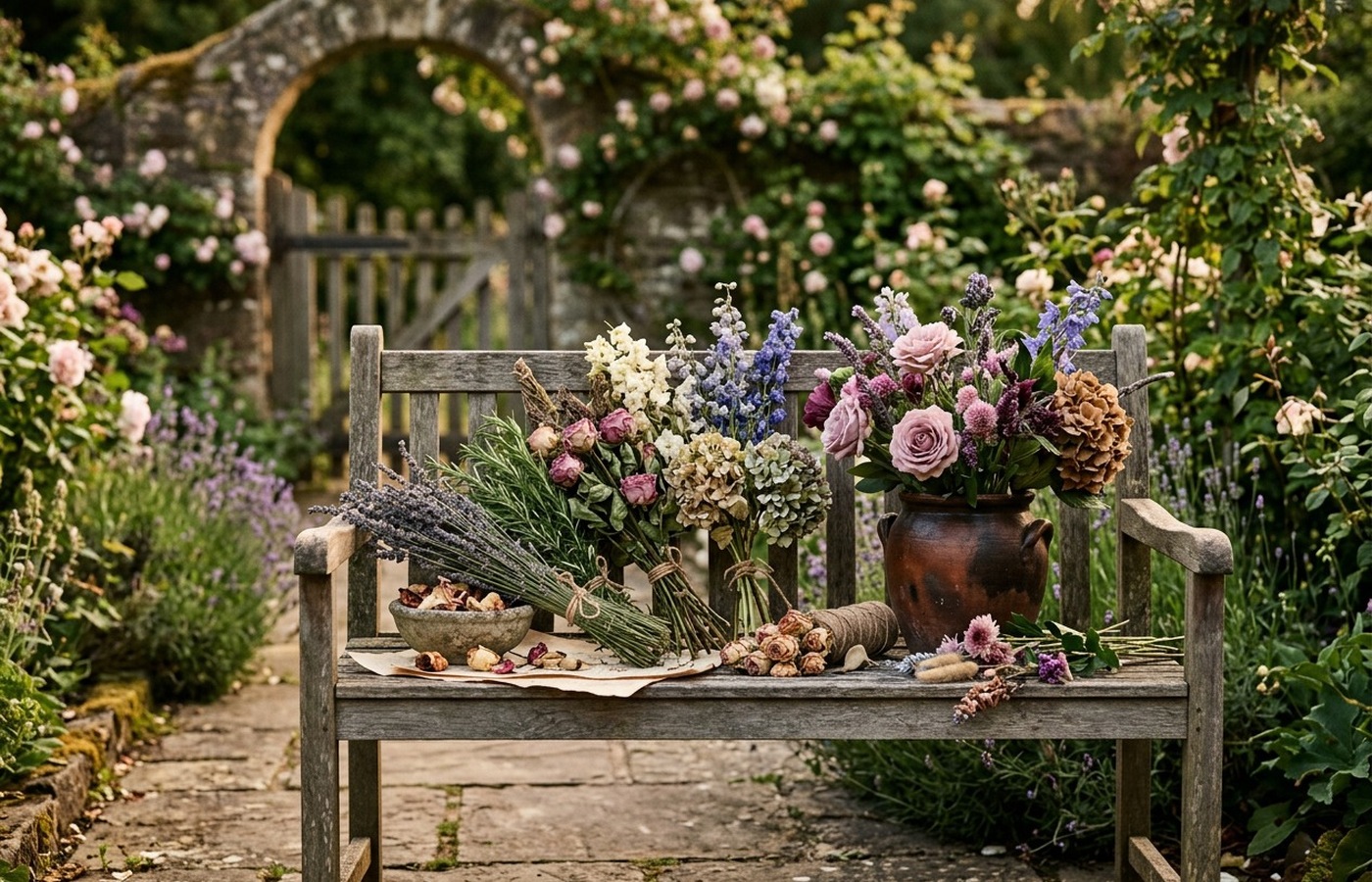
It might be a brown bottle with dried yarrow, a crock with lavender, a small basket of seed heads, or a framed print. Put that anchor slightly off center. Centered shelves can look stiff unless the whole room is very formal.
Then leave it alone for a minute. The empty space around the anchor is part of the styling. It gives your eye somewhere to rest.
If the flowers are tall, keep the other items low. If the flowers are short and full, add height with books or a small frame behind them.
Use Containers That Feel Collected
Dried flowers look better in simple containers: jam jars, brown medicine bottles, cream pitchers, old crocks, small baskets, or clear glass vases with narrow necks.
The container should not fight the flowers. A bright modern vase can work, but it pulls attention to itself. I usually pick plain jars, crocks, or bowls so the shelf does not look overworked.
Try this mix:
- One glass jar
- One ceramic piece
- One wood or basket texture
That is enough variety for most shelves.
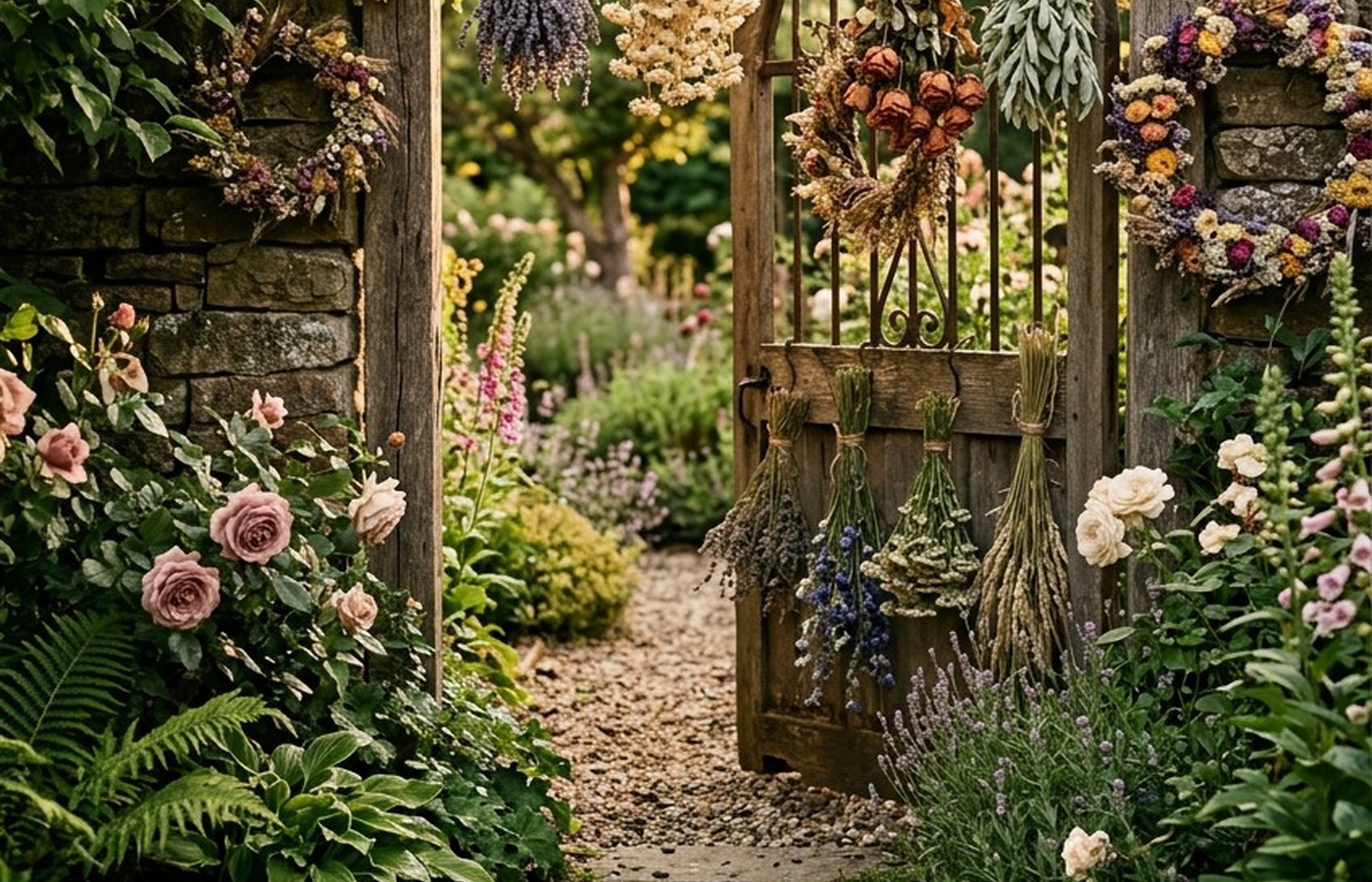
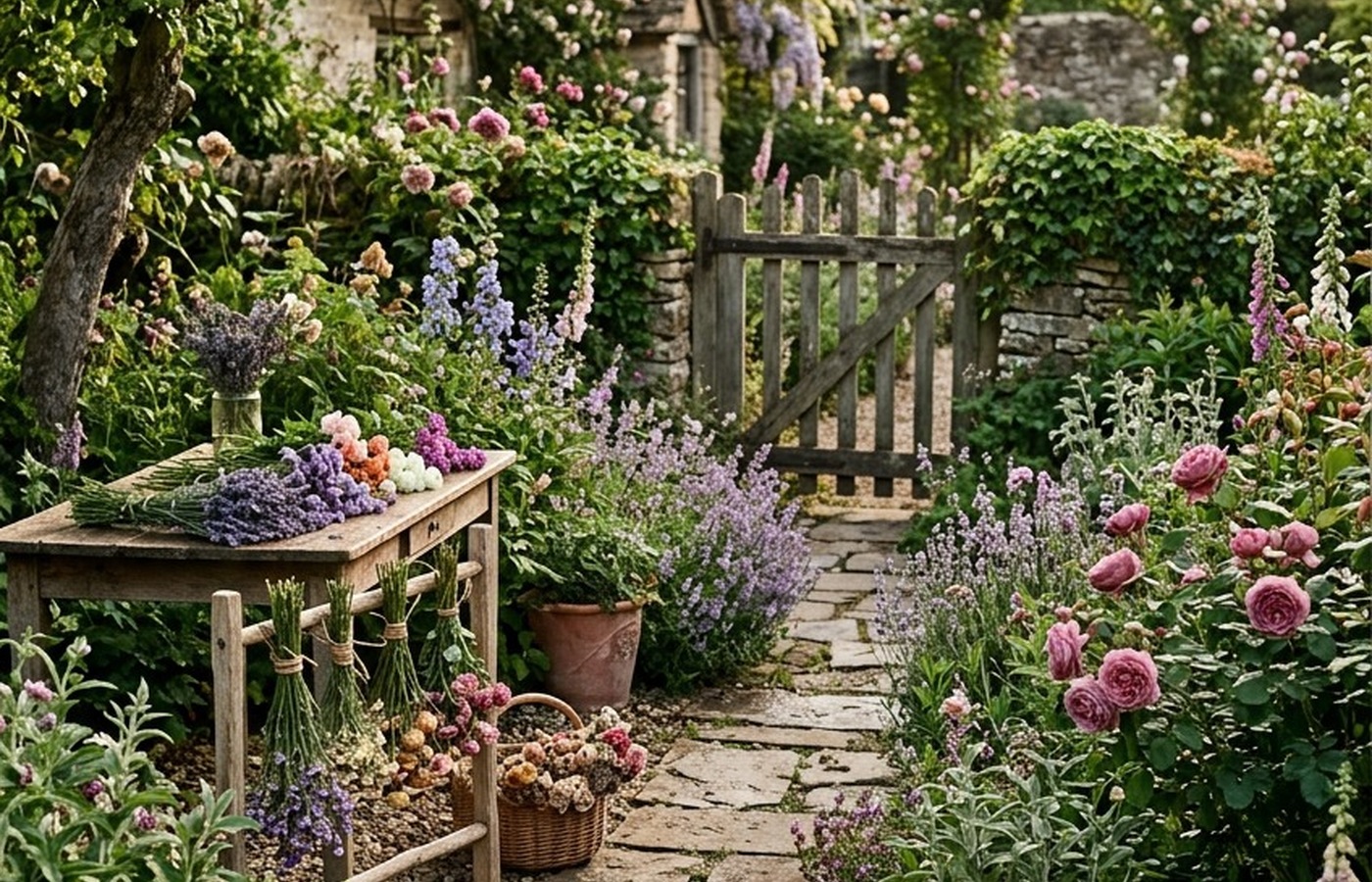
If you are drying your own stems, save a few short pieces from your garden flower drying projects . Short stems are easier to use indoors than long dramatic ones.
Build in Groups of Two
Styling advice often says to use groups of three. Sometimes that works. On a narrow shelf, it can also look crowded.
I like groups of two: flowers plus books, flowers plus bowl, flowers plus candle. The pair feels intentional without filling every inch.
Put the heavier object lower or wider. A low stack of books under a small jar works. A large vase next to a tiny teacup usually feels off unless there is something behind the cup to give it weight.
Step back after each pair. If you keep adding because the shelf feels unfinished, try moving one thing instead of adding another.
Make Seasonal Swaps Small
You do not need to restyle the whole shelf every month.
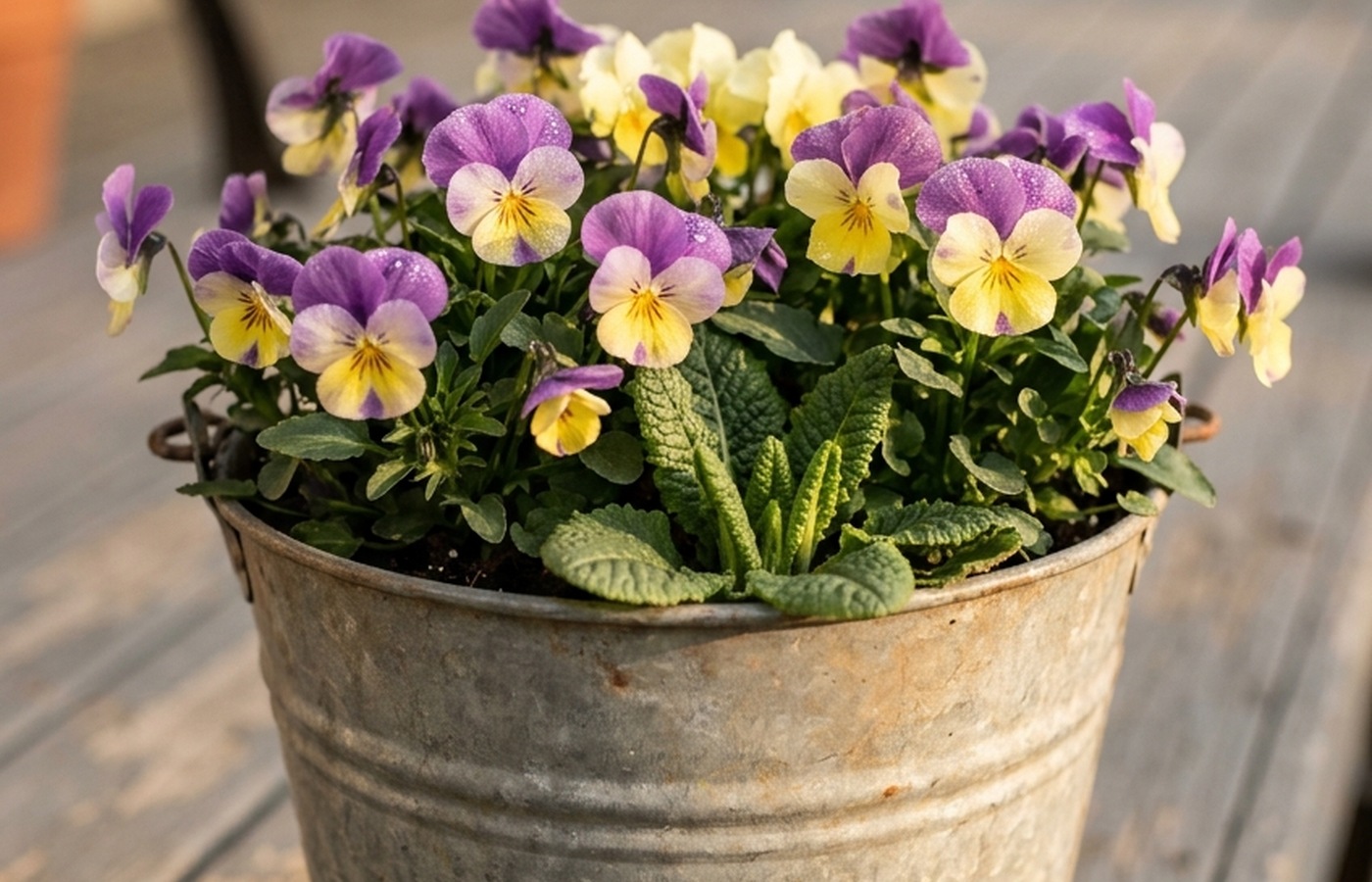
In spring, add a small jar of pressed pansies or early herbs. In summer, use strawflowers, lavender, and pale grasses. In fall, tuck in seed heads, dried hydrangea, or coppery leaves. In winter, add cedar, dried orange slices, or white statice.
Keep the bones the same: the same books, same bowl, same basket. Swap the flowers and one small detail.
That is how a room starts to feel seasonal without becoming a storage problem.
Leave Some Space Empty
This is the part I have to remind myself about.
Empty space is not wasted space. It is what makes the dried flowers feel calm instead of dusty. A shelf with five good things and breathing room usually feels better than a shelf with twelve tiny things trying to matter.
If you are unsure, remove one object. If it looks better, remove another. Stop when the shelf feels quiet but not bare.
A useful shelf does not have to be full. It needs enough space that you can dust it, use it, and change it without starting over.
A Simple Shelf Formula
Use this if you want a starting point:
- Left side: small stack of books with a low bowl on top
- Middle: open space
- Right side: jar of dried flowers with a small framed print behind it
Or flip it. The formula matters less than the breathing room.
And if one little jar of dried flowers is all the shelf needs, let that be enough.