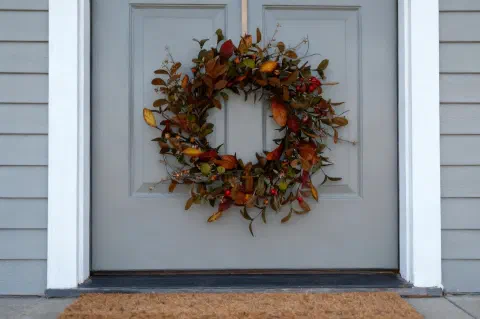
The orange maple wreath has a date stamped on it. Nobody prints the date, but everyone can read it, and it says the first week of November. After that it stops looking like autumn and starts looking like something you forgot about.
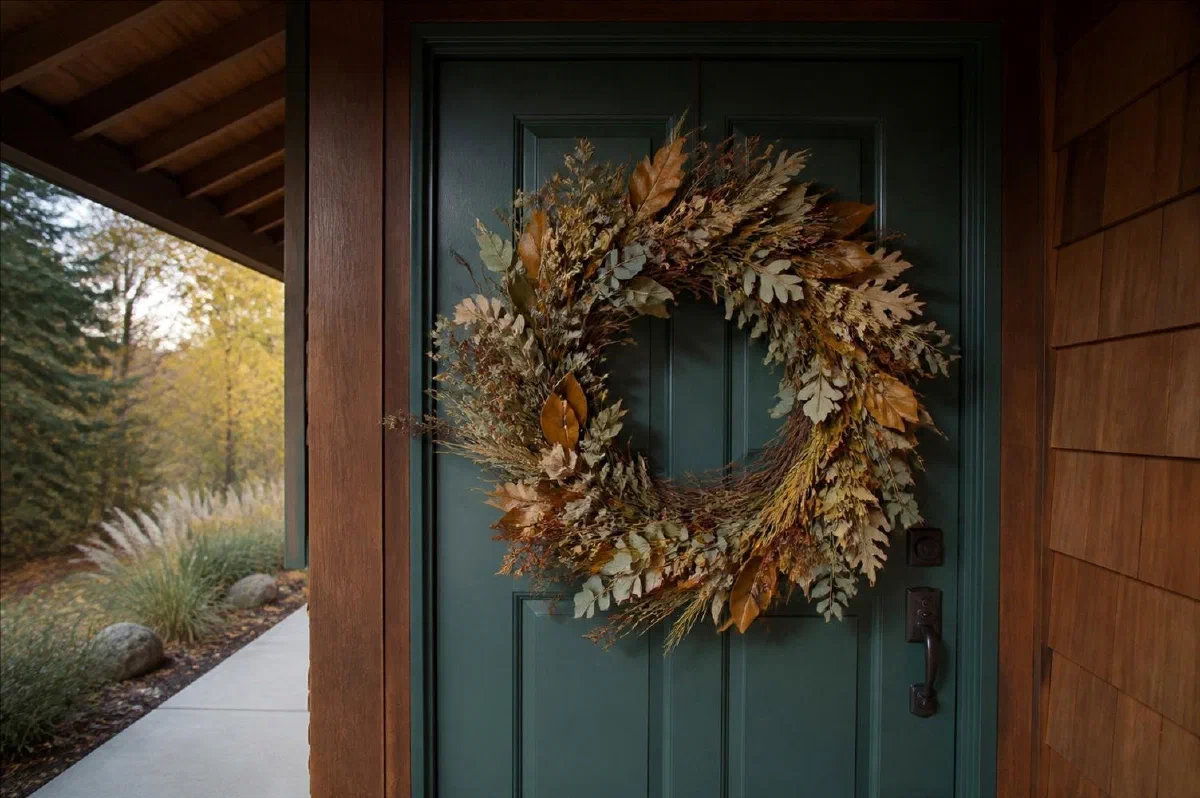
A dried fall wreath does not carry that date. Wheat, seed heads, grass plumes, and pale papery flowers are not autumn the way a dyed maple leaf is autumn. They read as fall in September, as winter in December, and as late winter in February with nothing swapped out. That one property is the whole buying argument, and it changes what you should be shopping for.
There is a condition attached, and it is the part listings leave out. The wreath keeps going only where the weather does not. Get the position right and it outlasts three seasonal changeovers. Get it wrong and it is litter after one storm.
This article contains affiliate links. If you buy through them, Etheric Echoes may earn a commission at no extra cost to you. As an Amazon Associate I earn from qualifying purchases. Read the full disclosure.
What Makes a Dried Fall Wreath Different From Every Other Fall Wreath
Dyed autumn decor is built to say one thing. It says it well, then it says it too long.
Take a well-made artificial one, like this artificial fall wreath in golden eucalyptus and oak leaves (opens Amazon in a new tab) (4.6 stars, 685 ratings). It is genuinely good at being autumn, and that is exactly why it comes down. Golden oak leaves in January are not neutral. They are last season, hanging on.
Neutral dried material has no such tell. Wheat, oat stems, and pale grass plumes sit in a narrow range of cream, bone, and grey, and none of those colors belongs to a month.
So the shopping list shifts:
- Neutral over dyed. Anything colored orange or rust is a fall wreath with a November deadline, no matter what it is made of.
- A sheltered position over an exposed one. This matters more than the wreath itself, and it is not negotiable.
- Indoors as a real option. Not a fallback for people without a good door. Often the better answer, and the one several dried wreaths are actually sold for.
If you would rather build the thing than buy it, the sizing, the wire, and the hanging hardware are all covered in how to make a fall wreath in one evening . This piece is about what happens after it is on the door.
Which Dried Materials Survive Outside, and Which Do Not
Outdoors, dried material fails in a set order: water first, wind second, light a distant third. Rain does not rot a dried stem quickly. It collapses the structure. A soaked grass plume mats down into a rope and never fluffs back out. That is the failure people describe as the wreath going flat, and it happens in one afternoon.
| Material | Under a roof | Fully exposed | What ends it |
|---|---|---|---|
| Dried wheat and oat stems | Holds its shape well | Poor | Heads shatter once wet, then wind strips them |
| Pampas plumes | Good, but sheds fibre | Poor | Rain mats the plume permanently |
| Bunny tails | Good | Poor | Small heads snap off in gusts |
| Statice | One of the better ones | Fair | Papery bracts fade before they fail |
| Fountain grass plumes | Good | Poor | Same matting problem as pampas |
| Dried hydrangea heads | Good | Poor | Bracts tear when wet and handled |
| Dyed or bleached anything | Fades first | Fades fastest | Color, not structure, gives out |
| Pinecones, pods, acorns | The toughest layer | Fine | Almost nothing |
Statice is worth singling out. NC State Extension describes Limonium sinuatum as carrying “papery, funnel-shaped blossoms” often used in dried arrangements, and papery is the operative word. The bracts are already dry on the living plant, which is why they take a damp morning better than a wheat head does. Fountain grass is on the list for the same practical reason: NC State’s entry for Pennisetum alopecuroides tags it for dried arrangements, and its bottlebrush spikes hold a tighter shape than a loose plume.
Hydrangea heads give the most volume per stem of anything in the category, but the drying has a narrow window of its own. The method is in how to dry hydrangeas for fall arrangements , and it is worth reading before you cut anything.
The base matters less than people expect. A grapevine base handles wet and dry cycles better than foam or straw, because it is the same material as a vine outside in the rain. Foam holds water.
The Honest Limits of Pampas Grass Outdoors
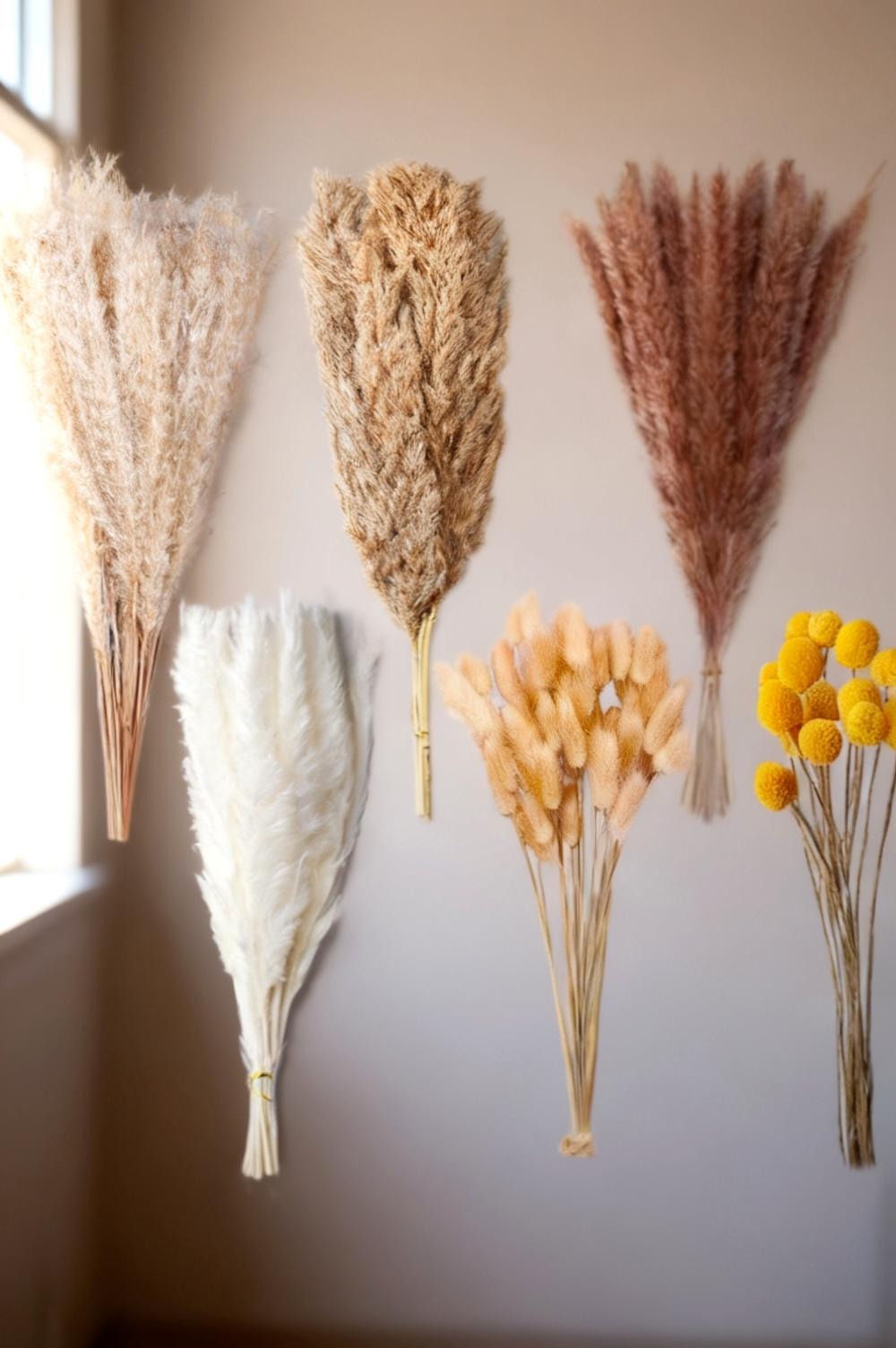
Pampas grass is the default look for this category, and it comes with two limits nobody puts in the listing.
The first is physical. NC State Extension notes that pampas grass blooms are “good in cut and dried arrangements,” and they are, indoors. Outdoors, the plume is the vulnerable part. It is a soft, feathered structure that depends on being dry to look like anything at all, and once rain flattens it there is no recovery.
The second is that a plume is a seed head. The California Invasive Plant Council’s profile for Cortaderia selloana records that a single plume can produce up to 100,000 seeds, that they are widely dispersed by wind, and that they develop without fertilization. Cal-IPC rates the species High, its most serious tier. NC State’s entry for Cortaderia selloana calls it “highly invasive in some areas of the United States.”
That does not mean nobody may hang pampas. It means the exposed outdoor position is the wrong one for it, on two counts at once, and where you live decides the second. Check your own state’s invasive plant list before you hang a seed head in the wind.
Which leads to a fork worth taking seriously:
- Genuinely dried, kept sheltered. This 23 inch natural pampas grass wreath (opens Amazon in a new tab) (4.5 stars, 516 ratings) is handmade from real dried material, and its own listing describes it as indoor decor for a door or a wall. That is not a hidden limitation. It is the maker telling you where it works.
- Faux, for an exposed door. This 25 inch faux pampas grass wreath (opens Amazon in a new tab) (4.4 stars, 765 ratings) is artificial, sold in ivory and taupe as an all-seasons piece. Nothing about it is dried, and that is the point: no seed, no matting, and it can hang where the rain reaches.
Neither is the honest answer in the other’s spot.
Where to Hang It, and Why a Covered Porch Changes Everything
Rank the positions by how much weather they let through, and the list settles quickly.
- An interior wall. Zero weather, zero fade risk if it is off the sun line. Dried material lasts here in a way it never will outside.
- A deep covered porch or a recessed entry. The best outdoor spot. Stand where the wreath will hang, look straight up at solid roof, and you are set.
- A north-facing door with an overhang. Little direct sun and little driven rain. Quietly the best real front door most houses have.
- The main door behind a storm door. Better than it sounds. The glass takes the rain and the wreath stays in the dry gap behind it.
- A south or west door with nothing above it. The one position where dried material does not belong. Buy faux for this door and stop fighting it.
A few things decide which bracket you are in:
- Look up, not out. Overhang depth is the whole variable. A two-foot roof over the step is worth more than any amount of care.
- Wind matters as much as rain. A door at the corner of a house takes weather sideways, and a roof does nothing about sideways.
- The storm door needs a flat wreath. Depth is what hits the glass. Hardware and clearances for that case are in the wreath hanging section of the build guide .
- Indoors is not a consolation prize. Over a bed, on a hallway wall, above a mantel: that is where the material finally gets to last. The dried flower shelf approach covers keeping it from reading as clutter alongside everything else.

How to Set Up a Dried Fall Wreath So Rain Never Reaches It
Six steps, and the first two are the only ones that decide anything.
- Stand where the wreath will hang and look up. If you can see open sky directly overhead, rain reaches the wreath. No hanging method changes that.
- Watch one storm before you commit. Wind-driven rain does not fall straight down. Note where the door is wet afterward, because that patch is where dried material will not survive.
- Choose neutral, not dyed. Undyed wheat, oat, cream, and grey have almost nowhere to fade to. Rust and orange dye is the first thing sunlight takes.
- Hang it shallow if a storm door is involved. Build or buy flatter than feels right, or the outer door will not close on it.
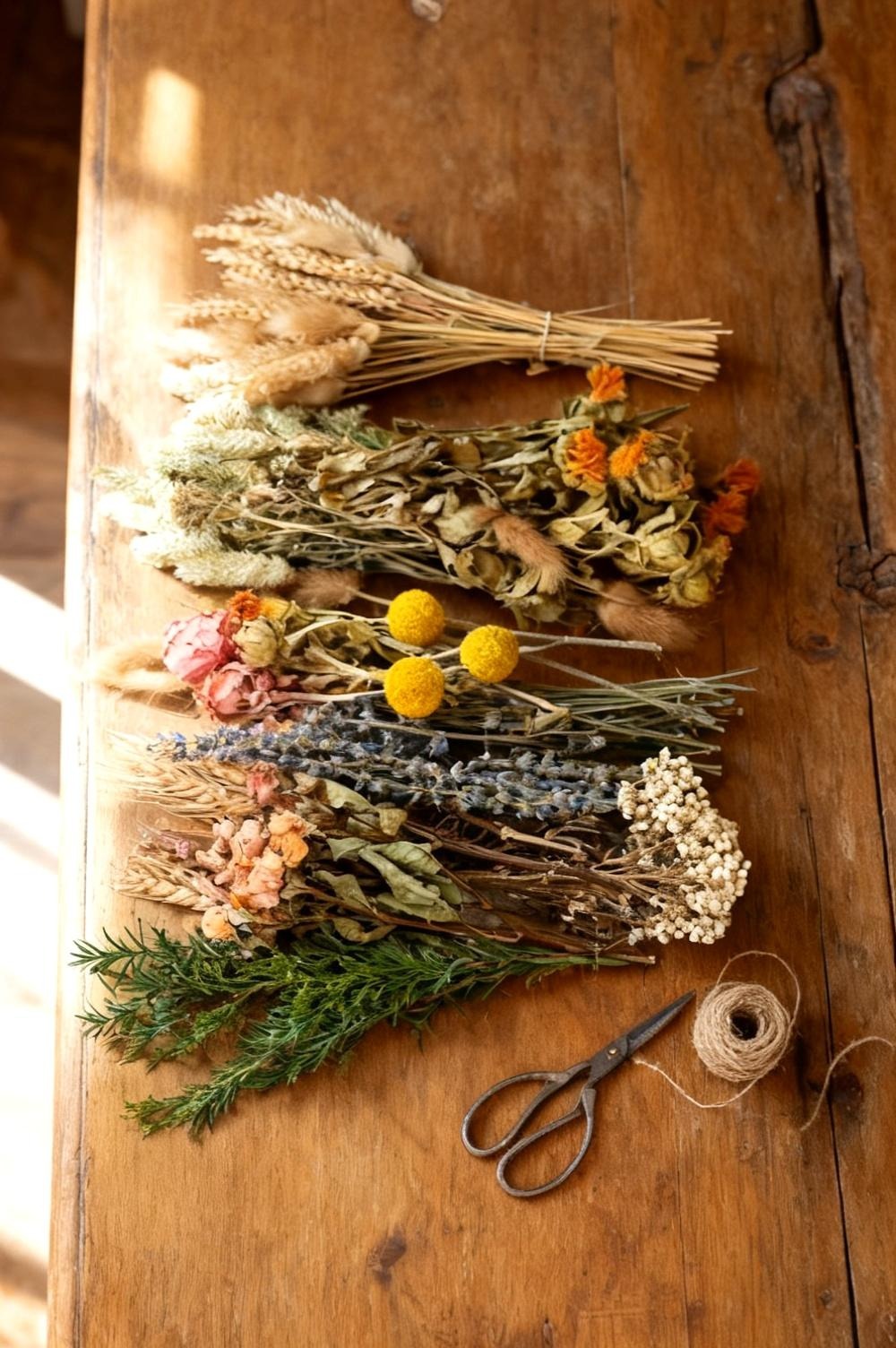
- Keep spare stems on hand. A handful of loose material turns a thinning wreath into a five-minute repair instead of a replacement. A 100 piece dried pampas grass bundle (opens Amazon in a new tab) (4.4 stars, 2,500 ratings) carries six types of dried stems, and a bulk natural dried flower set (opens Amazon in a new tab) (4.4 stars, 741 ratings) gives you the smaller accent pieces in brown tones that tuck into gaps.
- Bring it in when the forecast turns. Sixty seconds of effort on the two or three genuinely bad nights a season is the cheapest thing on this list.
The Mistakes That End a Dried Fall Wreath in November
- Hanging it somewhere the rain reaches. The only mistake that ends the wreath rather than damaging it.
- Buying dyed material for the neutral plan. Orange grasses defeat the reason to buy dried at all.
- Misting it, or spraying anything on it. Dried material and water are not friends, indoors or out.
- Hanging pampas grass on an exposed door where it is invasive. A seed head in the wind is doing something, whether or not you meant it to.
- Packing it flat in a box. Weight crushes plumes. Storage is the second most common way these end.
- Treating an indoor spot as failure. It is where the material lasts longest.
How to Keep It Going From September Into February
The wreath does not change. What changes is the one accent on it, and that takes about two minutes a season.
Swap the accent, not the wreath. Pull anything warm-toned out in late November and tuck in a few sprigs of preserved greenery or a couple of cotton stems. Same base, same neutral body, and it now reads as winter. In February, take the greenery back out and the wheat and grasses carry it alone.
Shake it, do not wash it. Off the hook, upside down outside, one firm shake. A soft brush handles the rest. Nothing wet goes near it.
Watch the humidity indoors too. Dried material pulls moisture back out of the air, which is why a dried wreath does poorly in a steamy bathroom or an unfinished basement and fine on a hallway wall.
Store it hanging. A hook in a closet or the back of a spare door keeps the plumes uncrushed. A flat box does not.
Refresh a thin patch instead of replacing the whole thing. Two or three stems tucked into the grapevine base, pushed the same direction as everything else, fixes a bare spot. If you would rather grow the replacement stems than buy them, flowers worth growing for drying covers what gives the most usable material per square foot.
What I’d Actually Buy
The split here is not by looks. It is by where the thing will hang.
- 23 inch natural pampas grass wreath, handmade dried (opens Amazon in a new tab) (4.5 stars, 516 ratings). Real dried material, sold as indoor decor. The one to buy for a hallway wall, a bedroom, or a genuinely covered porch.
- Perfnique 25 inch faux pampas grass wreath (opens Amazon in a new tab) (4.4 stars, 765 ratings). Artificial, ivory and taupe, sold for all seasons. This is the exposed-door answer, and it is faux by design rather than by compromise.
- Natural dried pampas grass, 17.5 inch, 100 pieces (opens Amazon in a new tab) (4.4 stars, 2,500 ratings). Six types of dried stems in one bundle. The best value for building a wreath from scratch and for keeping repair material on the shelf.
- xin’s convey DIY natural dried flower set, bulk (opens Amazon in a new tab) (4.4 stars, 741 ratings). Bulk dried flowers with stems in brown tones, including small bouquets and dried roses. This is the accent layer, not the body of the wreath.
- AMF0RESJ artificial fall wreath for a front door (opens Amazon in a new tab) (4.6 stars, 685 ratings). Artificial golden eucalyptus and oak leaves. Buy this if you want autumn to look like autumn and you accept that it comes down in November.
None of these five carries a Best Seller or Amazon’s Choice badge as of the 2026-08-15 check. Ratings and counts are from that same date, so check the current listing before ordering.
Related
- DIY Fall Wreath You Can Finish in One Evening has the base sizing, the wire method, and the hanging hardware this article assumes you already sorted.
- How to Dry Hydrangeas for Fall Arrangements covers the narrow cutting window that makes heads hold their shape instead of collapsing.
- Dried Flower Shelf Ideas for a Tidy Cozy Room is where the indoor version of this goes once it comes off the door.
- Flowers to Grow for Drying If You Want Arrangements All Winter tells you what to plant so next year’s stems cost nothing.