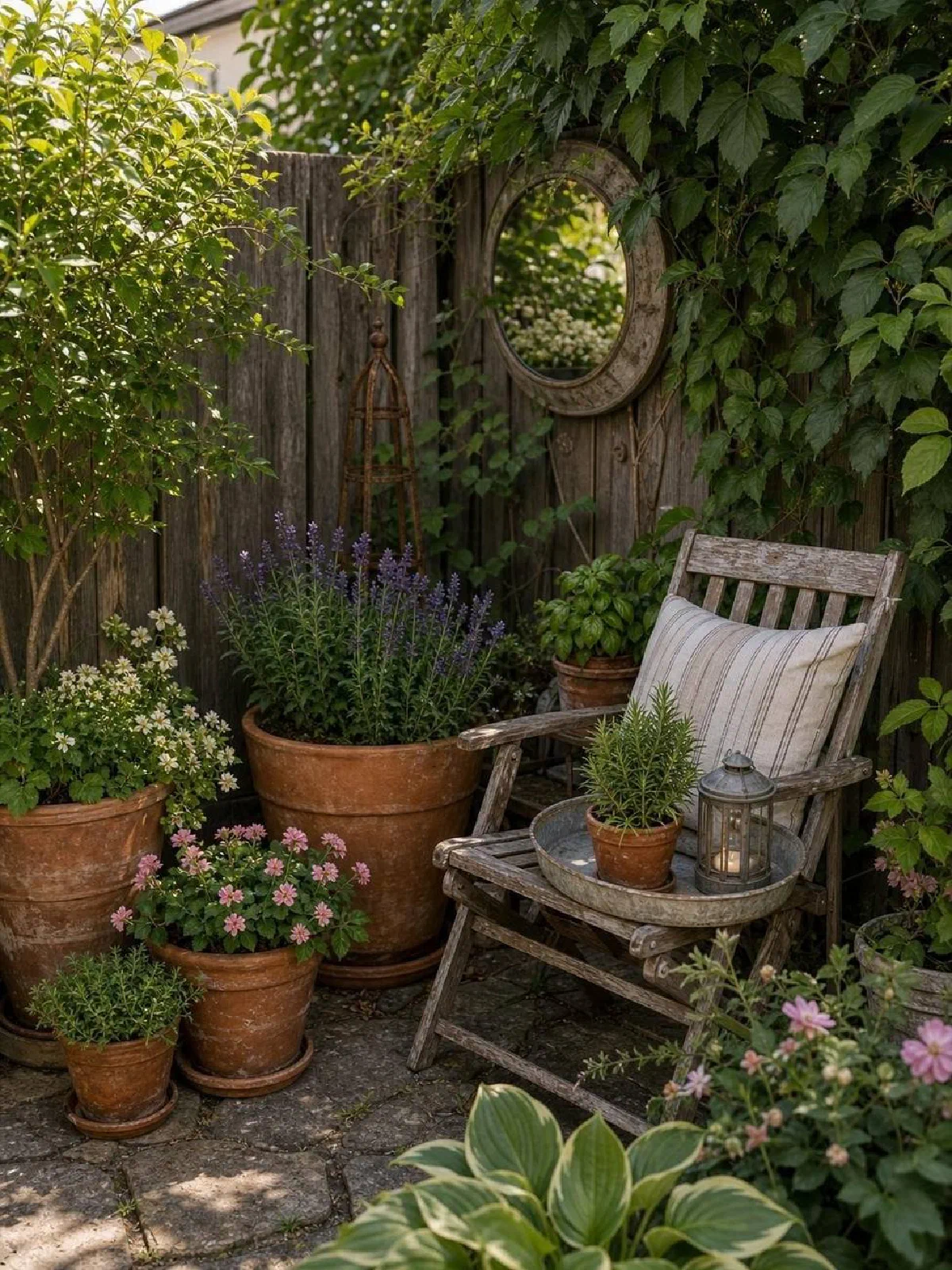
DIY garden decor can go wrong quickly.
One minute you are adding a little personality. The next minute the yard has painted signs, too many colors, a fake wishing well, and something made from a pallet that never quite stops looking like a pallet.
I like garden decor best when it looks gathered rather than bought. A little worn. Useful if possible. Something that could have been there for years, even if you found it at a thrift store last weekend.
These ideas are simple, but they have one rule in common: the plants still get to be the main thing.
Collected or Crafty: Which Signals Give It Away
The difference is rarely the object. It is whether the piece looks chosen or assembled.
| Crafty signal | What to do instead |
|---|---|
| Bright paint on a weathered object | Let the material age, or pick one muted color and stop there |
| Words and signs used as decoration | A plain label that only says what is planted |
| A different theme in every corner | One odd object, with plants doing the rest |
| A matching set bought in one trip | Pieces gathered over a few seasons, in mixed materials |
| Plastic and resin left in full sun | Clay, metal, stone, wood, or glass under cover |
1. Use Weathered Pots as Decor, Even Before You Plant Them
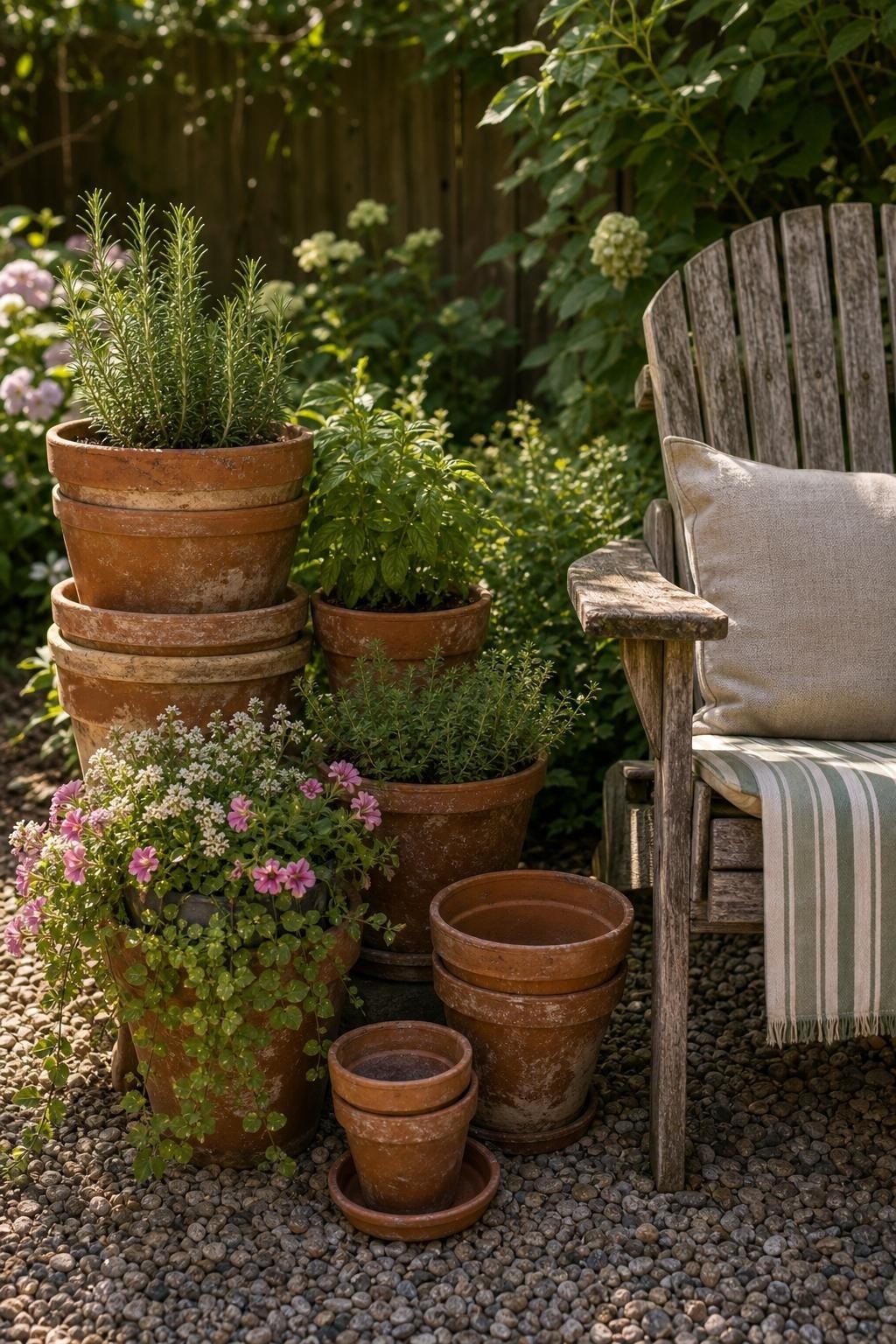
A stack of old terracotta pots can look better than a brand-new garden statue.
Look for chipped rims, mineral marks, mossy edges, or faded clay. Set three pots together near a bench, under a table, or beside a shed door. Plant one and leave the others empty if they look good that way.
This works because terracotta belongs in a garden. It weathers instead of fighting the weather.
If you only have new pots, leave them outside for a season. Rub a little soil on the outside if the color feels too orange. They will calm down.
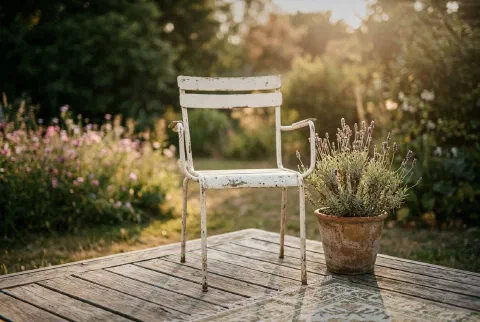
2. Turn a Thrifted Chair Into a Plant Holder
An old chair can become garden decor without becoming a full craft project.
Use a wood or metal chair with a missing seat, worn paint, or a shape you like. Set a pot where the seat would be. A fern, geranium, trailing nasturtium, or bowl of herbs works well.
The trick is restraint. Do not paint flowers on the chair. Do not add words. Do not tie a bow to it. Let the age of the chair do the work.
Place it at the end of a path or in a corner that needs height. It gives the eye a place to land without blocking the plants.
3. Add One Lantern Where the Garden Gets Dark First
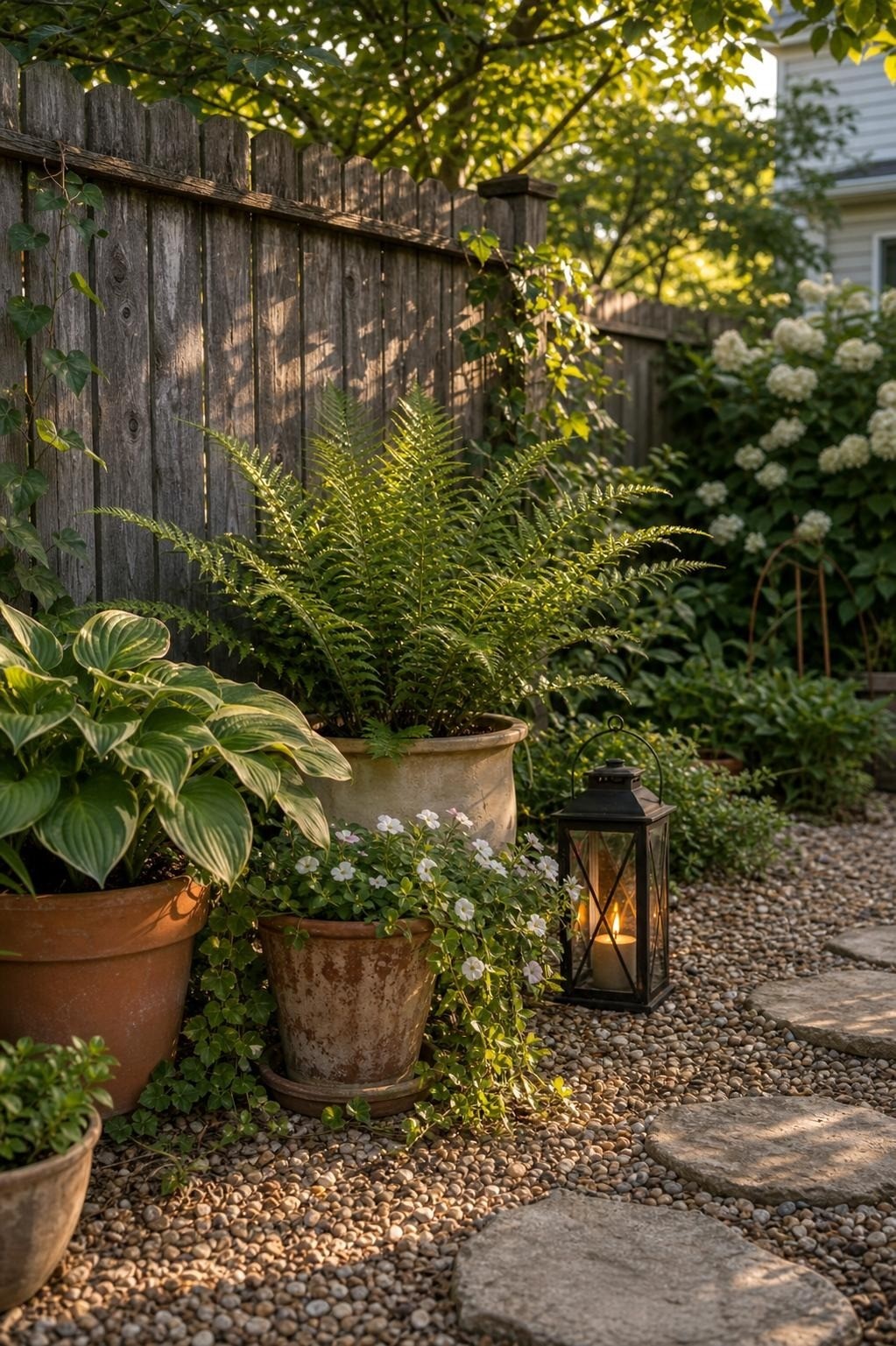
A lantern is useful decor, which is why it usually looks better than a random ornament.
Use one lantern at the edge of a seating area, near a step, or at the turn in a path. Solar, battery, or candle lanterns all work. The style matters less than the placement.
Black metal looks clean. Galvanized metal feels casual. Wicker or bamboo works on covered porches but ages badly in exposed rain.
Do not scatter lanterns everywhere. One good light makes a corner feel intentional. Ten small lights can make the yard look like a display aisle.
4. Hang a Small Mirror on a Fence
A garden mirror can be lovely if it is small and believable.
Use a thrifted mirror with a wood or metal frame. Hang it where it reflects plants, not the trash cans or the neighbor’s driveway. A shaded fence is usually better than full sun because glare can be harsh.
Keep the scale modest. A huge mirror outdoors starts to feel strange. A small one tucked behind ferns or beside a chair feels like a quiet surprise.
Make sure birds cannot fly straight into it. A reflective surface outdoors reads as more garden, which is the same reason birds hit windows. Project FeederWatch’s collision guidance asks for marks spaced no more than 2 inches apart to break up a reflection, which you cannot do on a mirror, so the workable version is a small mirror partly screened by leaves.
5. Use an Old Tray as a Pot Grouping Base
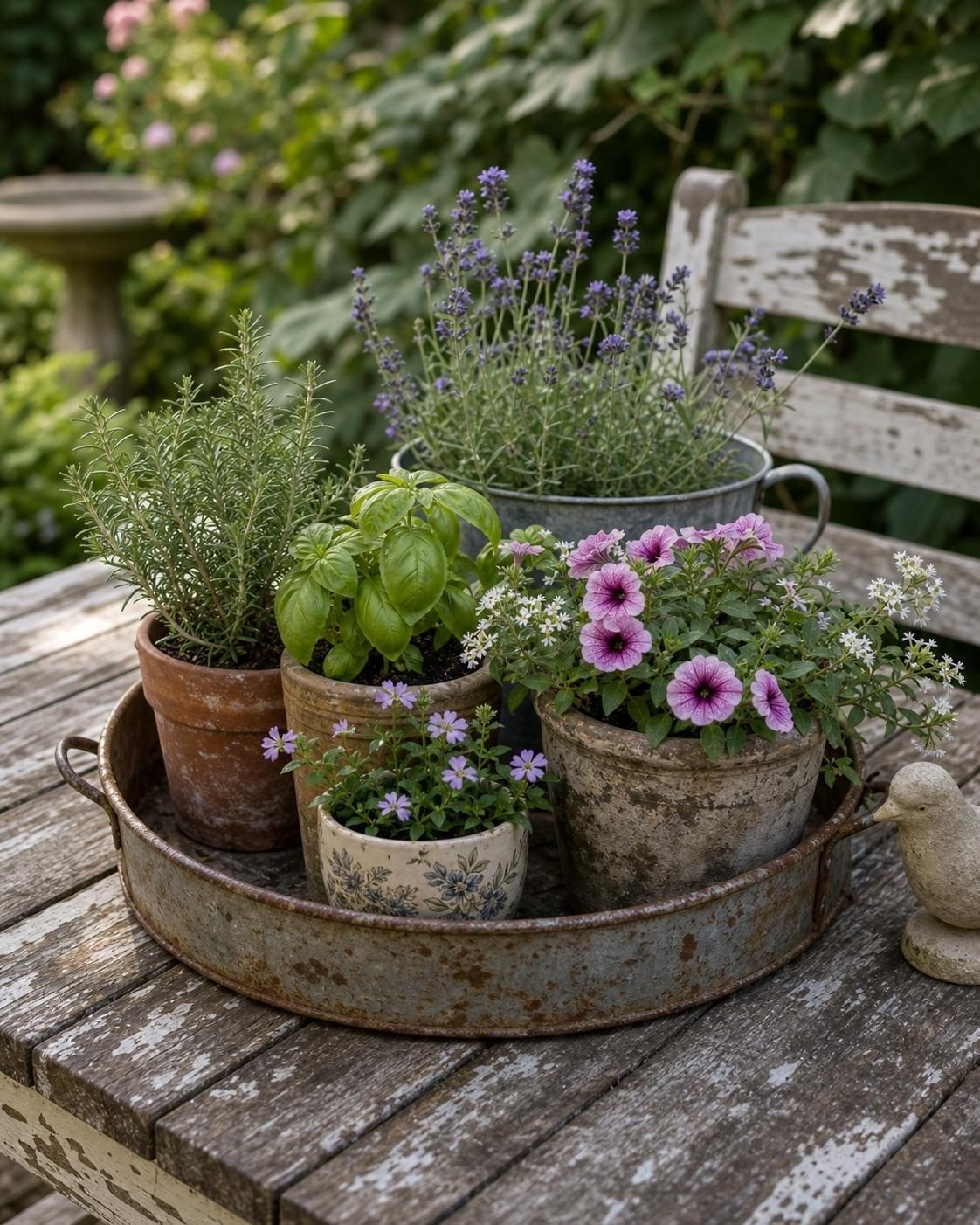
Small pots can look messy on their own. A tray turns them into a collection.
Use an old metal tray, a shallow wooden crate, or a chipped serving platter. Group three to five small pots on it: thyme, basil, alyssum, pansies, tiny succulents, or seed starts.
This is especially good on a porch table or potting bench. It keeps the little things from spreading everywhere.
If the tray holds water, drill a few holes or tip it after rain. Plants do not like sitting in a puddle just because the tray looks charming. Clemson HGIC’s houseplant factsheet explains why it matters: water the soil thoroughly and let the excess run out of the drain holes into a tray, then empty that tray. Salts left behind by standing water are what damage roots over time.
6. Make Plant Labels From Something That Ages Well
Plant labels are one place where DIY can look sweet or messy.
Skip bright plastic if you want the garden to feel like it has been there a while. Use wood stakes, flat stones, copper tags, broken terracotta shards, or zinc labels. Write clearly. Keep the label small.
I like terracotta shards for herbs because they look like they belong near pots. Copper tags look good in a more formal bed, but they can get expensive fast.
The label should help you remember what is planted. It does not need to announce itself from across the yard.
7. Let One Object Be the Odd Thing
Every garden can handle one odd object. A rusty gate panel. A birdcage with a plant in it. A small statue. A blue bottle on a stake. One.
The trouble starts when every corner has a different theme. Cottage corner, fairy corner, farmhouse corner, beach corner. The yard starts feeling like a craft booth.
Pick the piece you actually like and give it breathing room. Surround it with plants, not more objects.
What Makes DIY Garden Decor Work
The best pieces look like they could stay outside for a while. Clay, metal, stone, wood, glass, wicker under cover. Natural materials usually age better than bright paint and plastic.
If you are not sure, set the piece outside for a week before you commit to it. If it still looks good after rain, sun, and a few dead leaves, it probably belongs.
How to Edit a Garden Corner in an Afternoon
If the corner already has too much in it, this is the order that fixes it fastest:
- Walk out at dusk and look at the corner from where you actually sit, not from the doorway.
- Take out anything with words on it, then step back and look again before you put anything back.
- Group what is left in threes. Two of anything reads as a pair; three reads as a collection.
- Add one living thing: a pot, a plant, or a bowl of herbs.
- Leave it alone for a week. Whatever still bothers you is the only thing worth changing next.
What to Read Next
- Styling a Thrifted Dresser Without Clutter: the same editing instinct applied indoors, where clutter shows up faster.
- Cheap Pots That Look Expensive on a Front Porch: more on making old pots and planters read as intentional.
- Hurricane Lantern Fall Decor Ideas: lantern placement and grouping beyond a single garden light.
- Whimsical Garden Ideas for a Backyard: where one odd object fits into a bigger plan.
- Cottage Garden Ideas on a Budget: putting found pieces into a planted scheme instead of around one.